Renewable Energy Surge Accelerates as Global Oil Crisis Reshapes Energy Priorities
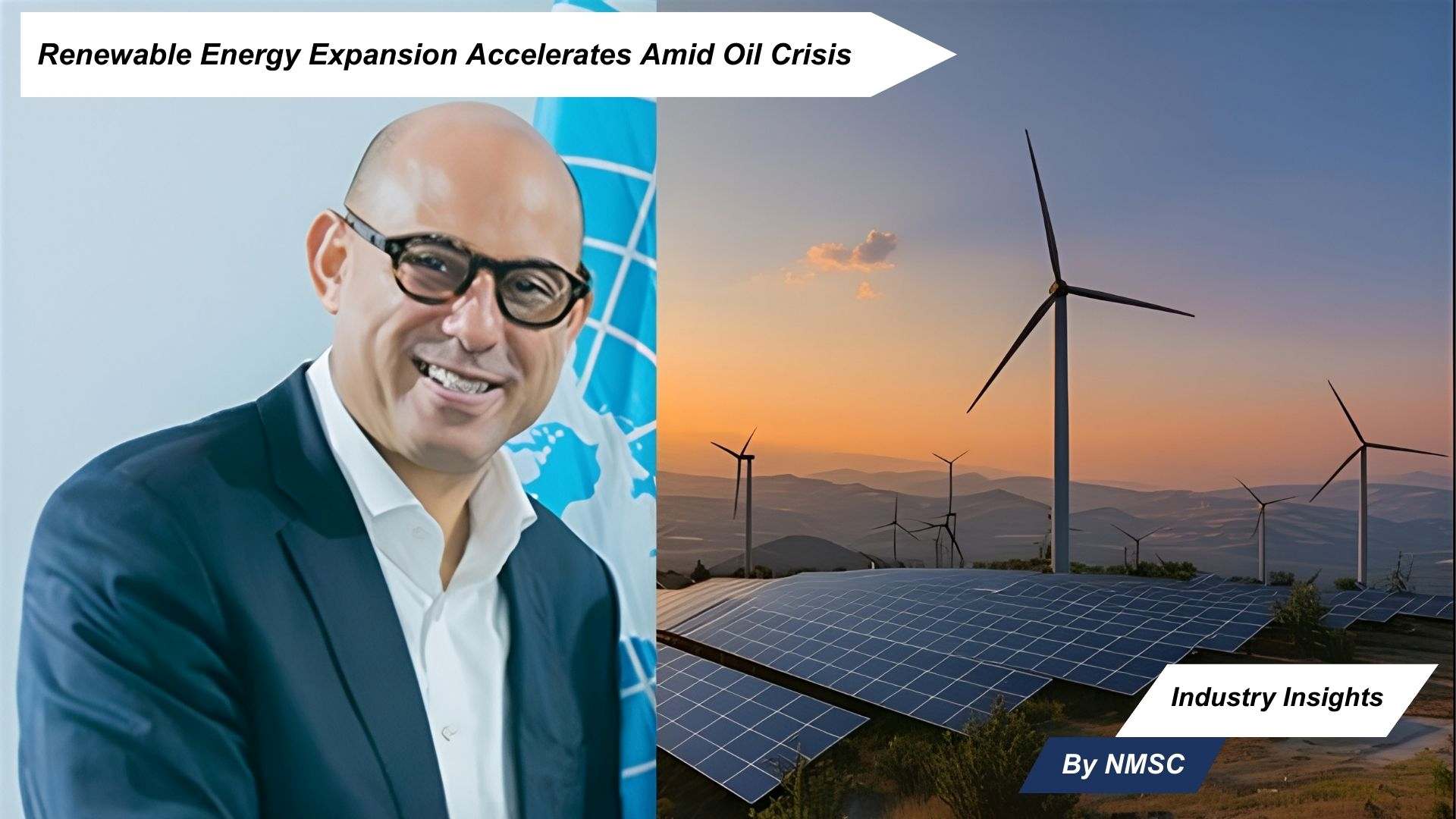
Industry Insights from Next Move Strategy Consulting
Amid escalating instability in global oil markets, renewable energy is emerging as a central pillar of energy resilience and long-term economic strategy. United Nations experts have emphasized the urgency of accelerating the transition toward clean energy as geopolitical tensions continue to disrupt traditional fuel supply chains.
The ongoing volatility in oil and gas markets has increased calls for a transition toward more stable and sustainable energy systems, with policymakers and industry leaders increasingly recognizing renewable energy as a dependable alternative in a volatile global landscape.
A Defining Moment for Energy Transition
Speaking on the issue, Simon Stiell, Executive Secretary of the UN Framework Convention on Climate Change, underscored the inherent advantages of renewable energy sources. He highlighted their independence from geopolitical chokepoints and conflict-prone regions, positioning them as a safeguard against external disruptions.
According to Stiell, renewable energy systems can offer greater resilience and reduced exposure to supply disruptions compared to fossil fuels, as they are not reliant on vulnerable shipping routes or military-protected supply chains. This distinction becomes particularly critical during periods of geopolitical unrest, where traditional energy logistics face heightened risks.
He further stressed that renewable energy enables nations to strengthen their energy independence while reducing exposure to global volatility and power dynamics often associated with fossil fuel distribution.
Fossil Fuel Dependence Under Scrutiny
The current crisis has brought renewed attention to the structural weaknesses of fossil fuel dependence. Stiell pointed out that reliance on fossil fuels not only destabilizes energy markets but also raises concerns around national security and sovereignty.
He criticized approaches that advocate for continued or increased reliance on fossil fuels, describing them as counterproductive in light of recurring supply disruptions. Drawing on historical patterns, he warned that such crises are not isolated incidents but are likely to repeat if systemic changes are not implemented.
The situation has been further exacerbated by tensions in the Middle East, particularly affecting critical global oil supply routes, which serve as key passages for international oil shipments. Disruptions in this region have significantly impacted supply flows, triggering sharp increases in oil and gas prices worldwide.
Investment Momentum and Economic Opportunity
Despite current challenges, the renewable energy sector is witnessing unprecedented growth and investment. In 2025, renewable energy is projected to approach or surpass coal as the world’s leading source of electricity generation, marking a major milestone in the global energy transition.
This shift has been accompanied by substantial financial commitments, with over $2 trillion invested in clean energy initiatives. Stiell described the sector as “a major and rapidly expanding area of global investment,” reflecting its growing economic and strategic importance reflecting its expanding economic potential and strategic importance.
The scale of investment highlights growing confidence in renewable technologies as not only environmentally sustainable solutions but also as viable drivers of economic growth and innovation.
Strategic Pathways for Sustainable Growth
Looking ahead, the UN has called on governments worldwide to accelerate the transition to renewable energy. Stiell emphasized the importance of comprehensive policy frameworks that integrate education, institutional strength, regulatory support, social equity, and technological innovation.
He noted that fostering an environment conducive to renewable energy development requires coordinated efforts across multiple sectors, ensuring that growth is both inclusive and sustainable. Intellectual property development and innovation were also identified as key components in maintaining competitive advantage and driving long-term progress.
Industry Outlook
The current oil crisis is serving as a catalyst for a broader transformation in global energy systems. As nations confront the limitations of fossil fuel dependence, Renewable Energy Market is increasingly being viewed as a strategic imperative rather than an optional alternative.
With its ability to provide stability, reduce geopolitical risk, and unlock significant economic value, renewable energy is poised to play a defining role in shaping the future of global energy dynamics.
As momentum continues to build, the transition toward cleaner energy sources is expected to accelerate, supported by strong investment flows, policy alignment, and growing international consensus on the need for sustainable and resilient energy solutions.
Source: Jurist News
Prepared by: Next Move Strategy Consulting
About the Author
 Sanyukta Deb
— Sanyukta Deb is Digital Marketing Team Lead at Next Move Strategy Consulting, where she has led content strategy and technical SEO for the firm's B2B market research publications for over 2 years. Her editorial process translates NextMSC's primary and secondary research — spanning technology, industrial, and consumer sectors — into commercial narratives, backed by search-intent, keyword, and competitive analysis. She brings 5 years of overall experience in digital marketing and content strategy.
Sanyukta Deb
— Sanyukta Deb is Digital Marketing Team Lead at Next Move Strategy Consulting, where she has led content strategy and technical SEO for the firm's B2B market research publications for over 2 years. Her editorial process translates NextMSC's primary and secondary research — spanning technology, industrial, and consumer sectors — into commercial narratives, backed by search-intent, keyword, and competitive analysis. She brings 5 years of overall experience in digital marketing and content strategy.
About the Reviewer
 Debashree Dey
— Debashree Dey is Assistant Manager at Next Move Strategy Consulting, where she supports cross-vertical market content and communications across diverse industries for 6 years. Her professional background includes senior content writing, communications, and published manuscript authorship, with experience developing audience-focused business narratives and maintaining clear, consistent messaging. Her role supports research-led content development and editorial quality across NextMSC publications.
Debashree Dey
— Debashree Dey is Assistant Manager at Next Move Strategy Consulting, where she supports cross-vertical market content and communications across diverse industries for 6 years. Her professional background includes senior content writing, communications, and published manuscript authorship, with experience developing audience-focused business narratives and maintaining clear, consistent messaging. Her role supports research-led content development and editorial quality across NextMSC publications.
















Add Comment