Semiconductor Material Price Surge Signals Supply Chain Strain
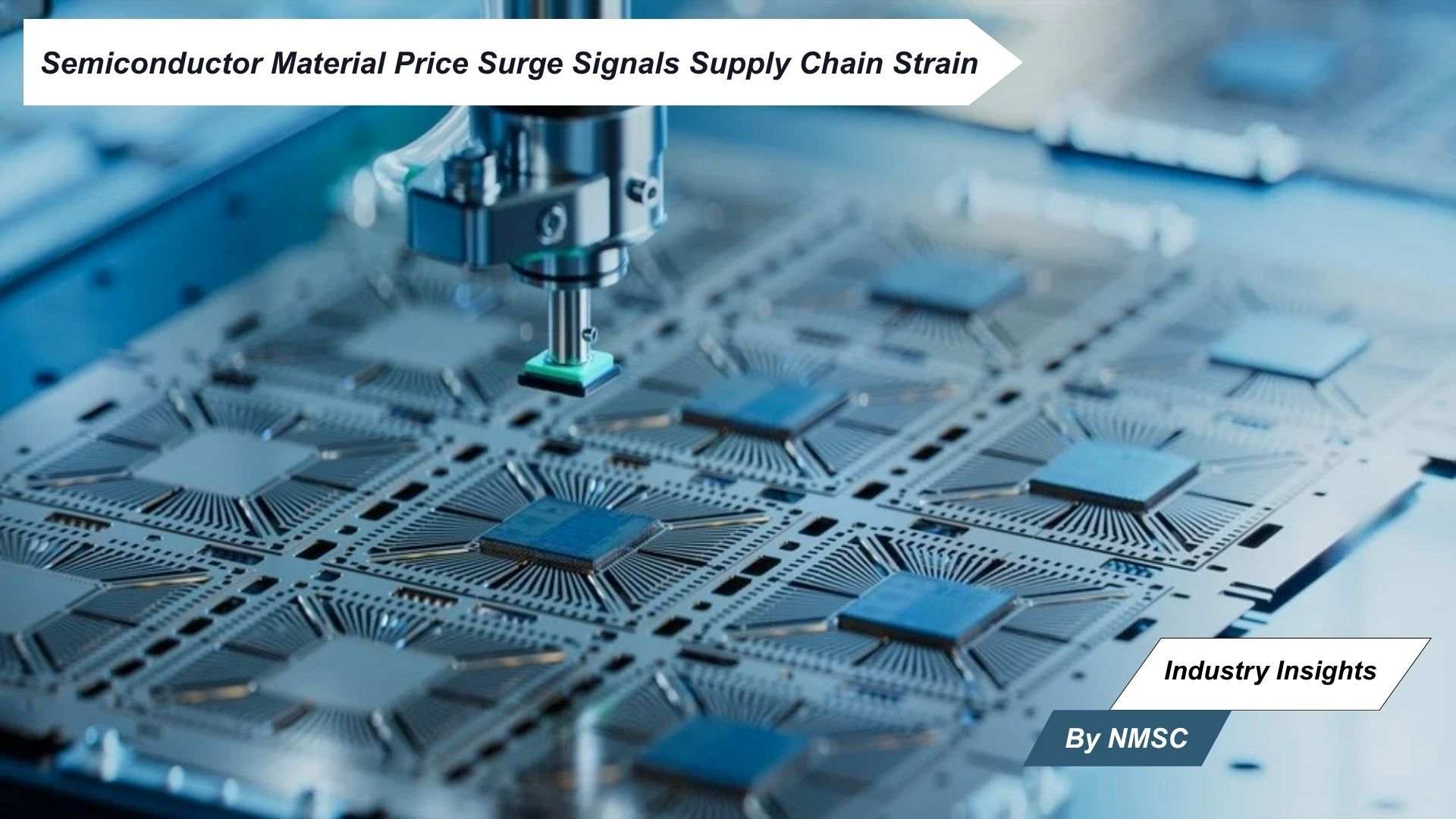
Industry Insights from Next Move Strategy Consulting
The global Semiconductor Market is witnessing renewed supply chain pressure as escalating geopolitical tensions between the United States and Iran begin to disrupt the availability and pricing of critical raw materials. Procurement stability and rising input costs are now emerging as central concerns for chip manufacturers, particularly across Asia.
According to industry sources, South Korean semiconductor companies are actively monitoring the situation, as uncertainties surrounding key materials including helium, diluents, ethanol, and isopropyl alcohol (IPA) continue to intensify. The developments highlight the growing vulnerability of semiconductor supply chains to geopolitical disruptions.
Helium Supply Shock Reshapes Procurement Strategies
Among all affected materials, helium has emerged as the most impacted, with spot prices surging by more than 50% in recent weeks. Widely regarded as an essential gas in semiconductor manufacturing, helium plays a critical role in cooling and process stability, with no viable substitute currently available.
Major semiconductor players such as Samsung Electronics, SK Hynix, and DB HiTek have shifted their procurement strategies, prioritizing supply security over cost efficiency. Companies are closely tracking daily price fluctuations and securing inventory at prevailing market rates to avoid potential production disruptions.
The supply challenge is further compounded by helium’s heavy geographic concentration. Qatar accounts for nearly one-third of global helium production, and recent damage to LNG infrastructure in Ras Laffan Industrial City has disrupted long-term supply contracts. Industry assessments suggest that even in the event of geopolitical stabilization, recovery and reconstruction may take years, prolonging supply uncertainty.
Although companies such as TSMC and UMC have adopted helium recycling technologies achieving recovery rates between 60% and 75% a significant portion of daily consumption still depends on external supply. In South Korea, reliance is particularly high, with 64.7% of helium imports sourced from Qatar in 2025, underscoring the fragility of existing supply networks.
Cost Pressures Expand Across Multiple Materials
Beyond helium, the ripple effects of rising oil prices are driving cost increases across a broader range of semiconductor materials, particularly those used in lithography and cleaning processes.
Diluents, which are derived from propylene oxide and processed into intermediates such as PGME and PGMEA, are witnessing significant price adjustments. Major chemical producers have issued price increase notices, with upstream material costs expected to rise by 40% to 50%. Downstream suppliers are also preparing to raise shipment prices by approximately 20% in the near term.
At the same time, semiconductor-grade ethanol and IPA—both critical for wafer cleaning and residue removal—are experiencing double-digit price increases. These materials are indispensable in chip fabrication processes, making cost escalation unavoidable for manufacturers.
Strategic Shift Toward Supply Chain Resilience
The ongoing disruption is prompting a structural shift in how semiconductor companies approach sourcing and supply chain management. Industry observations indicate a growing emphasis on securing alternative supply channels and reducing dependence on geographically concentrated resources.
In the short term, concerns over supply continuity are accelerating the adoption of localized or domestic alternatives, particularly in areas where supply bottlenecks are most pronounced. In the longer term, increased capital investment and industrial expansion are expected to strengthen upstream material capabilities, especially in advanced process technologies and memory production.
According to Next Move Strategy Consulting
Next Move Strategy Consulting highlights that the current surge in semiconductor material prices reflects a broader transformation in global supply chain dynamics. The increasing frequency of geopolitical disruptions is driving a shift from cost-optimized sourcing toward resilience-focused strategies.
The firm notes that sustained volatility in critical materials such as helium and specialty chemicals is likely to accelerate domestic manufacturing initiatives and encourage diversification of supply sources. Over time, this trend is expected to reshape investment patterns across the semiconductor ecosystem, creating new growth opportunities for upstream material suppliers while reinforcing the importance of supply chain security as a strategic priority.
Source: ChemNet
Prepared by: Next Move Strategy Consulting
About the Author
 Sanyukta Deb
— Sanyukta Deb is Digital Marketing Team Lead at Next Move Strategy Consulting, where she has led content strategy and technical SEO for the firm's B2B market research publications for over 2 years. Her editorial process translates NextMSC's primary and secondary research — spanning technology, industrial, and consumer sectors — into commercial narratives, backed by search-intent, keyword, and competitive analysis. She brings 5 years of overall experience in digital marketing and content strategy.
Sanyukta Deb
— Sanyukta Deb is Digital Marketing Team Lead at Next Move Strategy Consulting, where she has led content strategy and technical SEO for the firm's B2B market research publications for over 2 years. Her editorial process translates NextMSC's primary and secondary research — spanning technology, industrial, and consumer sectors — into commercial narratives, backed by search-intent, keyword, and competitive analysis. She brings 5 years of overall experience in digital marketing and content strategy.
About the Reviewer
 Debashree Dey
— Debashree Dey is Assistant Manager at Next Move Strategy Consulting, where she supports cross-vertical market content and communications across diverse industries for 6 years. Her professional background includes senior content writing, communications, and published manuscript authorship, with experience developing audience-focused business narratives and maintaining clear, consistent messaging. Her role supports research-led content development and editorial quality across NextMSC publications.
Debashree Dey
— Debashree Dey is Assistant Manager at Next Move Strategy Consulting, where she supports cross-vertical market content and communications across diverse industries for 6 years. Her professional background includes senior content writing, communications, and published manuscript authorship, with experience developing audience-focused business narratives and maintaining clear, consistent messaging. Her role supports research-led content development and editorial quality across NextMSC publications.

















Add Comment