Soft Robotics Market Update: Morph Disrupts Ecosystem
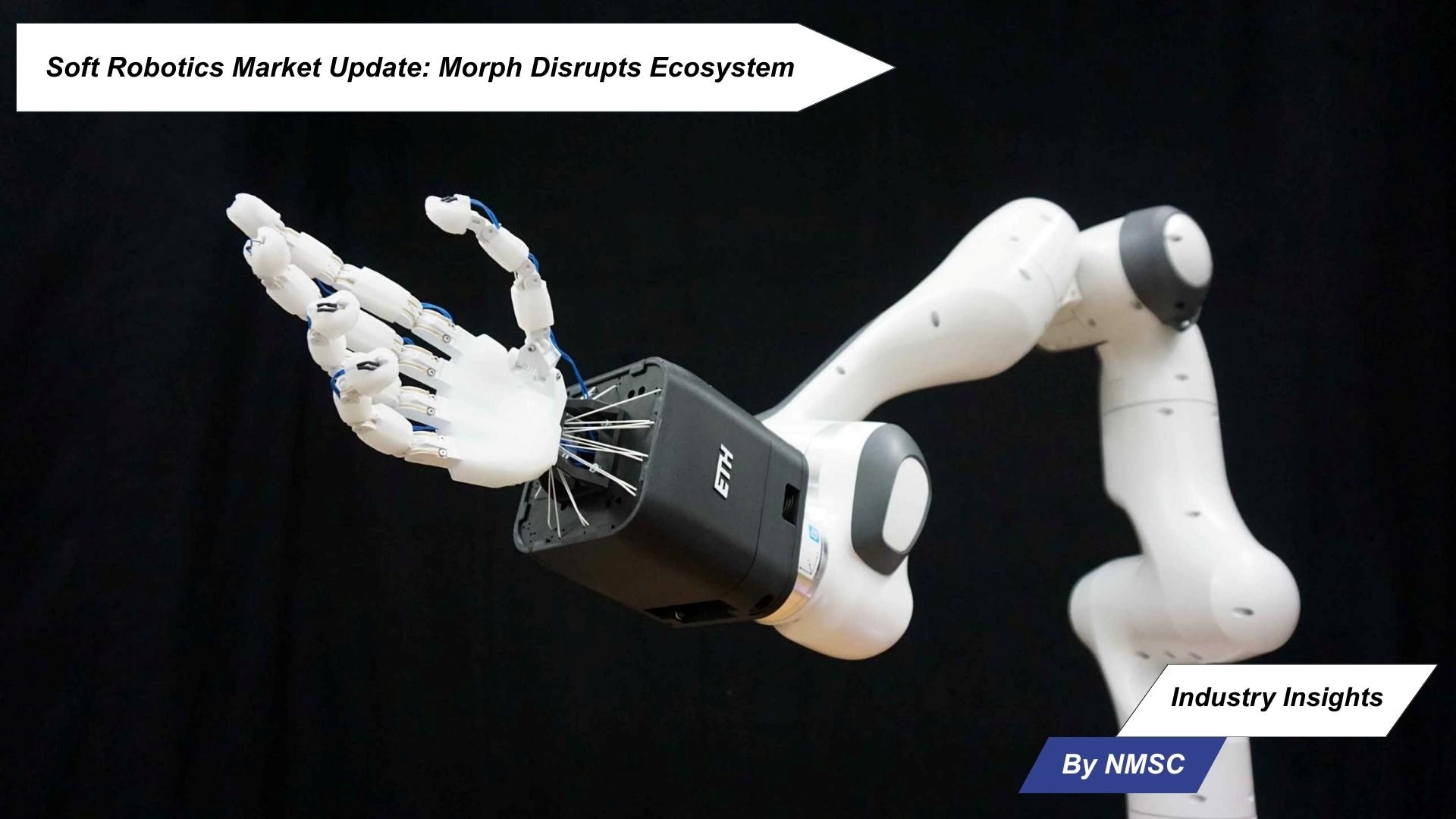
New morph Platform Redefines Soft Robotics Market; Adaptive Cells Launch Signals Material Evolution
TORONTO, Canada — June 4, 2026 — As commercial manufacturing demands higher degrees of human-machine synergy, soft robotics startup morph has formally emerged from stealth. Backed by a high-profile cohort of venture investors, the company has unveiled its "soft robotic cells" platform, a development that signals a significant material evolution for the global automation and hardware industries.
A Bold Shift from Rigid to Dynamic Hardware
For decades, physical automation has relied heavily on rigid structures and static mechanical limits. morph addresses this limitation by developing flexible, sensor-enabled robotic components designed to be embedded directly into everyday consumer and industrial products. The technology blends physical artificial intelligence, reinforcement learning, and advanced simulation to let objects alter their shape and stiffness in real time.
"We have designed and built a very rigid and static world, but since the beginning nature has shown us softness and dynamism," says Jean Nehme, founder and CEO of morph. "With our platform, we can build a new generation of products embedded with soft robotic cells that adapt in real time to support natural movement."
Key Platform Capabilities at a Glance:
-
Embedded Sensing: Flexible components capable of measuring human movement and environmental metrics inline.
-
Real-Time Morphing: Dynamic structures that modify their physical shape, behavior, or rigid properties on demand.
-
Simulation-Driven Design: A developer platform combining physics-based simulation and reinforcement learning to accelerate prototyping.
Commercial Applications and Strategic Outlook
The platform is initially targeting human performance, physical mobility, and injury prevention before scaling into healthcare, automotive, and industrial safety spaces. Moving beyond typical standalone hardware systems, the company intends to position itself as a design, technology, and manufacturing partner for established enterprises looking to integrate physical AI into their product lines.
This move comes at a critical juncture for industrial automated technology. Next Move Strategy Consulting analysts indicate that the diversification of Soft Robotics Market from factories into consumer interfaces is altering long-term capital deployment. Market data reveals that commercial hardware ecosystems are increasingly prioritizing adaptive, human-centric materials as manufacturers seek a edge over conventional, single-purpose rigid designs.
Redefining Human-Machine Interaction
The launch of morph's soft robotic cells introduces a new paradigm where products are no longer static, but actively responsive to their surroundings. By bridging biological adaptability with artificial intelligence, the platform establishes a foundation for hardware that shifts to fit human needs, rather than forcing humans to adapt to rigid machines.
Source: AI Insider
Prepared By: Prakhyat Chowdhury
About the Author
 Sanyukta Deb
— Sanyukta Deb is Digital Marketing Team Lead at Next Move Strategy Consulting, where she has led content strategy and technical SEO for the firm's B2B market research publications for over 2 years. Her editorial process translates NextMSC's primary and secondary research — spanning technology, industrial, and consumer sectors — into commercial narratives, backed by search-intent, keyword, and competitive analysis. She brings 5 years of overall experience in digital marketing and content strategy.
About the Reviewer
 Debashree Dey
— Debashree Dey is Assistant Manager at Next Move Strategy Consulting, where she supports cross-vertical market content and communications across diverse industries for 6 years. Her professional background includes senior content writing, communications, and published manuscript authorship, with experience developing audience-focused business narratives and maintaining clear, consistent messaging. Her role supports research-led content development and editorial quality across NextMSC publications.















Add Comment