Nanobot Market Surges on Clinical Breakthroughs
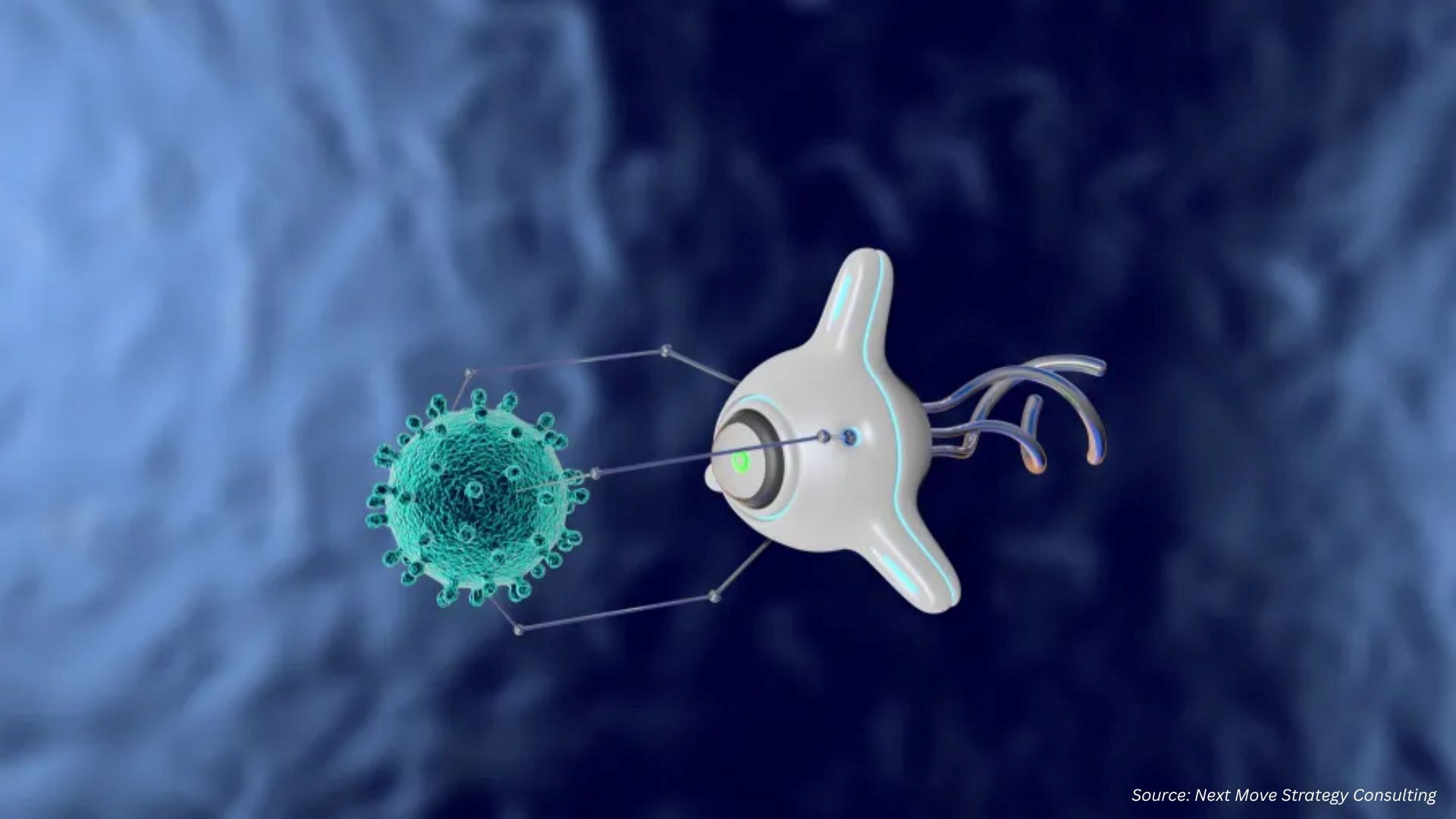
ETH Zurich's Clinically Ready Magnetic Microrobots and a $3.1 Million NIH Grant for Smart Nanoparticle Cancer Therapy Signal a Structural Inflection Point for a Global Industry Projected to Reach USD 54.83 Billion by 2035
In a development that has drawn significant attention from the global biomedical research community, ETH Zurich researchers published a landmark study in Science in November 2025 demonstrating a magnetically guided microrobotic drug delivery platform capable of precise navigation under physiological conditions — a system the authors described as "clinically ready." The platform, detailed in the paper "Clinically Ready Magnetic Microrobots for Targeted Therapies," employs gelatin-encapsulated microrobots guided by external magnetic fields to deliver therapeutic payloads to specific anatomical locations within the body, including sites relevant to stroke, cancer, and minimally invasive surgery. The study, published in one of the world's most prestigious peer-reviewed scientific journals, represents a critical transition in nanorobotics from laboratory proof-of-concept to a platform with a defined clinical translation pathway — a milestone that carries direct and measurable implications for the global Nanobot Market.
According to Next Move Strategy Consulting, the global Nanobot Market was valued at USD 11.02 billion in 2025 and is projected to reach USD 54.83 billion by 2035, expanding at a compound annual growth rate (CAGR) of 17.4% over the forecast period 2026–2035. The market is expected to reach USD 12.94 billion by the end of 2026, reflecting accelerating adoption across medical, research, and industrial applications.
For More Information: Download FREE Sample on Nanobot Market Report
ETH Zurich's Magnetic Microrobots: From Laboratory to Clinical Pathway
The ETH Zurich study, led by researchers at the Zurich Centre for Ferromagnetic Resonance and affiliated institutions, represents a significant advance in the field of magnetically actuated nanorobotics. The platform demonstrated the ability to navigate the body's intricate passages — including blood vessels and tissue channels — with precision sufficient for targeted drug delivery in clinically relevant anatomical environments. The system's clinical readiness designation reflects its compatibility with existing medical imaging infrastructure, its use of biocompatible materials, and its demonstrated performance under physiological flow conditions — criteria that have historically represented the most significant barriers to translating nanorobotic systems from research settings into regulated medical practice.
The ETH Zurich development follows a broader pattern of accelerating clinical-stage nanorobotics research. In February 2026, scientists at the UC Davis Comprehensive Cancer Center announced that their research into "smart" transformable nanoparticles — which travel through the body as ultrafine particles and reshape into nanofiber networks upon reaching tumor sites — had received a USD 3.1 million R01 research project grant from the National Institutes of Health (NIH) National Cancer Institute. The nanoparticles, developed under Distinguished Professor Kit S. Lam, are designed to remain anchored at tumor sites for up to one week while clearing from healthy organs such as the liver and lungs within two days — a selectivity profile that addresses one of the most persistent challenges in oncological drug delivery: systemic toxicity.
These two developments, occurring within months of each other, illustrate the accelerating pace at which nanobot-adjacent technologies are transitioning from experimental platforms to clinically validated systems — a trajectory that is reshaping investor expectations, regulatory frameworks, and commercial strategies across the global nanobot ecosystem.
U.S. Federal Investment: A USD 47 Billion Foundation for Nanobot Innovation
The structural demand for nanobot technologies is underpinned by sustained and substantial government investment in nanotechnology research and development. The U.S. National Nanotechnology Initiative (NNI), the federal government's cross-agency coordination program for nanoscale science and technology, published its Supplement to the President's 2026 Budget on April 9, 2026, requesting USD 1.45 billion for nanotechnology R&D across ten federal agencies. Cumulative NNI funding since the initiative's inception in 2001 totals nearly USD 47 billion, including the 2026 request — a figure that reflects the sustained, multi-decade federal commitment to nanoscale science as a foundational technology for national competitiveness, healthcare, defense, and energy.
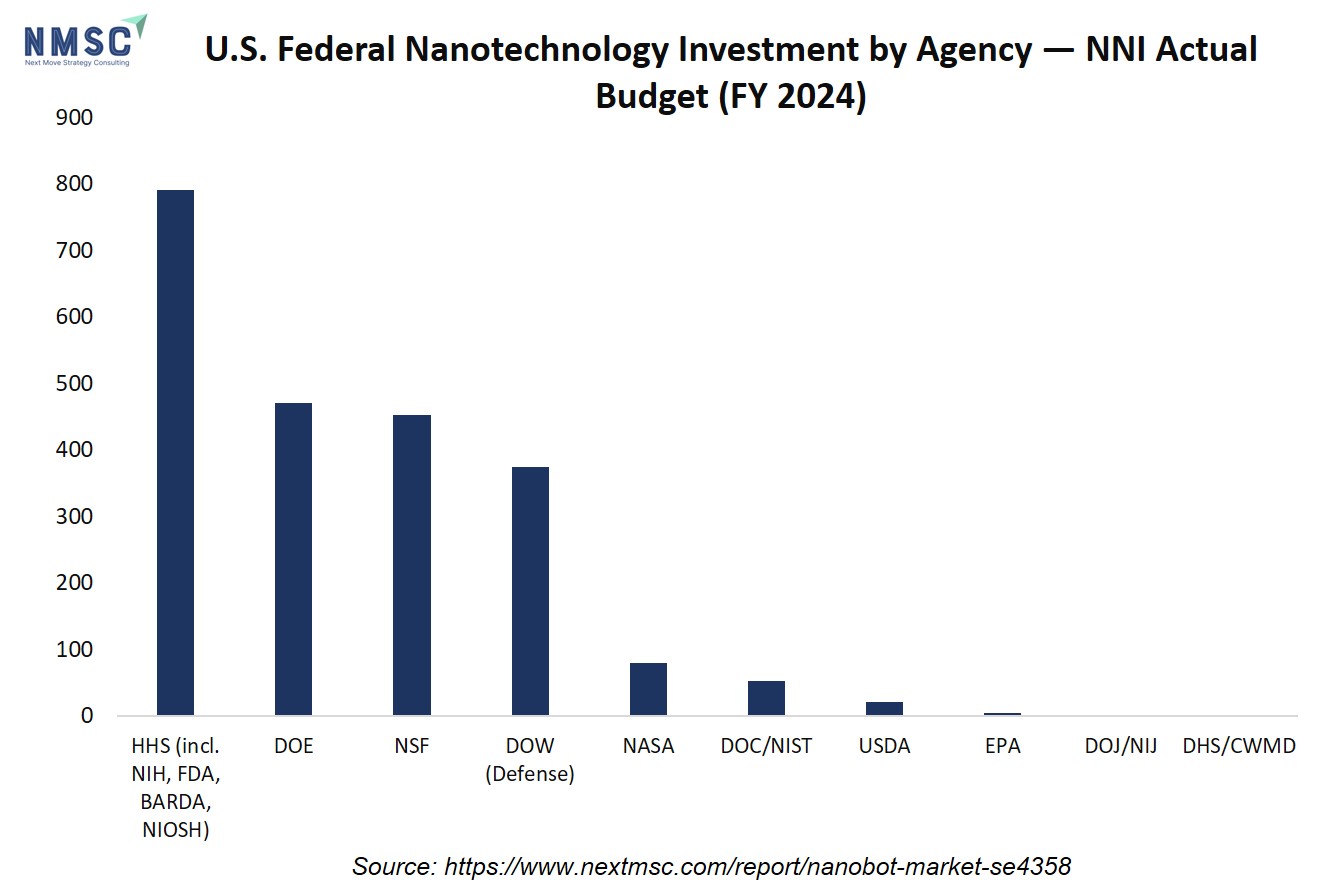
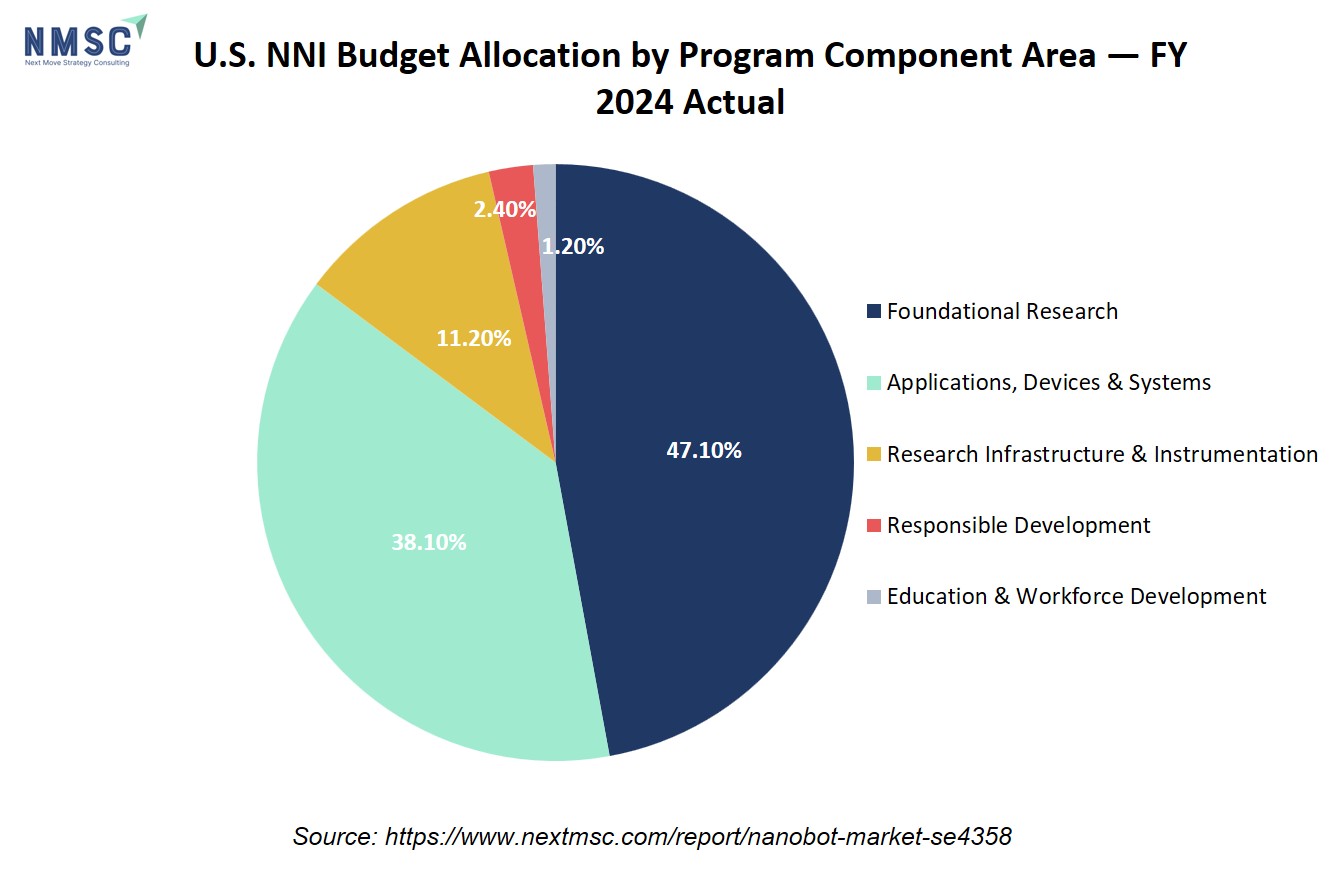
In FY 2024, total NNI investment across all participating agencies reached USD 2.248 billion, with the Department of Health and Human Services (HHS) — primarily through the National Institutes of Health (NIH) — representing the largest single contributor at USD 789.8 million. The Department of Energy (DOE) contributed USD 469.9 million, the National Science Foundation (NSF) USD 453.0 million, and the Department of War (DOW) USD 374.2 million. NIH alone invested USD 764.9 million in nanotechnology-based biomedical research in FY 2024, reflecting the agency's recognition of nanomedicine — including nanobot-enabled drug delivery, diagnostics, and imaging — as a strategic priority.
The 2025 Quadrennial Review of the NNI, conducted by the National Academies of Sciences, Engineering, and Medicine, concluded that nanotechnology is "essential to numerous scientific disciplines and relevant to the missions of multiple federal agencies," and that "nanotechnology commercialization is quickly developing following research breakthroughs." The review further noted that aggregated revenues of nanotechnology companies from 2002 to 2022 approached nearly one trillion dollars — a return that represents a substantial economic multiplier on the approximately USD 40 billion in federal investment over the same period.
U.S. NNI Federal Nanotechnology Investment by Agency, FY 2024–2026
|
Agency |
FY 2024 Actual (USD M) |
FY 2025 Estimated (USD M) |
FY 2026 Proposed (USD M) |
|
HHS (total) |
789.8 |
780.8 |
470.7 |
|
— NIH |
764.9 |
761.7 |
459.0 |
|
— FDA |
12.4 |
11.1 |
11.7 |
|
DOE |
469.9 |
448.2 |
368.0 |
|
NSF |
453.0 |
403.9 |
131.1 |
|
DOW (Defense) |
374.2 |
360.7 |
394.2 |
|
NASA |
80.1 |
57.0 |
27.1 |
|
DOC/NIST |
52.8 |
44.6 |
38.3 |
|
USDA (total) |
21.6 |
22.6 |
15.0 |
|
EPA |
4.3 |
2.8 |
2.8 |
|
DOJ/NIJ |
2.0 |
1.8 |
1.8 |
|
DHS/CWMD |
0.5 |
0.0 |
0.0 |
|
TOTAL |
2,248.3 |
2,122.4 |
1,449.1 |
Notes: 2025 figures based on enacted levels. 2026 figures represent the President's budget request. DOW includes Air Force, Army, Navy, DARPA, DTRA, and related defense agencies. HHS includes NIH, FDA, BARDA, and NIOSH. Totals may not add due to rounding.
Regulatory Landscape: FDA, EMA, and the Path to Clinical Commercialization
The regulatory environment governing nanobot technologies remains one of the most consequential determinants of commercialization timelines. The U.S. Food and Drug Administration (FDA) has reviewed and approved numerous nanotechnology-based products and expects a significant increase in submissions as the field matures. The FDA's National Center for Toxicological Research (NCTR) Nanotechnology Core Facility (NanoCore), in collaboration with NIH/NIEHS, finalized several documentary test method standards through ASTM International in 2024 and 2025, and provided technical input on two ASTM and ten ISO nanotechnology standards — a body of work that is progressively reducing regulatory ambiguity for nanobot developers seeking market authorization.
The FDA currently chairs the International Pharmaceutical Regulator Program Nanomedicine Working Group — a collaborative body comprising 17 international regulatory agencies — which is actively working toward regulatory convergence on nanomedicines, including lipid nanoparticle (LNP) classification and liposomal product guidance. This international coordination effort is expected to reduce cross-jurisdictional regulatory friction for nanobot developers operating across multiple markets, particularly in the United States, European Union, Japan, and South Korea — all of which are identified by NMSC as high-priority markets for nanobot adoption.
The NCI's Nanotechnology Characterization Laboratory (NCL), which has characterized more than 600 different nanomaterials and supported over 200 collaborations with academia, industry, and government laboratories, has facilitated 24 collaborators reaching clinical trials — with several now holding commercially marketed formulations. This pipeline represents a tangible and growing body of evidence that the regulatory pathway for nanobot-adjacent technologies, while demanding, is navigable and increasingly well-defined.
U.S. Federal Nanotechnology SBIR and STTR Awards by Agency, 2020–2023
|
Agency |
2020 Total (USD M) |
2021 Total (USD M) |
2022 Total (USD M) |
2023 Total (USD M) |
|
HHS/NIH |
48.6 |
48.3 |
45.7 |
57.3 |
|
DOW (Defense) |
69.3 |
68.6 |
109.2 |
53.6 |
|
DOE |
29.7 |
36.0 |
57.3 |
40.6 |
|
NSF |
20.8 |
23.1 |
22.9 |
51.3 |
|
NASA |
9.3 |
11.7 |
9.4 |
8.5 |
|
DOC/NIST |
1.9 |
1.3 |
3.9 |
12.9 |
|
USDA |
1.8 |
3.2 |
2.2 |
6.4 |
|
EPA |
0.5 |
0.6 |
0.2 |
0.0 |
|
DHS |
1.0 |
0.0 |
0.0 |
0.0 |
|
TOTAL |
182.8 |
192.8 |
250.8 |
230.5 |
Notes: 2023 is the latest year for which nanotechnology award data are available. Totals may not add due to rounding. Cumulative nanotechnology SBIR/STTR awards since 2004 total over USD 2.7 billion.
Market Segmentation: Medical Applications Dominate, Smart Systems Lead Growth
The nanobot market is segmented by offering, material composition, actuation mechanism, application, and end-user. Medical applications represent the dominant segment, driven by high demand for minimally invasive therapies, targeted drug delivery, and in-vivo diagnostics. Hospitals and clinics, alongside pharmaceutical and biotechnology companies, constitute the primary end-user base, reflecting both the high revenue potential and the strategic importance of clinical applications in driving market adoption.
By offering, nanorobotic systems — encompassing therapeutic systems, diagnostic systems, and industrial systems — dominate market revenues due to their comprehensive functionality and broad applicability. Particle products, including lipid nanoparticles (LNPs), polymeric nanoparticles, and radioenhancer nanoparticles, represent the second-largest offering segment, with LNPs in particular benefiting from the mRNA vaccine precedent established during the COVID-19 pandemic. Biological nanodevices, including DNA nanodevices and cell biohybrids, represent the highest-growth sub-segment within the offering category, driven by rising investment in DNA-based and biohybrid nanorobot platforms.
By material composition, polymer- and lipid-based materials dominate due to their biocompatibility, versatility, and established role in DNA nanorobots and targeted therapeutic platforms. By actuation, chemical propulsion is the leading mechanism, enabling autonomous navigation and operational flexibility in therapeutic and diagnostic applications, followed by magnetic propulsion — the mechanism employed in the ETH Zurich clinical platform — which is favored for its precision external control and compatibility with existing medical imaging infrastructure.
Regional Dynamics: North America Leads, Asia-Pacific Accelerates
North America represents the most mature nanobot market globally, anchored by the United States' advanced healthcare infrastructure, the world's largest biomedical research funding ecosystem, and a regulatory framework that — while demanding — provides structured pathways for nanobot product authorization. The U.S. leads in clinical adoption of DNA nanorobots and micro-robots for targeted drug delivery, diagnostics, and clinical research, supported by NIH's USD 764.9 million annual nanotechnology investment and an active network of NCI-designated cancer centers conducting nanobot-relevant clinical trials.
Asia-Pacific is the fastest-growing regional segment, with China, Japan, India, and South Korea driving adoption across drug delivery, diagnostics, and academic research. China leads the region in nanobot adoption, with hospitals, biotech firms, and research institutes deploying DNA nanorobots for drug delivery and experimental therapies, supported by robust R&D funding and strong domestic competition. Japan demonstrates high maturity in both clinical and research applications, with sustained growth potential in oncology and precision diagnostics. India represents an emerging market, with adoption accelerating through public research grants, start-up funding, and academic-industry partnerships.
Europe is a strategically significant but regulation-intensive market. Germany, the United Kingdom, France, and Switzerland — the home of ETH Zurich — lead adoption in medical and research nanobot applications. The European Medicines Agency's nanomedicines operational expert group, in which FDA participates as an observer, is actively working to harmonize regulatory standards for nanomedicine products across EU member states, a development that is expected to reduce approval timelines and stimulate commercial investment in European nanobot platforms.
Competitive Landscape: Innovation-Driven Differentiation Across a Specialized Ecosystem
The global nanobot market is characterized by a competitive landscape comprising pioneering biotech firms, established scientific instrument providers, and agile deep-tech startups. Key players identified by NMSC include Bionaut Labs, Inc., Nanobots Therapeutics, Robeauté, Nanovery, DNA Nanobots Inc., Theranautilus, Microbot Medical Inc., AMAROB, Endiatx, Nanobiotix, Nanoscribe, Thermo Fisher Scientific, ZEISS, Bruker, and JEOL Ltd.
Competitive differentiation is driven by advanced propulsion methods, AI-assisted navigation, nanoscale sensing capabilities, and programmable DNA or magnetic platforms. In January 2026, Nanovery CEO Jurek Kozyra disclosed on the Disruption Interruption podcast how DNA nanorobots integrated with artificial intelligence are shortening diagnostic timelines and accelerating drug discovery — a strategic advancement that illustrates the convergence of nanobot platforms with AI-enabled analytics. In December 2025, DNA Nanobots, Inc. secured USD 3.5 million in seed funding to advance its non-viral gene delivery platform and expand R&D and production infrastructure, with the capital earmarked for IND-enabling studies.
Theranautilus, in partnership with the Indian Institute of Science (IISc), developed CalBots in 2025 — magnetically guided nanobots that deliver calcium-based bioceramic cement directly into dentinal tubules to treat tooth sensitivity. Laboratory and animal tests confirmed effective sealing of dentinal tubules and high biocompatibility, demonstrating the potential of magnetically guided nanorobotic delivery in oral healthcare — a novel application that expands the addressable market for nanobot technologies beyond oncology and neurology.
Larger scientific instrument providers, including Thermo Fisher Scientific and Bruker Corporation, maintain strong competitive positioning through broad instrumentation portfolios that support nanobot research and characterization across laboratories worldwide. Nanobiotix, with its established presence in nanomedicine and radiotherapy enhancement technologies, bridges clinical nanotechnology with therapeutic applications through proven clinical pipelines and regulated product pathways.
Investment Dynamics: AI Integration and Translational Potential Drive Capital Allocation
Private investment in artificial intelligence for the healthcare sector is directly accelerating innovation in nanorobotics and precision therapeutics. According to Silicon Valley Bank's 2026 Healthcare Industry Trends Report, total U.S. and European venture capital investment in healthcare AI reached nearly USD 18 billion in 2025, with AI representing 46% of all healthcare investment. This capital influx is enabling research institutions, biotechnology firms, and medical device manufacturers to develop AI-enabled nanobot systems for targeted drug delivery, minimally invasive surgery, and real-time diagnostics — directly expanding the technological maturity and commercial viability of nanobot platforms.
The OECD's analysis of venture capital investment in artificial intelligence through 2025 found that by 2025, AI accounted for approximately 61% of the total value of all VC investment globally — double its 2022 share of 30% — underscoring the scale of capital flowing into AI-adjacent technologies, including AI-integrated nanorobotics. For the nanobot market, this investment environment is particularly consequential: AI-enabled design platforms are accelerating nanobot prototyping cycles, improving computational modelling of nanoscale behavior in biological environments, and supporting regulatory validation processes — collectively reducing the time and capital required to advance nanobot technologies from laboratory to clinical application.
Bottom Line
The global nanobot market is at a structural inflection point, driven by the convergence of clinically validated technological breakthroughs, sustained government investment, and accelerating private capital flows into AI-integrated biomedical platforms. The ETH Zurich magnetic microrobot publication in Science and the UC Davis NIH-funded smart nanoparticle program represent tangible evidence that the field is transitioning from experimental research to regulated clinical application — a shift that will progressively expand the addressable market and compress commercialization timelines. With the U.S. NNI investing USD 2.248 billion in nanotechnology R&D in FY 2024 and cumulative federal investment approaching USD 47 billion since 2001, the foundational infrastructure for nanobot innovation is robust and expanding. The market's projected growth from USD 11.02 billion in 2025 to USD 54.83 billion by 2035 at a CAGR of 17.4% reflects both the scale of unmet clinical need and the depth of the innovation pipeline. Key risks include regulatory uncertainty surrounding in-vivo nanobot deployment, biocompatibility validation requirements, and the extended timelines associated with clinical trial progression. For investors, the highest-conviction opportunities lie in companies demonstrating proof-of-concept in complex biological environments, scalable manufacturing capabilities, and proactive regulatory alignment — particularly in targeted therapeutics, AI-integrated diagnostics, and magnetically actuated delivery platforms, where the convergence of clinical demand and technological readiness is most advanced.
About Next Move Strategy Consulting
Next Move Strategy Consulting is a premier market research and management consulting firm that has been committed to provide strategically analysed well documented latest research reports to its clients. The research industry is flooded with many firms to choose from, what makes NMSC different from the rest is its top-quality research and the obsession of turning data into knowledge by dissecting every bit of it and providing fact-based research recommendation that is supported by information collected from over 500 million websites, paid databases, industry journals and one on one consultations with industry experts across a diverse range of industry sectors. The high-quality customized research reports with actionable insights and excellent end-to-end customer service help our clients to take critical business decisions that enables them to move beyond time and have competitive edge in the industry.
We have been servicing over 1000 customers globally that includes 90% of the Fortune 500 companies over a decade. Our analysts are constantly tracking various high growth markets and identifying hidden opportunities in each sector or the industry. We provide one of the industry's best quality syndicate as well as custom research reports across 10 different industry verticals. We are committed to deliver high quality research solutions in accordance to your business needs. Our industry standard delivery solutions that ranges from the pre consultation to after-sales services, provide an excellent client experience and ensure right strategic decision making for businesses.
For more information, please contact:
Next Move Strategy Consulting
5th Floor 867 Boylston St, STE 500,
Boston, MA 02116, U.S.
E-Mail: [email protected]
Direct: +1-217-650-7991
Website: www.nextmsc.com
About the Author
 Sanyukta Deb
— Sanyukta Deb is Digital Marketing Team Lead at Next Move Strategy Consulting, where she has led content strategy and technical SEO for the firm's B2B market research publications for over 2 years. Her editorial process translates NextMSC's primary and secondary research — spanning technology, industrial, and consumer sectors — into commercial narratives, backed by search-intent, keyword, and competitive analysis. She brings 5 years of overall experience in digital marketing and content strategy.
Sanyukta Deb
— Sanyukta Deb is Digital Marketing Team Lead at Next Move Strategy Consulting, where she has led content strategy and technical SEO for the firm's B2B market research publications for over 2 years. Her editorial process translates NextMSC's primary and secondary research — spanning technology, industrial, and consumer sectors — into commercial narratives, backed by search-intent, keyword, and competitive analysis. She brings 5 years of overall experience in digital marketing and content strategy.
About the Reviewer
 Debashree Dey
— Debashree Dey is Assistant Manager at Next Move Strategy Consulting, where she supports cross-vertical market content and communications across diverse industries for 6 years. Her professional background includes senior content writing, communications, and published manuscript authorship, with experience developing audience-focused business narratives and maintaining clear, consistent messaging. Her role supports research-led content development and editorial quality across NextMSC publications.
Debashree Dey
— Debashree Dey is Assistant Manager at Next Move Strategy Consulting, where she supports cross-vertical market content and communications across diverse industries for 6 years. Her professional background includes senior content writing, communications, and published manuscript authorship, with experience developing audience-focused business narratives and maintaining clear, consistent messaging. Her role supports research-led content development and editorial quality across NextMSC publications.















Add Comment