South Korea Begins Building World’s Largest Hydrogen Fuel-Cell Plant
Industry Insights from Next Move Strategy Consulting
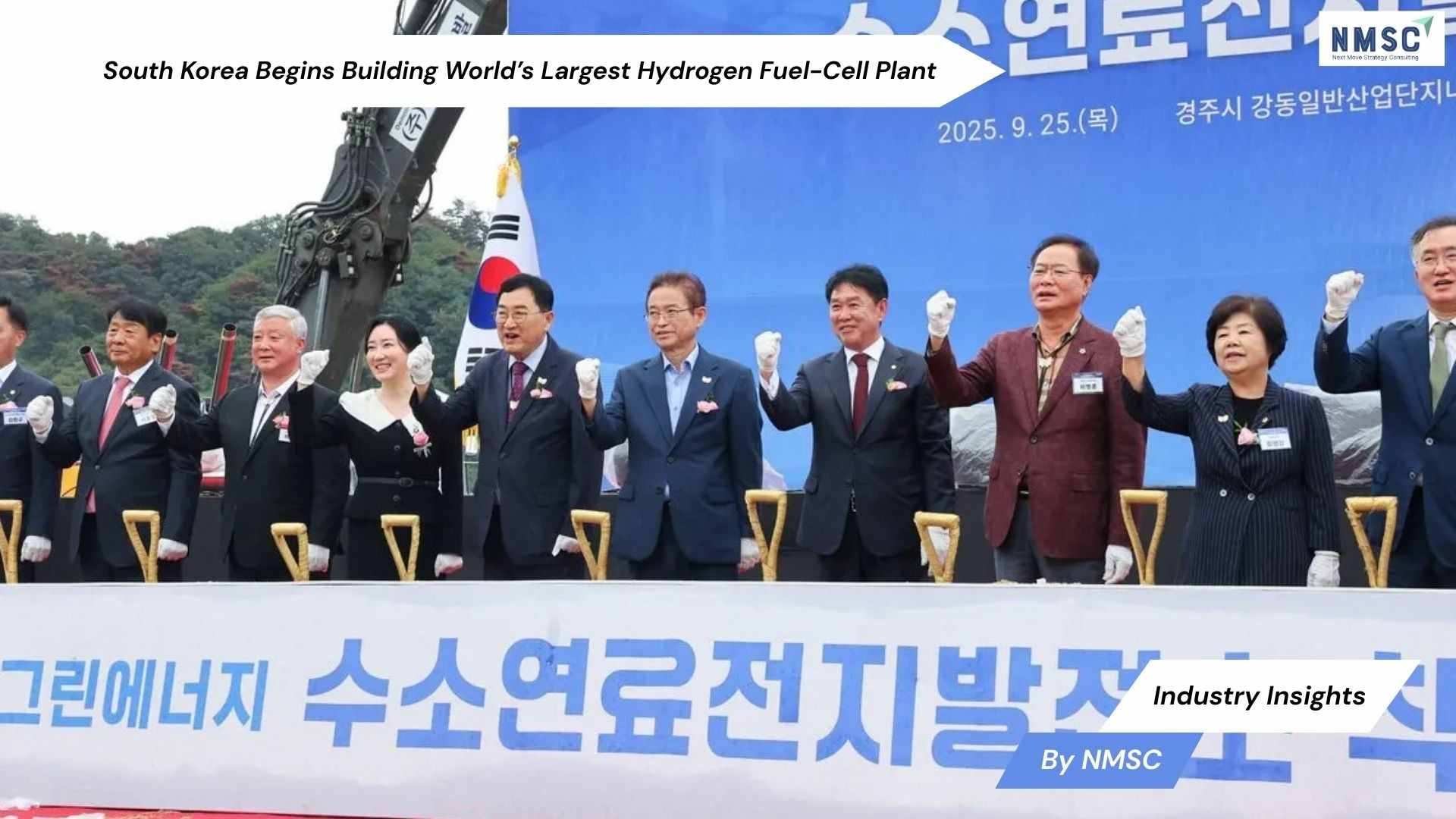
South Korea has commenced construction on what is described as the world’s largest hydrogen fuel-cell power plant — a 108MW facility designed to deliver baseload electricity by using grey hydrogen produced on site from natural gas. The project was marked by a groundbreaking ceremony attended by company executives and local dignitaries in North Gyeongsang province.
A landmark for hydrogen infrastructure
The project represents a significant infrastructure undertaking in the fuel-cell energy space. Organisers say the facility will operate as a baseload power source, relying on hydrogen manufactured at the site from natural gas feedstock. The ceremony and official coverage underscore the project’s scale and its positioning within South Korea’s broader push into hydrogen technologies.
Key facts at a glance
-
Capacity: 108MW - reported as the largest hydrogen fuel-cell power plant in the world.
-
Power role: Intended to provide baseload electricity.
-
Fuel source: Grey hydrogen produced on site from natural gas.
-
Public notice: Project and ceremony reported 26 September 2025; imagery credits reference North Gyeongsang provincial government.
Industry outlook and construction implications
This construction initiative adds a high-profile example of large-scale energy infrastructure development in South Korea. As a project built around on-site hydrogen production and fuel-cell generation, it will require specialized civil works, mechanical installations and integration of energy systems — factors that can drive demand across multiple construction disciplines.
According to Next Move Strategy Consulting
Next Move Strategy Consulting views this development as a meaningful signal for the South Korea Construction Market. Key impacts likely include:
-
A near-term uptick in demand for large-scale industrial construction services and specialist contractors familiar with energy-grade mechanical and electrical systems.
-
Increased regional construction activity in North Gyeongsang province as site works, foundations, and plant installation proceed.
-
Opportunities for local supply-chain firms and engineering contractors to participate in complex energy projects, potentially raising technical capacity and creating longer-term project pipelines for similar infrastructure.
These outcomes stem from the project’s scale and technical requirements as reported, and they point to direct linkages between major energy projects and the construction sector’s activity profile.
Source: Hydrogen Insight
Prepared By: Next Move Strategy Consulting
About the Author
 Sanyukta Deb
— Sanyukta Deb is Digital Marketing Team Lead at Next Move Strategy Consulting, where she has led content strategy and technical SEO for the firm's B2B market research publications for over 2 years. Her editorial process translates NextMSC's primary and secondary research — spanning technology, industrial, and consumer sectors — into commercial narratives, backed by search-intent, keyword, and competitive analysis. She brings 5 years of overall experience in digital marketing and content strategy.
Sanyukta Deb
— Sanyukta Deb is Digital Marketing Team Lead at Next Move Strategy Consulting, where she has led content strategy and technical SEO for the firm's B2B market research publications for over 2 years. Her editorial process translates NextMSC's primary and secondary research — spanning technology, industrial, and consumer sectors — into commercial narratives, backed by search-intent, keyword, and competitive analysis. She brings 5 years of overall experience in digital marketing and content strategy.
About the Reviewer
 Debashree Dey
— Debashree Dey is Assistant Manager at Next Move Strategy Consulting, where she supports cross-vertical market content and communications across diverse industries for 6 years. Her professional background includes senior content writing, communications, and published manuscript authorship, with experience developing audience-focused business narratives and maintaining clear, consistent messaging. Her role supports research-led content development and editorial quality across NextMSC publications.
Debashree Dey
— Debashree Dey is Assistant Manager at Next Move Strategy Consulting, where she supports cross-vertical market content and communications across diverse industries for 6 years. Her professional background includes senior content writing, communications, and published manuscript authorship, with experience developing audience-focused business narratives and maintaining clear, consistent messaging. Her role supports research-led content development and editorial quality across NextMSC publications.















Add Comment