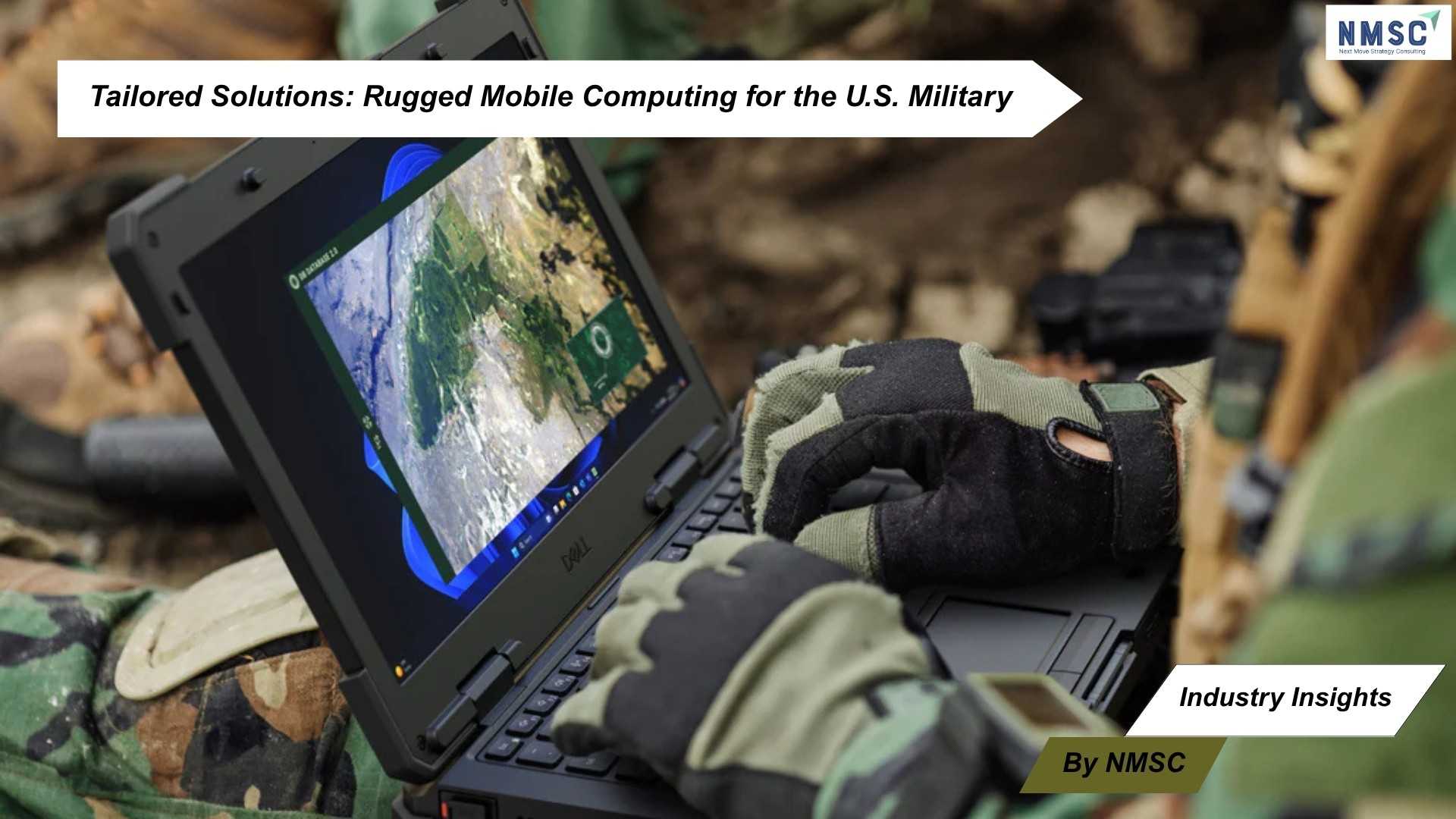
Tailored Solutions: Rugged Mobile Computing for the U.S. Military
Industry Insights from Next Move Strategy Consulting
The U.S. military’s approach to rugged military computer is defined by precision and adaptability rather than any one-size-fits-all solution. Engineers in this field must deliver systems that are not only mission-specific but also customizable to meet the varying and sometimes unexpected needs of different service branches.
Fundamental Compliance: Specs That Define “Rugged”
Entry into the military-grade computing market hinges on robust regulatory compliance. Devices must satisfy a blend of specifications and standards:
-
MIL-STD-810H: Ensures resistance to environmental extremes, from shock and vibration to humidity and temperature.
-
MIL-STD-461G: Governs electromagnetic emission and susceptibility for all DoD-backed electronics.
-
IP Ingress Protection (IPxx): Rates resistance against dust and water intrusion.
-
AS9100: Guarantees components are traceable and produced by quality-compliant suppliers.
All these standards collectively ensure that devices can genuinely endure military-grade conditions.
Beyond Compliance: Versatility in Field Conditions
In high-security or “non-comm” environments, even typically standard features like Wi-Fi or Bluetooth may be intentionally omitted to prevent signals from being intercepted. Instead, systems may rely on hard-wired connectivity—such as RJ45 or RS-232 ports—for secure communications via satellite or radio networks.
Manufacturers must therefore offer adaptable engineering—from integrating AI or legacy capabilities to stripping out features as needed—to meet varying operational requirements.
Procurement Readiness: Contracts and Longevity
Being recognized as a credible supplier in this space goes beyond product specs. Key indicators of reliability include inclusion on:
-
ID/IQ contracts
-
BPAs (Blanket Purchase Agreements)
-
GSA schedules
Alignment with a Program of Record (POR) further affirms eligibility—ensuring a manufacturer can offer consistent production and support over the long term.
Strategic Insight and Leadership
Joe Guest, President of Durabook Federal, brings over three decades of service across the U.S. Air Force, National Guard, and private-sector technology sales. His leadership exemplifies the deep domain expertise necessary to design flexible, mission-specific rugged computing solutions for the defense sector.
Conclusion
Rugged mobile computing for the U.S. military is far from standard—it demands a blend of rigorous compliance, configurability, and strategic procurement integration. Manufacturers succeed by delivering truly rugged platforms tailor-made for each mission scenario, backed by validated certifications and long-term program commitments.
Source: Military Embedded System
Prepared by: Next Move Strategy Consulting
About the Author
 Sanyukta Deb
— Sanyukta Deb is Digital Marketing Team Lead at Next Move Strategy Consulting, where she has led content strategy and technical SEO for the firm's B2B market research publications for over 2 years. Her editorial process translates NextMSC's primary and secondary research — spanning technology, industrial, and consumer sectors — into commercial narratives, backed by search-intent, keyword, and competitive analysis. She brings 5 years of overall experience in digital marketing and content strategy.
Sanyukta Deb
— Sanyukta Deb is Digital Marketing Team Lead at Next Move Strategy Consulting, where she has led content strategy and technical SEO for the firm's B2B market research publications for over 2 years. Her editorial process translates NextMSC's primary and secondary research — spanning technology, industrial, and consumer sectors — into commercial narratives, backed by search-intent, keyword, and competitive analysis. She brings 5 years of overall experience in digital marketing and content strategy.
About the Reviewer
 Debashree Dey
— Debashree Dey is Assistant Manager at Next Move Strategy Consulting, where she supports cross-vertical market content and communications across diverse industries for 6 years. Her professional background includes senior content writing, communications, and published manuscript authorship, with experience developing audience-focused business narratives and maintaining clear, consistent messaging. Her role supports research-led content development and editorial quality across NextMSC publications.
Debashree Dey
— Debashree Dey is Assistant Manager at Next Move Strategy Consulting, where she supports cross-vertical market content and communications across diverse industries for 6 years. Her professional background includes senior content writing, communications, and published manuscript authorship, with experience developing audience-focused business narratives and maintaining clear, consistent messaging. Her role supports research-led content development and editorial quality across NextMSC publications.

















Add Comment