Trump Cuts Aluminum Tariffs for Onshoring Pledges
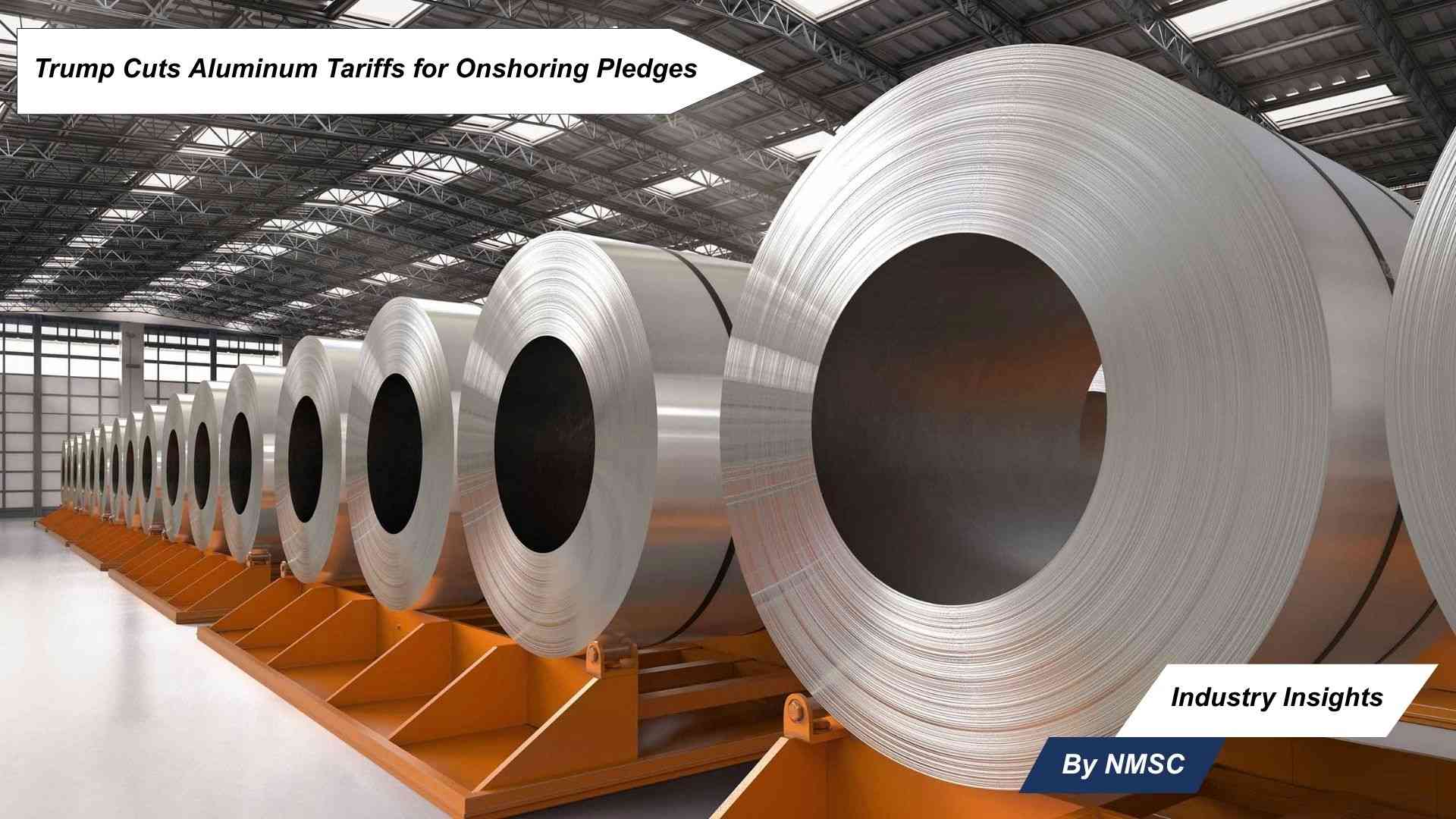
Trump Signs Proclamation to Halve Aluminum Import Tariffs for Domestic Production Pledges
WASHINGTON, D.C., United States — July 21, 2026 — President Donald Trump signed a proclamation on Monday offering to reduce the existing 50% Section 232 tariff on aluminum imports to 25% for companies that commit to investing in domestic U.S. aluminum production facilities, a move that carries significant implications for the global aluminum industry and its supply chain stakeholders.
Main Development
The proclamation, signed July 20, 2026, directs Commerce Secretary Howard Lutnick to establish a formal application program through which aluminum importers may qualify for the reduced tariff rate. To be eligible, companies must submit commercially viable plans to build, refurbish, or expand U.S. aluminum production facilities and commit to beginning construction no later than January 20, 2029.
Once approved, the tariff burden will be halved on a volume of aluminum imports that corresponds to each company's projected domestic production levels. The Commerce Department retains authority to evaluate additional factors, including commercial feasibility and anticipated annual output, prior to granting approval.
The latest action builds on a similar program established earlier in 2026 for steel and aluminum producers based in Canada and Mexico, which offered comparable tariff relief in exchange for commitments to invest in U.S. manufacturing. Unlike the earlier program, Monday's proclamation extends eligibility beyond North American suppliers to a broader set of global importers.
Century Aluminum, one of the few remaining primary aluminum producers in the United States, publicly applauded the executive action, noting that the reduced tariff rate creates a more competitive environment for companies willing to commit capital to domestic capacity expansion.
The White House did not immediately provide further details on the program's implementation timeline or additional documentation requirements.
Key Highlights:
-
President Trump signed a proclamation on July 20, 2026, offering to reduce aluminum import tariffs from 50% to 25% for qualifying companies.
-
Eligibility requires submission of plans to build, refurbish, or expand U.S. aluminum facilities, with construction to begin by January 20, 2029.
-
Commerce Secretary Howard Lutnick will administer the application program, evaluating commercial feasibility and projected production levels.
-
The measure extends a similar tariff-relief framework previously established for Canadian and Mexican aluminum and steel producers.
Analyst Insight:
According to analysts at Next Move Strategy Consulting, the Trump administration's onshoring incentive arrives at a strategically significant moment for the global aluminum industry. The aluminum market is valued at USD 306.17 billion in 2026 and is projected to reach USD 503.43 billion by 2035, expanding at a CAGR of 5.68% over the forecast period.
NMSC analysts note that North America currently accounts for approximately 10.94% of global aluminum demand, with the U.S. market specifically projected to grow at a CAGR of 6.01%, driven by automotive electrification, infrastructure modernization, and packaging demand. The tariff relief program, if widely adopted, could accelerate domestic capacity investment and reduce the region's import dependency, particularly as reshoring initiatives and investments in domestic rolling capacities are already strengthening supply security across North America.
Industry Outlook:
The Trump administration's conditional tariff reduction signals a structural shift in U.S. trade policy toward incentive-based industrial onshoring rather than blanket protectionism. For the broader aluminum industry, the measure introduces a new variable in global supply chain planning, as international producers must now weigh the cost-benefit of committing to U.S. facility investments against the ongoing 50% tariff burden.
With Asia-Pacific dominating global aluminum production at a 67.95% market share in 2025 and the U.S. market projected to grow at a CAGR of 6.01%, the policy could catalyze a meaningful rebalancing of North American production capacity over the medium term. Producers that act early to secure program approval may gain a durable competitive advantage in the world's largest single-country aluminum consumption market.
Source: Supply Chain Dive
For More Information – Download FREE Sample on Aluminium Market Report
Prepared By: Sanyukta Deb
About the Author
 Sanyukta Deb
— Sanyukta Deb is Digital Marketing Team Lead at Next Move Strategy Consulting, where she has led content strategy and technical SEO for the firm's B2B market research publications for over 2 years. Her editorial process translates NextMSC's primary and secondary research — spanning technology, industrial, and consumer sectors — into commercial narratives, backed by search-intent, keyword, and competitive analysis. She brings 5 years of overall experience in digital marketing and content strategy.
Sanyukta Deb
— Sanyukta Deb is Digital Marketing Team Lead at Next Move Strategy Consulting, where she has led content strategy and technical SEO for the firm's B2B market research publications for over 2 years. Her editorial process translates NextMSC's primary and secondary research — spanning technology, industrial, and consumer sectors — into commercial narratives, backed by search-intent, keyword, and competitive analysis. She brings 5 years of overall experience in digital marketing and content strategy.
About the Reviewer
 Debashree Dey
— Debashree Dey is Assistant Manager at Next Move Strategy Consulting, where she supports cross-vertical market content and communications across diverse industries for 6 years. Her professional background includes senior content writing, communications, and published manuscript authorship, with experience developing audience-focused business narratives and maintaining clear, consistent messaging. Her role supports research-led content development and editorial quality across NextMSC publications.
Debashree Dey
— Debashree Dey is Assistant Manager at Next Move Strategy Consulting, where she supports cross-vertical market content and communications across diverse industries for 6 years. Her professional background includes senior content writing, communications, and published manuscript authorship, with experience developing audience-focused business narratives and maintaining clear, consistent messaging. Her role supports research-led content development and editorial quality across NextMSC publications.


















Add Comment