Ukraine Drone Strikes Reshape Modern Warfare Strategy
Drone Strikes on Aviation Facilities Trigger Strategic Shift in Global Defense Market Update
KYIV, Ukraine — May 4, 2026 — As the conflict between Ukraine and Russia continues to evolve, Ukraine’s recent drone-led strikes on critical Russian aviation infrastructure mark a significant turning point in modern warfare strategy. By successfully targeting high-value aircraft production and repair facilities, Ukraine is demonstrating the increasing effectiveness of long-range unmanned aerial systems in disrupting military capabilities.
A Strategic Shift Toward Precision Drone Warfare
Ukraine recently reported successful strikes on two major Russian aviation facilities, including the Aviastar aircraft manufacturing plant in the Ulyanovsk region. The site, owned by United Aircraft Corporation, plays a crucial role in producing heavy military transport aircraft. The attack reportedly targeted aircraft shelters and parking areas, highlighting a shift toward precision-based infrastructure disruption.
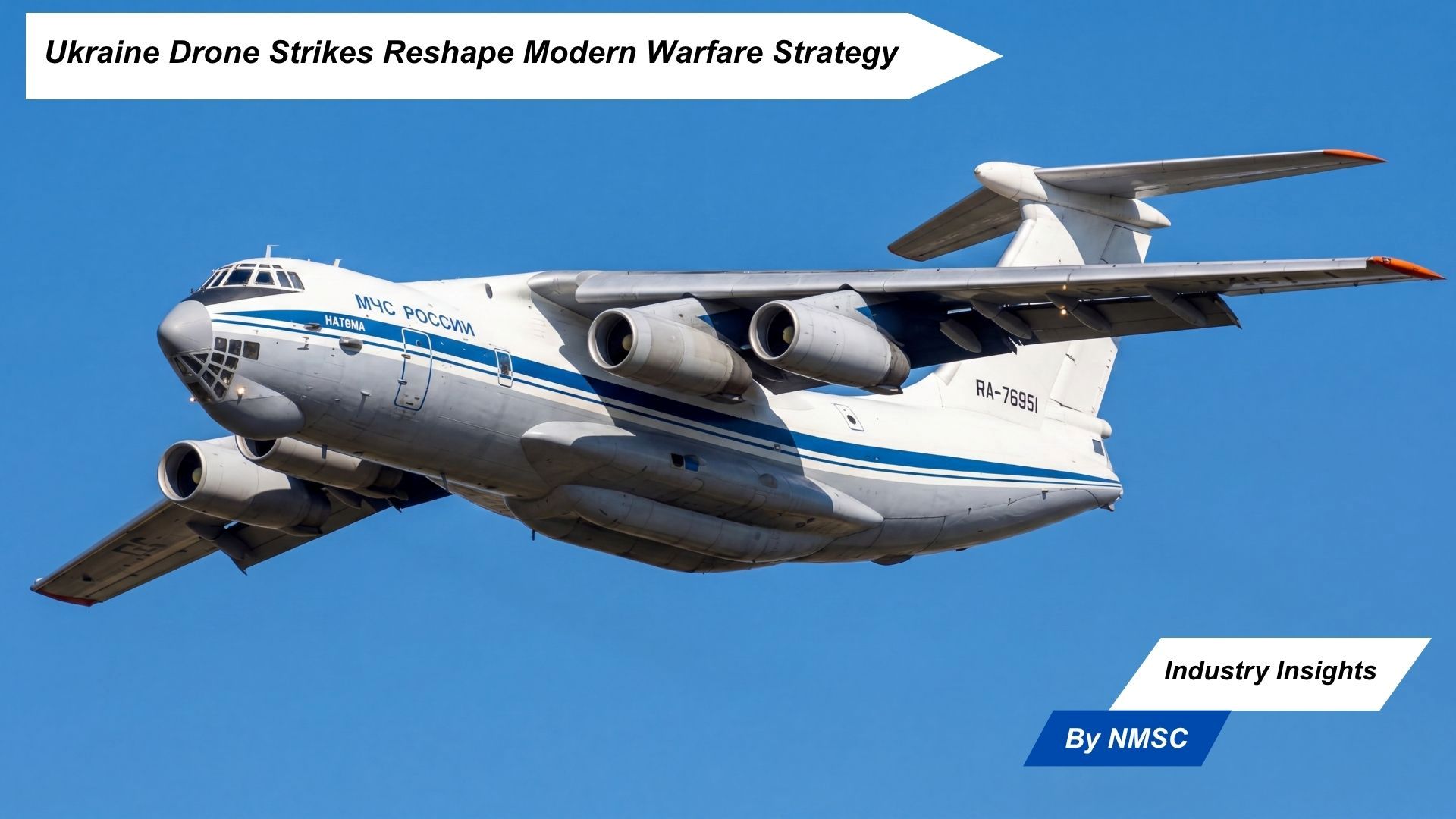
Located approximately 800 kilometers from the Ukrainian border, the strike underscores Ukraine’s expanding long-range operational capabilities. Aviastar is notably the largest aircraft manufacturing facility in Russia, responsible for producing the Il-76 strategic transport aircraft, while also historically associated with the Tu-204 and An-124 Ruslan aircraft.
Expanding Target Scope: Aircraft Repair Facilities Hit
In a follow-up operation, Ukraine claimed to have struck the 123rd Aircraft Repair Plant in Staraya Russa, located in Russia’s Novgorod region. The facility is vital for maintaining and servicing key aircraft such as the Il-76 and L-410, along with strategic airlifters and aerial refueling tankers.
Satellite imagery reportedly confirmed damage to one of the plant’s main hangars, reinforcing claims of a successful strike. Ukrainian drone forces emphasized that targeting such facilities directly impacts the adversary’s ability to restore and maintain combat-ready aircraft.
Local sources indicated that multiple UAVs were involved in the attack, with some reportedly intercepted. Despite this, the extent of damage suggests that Ukraine’s drone operations are becoming increasingly sophisticated and difficult to counter.
Increasing Focus on Ground-Based Aircraft Destruction
As the war enters its fifth year, there has been a noticeable transition in how Russian aircraft are being neutralized. Earlier phases of the conflict saw a higher number of aircraft shot down during operations. However, recent developments indicate a growing emphasis on targeting aircraft while they are grounded.
This approach has yielded significant results. In 2025, Ukraine is estimated to have destroyed approximately 20% of Russia’s operational strategic bomber fleet during a coordinated campaign. These efforts are part of a broader initiative to weaken aerial capabilities through targeted drone strikes on parked and vulnerable assets.
Further reports suggest continued attacks into 2026, including strikes on specialized aircraft such as airborne early warning and control platforms. While some of these assets may have been non-operational, the psychological and strategic impact remains substantial.
Weakening Air Defenses Enabling Deeper Penetration
A critical factor contributing to Ukraine’s growing success is its increasing ability to target and degrade Russian air defense systems. In 2026, there has been a notable rise in successful strikes against systems such as Pantsir, Tor, Buk, and S-300/S-400 platforms.
If this trend continues, it could lead to widening gaps in Russia’s air defense coverage, allowing for deeper and more frequent drone incursions. This evolving dynamic suggests that drone warfare is not only augmenting traditional military tactics but also reshaping the effectiveness of defensive infrastructure.
Next Move Strategy Consulting’s View
According to Next Move Strategy Consulting, developments such as these are accelerating global interest and investment in drone technologies. The increasing reliance on unmanned systems for surveillance, precision strikes, and strategic disruption is expected to drive significant growth in the Drone Market.
The firm highlights that modern conflicts are demonstrating the cost-effectiveness, scalability, and operational flexibility of drones compared to conventional military assets. As nations observe the impact of such technologies in real-world scenarios, demand for advanced UAV systems, counter-drone solutions, and integrated defense platforms is projected to rise.
Redefining the Future of Defense Operations
Ukraine’s recent strikes illustrate a broader transformation in military strategy, where agility, precision, and technological innovation are becoming decisive factors. The ability to target critical infrastructure deep within adversary territory using drones signals a new era in warfare.
As drone capabilities continue to advance and air defense vulnerabilities are exposed, the global defense landscape is likely to undergo further disruption. These developments not only reshape battlefield dynamics but also influence long-term defense planning and investment priorities.
Source: Aerospace Global News
Prepared by: Tania Dey


















Add Comment