U.S. Navy’s Next-Generation Anti-Radar Missile Program
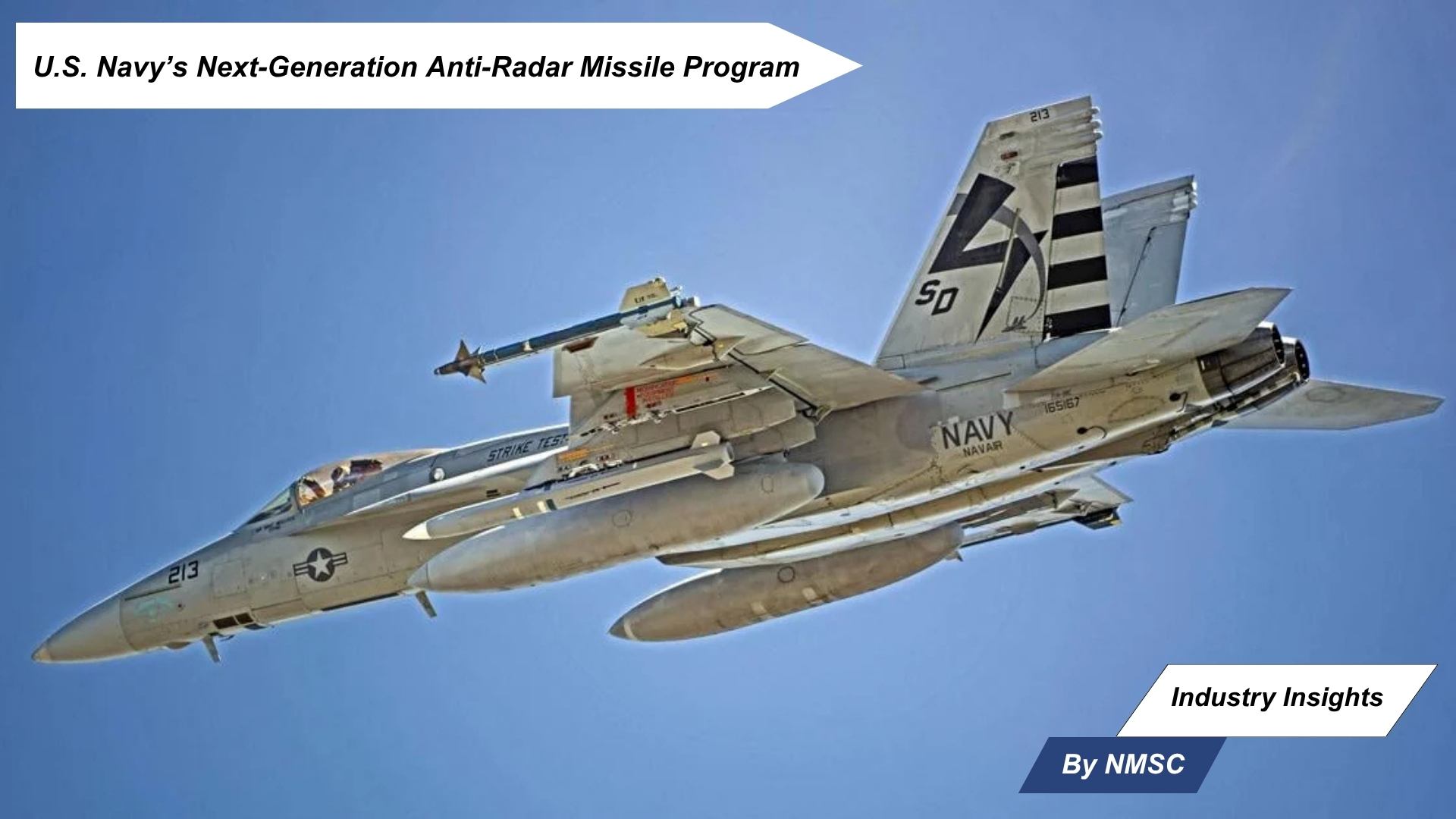
Industry Insights from Next Move Strategy Consulting
Amid shifting defense priorities and evolving operational considerations, the U.S. Navy has initiated a strategic pause in the development of its next-generation anti-radar missile program. The decision reflects a recalibration of priorities within modern naval warfare, where adaptability and alignment with broader mission objectives remain critical.
A Strategic Reassessment of Advanced Radar Suppression Capabilities
The anti-radar missile initiative was envisioned as a key advancement in countering enemy radar systems, enhancing the Navy’s ability to operate in contested environments. However, the program’s pause signals a deliberate reassessment rather than a cancellation, allowing stakeholders to evaluate its role within the broader defense ecosystem.
This move underscores the complexity of integrating next-generation technologies into evolving military strategies. As threats continue to diversify, ensuring that advanced weapon systems align with long-term operational needs has become increasingly important.
Balancing Innovation with Operational Priorities
The decision to halt progress temporarily highlights the Navy’s focus on aligning technological innovation with mission-critical demands. While anti-radar capabilities remain essential for suppressing adversary defenses, the pause suggests a need to refine program objectives, timelines, or resource allocation.
Such strategic pauses are not uncommon in defense development cycles, particularly when emerging technologies must be reassessed against changing geopolitical and operational landscapes.
Industry Response and Strategic Outlook
The development has drawn attention across the defense sector, particularly among stakeholders monitoring advancements in electronic warfare and radar suppression systems. The pause may influence procurement strategies and future investments, as defense agencies seek to prioritize systems that deliver immediate and scalable operational value.
According to Next Move Strategy Consulting, this development reflects a broader Radar Industry trend where defense programs are increasingly subject to rigorous evaluation to ensure alignment with evolving mission requirements and fiscal considerations.
Navigating the Future of Radar Countermeasure Technologies
As the U.S. Navy reassesses its anti-radar missile program, the focus remains on achieving a balance between innovation and strategic necessity. The pause provides an opportunity to refine capabilities, ensuring that future systems deliver enhanced effectiveness in complex operational environments.
In an era defined by rapid technological advancement and dynamic threat landscapes, such decisions highlight the importance of agility in defense planning. The outcome of this reassessment is expected to shape the future trajectory of radar countermeasure technologies within naval operations.
Source: Naval News
Prepared by: Next Move Strategy Consulting
About the Author
 Prakhyat Chowdhury
— Prakhyat Chowdhury is a results-driven Market Analyst and data strategist specializing in business intelligence, trend forecasting, and performance-focused market growth. His competitive intelligence frameworks, and data-driven insights enhances strategic planning, operational efficiency, and organizational authority. Known for strong communication, analytical thinking, and multilingual proficiency, he delivers rigorous, objective-led solutions that support scalable business outcomes across industries with professionalism. He consistently aligns quantitative and qualitative analysis with global business goals.
Prakhyat Chowdhury
— Prakhyat Chowdhury is a results-driven Market Analyst and data strategist specializing in business intelligence, trend forecasting, and performance-focused market growth. His competitive intelligence frameworks, and data-driven insights enhances strategic planning, operational efficiency, and organizational authority. Known for strong communication, analytical thinking, and multilingual proficiency, he delivers rigorous, objective-led solutions that support scalable business outcomes across industries with professionalism. He consistently aligns quantitative and qualitative analysis with global business goals.
About the Reviewer
 Sanyukta Deb
— Sanyukta Deb is Digital Marketing Team Lead at Next Move Strategy Consulting, where she has led content strategy and technical SEO for the firm's B2B market research publications for over 2 years. Her editorial process translates NextMSC's primary and secondary research — spanning technology, industrial, and consumer sectors — into commercial narratives, backed by search-intent, keyword, and competitive analysis. She brings 5 years of overall experience in digital marketing and content strategy.
Sanyukta Deb
— Sanyukta Deb is Digital Marketing Team Lead at Next Move Strategy Consulting, where she has led content strategy and technical SEO for the firm's B2B market research publications for over 2 years. Her editorial process translates NextMSC's primary and secondary research — spanning technology, industrial, and consumer sectors — into commercial narratives, backed by search-intent, keyword, and competitive analysis. She brings 5 years of overall experience in digital marketing and content strategy.


















Add Comment