USDA Opens Comment Period on Bayer's GE Cotton Varieties
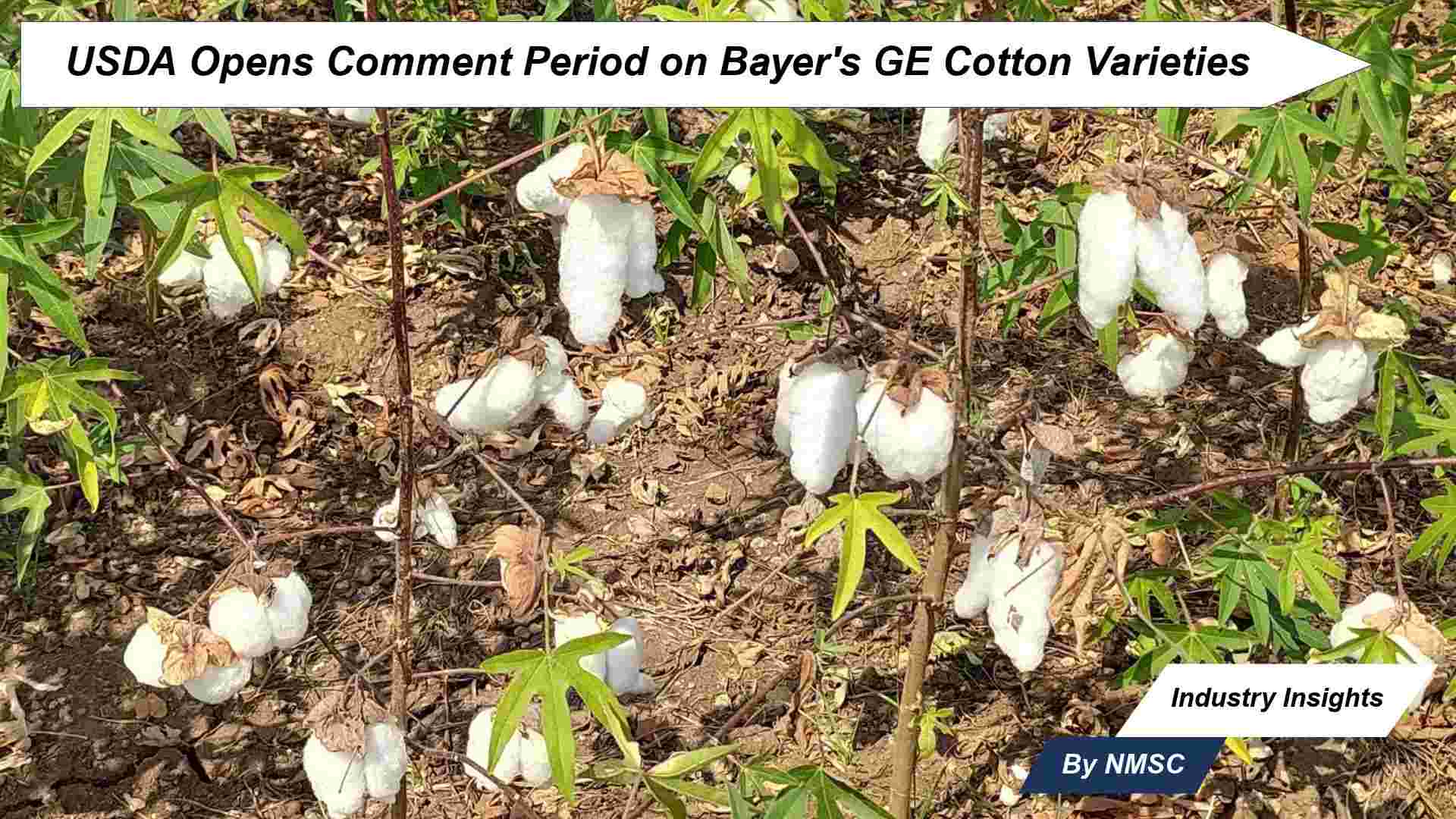
USDA APHIS Seeks Public Input on Bayer's Herbicide- and Pest-Resistant GE Cotton Petitions
WASHINGTON, D.C., United States September 30, 2026, the U.S. Department of Agriculture's Animal and Plant Health Inspection Service (APHIS) has opened a 60-day public comment period on two petitions filed by Bayer Crop Science LLC to deregulate genetically engineered (GE) cotton varieties, a regulatory development with direct implications for the expanding Agricultural Biotechnology Market. The move signals continued momentum in the regulatory pipeline for next-generation biotech crop traits in the United States.
The first petition covers Mon 96012 cotton, engineered to resist five distinct herbicide groups including glyphosate, glufosinate, dicamba, triketone HPPD-inhibiting, and PPO-inhibiting herbicides. The second petition addresses a GE cotton variety designed to protect against a broad spectrum of lepidopteran pests, including tobacco budworm, cotton bollworm, old world bollworm, Australian budworm, fall armyworm, and soybean looper.
USDA APHIS has invited stakeholders, scientists, and the general public to submit comments and scientific information on both petitions and their accompanying draft Plant Pest Risk Assessments (PPRAs) through November 20, 2026. Comments may be submitted via docket numbers APHIS-2026-1387 for the herbicide-resistant variety and APHIS-2026-0859 for the insect-resistant variety.
The regulatory action comes as the global agricultural biotechnology market, valued at USD 67.5 billion in 2026, is projected to reach USD 168.0 billion by 2035, expanding at a compound annual growth rate (CAGR) of 10.7%, according to Next Move Strategy Consulting. North America leads the global market with approximately 34% revenue share, underpinned by decades of mature biotech seed adoption and an active regulatory framework administered by USDA APHIS.
Key Highlights:
-
Dual-petition scope: Bayer Crop Science LLC has filed two separate deregulation petitions one for multi-herbicide-resistant cotton (Mon 96012) and one for cotton resistant to six major lepidopteran pest species.
-
Public comment window: The comment period runs from September 21 to November 20, 2026, with submissions accepted under designated APHIS docket numbers for each petition.
-
Market context: Plant Biotechnology the segment encompassing biotech seeds and biologicals held the largest product-category share at approximately 60% (USD 37.20 billion) of the global agricultural biotechnology market in 2025, with Crop Production generating USD 39.50 billion in application revenue.
-
Regulatory framework: USDA APHIS's streamlined biotechnology review pathway continues to serve as a primary mechanism for accelerating the commercialization of GE crop traits in the United States.
Analyst Insight:
According to analysts at Next Move Strategy Consulting, regulatory easing for gene-edited and genetically engineered crops is among the most significant structural drivers of the agricultural biotechnology market, contributing an estimated +2.4% impact on CAGR across North America and Europe through 2032. NMSC analysts note that USDA APHIS's active deregulation pipeline exemplified by the current Bayer petitions is shortening time-to-market for new biotech traits by several years relative to historical transgenic approval timelines, a trend that is expected to reinforce North America's dominant market position through 2035. The analysts further observe that stacked-trait cotton varieties combining herbicide tolerance and insect resistance represent a commercially mature and high-demand product category, with farmer adoption of GE varieties in corn, cotton, and soybeans now exceeding 90% of total U.S. acreage.
Industry Outlook:
The USDA APHIS public comment process for Bayer's two GE cotton petitions reflects the continued maturation of the U.S. regulatory framework for agricultural biotechnology, where transparent stakeholder engagement is a prerequisite for commercial deregulation. As the global agricultural biotechnology market advances toward its projected USD 168.0 billion valuation by 2035, regulatory clarity in major producing nations will remain a critical enabler of trait commercialization and market expansion.
The outcome of these petitions is expected to influence the competitive positioning of herbicide-tolerant and insect-resistant cotton trait portfolios in the United States, with broader implications for global cotton-producing markets where similar regulatory frameworks are evolving. With gene editing identified as the fastest-growing technology platform at an 18.9% CAGR from 2026 to 2035, and Asia-Pacific emerging as the fastest-growing regional market at a 14.0% CAGR, the regulatory precedents established in the U.S. are likely to inform approval frameworks across multiple jurisdictions in the years ahead.
Source: ISAAA Biotech Updates
For More Information: Download FREE Sample on Agricultural Biotechnology Market Report
Prepared By: Sanyukta Deb
About the Author
 Sanyukta Deb
— Sanyukta Deb is Digital Marketing Team Lead at Next Move Strategy Consulting, where she has led content strategy and technical SEO for the firm's B2B market research publications for over 2 years. Her editorial process translates NextMSC's primary and secondary research — spanning technology, industrial, and consumer sectors — into commercial narratives, backed by search-intent, keyword, and competitive analysis. She brings 5 years of overall experience in digital marketing and content strategy.
Sanyukta Deb
— Sanyukta Deb is Digital Marketing Team Lead at Next Move Strategy Consulting, where she has led content strategy and technical SEO for the firm's B2B market research publications for over 2 years. Her editorial process translates NextMSC's primary and secondary research — spanning technology, industrial, and consumer sectors — into commercial narratives, backed by search-intent, keyword, and competitive analysis. She brings 5 years of overall experience in digital marketing and content strategy.
About the Reviewer
 Debashree Dey
— Debashree Dey is Assistant Manager at Next Move Strategy Consulting, where she supports cross-vertical market content and communications across diverse industries for 6 years. Her professional background includes senior content writing, communications, and published manuscript authorship, with experience developing audience-focused business narratives and maintaining clear, consistent messaging. Her role supports research-led content development and editorial quality across NextMSC publications.
Debashree Dey
— Debashree Dey is Assistant Manager at Next Move Strategy Consulting, where she supports cross-vertical market content and communications across diverse industries for 6 years. Her professional background includes senior content writing, communications, and published manuscript authorship, with experience developing audience-focused business narratives and maintaining clear, consistent messaging. Her role supports research-led content development and editorial quality across NextMSC publications.

















Add Comment