Voestalpine Boosts Hydrogen Capacity at H2FUTURE Plant
Industry Insights from Next Move Strategy Consulting
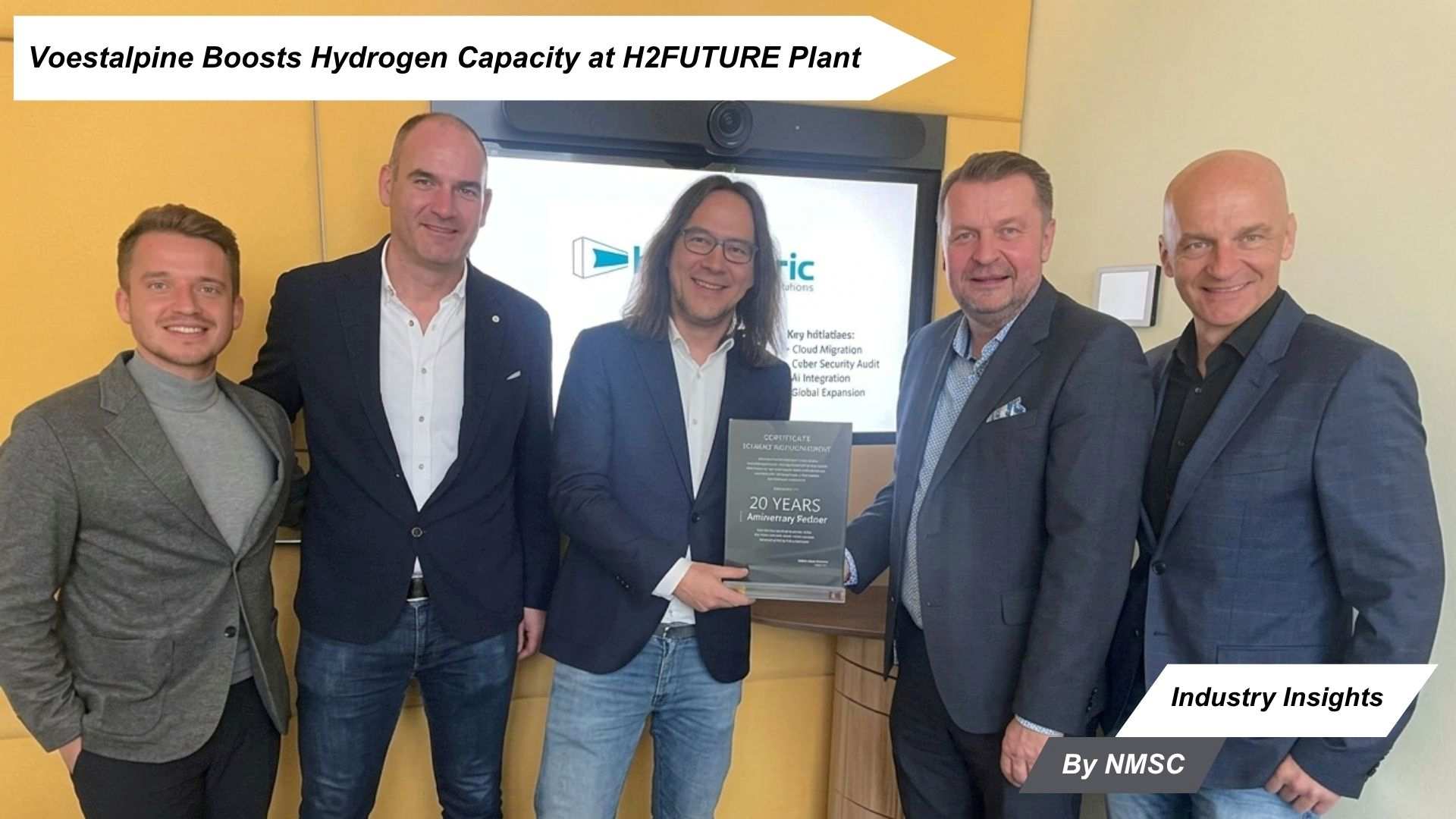
As industries accelerate their transition toward low-carbon operations, voestalpine’s latest investment in hydrogen infrastructure marks a significant advancement in sustainable steelmaking. The installation of Hiperbaric’s high-pressure hydrogen compression technology at the H2FUTURE plant in Linz reinforces the facility’s role as a global benchmark for industrial-scale green hydrogen production and application.
Strengthening Hydrogen Infrastructure with Advanced Compression
Voestalpine, a globally recognized steel and technology group, has deployed two high-pressure compressor units from Hiperbaric at its Linz site. This integration enhances the plant’s ability to process green hydrogen generated through PEM electrolysis at H2FUTURE one of the world’s longest-operating hydrogen pilot plants focused on industrial applications and research.
The installed system, based on Hiperbaric’s KS50 PRO model, enables hydrogen compression up to 500 bar while maintaining stringent safety, efficiency, and purity standards. This capability is essential for enabling storage and downstream use of hydrogen in advanced processes such as HYFOR®, which is designed to gradually replace fossil fuels with cleaner energy sources in steel production.
Driving Innovation in Low-Emission Steel Production
Operating from its headquarters in Linz, voestalpine continues to push the boundaries of sustainable steelmaking. The company has already achieved notable milestones, including the production of the world’s first railway rail manufactured using green hydrogen. These efforts align with its long-term objective of achieving net-zero CO2 emissions in steel production by 2050.
The H2FUTURE initiative plays a critical role in this transition by enabling research into replacing conventional fossil fuels with green hydrogen in industrial processes. Through ongoing collaboration with partners across industry and academia, voestalpine is actively developing next-generation steel production technologies that prioritize sustainability and efficiency.
Eco-Design Integration and Emissions Reduction
A key aspect of this collaboration lies in the integration of voestalpine’s greentec steel Edition into Hiperbaric’s high-pressure equipment manufacturing. This approach has resulted in a cumulative reduction of approximately 430 tonnes of CO2e emissions.
Voestalpine’s optimized production processes reduce emissions by up to 10% at its Linz facility using the traditional blast furnace route. This lower carbon footprint directly supports Hiperbaric in minimizing its Scope 3 emissions, with transparency ensured through an allocation model validated by independent third parties (LRQA).
Hiperbaric emphasizes that the use of low-emission steel is central to achieving both technical excellence and sustainability in its high-pressure systems, reinforcing the importance of material selection in advanced industrial technologies.
A Circular Model of Industrial Sustainability
The collaboration between voestalpine and Hiperbaric represents a closed-loop model of industrial sustainability. While voestalpine leverages Hiperbaric’s compression technology to scale hydrogen utilization, Hiperbaric incorporates voestalpine’s sustainable steel into its manufacturing processes.
This mutually reinforcing partnership is built on over 15 years of collaboration, highlighting a long-standing commitment to innovation, supply chain integration, and shared environmental goals. The alliance strengthens both companies’ competitiveness while advancing the broader vision of climate-neutral heavy industry.
Industry Outlook: Hydrogen Market Gains Momentum
According to Next Move Strategy Consulting, developments such as the H2FUTURE project underscore the accelerating momentum of the global Hydrogen Market. Increasing investments in green hydrogen infrastructure, coupled with advancements in storage and compression technologies, are driving the adoption of hydrogen as a viable alternative to fossil fuels in energy-intensive sectors.
The integration of hydrogen into steel production exemplifies a broader industry shift toward decarbonization, where scalable solutions and cross-industry partnerships are critical. As organizations continue to explore innovative applications of hydrogen, technologies that enhance efficiency, safety, and sustainability are expected to shape the next phase of industrial transformation.
Advancing Toward a Low-Carbon Industrial Future
Voestalpine’s deployment of high-pressure hydrogen compression technology at H2FUTURE signals a decisive step forward in the evolution of sustainable manufacturing. By combining advanced engineering with low-emission materials and strategic collaboration, the initiative demonstrates how hydrogen can be effectively integrated into large-scale industrial operations.
As the global push for decarbonization intensifies, projects like H2FUTURE highlight the potential of hydrogen to redefine traditional industries and pave the way for a more sustainable and resilient future.
Source: Fuel Cell Works
Prepared by: Next Move Strategy Consulting
About the Author
 Sanyukta Deb
— Sanyukta Deb is Digital Marketing Team Lead at Next Move Strategy Consulting, where she has led content strategy and technical SEO for the firm's B2B market research publications for over 2 years. Her editorial process translates NextMSC's primary and secondary research — spanning technology, industrial, and consumer sectors — into commercial narratives, backed by search-intent, keyword, and competitive analysis. She brings 5 years of overall experience in digital marketing and content strategy.
Sanyukta Deb
— Sanyukta Deb is Digital Marketing Team Lead at Next Move Strategy Consulting, where she has led content strategy and technical SEO for the firm's B2B market research publications for over 2 years. Her editorial process translates NextMSC's primary and secondary research — spanning technology, industrial, and consumer sectors — into commercial narratives, backed by search-intent, keyword, and competitive analysis. She brings 5 years of overall experience in digital marketing and content strategy.
About the Reviewer
 Debashree Dey
— Debashree Dey is Assistant Manager at Next Move Strategy Consulting, where she supports cross-vertical market content and communications across diverse industries for 6 years. Her professional background includes senior content writing, communications, and published manuscript authorship, with experience developing audience-focused business narratives and maintaining clear, consistent messaging. Her role supports research-led content development and editorial quality across NextMSC publications.
Debashree Dey
— Debashree Dey is Assistant Manager at Next Move Strategy Consulting, where she supports cross-vertical market content and communications across diverse industries for 6 years. Her professional background includes senior content writing, communications, and published manuscript authorship, with experience developing audience-focused business narratives and maintaining clear, consistent messaging. Her role supports research-led content development and editorial quality across NextMSC publications.















Add Comment