WHO Precision Medicine Mandate Reshapes Genetic Testing

World Health Assembly's Landmark Precision Medicine Resolution Accelerates Global Demand for Genetic Testing as Market Targets USD 67.12 Billion by 2030
On May 22, 2026, the 79th World Health Assembly (WHA) endorsed Resolution WHA79.8, titled "Precision medicine: a path towards targeted, personalized and equitable care," marking the most consequential multilateral commitment to genomic medicine in the history of the United Nations health system. The resolution, adopted by WHO Member States, establishes a formal mandate for governments to integrate precision medicine — anchored in genomic data, molecular diagnostics, and clinical biomarkers — into national health systems, with an explicit emphasis on equitable access across low- and middle-income countries.
"Precision medicine is not an aspirational idea for health delivery in the future — it is already transforming lives across the world," stated Dr. Meg Doherty, Director of Science for Health at WHO. "This WHA resolution gives global health leaders, ministries of health, and WHO a clear mandate: to act."
The resolution's scope is sweeping. Member States have committed to developing national policies, infrastructure, workforce capacity, and governance frameworks to support the safe, ethical, and equitable integration of precision medicine into health systems aligned with universal health coverage. WHO has been tasked with developing a Global Strategy on Precision Medicine and deploying a country maturity model to guide context-appropriate implementation.
For the global Genetic Testing Market, this resolution represents a structural demand catalyst of the highest institutional order — one that is expected to accelerate clinical adoption, expand reimbursement frameworks, and drive public investment in genomic infrastructure across more than 190 WHO Member States.
For More Information: Download FREE Sample on Genetic Testing Market Report
A Market at Inflection: Scale, Velocity, and Clinical Depth
The genetic testing industry is entering a decisive phase of expansion. Projected to reach USD 30.1 billion in 2025, the market is forecast to more than double to USD 67.12 billion by 2030, registering a compound annual growth rate (CAGR) of 17.4% over the 2025–2030 forecast period, according to analysis by Next Move Strategy Consulting (NMSC).
This trajectory is underpinned by three converging forces: the sustained decline in next-generation sequencing (NGS) costs, the deepening integration of genomic data into electronic health records (EHRs) and clinical decision support systems, and the growing burden of chronic and hereditary diseases that demand early, precise diagnosis.
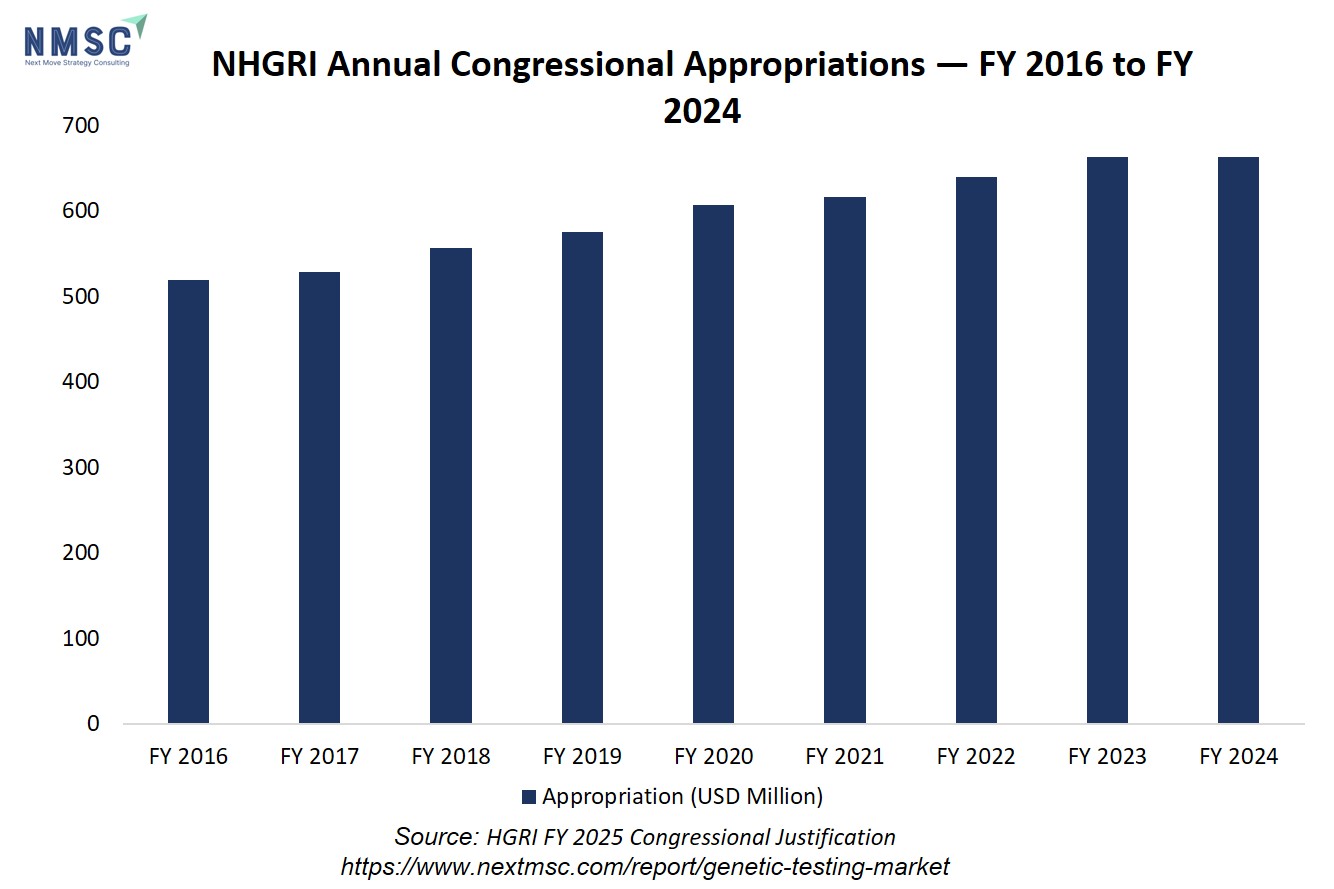
According to the National Human Genome Research Institute (NHGRI), the cost of sequencing a human genome has declined from approximately USD 95 million in 2001 to below USD 1,000 by 2020 — a reduction that has outpaced Moore's Law and fundamentally altered the economics of clinical genomics.
WHO Resolution Elevates Genomics to a Global Policy Priority
The WHA79.8 resolution is not merely symbolic. It establishes a binding framework under which WHO Member States commit to five operational pillars: advancing personalized medicine through genomic and biomarker integration; promoting equitable access in low- and middle-income countries; strengthening national genomic infrastructure and human resources; reinforcing regulatory and data governance frameworks; and fostering international cooperation for evidence and data exchange.
The Pan American Health Organization (PAHO), in its June 19, 2026 communiqué, noted that the resolution "reflects the growing importance of genomics in biomedical and digital innovation in global health" and is directly linked to digital health, artificial intelligence, and universal health coverage agendas.
The resolution's emphasis on equity is particularly significant. WHO has explicitly acknowledged that "many populations — especially in low- and middle-income countries — remain underrepresented in data and research, which limits the public health impact of precision medicine and may widen health inequalities if no action is taken now." This acknowledgment is expected to catalyze new public funding streams, international partnerships, and regulatory harmonization efforts that will directly benefit clinical genomics providers operating across emerging markets.
Oncology Testing: The Market's Largest and Fastest-Growing Segment
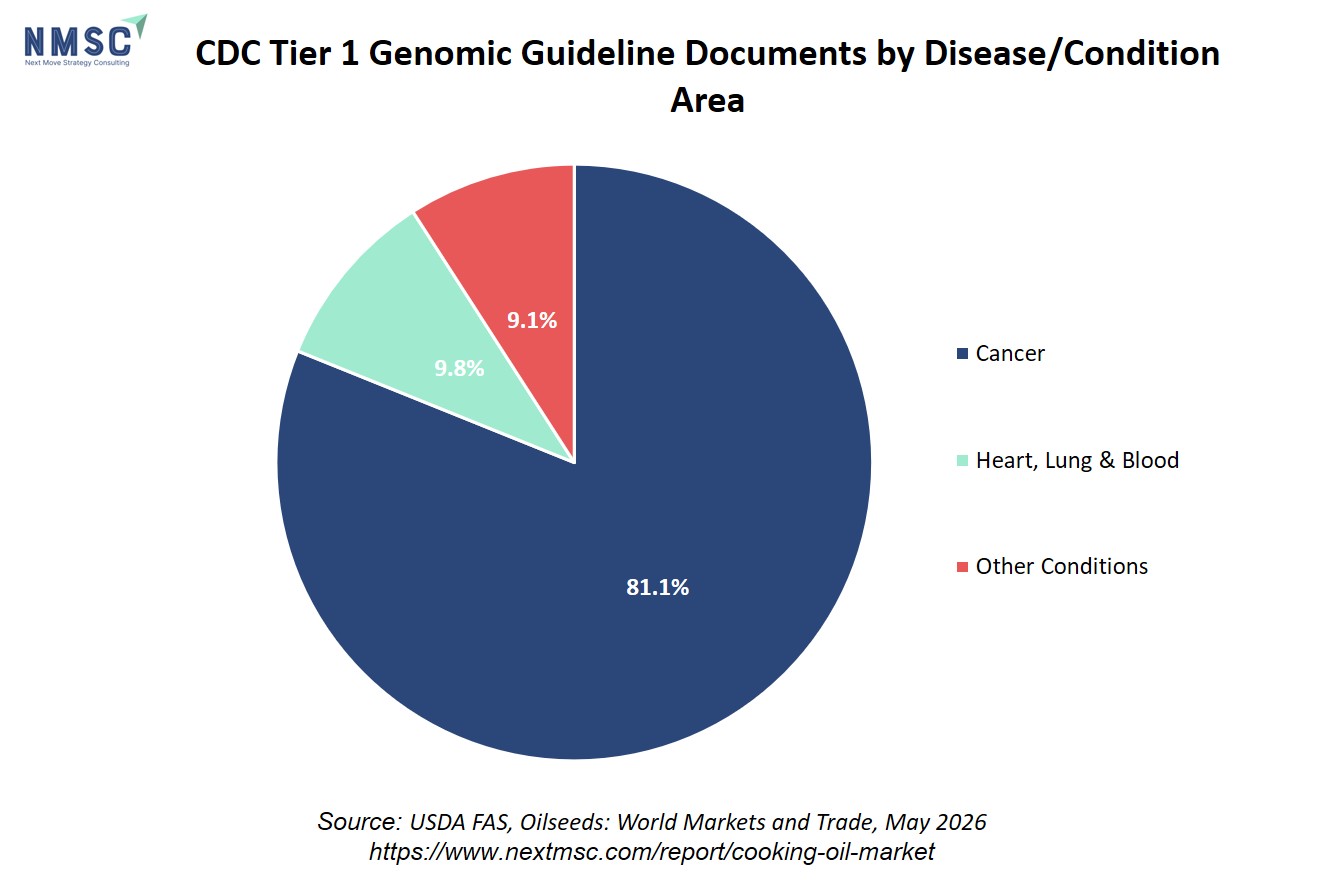
The oncology application segment remains the primary commercial engine of the genetic testing industry. According to the World Health Organization's GLOBOCAN data, an estimated 20.6 million new cancer cases were recorded globally in 2024, with projections indicating the global cancer burden could reach 34 million new cases annually by 2050 — a 67% increase driven by population growth and aging demographics.
This escalating disease burden is translating directly into demand for oncology genetic testing — including germline mutation analysis, somatic tumor profiling, companion diagnostics, and liquid biopsy platforms. The National Cancer Institute (NCI) recognizes genetic testing as a cornerstone of precision oncology, enabling identification of inherited cancer risk and guiding targeted therapy decisions including PARP inhibitors and immunotherapies.
Corporate Developments: Innovation Accelerates Across the Value Chain
The first half of 2026 has been marked by significant product launches and strategic consolidation that reflect the industry's maturation and competitive intensity.
In January 2026, GeneDx (Nasdaq: WGS) announced the launch of GenomeDx Prenatal™, a phenotype-informed, trio-based whole genome sequencing (WGS) test designed for pregnancies in which fetal anomalies have been identified via ultrasound. The test, which became available for clinician ordering in February 2026, delivers comprehensive variant detection — including single nucleotide mutations, small insertions/deletions, and large copy-number variations — with results in under two weeks.
"Families and clinicians facing complex fetal findings need precise, fast, and actionable answers they can trust," said Katherine Stueland, President and CEO of GeneDx. "GenomeDx Prenatal extends our industry-leading diagnostic capabilities into prenatal care, helping identify rare disease at the earliest moment possible."
The clinical rationale is compelling: significant fetal structural anomalies are identified in up to 4% of pregnancies, and prenatal genomic sequencing has been shown to influence clinical management in up to 70% of cases, including both diagnostic and inconclusive results.
Earlier, in May 2025, GeneDx had acquired Fabric Genomics to enhance AI-driven variant interpretation and accelerate diagnostic yield for rare diseases. In February 2025, Tempus acquired Ambry Genetics to expand its clinical genomics operations across oncology and rare disease diagnostics. These transactions reflect a broader industry pattern in which scale, complementary assay portfolios, and geographic access are acquired rather than organically built, shortening time to market and strengthening payer and provider channels.
Global Cancer Burden by Region — New Cases, 2022
|
Region |
Estimated New Cases (Millions) |
Share of Global Total (%) |
|
Asia |
9.8 |
49.0% |
|
Europe |
4.0 |
20.0% |
|
North America |
2.7 |
13.5% |
|
Latin America & Caribbean |
1.5 |
7.5% |
|
Africa |
1.1 |
5.5% |
|
Oceania |
0.2 |
1.0% |
|
World Total |
20.0 |
100.0% |
Regulatory Landscape: FDA Framework and LDT Oversight Shape Market Dynamics
On February 23, 2026, the U.S. Food and Drug Administration (FDA) launched a new framework for accelerating the development of individualized therapies for ultra-rare diseases, with draft guidance focused on therapies targeting specific genetic, cellular, or molecular abnormalities. This regulatory development, combined with the FDA's ongoing scrutiny of laboratory-developed tests (LDTs), is reshaping the compliance and commercialization calculus for diagnostic laboratories.
Regulatory ambiguity over LDTs and uneven reimbursement policies continue to present adoption headwinds. Evolving rules and legal challenges create uncertainty for diagnostic labs regarding validation burden, submission timelines, and compliance costs, potentially slowing new test introductions. Meanwhile, payer coverage for molecular diagnostics remains variable, with programs such as MolDX requiring comprehensive clinical utility dossiers for coverage.
For market participants, the strategic imperative is clear: invest in regulatory readiness, publish real-world clinical utility evidence, and build EHR interoperability to accelerate payer acceptance and clinician adoption.
Technology Segmentation: NGS Dominates, AI Reshapes Interpretation
Next-Generation Sequencing (NGS) has become the cornerstone of modern genetic testing, enabling high-throughput, cost-effective sequencing across oncology, rare disease diagnosis, and pharmacogenomics. Laboratories leveraging cloud bioinformatics and automated workflows are enhancing diagnostic yield and turnaround time, strengthening competitive positioning in precision medicine.
Artificial intelligence is moving from research demonstrations into production tooling for variant calling, annotation, and classification — lowering false positives, accelerating throughput, and compressing interpretation costs. Mature neural-network callers and ensemble approaches are outperforming legacy methods on difficult genomic regions, while generative and large language models are being piloted to summarize evidence for variant of uncertain significance (VUS) reclassification.
Polymerase Chain Reaction (PCR) remains a backbone technology for single-gene assays and confirmatory tests, while its integration with digital and real-time PCR platforms enhances analytical sensitivity and supports decentralized testing. Whole genome sequencing is rapidly transitioning from research into clinical workflows as falling costs and improved analytics enable detection of structural variants and non-coding variation missed by exome-based approaches.
NHGRI Human Genome Sequencing Cost Milestones (2001–2022)
-
Year Approx. Cost Per Genome (USD) Sequencing Technology Era
-
2001 $95,263,072 Sanger-Based (First Generation)
-
2004 $20,000,000 Sanger-Based (First Generation)
-
2007 $10,000,000 Sanger-Based (First Generation)
-
2008 $1,000,000 NGS Transition (Second Generation)
-
2010 $50,000 Next-Generation Sequencing
-
2013 $5,000 Next-Generation Sequencing
-
2016 $1,500 Next-Generation Sequencing
-
2019 $1,000 Next-Generation Sequencing
-
2022 ~$525 Next-Generation Sequencing
Regional Outlook: North America Leads, Asia-Pacific Accelerates
-
North America remains the most commercially mature market, supported by strong clinical genomics infrastructure, broad payer engagement, and large population research programs including the NIH All of Us Research Program, which has made hundreds of thousands of genomes available to researchers, improving variant interpretation and polygenic modeling.
-
Europe's landscape is shaped by coordinated EU initiatives, including the EU 1+ Million Genomes project and the European Genomics Data Infrastructure, which are creating federated access and standards that help countries adopt routine genomic services and harmonize clinical interpretation. National programs in the United Kingdom (NHS Genomic Medicine Service), Germany (federal oncology and rare disease sequencing pilots), and France (Plan France Médecine Génomique) are establishing reproducible procurement pathways for validated assays.
-
Asia-Pacific is the fastest-growing regional market. China's large sequencing centers and domestic capacity expansion are enabling rapid deployment of oncology, reproductive, and rare-disease testing at scale. India's GenomeIndia project is building population-representative reference panels to reduce variant interpretation gaps for South Asian ancestries. Japan's Genome Medicine Promotion Act and MHLW-aligned guidance are creating clearer reimbursement lanes for clinically indicated tests. South Korea's Korean Genome and Epidemiology Study (KoGES) and Taiwan's Precision Medicine Initiative — targeting one million genome sequences linked to longitudinal NHI health records — further illustrate the region's institutional commitment to genomic medicine.
The WHO WHA79.8 resolution is expected to accelerate genomic infrastructure investment across Latin America, the Middle East, and Africa, where PAHO's PAHOHumanGen knowledge portal and the Africa Pathogen Genomics Initiative are already building regional NGS laboratory capacity and improving local variant catalogs.
Competitive Landscape: Scale and Clinical Depth as Complementary Assets
The competitive structure of the genetic testing industry is bifurcated between large clinical laboratory networks that compete on scale and payer relationships, and specialist diagnostics firms that compete on clinical differentiation and interpretation expertise. Labcorp and Quest Diagnostics offer wide test menus and outreach networks; Myriad Genetics and Natera focus on differentiated clinical assays and proprietary interpretation platforms; Illumina supplies the instruments and consumables underpinning many laboratories' sequencing capacity; Eurofins and BGI offer global laboratory scale and service breadth; while Blueprint Genetics, GenDX, and Ambry Genetics occupy specialist clinical niches.
Recent M&A activity underscores the industry's consolidation trajectory. Quest Diagnostics acquired LifeLabs to extend Canadian reach; Labcorp moved to acquire select BioReference assets to deepen oncology testing capabilities; Natera acquired reproductive health assets from Invitae to consolidate NIPT and carrier services; and Myriad Genetics acquired Precise Tumor to broaden tumor-profiling offerings.
Firms that publish real-world evidence, secure EHR interoperability, and demonstrate ironclad custody of genomic data are accelerating payer acceptance and clinician adoption — the clearest predictors of commercial traction in an increasingly evidence-driven market.
Data Privacy, Governance, and the DTC Recalibration
Rising regulatory activity and high-profile data-protection incidents have placed direct-to-consumer (DTC) genetic testing providers and clinical laboratories on notice. Several U.S. states have tightened genetic privacy rules, and federal regulators are scrutinizing how consumer genomic data is transferred or monetized. Consumer interest in ancestry and wellness testing has cooled in some markets, shifting growth toward clinically actionable tests backed by provider workflows.
The WHO resolution's explicit emphasis on "reinforcing regulatory and governance frameworks, ensuring ethical standards, data protection, and quality" is expected to accelerate the formalization of genomic data governance standards globally, raising the compliance bar for all market participants while simultaneously creating a more predictable operating environment for those that invest in robust data stewardship.
Bottom Line
The genetic testing market stands at a structural inflection point defined by three simultaneous forces: a landmark WHO multilateral mandate that elevates genomic medicine to a global health policy priority; accelerating technological innovation in whole genome sequencing, AI-assisted variant interpretation, and liquid biopsy platforms; and an escalating global disease burden — particularly in oncology — that is generating sustained, system-level demand for precise, early, and actionable diagnostics.
For investors, the market's projected expansion from USD 30.1 billion in 2025 to USD 67.12 billion by 2030 at a 17.4% CAGR represents a durable growth opportunity anchored in clinical necessity rather than discretionary demand. The primary risks — regulatory uncertainty over LDTs, reimbursement complexity, and data governance challenges — are real but manageable for well-capitalized players with strong compliance infrastructure and clinical evidence portfolios.
For strategic executives, the imperative is to prioritize investments in data interoperability, AI-enabled interpretation, and EHR integration while building the regulatory and payer relationships that convert clinical innovation into reimbursed, scalable services. The WHO resolution has effectively expanded the total addressable market by placing genomic medicine on the policy agenda of every WHO Member State — a development that will reshape procurement, funding, and partnership dynamics across every major geography over the next decade
About Next Move Strategy Consulting
Next Move Strategy Consulting is a premier market research and management consulting firm that has been committed to provide strategically analysed well documented latest research reports to its clients. The research industry is flooded with many firms to choose from, what makes NMSC different from the rest is its top-quality research and the obsession of turning data into knowledge by dissecting every bit of it and providing fact-based research recommendation that is supported by information collected from over 500 million websites, paid databases, industry journals and one on one consultations with industry experts across a diverse range of industry sectors. The high-quality customized research reports with actionable insights and excellent end-to-end customer service help our clients to take critical business decisions that enables them to move beyond time and have competitive edge in the industry.
We have been servicing over 1000 customers globally that includes 90% of the Fortune 500 companies over a decade. Our analysts are constantly tracking various high growth markets and identifying hidden opportunities in each sector or the industry. We provide one of the industry's best quality syndicate as well as custom research reports across 10 different industry verticals. We are committed to deliver high quality research solutions in accordance to your business needs. Our industry standard delivery solutions that ranges from the pre consultation to after-sales services, provide an excellent client experience and ensure right strategic decision making for businesses.
For more information, please contact:
Next Move Strategy Consulting
5th Floor 867 Boylston St, STE 500,
Boston, MA 02116, U.S.
E-Mail: [email protected]
Direct: +1-217-650-7991
Website: www.nextmsc.com
About the Author
 Sanyukta Deb
— Sanyukta Deb is Digital Marketing Team Lead at Next Move Strategy Consulting, where she has led content strategy and technical SEO for the firm's B2B market research publications for over 2 years. Her editorial process translates NextMSC's primary and secondary research — spanning technology, industrial, and consumer sectors — into commercial narratives, backed by search-intent, keyword, and competitive analysis. She brings 5 years of overall experience in digital marketing and content strategy.
Sanyukta Deb
— Sanyukta Deb is Digital Marketing Team Lead at Next Move Strategy Consulting, where she has led content strategy and technical SEO for the firm's B2B market research publications for over 2 years. Her editorial process translates NextMSC's primary and secondary research — spanning technology, industrial, and consumer sectors — into commercial narratives, backed by search-intent, keyword, and competitive analysis. She brings 5 years of overall experience in digital marketing and content strategy.
About the Reviewer
 Debashree Dey
— Debashree Dey is Assistant Manager at Next Move Strategy Consulting, where she supports cross-vertical market content and communications across diverse industries for 6 years. Her professional background includes senior content writing, communications, and published manuscript authorship, with experience developing audience-focused business narratives and maintaining clear, consistent messaging. Her role supports research-led content development and editorial quality across NextMSC publications.
Debashree Dey
— Debashree Dey is Assistant Manager at Next Move Strategy Consulting, where she supports cross-vertical market content and communications across diverse industries for 6 years. Her professional background includes senior content writing, communications, and published manuscript authorship, with experience developing audience-focused business narratives and maintaining clear, consistent messaging. Her role supports research-led content development and editorial quality across NextMSC publications.
















Add Comment