World’s First Pig-to-Human Liver Transplant Success
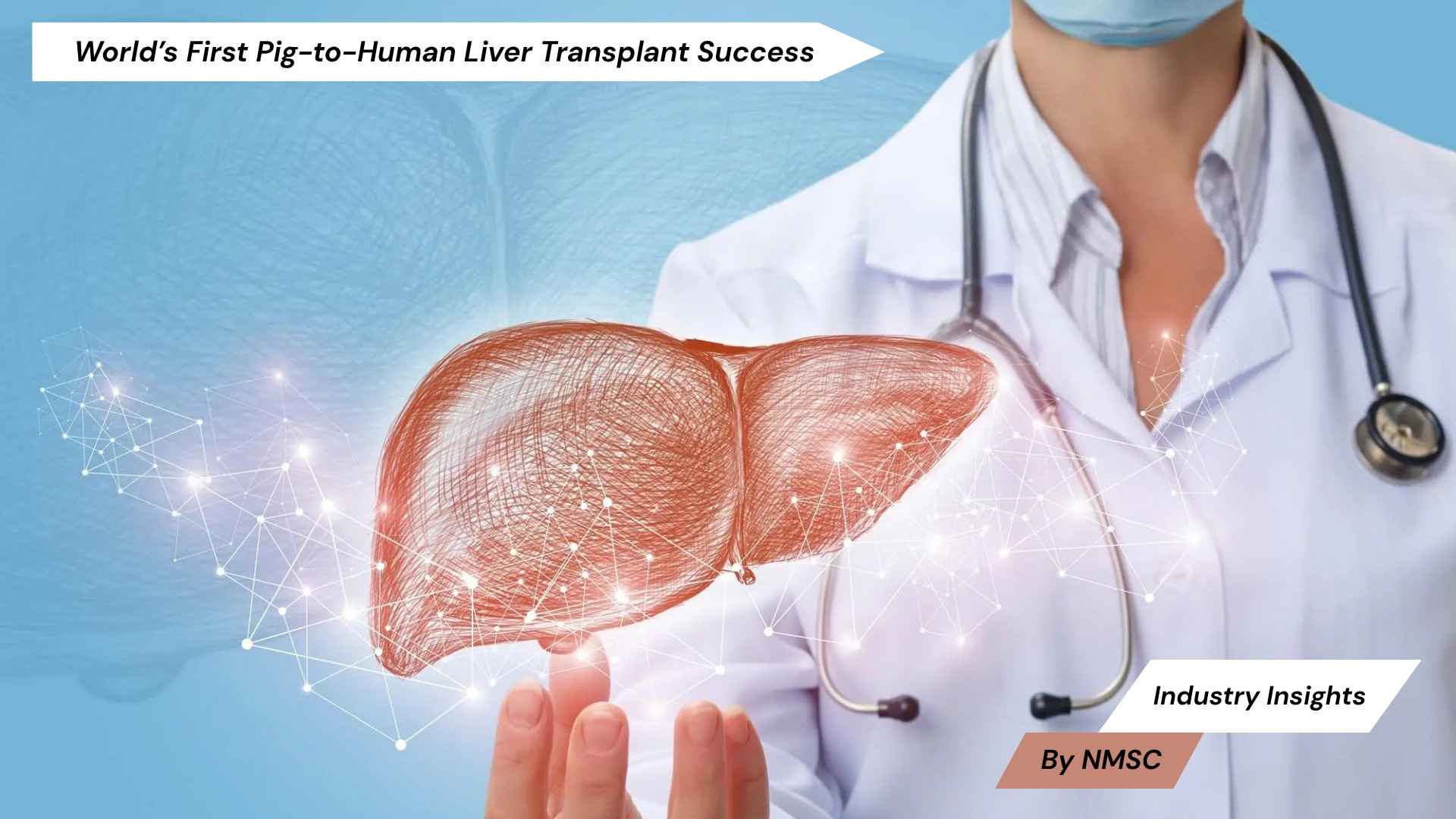
Industry Insights from Next Move Strategy Consulting
As organ failure claims thousands annually due to donor shortages, the successful auxiliary transplantation of a genetically engineered pig liver into a 71-year-old patient marks a pivotal advancement in xenotransplantation. This procedure, where the pig liver functioned alongside the human organ for over a month without acute rejection, underscores the potential to scale organ supply through bioengineered solutions, transforming treatment paradigms for end-stage liver disease.
A Pioneering Leap in Cross-Species Transplantation
Traditional human organ transplants are severely limited by scarcity, with only a fraction of patients receiving timely interventions. The reported case involved a Diannan miniature pig liver with ten genetic modifications—removing pig-specific immune triggers and inserting human genes—to enhance compatibility. Implanted as an auxiliary graft in a patient with hepatitis B-related cirrhosis and hepatocellular carcinoma ineligible for standard transplants, the organ produced bile, synthesized protein, and handled metabolic functions effectively for 38 days initially.
"This achievement validates extended pig liver functionality in humans, highlighting both promise and immunological challenges like coagulation issues," notes Dr. Beicheng Sun, the study lead. The patient's 171-day survival post-surgery provides critical data for refining xenotransplantation protocols.
Key Milestones at a Glance:
-
Successful bile production and protein synthesis for over one month, confirming core liver functions in a human host.
-
No acute rejection initially, enabled by targeted genetic edits for reduced immunogenicity.
-
Auxiliary approach allowing workload sharing with the native liver, extending observation periods.
-
Management of complications via graft removal, plasma exchange, and eculizumab, yielding insights into thrombotic microangiopathy.
-
Proof-of-concept for pig organs in bridging donor gaps, with survival far exceeding prior expectations.
Bridging Global Organ Shortages with Engineered Solutions
The World Health Organization highlights that thousands die yearly awaiting transplants, with China alone facing hundreds of thousands of liver failure cases against minimal successful procedures. This xenotransplantation milestone positions genetically modified pigs as a scalable alternative, given their anatomical similarity, rapid reproduction, and controlled breeding—potentially alleviating supply-demand imbalances that currently hinder market expansion.
Overcoming Persistent Biological Barriers
Early efficacy gave way to xenotransplantation-associated thrombotic microangiopathy on day 38, prompting interventions that controlled but did not eliminate risks. Subsequent issues, including gastrointestinal bleeding, led to the patient's passing on day 171. These outcomes emphasize the need for advanced genetic refinements, enhanced immunosuppression, and real-time monitoring to mitigate immune and coagulation dysregulation.
Impact on the Organ Transplantation Market: Next Move Strategy Consulting’s View
This breakthrough is catalyzing investment and innovation in the Organ Transplantation Market sector, projected to grow significantly as xenotransplantation moves toward clinical viability.
By demonstrating pig livers can sustain human life for months, it drives demand for bioengineering technologies, regulatory frameworks, and supply chain infrastructure for genetically edited animals. Partnerships between biotech firms and transplant centers, and expanded market opportunities in addressing chronic shortages—ultimately reducing waitlist mortality and enabling broader access to life-saving therapies.
Redefining Organ Failure Treatment Horizons
This landmark case blurs experimental and clinical boundaries, paving the way for future trials focused on graft longevity and safety. As ethical debates evolve alongside technical progress, xenotransplantation emerges as a sustainable pillar in organ transplantation, offering hope where human donors fall short.
Source: Times of India
Prepared by: Next Move Strategy Consulting
About the Author
 Sanyukta Deb
— Sanyukta Deb is Digital Marketing Team Lead at Next Move Strategy Consulting, where she has led content strategy and technical SEO for the firm's B2B market research publications for over 2 years. Her editorial process translates NextMSC's primary and secondary research — spanning technology, industrial, and consumer sectors — into commercial narratives, backed by search-intent, keyword, and competitive analysis. She brings 5 years of overall experience in digital marketing and content strategy.
Sanyukta Deb
— Sanyukta Deb is Digital Marketing Team Lead at Next Move Strategy Consulting, where she has led content strategy and technical SEO for the firm's B2B market research publications for over 2 years. Her editorial process translates NextMSC's primary and secondary research — spanning technology, industrial, and consumer sectors — into commercial narratives, backed by search-intent, keyword, and competitive analysis. She brings 5 years of overall experience in digital marketing and content strategy.
About the Reviewer
 Debashree Dey
— Debashree Dey is Assistant Manager at Next Move Strategy Consulting, where she supports cross-vertical market content and communications across diverse industries for 6 years. Her professional background includes senior content writing, communications, and published manuscript authorship, with experience developing audience-focused business narratives and maintaining clear, consistent messaging. Her role supports research-led content development and editorial quality across NextMSC publications.
Debashree Dey
— Debashree Dey is Assistant Manager at Next Move Strategy Consulting, where she supports cross-vertical market content and communications across diverse industries for 6 years. Her professional background includes senior content writing, communications, and published manuscript authorship, with experience developing audience-focused business narratives and maintaining clear, consistent messaging. Her role supports research-led content development and editorial quality across NextMSC publications.

















Add Comment