AI-Powered Health Intelligence Platform Market Size, Share, Growth & Forecast by Offering (Software and Platforms, Professional Services), Core Use Case (Longevity and Observability, Consumer Wellness, Preventive Care and Diagnostics, Chronic Condition Management, Sleep and Recovery Analytics, Post-acute), Revenue Model , Data Source Integration , Distribution Channel (Direct to Consumer, Direct to Enterprise, Channel Partners, OEM Embedded), and End User — Global Analysis 2025–2035
Industry: Energy & Power | Publishing Date: July 7, 2026 | Last Updated: September 30, 2026 | No of Pages: N/A | No. of Tables: N/A | No. of Figures: N/A | Format: PDF | Report Code: EP4997
What Is the AI-Powered Health Intelligence Platform Market Size?
The global AI-Powered Health Intelligence Platform Market was valued at USD 3.8 billion in 2025 and is projected to reach USD 4.7 billion in 2026. Sustained investment in digital health infrastructure, the proliferation of consumer wearables, and the rapid expansion of AI-driven clinical analytics are expected to propel the AI-Powered Health Intelligence Platform Market to USD 28.6 billion by 2035, advancing at a CAGR of 22.4% from 2026 to 2035. Key growth drivers include the rising adoption of electronic health records, the integration of AI analytics with connected medical devices, growing employer wellness program investments, and increasing demand from life sciences organizations for real-world evidence generation and population health insights.
|
Parameters |
Details |
|
Market Size in 2025 |
USD 3.8 Billion |
|
Market Size in 2026 |
USD 4.7 Billion |
|
Revenue Forecast in 2035 |
USD 28.6 Billion |
|
Growth Rate |
CAGR of 22.4% from 2026 to 2035 |
|
Analysis Period |
2025–2035 |
|
Base Year Considered |
2025 |
|
Forecast Period |
2026–2035 |
|
Market Size Estimation |
Billion USD |
|
Companies Profiled |
10 |
|
Countries Covered |
33 |
|
Market Share |
Top 10 |
AI-Powered Health Intelligence Platform Market Overview
What Is the AI-Powered Health Intelligence Platform?
The AI-Powered Health Intelligence Platform refers to an integrated ecosystem of software, data products, and professional services that leverage artificial intelligence, machine learning, and advanced analytics to collect, interpret, and act upon health data from multiple sources. These platforms connect consumer wearables, electronic health records, connected medical devices, and diagnostic laboratories to deliver actionable insights for consumers, healthcare providers, payers, employers, and life sciences organizations. The market spans applications ranging from chronic condition management and preventive diagnostics to longevity monitoring and post-acute care transitions.
How Has the AI-Powered Health Intelligence Platform Market Evolved?
The AI-Powered Health Intelligence Platform Market has transitioned through distinct developmental phases. The initial phase centered on electronic health record digitization and basic clinical decision support tools. A subsequent phase introduced consumer health applications linked to wearable biosensors and mobile health platforms. NMSC's analysis indicates that the current phase is defined by agentic AI engines that autonomously interpret multimodal health signals, generate clinical-grade recommendations, and enable interoperability across fragmented healthcare data ecosystems, fundamentally elevating the role of AI from decision support to proactive health intelligence.
How Do Regulations Influence the AI-Powered Health Intelligence Platform Market?
Regulatory frameworks have become a foundational structural influence on the AI-Powered Health Intelligence Platform Market. In the United States, the Health Insurance Portability and Accountability Act (HIPAA), the 21st Century Cures Act's interoperability provisions, and the FDA's digital health guidance for AI-based devices directly govern platform architecture, data handling, and clinical-grade claims. In the European Union, the General Data Protection Regulation (GDPR) and the EU AI Act impose strict transparency and accountability requirements on AI-driven health applications. These mandates are compelling vendors to invest in privacy-by-design architectures, explainable AI modules, and regulatory-grade audit trails.
How Is Technology Adoption Expanding Across the AI-Powered Health Intelligence Platform Market?
Technology adoption across the AI-Powered Health Intelligence Platform Market is accelerating as the convergence of continuous biosensing, cloud computing, and foundation model AI creates new categories of health intelligence. From our assessment, SaaS-based delivery models are lowering barriers for mid-market providers and employer wellness programs. Application programming interface (API)-driven interoperability solutions enable seamless connectivity across EHR systems, laboratory networks, and consumer devices. Simultaneously, AI analytics and agentic engine capabilities are maturing from rule-based alerts to autonomous multi-step reasoning that integrates longitudinal health data for population-level risk stratification and individualized care pathway optimization.
|
Key Takeaways |
|
By Offering, Software and Platforms held the largest share of the AI-Powered Health Intelligence Platform Market at USD 2.1 billion in 2025. Consumer Applications and AI Analytics & Agentic Engines are the fastest-growing sub-segments, forecast to expand at CAGRs of 24.8% and 27.1% respectively through 2035, driven by surging consumer demand for personalized health monitoring and enterprise adoption of autonomous clinical intelligence engines. |
|
By Core Use Case, Chronic Condition Management represents the dominant use case in the AI-Powered Health Intelligence Platform Market at USD 1.1 billion in 2025, accounting for approximately 29% of total market revenue, supported by the global prevalence of diabetes, cardiovascular disease, and respiratory conditions requiring continuous remote monitoring. |
|
Longevity and Observability is the fastest-growing core use case segment at a CAGR of 26.3% from 2026 to 2035, as consumers and life sciences organizations increase investment in healthspan analytics, biomarker tracking, and proactive longevity protocols using AI-driven platforms. |
|
By Revenue Model, SaaS Subscription dominates the AI-Powered Health Intelligence Platform Market at USD 1.9 billion in 2025, representing approximately 50% of total revenue, as enterprises and healthcare providers favor predictable recurring cost structures for cloud-delivered health intelligence services. |
|
Data Licensing is the fastest-growing revenue model in the AI-Powered Health Intelligence Platform Market at a CAGR of 25.6% from 2026 to 2035, as life sciences organizations and payers increasingly seek access to de-identified, longitudinal real-world health datasets to accelerate drug development, evidence generation, and population health initiatives. |
|
By Data Source Integration, Consumer Wearables constitute the largest data source category in the AI-Powered Health Intelligence Platform Market at USD 1.3 billion in 2025, reflecting the mass-market adoption of smartwatches, fitness trackers, and continuous glucose monitors as primary health data capture endpoints. |
|
Electronic Health Records integration is the fastest-growing data source segment at a CAGR of 23.9%, propelled by FHIR-based interoperability mandates and the 21st Century Cures Act in the United States compelling EHR vendors to open clinical data APIs to certified health application developers. |
|
By End User, Healthcare Providers account for the largest end user segment in the AI-Powered Health Intelligence Platform Market at USD 1.4 billion in 2025, driven by provider organizations investing in AI-powered clinical decision support, population health management, and remote patient monitoring capabilities. |
|
The Life Sciences and Research end user segment is the fastest-growing at a CAGR of 24.8% from 2026 to 2035, as pharmaceutical and biotech firms integrate AI health intelligence platforms into clinical trial design, patient recruitment, and real-world evidence generation workflows. |
|
North America held the largest regional share of the AI-Powered Health Intelligence Platform Market at USD 1.8 billion in 2025, projected to reach USD 12.4 billion by 2035 at a CAGR of 21.2%, anchored by the highest digital health investment concentration, advanced EHR adoption, and a well-established regulatory framework for digital health innovation. |
|
Asia-Pacific is the fastest-growing major region in the AI-Powered Health Intelligence Platform Market at a CAGR of 25.1% from 2026 to 2035, driven by India's national digital health mission, China's health AI investment programs, and rising consumer health platform adoption across Southeast Asia. |
|
The United States is the single largest country market in the AI-Powered Health Intelligence Platform Market, representing over 78% of North American revenue in 2025, underpinned by the highest concentration of AI health platform vendors, the most mature commercial payer market, and significant venture capital and NIH funding for digital health innovation. |
|
India is the fastest-growing national market in Asia-Pacific within the AI-Powered Health Intelligence Platform Market at a CAGR of 28.2%, propelled by the Ayushman Bharat Digital Mission, the National Digital Health Ecosystem, and rapidly increasing smartphone penetration enabling consumer health application adoption. |
Key Emerging Trends in the AI-Powered Health Intelligence Platform Market
How Is Agentic AI Transforming Clinical Decision Workflows in the AI-Powered Health Intelligence Platform Market?
Agentic AI architectures are redefining the AI-Powered Health Intelligence Platform Market by enabling autonomous multi-step reasoning, action execution, and care coordination without continuous human oversight. From our research, we found that companies such as Biofourmis and Huma Therapeutics have deployed agentic clinical intelligence engines capable of continuously monitoring patient biosignals, triaging deterioration alerts, and generating care escalation recommendations. These systems integrate sensor data from connected medical devices with EHR clinical history, enabling early warning capabilities that demonstrably reduce hospital readmissions and improve post-acute care transitions across complex patient populations.
How Is Longitudinal Biomarker Intelligence Reshaping Preventive Care in the AI-Powered Health Intelligence Platform Market?
Longitudinal biomarker intelligence represents a transformative trend in the AI-Powered Health Intelligence Platform Market, particularly within preventive care and longevity use cases. Our analysis shows that platforms such as Function Health and InsideTracker are aggregating hundreds of laboratory biomarkers with consumer wearable data streams to generate comprehensive health age assessments and individualized preventive intervention protocols. This approach shifts care delivery from reactive episodic treatment to continuous, proactive health optimization. Life sciences organizations are increasingly partnering with these platforms to gain access to rich longitudinal real-world biomarker datasets for novel therapeutic target identification.
How Is FHIR-Based Interoperability Accelerating Data Integration Across the AI-Powered Health Intelligence Platform Market?
Fast Healthcare Interoperability Resources (FHIR) adoption is a critical structural driver enabling the AI-Powered Health Intelligence Platform Market to scale beyond siloed data environments. Based on NMSC's research, the 21st Century Cures Act's interoperability rules have compelled all certified EHR vendors in the United States to expose FHIR-compliant APIs, enabling health intelligence platforms to access clinical data at scale and in standardized formats. Companies such as CareEvolution and Seqster PDM are building interoperability layers that aggregate patient data across hundreds of EHR systems, enabling unified longitudinal patient records that power AI analytics engines with high-fidelity clinical context.
How Is Employer Wellness Investment Expanding the AI-Powered Health Intelligence Platform Market?
Employer-sponsored wellness programs have become a significant demand engine for the AI-Powered Health Intelligence Platform Market. Through our market assessment, we observed that large self-insured employers are deploying AI health intelligence platforms to monitor workforce health trends, identify high-risk employees for proactive intervention, and reduce downstream healthcare claim costs. Platforms such as Heads Up Health and Guava Health are positioned within the employer distribution channel, offering population-level health dashboards, personalized wellness insights, and integration with benefits administration systems. The employer end user segment benefits from measurable ROI through reduced absenteeism, improved productivity, and lower actuarial risk within self-funded health plans.
What Are the Key Market Drivers, Breakthroughs, and Investment Opportunities that Will Shape the AI-Powered Health Intelligence Platform Market Industry in the Next Decade?
|
Drivers / Trends / Restraints |
(+/-) % Impact on CAGR Forecast |
Geographic Relevance |
Impact Timeline |
|
Rapid Adoption of Consumer Wearables and Biosensors |
+3.1% |
Global (led by North America, Europe, APAC) |
2025–2030 |
|
FHIR Interoperability Mandates Enabling EHR Data Access |
+2.4% |
North America, Europe, Australia |
2025–2029 |
|
Life Sciences Real-World Evidence Generation Demand |
+2.1% |
Global (all regions) |
2026–2035 |
|
Employer Health Intelligence and Benefits Analytics Growth |
+1.8% |
North America, Europe |
2025–2032 |
|
Payer Adoption of AI-Driven Preventive Care Models |
+1.6% |
North America, Europe, MEA |
2026–2035 |
|
Longevity and Healthspan Economy Expansion |
+1.4% |
North America, Europe, East Asia |
2026–2035 |
|
Data Privacy Regulation Complexity (HIPAA, GDPR, DPDPA) |
-1.5% |
North America, Europe, APAC |
Ongoing |
|
Fragmented EHR Ecosystem and Integration Complexity |
-1.1% |
Global (especially emerging markets) |
2025–2030 |
|
AI Diagnostic Accuracy and Clinical Liability Concerns |
-0.8% |
All regions |
Ongoing |
|
Post-Acute Care and Remote Monitoring Expansion |
+1.9% |
North America, Europe, APAC |
2025–2033 |
|
SaaS Model Enabling SMB Healthcare Provider Adoption |
+1.3% |
Global (mid-market, SMB) |
2025–2030 |
|
National Digital Health Infrastructure Programs (ABDM, NHS) |
+1.1% |
India, UK, Southeast Asia |
2026–2035 |
What Are the Growth Drivers of the AI-Powered Health Intelligence Platform Market?
How Is the Rapid Proliferation of Consumer Wearables and Biosensors Driving the AI-Powered Health Intelligence Platform Market?
The mass-market adoption of consumer wearables and continuous biosensors has fundamentally expanded the data infrastructure of the AI-Powered Health Intelligence Platform Market. Based on our market evaluation, smartwatches, fitness trackers, continuous glucose monitors, and pulse oximeters now generate petabytes of longitudinal physiological data daily. The U.S. Food and Drug Administration (FDA) has cleared numerous wearable biosensors under its Digital Health Center of Excellence, validating their clinical utility as real-world data sources. The Centers for Disease Control and Prevention (CDC) reports that chronic disease affects approximately 60% of American adults, creating massive addressable demand for continuous health monitoring solutions integrated within AI health intelligence platforms.
How Are Interoperability Mandates and EHR API Access Fueling Growth in the AI-Powered Health Intelligence Platform Market?
Federal interoperability mandates represent a structural demand catalyst for the AI-Powered Health Intelligence Platform Market. The Office of the National Coordinator for Health Information Technology (ONC) issued the 21st Century Cures Act Final Rule, requiring certified EHR developers to implement FHIR-based APIs that allow third-party applications to access patient clinical data with patient consent. Our analysis shows that this regulatory intervention has democratized access to structured clinical data for health intelligence platform developers, enabling them to build longitudinal patient profiles that integrate claims history, lab results, medication records, and problem lists directly into AI analytics engines without manual data entry.
How Is the Life Sciences Sector's Demand for Real-World Evidence Expanding the AI-Powered Health Intelligence Platform Market?
The pharmaceutical and medical device industries' growing reliance on real-world evidence has created a structurally significant and durable demand driver for the AI-Powered Health Intelligence Platform Market. The U.S. FDA's Real-World Evidence Program, established under the 21st Century Cures Act, explicitly recognizes real-world data and evidence as a basis for regulatory submissions and post-market surveillance. Our findings suggest that life sciences organizations are increasingly partnering with AI health intelligence platforms to access de-identified, longitudinal patient data streams that can support clinical trial site identification, patient recruitment efficiency, regulatory submissions, and pharmacovigilance studies at substantially lower cost than traditional clinical trial methodologies.
PESTEL ANALYSIS OF THE AI-POWERED HEALTH INTELLIGENCE PLATFORM MARKET
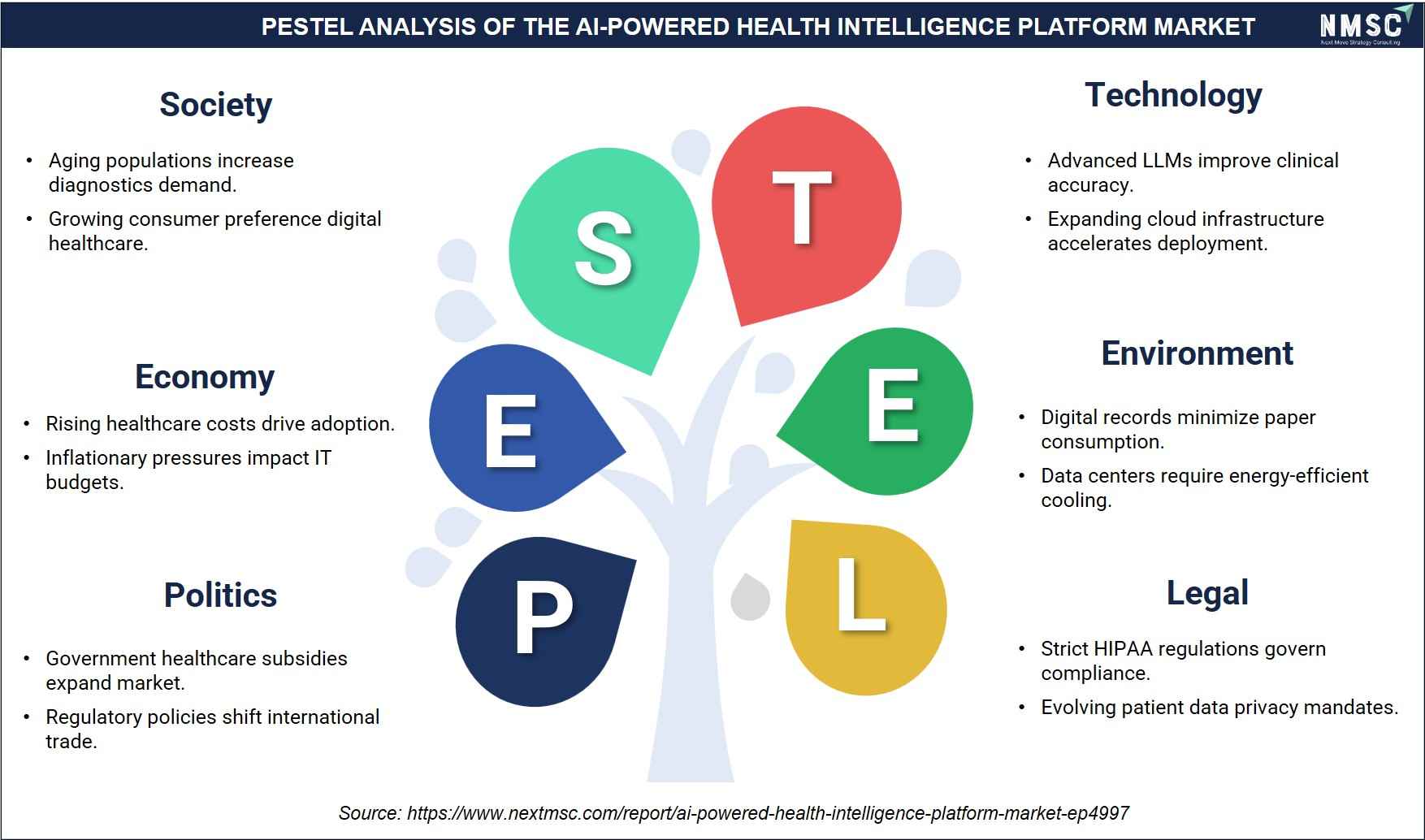
The AI-powered health intelligence platform market is influenced by a wide range of external factors. Politically, governments are promoting digital healthcare and AI adoption through supportive policies and funding initiatives. Economic factors include rising healthcare expenditures and demand for cost-efficient care delivery. Socially, increasing awareness of preventive healthcare and personalized medicine is driving adoption. Technological advancements in artificial intelligence, machine learning, cloud computing, and data analytics are accelerating innovation. Environmental considerations encourage digital healthcare solutions that reduce resource consumption, while legal factors such as data privacy, cybersecurity, and healthcare compliance regulations shape market operations and growth.
What Are the Growth Inhibitors of the AI-Powered Health Intelligence Platform Market?
How Does the Complexity of Health Data Privacy Regulation Constrain AI-Powered Health Intelligence Platform Market Expansion?
Regulatory fragmentation across health data privacy jurisdictions represents one of the most significant structural constraints on the AI-Powered Health Intelligence Platform Market. In the United States, the Health Insurance Portability and Accountability Act (HIPAA) imposes strict requirements on the use, access, and disclosure of protected health information, while the FTC Act and state-level biometric data privacy laws add additional compliance layers for consumer health applications. The U.S. Department of Health and Human Services (HHS) Office for Civil Rights has increasingly enforced HIPAA violations in digital health contexts. These overlapping frameworks extend development timelines, increase compliance costs, and create significant legal uncertainty for cross-border health data flows essential to AI model training.
How Does the Fragmented EHR Ecosystem Limit Scalability in the AI-Powered Health Intelligence Platform Market?
The persistent fragmentation of the electronic health record landscape across thousands of independent health systems, physician practices, and hospital networks represents a meaningful adoption barrier for the AI-Powered Health Intelligence Platform Market. Despite FHIR mandates, implementation quality, data completeness, and API performance vary considerably across EHR vendors and site configurations. Through our analysis, we observed that the U.S. Government Accountability Office (GAO) has documented ongoing challenges with health information exchange, noting that incomplete data standards, inconsistent implementation, and workflow integration complexity continue to limit the practical utility of EHR-sourced data for AI-driven health intelligence applications at scale.
What Are the Growth Opportunities in the AI-Powered Health Intelligence Platform Market?
How Does the Longevity Economy Create a Multi-Billion Dollar Opportunity in the AI-Powered Health Intelligence Platform Market?
The emergence of a structured longevity economy, defined by consumer and enterprise investment in healthspan optimization, biological aging measurement, and proactive disease prevention, is creating a high-growth commercial opportunity within the AI-Powered Health Intelligence Platform Market. The National Institute on Aging, a division of the U.S. National Institutes of Health, has significantly expanded funding for aging biomarker research, validating the scientific basis for AI-driven longevity analytics platforms. Our assessment indicates that premium consumer segments are increasingly willing to invest in comprehensive longitudinal health monitoring that integrates laboratory diagnostics, wearable biosensors, genetic data, and lifestyle tracking within unified AI intelligence platforms for personalized longevity optimization.
How Does National Digital Health Infrastructure Expansion Create Structural Opportunities in the AI-Powered Health Intelligence Platform Market?
National digital health infrastructure programs across multiple geographies are generating structural, long-term demand for AI-Powered Health Intelligence Platform capabilities. India's Ayushman Bharat Digital Mission (ABDM), administered by the National Health Authority, is establishing a nationwide health record architecture that creates interoperability standards for health platform integration across the country's 1.4 billion population. The NHS in the United Kingdom is advancing AI health platform adoption through its NHS AI Lab and federated data platform initiatives. Our analysis shows that these government-led initiatives create sovereign demand channels for AI health intelligence platform vendors that bypass traditional commercial sales cycles and provide access to national-scale patient populations for AI model development and validation.
How Does the Expansion of Value-Based Care Models Generate Demand in the AI-Powered Health Intelligence Platform Market?
The accelerating transition from fee-for-service to value-based care reimbursement models in the United States and internationally is creating compelling economic incentives for healthcare provider and payer adoption of the AI-Powered Health Intelligence Platform Market solutions. The Centers for Medicare and Medicaid Services (CMS) has expanded its Alternative Payment Models program, creating financial accountability for quality outcomes, readmission reduction, and chronic disease management performance. Based on NMSC's research, health systems participating in accountable care organizations (ACOs) require AI-driven population health analytics and remote monitoring capabilities to achieve the risk-adjusted outcome benchmarks that determine their shared savings distributions, directly expanding addressable demand for enterprise AI health intelligence platforms.
PORTER’S FIVE FORCES ANALYSIS OF AI-POWERED HEALTH INTELLIGENCE PLATFORM MARKET
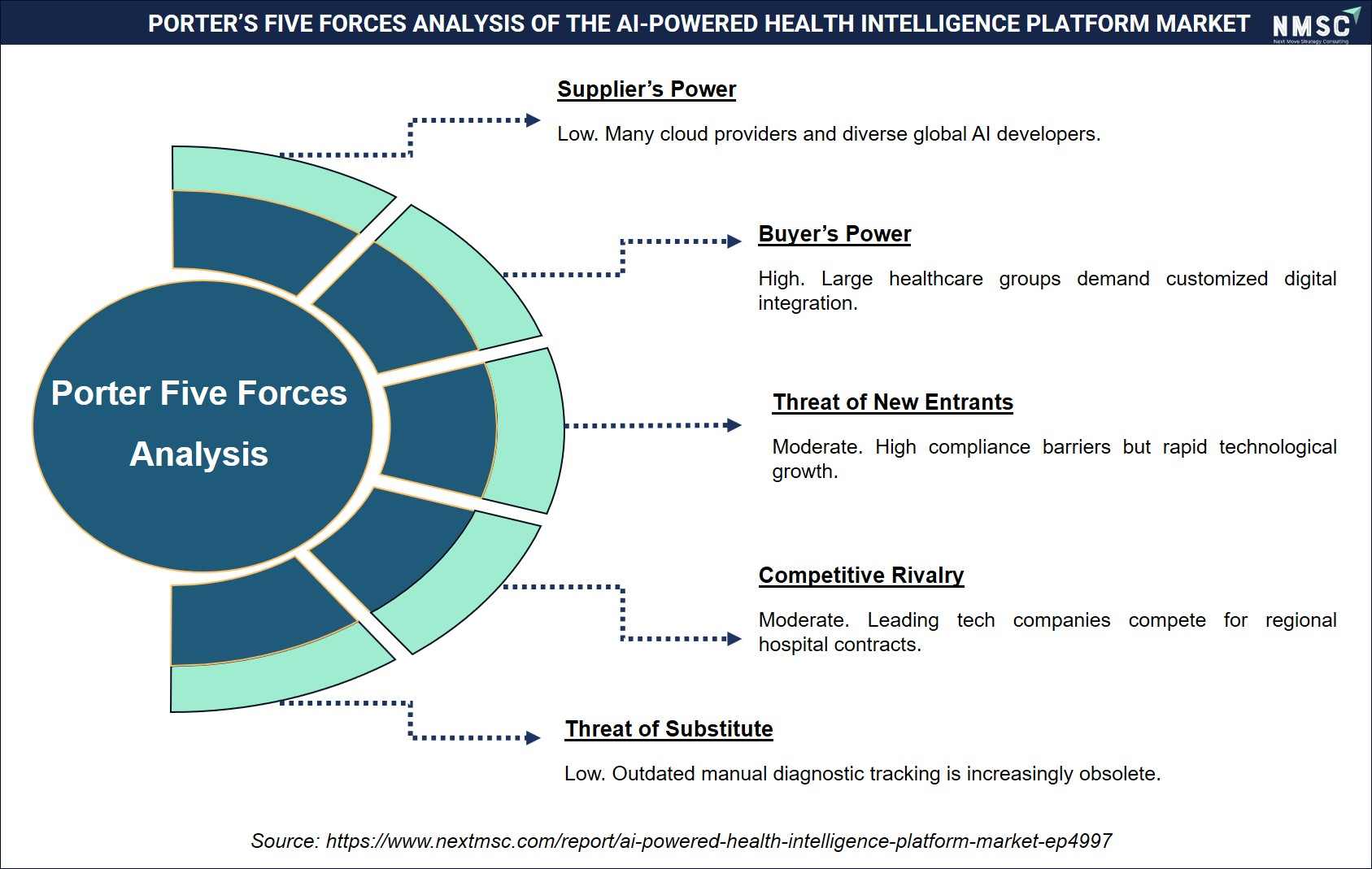
The Porter’s Five Forces Analysis of the AI-Powered Health Intelligence Platform Market provides a structured framework for evaluating the competitive forces that influence market attractiveness and long-term profitability. It examines the bargaining power of healthcare providers, payers, and enterprise buyers, the influence of technology and data suppliers, the threat posed by new entrants and alternative health analytics solutions, and the intensity of competition among established platform vendors. The analysis highlights the impact of clinical validation requirements, regulatory compliance, proprietary health datasets, AI innovation capabilities, and interoperability standards on market positioning, enabling stakeholders to make informed strategic, investment, and expansion decisions.
How Is the AI-Powered Health Intelligence Platform Market Segmented in This Report, and What Are the Key Insights from the Segmentation Analysis?
How Does the Offering Segmentation Reveal the Structural Composition of the AI-Powered Health Intelligence Platform Market?
|
Offering Segment |
2025 (USD Bn) |
2035 (USD Bn) |
CAGR (%) |
|
Software and Platforms |
2.1 |
16.4 |
22.9% |
|
— Consumer Applications |
0.7 |
6.1 |
24.8% |
|
— Provider Portals |
0.5 |
3.5 |
21.4% |
|
— AI Analytics & Agentic Engines |
0.5 |
4.4 |
27.1% |
|
— Interoperability Solutions |
0.4 |
2.4 |
19.6% |
|
Data and Content Products |
1.0 |
7.2 |
21.8% |
|
— Curated Health Datasets |
0.6 |
4.4 |
22.1% |
|
— Knowledge Bases |
0.4 |
2.8 |
21.3% |
|
Professional Services |
0.7 |
5.0 |
21.7% |
|
— Implementation and Integration |
0.3 |
2.1 |
21.5% |
|
— Clinical Reporting Services |
0.2 |
1.7 |
23.8% |
|
— Support and Maintenance |
0.2 |
1.2 |
19.6% |
Based on our analysis of enterprise health digitization strategies and platform commercialization patterns, we observed that the AI-Powered Health Intelligence Platform Market offering is segmented into Software and Platforms, Data and Content Products, and Professional Services. The Software and Platforms segment dominates due to the high commercial value of recurring SaaS subscriptions and the rapid maturation of consumer health applications and AI analytics engines. From our market assessment, AI Analytics and Agentic Engines represent the fastest-growing sub-segment within Software and Platforms, as healthcare organizations invest in autonomous clinical intelligence capabilities that deliver actionable insights from multimodal health data streams. Meanwhile, Data and Content Products are gaining strategic importance as life sciences organizations and payers seek curated longitudinal real-world datasets and validated knowledge bases to power research and population health programs.
Which Core Use Cases Are Defining Value Creation in the AI-Powered Health Intelligence Platform Market?
|
Core Use Case Segment |
2025 (USD Bn) |
2035 (USD Bn) |
CAGR (%) |
|
Longevity and Observability |
0.4 |
3.3 |
26.3% |
|
Consumer Wellness |
0.5 |
3.6 |
21.8% |
|
Preventive Care and Diagnostics |
0.6 |
4.5 |
22.3% |
|
Chronic Condition Management |
1.1 |
7.9 |
21.7% |
|
Sleep and Recovery Analytics |
0.3 |
2.2 |
22.0% |
|
Post-acute and Transitions of Care |
0.9 |
7.1 |
23.0% |
Our findings suggest that the AI-Powered Health Intelligence Platform Market is structured across six core use case segments that collectively address the full continuum of health intelligence from preventive wellness to post-acute recovery. Chronic Condition Management represents the dominant use case at USD 1.1 billion in 2025, driven by the global prevalence of diabetes, hypertension, and cardiovascular disease requiring continuous AI-driven monitoring and intervention. Post-acute and Transitions of Care is the second-largest segment, as health systems deploy AI platforms to reduce hospital readmissions and manage care transitions for complex, high-cost patient populations. Longevity and Observability is the fastest-growing use case at a CAGR of 26.3%, as premium consumer demand for biological age tracking, biomarker optimization, and proactive health intelligence expands the addressable market significantly beyond traditional clinical applications.
How Do Revenue Models Reflect the Commercial Evolution of the AI-Powered Health Intelligence Platform Market?
|
Revenue Model Segment |
2025 (USD Bn) |
2035 (USD Bn) |
CAGR (%) |
|
SaaS Subscription |
1.9 |
13.5 |
21.5% |
|
Transactional |
0.6 |
4.2 |
21.4% |
|
Data Licensing |
0.7 |
6.0 |
25.6% |
|
Managed Contracts |
0.6 |
4.9 |
23.3% |
In our analysis of commercial health platform adoption trends, we assessed that the AI-Powered Health Intelligence Platform Market operates across four primary revenue models. The SaaS Subscription model dominates at USD 1.9 billion in 2025, representing approximately 50% of total revenue, as both enterprise and consumer buyers prefer predictable, cloud-delivered subscription structures for health intelligence services. Data Licensing is the fastest-growing revenue model at a CAGR of 25.6%, reflecting the increasing commercial value of de-identified, longitudinal health datasets sought by pharmaceutical companies, payers, and academic researchers. Managed Contracts are gaining traction among hospital systems and integrated delivery networks that prefer outcomes-based commercial arrangements aligned with value-based care financial incentives.
Which Data Source Integration Pathways Are Shaping the AI-Powered Health Intelligence Platform Market?
|
Data Source Integration Segment |
2025 (USD Bn) |
2035 (USD Bn) |
CAGR (%) |
|
Consumer Wearables |
1.3 |
9.2 |
21.5% |
|
Connected Medical Devices |
0.8 |
6.3 |
23.1% |
|
Electronic Health Records |
0.9 |
7.1 |
23.9% |
|
Diagnostic Laboratories |
0.5 |
3.6 |
21.8% |
|
Third Party Research |
0.3 |
2.4 |
23.0% |
From our research, we found that the AI-Powered Health Intelligence Platform Market is categorized across five data source integration modalities. Consumer Wearables represent the largest source integration category at USD 1.3 billion in 2025, reflecting the mass-market penetration of smartwatches and fitness trackers as primary real-world health data capture endpoints. Electronic Health Records integration is the fastest-growing modality at a CAGR of 23.9%, accelerated by ONC FHIR API mandates that have standardized clinical data access across certified EHR systems. Connected Medical Devices integration is advancing rapidly as FDA-cleared glucose monitors, blood pressure cuffs, and cardiac monitors generate continuous, clinically validated data streams that enhance AI diagnostic accuracy. Diagnostic Laboratory data integration is gaining importance within preventive care and longevity platforms that require blood biomarker panels to complement wearable sensor data.
How Are Distribution Channels Reshaping Go-to-Market Strategies in the AI-Powered Health Intelligence Platform Market?
|
Distribution Channel Segment |
2025 (USD Bn) |
2035 (USD Bn) |
CAGR (%) |
|
Direct to Consumer (D2C) |
0.9 |
6.3 |
21.5% |
|
Direct to Enterprise |
1.6 |
11.2 |
21.4% |
|
Channel Partners |
0.8 |
6.0 |
22.4% |
|
OEM Embedded |
0.5 |
5.1 |
26.1% |
We noticed that the AI-Powered Health Intelligence Platform Market operates through four primary distribution channels. Direct to Enterprise is the dominant channel at USD 1.6 billion in 2025, driven by large healthcare provider organizations, payers, and employers procuring enterprise-grade AI health intelligence solutions through dedicated sales relationships. OEM Embedded distribution is the fastest-growing channel at a CAGR of 26.1%, as medical device manufacturers, consumer electronics companies, and laboratory equipment vendors integrate AI health intelligence capabilities directly within their hardware ecosystems, creating embedded recurring revenue streams. Direct to Consumer channels are maturing rapidly, particularly for longevity platforms and consumer wellness applications that sell premium subscription services directly to health-conscious individuals. Channel Partner distribution through benefit consultants, pharmacy benefit managers, and health systems serves as an important indirect pathway for employer and payer market penetration.
Which End User Segments Generate the Most Value in the AI-Powered Health Intelligence Platform Market?
|
End User Segment |
2025 (USD Bn) |
2035 (USD Bn) |
CAGR (%) |
|
Consumers |
0.8 |
5.6 |
21.5% |
|
Healthcare Providers |
1.4 |
9.8 |
21.3% |
|
Payers (Insurers) |
0.7 |
5.3 |
22.5% |
|
Employers |
0.5 |
3.5 |
21.5% |
|
Life Sciences and Research |
0.4 |
4.4 |
24.8% |
Based on our analysis of health system investment priorities and digital health commercialization strategies, we observed that the AI-Powered Health Intelligence Platform Market is structured across five end user categories. Healthcare Providers represent the largest end user segment at USD 1.4 billion in 2025, driven by health system investments in AI-powered population health management, clinical decision support, and remote patient monitoring. Life Sciences and Research is the fastest-growing end user at a CAGR of 24.8%, reflecting growing pharmaceutical and biotech investment in AI health platforms for clinical trial optimization and real-world evidence generation. Payer adoption is accelerating as insurance organizations leverage AI health intelligence to improve member risk stratification, reduce high-cost acute events, and optimize preventive care benefit design. The Employer segment is benefiting from measurable ROI through workforce health optimization, productivity improvement, and healthcare cost reduction within self-funded health benefit programs.
Regional Outlook
Geographic Performance Snapshot
|
Region |
2025 (USD Bn) |
2035 (USD Bn) |
CAGR (%) |
Key Driver |
|
North America |
1.8 |
12.4 |
21.2% |
Digital health investment, EHR interoperability, mature payer market |
|
Europe |
0.9 |
6.5 |
21.8% |
GDPR compliance, NHS AI initiatives, value-based care adoption |
|
Asia-Pacific |
0.7 |
5.8 |
25.1% |
ABDM in India, China AI investment, Southeast Asia digital health growth |
|
Middle East & Africa (MEA) |
0.2 |
2.1 |
26.7% |
Vision 2030 health transformation, digital health infrastructure build-out |
|
Latin America |
0.2 |
1.8 |
24.7% |
Digital health startup ecosystem, chronic disease burden, telemedicine adoption |
North America AI-Powered Health Intelligence Platform Market
North America dominates the global AI-Powered Health Intelligence Platform Market, accounting for USD 1.8 billion in 2025 and forecast to reach USD 12.4 billion by 2035 at a CAGR of 21.2%. The region benefits from the highest concentration of digital health platform vendors, advanced EHR infrastructure across major health systems, and mature commercial insurance markets that create strong incentives for preventive AI health investments. Regulatory clarity from the FDA's Digital Health Center of Excellence and the ONC's interoperability mandates has accelerated enterprise platform adoption. Significant venture capital and National Institutes of Health (NIH) funding continues to drive innovation across all AI health intelligence sub-segments.
U.S. AI-Powered Health Intelligence Platform Market
Based on our engagements with digital health stakeholders across the United States, we found that the U.S. represents over 78% of North American AI-Powered Health Intelligence Platform Market revenue in 2025. The country leads globally in EHR adoption, with ONC-certified systems deployed across nearly all acute care hospitals, creating a FHIR API-enabled data foundation for AI health intelligence applications. The Centers for Medicare and Medicaid Services (CMS) Alternative Payment Models and accountable care organization programs create direct financial incentives for provider adoption of AI-driven population health and care transition platforms. Venture capital investment in digital health remains robust, with the U.S. accounting for the majority of global health AI funding activity.
Canada AI-Powered Health Intelligence Platform Market
Through our analysis, we noticed that Canada represents approximately 14% of North American AI-Powered Health Intelligence Platform Market revenue. Canada's publicly funded provincial health systems are increasing investment in digital health transformation, with initiatives such as the pan-Canadian Health Data Strategy and provincial EHR platforms driving AI integration across primary care and specialist networks. Canadian privacy legislation, including the Personal Information Protection and Electronic Documents Act (PIPEDA) and provincial health information protection acts, governs health data use, creating compliance-driven demand for privacy-engineered AI health platform architectures optimized for the Canadian regulatory environment.
Mexico AI-Powered Health Intelligence Platform Market
From our assessment, Mexico represents the fastest-growing national market within North America for the AI-Powered Health Intelligence Platform Market. Mexico's expanding private health insurance sector, growing middle-class consumer health consciousness, and increasing digital health startup ecosystem are driving platform adoption. The Mexican Social Security Institute (IMSS) and the government's digital health transformation agenda are creating public sector demand for AI health platform capabilities. Mexico's Federal Law on Protection of Personal Data Held by Private Parties governs health data handling, and compliance requirements are compelling AI platform vendors to establish localized data processing capabilities.
Europe AI-Powered Health Intelligence Platform Market
Europe represents the second-largest region in the AI-Powered Health Intelligence Platform Market at USD 0.9 billion in 2025, forecast to reach USD 6.5 billion by 2035 at a CAGR of 21.8%. The European market is shaped by the dual influence of GDPR data governance requirements and national digital health transformation programs across major economies. The EU's European Health Data Space (EHDS) regulation, which establishes a unified framework for health data sharing and secondary use across member states, is expected to become a major structural enabler for AI health intelligence platform adoption across Europe by creating standardized data access pathways for researchers, platform developers, and healthcare organizations.
UK AI-Powered Health Intelligence Platform Market
Based on our engagements across the UK digital health sector, we found that the United Kingdom represents the largest individual country market for the AI-Powered Health Intelligence Platform Market within Europe. NHS England's Federated Data Platform, the NHS AI Lab, and the NHSX digital health strategy have created significant demand for AI health intelligence capabilities across the National Health Service's integrated care system structure. The UK's Medicines and Healthcare products Regulatory Agency (MHRA) has published detailed guidance on AI and machine learning software as a medical device, providing regulatory clarity that supports enterprise AI health platform development and commercialization within the UK market.
Germany AI-Powered Health Intelligence Platform Market
According to our evaluation, Germany is the second-largest European market for the AI-Powered Health Intelligence Platform Market. The Digitale-Versorgung-Gesetz (DVG) and Digitale-Versorgung-und-Pflege-Modernisierungs-Gesetz (DVPMG) legislative frameworks have established a statutory pathway for digital health applications (DiGA) to achieve reimbursement within the statutory health insurance system, creating a structurally unique and commercially valuable channel for AI health intelligence applications that achieve clinical validation. The German health insurance system (GKV), with approximately 73 million enrollees, represents a large addressable population for payer-integrated AI preventive care and chronic condition management platforms.
France AI-Powered Health Intelligence Platform Market
Through our analysis, we noticed that France is the third-largest European market in the AI-Powered Health Intelligence Platform Market, driven by a robust national digital health strategy centered on the Mon Espace Santé (My Health Space) patient portal initiative. The Délégation au Numérique en Santé (DNS) oversees France's digital health transformation and has established a framework for integrating AI health applications with the national health data platform (SNDS). The CNIL, France's primary data protection authority, actively enforces GDPR compliance across health technology platforms, compelling AI health intelligence vendors to demonstrate high standards of privacy engineering and data governance.
Italy AI-Powered Health Intelligence Platform Market
From our assessment, Italy demonstrates growing adoption of AI-Powered Health Intelligence Platform solutions across its regional health service structure. The Fascicolo Sanitario Elettronico (FSE), Italy's national electronic health record system, is being expanded and enhanced under the Piano Nazionale di Ripresa e Resilienza (PNRR), creating a national health data infrastructure that supports AI health platform integration across regional health authorities. Italy's Garante data protection authority enforces GDPR requirements in health data contexts, and AI health platform vendors operating in the Italian market must demonstrate compliant data processing architectures appropriate for protected health information.
Spain AI-Powered Health Intelligence Platform Market
Based on our market evaluation, Spain is demonstrating increasing momentum in the AI-Powered Health Intelligence Platform Market, supported by the national health strategy Plan de Digitalización del SNS and growing investment in connected health technologies. Spain's national health system (SNS) serves approximately 47 million citizens, creating a large potential population for AI-driven preventive care and chronic disease management platform deployment. The Agencia Española de Protección de Datos (AEPD) actively enforces GDPR across health data environments, and AI health intelligence vendors must maintain EU-standard data residency, consent management, and access governance capabilities.
Sweden AI-Powered Health Intelligence Platform Market
Through our market assessment, we observed that Sweden is a leading adopter of AI health intelligence capabilities within the Nordic region. Sweden's highly digitized healthcare system, anchored by comprehensive patient data registries and a national interoperability framework, provides an exceptionally favorable data infrastructure for AI health platform deployment. The Swedish eHealth Agency oversees national digital health infrastructure and standards. Sweden's Integritetsskyddsmyndigheten (IMY) governs health data privacy under GDPR, and Swedish health systems have been early adopters of AI-driven clinical decision support and population health analytics applications.
Denmark AI-Powered Health Intelligence Platform Market
From our assessment, Denmark represents one of the most data-mature markets in Europe for the AI-Powered Health Intelligence Platform Market. Denmark's integrated health data infrastructure, including the sundhed.dk national health portal and comprehensive health registries, provides a uniquely rich longitudinal dataset for AI health intelligence development and validation. The Danish Health Data Authority manages national health data assets and has established frameworks for secondary use of health data that support research partnerships with AI health platform vendors. Denmark's approach balances data accessibility for innovation with privacy protection under GDPR.
Finland AI-Powered Health Intelligence Platform Market
According to our evaluation, Finland is a technically advanced market for AI-Powered Health Intelligence Platform adoption, distinguished by the Kanta national health information system that provides a comprehensive national EHR infrastructure accessible to patients and healthcare providers. Finland's Act on Secondary Use of Health and Social Data (Toissijäinen käyttö) provides a structured framework for the research use of health data, creating opportunities for AI health intelligence platform vendors to access Finnish health registry data for algorithm development and validation. The Office of the Data Protection Ombudsman governs health data compliance under GDPR.
Netherlands AI-Powered Health Intelligence Platform Market
Based on our engagements with Dutch digital health ecosystem stakeholders, we found that the Netherlands demonstrates strong AI-Powered Health Intelligence Platform Market adoption, driven by a progressive digital health regulatory environment and a highly competitive health insurance market. The Dutch personal health environment (PHE) framework and the MedMij standards initiative establish technical specifications for health data exchange between patients, providers, and third-party health applications. The Autoriteit Persoonsgegevens (AP) enforces GDPR across health data contexts, and the Dutch market is characterized by strong collaboration between academic medical centers and AI health platform vendors for clinical validation studies.
Rest of Europe AI-Powered Health Intelligence Platform Market
From our market evaluation, the remaining European markets, including Belgium, Austria, Switzerland, Poland, Portugal, and the broader Central and Eastern European region, collectively present a growing opportunity for the AI-Powered Health Intelligence Platform Market. These markets are at varying stages of EHR digitization, health data interoperability, and AI health technology adoption. EU-level digital health policy harmonization through the European Health Data Space regulation is expected to accelerate adoption across these markets by establishing common data standards, access frameworks, and secondary use permissions that reduce market-entry barriers for AI health intelligence platform vendors.
Asia-Pacific AI-Powered Health Intelligence Platform Market
Asia-Pacific represents the fastest-growing major region in the AI-Powered Health Intelligence Platform Market at a CAGR of 25.1% from 2026 to 2035, advancing from USD 0.7 billion in 2025 to USD 5.8 billion by 2035. The region encompasses diverse market maturity levels, from technologically advanced health systems in Japan, South Korea, and Australia to rapidly digitizing markets in India and Southeast Asia. Government-led national digital health infrastructure programs, rising chronic disease burden, smartphone-enabled health application adoption, and significant AI health investment by regional technology conglomerates are collectively accelerating market expansion across the Asia-Pacific geography.
China AI-Powered Health Intelligence Platform Market
Through our analysis, we found that China represents the largest single country market in Asia-Pacific for the AI-Powered Health Intelligence Platform Market. The Chinese government's Healthy China 2030 initiative and national AI strategy have directed significant investment toward health intelligence platform development. China's State Administration for Market Regulation and the National Medical Products Administration (NMPA) govern AI-based health applications, with the NMPA having established a regulatory pathway for AI-based medical devices. The vast scale of China's population and the high prevalence of chronic conditions including diabetes and hypertension create a structurally large addressable market for AI-driven health management platforms.
India AI-Powered Health Intelligence Platform Market
Based on our engagements with India's digital health ecosystem, we found that India is the fastest-growing national market in Asia-Pacific for the AI-Powered Health Intelligence Platform Market at a CAGR of 28.2%. The Ayushman Bharat Digital Mission (ABDM), administered by the National Health Authority, is establishing a federated national health record infrastructure that creates interoperability standards enabling AI health platform integration across India's fragmented healthcare ecosystem. The Digital Personal Data Protection Act (DPDPA) of 2023 establishes India's data privacy framework applicable to health platform operators, creating compliance requirements that are shaping platform architecture across the Indian digital health market.
Japan AI-Powered Health Intelligence Platform Market
According to our evaluation, Japan represents a technically mature but regulation-sensitive market for the AI-Powered Health Intelligence Platform Market. Japan's aging population, with over 29% of citizens above age 65, creates significant structural demand for longevity analytics, chronic condition management, and post-acute care AI intelligence platforms. The Japanese Ministry of Health, Labour and Welfare (MHLW) oversees digital health regulation, including guidelines for AI-based medical device software. Japan's Act on the Protection of Personal Information (APPI) governs health data privacy, and regulatory clarity under MHLW's digital health transformation initiatives is creating a more defined operating environment for AI health platform vendors.
South Korea AI-Powered Health Intelligence Platform Market
From our assessment, South Korea is a technologically advanced market for the AI-Powered Health Intelligence Platform Market, characterized by high smartphone penetration, universal health insurance coverage, and strong government investment in health AI. The Korea Disease Control and Prevention Agency (KDCA) and the Ministry of Health and Welfare are advancing digital health transformation through national health data platform initiatives. South Korea's Personal Information Protection Act (PIPA) governs health data privacy, and the government has established designated medical AI regulatory sandboxes to accelerate clinical validation of AI health intelligence platforms.
Taiwan AI-Powered Health Intelligence Platform Market
Through our market assessment, we observed that Taiwan presents a focused opportunity within the AI-Powered Health Intelligence Platform Market, supported by the National Health Insurance Administration's comprehensive health claims database and strong national health information infrastructure. Taiwan's National Health Insurance system, covering over 99% of the population, generates rich longitudinal health data that supports AI health platform development and clinical validation. The Personal Data Protection Act (PDPA) governs health data privacy, and Taiwan's medical device regulatory framework includes pathways for AI-based diagnostic software that apply to AI health intelligence platform components.
Indonesia AI-Powered Health Intelligence Platform Market
Based on our market evaluation, Indonesia represents an emerging but high-potential market for the AI-Powered Health Intelligence Platform Market. Indonesia's Personal Data Protection Law (UU PDP), enacted in 2022, establishes a comprehensive framework for health data privacy governing AI health platform operations. The Ministry of Health's national health information system (SikNas) and digital health transformation programs are creating foundational infrastructure for AI-powered health application integration. Indonesia's young, mobile-first population and rising digital health adoption, particularly in telemedicine and wellness applications, are generating early-stage but structurally significant demand for consumer AI health intelligence services.
Vietnam AI-Powered Health Intelligence Platform Market
From our assessment, Vietnam is an early-stage market for the AI-Powered Health Intelligence Platform Market with growing strategic importance. Vietnam's Ministry of Health has launched digital health transformation initiatives that include national electronic health record development and telemedicine platform expansion. The country's growing urban middle class, increasing smartphone penetration, and rising consumer health awareness are creating initial demand for consumer AI health applications. Vietnam's Cybersecurity Law and proposed personal data protection regulations are establishing the compliance framework within which AI health intelligence platform vendors must operate in the Vietnamese market.
Australia AI-Powered Health Intelligence Platform Market
Based on our engagements with Australian digital health stakeholders, we found that Australia represents one of the most mature and commercially developed markets for the AI-Powered Health Intelligence Platform Market within the Asia-Pacific region. Australia's My Health Record national digital health infrastructure, managed by the Australian Digital Health Agency (ADHA), provides a foundational platform for AI health intelligence integration across primary care and specialist networks. The Australian Competition and Consumer Commission (ACCC) oversees the Consumer Data Right (CDR), which is being progressively extended to health data, creating a regulatory framework for health data portability that supports AI health platform data access strategies.
Philippines AI-Powered Health Intelligence Platform Market
Through our analysis, we observed that the Philippines represents a developing market for the AI-Powered Health Intelligence Platform Market with growing digital health adoption. The Philippine Health Insurance Corporation (PhilHealth) digital transformation initiatives and the Department of Health's eHealth program are establishing foundational health data infrastructure. The Data Privacy Act of 2012, enforced by the National Privacy Commission, governs health data privacy and establishes compliance requirements for AI health platform vendors. Consumer demand for health and wellness applications is growing rapidly, driven by increasing smartphone penetration and rising health awareness among the Philippine urban population.
Malaysia AI-Powered Health Intelligence Platform Market
From our market evaluation, Malaysia is demonstrating increasing momentum in the AI-Powered Health Intelligence Platform Market, supported by the Ministry of Health's MyHEALTH portal and national digital health blueprint. Malaysia's National Health Data Centre initiative aims to consolidate fragmented health data sources into a unified national health data infrastructure that can support AI health intelligence applications. The Personal Data Protection Act (PDPA) 2010 governs health data privacy, and regulatory updates are progressively aligning Malaysian standards with international best practices. The Malaysian Digital Economy Corporation (MDEC) actively supports digital health innovation through regulatory sandboxes and industry partnership programs.
Rest of APAC AI-Powered Health Intelligence Platform Market
Our assessment indicates that the remaining Asia-Pacific markets, including Singapore, Thailand, Bangladesh, Pakistan, Sri Lanka, and New Zealand, collectively represent a growing opportunity for the AI-Powered Health Intelligence Platform Market. Singapore stands out as a regional digital health hub, with the Ministry of Health's Healthier SG strategy and the Monetary Authority of Singapore's data governance frameworks creating a sophisticated regulatory environment for health AI. New Zealand's Te Whatu Ora health system digital transformation and Thailand's national health information system modernization are creating additional adoption pathways across the broader APAC region.
Middle East and Africa (MEA) AI-Powered Health Intelligence Platform Market
The Middle East and Africa region is the fastest-growing major region in the AI-Powered Health Intelligence Platform Market at a CAGR of 26.7% from 2026 to 2035, advancing from USD 0.2 billion in 2025 to USD 2.1 billion by 2035. Gulf Cooperation Council nations are investing substantially in health system transformation under Vision 2030 strategic frameworks, with Saudi Arabia and the UAE emerging as regional leaders in AI health technology adoption. African markets present longer-term opportunity driven by mobile-first health access models and growing digital health infrastructure investment from international development organizations and domestic governments.
Saudi Arabia AI-Powered Health Intelligence Platform Market
Based on our engagements, we found that Saudi Arabia is the leading market for the AI-Powered Health Intelligence Platform Market within the Middle East. The Saudi Vision 2030 health transformation program and the National Health Information Center (NHIC) are driving significant investment in health data digitization, EHR adoption, and AI health platform deployment across the Kingdom's healthcare system. The Saudi Data and AI Authority (SDAIA) has established national AI and data governance frameworks applicable to health intelligence platforms. Saudi Arabia's population structure, with a relatively young demographic and rising chronic disease prevalence, creates strong demand for preventive care and chronic condition management AI platforms.
UAE AI-Powered Health Intelligence Platform Market
Through our analysis, we noticed that the United Arab Emirates represents a highly technology-receptive market for the AI-Powered Health Intelligence Platform Market. The UAE's Ministry of Health and Prevention (MOHAP) has actively promoted digital health innovation, and the Dubai Health Authority (DHA) has established a digital health regulatory framework that includes pathways for AI-based health applications. The UAE National AI Strategy 2031 prioritizes healthcare as a key AI application sector, creating policy-level support for AI health intelligence platform deployment. The country's high-income population and premium healthcare expectations generate demand for sophisticated longevity, preventive care, and consumer wellness AI platforms.
Egypt AI-Powered Health Intelligence Platform Market
From our assessment, Egypt represents an emerging market for the AI-Powered Health Intelligence Platform Market within North Africa. Egypt's Universal Health Insurance Authority (UHIA) is implementing a comprehensive national health insurance expansion program that is digitizing patient records and creating a national health data foundation. The Egyptian Personal Data Protection Law (PDPL) establishes data privacy requirements applicable to health platform operators. Egypt's large population base, high chronic disease burden including diabetes and hypertension, and growing digital health startup ecosystem are creating foundational conditions for AI health intelligence platform market development over the forecast period.
Israel AI-Powered Health Intelligence Platform Market
According to our evaluation, Israel is a technologically advanced and globally significant market for the AI-Powered Health Intelligence Platform Market. Israel's four major health maintenance organizations (HMOs), particularly Clalit Health Services, possess longitudinal patient datasets spanning decades that have supported world-class health AI research and clinical validation. Israel's Privacy Protection Authority governs health data privacy, and the Israeli government actively supports health AI innovation through the Innovation Authority. Israeli digital health companies are internationally recognized for AI diagnostic, preventive care, and remote monitoring innovation, with several achieving FDA clearance for AI-based clinical applications.
Turkey AI-Powered Health Intelligence Platform Market
Based on our market evaluation, Turkey is demonstrating growing adoption of AI-Powered Health Intelligence Platform capabilities, supported by the Ministry of Health's eSağlık digital health platform and the national Health Information System (HHBS). Turkey's Personal Data Protection Law (KVKK) governs health data privacy and establishes compliance obligations for AI health platform vendors operating in the Turkish market. Turkey's young and growing population, combined with increasing chronic disease prevalence, creates addressable demand for chronic condition management and preventive care AI platforms. The country's digital health regulatory environment is progressively modernizing to accommodate AI health technology innovation.
Nigeria AI-Powered Health Intelligence Platform Market
Through our analysis, we observed that Nigeria represents the largest Sub-Saharan African opportunity for the AI-Powered Health Intelligence Platform Market. The Nigeria Data Protection Commission (NDPC) and the Nigeria Data Protection Regulation (NDPR) establish the data privacy framework for health platform operators. Nigeria's National Health Management Information System (NHMIS) is being modernized to support digital health data infrastructure. Mobile-first health access models are particularly relevant in Nigeria, where smartphone-based consumer wellness and telemedicine applications are advancing ahead of traditional enterprise health IT infrastructure. The Federal Ministry of Health's digital health strategy provides policy-level direction for AI health platform adoption.
South Africa AI-Powered Health Intelligence Platform Market
From our assessment, South Africa represents the most commercially mature market for the AI-Powered Health Intelligence Platform Market within Sub-Saharan Africa. South Africa's Protection of Personal Information Act (POPIA), administered by the Information Regulator, establishes a comprehensive data privacy framework that governs health data processing. The country's private health sector, serving approximately 9 million medical scheme members, creates a commercially viable market for AI-driven preventive care, chronic condition management, and consumer wellness platforms. The Council for Medical Schemes regulates open medical schemes and is increasingly attentive to digital health service integration within benefit designs.
Rest of MEA AI-Powered Health Intelligence Platform Market
Our assessment indicates that the remaining Middle East and Africa markets, including Kuwait, Qatar, Bahrain, Oman, Jordan, Kenya, Ethiopia, Ghana, and Tanzania, collectively present a developing opportunity for the AI-Powered Health Intelligence Platform Market. GCC markets beyond Saudi Arabia and the UAE are investing in health system digitization under national vision frameworks. In East and West Africa, mobile health applications and AI diagnostic tools are being deployed by international NGOs, domestic startups, and government health programs to extend health access in resource-constrained environments, creating early-stage demand for lightweight AI health intelligence capabilities.
Latin America AI-Powered Health Intelligence Platform Market
Latin America represents the second-fastest growing regional market in the AI-Powered Health Intelligence Platform Market at a CAGR of 24.7% from 2026 to 2035, advancing from USD 0.2 billion in 2025 to USD 1.8 billion by 2035. The region is driven by a significant and growing chronic disease burden, an expanding digital health startup ecosystem, and increasing government investment in health system digitization. Brazil and Mexico represent the largest national markets, while Colombia and Chile demonstrate growing technology adoption in health intelligence. Mobile health application penetration and telemedicine growth are creating consumer-side demand for AI health platforms across Latin American markets.
Brazil AI-Powered Health Intelligence Platform Market
Based on our engagements with Brazilian digital health stakeholders, we found that Brazil is the largest market for the AI-Powered Health Intelligence Platform Market within Latin America. Brazil's Lei Geral de Proteção de Dados (LGPD), enforced by the Autoridade Nacional de Proteção de Dados (ANPD), governs health data privacy and establishes compliance obligations for AI health platform operators. The Unified Health System (SUS) serves approximately 190 million Brazilians and is the subject of significant federal digital health investment through the Rede Nacional de Dados em Saúde (RNDS) initiative. Brazil's large private health insurance sector creates complementary demand for AI-driven preventive care and chronic condition management platforms.
Argentina AI-Powered Health Intelligence Platform Market
Through our analysis, we noticed that Argentina represents the second-largest market for the AI-Powered Health Intelligence Platform Market within Latin America. Argentina's Personal Data Protection Law (Ley 25.326) governs health data privacy, and regulatory modernization aligned with international standards is expected to create a clearer compliance environment for AI health platform vendors. Argentina's advanced medical education system and relatively high health consciousness among urban populations create demand for premium consumer wellness and preventive care AI platforms. The Argentine digital health startup ecosystem is increasingly active, with domestic and regional companies developing AI health intelligence applications for the Latin American market.
Chile AI-Powered Health Intelligence Platform Market
From our market evaluation, Chile is demonstrating growing momentum in the AI-Powered Health Intelligence Platform Market, supported by a well-developed private health sector (ISAPRE system) and strong digital infrastructure. Chile's Law No. 19.628 on Personal Data Protection is under modernization to align with GDPR-equivalent standards, creating an evolving compliance environment for health platform operators. The Chilean Ministry of Health's digital health strategy includes EHR interoperability initiatives and telemedicine expansion programs that are creating digital health data infrastructure supportive of AI health intelligence platform integration. Chile's relatively high per-capita income and health technology adoption make it an attractive market for premium AI health services.
Colombia AI-Powered Health Intelligence Platform Market
According to our evaluation, Colombia presents a growing opportunity for the AI-Powered Health Intelligence Platform Market within the Andean region. Colombia's Statutory Health Law and the MinSalud digital health transformation agenda are driving EHR adoption and health data system modernization. Colombia's Law 1581 of 2012 and its decrees govern personal data protection including health data, establishing compliance requirements for AI health platform operators. The country's large health insurance system (EPS system) covering the majority of the population creates institutional demand for AI-driven chronic condition management and population health analytics. The growing Bogotá-based digital health startup ecosystem contributes to regional innovation capacity.
Rest of LATAM AI-Powered Health Intelligence Platform Market
Our analysis indicates that the remaining Latin American markets, including Peru, Ecuador, Uruguay, Paraguay, Bolivia, Venezuela, and Central American economies, collectively represent an early-stage but directionally positive market for the AI-Powered Health Intelligence Platform Market. These markets are progressing through foundational digital health infrastructure development, with EHR adoption, telemedicine expansion, and mobile health application penetration creating the preconditions for future AI health intelligence platform adoption. Regional digital health investment from the Inter-American Development Bank (IDB) and PAHO-supported health digitization programs are providing structural support for market development across smaller Latin American economies over the forecast period.
Competitive Landscape
Competitive Dynamics and M&A Landscape
|
Key Takeaways |
Details |
|
Market Structure |
The AI-Powered Health Intelligence Platform Market is characterized by competition among large healthcare technology providers, cloud and AI leaders, electronic health record (EHR) vendors, and specialized health analytics companies. Major participants compete through clinical decision support, predictive analytics, population health management, and real-time patient intelligence capabilities. |
|
Innovation Focus |
Innovation is centered on generative AI for clinical workflows, predictive and preventive healthcare analytics, multimodal data integration, digital health twins, personalized treatment recommendations, and privacy-preserving AI technologies. Vendors are also investing in explainable AI, federated learning, and interoperable healthcare data ecosystems to improve clinical outcomes and operational efficiency. |
|
M&A Activity |
The market is witnessing increasing mergers, acquisitions, and strategic partnerships aimed at expanding AI capabilities, healthcare data assets, and clinical intelligence solutions. Technology companies, healthcare IT vendors, and analytics providers are acquiring AI startups and specialty health-data firms to strengthen predictive analytics, care management, and patient engagement portfolios while accelerating innovation and market reach. |
How Do Companies Compete in the AI-Powered Health Intelligence Platform Market?
The AI-Powered Health Intelligence Platform Market demonstrates a multi-dimensional competitive structure where vendors compete on data connectivity breadth, AI model accuracy, clinical regulatory credentials, and enterprise integration depth. Market structure is currently fragmented, with multiple specialized platforms addressing specific use cases rather than a single consolidated leader. Competitive strategies include platform-as-infrastructure positioning (CareEvolution, Validic), clinical AI differentiation (Biofourmis, Huma Therapeutics), longevity science positioning (InsideTracker, Function Health), and employer channel specialization (Guava Health, Heads Up Health). M&A activity is nascent but accelerating, as larger health IT organizations and strategic investors recognize the value of acquiring specialized AI health intelligence platform capabilities. Geographic expansion, particularly into European and Asia-Pacific markets, is a common growth strategy among leading vendors. Pricing strategies range from per-member-per-month enterprise contracts to premium direct-to-consumer subscription models for longevity platforms, reflecting the diversity of end user segments served.
Who Are the Key Market Players in the AI-Powered Health Intelligence Platform Market?
-
CareEvolution LLC
-
Validic, Inc.
-
Huma Therapeutics Limited
-
Biofourmis Inc.
-
Heads Up Health, Inc.
-
Current Health Ltd.
-
Function Health, Inc.
-
Guava Health, Inc.
-
InsideTracker, Inc.
-
Seqster PDM, Inc.
What Are the Latest Developments in the AI-Powered Health Intelligence Platform Market Industry?
|
Date |
Event |
|
April 2026 |
Validic launched a free developer tier with API-driven, agentic-ready self-signup, enabling AI developers and digital health companies to build applications using normalized health data from 700+ connected devices and wearables. |
|
November 2025 |
Function Health announced the acquisition of Ezra, integrating FDA-cleared AI-powered MRI imaging with its health testing platform to strengthen predictive and preventive health intelligence capabilities |
|
November 2024 |
Validic announced seamless CGM integration into EHR workflows, enabling real-time patient-generated health data access for diabetes management, clinical decision support, and connected care delivery. |
Expert Insights
 "With Health100, CVS Health is delivering the future of agentic, AI-powered health care that enhances human touch and eliminates complexity."
- Thomas Kurian, CEO, Google Cloud
Statement made during a 2026 strategic partnership announcement between CVS Health and Google Cloud, detailing the deployment of new generative AI health platforms aimed at reimagining consumer healthcare engagement.
Market Interpretation:
This comment highlights a major industry shift towards "agentic," multimodal AI platforms that go beyond basic automation to deliver proactive, end-to-end patient care. General-purpose AI models are increasingly being replaced by specialized, highly secure health intelligence platforms capable of navigating the complex nuances of medical data and regulatory standards. As a result, major healthcare providers are partnering with cloud infrastructure giants to reduce administrative complexity, improve clinical workflows, and offer highly personalized patient engagement. This convergence of advanced data architecture and healthcare delivery is a primary growth driver for the AI health intelligence market.
What Are the Investment Opportunities in the AI-Powered Health Intelligence Platform Market?
Capital Inflows and Venture Activity
The AI-Powered Health Intelligence Platform Market continues to attract strong venture capital, growth equity, and strategic investment as healthcare organizations increasingly adopt AI-driven analytics, predictive intelligence, and personalized health management solutions. Major funding rounds across digital health, clinical AI, and healthcare data intelligence companies have reinforced investor confidence in platforms capable of integrating longitudinal health records, genomics, wearable device data, and real-world evidence into actionable intelligence. We observe that investors are particularly focused on companies developing scalable AI models for population health management, risk prediction, clinical decision support, and preventive care optimization. Growing investment activity in healthcare AI infrastructure, digital therapeutics analytics, and precision medicine platforms reflects sustained confidence in the sector's long-term growth trajectory.
Infrastructure Investment
Infrastructure investment represents one of the most attractive opportunities within the AI-Powered Health Intelligence Platform Market. Significant capital is being directed toward cloud-native healthcare data platforms, FHIR-compliant interoperability frameworks, health information exchange networks, and AI training environments capable of processing multimodal health datasets. We found that healthcare providers, payers, pharmaceutical companies, and public health agencies are investing heavily in data modernization programs that support real-time analytics and AI deployment. Infrastructure segments such as federated learning environments, secure clinical data repositories, healthcare data lakes, and privacy-preserving computation platforms are becoming critical enablers of next-generation health intelligence solutions and are expected to generate sustained investment demand through the forecast period.
ESG and Health Equity-Driven Investment
Environmental, Social, and Governance (ESG) considerations are increasingly influencing investment allocation decisions within the AI-Powered Health Intelligence Platform Market. Investors are prioritizing platforms that demonstrate measurable improvements in healthcare accessibility, preventive care outcomes, chronic disease management, and population health equity. AI-powered health intelligence solutions that reduce disparities in healthcare delivery, improve early disease detection, and support underserved communities align strongly with institutional ESG objectives. Furthermore, responsible AI governance, patient privacy protection, algorithm transparency, and ethical use of health data are emerging as important evaluation criteria for both investors and enterprise buyers. Platforms that successfully combine strong clinical outcomes with robust governance frameworks are expected to attract premium valuations and broader institutional participation.
Digital Transformation Enablement
AI-powered health intelligence platforms are becoming foundational components of healthcare digital transformation strategies across hospitals, health systems, insurers, life sciences organizations, and government health agencies. Enterprises undertaking electronic health record modernization, value-based care initiatives, remote patient monitoring deployments, and personalized medicine programs increasingly require advanced intelligence platforms to extract actionable insights from complex health datasets. We further analyzed that growing adoption of interoperable healthcare ecosystems, connected medical devices, virtual care infrastructure, and AI-assisted clinical workflows creates durable demand for health intelligence platforms. As healthcare organizations continue prioritizing data-driven decision-making, AI health intelligence solutions are positioned to benefit from multi-year digital transformation investment cycles globally.
Private Equity and Strategic M&A Activity
Private equity firms and strategic healthcare technology investors are actively pursuing acquisition opportunities across the AI-Powered Health Intelligence Platform Market. Investment interest is particularly strong in companies possessing proprietary health datasets, clinically validated AI algorithms, interoperability capabilities, and recurring SaaS-based revenue models. Strategic acquisitions are increasingly focused on expanding capabilities in real-world evidence analytics, clinical decision support, predictive population health management, digital biomarkers, and personalized care intelligence. We assessed that investors should closely monitor consolidation activity involving healthcare data integration providers, AI-powered care management platforms, clinical analytics vendors, and preventive health intelligence companies, as these segments are expected to remain attractive M&A targets between 2026 and 2030. The combination of healthcare digitization, regulatory support for interoperability, and rising demand for AI-enabled clinical intelligence creates a favorable environment for both strategic and financial investors seeking long-term value creation opportunities within the AI-Powered Health Intelligence Platform Market.
Key Benefits for Stakeholders
For Healthcare Providers and Health Systems
Healthcare providers and health systems gain comprehensive, vendor-neutral insights into the AI-Powered Health Intelligence Platform Market, including quantitative analysis across platform types, deployment models, end-user segments, and clinical application areas. This intelligence supports digital health strategy development, AI adoption planning, and long-term investment decisions. Our competitive landscape assessment enables healthcare organizations to evaluate platform capabilities in population health management, predictive analytics, clinical decision support, and patient engagement while benchmarking vendors on interoperability, scalability, and clinical validation standards.
For Investors and Financial Analysts
Investors and financial analysts gain access to a structured, data-driven evaluation of the AI-Powered Health Intelligence Platform Market's growth prospects, competitive environment, funding activity, and M&A landscape. Market forecasts by platform category, healthcare setting, and region support investment prioritization and valuation modeling. Detailed profiles of leading market participants, combined with analysis of funding trends, strategic partnerships, and product innovation pipelines, provide an early-warning framework for identifying emerging market leaders, attractive acquisition targets, and disruptive technologies shaping the future of healthcare intelligence.
For AI Health Platform Vendors and Technology Providers
AI health platform vendors, digital health companies, and technology providers gain actionable intelligence regarding competitive positioning, unmet clinical needs, and high-growth market opportunities within the AI-Powered Health Intelligence Platform Market. Application-level analysis highlights expanding demand across preventive healthcare, chronic disease management, personalized medicine, population health analytics, and real-world evidence generation. Regional market assessments help identify priority expansion markets while providing insight into regulatory readiness, healthcare digitization maturity, and reimbursement environments. The analysis also supports optimization of go-to-market strategies, partnership development, and product roadmap planning.
For Pharmaceutical, Life Sciences, and Payer Organizations
Pharmaceutical companies, biotechnology firms, contract research organizations (CROs), and healthcare payers benefit from detailed insights into how AI-powered health intelligence platforms support clinical research, drug development, patient stratification, real-world evidence generation, and value-based care initiatives. Market intelligence enables stakeholders to evaluate technology partners, identify opportunities for data-driven decision-making, and improve operational efficiency across research, clinical, and commercial functions. The report also provides visibility into emerging data ecosystems that are transforming healthcare analytics and outcomes measurement.
For Government, Public Health, and Regulatory Bodies
Government agencies, public health authorities, and regulatory organizations gain a structured understanding of how AI-Powered Health Intelligence Platform Market solutions are influencing healthcare delivery, population health management, and national digital health transformation initiatives. Country-level insights provide policymakers with evidence-based perspectives on the impact of interoperability standards, healthcare data governance regulations, AI ethics frameworks, and digital health policies on market development. The analysis supports informed decision-making regarding healthcare modernization programs, public health infrastructure investments, and regulatory frameworks designed to promote innovation while ensuring patient privacy, safety, and equitable access to AI-enabled healthcare services.
Key Market Segments
By Offering
-
Software and Platforms
-
Consumer Applications
-
Provider Portals
-
AI Analytics & Agentic Engines
-
Interoperability Solutions
-
-
Data and Content Products
-
Curated Health Datasets
-
Knowledge Bases
-
-
Professional Services
-
Implementation and Integration
-
Clinical Reporting Services
-
Support and Maintenance
-
By Core Use Case
-
Longevity and Observability
-
Consumer Wellness
-
Preventive Care and Diagnostics
-
Chronic Condition Management
-
Sleep and Recovery Analytics
-
Post-acute and Transitions of Care
By Revenue Model
-
SaaS Subscription
-
Transactional
-
Data Licensing
-
Managed Contracts
By Data Source Integration
-
Consumer Wearables
-
Connected Medical Devices
-
Electronic Health Records
-
Diagnostic Laboratories
-
Third Party Research
By Distribution Channel
-
Direct to Consumer (D2C)
-
Direct to Enterprise
-
Channel Partners
-
OEM Embedded
By End User
-
Consumers
-
Healthcare Providers
-
Payers (Insurers)
-
Employers
-
Life Sciences and Research
Conclusion and Recommendations
Long-Term Outlook
The AI-Powered Health Intelligence Platform Market is entering a decade of sustained structural expansion, driven by the convergence of interoperable health data infrastructure, increasingly capable AI foundation models, and growing economic incentives for preventive and value-based health management. The market is forecast to grow from USD 4.7 billion in 2026 to USD 28.6 billion by 2035 at a CAGR of 22.4%, reflecting both the broadening addressable market across new end user segments and the deepening intelligence capabilities that are increasing per-user and per-organization platform value. The long-term competitive advantage will accrue to platforms that build defensible data network effects, achieve clinical validation across high-stakes use cases, and establish interoperability leadership within national health information exchange frameworks.
Strategic Positioning Recommendations
Platform vendors should prioritize FHIR-native interoperability architecture and TEFCA connectivity as foundational differentiation priorities in the North American market, while pursuing EHDS compliance frameworks for European market access. Clinical validation through peer-reviewed research, regulatory clearance, and outcomes-demonstrated partnerships with leading health systems will command premium enterprise pricing and accelerate procurement cycles across both provider and payer channels. Vendors targeting the life sciences end user segment should develop dedicated real-world evidence data licensing capabilities, including de-identification infrastructure, longitudinal data governance frameworks, and partnership models with pharmaceutical companies and contract research organizations.
Investment Attractiveness
The AI-Powered Health Intelligence Platform Market represents a high-conviction investment environment with durable multi-decade secular growth drivers, transitioning revenue models toward recurring SaaS and data licensing structures, and expanding value creation across multiple high-margin enterprise end user segments. The highest-conviction investment themes identified through NMSC's analysis include AI Analytics and Agentic Engine development (27.1% CAGR), Longevity and Observability platforms (26.3% CAGR), Data Licensing revenue model growth (25.6% CAGR), and OEM Embedded distribution channel expansion (26.1% CAGR). Investors should monitor life sciences partnership deal flow, FDA and EMA regulatory clearance activity, and enterprise contract sizes as leading indicators of market trajectory.
Market Shifts and Key Risks
The most significant market shift underway is the transition from single-source health monitoring applications toward comprehensive, longitudinal health intelligence platforms that integrate data from consumer wearables, EHRs, diagnostic laboratories, connected medical devices, and third-party research into unified AI analytics environments. This shift benefits platforms with broad data connectivity and agentic AI capabilities at the expense of single-modality monitoring applications. Key risks for the AI-Powered Health Intelligence Platform Market include health data privacy regulatory escalation that could restrict data sharing for AI model training, clinical liability concerns that could constrain AI diagnostic feature monetization, and reimbursement uncertainty for AI health platform services within public payer systems globally.
Growth Pathways
Organizations seeking to maximize value from the AI-Powered Health Intelligence Platform Market should pursue a three-horizon strategic framework. In the near term from 2025 to 2027, prioritize FHIR interoperability integration, clinical validation investments, and enterprise customer acquisition across healthcare provider and payer channels. In the mid-term from 2027 to 2031, invest in AI Analytics and Agentic Engine capabilities, longevity platform commercialization, and life sciences data licensing business model development to access the highest-growth revenue streams. In the long term from 2031 to 2035, position for global platform expansion, particularly within Asia-Pacific and MEA markets where national digital health infrastructure maturation will create new enterprise adoption pathways at scale.
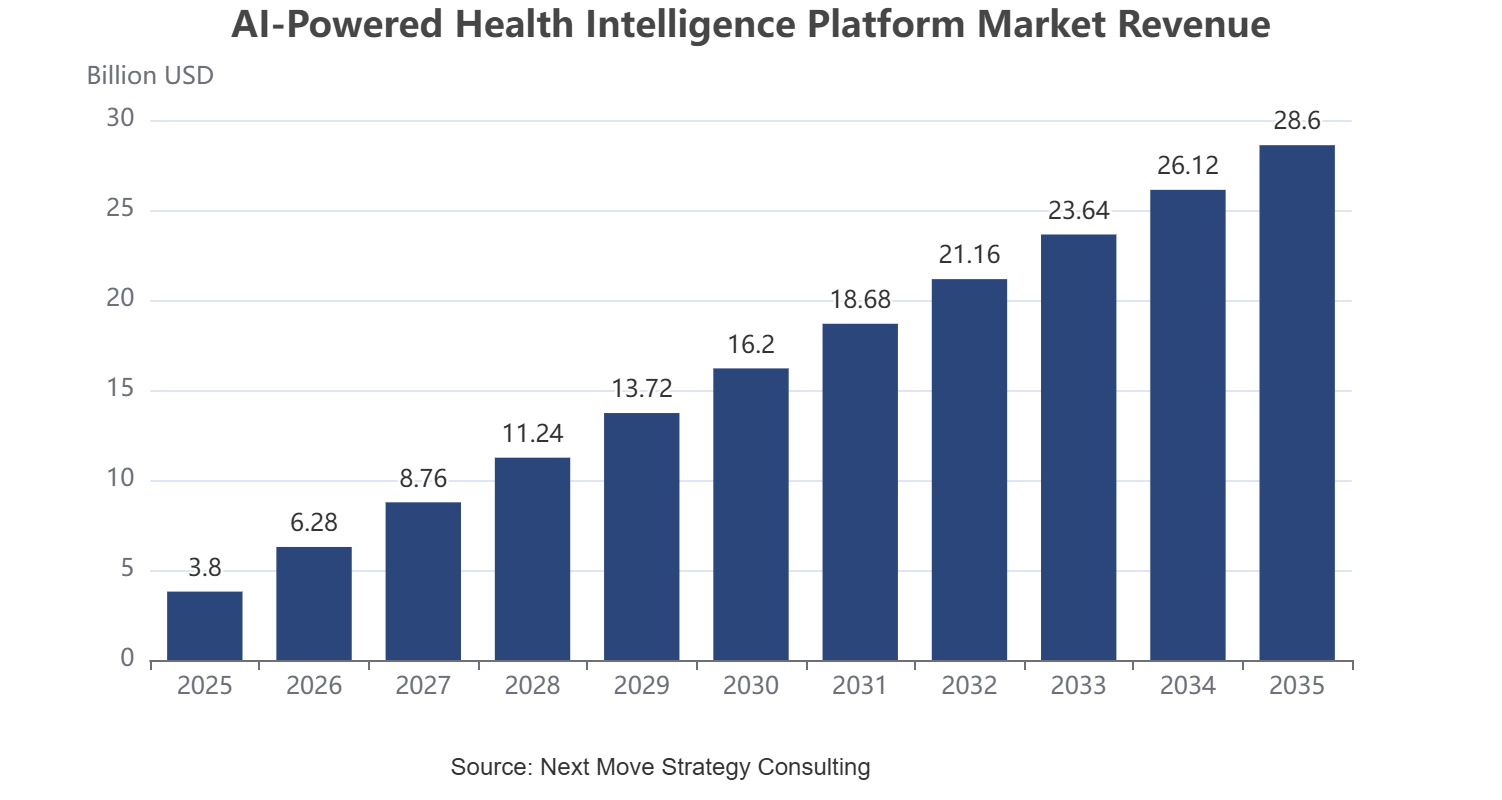
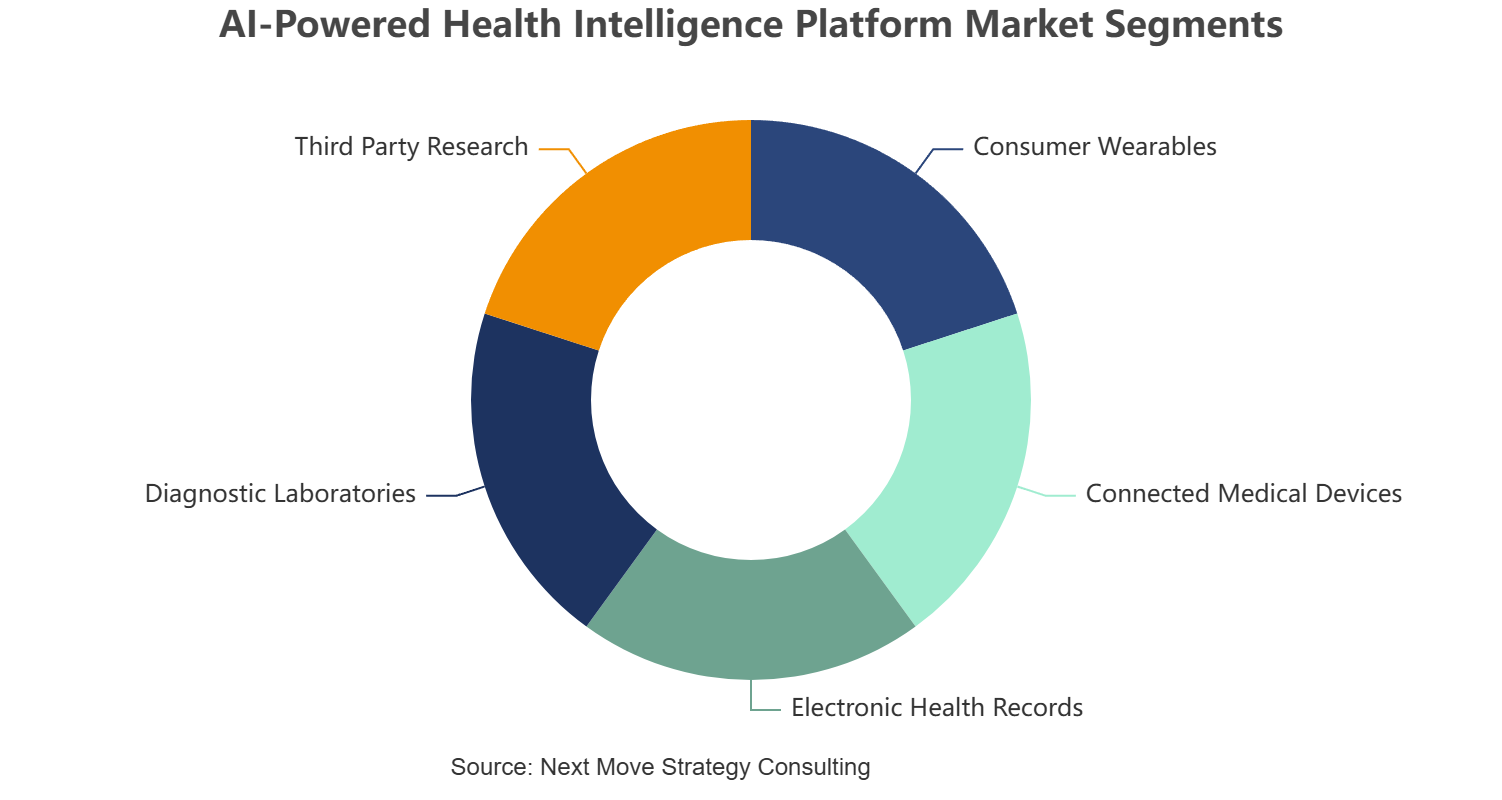
About the Author
 Liza Phukan
— Liza Phukan is Research Associate at Next Move Strategy Consulting, where she has covered emerging industries and market research across sectors for 3.5 years. Her work includes analyzing industry developments, validating market data, and developing structured business content from research findings. She uses secondary research and data-validation practices to turn complex market information into clear decision-useful market analysis for business audiences and support report development and B2B.
Liza Phukan
— Liza Phukan is Research Associate at Next Move Strategy Consulting, where she has covered emerging industries and market research across sectors for 3.5 years. Her work includes analyzing industry developments, validating market data, and developing structured business content from research findings. She uses secondary research and data-validation practices to turn complex market information into clear decision-useful market analysis for business audiences and support report development and B2B.
About the Reviewer
 Supradip Baul
— Supradip Baul is an accomplished business consultant and strategist with over a decade of rich experience in market intelligence, strategy, technology, and business transformation. His work has included rigorous qualitative and quantitative analysis across multiple industries, helping clients shape investment decisions and long-term roadmaps. Earlier in his career, he was associated with Gartner, where he contributed to industry-leading reports and market share analyses. He has worked with leading global companies and holds an MBA with a dual specialization in Marketing and Finance.
Supradip Baul
— Supradip Baul is an accomplished business consultant and strategist with over a decade of rich experience in market intelligence, strategy, technology, and business transformation. His work has included rigorous qualitative and quantitative analysis across multiple industries, helping clients shape investment decisions and long-term roadmaps. Earlier in his career, he was associated with Gartner, where he contributed to industry-leading reports and market share analyses. He has worked with leading global companies and holds an MBA with a dual specialization in Marketing and Finance.
At Next Move Strategy Consulting, we understand that insightful market research is the cornerstone of successful business decisions. That's why we employ a robust and multifaceted approach, combining various methodologies to deliver the most accurate and actionable data for our clients.

Research Landscape
We navigate the world of research with two primary approaches:
Qualitative Approach
Our qualitative research methodologies involve immersive techniques such as in-depth interviews, focus groups, and observational studies. By engaging directly with individuals and stakeholders, we uncover valuable insights that quantitative data alone may overlook.

Quantitative Research
In tandem with qualitative methodologies, NMSC leverages the power of Quantitative Research to provide a robust foundation of numerical insights. Through systematic data collection and analysis, we quantify patterns, preferences, and market trends, offering a comprehensive view of the business landscape.
Our quantitative research approach employs diverse tools, including surveys, experiments, and statistical modelling. These methodologies enable us to gather data from a large and representative sample, ensuring the statistical significance of our findings. By employing structured questionnaires and standardized data collection methods, we guarantee the reliability and validity of the information we present to our clients.
Quantitative research is particularly effective in measuring the prevalence of trends, assessing market size, and gauging the impact of various factors on consumer behavior. The numerical precision attained through this approach equips our clients with actionable insights, facilitating data-driven decision-making and strategy formulation.


Our Specialized Toolbox for Industry-Specific Market Research
We deploy a specialized arsenal of techniques tailored to meet your unique requirements. Here's a glimpse into our comprehensive toolbox:

Information Procurement
The stage entails acquiring market data or relevant information through various sources and methodologies.


Market Research Approach
We utilize both top-down and bottom-up approaches in market research analysis to achieve a comprehensive understanding of the market dynamics, leveraging the broad perspective of industry trends and macroeconomic factors alongside detailed insights from specific segments and individual companies.

Porters Five Forces Analysis
We conduct Porter's Five Forces analysis to evaluate the competitive landscape of an industry, providing us with insights into factors that affect profitability and strategic positioning.

SWOT Analysis

Forecasting
We utilize a forecasting model to predict future consumption by considering parameters like population, economics, regulations, market competition, drivers, constraints, technology, and pricing. We also employ statistical techniques such as multilinear regression, exponential smoothing, moving average, ARIMA, and Monte Carlo simulations for accurate predictions. In econometric forecasting, we analyzed short-term and long-term event impacts, attributing values based on regulatory frameworks, economic factors, and market events.





 Speak to Our Analyst