Case Processing Market Size, Share, Growth & Forecast by Offering (Software: Safety Case Management, Signal Detection, Risk Analytics, Integrated PV Suite; Managed Services: Intake and Triage, ICSR Processing, Medical Review, Literature Surveillance, Aggregate Reporting, QPPV Support; Professional Services: System), By Buyer Type (Pharma, Biotech, CRO), By Deployment Model (Cloud, On-Premises), By Case Source (Clinical Trials, Post-Marketing Spontaneous Reports) — Global Analysis 2026–2035
Industry: Healthcare | Publishing Date: July 6, 2026 | Last Updated: September 30, 2026 | No of Pages: N/A | No. of Tables: N/A | No. of Figures: N/A | Format: PDF | Report Code: HC4974
What Is the Case Processing Market Size?
The Global Case Processing Market was valued at USD 3.8 billion in 2025 and is projected to reach USD 4.2 billion in 2026. Continued regulatory expansion, rising adverse event volumes, and accelerating pharmaceutical pipeline activity are forecast to propel the market to USD 10.2 billion by 2035, advancing at a CAGR of 10.3% from 2026 to 2035. Key growth drivers include the global expansion of pharmacovigilance reporting obligations under evolving regulatory guidelines from the U.S. Food and Drug Administration (FDA) and the European Medicines Agency (EMA), the increasing complexity of Individual Case Safety Report (ICSR) processing requirements across multi-regional clinical trials, growing outsourcing of safety operations to specialized Contract Research Organizations (CROs) and pharmacovigilance service providers, and rising demand for cloud-based integrated pharmacovigilance software platforms that automate intake, triage, and aggregate reporting workflows.
|
Parameters |
Details |
|
Market Size in 2025 |
USD 3.8 Billion |
|
Market Size in 2026 |
USD 4.2 Billion |
|
Revenue Forecast in 2035 |
USD 10.2 Billion |
|
Growth Rate |
CAGR of 10.3% from 2026 to 2035 |
|
Analysis Period |
2025–2035 |
|
Base Year Considered |
2025 |
|
Forecast Period |
2026–2035 |
|
Market Size Estimation |
Billion USD |
|
Companies Profiled |
20 |
|
Countries Covered |
33 |
|
Market Share |
Top 1 |
Case Processing Market Overview
What Is the Case Processing Market?
The Case Processing Market refers to the ecosystem of software platforms, managed services, and professional services that enable pharmaceutical companies, biotechnology firms, medical device manufacturers, CROs, and public health organizations to collect, process, evaluate, and report individual case safety reports (ICSRs) and other safety data in compliance with global pharmacovigilance regulations. Case processing encompasses the full lifecycle of a safety case, from initial intake and triage through medical review, narrative writing, coding, expedited regulatory submission, and periodic aggregate reporting. The market supports regulatory compliance with ICH E2B(R3), EudraVigilance, FDA FAERS, WHO VigiBase, and comparable national pharmacovigilance databases across more than 130 countries.
How Has the Case Processing Market Evolved?
The Case Processing Market has matured through three distinct structural phases over the past two decades. The initial phase was characterized by paper-based and manual data entry processes, with limited technology standardization across regulatory jurisdictions. The second phase introduced dedicated pharmacovigilance software solutions such as Oracle Argus and ArisGlobal LifeSphere, enabling electronic case capture and ICSR submission workflows. NMSC's analysis indicates that the current phase is defined by cloud-native, AI-augmented case processing platforms that automate intake triage, auto-code adverse events using MedDRA, generate case narratives through natural language processing, and integrate with regulatory gateway systems in near real-time, fundamentally transforming both insourced and outsourced pharmacovigilance operations.
How Do Regulations Influence the Case Processing Market?
Regulatory requirements represent the primary structural driver of the Case Processing Market. The FDA's Code of Federal Regulations (21 CFR Part 312 and 314) and the EMA's Good Pharmacovigilance Practices (GVP) Modules I through XVI establish binding reporting timelines, content standards, and electronic submission requirements for ICSRs across clinical and post-marketing phases. The International Council for Harmonisation's ICH E2B(R3) guideline, implemented globally, standardizes ICSR data elements and XML transmission formats. From our research, we found that recent regulatory expansions, including EMA's mandatory MedDRA coding updates, FDA's ICH E2F aggregate reporting requirements, and WHO's VigiBase data quality standards, are compelling organizations to upgrade legacy case processing systems and increase investment in validated, submission-ready pharmacovigilance platforms.
How Is Technology Adoption Expanding Across the Case Processing Market?
Technology adoption across the Case Processing Market is accelerating as organizations seek to address rising case volumes and complexity while containing operational costs. Cloud-based pharmacovigilance platforms are displacing on-premises deployments across mid-sized pharmaceutical firms and CROs, driven by the scalability, audit-ready infrastructure, and reduced IT maintenance overhead that cloud delivery provides. Based on NMSC's research, we found that artificial intelligence is being embedded into case processing workflows through automated adverse event detection from unstructured literature and social media sources, intelligent signal detection algorithms, and large language model-assisted narrative generation tools. These capabilities are reducing average case processing cycle times and enabling pharmacovigilance teams to manage significantly higher ICSR volumes without proportional headcount increases.
|
Key Takeaways |
|
By offering, Software held the largest share of the Case Processing Market in 2025, led by the Integrated PV Suite segment at USD 0.98 billion. ICSR Processing is the fastest-growing sub-segment at a CAGR of 12.2% from 2026 to 2035, driven by increasing outsourcing of pharmacovigilance operations. |
|
By buyer type, Pharma accounted for USD 1.6 billion in 2025, representing the largest revenue share of the Case Processing Market. Biotech is the fastest-growing buyer segment at a CAGR of 13.0% from 2026 to 2035, as more biotechnology companies establish pharmacovigilance infrastructure and outsourced safety operations. |
|
By deployment model, Cloud held the largest share of the Case Processing Market at USD 1.9 billion in 2025. Cloud is also the fastest-growing deployment model at a CAGR of 12.4% from 2026 to 2035, supported by the migration of pharmacovigilance operations to scalable and validated cloud environments. |
|
By case source, Post-Marketing Spontaneous Reports accounted for the largest share of the Case Processing Market in 2025. Patient Support Programs are the fastest-growing case source segment at a CAGR of 12.4% from 2026 to 2035, driven by the expansion of specialty pharmaceutical and patient engagement programs |
|
North America dominates the Case Processing Market, contributing approximately USD 1.72 billion in 2025, supported by the presence of the world's largest pharmaceutical and biotechnology companies, the FDA's stringent adverse event reporting requirements, and the highest concentration of specialized pharmacovigilance service providers and technology vendors globally. |
|
Asia-Pacific is the fastest-growing major region in the Case Processing Market, advancing at a CAGR of 11.8%. from 2026 to 2035, led by India's rapidly expanding pharmaceutical manufacturing and CRO sector, growing regulatory harmonization efforts across ASEAN nations, and increasing foreign pharmaceutical company investment in regional pharmacovigilance infrastructure. |
|
The United States is the single largest national market in the Case Processing Market, representing over 70% of North American revenue in 2025, anchored by the FDA's comprehensive reporting obligations under 21 CFR Part 312 and 314, the global headquarters of leading pharmacovigilance software vendors, and the world's deepest pool of pharmacovigilance talent and outsourcing infrastructure. |
|
India is the fastest-growing national market within the Case Processing Market, advancing at a CAGR of 16.2% from 2026 to 2035, driven by the expansion of India-based pharmacovigilance CROs, CDSCO's harmonization with ICH guidelines, and the global pharmaceutical industry's increasing reliance on India as a low-cost, high-quality case processing hub. |
Key Emerging Trends in the Case Processing Market
How Is AI-Powered Automation Transforming Case Processing Workflows?
Artificial intelligence is fundamentally restructuring pharmacovigilance operations within the Case Processing Market. Natural language processing models are being deployed to extract adverse event information from unstructured sources, including electronic health records, literature publications, and patient support program contacts, reducing manual review time per case. Vendors such as Veeva Systems and ArisGlobal have integrated AI-assisted narrative generation and MedDRA autocoding into their platforms. From our research, we found that AI-driven automation is enabling organizations to process up to three times the ICSR volume per pharmacovigilance specialist, substantially improving operational scalability without proportional increases in headcount or processing costs.
How Is the Shift to Cloud-Native Pharmacovigilance Platforms Reshaping the Case Processing Market?
Cloud-native deployment has emerged as the dominant architectural direction across the Case Processing Market, displacing legacy on-premises pharmacovigilance systems across pharmaceutical companies and CROs of all sizes. Validated cloud environments, particularly AWS GovCloud and Microsoft Azure's pharmaceutical-grade deployments, offer pre-built compliance frameworks for 21 CFR Part 11, GxP, and ICH E2B(R3) that reduce system validation timelines from months to weeks. Through NMSC's assessment, we found that major pharmacovigilance platform vendors, including Oracle Argus Safety Cloud, Veeva Vault Safety, and ArisGlobal LifeSphere, have achieved significant cloud-based subscription revenue growth as pharmaceutical organizations migrate legacy systems during platform consolidation cycles.
What Role Is Regulatory Harmonization Playing in Driving Case Processing Market Growth?
Regulatory harmonization initiatives are expanding the global footprint of structured case processing requirements across emerging pharmaceutical markets, creating new commercial demand within the Case Processing Market. The International Council for Harmonisation's ICH M10, E2B(R3), and E2F guidelines are being adopted by regulatory authorities in Brazil (ANVISA), India (CDSCO), China (NMPA), and South Korea (MFDS), compelling local and multinational pharmaceutical companies operating in these markets to implement compliant case processing systems and processes. Our assessment indicates that harmonization with ICH standards is the single most significant regulatory driver expanding the total addressable market for case processing services and software across Asia-Pacific and Latin America.
How Is Outsourcing and the CRO Model Reshaping the Case Processing Market Structure?
The growing adoption of functional service provider (FSP) and full outsourcing models for pharmacovigilance operations is fundamentally reshaping the competitive and revenue structure of the Case Processing Market. Pharmaceutical companies across all tiers, from global top-20 firms to emerging biotech organizations, are transferring end-to-end ICSR processing, literature surveillance, and aggregate reporting functions to specialized CROs and pharmacovigilance outsourcing partners. NMSC's analysis indicates that organizations including IQVIA, ICON, Syneos Health, and Parexel have expanded their dedicated pharmacovigilance service divisions substantially in recent years, competing aggressively on processing capacity, technology infrastructure, and global regulatory expertise to capture this growing outsourcing wave.
Ecosystem Analysis Of The Case Processing Market
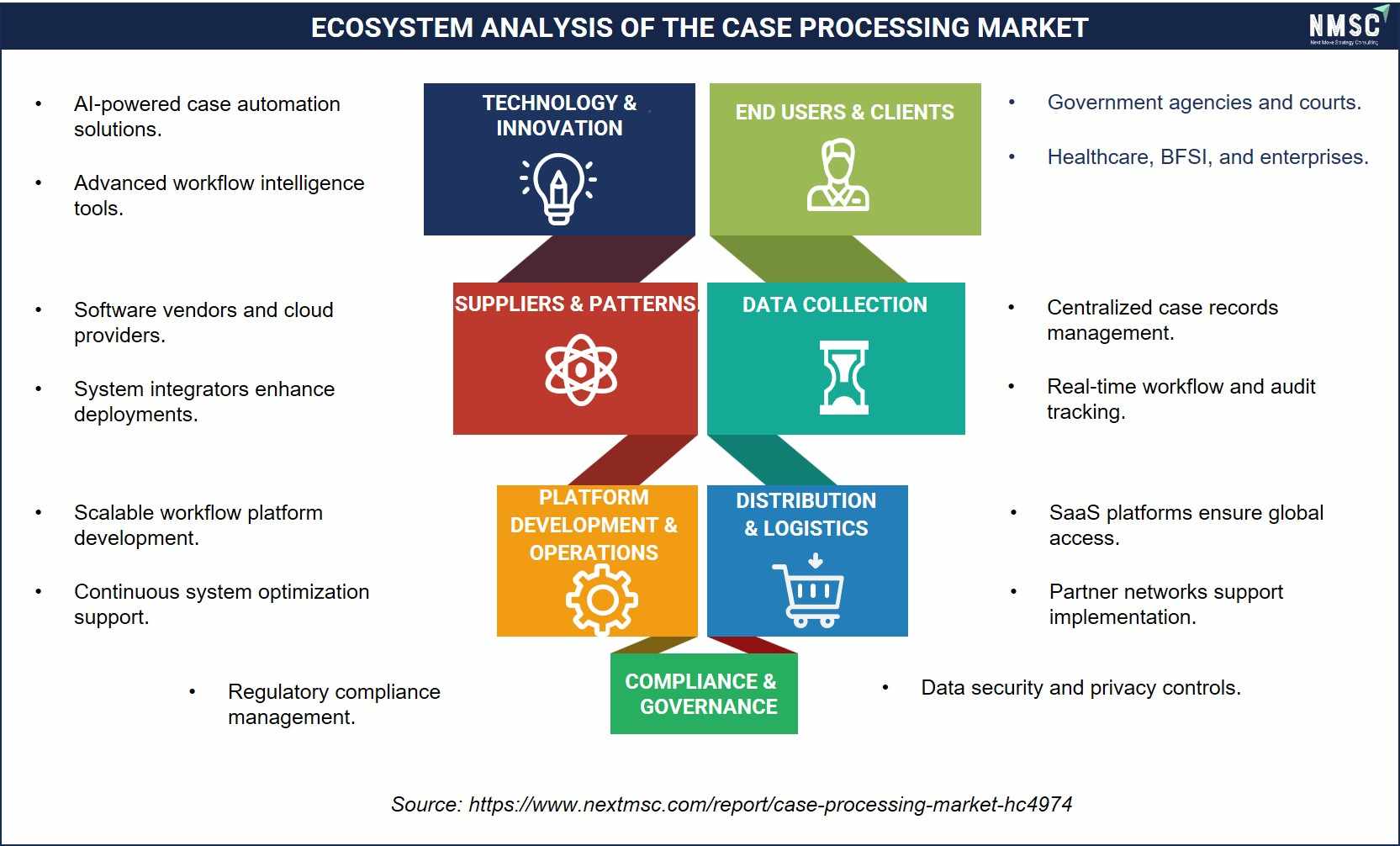
The ecosystem analysis of the Case Processing Market illustrates the interconnected value chain that supports efficient safety and case management operations. It begins with technology and innovation, enabling advanced automation and AI capabilities, followed by data collection from multiple reporting sources. Suppliers and partners provide specialized services and expertise, while platform development and operations ensure seamless workflow management. Distribution and logistics facilitate information exchange, and compliance and governance maintain adherence to regulatory requirements. The ecosystem ultimately serves end users, including pharmaceutical companies, healthcare organizations, and other regulated industries.
What Are the Key Market Drivers, Breakthroughs, and Investment Opportunities that Will Shape the Case Processing Market in the Next Decade?
|
Drivers / Trends / Restraints |
(+/-) % Impact on CAGR Forecast |
Geographic Relevance |
Impact Timeline |
|
Rising Global Adverse Event Reporting Obligations |
+2.1% |
Global (led by North America, Europe) |
2025–2035 |
|
Outsourcing of Pharmacovigilance Functions to CROs |
+1.8% |
North America, Europe, Asia-Pacific |
2025–2032 |
|
AI and Automation in ICSR Processing |
+1.5% |
Global (all regions) |
2026–2035 |
|
Cloud Platform Migration in Pharmacovigilance |
+1.2% |
North America, Europe, Australia |
2025–2030 |
|
ICH Harmonization Expanding Market in Emerging Regions |
+1.0% |
Asia-Pacific, Latin America, MEA |
2026–2035 |
|
Shortage of Qualified Pharmacovigilance Personnel |
-1.1% |
All regions |
Ongoing |
|
High Regulatory Validation Costs for System Implementation |
-0.7% |
SMB Pharma, Biotech globally |
2025–2028 |
|
Integration Complexity Across Legacy Safety Systems |
-0.5% |
North America, Europe |
Ongoing |
|
Patient Support Program Case Source Expansion |
+1.3% |
North America, Europe |
2025–2030 |
|
Biosimilar and Generics Pipeline Expansion |
+0.9% |
Asia-Pacific, Latin America |
2026–2035 |
What Are the Growth Drivers of the Case Processing Market?
How Are Rising Global Pharmacovigilance Reporting Obligations Driving the Case Processing Market?
Expanding pharmacovigilance reporting requirements across global regulatory jurisdictions represent the single most durable growth driver in the Case Processing Market. The FDA's MedWatch reporting program and EMA's EudraVigilance system require pharmaceutical companies to submit expedited ICSRs for serious unexpected adverse events within 15 calendar days of first notification and non-expedited ICSRs quarterly or annually. Based on our market evaluation, we noticed that FDA adverse event reporting volumes have grown consistently year-over-year, with the FDA Adverse Event Reporting System (FAERS) publicly documenting over 25 million case reports as of 2024, reflecting the structural growth in reporting obligations driven by an expanding universe of approved pharmaceutical products, biosimilars, and combination therapies.
How Is the Pharmaceutical Outsourcing Wave Expanding the Case Processing Market?
The structural shift of pharmacovigilance functions from in-house pharmaceutical operations to specialized CROs and pharmacovigilance service providers is one of the primary growth catalysts for the Case Processing Market. The U.S. Government Accountability Office (GAO) has recognized that pharmaceutical companies are increasingly adopting functional service provider models to manage cost pressures, access specialized expertise, and scale processing capacity in response to regulatory timelines. From our assessment, we observed that leading CROs including IQVIA, ICON, Parexel, and Syneos Health have significantly expanded their dedicated pharmacovigilance service portfolios, with global pharmacovigilance outsourcing representing a majority of total case processing revenue across the competitive landscape.
How Is AI-Driven Automation Creating Structural Efficiencies in the Case Processing Market?
Artificial intelligence and machine learning technologies are creating measurable operational improvements across the Case Processing Market by automating labor-intensive case processing sub-tasks. Intelligent document processing tools apply optical character recognition and natural language processing to extract structured adverse event data from incoming literature, healthcare professional communications, and patient support contacts. The National Institutes of Health (NIH) has published research demonstrating that NLP-assisted literature screening can reduce manual review burden by over 50% in pharmacovigilance literature surveillance workflows. Our analysis shows that AI-assisted MedDRA coding, duplicate case detection, and AI-driven narrative drafting are generating measurable cycle time reductions that allow pharmacovigilance operations to handle growing case volumes with greater consistency and compliance accuracy.
What Are the Growth Inhibitors of the Case Processing Market?
How Does the Shortage of Qualified Pharmacovigilance Personnel Constrain the Case Processing Market?
A persistent and structurally significant shortage of trained pharmacovigilance professionals represents one of the most critical constraints on the Case Processing Market. Medical reviewers, safety physicians, regulatory affairs specialists, and pharmacovigilance case processors require highly specialized training in drug safety science, regulatory frameworks, and GxP-compliant documentation practices. The World Health Organization (WHO) has consistently highlighted the global shortage of pharmacovigilance expertise as a core challenge for national regulatory authorities and pharmaceutical organizations, particularly in low- and middle-income countries seeking to build compliant drug safety systems. This talent scarcity limits case processing throughput, elevates operational costs, and reduces the speed at which organizations can scale their pharmacovigilance capabilities in response to pipeline growth.
How Do High System Validation and Implementation Costs Limit Case Processing Market Penetration?
The significant costs associated with validating and implementing pharmacovigilance software systems present a structural barrier to adoption, particularly among smaller pharmaceutical companies and emerging biotech organizations entering the market for the first time. Computer System Validation (CSV) requirements under 21 CFR Part 11 and EMA GxP Annex 11 mandate rigorous documentation, testing, and audit trail maintenance for all regulated pharmacovigilance systems. Based on research conducted by NMSC, we found that system implementation and validation projects for enterprise pharmacovigilance platforms can require 12 to 24 months of dedicated project time and significant consulting and IT resource investments, creating a substantial upfront cost that can delay adoption and extend payback periods for smaller organizations procuring case processing systems.
What Are the Growth Opportunities in the Case Processing Market?
How Is the Expansion of Patient Support Programs Creating New Case Source Opportunities in the Case Processing Market?
Patient support programs operated by pharmaceutical companies across specialty, rare disease, and oncology therapeutic areas represent one of the fastest-growing case source opportunities in the Case Processing Market. These programs generate a substantial and growing volume of regulatory-reportable adverse event contacts from patients and caregivers, creating new case processing demand that requires specialized intake protocols, trained healthcare professional oversight, and validated case processing workflows. The FDA's guidance on reporting obligations for adverse events received through patient support programs establishes the regulatory framework that makes this an expanding compliance-driven commercial opportunity. Our findings suggest that organizations investing in dedicated patient support program case processing infrastructure are positioned to capture a differentiated and rapidly growing segment of the overall case processing services market.
How Is the Biosimilars and Generics Pipeline Expansion Creating Structural Growth Opportunities in the Case Processing Market?
The unprecedented expansion of the global biosimilar and generic pharmaceutical pipeline represents a significant structural growth opportunity for the Case Processing Market, particularly across Asia-Pacific and Latin American markets. Biosimilars require robust post-marketing pharmacovigilance infrastructure due to immunogenicity monitoring requirements, product-specific traceability mandates, and enhanced adverse event reporting compared with small molecule generic drugs. The FDA's Center for Drug Evaluation and Research (CDER) and EMA's Committee for Medicinal Products for Human Use (CHMP) have both published biosimilar pharmacovigilance-specific guidance that compels biosimilar manufacturers to establish comprehensive case processing systems from the date of product approval. Our analysis shows that the expanding biosimilar approval pipeline across oncology, autoimmune, and diabetes therapeutic areas will generate durable incremental demand for case processing services and software through the forecast period.
How Is the MedTech Sector Creating a New Demand Frontier in the Case Processing Market?
Medical device manufacturers represent an increasingly important and structurally distinct buyer segment within the Case Processing Market, driven by the FDA's Medical Device Reporting (MDR) regulations and the EU Medical Device Regulation (MDR 2017/745) and In-Vitro Diagnostic Regulation (IVDR 2017/746) frameworks. These regulations impose mandatory complaint handling, adverse event investigation, trend reporting, and post-market clinical follow-up obligations that require case processing infrastructure equivalent in complexity to pharmaceutical pharmacovigilance. Based on NMSC's research, we found that the transition of medical device manufacturers from legacy complaint management systems to integrated case processing platforms capable of handling both device complaints and adverse event reporting is creating a new and fast-growing commercial opportunity for pharmacovigilance software vendors and managed service providers with validated MedTech case processing capabilities.
Strategic Framework Of The Case Processing Market
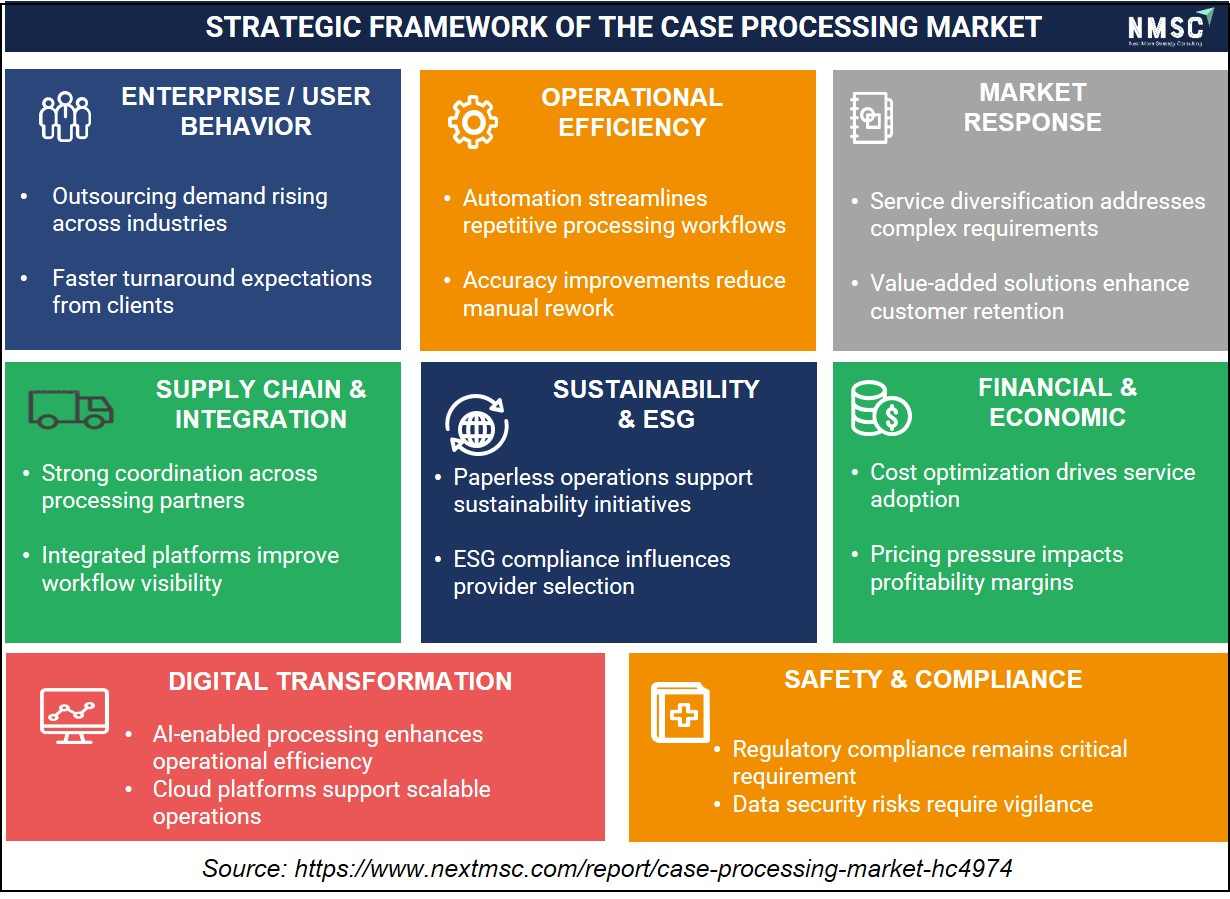
The Strategic Framework of the Case Processing Market highlights the key factors shaping market growth and competitive positioning. Rising outsourcing demand and expectations for faster turnaround are driving investments in automation and AI-enabled workflows that improve operational efficiency and accuracy. Integrated platforms and strong collaboration across processing partners enhance workflow visibility, while cloud-based technologies support scalable operations. At the same time, cost optimization, sustainability initiatives, and stringent regulatory compliance requirements are influencing provider selection and accelerating the adoption of secure, technology-driven case processing solutions.
How Is the Case Processing Market Segmented in This Report, and What Are the Key Insights from the Segmentation Analysis?
How Does Offering Segmentation Reveal the Structural Composition of the Case Processing Market?
|
Offering Segment |
2025 (USD Bn) |
2035 (USD Bn) |
CAGR (%) |
|
Software |
2.24 |
6.06 |
10.5% |
|
Safety Case Management |
0.48 |
1.28 |
10.3% |
|
Signal Detection |
0.38 |
1.02 |
10.4% |
|
Risk Analytics |
0.26 |
0.72 |
10.7% |
|
Integrated PV Suite |
0.98 |
2.72 |
10.7% |
|
Other Software |
0.14 |
0.32 |
8.6% |
|
Managed Services |
1.18 |
3.14 |
10.3% |
|
Intake and Triage |
0.20 |
0.50 |
9.6% |
|
ICSR Processing |
0.32 |
1.01 |
12.2% |
|
Medical Review |
0.24 |
0.58 |
9.2% |
|
Literature Surveillance |
0.18 |
0.46 |
9.8% |
|
Aggregate Reporting |
0.14 |
0.35 |
9.6% |
|
QPPV Support |
0.06 |
0.13 |
8.0% |
|
Other Managed Services |
0.04 |
0.11 |
10.7% |
|
Professional Services |
0.38 |
1.00 |
10.2% |
|
System Implementation & Validation |
0.16 |
0.42 |
10.1% |
|
Data Migration and Integration |
0.10 |
0.26 |
10.0% |
|
Consulting and Advisory |
0.09 |
0.22 |
9.3% |
|
Training and Support |
0.03 |
0.10 |
12.8% |
Based on our analysis of the Case Processing Market by offering, we observed that the market is structured into Software platforms, Managed Services, and Professional Services. Software holds the dominant position with USD 2.24 billion in 2025, led by the Integrated PV Suite sub-segment at USD 0.98 billion, reflecting enterprise demand for unified pharmacovigilance platforms that consolidate safety case management, signal detection, and regulatory submission. Managed Services, at USD 1.18 billion in 2025, are expanding rapidly as pharmaceutical organizations outsource ICSR processing, literature surveillance, and QPPV support functions, with ICSR Processing representing the fastest-growing sub-segment at a CAGR of 12.2% from 2026 to 2035. Professional Services, at USD 0.38 billion in 2025, generate demand through system implementation, validation, and data migration engagements as pharmaceutical companies modernize legacy pharmacovigilance platforms.
How Does Buyer Type Segmentation Differentiate Revenue Composition in the Case Processing Market?
|
Buyer Type Segment |
2025 (USD Bn) |
2035 (USD Bn) |
CAGR (%) |
|
Pharma |
1.60 |
4.00 |
9.6% |
|
Biotech |
0.68 |
2.31 |
13.0% |
|
CRO |
1.00 |
2.60 |
10.0% |
|
MedTech |
0.30 |
0.82 |
10.6% |
|
Animal Health |
0.14 |
0.30 |
7.9% |
|
Public Sector |
0.08 |
0.17 |
7.8% |
Based on our analysis of the Case Processing Market by buyer type, we observed that the market is segmented into Pharma, Biotech, CRO, MedTech, Animal Health, and Public Sector organizations. Pharma is the largest buyer segment, contributing USD 1.60 billion in 2025, reflecting the extensive pharmacovigilance compliance obligations across large-cap and mid-tier pharmaceutical companies maintaining marketed product portfolios across global regulatory jurisdictions. Biotech is the fastest-growing buyer segment at a CAGR of 13.0% from 2026 to 2035, as an increasing number of clinical-stage biotechnology companies achieve product approval and establish pharmacovigilance infrastructure for the first time through outsourced case processing and cloud-based platforms. CROs represent a significant buyer segment at USD 1.00 billion in 2025, growing at a CAGR of 10.0% as functional service provider engagements and full outsourcing mandates expand the demand for validated case processing technology within CRO operations. MedTech is an emerging segment advancing at a CAGR of 10.6%, driven by FDA MDR and EU MDR/IVDR adverse event reporting requirements compelling medical device manufacturers to adopt pharmacovigilance-grade case processing infrastructure.
How Does Deployment Model Shape Revenue Distribution in the Case Processing Market?
|
Deployment Model Segment |
2025 (USD Bn) |
2035 (USD Bn) |
CAGR (%) |
|
Cloud |
1.90 |
6.11 |
12.4% |
|
On-Premises |
1.44 |
2.94 |
7.4% |
|
Hybrid |
0.46 |
1.15 |
9.6% |
Based on our analysis of the Case Processing Market by deployment model, we observed that the market is segmented into Cloud, On-Premises, and Hybrid deployment environments. Cloud is both the dominant and fastest-growing deployment model, accounting for USD 1.90 billion in 2025 and advancing at a CAGR of 12.4% from 2026 to 2035, driven by the migration of pharmacovigilance operations to validated cloud platforms from Oracle Argus Safety Cloud, Veeva Vault Safety, and ArisGlobal LifeSphere that offer GxP-compliant infrastructure and ICH E2B(R3) gateway connectivity. On-Premises deployments, at USD 1.44 billion in 2025, represent legacy installations at large pharmaceutical companies advancing at a more modest CAGR of 7.4% as migration cycles gradually shift volumes toward cloud-native architectures. Hybrid deployments, at USD 0.46 billion in 2025 and advancing at a CAGR of 9.6%, serve organizations managing complex multi-system pharmacovigilance environments requiring both cloud scalability and on-premises data residency for specific regulatory jurisdictions.
How Does Case Source Segmentation Reveal Demand Dynamics in the Case Processing Market?
|
Case Source Segment |
2025 (USD Bn) |
2035 (USD Bn) |
CAGR (%) |
|
Post-Marketing Spontaneous Reports |
1.30 |
3.34 |
9.9% |
|
Clinical Trials |
0.96 |
2.46 |
9.9% |
|
Literature |
0.48 |
1.42 |
11.4% |
|
Solicited Reports |
0.28 |
0.70 |
9.6% |
|
Patient Support Programs |
0.32 |
1.03 |
12.4% |
|
Medical Information |
0.18 |
0.46 |
9.8% |
|
Medical Device Complaints |
0.12 |
0.36 |
11.6% |
|
Market Research |
0.08 |
0.20 |
9.6% |
|
Other Sources |
0.08 |
0.23 |
11.1% |
Based on our analysis of the Case Processing Market by case source, we observed that the market is segmented into Post-Marketing Spontaneous Reports, Clinical Trials, Literature, Solicited Reports, Patient Support Programs, Medical Information, Medical Device Complaints, Market Research, and Other Sources. Post-Marketing Spontaneous Reports is the largest case source, accounting for USD 1.30 billion in 2025, reflecting the broad mandatory adverse event reporting obligations under FDA MedWatch and EMA EudraVigilance for all approved marketed pharmaceutical products globally. Clinical Trials represent the second-largest case source at USD 0.96 billion in 2025, driven by expanding global clinical research activity and expedited ICSR reporting requirements for serious unexpected adverse reactions under ICH E2B(R3) and 21 CFR Part 312. Patient Support Programs are the fastest-growing case source at a CAGR of 12.4% from 2026 to 2035, as the proliferation of specialty pharmaceutical and rare disease patient engagement programs generates a growing volume of regulatory-reportable adverse event contacts requiring validated case processing workflows. Literature surveillance at USD 0.48 billion in 2025 is expanding at a CAGR of 11.4%, driven by AI-powered automated literature screening tools that are identifying increasing volumes of reportable adverse event signals from published medical and scientific literature.
Regional Outlook
Geographic Performance Snapshot
|
Region |
2025 (USD Bn) |
2035 (USD Bn) |
CAGR (%) |
Key Driver |
|
North America |
1.72 |
4.53 |
10.2% |
FDA reporting obligations, outsourcing CRO base |
|
Europe |
1.02 |
2.62 |
9.9% |
EMA GVP regulations, EudraVigilance expansion |
|
Asia-Pacific |
0.64 |
1.95 |
11.8% |
India CRO growth, ICH harmonization in China and ASEAN |
|
Middle East & Africa |
0.18 |
0.52 |
11.2% |
Regulatory modernization, multinational pharma expansion |
|
Latin America |
0.24 |
0.58 |
9.2% |
ANVISA ICH harmonization, Brazil pharma sector growth |
North America Case Processing Market
North America is the leading region in the Case Processing Market, generating approximately USD 1.72 billion in 2025 and projected to reach USD 4.53 billion by 2035 at a CAGR of 10.2%. The region's dominance reflects the FDA's comprehensive pharmacovigilance reporting requirements, the presence of the world's largest pharmaceutical and biotechnology companies, and the highest global concentration of specialized pharmacovigilance CROs and technology vendors. The U.S. MedWatch and FDA FAERS reporting systems create structured demand for validated case processing infrastructure across both clinical and post-marketing phases. Based on our market evaluation, we noticed that North America is also the leading market for pharmacovigilance outsourcing, with FSP and full-service models well established across the region.
U.S. Case Processing Market
Based on our engagements with market participants, the United States accounts for approximately 78% of North American Case Processing Market revenue in 2025, underpinned by the FDA's 21 CFR Part 314 and Part 312 reporting mandates, the dense concentration of global pharmaceutical and biotechnology company headquarters, and the world's most developed pharmacovigilance service provider ecosystem. Industry demand structure is shaped by both large-cap pharmaceutical companies maintaining extensive in-house safety operations and a growing biotech sector that increasingly relies on CRO and FSP outsourcing models for case processing support. Technology penetration is mature, with enterprise platforms from Oracle, ArisGlobal, and Veeva Systems widely deployed. Competitive intensity is very high, with global CROs, specialist pharmacovigilance service firms, and technology vendors competing across all buyer segments.
Canada Case Processing Market
Through our analysis, Canada represents approximately 15% of North American Case Processing Market revenue. Health Canada's regulatory reporting requirements, aligned with ICH guidelines, create structured demand for validated ICSR processing and aggregate reporting services across pharmaceutical companies operating in the Canadian market. The Canadian pharmacovigilance infrastructure is well developed, with pharmaceutical companies often managing Canadian reporting obligations through the same case processing systems used for FDA submissions. Growing biotech clusters in Ontario and British Columbia are creating incremental demand for outsourced pharmacovigilance services, and leading CROs operating from Canadian offices serve both domestic and cross-border pharmacovigilance mandates.
Mexico Case Processing Market
From our assessment, Mexico is a developing but growing Case Processing Market within North America. COFEPRIS pharmacovigilance reporting requirements are increasingly aligned with ICH E2B(R3) standards, compelling multinational pharmaceutical companies operating in Mexico to integrate local reporting into their global case processing platforms. Generic and biosimilar pharmaceutical manufacturers with a Mexican production base are establishing pharmacovigilance infrastructure to meet COFEPRIS post-marketing surveillance requirements. Market growth is supported by nearshoring trends in pharmaceutical manufacturing and growing investment by global CROs in Mexico-based pharmacovigilance staffing capacity to serve North American clients at cost-competitive rates.
Europe Case Processing Market
Europe is the second-largest region in the Case Processing Market, contributing USD 1.02 billion in 2025 and forecast to reach USD 2.62 billion by 2035 at a CAGR of 9.9%. The EMA's Good Pharmacovigilance Practices (GVP) modules, EudraVigilance reporting gateway, and the QPPV requirement under Directive 2010/84/EU create the most comprehensive and complex pharmacovigilance regulatory framework globally. Based on our market evaluation, we noticed that Europe's pharmaceutical regulatory environment continues to evolve through new GVP module revisions, the EU Clinical Trials Regulation (536/2014), and enhanced signal detection guidelines that consistently expand pharmacovigilance operational obligations.
UK Case Processing Market
Based on our engagements, the United Kingdom is the largest individual country market for Case Processing in Europe, representing approximately 21% of European regional revenue in 2025. The MHRA's Yellow Card pharmacovigilance reporting system and UK-specific QPPV requirements, maintained post-Brexit under UK GDPR-equivalent pharmacovigilance legislation, sustain strong case processing demand across pharmaceutical and biotechnology companies with UK marketing authorizations. London's established pharmaceutical and CRO base, including ICON, Parexel, and Syneos Health UK operations, provides both technology and service capabilities. The UK's Clinical Research Environment, supported by the NIHR, drives clinical trial ICSR processing volumes from one of Europe's most active research ecosystems.
Germany Case Processing Market
Through our analysis, Germany represents approximately 18% of European Case Processing Market revenue, driven by Europe's largest pharmaceutical industry, home to Bayer, Merck KGaA, Boehringer Ingelheim, and a dense network of CROs and pharmacovigilance service providers. German pharmaceutical companies operate some of the most extensive pharmacovigilance systems in Europe, maintaining both centralized EU QPPV functions and local pharmacovigilance officers. The BfArM (Federal Institute for Drugs and Medical Devices) oversees national pharmacovigilance obligations that supplement EMA reporting requirements. Germany's life sciences ecosystem also drives literature surveillance case processing demand through extensive clinical research and medical publication activity.
France Case Processing Market
From our assessment, France represents a significant Case Processing Market within Europe, supported by its established pharmaceutical sector, home to Sanofi and a broad mid-tier pharmaceutical industry. The ANSM (National Agency for Medicines and Health Products Safety) enforces national pharmacovigilance requirements aligned with EMA GVP modules. France's national pharmacovigilance network, coordinated through 31 regional pharmacovigilance centers, creates structured demand for literature surveillance and healthcare professional report case processing services. Investment under the France 2030 strategy in life sciences and digital health is also generating incremental demand for cloud-based pharmacovigilance infrastructure.
Italy Case Processing Market
According to evaluation, Italy is a mid-tier European Case Processing Market with growing adoption across its established pharmaceutical manufacturing sector and expanding biotech cluster. The AIFA (Italian Medicines Agency) pharmacovigilance reporting requirements, aligned with EMA GVP modules, mandate electronic ICSR submission through the national pharmacovigilance network. Italy's PNRR investment in healthcare digitalization is creating incremental demand for cloud-based pharmacovigilance systems. A number of global CROs maintain Italy-based pharmacovigilance service operations that serve both domestic pharmaceutical clients and provide cost-competitive case processing capacity for broader European and global mandates.
Spain Case Processing Market
Based on our engagements, Spain demonstrates steady growth in the Case Processing Market, driven by an active pharmaceutical industry and the AEMPS (Spanish Agency for Medicines and Health Products) pharmacovigilance reporting framework. Spanish pharmaceutical companies and subsidiaries of multinational firms maintain established case processing operations aligned with EMA GVP requirements. Barcelona and Madrid host growing life sciences and CRO communities that are increasingly involved in pharmacovigilance outsourcing. Spain's participation in EudraVigilance reporting and its 17 autonomous regional pharmacovigilance centers reflect a mature but evolving pharmacovigilance infrastructure that creates consistent demand for case processing services.
Sweden Case Processing Market
Through our analysis, Sweden maintains a specialized Case Processing Market with high per-capita pharmaceutical activity supported by AstraZeneca's Gothenburg and Stockholm operations, a strong generics pharmaceutical sector, and one of Europe's most active life sciences research communities. The MPA (Medical Products Agency) implements EMA GVP pharmacovigilance requirements for Swedish marketing authorizations. Sweden's advanced healthcare system, with comprehensive electronic health records, creates emerging opportunities for AI-assisted adverse event detection from real-world clinical data. Nordic pharmacovigilance service capacity is concentrated in Sweden, serving pharmaceutical clients across the Nordic and Baltic regions.
Denmark Case Processing Market
From our assessment, Denmark occupies a distinctive position in the European Case Processing Market as both a pharmaceutical industry hub, home to Novo Nordisk and LEO Pharma, and a leading national model for pharmacovigilance data quality. The Danish Medicines Agency (DKMA) implements robust pharmacovigilance reporting frameworks aligned with EMA GVP standards. Denmark's advanced health registry infrastructure creates unique opportunities for real-world adverse event data integration with pharmacovigilance case processing workflows. Novo Nordisk's global scale in diabetes and obesity therapeutics generates one of the highest ICSR processing volumes in Northern Europe, creating significant demand for both in-house and outsourced case processing capabilities.
Finland Case Processing Market
According to evaluation, Finland's Case Processing Market is characterized by advanced digital health infrastructure, high pharmaceutical innovation activity through companies such as Orion Pharma, and a mature public pharmacovigilance reporting system administered by Fimea (Finnish Medicines Agency). Finland's healthcare data ecosystem, including comprehensive national health registries, is increasingly being integrated with pharmacovigilance workflows to identify adverse event signals from real-world evidence. The Finnish government's digital health strategy and EU clinical research investment are supporting incremental demand for cloud-based case processing platforms and pharmacovigilance managed services.
Netherlands Case Processing Market
Based on our engagements, the Netherlands is a strategically important Case Processing Market in Europe, hosting the EMA headquarters in Amsterdam and a concentration of global pharmaceutical companies including Organon and numerous biopharmaceutical subsidiaries. The CBG-MEB (Medicines Evaluation Board) implements national pharmacovigilance requirements supplementing EMA GVP obligations. Amsterdam's life sciences cluster and the Netherlands' role as a European pharmaceutical regulatory hub sustain strong demand for pharmacovigilance expertise and case processing services. The Netherlands also hosts significant CRO operations with dedicated pharmacovigilance service divisions serving pan-European pharmaceutical clients.
Rest of Europe Case Processing Market
Through our analysis, the Rest of Europe, comprising Poland, Belgium, Switzerland, Austria, Portugal, Czech Republic, and other European nations, collectively represents a growing and commercially significant portion of the European Case Processing Market. Switzerland, home to Roche, Novartis, and a deep pool of pharmaceutical innovation, generates some of the highest per-company ICSR volumes in continental Europe and sustains demand for sophisticated case processing infrastructure. Belgium, hosting the European Commission and the offices of numerous pharmaceutical lobbying and regulatory affairs organizations, is a structurally important market. Poland and Czech Republic are emerging outsourcing destinations for pharmacovigilance managed services, offering multilingual case processing capacity at competitive cost structures.
Asia-Pacific Case Processing Market
Asia-Pacific is the fastest-growing region in the Case Processing Market, advancing from USD 0.64 billion in 2025 to USD 1.95 billion by 2035 at a CAGR of 11.8%. The region's growth is driven by India's rapidly expanding pharmaceutical manufacturing sector and pharmacovigilance CRO industry, China's NMPA regulatory modernization, South Korea's and Japan's advanced pharmaceutical markets, and the broader harmonization of ASEAN nations' pharmacovigilance frameworks with ICH standards. Regional case processing demand is increasing across both insourced pharmaceutical operations and outsourced pharmacovigilance service engagements.
China Case Processing Market
Based on our engagements, China is the largest single country market in Asia-Pacific for Case Processing, driven by NMPA's pharmacovigilance reporting requirements under the Drug Administration Law (2019) and supporting regulations that mandate ICSR submission, periodic benefit-risk evaluation reports, and signal detection for all marketed pharmaceutical and biologic products in China. The NMPA's alignment with ICH E2B(R3) reporting standards is compelling multinational pharmaceutical companies to integrate Chinese case processing into global pharmacovigilance systems. Local pharmaceutical companies and CROs are developing pharmacovigilance capabilities, and China's vast patient population generates high adverse event report volumes across its national pharmacovigilance database, the CNPV system.
India Case Processing Market
Through our analysis, India is the fastest-growing national Case Processing Market in Asia-Pacific, advancing at a CAGR of 16.2% from 2026 to 2035. India's established pharmaceutical manufacturing industry, which supplies over 20% of global generic medicines by volume, creates substantial post-marketing pharmacovigilance obligations for Indian pharmaceutical exporters across FDA, EMA, and other regulatory jurisdictions. The CDSCO's Pharmacovigilance Programme of India (PvPI), launched under the WHO's program, is expanding national adverse event reporting infrastructure. India's CRO sector, led by companies such as Tata Consultancy Services, Wipro, and specialist pharmacovigilance providers, serves as a global delivery hub for outsourced case processing services, attracting pharmaceutical clients seeking cost-competitive, high-quality pharmacovigilance processing capacity.
Japan Case Processing Market
From our assessment, Japan is the second-largest Asia-Pacific Case Processing Market, supported by its established pharmaceutical industry, home to major companies including Takeda, Astellas, Daiichi Sankyo, and Eisai. The PMDA (Pharmaceuticals and Medical Devices Agency) implements rigorous pharmacovigilance reporting requirements for marketed products in Japan, including domestic ICSR submission and annual periodic safety reports aligned with ICH E2F standards. Japan's pharmaceutical sector is characterized by high pharmacovigilance compliance standards and significant investment in validated case processing systems. The PMDA's progressive alignment with ICH guidelines has simplified integration of Japanese pharmacovigilance operations into global case processing platforms.
South Korea Case Processing Market
According to evaluation, South Korea demonstrates high pharmacovigilance maturity within the Asia-Pacific Case Processing Market, supported by the MFDS (Ministry of Food and Drug Safety) pharmacovigilance reporting framework that is increasingly aligned with ICH E2B(R3) standards. Korean pharmaceutical companies including Samsung Biologics, Celltrion, and Hanmi Pharmaceutical are significant biosimilar exporters with complex global pharmacovigilance obligations across FDA, EMA, and MFDS jurisdictions. South Korea's advanced biotech sector is creating demand for specialized case processing infrastructure to support biosimilar post-marketing pharmacovigilance programs. The government's biopharma industry promotion strategy is supporting investment in pharmacovigilance capability development.
Taiwan Case Processing Market
Based on our engagements, Taiwan's Case Processing Market is concentrated in the pharmaceutical industry and growing biologics sector. The TFDA (Taiwan Food and Drug Administration) implements pharmacovigilance reporting requirements for marketed products, and Taiwan-based pharmaceutical companies serving export markets maintain case processing systems aligned with FDA and EMA requirements. Taiwan's contract manufacturing and pharmaceutical outsourcing sectors generate pharmacovigilance service demand. The government's biomedical industry promotion initiatives are supporting the development of Taiwan's domestic pharmacovigilance infrastructure and creating incremental market opportunities for case processing technology vendors.
Indonesia Case Processing Market
Through our analysis, Indonesia is a developing but high-growth Case Processing Market within Southeast Asia, driven by BPOM (National Agency of Drug and Food Control) pharmacovigilance reporting requirements for marketed pharmaceutical and biologic products and an expanding domestic pharmaceutical manufacturing sector. Indonesia's pharmaceutical industry is experiencing increasing integration with global supply chains, creating demand for international-standard pharmacovigilance infrastructure. The government's healthcare sector investment under the national health insurance program is expanding adverse event reporting volumes. Multinational pharmaceutical companies operating in Indonesia are establishing local pharmacovigilance functions that require case processing capabilities aligned with both BPOM and global regulatory standards.
Vietnam Case Processing Market
From our assessment, Vietnam represents an emerging Case Processing Market in Southeast Asia with increasing pharmaceutical sector activity and regulatory development under the Drug Administration of Vietnam (DAV). The DAV pharmacovigilance reporting system is developing capabilities aligned with WHO pharmacovigilance standards, and Vietnam's growing pharmaceutical import market is creating demand for adverse event reporting infrastructure. Multinational pharmaceutical companies establishing commercial operations in Vietnam are implementing case processing systems to satisfy local marketing authorization reporting requirements. Vietnam's manufacturing sector expansion and generic pharmaceutical production growth are expected to generate incremental pharmacovigilance compliance demand through the forecast period.
Australia Case Processing Market
According to evaluation, Australia is a mature Case Processing Market in Asia-Pacific, supported by the TGA (Therapeutic Goods Administration) comprehensive pharmacovigilance reporting requirements and an advanced pharmaceutical regulatory framework that aligns closely with ICH standards. The TGA's Database of Adverse Event Notifications (DAEN) captures post-marketing adverse event data that pharmaceutical companies are obligated to report and monitor. Australia's biomedical research sector, supported by the Medical Research Future Fund, generates clinical trial ICSR processing demand. All major global pharmacovigilance software vendors serve Australian pharmaceutical clients, and several CROs operate Australian pharmacovigilance service operations.
Philippines Case Processing Market
Based on our engagements, the Philippines represents a developing Case Processing Market within Southeast Asia, driven by FDA Philippines pharmacovigilance reporting requirements and an expanding domestic pharmaceutical manufacturing sector. The National Pharmacovigilance Center under FDA Philippines coordinates national adverse event reporting and is working toward greater alignment with ICH E2B(R3) reporting standards. Pharmaceutical companies with Philippine marketing authorizations are progressively implementing case processing infrastructure to meet domestic reporting obligations. The Philippines' growing BPO sector, with its large English-speaking and medically trained workforce, also presents an emerging opportunity for pharmacovigilance case processing outsourcing services.
Malaysia Case Processing Market
Through our analysis, Malaysia's Case Processing Market is developing steadily, supported by the NPRA (National Pharmaceutical Regulatory Agency) pharmacovigilance reporting system and Malaysia's ambitions to develop a regional pharmaceutical hub under the MyDIGITAL and National Life Sciences Strategy. Pharmaceutical companies with Malaysian marketing authorizations are required to maintain pharmacovigilance systems and report adverse events to NPRA. Malaysia's growing biosimilar manufacturing sector, supported by companies including Duopharma Biotech, is creating incremental pharmacovigilance infrastructure demand. Kuala Lumpur's emergence as a life sciences services hub is attracting pharmacovigilance outsourcing activity from regional pharmaceutical companies.
Rest of Asia-Pacific Case Processing Market
The Rest of Asia-Pacific, comprising Thailand, Singapore, Bangladesh, Sri Lanka, New Zealand, and other nations, collectively represents a growing share of the regional Case Processing Market. Singapore occupies a disproportionate strategic importance as the regional headquarters location for numerous multinational pharmaceutical companies and as a center for pharmacovigilance regulatory expertise and talent. HSA (Health Sciences Authority) Singapore maintains rigorous pharmacovigilance reporting requirements aligned with ICH standards. Thailand's FDA pharmacovigilance framework and New Zealand's Medsafe reporting system reflect varying levels of market maturity across this diverse sub-region, collectively generating incremental case processing demand aligned with ICH harmonization progress.
Middle East and Africa Case Processing Market
The Middle East and Africa region is advancing from USD 0.18 billion in 2025 to USD 0.52 billion by 2035 at a CAGR of 11.2% in the Case Processing Market. Regulatory modernization across Gulf Cooperation Council (GCC) nations, led by Saudi Arabia and the UAE, combined with multinational pharmaceutical companies' expansion into high-growth emerging pharmaceutical markets, is driving structured demand for pharmacovigilance case processing infrastructure. Vision 2030 national transformation programs across the GCC are accelerating healthcare sector digitalization and pharmaceutical regulatory capability development that supports market growth.
Saudi Arabia Case Processing Market
Based on our engagements, Saudi Arabia is the largest Case Processing Market in the Middle East and Africa, driven by SFDA (Saudi Food and Drug Authority) pharmacovigilance reporting requirements and the Kingdom's Vision 2030 healthcare transformation agenda. The SFDA's increasing alignment with ICH E2B(R3) standards is compelling multinational pharmaceutical companies to integrate Saudi adverse event reporting into global case processing platforms. The expansion of Saudi Arabia's domestic pharmaceutical manufacturing sector and the establishment of regional pharmacovigilance training centers reflect structural market development. Global CROs and pharmacovigilance service providers are establishing regional presence in Riyadh to serve both Saudi and broader GCC pharmaceutical market requirements.
UAE Case Processing Market
Through our analysis, the UAE is the second-largest Case Processing Market in the MEA region, supported by MOHAP (Ministry of Health and Prevention) and regulatory authorities across Dubai and Abu Dhabi's healthcare free zones. The UAE's strategic ambition as a regional pharmaceutical and biotechnology hub, reinforced by the UAE National Strategy for Pharmaceutical Industries, creates structured demand for pharmacovigilance infrastructure. Dubai's DHCC (Dubai Healthcare City) and Abu Dhabi's healthcare cluster host pharmaceutical companies and CROs with regional pharmacovigilance functions. The UAE's advanced digital infrastructure and cloud adoption support deployment of cloud-based case processing platforms.
Egypt Case Processing Market
From our assessment, Egypt is a significant and growing Case Processing Market in the African continental context, driven by EDAP (Egyptian Drug Authority) pharmacovigilance reporting requirements and an expanding pharmaceutical manufacturing sector that ranks among the largest in Africa. Egypt's pharmaceutical production capacity and export ambitions are creating demand for ICH-aligned pharmacovigilance infrastructure, particularly among manufacturers seeking WHO prequalification or FDA/EMA marketing authorizations. Government investment in Egypt Vision 2030 healthcare programs and the establishment of modern pharmaceutical regulatory frameworks are supporting market development.
Israel Case Processing Market
According to evaluation, Israel occupies a distinct position in the MEA Case Processing Market as both a source of pharmacovigilance technology innovation and an active buyer of case processing services. The Ministry of Health's pharmacovigilance reporting requirements for marketed pharmaceuticals sustain demand across Israel's advanced biopharmaceutical sector. Israel's global pharmaceutical and biotech companies, including Teva Pharmaceutical, maintain extensive global pharmacovigilance operations across multiple jurisdictions. Israel's technology sector is also producing pharmacovigilance AI and automation solutions that are increasingly entering the global case processing technology landscape.
Turkey Case Processing Market
Based on our engagements, Turkey is a mid-sized Case Processing Market within the MEA region, driven by TITCK (Turkish Medicines and Medical Devices Agency) pharmacovigilance reporting requirements and a growing domestic pharmaceutical sector. Turkey's progressive alignment with EMA GVP modules is compelling pharmaceutical companies to invest in validated case processing systems. The Turkish pharmaceutical market is characterized by a strong domestic generics industry, and multinational pharmaceutical companies operating in Turkey maintain pharmacovigilance functions that integrate Turkish adverse event reporting with global case processing systems. Turkey's strategic geographic position between Europe and the Middle East supports pharmacovigilance outsourcing activity.
Nigeria Case Processing Market
Through our analysis, Nigeria represents a developing but commercially significant Case Processing Market in Sub-Saharan Africa, supported by NAFDAC (National Agency for Food and Drug Administration and Control) pharmacovigilance reporting requirements and a large and growing pharmaceutical market. Nigeria's participation in the WHO Collaborating Centre for International Drug Monitoring reflects its commitment to national pharmacovigilance system development. Multinational pharmaceutical companies with Nigerian marketing authorizations are implementing case processing infrastructure to satisfy NAFDAC reporting obligations. The expansion of Nigeria's domestic pharmaceutical manufacturing sector is creating incremental demand for pharmacovigilance compliance capabilities.
South Africa Case Processing Market
From our assessment, South Africa is the most developed Case Processing Market in Sub-Saharan Africa, supported by SAHPRA (South African Health Products Regulatory Authority) comprehensive pharmacovigilance reporting requirements and an advanced pharmaceutical sector. South Africa's established clinical research infrastructure and its role as a major pharmaceutical distribution hub for the broader African continent create consistent demand for case processing services and technology. SAHPRA's participation in the African Medicines Regulatory Harmonisation initiative reflects South Africa's commitment to regional pharmacovigilance standards development. Leading global CROs maintain South Africa-based pharmacovigilance service operations serving both domestic and regional pharmaceutical market mandates.
Rest of MEA Case Processing Market
According to evaluation, the Rest of the MEA region, comprising Kuwait, Qatar, Bahrain, Oman, Jordan, Morocco, Ethiopia, Kenya, and other nations, collectively represents a growing and commercially developing portion of the MEA Case Processing Market. GCC nations outside Saudi Arabia and the UAE are implementing pharmacovigilance reporting frameworks through the Gulf Health Council harmonization initiative, creating increasing demand for ICH-aligned case processing infrastructure. African nations participating in the African Medicines Agency (AMA) framework are developing national pharmacovigilance capabilities that will create incremental case processing demand as regional regulatory harmonization progresses.
Latin America Case Processing Market
Latin America represents USD 0.24 billion in 2025 and is forecast to reach USD 0.58 billion by 2035 at a CAGR of 9.2% in the Case Processing Market. ANVISA's progressive alignment with ICH pharmacovigilance guidelines in Brazil, INVIMA's pharmacovigilance framework in Colombia, and the broader regional trend toward harmonized adverse event reporting are creating structured commercial demand for case processing services and technology across the region. Our findings suggest that Latin America's pharmaceutical sector growth, led by Brazil, is generating new demand for both in-house pharmacovigilance infrastructure investment and outsourced case processing services.
Brazil Case Processing Market
Based on our engagements, Brazil is the dominant Case Processing Market in Latin America, driven by ANVISA's Pharmacovigilance Resolution RDC 406/2020 and supporting regulations that establish comprehensive ICSR reporting and signal detection requirements aligned with ICH standards. Brazil's pharmaceutical market ranks among the top 10 globally by sales value, creating substantial pharmacovigilance compliance obligations for both domestic and multinational pharmaceutical companies with Brazilian marketing authorizations. The expansion of Brazil's clinical research sector and its growing biosimilar manufacturing industry are generating incremental case processing demand. São Paulo's established life sciences services cluster supports pharmacovigilance outsourcing activity.
Argentina Case Processing Market
Through our analysis, Argentina represents a significant Case Processing Market in Latin America, supported by ANMAT pharmacovigilance reporting requirements and an established pharmaceutical manufacturing industry. Argentina's pharmaceutical sector, characterized by both domestic production and multinational company presence, maintains pharmacovigilance functions that generate steady case processing demand. The ANMAT adverse event reporting system, integrated with the Pan American Network for Drug Regulatory Harmonization, reflects Argentina's regional pharmacovigilance governance participation. Growing generic and biosimilar production, supported by government industrial policy, is creating incremental pharmacovigilance compliance demand.
Chile Case Processing Market
From our assessment, Chile's Case Processing Market is developing steadily, supported by the ISP (Public Health Institute) pharmacovigilance reporting framework and Chile's well-regulated pharmaceutical market. Chilean pharmaceutical companies and multinational subsidiaries maintain pharmacovigilance systems aligned with ISP requirements. Chile's advanced healthcare infrastructure and stable regulatory environment attract pharmaceutical investment that generates consistent case processing demand. The ISP's participation in regional pharmacovigilance harmonization initiatives through PANDRH reflects Chile's commitment to aligning national reporting requirements with international best practices.
Colombia Case Processing Market
According to evaluation, Colombia represents a growing Case Processing Market in Latin America, driven by INVIMA pharmacovigilance reporting obligations and an expanding pharmaceutical sector. INVIMA's adverse event reporting system encompasses pharmaceutical, biologic, and medical device products, creating multi-category case processing demand across Colombian pharmaceutical and MedTech companies. Colombia's growing clinical research capacity, supported by INVIMA's clinical trial regulatory framework, generates ICSR processing volumes from an expanding domestic clinical trial ecosystem. Global CROs with Colombia-based operations serve both local and regional pharmacovigilance mandates for pharmaceutical clients.
Rest of LATAM Case Processing Market
Through our analysis, the Rest of Latin America, comprising Mexico (covered under North America), Peru, Ecuador, Bolivia, Uruguay, Paraguay, Venezuela, and Central American nations, represents a developing Case Processing Market segment with varying levels of national pharmacovigilance infrastructure maturity. Peru's DIGEMID and Ecuador's ARCSA maintain national pharmacovigilance reporting systems aligned with PAHO guidelines. The expansion of generic pharmaceutical production across several Latin American nations, combined with the regional trend toward ICH harmonization participation, is generating incremental case processing compliance demand that global pharmacovigilance service providers and technology vendors are beginning to address through regional service offerings.
Competitive Landscape
Competitive Dynamics and M&A Landscape
|
Key Takeaways |
Details |
|
Market Structure |
The Pharmacovigilance Signal Detection Market is characterized by competition among enterprise safety software providers (Oracle, ArisGlobal, Veeva, Ennov, EXTEDO), global CROs (IQVIA, ICON, Parexel, Fortrea, PPD, PrimeVigilance), and IT/BPO service providers (Accenture, Cognizant, Wipro, TCS, HCL, Genpact, Capgemini). These companies deliver integrated signal detection, case processing, regulatory compliance, and safety analytics solutions. |
|
Innovation Focus |
Innovation in the Pharmacovigilance Signal Detection Market is centered on AI- and NLP-powered case processing, automated signal detection, cloud-based pharmacovigilance platforms, real-world evidence integration, advanced safety analytics, and regulatory-compliant digital workflows. Companies are increasingly investing in machine learning models to improve adverse event detection and operational efficiency. |
|
Expansion & Strategic Activity |
Market participants are expanding through AI platform enhancements, cloud migration initiatives, managed pharmacovigilance services, and global delivery center expansion. CROs and IT service providers continue to strengthen Functional Service Provider (FSP) capabilities, while software vendors focus on enhancing cloud-native safety platforms and integrating advanced analytics into pharmacovigilance operations. |
How Do Companies Compete in the Case Processing Market?
The Case Processing Market is characterized by multi-tiered competition among pharmacovigilance software vendors, contract research organizations (CROs), IT outsourcing firms, and specialist safety service providers. Enterprise platform vendors such as Oracle, ArisGlobal, and Veeva compete on validated cloud infrastructure, AI-assisted case processing automation, regulatory submission gateway connectivity, and the breadth of their integrated pharmacovigilance suites. CROs and specialist providers including IQVIA, ICON, Parexel, and PrimeVigilance differentiate on global processing capacity, therapeutic expertise, and regulatory compliance capabilities. IT and business process outsourcing companies such as Accenture, Cognizant, TCS, Wipro, HCL, and Genpact compete on cost-efficient delivery models, multilingual operations, and large-scale managed pharmacovigilance services.
Which Kind of Companies Dominate the Case Processing Market?
Three distinct categories of companies dominate the Case Processing Market. First, pharmacovigilance software platform providers including Oracle, ArisGlobal, Veeva, Ennov, and EXTEDO deliver validated cloud-based safety systems and end-to-end case management platforms. Second, global CROs such as IQVIA, ICON, Parexel, Fortrea, PPD, and PrimeVigilance provide outsourced case processing, signal management, and regulatory support services. At last, IT consulting and business process outsourcing companies including Accenture, Cognizant, TCS, Wipro, HCL Technologies, Genpact, and Capgemini leverage digital transformation capabilities and global delivery networks to provide scalable pharmacovigilance operations.
AI-Driven Automation and Global Delivery Models Drive Market Success in the Case Processing Market
Innovation across the Case Processing Market is concentrated in AI-assisted adverse event intake, natural language processing (NLP), intelligent workflow automation, cloud-native pharmacovigilance platforms, and advanced analytics for safety monitoring. Vendors that successfully integrate artificial intelligence into validated regulatory workflows are improving case processing efficiency and reducing operational costs. Strategic investments in multilingual processing centers and global delivery hubs across India, Eastern Europe, and Latin America are further strengthening service scalability while supporting evolving global pharmacovigilance requirements.
Market Players to Opt for Strategic Expansion and Technology Partnerships to Strengthen Their Presence in the Case Processing Market
Strategic partnerships and service expansion initiatives are reshaping the competitive landscape of the Case Processing Market. Software vendors continue to enhance AI-enabled safety platforms and expand cloud deployment capabilities, while CROs and outsourcing providers are strengthening Functional Service Provider (FSP) models and managed ICSR processing services. Technology collaborations between platform vendors and service providers are increasing to deliver integrated pharmacovigilance solutions. In addition, companies are expanding global delivery centers and investing in digital safety operations to meet the growing demand for efficient, compliant, and cost-effective case processing services.
Who Are the Key Market Players in the Case Processing Market?
-
Oracle Corporation
-
ArisGlobal LLC
-
Cognizant Technology Solutions Corporation
-
Wipro Limited
-
IQVIA Holdings Inc.
-
Tata Consultancy Services Limited
-
Accenture plc
-
HCL Technologies Limited
-
Parexel International (MA) Corporation
-
ICON plc
-
Fortrea Holdings Inc.
-
Syneos Health Inc.
-
Veeva Systems Inc.
-
Genpact Limited
-
Pharmaceutical Product Development LLC
-
EVERSANA Life Science Services LLC
-
Capgemini SE
-
PrimeVigilance Limited
-
Ennov SAS
-
EXTEDO GmbH
What Are the Latest Developments in the Case Processing Market?
|
Date |
Event |
|
February 2026 |
ArisGlobal launched XDI, three new NavaX AI Agents, and NavaX Translation to automate pharmacovigilance workflows and PV case data intake. |
|
August 2025 |
Selta Square adopted Oracle Argus to automate pharmacovigilance and global regulatory reporting workflows. |
Expert Insights

"Our trusted, proven pharmacovigilance solutions are used by leading pharmaceutical companies to address safety standards around the globe and accelerate their drug safety processes. Oracle Argus leads the way to next-generation multivigilance through AI-driven automation and data science-based innovation.
—SeemaVerma, Executive Vice President and General Manager, Oracle Health and Life Science
Statement made during Oracle's official press release announcing Selta Square's implementation of Oracle Argus to strengthen AI-driven pharmacovigilance and safety case processing capabilities (August 2025).
Market Interpretation
The statement highlights the increasing adoption of AI and automation technologies in pharmacovigilance case processing. As adverse event volumes grow and regulatory requirements become more complex, organizations are investing in intelligent safety platforms that enhance case intake, processing efficiency, and regulatory reporting while supporting integrated management of multiple safety domains.
What Are the Investment Opportunities in the Case Processing Market?
Capital Inflows and Venture Activity
The Case Processing Market has attracted increasing capital inflows as investors recognize the structural, regulation-mandated nature of pharmacovigilance spending across the pharmaceutical and biotechnology industries. Private equity firms have demonstrated sustained interest in pharmacovigilance outsourcing platforms and specialist CROs, recognizing the recurring revenue characteristics and high client retention rates typical of pharmacovigilance service contracts. Our findings suggest that the combination of non-discretionary regulatory compliance spending and growing demand for technology-enabled pharmacovigilance infrastructure makes the Case Processing sector an attractive investment environment with defensible revenue visibility across economic cycles.
Infrastructure Investments
Infrastructure investment in the Case Processing Market is concentrated in cloud pharmacovigilance platform development, AI model training for adverse event classification, and the expansion of dedicated pharmacovigilance delivery center capacity in India, Poland, and other cost-competitive outsourcing destinations. Hyperscaler investments in GxP-compliant cloud infrastructure across AWS, Microsoft Azure, and Google Cloud are enabling pharmacovigilance software vendors to accelerate cloud deployment without incurring the full cost of proprietary validated infrastructure. Through NMSC's assessment, we found that technology infrastructure investment is also flowing into regulatory submission gateway infrastructure, EudraVigilance connectivity, and FDA FAERS gateway integration capabilities that are prerequisites for competitive case processing platform positioning.
ESG Considerations in Case Processing Investments
Environmental, Social, and Governance (ESG) considerations are increasingly relevant to the Case Processing Market, particularly from the social governance dimension. Patient safety, which is the fundamental mission of pharmacovigilance case processing, is an inherently ESG-aligned activity that investors recognize as core to pharmaceutical companies' social license to operate. NMSC's analysis indicates that organizations with robust, validated, and technology-enabled pharmacovigilance infrastructure demonstrate stronger regulatory compliance records, lower enforcement action risk, and more credible product safety data, all of which positively influence ESG ratings and institutional investor assessments of pharmaceutical and pharmacovigilance service companies.
Digital Transformation Opportunities
The digital transformation of pharmacovigilance operations represents one of the most significant near-term investment opportunities within the Case Processing Market. Large pharmaceutical companies and CROs are allocating substantial capital to replace legacy on-premises Oracle Argus and ArisGlobal installations with validated cloud-based platforms that offer AI automation, regulatory gateway integration, and real-time pharmacovigilance management dashboards. Based on our analysis, we observed that professional services revenue associated with platform migration, system validation, and data migration projects is generating significant near-term commercial opportunity for system integrators, consulting firms, and pharmacovigilance technology specialists serving pharmaceutical clients undertaking platform modernization programs.
PE/VC Activity Across Case Processing
Private equity investment in the pharmacovigilance outsourcing and case processing services sector has been sustained by the attractive financial characteristics of specialist CRO and pharmacovigilance BPO businesses, including high client retention, recurring revenue from long-term pharmacovigilance service agreements, and scalable delivery models leveraging India-based processing capacity. Venture capital investment is directed primarily toward pharmacovigilance AI and automation startups developing NLP-based adverse event extraction, signal detection algorithms, and intelligent case processing workflow tools. Our findings suggest that the convergence of PE buyout interest in pharmacovigilance services businesses and VC investment in enabling AI technologies is creating a dynamic M&A environment where platform vendors and large CROs are acquiring AI capabilities to differentiate their case processing service and software offerings.
Key Benefits for Stakeholders
For Pharmaceutical Companies
Pharmaceutical companies gain access to validated, cloud-based case processing platforms and specialized outsourcing services that support global regulatory compliance and scalable pharmacovigilance operations. Advanced automation capabilities help reduce operational risk, improve case quality, and manage increasing adverse event volumes as product portfolios and clinical pipelines expand. The availability of flexible deployment and service models enables organizations to optimize cost structures while maintaining compliance with evolving global safety regulations.
For Biotechnology Firms
Biotechnology firms benefit from the ability to establish compliant pharmacovigilance infrastructure rapidly through outsourced case processing services and validated technology platforms. This approach minimizes the need for significant upfront investment in proprietary safety systems while providing access to experienced pharmacovigilance professionals and regulatory expertise. Flexible service models support efficient scaling from clinical development through commercial product launch.
For Contract Research Organizations (CROs)
Contract research organizations gain expanded revenue opportunities through Functional Service Provider (FSP) engagements and full-service pharmacovigilance outsourcing contracts. Validated case processing platforms, global delivery networks, and specialized safety expertise enable CROs to deliver cost-efficient and scalable services to pharmaceutical and biotechnology clients. Increasing demand for outsourced pharmacovigilance operations creates long-term growth opportunities across global markets.
For MedTech Companies
Medical technology companies gain access to validated case processing systems and managed pharmacovigilance services that support compliance with FDA MDR and EU MDR/IVDR adverse event reporting requirements. These solutions simplify safety data management across diverse medical device portfolios while reducing the complexity of maintaining dedicated internal pharmacovigilance infrastructure. Cloud-based platforms further enhance operational flexibility and regulatory readiness.
For Investors and Financial Analysts
Investors and financial analysts gain exposure to a non-discretionary, regulation-driven market supported by recurring revenue models, high customer retention, and long-term structural growth in pharmaceutical safety operations. Increasing product approvals, expanding clinical pipelines, and tightening global regulatory requirements continue to drive demand for advanced case processing technologies and outsourcing services. Competitive landscape analysis provides insight into emerging market leaders, technology innovators, and strategic investment opportunities.
For Government and Regulatory Authorities
Government agencies and regulatory authorities benefit from improved quality, consistency, and timeliness of Individual Case Safety Report (ICSR) submissions generated through validated case processing platforms. Standardized digital workflows and advanced automation technologies enhance pharmacovigilance signal detection capabilities and strengthen public health protection initiatives. Greater adoption of compliant safety systems also supports more effective regulatory oversight and international data exchange.
For Animal Health Organizations
Animal health organizations benefit from the adaptation of validated case processing methodologies and pharmacovigilance platforms for veterinary adverse event reporting. These capabilities support compliance with national and international animal health regulations while improving the efficiency and quality of safety monitoring activities. Standardized processes also facilitate better surveillance of veterinary products and contribute to enhanced animal health outcomes.
Key Market Segments
By Offering
-
Software
-
Safety Case Management
-
Signal Detection
-
Risk Analytics
-
Integrated PV Suite
-
Other Software
-
-
Managed Services
-
Intake and Triage
-
ICSR Processing
-
Medical Review
-
Literature Surveillance
-
Aggregate Reporting
-
QPPV Support
-
Other Managed Services
-
-
Professional Services
-
System Implementation and Validation
-
Data Migration and Integration
-
Consulting and Advisory
-
Training and Support
-
By Buyer Type
-
Pharma
-
Biotech
-
CRO
-
MedTech
-
Animal Health
-
Public Sector
By Deployment Model
-
Cloud
-
On-Premises
-
Hybrid
By Case Source
-
Clinical Trials
-
Post-Marketing Spontaneous Reports
-
Literature
-
Solicited Reports
-
Patient Support Programs
-
Medical Information
-
Market Research
-
Medical Device Complaints
-
Other Sources
By Region
-
North America: U.S., Canada, and Mexico.
-
Europe: UK, Germany, France, Italy, Spain, Sweden, Denmark, Finland, the Netherlands, and the rest of Europe.
-
Asia Pacific: China, India, Japan, South Korea, Taiwan, Indonesia, Vietnam, Australia, Philippines, Malaysia and the rest of APAC.
-
Middle East & Africa (MEA): Saudi Arabia, UAE, Egypt, Israel, Turkey, Nigeria, South Africa, and the rest of MEA.
-
Latin America: Brazil, Argentina, Chile, Colombia, and the rest of LATAM.
Conclusion and Recommendations
Long-Term Outlook
The Case Processing Market is positioned for sustained and structurally sound growth through 2035, driven by the non-discretionary nature of pharmacovigilance regulatory compliance obligations across an expanding global pharmaceutical and biotechnology pipeline. The market is forecast to grow from USD 4.2 billion in 2026 to USD 10.2 billion by 2035, at a CAGR of 10.3%. Our assessment indicates that this growth reflects both the increasing volume of adverse event reports generated by a larger marketed product universe and the ongoing technology modernization of pharmacovigilance operations toward cloud-native, AI-augmented case processing platforms that improve processing efficiency, data quality, and regulatory compliance outcomes.
Strategic Positioning Recommendations
Technology vendors in the Case Processing Market should prioritize AI-native differentiation through embedded NLP-based adverse event extraction, automated MedDRA coding, and intelligent narrative generation capabilities that tangibly reduce case processing cycle time and manual review burden. Cloud platform vendors should accelerate validated GxP-compliant cloud migration pathways for legacy Oracle Argus and ArisGlobal on-premises customers, capturing a significant upgrade cycle opportunity. Pharmacovigilance service providers should invest in India-based and Eastern Europe-based delivery capacity to serve growing global outsourcing demand while maintaining regulatory expertise in the FDA, EMA, and ICH regulatory jurisdictions that drive compliance requirements.
Investment Attractiveness
The Case Processing Market represents a compelling investment environment characterized by non-discretionary, regulation-mandated demand, high client retention rates across both software and services segments, and a structural growth trajectory aligned with global pharmaceutical pipeline expansion and regulatory intensification. From our assessment, we observed that the highest-conviction investment themes include cloud pharmacovigilance platform adoption (12.4% CAGR), biotech buyer segment growth (13.0% CAGR), ICSR processing managed services (12.2% CAGR), and Patient Support Program case source expansion (12.4% CAGR). The Asia-Pacific region, particularly India, presents the highest geographic growth opportunity at a CAGR of 11.8% through 2035.
Market Shifts and Key Risks
The most significant market shift underway within the Case Processing Market is the migration from standalone pharmacovigilance case processing systems toward integrated, cloud-based PV suites that consolidate safety case management, signal detection, risk analytics, and regulatory submission into unified validated platforms. This shift benefits full-suite platform vendors such as Oracle, ArisGlobal, and Veeva at the expense of point-solution providers. Key risks include potential regulatory delays that could slow pipeline growth and reduce new ICSR volume generation, increasing AI regulatory scrutiny around the use of automated tools in validated pharmacovigilance processes, and geopolitical risks affecting cross-border outsourcing arrangements particularly between Western pharmaceutical companies and India or Eastern European delivery centers.
Growth Pathways
Organizations seeking to maximize value from the Case Processing Market should pursue a three-horizon approach. In the near term through 2027, pharmaceutical companies should prioritize cloud pharmacovigilance platform migration and AI automation pilots to establish the efficiency foundation required for managing growing adverse event volumes. In the mid-term through 2031, investment should focus on integrated PV suite deployments, AI-driven signal detection capability development, and expansion of pharmacovigilance managed service partnerships to access specialized expertise and global processing capacity. In the long term through 2035, positioning for pharmacovigilance data interoperability across global regulatory submission gateways and AI-augmented benefit-risk assessment will define competitive differentiation in case processing leadership.
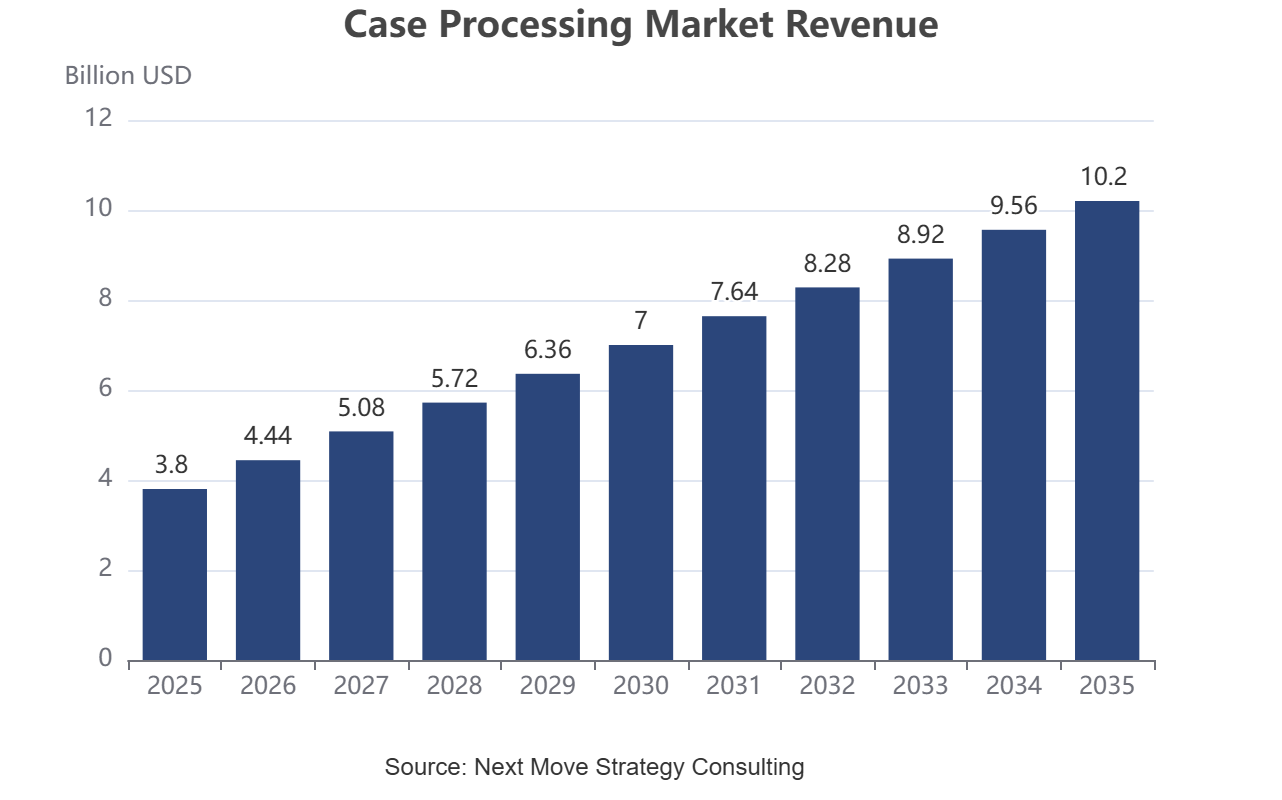
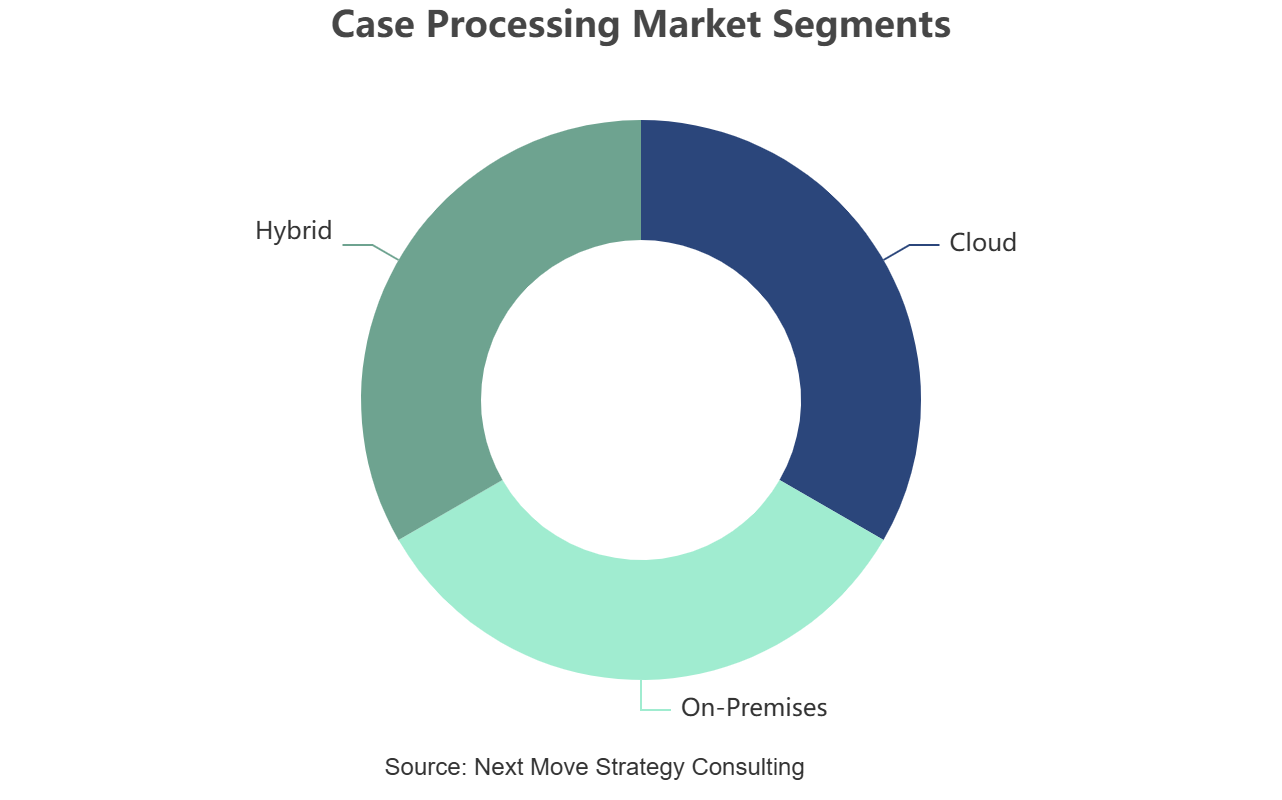
About the Author
 Liza Phukan
— Liza Phukan is Research Associate at Next Move Strategy Consulting, where she has covered emerging industries and market research across sectors for 3.5 years. Her work includes analyzing industry developments, validating market data, and developing structured business content from research findings. She uses secondary research and data-validation practices to turn complex market information into clear decision-useful market analysis for business audiences and support report development and B2B.
Liza Phukan
— Liza Phukan is Research Associate at Next Move Strategy Consulting, where she has covered emerging industries and market research across sectors for 3.5 years. Her work includes analyzing industry developments, validating market data, and developing structured business content from research findings. She uses secondary research and data-validation practices to turn complex market information into clear decision-useful market analysis for business audiences and support report development and B2B.
About the Reviewer
 Supradip Baul
— Supradip Baul is an accomplished business consultant and strategist with over a decade of rich experience in market intelligence, strategy, technology, and business transformation. His work has included rigorous qualitative and quantitative analysis across multiple industries, helping clients shape investment decisions and long-term roadmaps. Earlier in his career, he was associated with Gartner, where he contributed to industry-leading reports and market share analyses. He has worked with leading global companies and holds an MBA with a dual specialization in Marketing and Finance.
Supradip Baul
— Supradip Baul is an accomplished business consultant and strategist with over a decade of rich experience in market intelligence, strategy, technology, and business transformation. His work has included rigorous qualitative and quantitative analysis across multiple industries, helping clients shape investment decisions and long-term roadmaps. Earlier in his career, he was associated with Gartner, where he contributed to industry-leading reports and market share analyses. He has worked with leading global companies and holds an MBA with a dual specialization in Marketing and Finance.
At Next Move Strategy Consulting, we understand that insightful market research is the cornerstone of successful business decisions. That's why we employ a robust and multifaceted approach, combining various methodologies to deliver the most accurate and actionable data for our clients.

Research Landscape
We navigate the world of research with two primary approaches:
Qualitative Approach
Our qualitative research methodologies involve immersive techniques such as in-depth interviews, focus groups, and observational studies. By engaging directly with individuals and stakeholders, we uncover valuable insights that quantitative data alone may overlook.

Quantitative Research
In tandem with qualitative methodologies, NMSC leverages the power of Quantitative Research to provide a robust foundation of numerical insights. Through systematic data collection and analysis, we quantify patterns, preferences, and market trends, offering a comprehensive view of the business landscape.
Our quantitative research approach employs diverse tools, including surveys, experiments, and statistical modelling. These methodologies enable us to gather data from a large and representative sample, ensuring the statistical significance of our findings. By employing structured questionnaires and standardized data collection methods, we guarantee the reliability and validity of the information we present to our clients.
Quantitative research is particularly effective in measuring the prevalence of trends, assessing market size, and gauging the impact of various factors on consumer behavior. The numerical precision attained through this approach equips our clients with actionable insights, facilitating data-driven decision-making and strategy formulation.


Our Specialized Toolbox for Industry-Specific Market Research
We deploy a specialized arsenal of techniques tailored to meet your unique requirements. Here's a glimpse into our comprehensive toolbox:

Information Procurement
The stage entails acquiring market data or relevant information through various sources and methodologies.


Market Research Approach
We utilize both top-down and bottom-up approaches in market research analysis to achieve a comprehensive understanding of the market dynamics, leveraging the broad perspective of industry trends and macroeconomic factors alongside detailed insights from specific segments and individual companies.

Porters Five Forces Analysis
We conduct Porter's Five Forces analysis to evaluate the competitive landscape of an industry, providing us with insights into factors that affect profitability and strategic positioning.

SWOT Analysis

Forecasting
We utilize a forecasting model to predict future consumption by considering parameters like population, economics, regulations, market competition, drivers, constraints, technology, and pricing. We also employ statistical techniques such as multilinear regression, exponential smoothing, moving average, ARIMA, and Monte Carlo simulations for accurate predictions. In econometric forecasting, we analyzed short-term and long-term event impacts, attributing values based on regulatory frameworks, economic factors, and market events.





 Speak to Our Analyst