Germany EV Charging Market By Type of Charger (AC Chargers and DC Chargers), By Charging Speed (Level 1, Level 2, and Level 3), By Connector Type (Type 1, Type 2, CCS, CHAdeMO, and Others), By Installation (Fixed and Portable), By End-User [Commercial {Commercial Public EV Charging Stations (Highway, Fleet, and Workplace Charging Stations), Commercial Private EV Charging Stations}, Residential {Private Homes and Apartments}] – Analysis & Forecast, 2025–2030
Industry: Automotive & Transportation | Lastest Edition: March 19, 2026 | No of Pages: 180 | No. of Tables: 142 | No. of Figures: 87 | Format: PDF | Report Code : AT850
Industry Outlook
The Germany EV Charging Market size was valued at USD 1148 million in 2024 and is expected to reach USD 1441.9 million by 2025. Looking ahead, the market is projected to expand steadily, reaching USD 3122.1 million by 2030, at a CAGR of 16.71% from 2025 to 2030. In terms of volume, the market recorded 1447 thousand units in 2024, with forecasts indicating growth to 1868 thousand units by 2025 and further to 4536 thousand by 2030, reflecting a CAGR 19.42% over the same period.
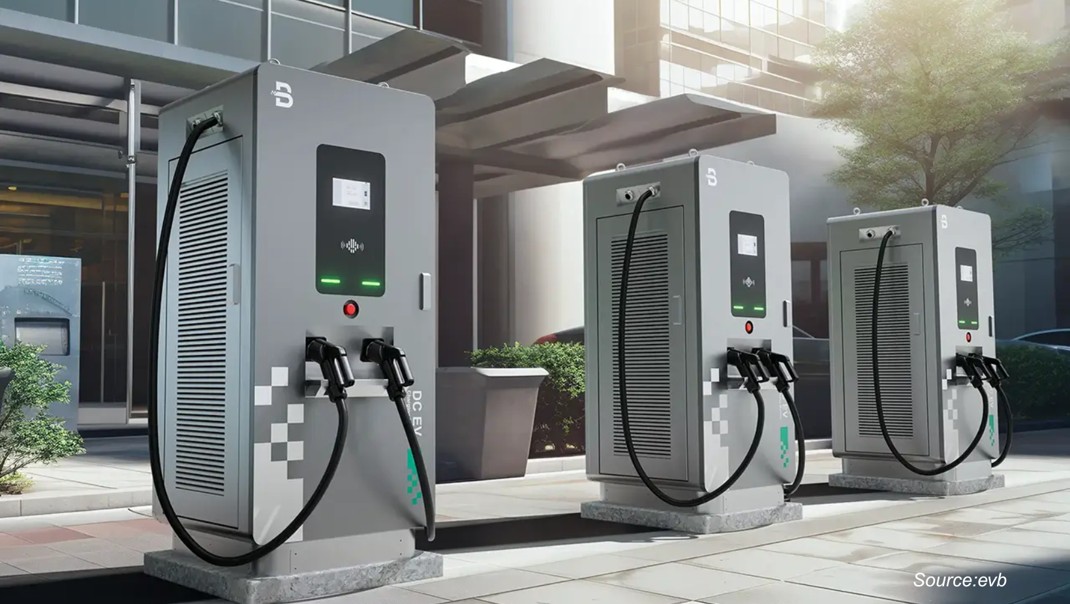
The EV charging market in Germany is witnessing strong growth, driven by the country’s robust industrial base, manufacturing expertise, and accelerated transition to renewable energy. Globally recognized for precision engineering, automotive, machinery, and chemical industries, Germany leverages advanced production technologies, Industry 4.0 solutions, and established export networks to support large-scale EV infrastructure deployment. Investments in wind, solar, bioenergy, and smart grid modernization, alongside corporate decarbonization initiatives, are enhancing energy efficiency and creating demand for clean mobility solutions.
A highly skilled workforce, advanced research networks, and innovation-friendly ecosystem support the development and commercialization of EV components, smart charging systems, and battery technologies. However, high labour, energy, and operational costs, coupled with complex regulatory compliance, continue to restrain rapid market expansion. Despite these challenges, Germany’s leadership in advanced mobility, strong government incentives, and growing EV adoption present significant opportunities for suppliers, technology providers, and startups. Overall, the Germany EV charging market is positioned for sustainable growth, supported by industrial strength, technological innovation, and Europe’s transition to electrified mobility.
Strong Industrial Base and Manufacturing Expertise Drives the Germany EV Charging Market Demand
Germany’s market is driven by its robust industrial and manufacturing base, recognized globally for precision engineering, automotive, machinery, and chemical industries. The country’s emphasis on high-quality production, technological integration, and lean manufacturing practices enhances efficiency and global competitiveness. Strong supplier networks, advanced logistics infrastructure, and established export channels support large-scale industrial operations. Continuous investment in Industry 4.0 solutions, robotics, and automation further strengthens productivity. This mature industrial ecosystem enables both domestic firms and multinational corporations to innovate, scale operations, and maintain Germany’s reputation as a global leader in advanced manufacturing and engineering-driven markets.
Advanced Renewable Energy Transition and Energy Security Initiatives Boosts the Market Demand
Germany’s transition to renewable energy (Energiewende) is a major growth driver, with substantial investments in wind, solar, and bioenergy. Policymakers prioritize energy security, decarbonization, and grid modernization, creating a strong market for clean technology adoption. Corporates and SMEs are increasingly investing in energy-efficient processes, smart grid solutions, and green manufacturing to comply with stringent EU climate policies. Additionally, Germany’s leadership in energy research and innovation fosters the commercialization of new technologies, enabling businesses to reduce operational costs while contributing to sustainability goals. This drives demand for renewable energy equipment, energy management solutions, and industrial decarbonization projects.
High Labor and Operational Costs Restraints the Germany EV Charging Market Growth
Despite its industrial strength, Germany faces a significant market restraint in the form of high labor, energy, and operational costs. Skilled labor shortages in technical sectors, coupled with strong labor unions and social welfare obligations, increase wage pressures. Energy-intensive industries face elevated electricity and gas prices, particularly with the ongoing energy transition and global market volatility. These factors elevate production costs, reduce profit margins, and challenge competitiveness for SMEs and export-focused companies. While efficiency measures and automation help mitigate costs, high operational expenditures remain a persistent constraint for expanding domestic and foreign enterprises in Germany’s market.
Strategic Leadership in Advanced Mobility and EV Adoption Creates New Germany EV Charging Market Opportunities
Germany’s focus on advanced mobility, electric vehicles (EVs), and smart transportation systems presents a significant market opportunity. With leading automotive OEMs, battery manufacturers, and EV infrastructure developers, the country is at the forefront of transitioning from internal combustion engines to electrified mobility. Government incentives, research grants, and robust charging infrastructure expansion accelerate adoption and innovation. This creates openings for suppliers, technology providers, and startups in areas like battery technology, EV components, smart charging solutions, and mobility-as-a-service platforms. By capitalizing on Germany’s automotive expertise and regulatory support, businesses can capture high-value opportunities in Europe’s rapidly growing EV and sustainable mobility ecosystem.
Competitive Landscape
The major players operating in the Germany EV charging industry include Siemens AG, ABB, Schneider Electric, Tesla Germany GmbH, ChargePoint Holdings, Inc., Delta Electronics, Kempower Oyj, Alfen N.V., Heliox Energy B.V., Zaptec ASA, Efacec Power Solutions S.A., Autel Intelligent Technology Corp., EV BOX, Enphase, Hitachi En. and others.
Germany EV Charging Market Key Segments
By Type of Charger
-
AC Chargers
-
Mode 1 (2.3 kW)
-
Mode 2 (2.3 kW)
-
Mode 3 (3.7 kW to 22 kW)
-
-
DC Chargers
By Charging Speed
-
Level 1
-
Level 2
-
Level 3
By Connector Type
-
Type 1
-
Type 2
-
CCS
-
CHAdeMO
-
Others
By Installation
-
Fixed
-
Portable
By End-User
-
Commercial
-
Commercial Public EV Charging Stations
-
Highway Charging Stations
-
Fleet Charging Stations
-
Workplace Charging Stations
-
-
Commercial Private EV Charging Stations
-
-
Residential
-
Private Homes
-
-
Apartments
Key Players
-
Siemens AG
-
Schneider Electric
-
Tesla Germany GmbH
-
ChargePoint Holdings, Inc.
-
Delta Electronics
-
Kempower Oyj
-
Alfen N.V.
-
Heliox Energy B.V.
-
Zaptec ASA
-
Efacec Power Solutions S.A.
-
Autel Intelligent Technology Corp.
-
EV BOX
-
Enphase
-
Hitachi Energy
Report Scope and Segmentation
|
Parameters |
Details |
|
Market Size Value in 2025 |
USD 1441.9 million |
|
Revenue Forecast in 2030 |
USD 3122.1 million |
|
Value Growth Rate |
CAGR of 16.71% from 2025 to 2030 |
|
Market Volume in 2025 |
1868 Thousand Units |
|
Market Volume Forecast in 2030 |
4536 Thousand Units |
|
Volume Growth Rate |
CAGR of 19.42% from 2025 to 2030 |
|
Analysis Period |
2024–2030 |
|
Base Year Considered |
2024 |
|
Forecast Period |
2025–2030 |
|
Market Size Estimation |
Million (USD) |
|
Market Volume Estimation |
Thousand Units |
|
Growth Factors |
|
|
Companies Profiled |
15 |
|
Market Share |
Available for 10 companies |
|
Customization Scope |
Free customization (equivalent up to 80 working hours of analysts) after purchase. Addition or alteration to country, regional, and segment scope. |
|
Pricing and Purchase Options |
Avail customized purchase options to meet your exact research needs. |


About the Author
 Jayanta Das is a senior research analyst delivering high-impact market intelligence across global markets. He leads comprehensive studies covering market assessment, forecasting, competitive evaluation, regulatory review, and trend analysis. Known for his structured and methodical approach, Jayanta excels at converting complex datasets into clear, decision-ready insights for leadership teams. His work supports strategic planning through credible sourcing, analytical precision, strong validation frameworks, and well-structured, business-focused reporting that enables confident decision-making.
About the Reviewer
 Supradip Baul is an accomplished business consultant and strategist with over a decade of rich experience in market intelligence, strategy, technology, and business transformation. His work has included rigorous qualitative and quantitative analysis across multiple industries, helping clients shape investment decisions and long-term roadmaps. Earlier in his career, he was associated with Gartner, where he contributed to industry-leading reports and market share analyses. He has worked with leading global companies and holds an MBA with a dual specialization in Marketing and Finance.
At Next Move Strategy Consulting, we understand that insightful market research is the cornerstone of successful business decisions. That's why we employ a robust and multifaceted approach, combining various methodologies to deliver the most accurate and actionable data for our clients.

Research Landscape
We navigate the world of research with two primary approaches:
Qualitative Approach
Our qualitative research methodologies involve immersive techniques such as in-depth interviews, focus groups, and observational studies. By engaging directly with individuals and stakeholders, we uncover valuable insights that quantitative data alone may overlook.

Quantitative Research
In tandem with qualitative methodologies, NMSC leverages the power of Quantitative Research to provide a robust foundation of numerical insights. Through systematic data collection and analysis, we quantify patterns, preferences, and market trends, offering a comprehensive view of the business landscape.
Our quantitative research approach employs diverse tools, including surveys, experiments, and statistical modelling. These methodologies enable us to gather data from a large and representative sample, ensuring the statistical significance of our findings. By employing structured questionnaires and standardized data collection methods, we guarantee the reliability and validity of the information we present to our clients.
Quantitative research is particularly effective in measuring the prevalence of trends, assessing market size, and gauging the impact of various factors on consumer behavior. The numerical precision attained through this approach equips our clients with actionable insights, facilitating data-driven decision-making and strategy formulation.


Our Specialized Toolbox for Industry-Specific Market Research
We deploy a specialized arsenal of techniques tailored to meet your unique requirements. Here's a glimpse into our comprehensive toolbox:

Information Procurement
The stage entails acquiring market data or relevant information through various sources and methodologies.


Market Research Approach
We utilize both top-down and bottom-up approaches in market research analysis to achieve a comprehensive understanding of the market dynamics, leveraging the broad perspective of industry trends and macroeconomic factors alongside detailed insights from specific segments and individual companies.

Porters Five Forces Analysis
We conduct Porter's Five Forces analysis to evaluate the competitive landscape of an industry, providing us with insights into factors that affect profitability and strategic positioning.

SWOT Analysis

Forecasting
We utilize a forecasting model to predict future consumption by considering parameters like population, economics, regulations, market competition, drivers, constraints, technology, and pricing. We also employ statistical techniques such as multilinear regression, exponential smoothing, moving average, ARIMA, and Monte Carlo simulations for accurate predictions. In econometric forecasting, we analyzed short-term and long-term event impacts, attributing values based on regulatory frameworks, economic factors, and market events.





 Speak to Our Analyst