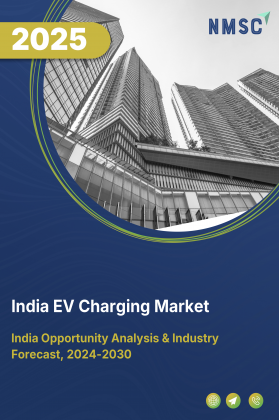
India Electric Vehicle (EV) Charging Market By Type of Charger (AC Chargers, DC Chargers), By Charging Speed (Level 1, Level 2, Level), By Connector Type (Type 1, Type 2, CCS, CHAdeMO, Others), By Installation (Fixed, Portable), and By End User (Commercial, Residential) – India Opportunity Analysis and Market Forecast, 2025–2030.
Industry: Automotive & Transportation | Lastest Edition: December 23, 2025 | No of Pages: 110 | No. of Tables: 142 | No. of Figures: 87 | Format: PDF | Report Code : AT868
Industry Outlook
The India EV Charging Market size was valued at USD 348.5 million in 2024 and is expected to reach USD 487.1 million by the end of 2025. The industry is projected to grow, hitting USD 1652.2 million by 2030, with a CAGR of 27.67% between 2025 and 2030. In terms of volume, the market recorded 454 thousand units in 2024, with forecasts indicating growth to 653 thousand units by 2025 and further to 2507 thousand units by 2030, reflecting a CAGR of 30.9% over the same period.
The India EV charging market is witnessing steady growth, driven by the rapid expansion of public charging infrastructure, rising adoption of electric vehicles, and increasing demand for convenient and efficient mobility solutions. Investments in transport, energy, and digital infrastructure are enabling the deployment of advanced charging networks that offer faster, more accessible, and reliable EV charging across urban and semi-urban regions. Supportive government initiatives and incentives are fostering private sector participation, encouraging the development of innovative solutions and collaborative networks between manufacturers, fleet operators, and service providers. Together, these developments are enhancing interoperability, user convenience, and operational efficiency, positioning the EV charging ecosystem as a key enabler of India’s transition toward sustainable and widespread electric mobility.
What are the Key India EV Charging Market Trends?
How is India's EV Charging Market Evolving with Government Initiatives?
The India EV charging market is witnessing rapid expansion, fueled by strong government support and strategic initiatives. By 2024, the country has established around 12,146 public charging stations, reflecting a growing market infrastructure. The government’s allocation of USD 241 million under the PM E-DRIVE Scheme further strengthens this market by enabling nationwide deployment of charging networks. These efforts are not only enhancing the availability and reliability of charging services but also driving higher adoption of electric vehicles across both urban and rural regions, positioning the EV charging market as a critical component of India’s sustainable mobility ecosystem.
What Role does Technological Innovation Play in India's EV Charging Market?
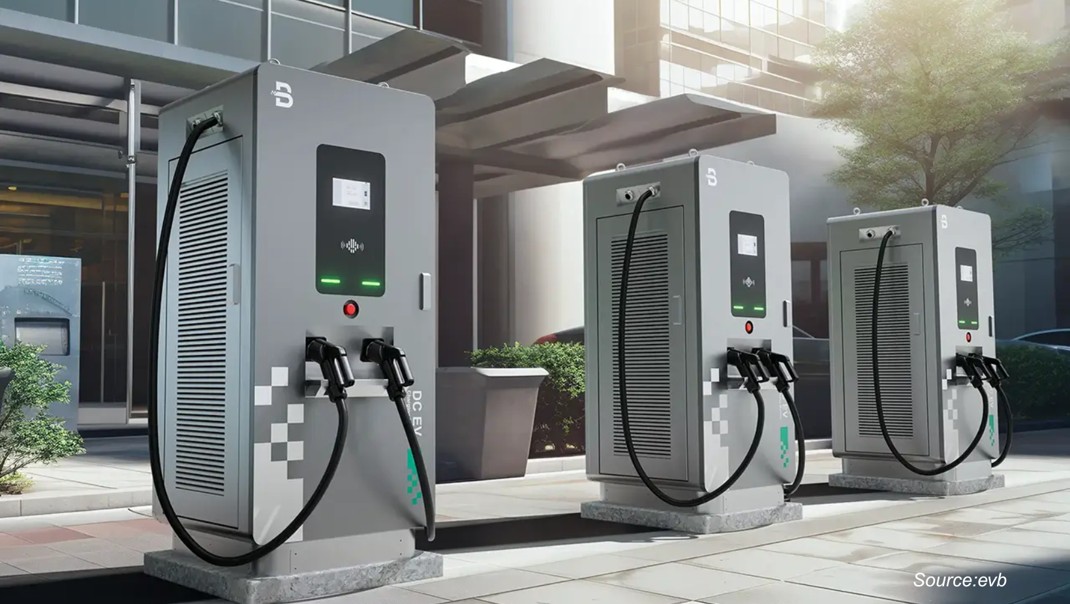
Technological advancements are reshaping the India EV charging market, with smart charging solutions like advanced metering systems and real-time monitoring improving operational efficiency and enhancing user experience. The growing deployment of fast charging technologies, including DC fast chargers, is reducing charging times and making EV usage more convenient, directly supporting market adoption. Government initiatives that emphasize research and development, standardization of charging protocols, and integration of renewable energy into charging stations are further strengthening the market’s infrastructure and sustainability. For companies in the EV charging sector, investing in these advanced technologies and aligning with national guidelines not only provides a competitive edge but also positions them to capitalize on India’s rapidly expanding EV ecosystem.
How are State-level Policies Influencing EV Charging Infrastructure Development?
State-level policies are significantly influencing the growth and India EV charging market expansion. Regions such as Delhi, Maharashtra, and Telangana have emerged as leaders in the India Electric Mobility Index due to their proactive measures, including incentives for setting up charging stations, simplified approval processes, and concessional land allocations for infrastructure development. These supportive policies are not only accelerating the deployment of charging networks but also creating attractive market opportunities for companies looking to expand their presence. By aligning business strategies with state-specific regulations and leveraging these incentives, players in the market can optimize operations, increase coverage, and contribute to the nationwide adoption of electric mobility.
What are the Key Market Drivers, Breakthroughs, and Investment Opportunities that will Shape the Industry in the Next Decade?
The India EV charging market growth is driven by the rapid expansion of public charging infrastructure and rising adoption of electric vehicles across urban and semi-urban regions. This growth is enhancing accessibility and convenience for EV users while encouraging private sector investment in charging networks. The increasing deployment of charging stations is creating opportunities for market players to expand their network coverage, introduce innovative charging solutions, and collaborate with both government and private stakeholders. Collectively, these developments are strengthening the foundation for a sustainable and efficient electric mobility ecosystem in India.
At the same time, the market faces challenges related to grid limitations and the need for substantial upgrades to support high-power charging infrastructure. In parallel, emerging solutions such as battery swapping technology are providing practical alternatives to address long charging times and range anxiety. Regulatory support and simplified guidelines for private sector participation are further fostering the development of complementary charging networks. These trends are positioning India’s EV charging market for continued growth, innovation, and wider adoption of electric mobility across the country.
Growth Drivers:
How is the Rapid Expansion of Public Charging Stations Driving the India EV Charging Market?
The India EV charging market is being significantly propelled by the rapid expansion of public charging infrastructure. Between December 2022 and December 2024, the number of public charging stations surged from 5,151 to 25,202, reflecting a nearly fivefold increase in just two years. This growth addresses one of the most critical barriers to EV adoption range anxiety by making charging more accessible and convenient for consumers across urban and semi-urban regions. Such infrastructure development not only supports the rising fleet of electric vehicles but also attracts private investments into the charging ecosystem. For market players, this trend highlights opportunities to expand their network coverage, introduce innovative charging solutions, and collaborate with both government and private stakeholders to capitalize on the accelerating adoption of electric mobility in India.
How is Government Financial Support Driving the India EV Charging Market?
The India EV charging market demand is being strongly propelled by substantial government financial support aimed at expanding electric mobility infrastructure. Under the PM E-DRIVE Scheme, USD 1,313 million has been allocated from April 2024 to March 2026 to support various EV segments, including e-2W, e-3W, e-buses, e-trucks, and public charging stations. This funding not only facilitates the rapid establishment of charging networks but also incentivizes private sector participation, reducing financial barriers for investment in EV infrastructure. By creating a supportive ecosystem for manufacturers, fleet operators, and charging service providers, these government initiatives are accelerating EV adoption and expanding the market, positioning India’s EV charging sector for sustained growth in the coming years.
Growth Inhibitors:
How are Grid Infrastructure Limitations Restricting the India EV Charging Market?
The rapid growth of India EV charging market is facing significant constraints due to the limitations of the existing electrical grid. According to NITI Aayog, integrating charging stations with the national power network remains a critical challenge, as the increasing number of EVs requires major upgrades to the distribution system, including transformers, control systems, and high-voltage connections to support high-power chargers. These infrastructure requirements demand substantial investment and coordination, which can slow the deployment of new charging stations. Addressing these grid-related challenges is essential for the continued expansion of the market and for supporting the country’s transition toward widespread electric mobility.
How is Battery Swapping Technology Creating Opportunities in the India EV Charging Market?
Battery swapping technology is emerging as a key growth opportunity within the India EV charging market, offering a practical solution to long charging times and range anxiety for electric vehicle users. The Ministry of Power has issued guidelines recognizing battery swapping stations as an unlicensed activity, thereby promoting private sector participation and easing regulatory hurdles. These measures are designed to support the development of a widespread and efficient battery swapping infrastructure, complementing traditional charging networks. By integrating battery swapping solutions, companies in the can enhance convenience for EV users, reduce downtime, and accelerate the adoption of electric mobility across urban and semi-urban regions, strengthening the overall growth of the sector.
How is the India EV Charging Market Segmented in this Report, and What are the Key Insights from the Segmentation Analysis?
By Type Insights
How do Different Types of Chargers Shape EV Charger Demand?
Based on type, the India EV charging market is categorized into AC charger and DC charger.
AC chargers are the most commonly deployed type of charging solution in India’s electric vehicle (EV) ecosystem, particularly suitable for residential, commercial, and public settings. These chargers supply alternating current (AC) to the EV, which is then converted to direct current (DC) by the vehicle’s onboard charger to charge the battery. Within AC chargers, there are different modes, for example Mode 1 (2.3 kW), which is the simplest form and uses a standard household plug without additional safety features, primarily suitable for overnight charging of two-wheelers and low-capacity EVs. AC chargers are favored for their affordability, ease of installation, and compatibility with most EVs, making them a foundational component of India’s EV charging infrastructure.

The chart illustrates the market share of AC chargers and DC chargers in the India EV charging market. AC chargers dominate the segment with 67.33%, indicating that a majority of electric vehicles rely on alternating current for charging, typically in residential, workplace, and public settings. DC chargers account for 32.67%, reflecting the growing adoption of fast-charging solutions for commercial vehicles, highway corridors, and high-capacity electric fleets. The chart highlights the current preference for AC charging infrastructure while also underscoring the increasing demand for DC fast chargers to support rapid, convenient, and high-capacity EV charging across India.
By Charging Speed Insights
How Charging Speed Influences EV Infrastructure Investment Decisions in India?
Based on charging speed, the India EV charging market is categorized into level 1, level 2 and level 3.
In India, EV charging infrastructure is categorized by charging speed into Level 1, Level 2, and Level 3, and charging power plays a critical role in investment decisions. Level 1 chargers are low-power and cost-effective, suitable for residential areas but less viable for commercial use. Level 2 chargers offer moderate speeds and are ideal for workplaces and urban hubs, balancing installation cost with faster charging. Level 3 DC fast chargers provide high-power charging (50–350 kW), enabling EV batteries to recharge in 30–60 minutes, making them essential for highways, fleet operations, and high-traffic commercial locations. Although Level 3 installations require higher capital and maintenance, investors prioritize them for long-distance travel support and revenue potential, while Level 1 and 2 chargers serve accessibility and everyday commuting needs. Overall, charging power influences the scale, location, and type of infrastructure investment, aligning with utilization patterns and EV adoption goals across India.
By Connector Type Insights
What Types of Connectors are Most Sought After?
Based on connector type, the market is categorized into type 1, type 2, CSS and others.
The combined charging system (CCS) is a standardized connector type designed to support both AC and DC charging, making it highly versatile for modern electric vehicles (EVs). In India, CCS has emerged as a preferred choice for fast-charging infrastructure, particularly for electric cars and commercial EVs. It enables high-power DC fast charging, typically ranging from 50 kW to 350 kW, allowing vehicles to recharge much faster than standard AC chargers. CCS connectors are compatible with Level 2 and Level 3 charging stations, facilitating interoperability and reducing range anxiety among EV users. Their adoption is crucial for expanding public charging networks, especially along highways and high-traffic corridors, supporting the country’s growing EV ecosystem.
By End User Insights
How does End User Influence the Market?
Based on end user, the India EV charging market is categorised into commercial and residential.
The commercial segment of India’s EV charging market encompasses both public and private charging infrastructure designed to serve businesses, fleets, and public commuters. Commercial public EV charging stations include highway charging stations, which cater to long-distance travelers by providing fast and reliable charging along major routes; fleet charging stations, dedicated to commercial electric fleets such as taxis, delivery vehicles, and buses to ensure operational efficiency; and workplace charging stations, installed at offices to enable employees to conveniently charge their EVs during work hours.
On the other hand, commercial private EV charging stations are owned by businesses or organizations to serve their own vehicles or staff, offering controlled access and optimized charging schedules. This commercial infrastructure is pivotal in promoting EV adoption by ensuring accessibility, convenience, and reliability for high-usage vehicles in urban and intercity settings.

The pie chart represents the end-user distribution of the between commercial and residential segments. Residential users account for 67.41%, indicating that a majority of charging infrastructure is concentrated at private homes and apartments, catering primarily to individual EV owners. Commercial users make up 32.59%, reflecting charging installations at workplaces, fleet depots, public stations, and highway corridors. The chart highlights the dominance of residential charging while also emphasizing the growing role of commercial infrastructure in supporting fleets, public transport, and high-traffic areas, which is essential for the broader adoption of electric vehicles in India.
List of Self Manufactured Vs White-labelled Charger Manufacturers
|
Supplier |
Own Manufacturing/Designing |
Primarily White-Label |
|
Servotech Power Systems |
Yes |
No |
|
Exicom Group |
Yes |
No |
|
Tata Power |
Partial |
No |
|
Ather Energy |
Yes |
No |
|
Delta Electronics India |
Yes |
No |
|
Mass-Tech Controls |
Yes |
No |
|
Okaya EV |
Yes |
No |
|
BrightBlu |
Yes |
No |
|
Charzer |
No |
Yes |
|
Magenta EV Solutions |
No |
Yes |
The Indian EV charging market comprises a mix of companies that either design and manufacture their own chargers or primarily operate as white-label providers. Leading players such as Servotech Power Systems, Exicom Group, Ather Energy, Delta Electronics India, Mass-Tech Controls, Okaya EV, and BrightBlu focus on in-house manufacturing and design, emphasizing proprietary technology and product development. Tata Power operates partially in this domain, combining some of its own production with other solutions. On the other hand, companies like Charzer and Magenta EV Solutions primarily function as white-label providers, offering charging solutions sourced from other manufacturers rather than developing them internally. This blend of self-manufacturers and white-label players highlights the diverse approaches in India’s evolving EV charging ecosystem, balancing innovation with market accessibility.
List of Charge Point Operators in India
|
Sl No |
Company Name |
No of Public Charging Stations (PCS) |
Major Businesses |
Revenue in 2024 (USD Million) |
|
1 |
Ather Energy Pvt Ltd |
1,018 |
1. Manufacturing of electric scooters |
16.10 |
|
2 |
Blink Charging Co. |
100 |
1. Sale and distribution of electric vehicle charging equipment |
1.38 |
|
3 |
Blue Smart |
7 |
1. EV ride hailing service |
XX |
|
4 |
BPM Power Private Limited (chargemod) |
106 |
1. Provider of EV charging solutions |
XX |
|
5 |
Delta |
4 |
1. Power Electronics |
XX |
|
6 |
EEE Taxi |
1 |
1. e-mobility solution provider |
XX |
|
7 |
E-Fill Electric |
18 |
1. EV chargers |
XX |
|
8 |
Electreefi |
22 |
1. eMobility solutions |
XX |
|
9 |
ElectriVa |
3 |
1. EV Charging Point Operators |
XX |
|
10 |
EVI Technologies Pvt Ltd. |
31 |
1. Energy Storage |
XX |
The India EV charging market is characterized by a combination of established leaders and emerging players, reflecting the sector’s rapid growth and evolving dynamics. Ather Energy stands out as the largest operator, with over 1,000 public charging stations, leveraging its electric scooter manufacturing business alongside both public and private charging infrastructure, generating USD 16.1 million in revenue in 2024. Other operators, such as Blink Charging Co. and BPM Power (chargemod), focus on providing EV charging solutions and equipment, though they operate smaller networks with lower revenues. Companies like Blue Smart and Delta integrate EV charging with broader mobility, automation, and infrastructure services, highlighting a diversified approach in the market. Smaller players, including E-Fill Electric, Electreefi, ElectriVa, EVI Technologies, and EEE Taxi, contribute to niche segments such as energy storage, smart meters, and specialized charging solutions, helping expand the reach of EV infrastructure. Overall, the market reflects a mix of large-scale deployment, innovative service offerings, and a growing ecosystem of operators driving India’s transition toward electric mobility.
Competitive Landscape
What are the Top Companies in the India EV Charging Industry, and How are they Competing Against One Another?
The India EV charging market is led by major global and regional players, including Tata Power, Servotech Renewable Power System Limited, Exicom, Okaya EV Pvt. Ltd., Amara Raja Energy & Mobility Limited, Bolt.Earth, Kazam EV Tech Pvt. Ltd., VVDN Technologies, Sharify Services Pvt. Ltd., Amplify Mobility Pvt. Ltd., ABB, ChargeZone, Delta Electronics, Inc., Schneider Electric, and Hitachi Industrial Products, Ltd.
Competition in India is shaped by both well-established multinational companies and specialized domestic EV charging solution providers. Key players leverage extensive service networks, integrated hardware-software solutions, and smart digital platforms to cater to diverse segments, including residential, commercial, and public charging infrastructure. Emerging trends such as fast charging, renewable energy integration, battery swapping solutions, and advanced energy management systems are creating opportunities for innovative entrants. Companies focusing on real-time monitoring, operational efficiency, and flexible charging solutions are driving the growth and modernization of India’s EV charging ecosystem.

Innovation and Adaptability Drive Market Success
In the India EV charging market, success increasingly depends on digital innovation, system adaptability, and sustainability-focused solutions. In May 2024, Exicom launched the Harmony Gen 1.5, India’s fastest DC charger, offering 60–400 kW power output. This charger provides a versatile and user-friendly solution, capable of catering to a wide range of electric vehicles from two-wheelers to high-capacity EV buses and trucks. By focusing on speed, reliability, and ease of use, Exicom demonstrates how technological advancements and flexible design strategies enhance customer experience, reduce charging time, and strengthen market leadership in the highly competitive EV charging sector.
Further strengthening its impact on the continent, In January 2025, Kazam unveiled its LEVDC Fast Charger for 2- and 3-wheelers, delivering 6–12 kW output, alongside an Energy Management System (EMS) designed for e-bus hubs. The charger takes a 2-wheeler from 20% to 80% charge in approximately 20 minutes and a 3-wheeler in about one hour, highlighting speed and efficiency. By combining fast charging with smart energy management, Kazam demonstrates adaptability to different vehicle segments and operational scenarios, positioning itself as a key innovator in India’s evolving EV charging ecosystem.
Market Players to Opt for Partnership & Collaboration Strategies to Expand their Presence
In the India EV charging market, partnership and strategic collaborations are accelerating as companies aim to expand both geographic reach and digital capabilities. In March 2025, Jigowatts, a Japanese provider of EV charger hardware and software solutions, entered into a strategic partnership with VVDN to manufacture and scale EV chargers within India, with a broader vision to export these solutions to markets across ASEAN, the Middle East, and Europe. This collaboration aims to leverage Jigowatts’ technological expertise and VVDN’s local manufacturing capabilities to accelerate the production and deployment of high-quality, reliable charging infrastructure.
Similarly, in September 2025, ABB Power Grids joined forces with Ashok Leyland to introduce the Grid-eMotion Fleet, a grid-to-plug EV charging system specifically designed for large-scale public transport fleets and commercial operators. By combining ABB’s advanced charging technology with Ashok Leyland’s fleet expertise, the partnership focuses on enabling faster adoption of electric buses and commercial vehicles. These collaborations not only facilitate technology transfer and innovation but also promote rapid market expansion, enhanced operational efficiency, and the establishment of scalable, future-ready charging networks across India.
List of India EV Charging Companies
-
Tata Power
-
Servotech Renewable Power System Limited
-
Exicom
-
Okaya EV Pvt. Ltd.
-
Amara Raja Energy & Mobility Limited
-
Bolt.Earth
-
Kazam EV Tech Pvt. Ltd.
-
VVDN Technologies
-
Sharify Services Pvt. Ltd.
-
Amplify Mobility Pvt. Ltd.
-
ABB
-
ChargeZone
-
Delta Electronics, Inc.
-
Schneider Electric
-
Hitachi Industrial Products, Ltd.
What are the Latest Key Industry Developments?
-
September 2025 - Tata Power, along with Tata Passenger Electric Mobility, introduced the TATA.ev “MegaCharger” concept and inaugurated a large charging hub in Mumbai in September 2025. The company also outlined major expansion plans, including public, home, and bus charging infrastructure, supported by significant investments and state-level projects to scale EV charging across cities and highways.
-
May 2025 - Amplify Mobility Pvt Ltd has inaugurated a new manufacturing facility in Hyderabad dedicated to producing EV chargers. This expansion aims to meet the growing demand for EV charging infrastructure and supports both domestic and international markets.
-
March 2025 - Jigowatts (Japanese EV charger hardware+software solutions) forged a strategic partnership with VVDN. Goal is to manufacture and scale EV chargers in India & export to ASEAN, Middle East, Europe.
What are the Key Factors Influencing Investment Analysis & Opportunities in the India EV Charging Market?
Investment in the India EV charging market is being driven by the rapid adoption of electric vehicles, government incentives, and the expansion of public and private charging infrastructure. Funding trends show increasing participation from both domestic and international investors seeking growth in urban and semi-urban regions. Valuations are influenced by technological advancements such as fast charging, smart energy management systems, and integration with renewable energy, which enhance operational efficiency and create a scalable ecosystem for electric mobility.
Investment hotspots are emerging in metropolitan areas, along highways, and in industrial corridors where fleet operations and commercial vehicle usage are high. Companies are leveraging strategic partnerships, joint ventures, and mergers to expand their networks, deploy innovative charging solutions, and capture market share. These trends present opportunities for private players, technology providers, and infrastructure developers to participate in India’s transition toward sustainable mobility, accelerating the adoption of EVs across residential, commercial, and public sectors.
Key Benefits for Stakeholders:
Next Move Strategy Consulting (NMSC) presents a comprehensive analysis of the India EV charging market, covering historical trends from 2020 through 2024 and offering detailed forecasts through 2030. Our study examines the market at global, regional, and country levels, providing quantitative projections and insights into key growth drivers, challenges, and investment opportunities across all major EV charging segments.
The India EV charging market creates significant value for a range of stakeholders, including investors, customers, and infrastructure providers. Investors benefit from high-growth opportunities, long-term returns, and the potential to participate in innovative technologies such as fast charging, battery swapping, and smart energy management systems. Customers, including EV owners, fleet operators, and commercial enterprises, gain from increased accessibility, reduced charging times, and reliable, convenient solutions that support seamless electric mobility. Infrastructure providers and technology companies benefit from partnerships, expanded networks, and the ability to deploy scalable solutions that align with government initiatives and urban development plans. Collectively, these advantages foster a collaborative ecosystem, driving the adoption of electric vehicles, enhancing operational efficiency, and promoting sustainable transportation across India.
Report Scope
|
Parameters |
Details |
|
Market Size in 2025 |
USD 487.1 million |
|
Revenue Forecast in 2030 |
USD 1652.2 million |
|
Growth Rate |
CAGR of 27.67% from 2025 to 2030 |
|
Market Volume in 2025 |
653 thousand units |
|
Volume Forecast in 2030 |
2507 thousand units |
|
Analysis Period |
2024–2030 |
|
Base Year Considered |
2024 |
|
Forecast Period |
2025–2030 |
|
Market Size Estimation |
Billion (USD) |
|
Growth Factors |
|
|
Companies Profiled |
15 |
|
Market Share |
Available for 10 companies |
|
Customization Scope |
Free customization (equivalent up to 80 analyst-working hours) after purchase. Addition or alteration to country, regional & segment scope. |
|
Pricing and Purchase Options |
Avail customized purchase options to meet your exact research needs. |
|
Approach |
In-depth primary and secondary research; proprietary databases; rigorous quality control and validation measures. |
|
Analytical Tools |
Porter's Five Forces, SWOT, value chain, and Harvey ball analysis to assess competitive intensity, stakeholder roles, and relative impact of key factors. |
Key Market Segments
By Type of Charger
-
AC Chargers
-
Mode 1 (2.3 kW)
-
Mode 2 (2.3 kW)
-
Mode 3 (3.7 kW to 22 kW)
-
-
DC Chargers (22 kW to 350 kW)
By Charging Speed
-
Level 1
-
Level 2
-
Level 3
By Connector Type
-
Type 1
-
Type 2
-
CCS
-
CHAdeMO
-
Others
By Installation
-
Fixed
-
Portable
By End User
-
Commercial
-
Commercial Public EV Charging Stations
-
Highway Charging Stations
-
Fleet Charging Stations
-
Workplace Charging Stations
-
- Commercial Private EV Charging Stations
-
-
Residential
-
Private Homes
-
Appartments
-
Conclusion & Recommendations
Our report equips stakeholders, industry participants, investors, and consultants with actionable insights to leverage the dynamic growth of the India EV charging market. By integrating comprehensive, data-driven analysis with strategic perspectives and market frameworks, the report serves as a vital resource for understanding evolving industry trends, technological advancements, and competitive dynamics across India. It enables stakeholders to make informed decisions, identify growth and investment opportunities, and effectively navigate the challenges within the country’s EV charging ecosystem. This insight supports investment strategies, operational planning, and long-term engagement, empowering market participants to capitalize on India’s accelerating transition toward sustainable and widespread electric mobility.


About the Author
 Ridip Gogoi is a research associate recognized for his strong analytical thinking and meticulous attention to detail. He specializes in transforming complex datasets into meaningful insights that support informed business decisions and strategic planning. With a proactive mindset and strong commitment to accuracy, he contributes effectively to market analysis, data validation, and insight generation. Ridip is driven by continuous learning and consistently works to enhance research quality, analytical depth, and reporting clarity across projects.
About the Reviewer
 Supradip Baul is an accomplished business consultant and strategist with over a decade of rich experience in market intelligence, strategy, technology, and business transformation. His work has included rigorous qualitative and quantitative analysis across multiple industries, helping clients shape investment decisions and long-term roadmaps. Earlier in his career, he was associated with Gartner, where he contributed to industry-leading reports and market share analyses. He has worked with leading global companies and holds an MBA with a dual specialization in Marketing and Finance.
At Next Move Strategy Consulting, we understand that insightful market research is the cornerstone of successful business decisions. That's why we employ a robust and multifaceted approach, combining various methodologies to deliver the most accurate and actionable data for our clients.

Research Landscape
We navigate the world of research with two primary approaches:
Qualitative Approach
Our qualitative research methodologies involve immersive techniques such as in-depth interviews, focus groups, and observational studies. By engaging directly with individuals and stakeholders, we uncover valuable insights that quantitative data alone may overlook.

Quantitative Research
In tandem with qualitative methodologies, NMSC leverages the power of Quantitative Research to provide a robust foundation of numerical insights. Through systematic data collection and analysis, we quantify patterns, preferences, and market trends, offering a comprehensive view of the business landscape.
Our quantitative research approach employs diverse tools, including surveys, experiments, and statistical modelling. These methodologies enable us to gather data from a large and representative sample, ensuring the statistical significance of our findings. By employing structured questionnaires and standardized data collection methods, we guarantee the reliability and validity of the information we present to our clients.
Quantitative research is particularly effective in measuring the prevalence of trends, assessing market size, and gauging the impact of various factors on consumer behavior. The numerical precision attained through this approach equips our clients with actionable insights, facilitating data-driven decision-making and strategy formulation.


Our Specialized Toolbox for Industry-Specific Market Research
We deploy a specialized arsenal of techniques tailored to meet your unique requirements. Here's a glimpse into our comprehensive toolbox:

Information Procurement
The stage entails acquiring market data or relevant information through various sources and methodologies.


Market Research Approach
We utilize both top-down and bottom-up approaches in market research analysis to achieve a comprehensive understanding of the market dynamics, leveraging the broad perspective of industry trends and macroeconomic factors alongside detailed insights from specific segments and individual companies.

Porters Five Forces Analysis
We conduct Porter's Five Forces analysis to evaluate the competitive landscape of an industry, providing us with insights into factors that affect profitability and strategic positioning.

SWOT Analysis

Forecasting
We utilize a forecasting model to predict future consumption by considering parameters like population, economics, regulations, market competition, drivers, constraints, technology, and pricing. We also employ statistical techniques such as multilinear regression, exponential smoothing, moving average, ARIMA, and Monte Carlo simulations for accurate predictions. In econometric forecasting, we analyzed short-term and long-term event impacts, attributing values based on regulatory frameworks, economic factors, and market events.





 Speak to Our Analyst