Veterinary Vaccine Market Size, Share, Trends and Growth Analysis, By Vaccine Type (Commercial Vaccines, Autogenous Vaccines, and Specialty Vaccines), By Technology (Live Attenuated, Inactivated, Recombinant, Vector, Subunit, Toxoid, and Other Technologies), By Disease Type (Viral, Bacterial, Parasitic, Multivalent, and Other Diseases), By Route of Administration, By Distribution Channel, and By Buyer Type — Global Industry Report and Forecast, 2026–2035
Industry: Healthcare | Publishing Date: July 25, 2026 | Last Updated: September 30, 2026 | No of Pages: N/A | No. of Tables: N/A | No. of Figures: N/A | Format: PDF | Report Code: HC5406
What Is the Veterinary Vaccine Market Size?
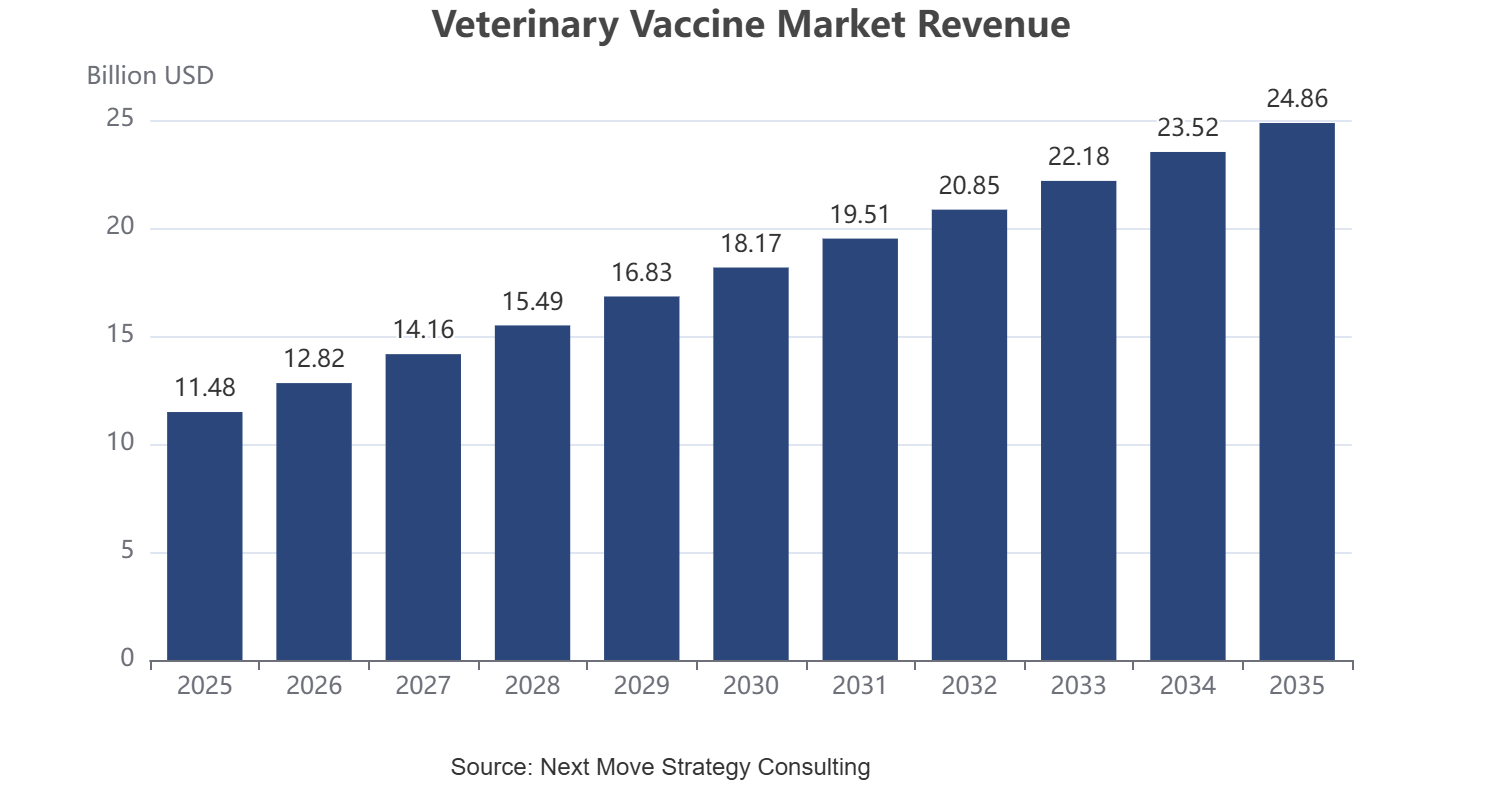
The global veterinary vaccine market size was valued at USD 11.48 billion in 2025 and is estimated at USD 12.32 billion in 2026, forecast to reach USD 24.86 billion by 2035, expanding at an 8.1% CAGR between 2026 and 2035. North America leads with approximately 35% share, while commercial vaccines dominate with approximately 87% share.
We observed that growth is broad-based across every segmentation axis, with recombinant technologies and aquaculture applications driving the dominant structural shifts through 2035.
|
Key Takeaways |
|
By Vaccine Type: Commercial Vaccines held the largest share of approximately 87% (USD 9.99 Billion) in 2025; Specialty Vaccines is the fastest-growing sub-segment at 12.3% CAGR from 2026–2035. |
|
By Technology: Inactivated vaccines held the largest share of approximately 30% (USD 3.44 Billion) in 2025; Nucleic Acid vaccines is the fastest-growing sub-segment at 15.0% CAGR from 2026–2035. |
|
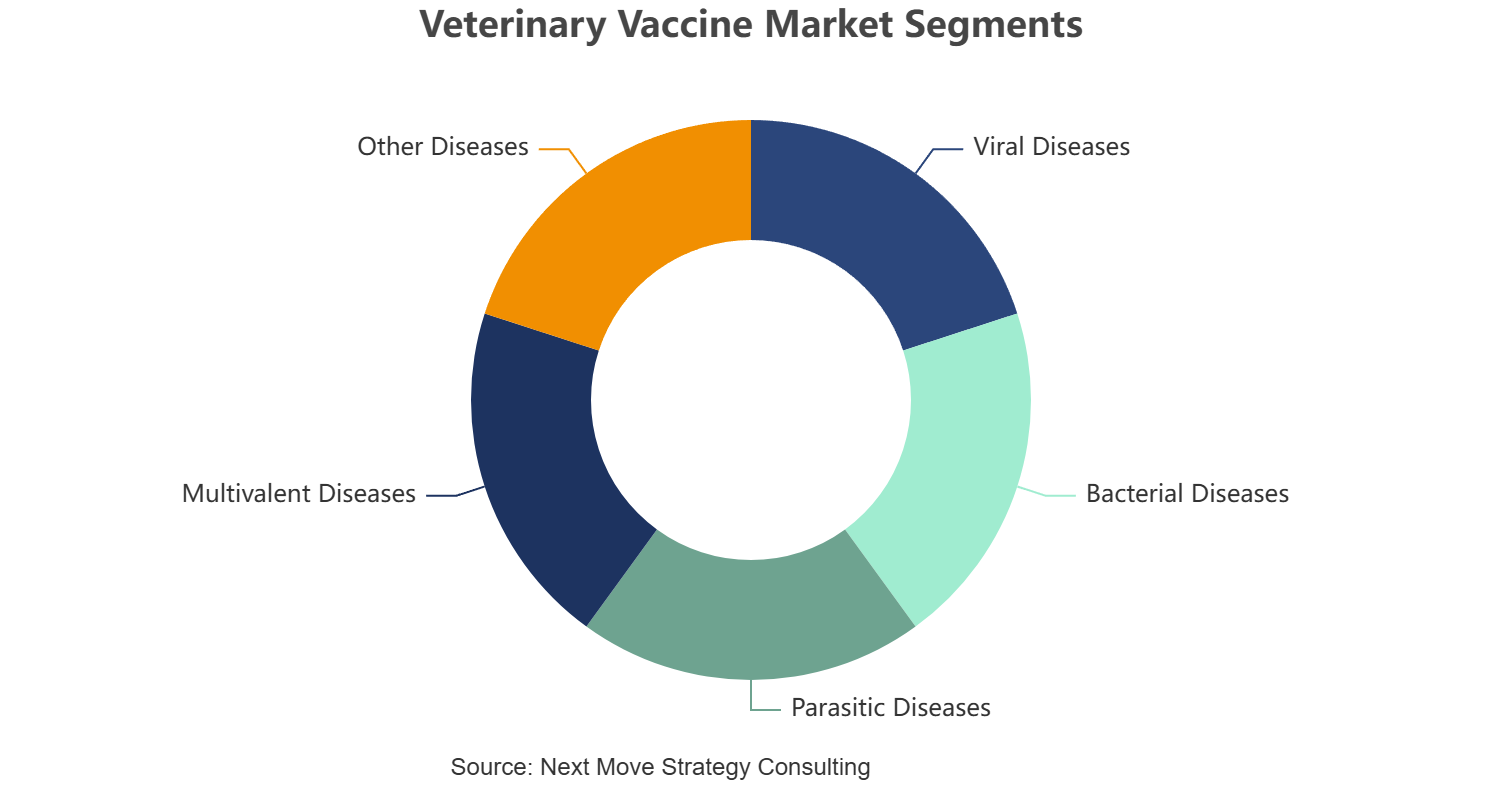
By Disease Type: Viral Diseases held the largest share of approximately 42% (USD 4.82 Billion) in 2025; Multivalent Diseases is the fastest-growing sub-segment at 12.7% CAGR from 2026–2035. |
|
By Route of Administration: Injectable held the largest share of approximately 68% (USD 7.81 Billion) in 2025; Oral is the fastest-growing sub-segment at 11.4% CAGR from 2026–2035. |
|
By Distribution Channel: Direct Sales held the largest share of approximately 38% (USD 4.36 Billion) in 2025; Digital Commerce is the fastest-growing sub-segment at 13.6% CAGR from 2026–2035. |
|
By Buyer Type: Livestock Producers held the largest share of approximately 33% (USD 3.79 Billion) in 2025; Aquaculture Producers is the fastest-growing sub-segment at 12.9% CAGR from 2026–2035. |
|
Dominant Region: North America dominated with approximately 35% revenue share (USD 4.02 Billion) in 2025. |
|
Fastest-Growing Region: Asia-Pacific is expected to register the highest CAGR of 10.4% during 2026–2035. |
|
Dominant Country: U.S. led with approximately USD 3.31 Billion in 2025. |
|
Fastest-Growing Country: India is the fastest-growing country at approximately 10.8% CAGR from 2026–2035. |
Market Opportunity: The veterinary vaccine market is expected to create an absolute dollar opportunity of USD 12.54 billion between 2026 and 2035, presenting significant investment potential across the livestock health, companion animal care, and aquaculture production value chain.
According to Next Move Strategy Consulting analysis, integrators are increasingly consolidating vaccine sourcing with fewer, biosecurity-certified suppliers to simplify multi-country regulatory compliance, a shift that favors diversified manufacturers with broad antigen portfolios over single-species specialists as disease surveillance intensifies through 2035.
What Does the Veterinary Vaccine Market Encompass?
The veterinary vaccine market encompasses immunobiological products administered to companion animals, livestock, and aquatic species to prevent viral, bacterial, and parasitic diseases. Our assessment indicates that the scope spans commercial, autogenous, and specialty vaccine formats supplied to veterinary clinics, livestock producers, poultry integrators, and government animal health programs. The category has evolved from broad-spectrum inactivated formulations into precision, multivalent, and species-specific platforms driven by rising zoonotic disease surveillance and food-security priorities worldwide.
Regulatory frameworks such as the U.S. Department of Agriculture's Center for Veterinary Biologics licensing regime and the European Medicines Agency's veterinary regulation shape efficacy and safety approval pathways, while the World Organisation for Animal Health guidelines increasingly influence cross-border trade standards. We observed that technology adoption is shifting toward recombinant and vector platforms that improve antigen stability and reduce production timelines. Next Move Strategy Consulting's analysis indicates that this structural shift, combined with rising demand for the cold-chain-independent formats, is redefining sourcing criteria across the global vaccines market.
|
Parameter |
Details |
|
Market Size in 2025 |
USD 11.48 Billion |
|
Market Size in 2026 |
USD 12.32 Billion |
|
Revenue Forecast in 2035 |
USD 24.86 Billion |
|
Growth Rate |
CAGR of 8.1% from 2026 to 2035 |
|
Analysis Period |
2025–2035 |
|
Base Year Considered |
2025 |
|
Forecast Period |
2026–2035 |
|
Market Size Estimation |
Revenue (USD Billion) |
|
Companies Profiled |
20 |
|
Countries Covered |
33 |
|
Market Share |
Available for Top 10 Companies |
Key Emerging Trends
We found that four structural trends are reshaping product development, manufacturing, and distribution strategies across the veterinary vaccine industry.
How Is Recombinant and Vector Technology Transforming Antigen Design?
Manufacturers are transitioning from traditional live attenuated formats toward recombinant and vector-based platforms that isolate specific antigens, improving safety profiles and reducing reversion risk. This transformation affects vaccine developers, contract manufacturers, and regulatory bodies overseeing biologic approvals. Boehringer Ingelheim Animal Health's canarypox vector platform illustrates how vector technology is being commercialized at scale, enabling differentiated immune responses for canine and equine indications while shortening development cycles for emerging pathogen threats.
How Is Digital Herd Health Monitoring Influencing Vaccination Programs?
Connected livestock monitoring platforms are increasingly informing vaccination scheduling, dosage tracking, and cold-chain compliance across large-scale poultry and swine operations. This adoption trend impacts producers, veterinary distributors, and integrators seeking traceability across multi-site operations. Zoetis' digital herd management tools demonstrate how data integration between diagnostics and immunization records is streamlining compliance reporting and reducing preventable disease outbreaks across commercial livestock networks.
What Role Does Aquaculture Vaccination Play in Sustainable Protein Production?
Rising global demand for farmed fish and shrimp protein is expanding immersion and injectable vaccine adoption across aquaculture operations. This shift affects aquaculture producers, feed integrators, and regional fisheries authorities managing disease containment. HIPRA's expanding fish vaccine portfolio reflects how aquaculture health management is becoming a core commercial priority, reducing antibiotic reliance while supporting sustainable protein output across Asia-Pacific and Latin American production regions.
How Is Oral and Wildlife Vaccination Expanding Disease Control Beyond Managed Animals?
Oral rabies and wildlife-targeted vaccine baiting programs are extending immunization coverage beyond clinically managed animal populations into free-ranging wildlife reservoirs. This trend involves government health agencies, conservation organizations, and specialty vaccine developers coordinating regional eradication campaigns. Ceva Santé Animale's oral rabies bait distribution programs illustrate how specialty vaccine formats are supporting public health mandates while reducing zoonotic spillover risk across endemic regions.
Regulatory Framework Impacting the Veterinary Vaccine Market
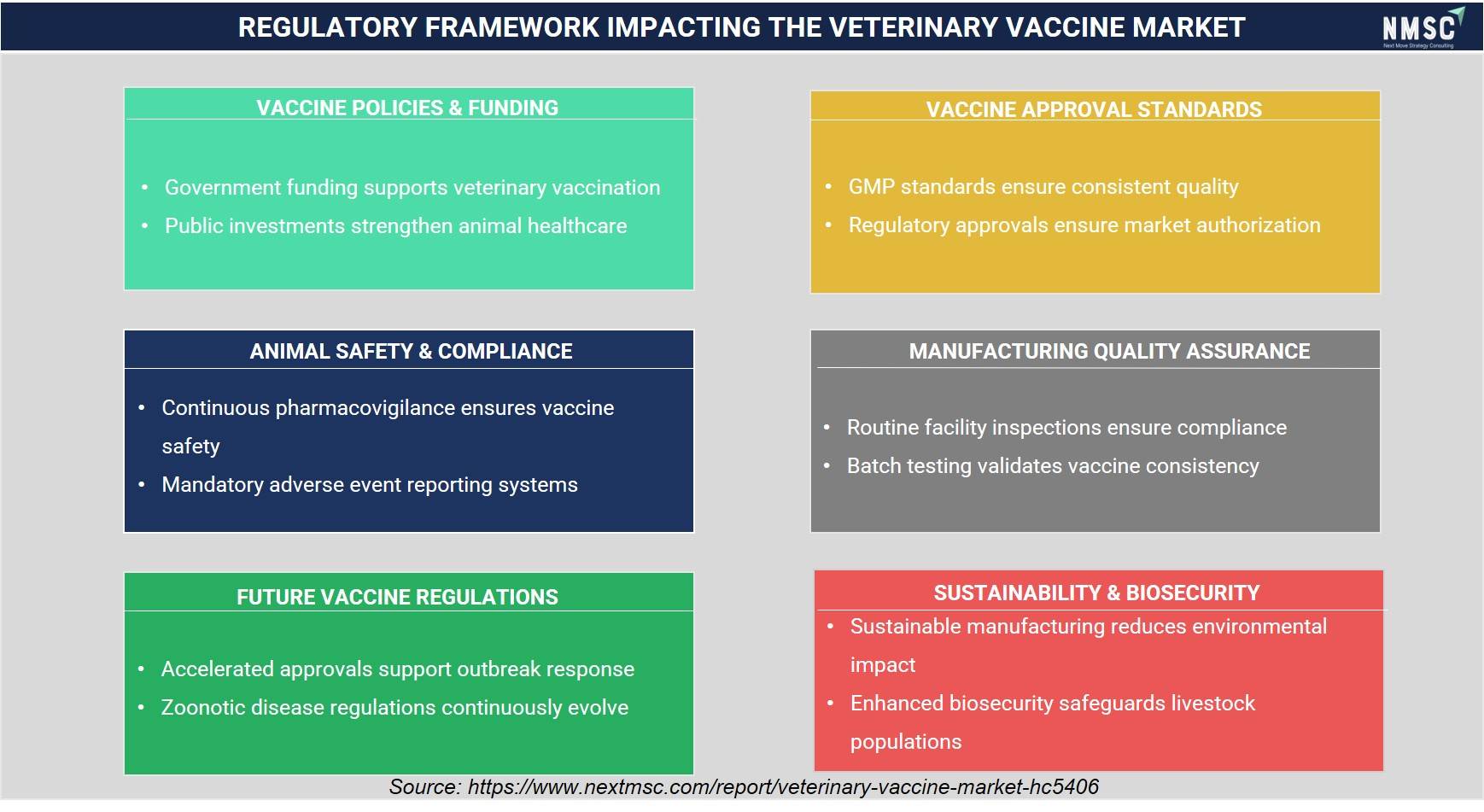
Our analysis indicates that the veterinary vaccine market is shaped by government vaccination policies, regulatory approval standards, animal safety requirements, manufacturing quality systems, evolving biosecurity regulations, and sustainability initiatives. Compliance with good manufacturing practices, pharmacovigilance, facility inspections, and emerging zoonotic disease regulations supports vaccine quality, accelerates market access, safeguards animal health, and strengthens industry resilience.
Growth Drivers & Restraints
|
Factors |
Type |
(+/−) % Impact on CAGR |
Geographic Relevance |
Impact Timeline |
|
Rising zoonotic disease surveillance mandates |
Driver |
+1.8% |
Global |
2026–2035 |
|
Growing livestock production intensity in Asia-Pacific |
Driver |
+1.4% |
Asia-Pacific |
2026–2032 |
|
Expanding companion animal ownership and pet insurance |
Driver |
+1.1% |
North America, Europe |
2026–2035 |
|
Government-funded rabies and foot-and-mouth eradication programs |
Driver |
+0.9% |
MEA, Latin America |
2026–2033 |
|
Aquaculture protein demand growth |
Driver |
+0.8% |
Asia-Pacific, Latin America |
2026–2035 |
|
High cold-chain and biologic manufacturing costs |
Restraint |
-0.9% |
Global |
2026–2035 |
|
Fragmented regulatory approval timelines across regions |
Restraint |
-0.7% |
Asia-Pacific, MEA |
2026–2032 |
|
Price sensitivity among smallholder livestock producers |
Restraint |
-0.6% |
Africa, South Asia |
2026–2035 |
|
Vaccine hesitancy and inconsistent booster compliance |
Restraint |
-0.4% |
Global |
2026–2033 |
What Is the Primary Growth Driver of the Veterinary Vaccine Market?
The primary growth driver is intensifying zoonotic and transboundary disease surveillance, which is expanding mandatory immunization requirements across livestock and poultry populations. The U.S. Department of Agriculture's Animal and Plant Health Inspection Service reports ongoing avian influenza response programs requiring expanded poultry vaccination coverage. This regulatory momentum is compounding with rising global protein demand to sustain double-digit growth in livestock vaccine procurement volumes through 2035.
How Is Rising Livestock Production Intensity Driving Market Growth?
Rising livestock production intensity across Asia-Pacific is driving market growth as producers scale herd and flock sizes to meet protein demand. The Food and Agriculture Organization notes that global meat production continues expanding to meet population-driven consumption growth, increasing exposure to concentrated-operation disease risk. This dynamic is prompting producers to adopt multivalent and combination vaccines that reduce administration frequency while maintaining herd immunity across large-scale operations.
What Is Restraining the Veterinary Vaccine Market?
High cold-chain infrastructure and biologic manufacturing costs are restraining broader market penetration, particularly across smallholder and emerging-market segments. Industry-derived estimates indicate that cold-chain logistics can account for a meaningful share of total vaccine delivery cost in regions with limited refrigerated transport infrastructure. This cost burden disproportionately affects price-sensitive producers in Africa and South Asia, slowing adoption of premium recombinant and vector-based formulations despite their improved efficacy profiles.
Segmentation Analysis
Segment Sizing: By Vaccine Type
|
Segment |
2025 (USD) |
2035 (USD) |
CAGR% (2026–2035) |
|
Commercial Vaccines |
9.99 Billion |
20.88 Billion |
7.7% |
|
Autogenous Vaccines |
0.92 Billion |
2.24 Billion |
9.5% |
|
Specialty Vaccines |
0.57 Billion |
1.74 Billion |
12.3% |
|
Total |
11.48 Billion |
24.86 Billion |
8.1% |
Which Vaccine Type Segment Dominates the Market?
Commercial vaccines dominate the vaccine type segment, supported by established manufacturing scale, standardized regulatory pathways, and broad distribution across veterinary clinics and livestock producers. Our findings suggest that specialty vaccines, though smaller in absolute size, are the fastest-growing category as government-funded oral rabies and wildlife immunization programs expand across endemic regions, reflecting rising public health investment in zoonotic spillover prevention through 2035.
Segment Sizing: By Technology
|
Segment |
2025 (USD) |
2035 (USD) |
CAGR% (2026–2035) |
|
Inactivated |
3.44 Billion |
5.97 Billion |
5.5% |
|
Live Attenuated |
2.76 Billion |
4.72 Billion |
5.3% |
|
Recombinant |
1.61 Billion |
4.72 Billion |
11.8% |
|
Vector |
1.03 Billion |
2.98 Billion |
11.6% |
|
Subunit |
0.92 Billion |
2.24 Billion |
9.5% |
|
Toxoid |
0.57 Billion |
0.99 Billion |
5.5% |
|
Nucleic Acid |
0.46 Billion |
1.74 Billion |
15.0% |
|
Immune Complex |
0.34 Billion |
0.75 Billion |
8.3% |
|
Combination |
0.23 Billion |
0.50 Billion |
8.2% |
|
Other Technologies |
0.12 Billion |
0.25 Billion |
7.6% |
|
Total |
11.48 Billion |
24.86 Billion |
8.1% |
Which Technology Segment Is Growing the Fastest?
Inactivated vaccines dominate the technology segment owing to their established safety profile and broad regulatory acceptance across livestock and companion animal indications. Based on research conducted by Next Move Strategy Consulting, we found that nucleic acid platforms are the fastest-growing technology as developers pursue rapid-response formats for emerging pathogens, with recombinant and vector platforms following closely as manufacturers prioritize precision antigen delivery and improved cold-chain resilience.
Segment Sizing: By Disease Type
|
Segment |
2025 (USD) |
2035 (USD) |
CAGR% (2026–2035) |
|
Viral Diseases |
4.82 Billion |
9.70 Billion |
7.2% |
|
Bacterial Diseases |
3.44 Billion |
6.96 Billion |
7.3% |
|
Parasitic Diseases |
1.38 Billion |
2.98 Billion |
8.1% |
|
Multivalent Diseases |
1.26 Billion |
3.98 Billion |
12.7% |
|
Other Diseases |
0.58 Billion |
1.24 Billion |
8.0% |
|
Total |
11.48 Billion |
24.86 Billion |
8.1% |
Why Do Multivalent Disease Vaccines Show the Strongest Growth?
Viral disease indications dominate segment revenue given the scale of avian influenza, foot-and-mouth, and rabies immunization programs across livestock and companion animal populations. During our market evaluation, we noticed that multivalent formulations are growing fastest as producers consolidate multiple antigens into single-dose combination products, reducing handling frequency and labor costs across large-scale poultry and swine operations while maintaining broad-spectrum herd protection.
Growth Opportunities
We observed three forward-looking whitespace opportunities positioned to shape competitive differentiation through 2035.
Can Thermostable Vaccine Formats Unlock Smallholder Livestock Markets?
Thermostable and reduced cold-chain formulations present a mechanism to unlock immunization coverage among smallholder livestock producers across Africa and South Asia. Companies commercializing heat-stable inactivated and subunit platforms stand to capture underserved rural veterinary distribution channels currently constrained by refrigerated logistics gaps.
Will Aquaculture Vaccination Expand Beyond Finfish Into Shrimp Production?
Expanding immersion and injectable vaccine adoption beyond finfish into shrimp aquaculture presents a scalable growth mechanism as producers seek alternatives to antibiotic-dependent disease management. Aquaculture producers and feed integrators across Southeast Asia and Latin America stand to benefit from reduced mortality and improved yield consistency.
Can Digital Commerce Channels Streamline Veterinary Vaccine Procurement?
Digital commerce platforms offer a mechanism to streamline procurement and inventory replenishment for veterinary clinics and independent practitioners currently reliant on fragmented distributor networks. Manufacturers investing in direct digital ordering infrastructure stand to capture share from smaller veterinary retail and pharmacy intermediaries over the forecast period.
Regional Outlook
|
Region |
2025 (USD) |
2035 (USD) |
CAGR% (2026–2035) |
Key Driver |
|
North America |
4.02 Billion |
7.96 Billion |
7.0% |
Advanced companion animal healthcare spending |
|
Europe |
2.98 Billion |
6.21 Billion |
7.7% |
Stringent EMA regulatory harmonization |
|
Asia-Pacific |
2.76 Billion |
7.21 Billion |
10.4% |
Expanding livestock and aquaculture production |
|
Middle East & Africa |
1.03 Billion |
1.74 Billion |
5.2% |
Government-funded eradication programs |
|
Latin America |
0.69 Billion |
1.74 Billion |
10.0% |
Rising export-oriented livestock production |
|
Total |
11.48 Billion |
24.86 Billion |
8.1% |
|
North America Veterinary Vaccine Market
North America maintains the most mature regulatory and distribution infrastructure globally, supported by established U.S. Department of Agriculture licensing pathways and dense veterinary clinic networks. High companion animal ownership and pet insurance penetration sustain premium vaccine adoption, while integrated poultry and swine operations drive consistent livestock demand. Manufacturers maintain strong direct-sales relationships with large producers, reinforcing the region's leadership position through 2035.
Europe Veterinary Vaccine Market
Europe's market is shaped by harmonized European Medicines Agency approval standards and rigorous biosecurity requirements across member states. Strong government support for foot-and-mouth and avian influenza containment sustains livestock vaccine demand, while companion animal care spending remains elevated across Western Europe. Technology adoption favors recombinant and vector platforms as manufacturers align with the region's stringent efficacy and traceability documentation requirements.
Asia-Pacific Veterinary Vaccine Market
Asia-Pacific is expanding fastest as rising protein consumption drives large-scale poultry, swine, and aquaculture production intensification. Regulatory environments vary by country, with China and India strengthening domestic biologics manufacturing capacity to reduce import dependence. Technology adoption is shifting toward cost-effective inactivated and subunit platforms suited to high-volume livestock operations, supporting the region's strategic position as a manufacturing and consumption hub.
Middle East & Africa Veterinary Vaccine Market
The Middle East & Africa region relies heavily on government-funded eradication and disease surveillance programs to sustain vaccination coverage across pastoral and commercial livestock systems. Regulatory frameworks remain fragmented across countries, creating import complexity for manufacturers. Technology adoption favors thermostable and easily administered formats given limited cold-chain infrastructure, with strategic outlook centered on donor-funded rabies and foot-and-mouth control initiatives.
Latin America Veterinary Vaccine Market
Latin America's market is anchored by large export-oriented cattle and poultry industries in Brazil and Argentina, requiring consistent immunization compliance to meet international trade health standards. Regulatory bodies increasingly align with international biologic guidelines to facilitate export certification. Technology adoption favors combination livestock vaccines that reduce handling costs across extensive grazing operations, supporting steady regional growth through 2035.
The U.S. Veterinary Vaccine Market
Based on our estimates, the U.S. veterinary vaccine market was valued at approximately USD 3.31 billion in 2025 and is projected to reach USD 6.53 billion by 2035, growing at a 7.0% CAGR. Demand structure is anchored by high companion animal healthcare spending and large integrated poultry and swine operations. Regulatory oversight under the USDA Center for Veterinary Biologics ensures consistent approval standards, while technology penetration favors recombinant platforms and competitive intensity remains high among global manufacturers with established distribution networks.
Canada Veterinary Vaccine Market
The market in Canada's veterinary vaccine sector was valued at approximately USD 0.62 billion in 2025 and is expected to reach USD 1.19 billion by 2035, expanding at a 6.8% CAGR. Demand is driven by cattle and swine health programs across the Prairie provinces alongside rising companion animal veterinary visits. The Canadian Food Inspection Agency's licensing framework shapes market entry, with technology adoption gradually shifting toward multivalent livestock formulations and steady competitive participation from multinational suppliers.
UK Veterinary Vaccine Market
As per our estimate, the UK veterinary vaccine market was valued at approximately USD 0.68 billion in 2025 and is forecast to reach USD 1.41 billion by 2035, at a 7.6% CAGR. Demand structure reflects strong companion animal ownership and government-backed livestock disease surveillance following the Animal and Plant Health Agency's biosecurity mandates. Technology penetration favors recombinant and vector platforms, and competitive intensity is shaped by established relationships between manufacturers and independent veterinary practices nationwide.
Germany Veterinary Vaccine Market
According to our analysis, Germany's veterinary vaccine market was valued at approximately USD 0.79 billion in 2025 and is projected to reach USD 1.65 billion by 2035, growing at a 7.7% CAGR. Demand is anchored by large-scale swine and poultry production alongside stringent Paul-Ehrlich-Institut biologics oversight. Technology adoption favors combination and subunit formats suited to intensive livestock operations, with strategic outlook centered on export-oriented biosecurity compliance across the European single market.
France Veterinary Vaccine Market
Based on our estimates, France's veterinary vaccine market was valued at approximately USD 0.61 billion in 2025 and is expected to reach USD 1.28 billion by 2035, at a 7.7% CAGR. Demand structure reflects extensive cattle and poultry farming alongside a well-established companion animal veterinary network. Regulatory alignment with European Medicines Agency standards shapes product approvals, while technology penetration is gradually shifting toward recombinant platforms amid steady competitive intensity from domestic and multinational suppliers.
China Veterinary Vaccine Market
The market in China's veterinary vaccine market was valued at approximately USD 0.94 billion in 2025 and is forecast to reach USD 2.41 billion by 2035, expanding at a 9.9% CAGR. Demand is driven by the world's largest swine and poultry production base alongside expanding aquaculture output. Domestic regulatory bodies are strengthening biologics manufacturing standards, with technology adoption favoring cost-effective inactivated formats and competitive intensity rising among domestic producers such as Jinyu Biotechnology and Ringpu Bio-Technology.
India Veterinary Vaccine Market
As per our estimate, India's veterinary vaccine market was valued at approximately USD 0.42 billion in 2025 and is projected to reach USD 1.16 billion by 2035, growing at a 10.8% CAGR, the fastest among covered countries. Demand structure reflects large dairy cattle and poultry populations alongside government-funded foot-and-mouth control programs. Technology penetration favors affordable inactivated and live attenuated formats, with Indian Immunologicals Limited maintaining strong domestic competitive positioning.
Japan Veterinary Vaccine Market
According to our analysis, Japan's veterinary vaccine market was valued at approximately USD 0.36 billion in 2025 and is expected to reach USD 0.71 billion by 2035, at a 7.0% CAGR. Demand is shaped by aging companion animal populations requiring advanced preventive care alongside consistent swine and poultry health programs. Regulatory oversight through the Ministry of Agriculture, Forestry and Fisheries ensures rigorous efficacy standards, with technology adoption favoring recombinant platforms and steady competitive presence from Kyoritsu Seiyaku Corporation.
South Korea Veterinary Vaccine Market
Based on our estimates, South Korea's veterinary vaccine market was valued at approximately USD 0.24 billion in 2025 and is projected to reach USD 0.53 billion by 2035, growing at an 8.1% CAGR. Demand structure reflects intensive swine and poultry production alongside periodic avian influenza containment campaigns. Regulatory bodies maintain strict import and biosecurity controls, with technology penetration favoring inactivated and vector formats and moderate competitive intensity among domestic and international suppliers.
Australia Veterinary Vaccine Market
The market in Australia's veterinary vaccine market was valued at approximately USD 0.28 billion in 2025 and is forecast to reach USD 0.58 billion by 2035, at a 7.2% CAGR. Demand is anchored by large-scale cattle and sheep grazing operations alongside strict biosecurity protocols managed by the Australian Pesticides and Veterinary Medicines Authority. Technology adoption favors combination livestock vaccines, and competitive intensity remains moderate with strong reliance on established multinational suppliers.
UAE Veterinary Vaccine Market
As per our estimate, the UAE veterinary vaccine market was valued at approximately USD 0.09 billion in 2025 and is expected to reach USD 0.21 billion by 2035, growing at an 8.9% CAGR. Demand structure reflects growing companion animal veterinary services alongside government-backed poultry biosecurity initiatives. Regulatory oversight through the Ministry of Climate Change and Environment shapes import approvals, with technology penetration gradually favoring recombinant formats amid limited but growing competitive activity.
Saudi Arabia Veterinary Vaccine Market
According to our analysis, Saudi Arabia's veterinary vaccine market was valued at approximately USD 0.14 billion in 2025 and is projected to reach USD 0.32 billion by 2035, at an 8.6% CAGR. Demand is driven by national food-security initiatives expanding poultry and livestock self-sufficiency programs. The Saudi Food and Drug Authority governs biologics approval, with technology adoption favoring inactivated and thermostable formats suited to the region's climate and logistics constraints.
South Africa Veterinary Vaccine Market
Based on our estimates, South Africa's veterinary vaccine market was valued at approximately USD 0.11 billion in 2025 and is forecast to reach USD 0.24 billion by 2035, growing at an 8.0% CAGR. Demand structure reflects commercial cattle ranching alongside government-funded foot-and-mouth surveillance in endemic zones. Regulatory oversight through the Department of Agriculture, Land Reform and Rural Development shapes approvals, with technology penetration favoring cost-effective live attenuated formats and moderate competitive intensity.
Brazil Veterinary Vaccine Market
The market in Brazil's veterinary vaccine market was valued at approximately USD 0.32 billion in 2025 and is projected to reach USD 0.83 billion by 2035, at a 10.0% CAGR. Demand is anchored by the country's position as a leading global beef and poultry exporter requiring consistent health certification. The Ministry of Agriculture, Livestock and Food Supply governs biologics registration, with technology adoption favoring combination formats and strong competitive presence from Biogénesis Bagó and Ourofino Saúde Animal.
Argentina Veterinary Vaccine Market
As per our estimate, Argentina's veterinary vaccine market was valued at approximately USD 0.15 billion in 2025 and is expected to reach USD 0.37 billion by 2035, growing at a 9.5% CAGR. Demand structure reflects extensive cattle ranching operations tied to export-oriented beef production. Regulatory oversight through SENASA ensures compliance with international trade health standards, with technology penetration favoring foot-and-mouth combination vaccines and steady competitive activity from regional manufacturers.
Consumer Behavior Analysis of the Veterinary Vaccine Market
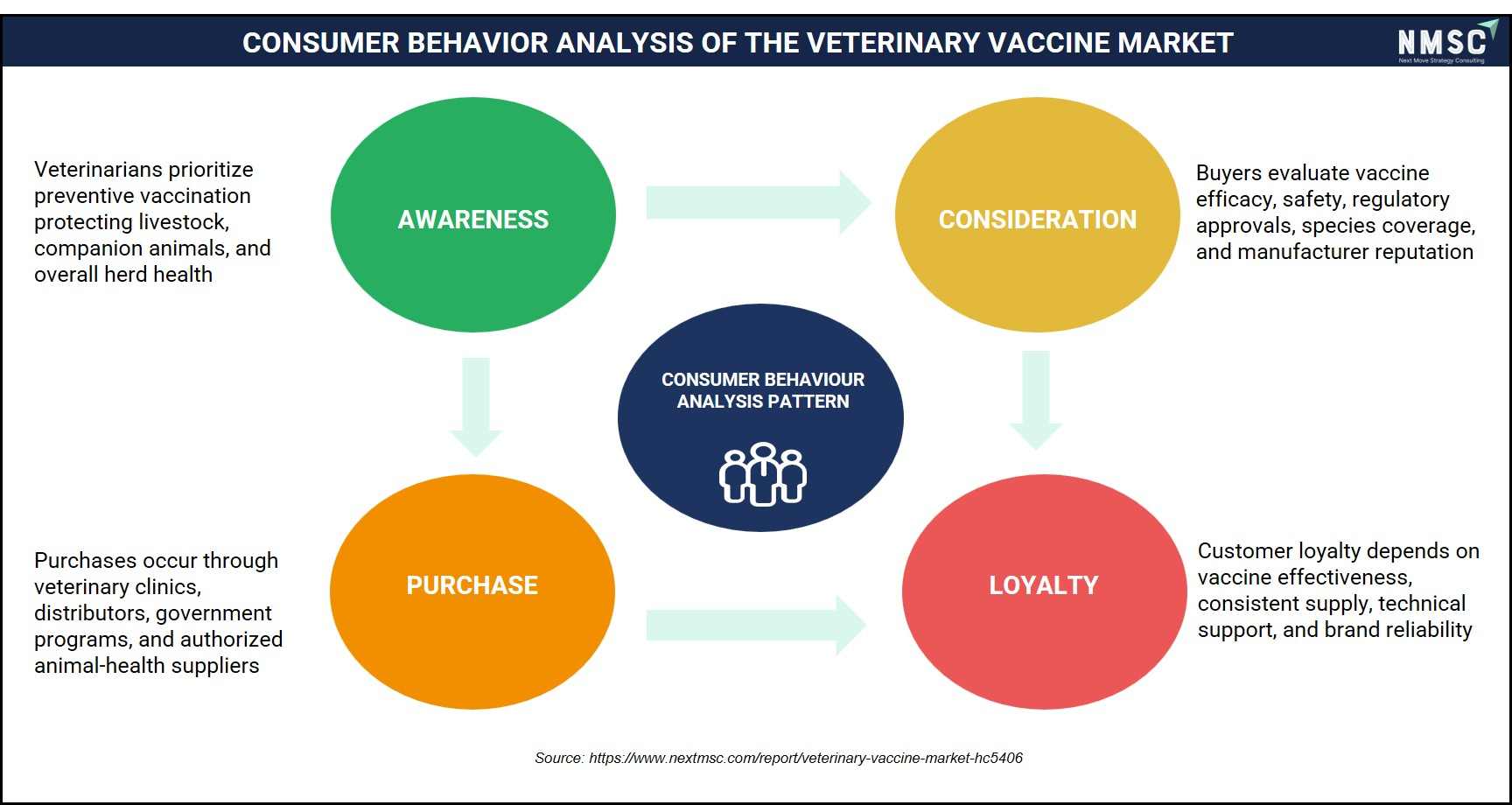
Our findings suggest that purchasing decisions in the veterinary vaccine market follow a structured path beginning with awareness of preventive animal healthcare, followed by evaluation of vaccine efficacy, safety, regulatory approvals, species coverage, and manufacturer reputation. Purchases are primarily made through veterinary clinics, distributors, government programs, and authorized animal-health suppliers, while long-term customer loyalty is driven by consistent vaccine effectiveness, reliable product availability, technical support, and trusted brand performance.
Competitive Landscape
We observed that the competitive landscape spans multinational animal health leaders with broad antigen portfolios alongside regional specialists focused on country-specific disease priorities.
|
Dimension |
Details |
|
Market Structure |
Moderately consolidated, with the top players holding a majority combined share across commercial vaccine categories |
|
Innovation Focus |
Recombinant and vector antigen platforms, thermostable formulations, and digital herd health integration |
|
M&A Activity |
Portfolio-expansion acquisitions targeting aquaculture, autogenous, and regional manufacturing capacity |
Competitive Landscape
We observed that the competitive landscape spans multinational animal health leaders with broad antigen portfolios alongside regional specialists focused on country-specific disease priorities.
Key Takeaways
|
Dimension |
Details |
|
Market Structure |
Moderately consolidated, with the top players holding a majority combined share across commercial vaccine categories |
|
Innovation Focus |
Recombinant and vector antigen platforms, thermostable formulations, and digital herd health integration |
|
M&A Activity |
Portfolio-expansion acquisitions targeting aquaculture, autogenous, and regional manufacturing capacity |
How Do Companies Compete in the Veterinary Vaccine Market?
Companies compete primarily through breadth of antigen portfolios, regulatory approval speed across multiple jurisdictions, and depth of distributor relationships with large livestock integrators and veterinary clinic networks. Manufacturers with established biosecurity-certified manufacturing capacity secure preferential access to government tender programs, while smaller regional players compete on price and localized disease relevance within specific national markets.
Which Competitive Archetypes Dominate the Industry?
Two archetypes dominate the industry: diversified global animal health majors offering integrated companion animal, livestock, and aquaculture portfolios, and regional biologics specialists focused on country-specific autogenous and endemic-disease vaccines. This dual structure allows multinational players to capture premium companion animal segments while regional manufacturers maintain strong positioning in cost-sensitive livestock markets requiring localized antigen strains.
What Innovation and Differentiation Strategies Are Companies Pursuing?
Companies are differentiating through recombinant and vector-based antigen platforms, thermostable formulations reducing cold-chain dependence, and digital integration linking vaccination records with herd management software. Ceva Santé Animale and Virbac have expanded aquaculture and companion animal research pipelines, while Phibro Animal Health Corporation continues investing in combination livestock formats to reduce administration frequency across intensive production systems.
How Active Is M&A in the Veterinary Vaccine Market?
M&A activity remains active as multinational players acquire regional manufacturers to expand geographic manufacturing footprints and antigen libraries. Elanco Animal Health and Zoetis have pursued targeted acquisitions strengthening aquaculture and companion animal vaccine capabilities, while mid-sized players pursue partnerships with regional distributors to accelerate market entry across Asia-Pacific and Latin American growth markets.
Key Market Players
We found that the following companies represent the validated set of leading participants shaping product innovation, manufacturing scale, and geographic distribution across the veterinary vaccine industry.
-
Zoetis
-
Merck Animal Health
-
Boehringer Ingelheim Animal Health
-
Elanco Animal Health
-
Ceva Santé Animale
-
Virbac
-
HIPRA
-
Phibro Animal Health Corporation
-
Biogénesis Bagó
-
Indian Immunologicals Limited
-
Jinyu Biotechnology Co., Ltd.
-
Vaxxinova
-
Hester Biosciences Limited
-
Kyoritsu Seiyaku Corporation
-
Brilliant Bio Pharma Limited
-
China Animal Husbandry Industry Co., Ltd.
-
Ringpu Bio-Technology Co., Ltd.
-
Laboratoire LCV
-
Ourofino Saúde Animal
-
Intas Animal Health
Latest Developments
Next Move Strategy Consulting's analysis indicates that recent product launches and regulatory approvals reflect sustained innovation investment across the industry.
|
Date |
Event |
|
July 2026 |
Boehringer Ingelheim advanced its livestock biologics portfolio with the commercial expansion of LENZELTA, an innovative vaccine designed to optimize mastitis prevention protocols and enhance herd immunity in dairy cattle during the dry-off period. |
|
January 2025 |
Elanco Animal Health secured regulatory approval for TruCan Ultra B, deploying an advanced low-volume formulation engineered to maximize immunological safety and streamline protection against Bordetella bronchiseptica in canine populations |
Expert Insights
 “Therefore, the availability and access to good quality vaccines, in addition to biosafety, are critical for the prevention and control of high impact animal and zoonotic diseases.”
— Dr. QU Dongyu, Director-General, Food and Agriculture Organization of the United Nations (FAO)
Statement made during the virtual launch of the first edition of Veterinary Vaccines: Principles and Applications, emphasizing the critical role of quality veterinary vaccines and biosafety in preventing high-impact animal and zoonotic diseases and strengthening global animal health.
Market Interpretation
The statement underscores the growing importance of veterinary vaccines as a cornerstone of animal disease prevention and zoonotic risk mitigation. As governments, livestock producers, and companion animal healthcare providers increasingly prioritize preventive healthcare, demand for safe, high-quality vaccines continues to rise. Consequently, manufacturers are expanding investments in advanced vaccine technologies, including recombinant, vector-based, and mRNA platforms, to enhance disease control, improve livestock productivity, and support global food security and One Health initiatives.
Investment Opportunities
Where Are Capital Inflows Concentrating Within the Industry?
Capital inflows are concentrating in recombinant antigen research and aquaculture vaccine manufacturing capacity as investors target high-growth sub-segments. Venture and strategic funding rounds increasingly favor companies developing thermostable formulations capable of expanding coverage across regions with limited cold-chain infrastructure, reflecting confidence in long-term demand from both established and emerging livestock production markets.
How Is Infrastructure Investment Shaping Manufacturing Capacity?
Infrastructure investment is expanding biologics manufacturing capacity across Asia-Pacific and Latin America as companies localize production to reduce import dependence and tariff exposure. China Animal Husbandry Industry Co., Ltd. and Jinyu Biotechnology Co., Ltd. have expanded domestic facilities, reflecting a broader trend of regional self-sufficiency investment supporting government food-security and disease-containment mandates.
What ESG Considerations Are Influencing Investment Decisions?
Environmental, social, and governance considerations are influencing investment decisions as manufacturers prioritize reduced antibiotic reliance through preventive vaccination and lower-emission cold-chain logistics. Investors increasingly evaluate biosecurity governance and traceability disclosures alongside financial performance, favoring companies demonstrating measurable contributions to sustainable livestock and aquaculture production practices across their manufacturing and distribution operations.
Key Benefits for Stakeholders
How Does This Report Benefit Industry Leaders?
Industry leaders gain access to validated segmentation, competitive benchmarking, and regional demand forecasts that support portfolio prioritization and manufacturing capacity planning. Our analysis shows that this data enables leadership teams to align R&D investment with the fastest-growing technology and disease-type segments while identifying underpenetrated geographic markets for expansion through 2035.
How Does This Report Benefit Investors and Financial Analysts?
Investors and financial analysts benefit from reconciled market sizing, CAGR projections, and company-level competitive positioning that support valuation and due-diligence workflows. The report's regional and segment-level forecasts provide a defensible basis for evaluating acquisition targets and capital allocation decisions across the commercial, autogenous, and specialty vaccine categories through the 2026–2035 forecast window.
How Does This Report Benefit Technology and Product Teams?
Technology and product teams benefit from detailed technology-segment sizing that clarifies where recombinant, vector, and nucleic acid platforms are gaining share relative to established inactivated and live attenuated formats. This insight supports pipeline prioritization decisions and helps product teams align development timelines with regional regulatory and distribution readiness across covered markets.
Key Market Segments
By Vaccine Type
-
Commercial Vaccines
-
Companion Animal Vaccines
-
Canine Vaccines
-
Feline Vaccines
-
Equine Vaccines
-
Other Companion Animal Vaccines
-
-
Livestock Vaccines
-
Bovine Vaccines
-
Swine Vaccines
-
Poultry Vaccines
-
Small Ruminant Vaccines
-
Other Livestock Vaccines
-
-
Aquaculture Vaccines
-
Fish Vaccines
-
Shrimp Vaccines
-
Other Aquaculture Vaccines
-
-
-
Autogenous Vaccines
-
Poultry
-
Swine
-
Bovine
-
Small Ruminants
-
Companion Animals
-
Other Autogenous Vaccines
-
-
Specialty Vaccines
-
Oral Rabies Vaccines
-
Wildlife Vaccines
-
Therapeutic Vaccines
-
Other Specialty Vaccines
-
By Technology
-
Live Attenuated
-
Inactivated
-
Recombinant
-
Vector
-
Subunit
-
Toxoid
-
Nucleic Acid
-
Immune Complex
-
Combination
-
Other Technologies
By Disease Type
-
Viral Diseases
-
Bacterial Diseases
-
Parasitic Diseases
-
Multivalent Diseases
-
Other Diseases
By Route of Administration
-
Injectable
-
Oral
-
Intranasal
-
Oculonasal
-
Immersion
-
Other Routes
By Distribution Channel
-
Direct Sales
-
Veterinary Distributors
-
Government Tender
-
Veterinary Retail and Pharmacy
-
Digital Commerce
By Buyer Type
-
Veterinary Clinics
-
Livestock Producers
-
Poultry Integrators
-
Aquaculture Producers
-
Government Organizations
-
Research Organizations
By Region
-
North America: U.S., Canada, Mexico
-
Europe: UK, Germany, France, Italy, Spain, Sweden, Denmark, Finland, Netherlands, Rest of Europe
-
Asia-Pacific: China, India, Japan, South Korea, Taiwan, Indonesia, Vietnam, Australia, Philippines, Malaysia, Rest of APAC
-
Middle East & Africa: Saudi Arabia, UAE, Egypt, Israel, Turkey, Nigeria, South Africa, Rest of MEA
-
Latin America: Brazil, Argentina, Chile, Colombia, Rest of LATAM
Conclusion & Recommendations
What Is the Long-Term Outlook for the Veterinary Vaccine Market?
The long-term outlook remains firmly positive, with the market projected to more than double from USD 11.48 billion in 2025 to USD 24.86 billion by 2035. Sustained protein demand, expanding zoonotic disease surveillance, and rising companion animal healthcare spending underpin durable growth. Our assessment indicates that recombinant and specialty vaccine categories will increasingly define competitive differentiation as the forecast period progresses toward 2035.
How Should Companies Position Strategically?
Companies should position strategically by broadening antigen portfolios across recombinant and vector platforms while strengthening regional manufacturing capacity in Asia-Pacific and Latin America. Building direct relationships with large livestock integrators and government tender programs will support resilient revenue streams, while investment in thermostable formats can unlock underserved smallholder and emerging-market veterinary distribution channels through 2035.
How Attractive Is the Market for Investment?
The market presents attractive investment characteristics given its 8.1% forecast CAGR, diversified end-use base spanning companion animal, livestock, and aquaculture applications, and consistent government-backed demand for disease containment programs. Investors evaluating the sector benefit from reconciled segment and regional forecasts that highlight recombinant technology and Asia-Pacific geographic exposure as the strongest risk-adjusted growth opportunities.
What Market Shifts and Key Risks Should Stakeholders Monitor?
Stakeholders should monitor shifting regulatory approval timelines across fragmented Asia-Pacific and MEA jurisdictions, alongside cold-chain cost pressures affecting smallholder adoption. Industry-derived estimates suggest that vaccine hesitancy and inconsistent booster compliance could moderate near-term uptake in select livestock segments, requiring sustained producer education and distribution investment to maintain projected growth trajectories through 2035.
What Are the Clearest Growth Pathways Through 2035?
The clearest growth pathways run through aquaculture vaccine expansion, recombinant and nucleic acid technology commercialization, and government-funded specialty vaccine programs targeting wildlife and rabies control. Companies that align manufacturing investment and distribution partnerships with these pathways are best positioned to capture the USD 12.54 billion absolute dollar opportunity emerging between 2026 and 2035.
About the Author
 Saista Faiyaz
— Saista Faiyaz is Research Associate at Next Move Strategy Consulting, where she has covered consumer markets and healthcare technologies for 3 years. Her work includes primary interview review, secondary-source validation, market sizing, and structured analysis of company and industry data. She supports research by comparing evidence across sources, organizing findings into market narratives, and documenting assumptions used in analysis. Her scope includes cross-market benchmarking, and reports.
Saista Faiyaz
— Saista Faiyaz is Research Associate at Next Move Strategy Consulting, where she has covered consumer markets and healthcare technologies for 3 years. Her work includes primary interview review, secondary-source validation, market sizing, and structured analysis of company and industry data. She supports research by comparing evidence across sources, organizing findings into market narratives, and documenting assumptions used in analysis. Her scope includes cross-market benchmarking, and reports.
About the Reviewer
 Supradip Baul
— Supradip Baul is an accomplished business consultant and strategist with over a decade of rich experience in market intelligence, strategy, technology, and business transformation. His work has included rigorous qualitative and quantitative analysis across multiple industries, helping clients shape investment decisions and long-term roadmaps. Earlier in his career, he was associated with Gartner, where he contributed to industry-leading reports and market share analyses. He has worked with leading global companies and holds an MBA with a dual specialization in Marketing and Finance.
Supradip Baul
— Supradip Baul is an accomplished business consultant and strategist with over a decade of rich experience in market intelligence, strategy, technology, and business transformation. His work has included rigorous qualitative and quantitative analysis across multiple industries, helping clients shape investment decisions and long-term roadmaps. Earlier in his career, he was associated with Gartner, where he contributed to industry-leading reports and market share analyses. He has worked with leading global companies and holds an MBA with a dual specialization in Marketing and Finance.
At Next Move Strategy Consulting, we understand that insightful market research is the cornerstone of successful business decisions. That's why we employ a robust and multifaceted approach, combining various methodologies to deliver the most accurate and actionable data for our clients.

Research Landscape
We navigate the world of research with two primary approaches:
Qualitative Approach
Our qualitative research methodologies involve immersive techniques such as in-depth interviews, focus groups, and observational studies. By engaging directly with individuals and stakeholders, we uncover valuable insights that quantitative data alone may overlook.

Quantitative Research
In tandem with qualitative methodologies, NMSC leverages the power of Quantitative Research to provide a robust foundation of numerical insights. Through systematic data collection and analysis, we quantify patterns, preferences, and market trends, offering a comprehensive view of the business landscape.
Our quantitative research approach employs diverse tools, including surveys, experiments, and statistical modelling. These methodologies enable us to gather data from a large and representative sample, ensuring the statistical significance of our findings. By employing structured questionnaires and standardized data collection methods, we guarantee the reliability and validity of the information we present to our clients.
Quantitative research is particularly effective in measuring the prevalence of trends, assessing market size, and gauging the impact of various factors on consumer behavior. The numerical precision attained through this approach equips our clients with actionable insights, facilitating data-driven decision-making and strategy formulation.


Our Specialized Toolbox for Industry-Specific Market Research
We deploy a specialized arsenal of techniques tailored to meet your unique requirements. Here's a glimpse into our comprehensive toolbox:

Information Procurement
The stage entails acquiring market data or relevant information through various sources and methodologies.


Market Research Approach
We utilize both top-down and bottom-up approaches in market research analysis to achieve a comprehensive understanding of the market dynamics, leveraging the broad perspective of industry trends and macroeconomic factors alongside detailed insights from specific segments and individual companies.

Porters Five Forces Analysis
We conduct Porter's Five Forces analysis to evaluate the competitive landscape of an industry, providing us with insights into factors that affect profitability and strategic positioning.

SWOT Analysis

Forecasting
We utilize a forecasting model to predict future consumption by considering parameters like population, economics, regulations, market competition, drivers, constraints, technology, and pricing. We also employ statistical techniques such as multilinear regression, exponential smoothing, moving average, ARIMA, and Monte Carlo simulations for accurate predictions. In econometric forecasting, we analyzed short-term and long-term event impacts, attributing values based on regulatory frameworks, economic factors, and market events.





 Speak to Our Analyst