Air Compressor Market 2026: Compact Innovation Meets Sustainability
Introduction: Air Compressor Technology Is Getting Smarter
The Air Compressor Industry in 2026 is moving beyond traditional performance metrics. Today, manufacturers are focusing on compact design, energy efficiency, and environmental compliance. Two recent developments—compact compressor launches and eco-friendly system advancements—highlight how the industry is evolving to meet modern industrial needs.
The air compressor sector is transitioning from hardware-focused competition to solution-driven innovation. Companies that integrate efficiency, space optimization, and sustainability into their offerings are positioning themselves for long-term growth.
Compact Air Compressors: Solving Space Constraints
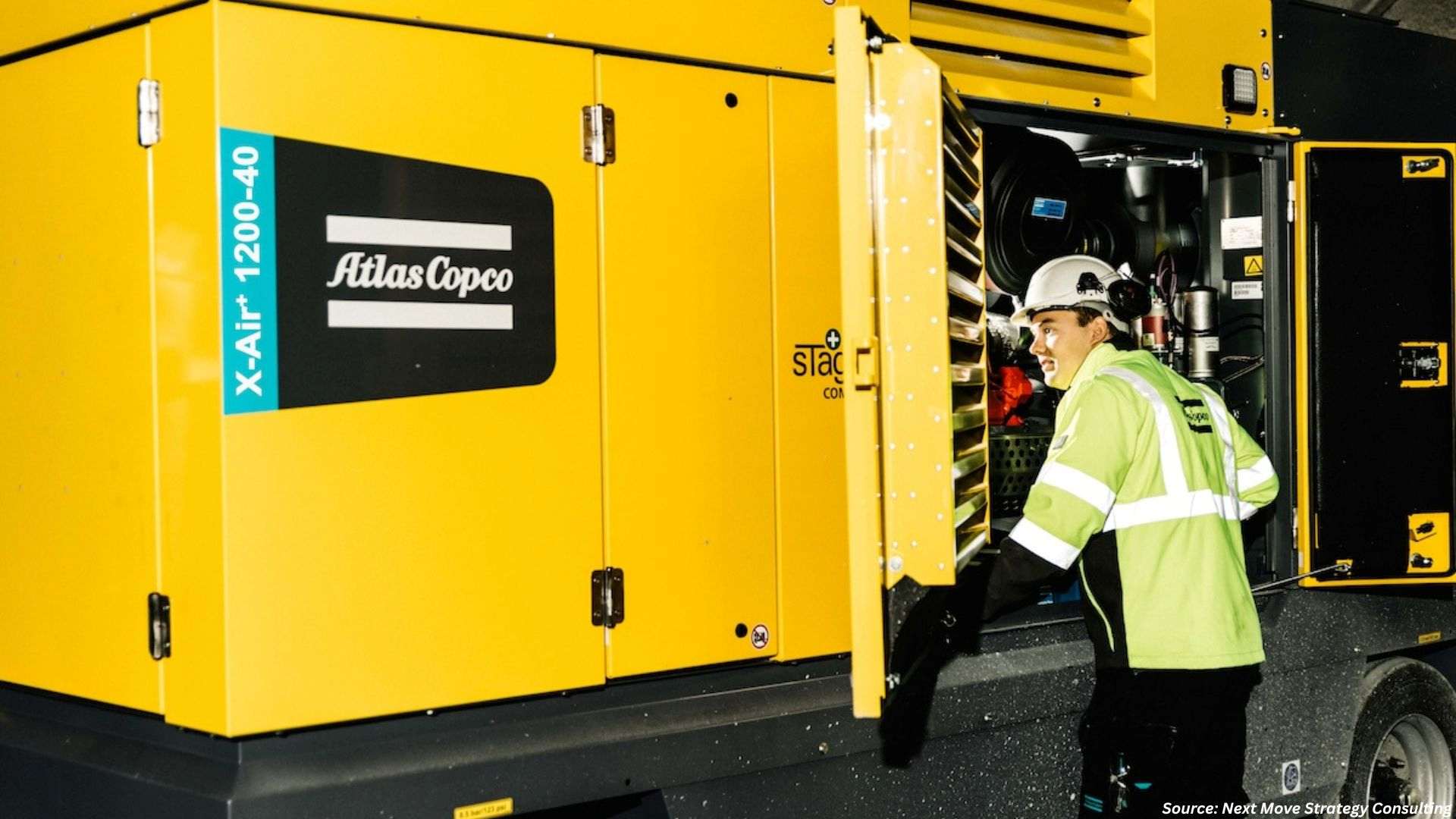
A major innovation trend in 2026 is the development of compact air compressors designed for tight industrial environments. Atlas Copco recently introduced new compressor models specifically engineered for limited spaces without compromising performance.
Key Highlights
-
Designed for confined and hard-to-access areas
-
Maintain high efficiency and reliability
-
Enable easy installation and mobility
-
Built to withstand harsh industrial conditions

Why This Matters
Industries such as manufacturing, construction, and mining often operate in constrained environments. Compact compressors reduce installation complexity and improve operational flexibility.
Miniaturization in industrial equipment is becoming a critical differentiator, and our observations at Next Move Strategy Consulting indicate that compact air compressors are not just a design upgrade but represent a shift toward modular and flexible industrial systems.
Environmental Air Compressors: The Sustainability Push
Sustainability is now a key driver in compressor innovation. Jaguar China has introduced environmentally friendly air compressors that align with stricter environmental regulations and energy-saving goals.
Key Features
-
Focus on energy efficiency and reduced emissions
-
Designed for long-term environmental compliance
-
Support industries aiming for green operations
-
Incorporate advanced energy-saving technologies
Industry Impact
With governments tightening environmental policies, industries are increasingly adopting eco-friendly compressors to reduce carbon footprints and operational costs.
Sustainability is no longer optional in industrial equipment, and our observations at Next Move Strategy Consulting indicate that air compressor manufacturers that prioritize environmental performance are likely to gain regulatory advantages and stronger market adoption.
Air Compressor Trends 2026: Key Shifts
|
Trend |
Description |
Industry Impact |
|
Compact Design |
Smaller footprint compressors |
Improved space utilization |
|
Energy Efficiency |
Reduced power consumption |
Lower operational costs |
|
Environmental Compliance |
Eco-friendly systems |
Regulatory alignment |
|
Mobility & Flexibility |
Easy installation and movement |
Faster deployment |
The convergence of compact design and sustainability indicates a broader industry transformation, and our observations at Next Move Strategy Consulting indicate that air compressors are evolving into integrated systems that support operational efficiency and environmental goals simultaneously.
Infographic: Evolution of Air Compressors in 2026
Key Focus Areas:
-
Space optimization
-
Energy efficiency
-
Environmental sustainability
-
Industrial adaptability

Visual trends suggest that the future of air compressors lies in balancing performance with adaptability, and we observe that companies investing in multi-functional designs will lead the next phase of innovation.
According to Next Move Strategy Consulting: Industry Impact
The latest developments in compact and eco-friendly air compressors are expected to reshape the competitive landscape. Manufacturers are increasingly focusing on delivering value through efficiency, compliance, and adaptability rather than just output capacity.
Key implications include:
-
Faster adoption in space-constrained industries
-
Increased demand for energy-efficient solutions
-
Stronger alignment with global sustainability goals
-
Shift toward smart and modular compressor systems

These innovations indicate that the air compressor market is entering a maturity phase where differentiation will depend on innovation depth rather than scale alone.
Challenges to Watch
-
Despite strong innovation, certain challenges remain:
-
High initial cost of advanced compressors
-
Integration with legacy industrial systems
-
Need for skilled maintenance and operation
While innovation is accelerating, adoption barriers still exist. Companies that offer cost-effective and user-friendly solutions will overcome these challenges more effectively.
Next Steps: Actionable Takeaways
1. Invest in compact solutions to optimize space in industrial operations
2. Adopt energy-efficient compressors to reduce long-term costs
3. Align with sustainability goals to meet regulatory requirements
4. Upgrade legacy systems gradually for smoother integration
5. Monitor emerging technologies for competitive advantage
Conclusion
The air compressor industry in 2026 is undergoing a significant transformation. With compact designs addressing spatial challenges and eco-friendly systems meeting environmental demands, the market is evolving toward smarter, more efficient solutions. Businesses that adapt early will benefit from improved performance, compliance, and cost efficiency.
The future of air compressors lies in intelligent design and sustainable engineering. Companies that align with these trends will shape the next generation of industrial operations.
About the Author
 Joydeep Dey is a content writer and analyst fueled by creativity, research, and continuous learning. He combines compelling storytelling with market insights to turn complex information into engaging, impactful content. Passionate about emerging trends, digital strategy, and innovation-driven communication, he believes curiosity and consistent growth are key to creating meaningful influence in every project.
About the Reviewer
 Debashree Dey is a senior content writer and communications specialist known for crafting audience-focused narratives and insight-driven content strategies. As a published manuscript author, she combines creative storytelling with strategic thinking to strengthen brand messaging, enhance visibility, and drive meaningful audience engagement across digital platforms. With a collaborative leadership approach, she contributes to high-impact communication initiatives that ensure consistency, clarity, and long-term brand value. Outside of work, she finds inspiration in creative projects, design exploration, and storytelling-driven ideas.















Add Comment