Could AI-Powered Warehouse Robotics Redefine Fulfillment Operations in 2026?
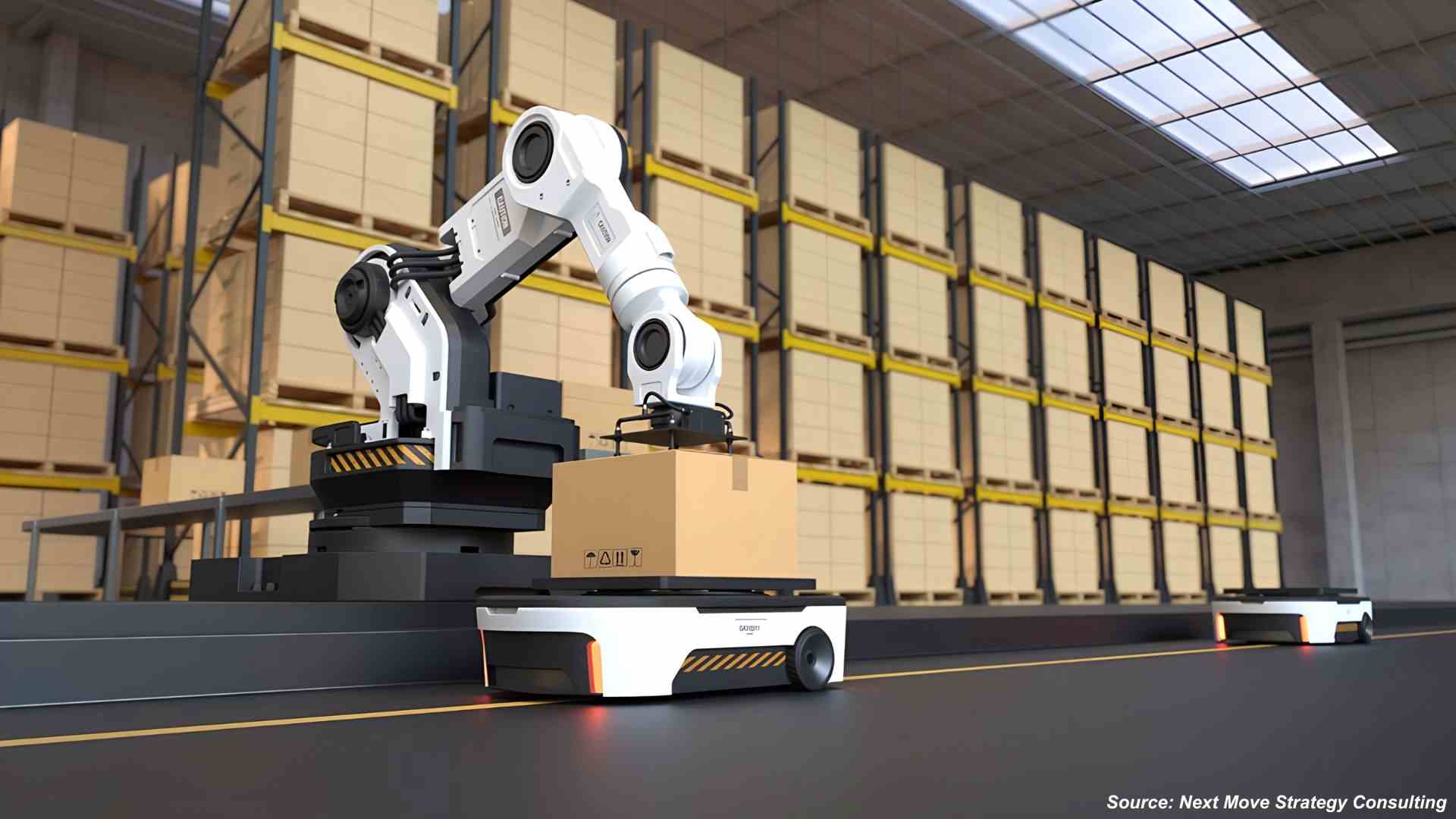
Warehouse Robotics Market is no longer viewed as a future-facing experiment reserved for large technology companies. In 2026, it is becoming foundational infrastructure for modern fulfillment operations as logistics providers attempt to balance rising order complexity, labor shortages, and growing pressure for operational consistency.
Recent developments from Locus Robotics and Amazon show that warehouse automation strategies are evolving beyond simple productivity improvements. Companies are now investing in intelligent robotics ecosystems capable of managing picking, inventory movement, replenishment, and fulfillment workflows with minimal human intervention.
How Is AI Reshaping Warehouse Robotics?
One of the most significant developments in warehouse robotics is the integration of Physical AI systems capable of autonomous execution inside fulfillment environments.
According to Locus Robotics launched Locus Array, a fully autonomous fulfillment system that combines mobile robotics, AI-powered perception, and robotic picking technology. The system operates directly within warehouse aisles and can manage workflows such as picking, putaway, replenishment, induction, and slotting without manual intervention.
This launch is important because it introduces a new automation category called Robots-to-Goods (R2G). Unlike traditional automation systems that move inventory through fixed conveyor infrastructure, the R2G approach allows robots to travel directly to inventory locations and complete tasks dynamically in real time.
At the same time, Amazon announced DeepFleet, a generative AI foundation model designed to coordinate robotic movement across its fulfillment network. According to the company, the technology improves robotic fleet travel efficiency by 10%, helping reduce congestion while improving delivery speed and operational efficiency.
These developments highlight a broader industry transition from isolated warehouse automation toward intelligent orchestration systems capable of adapting continuously to changing operational conditions.
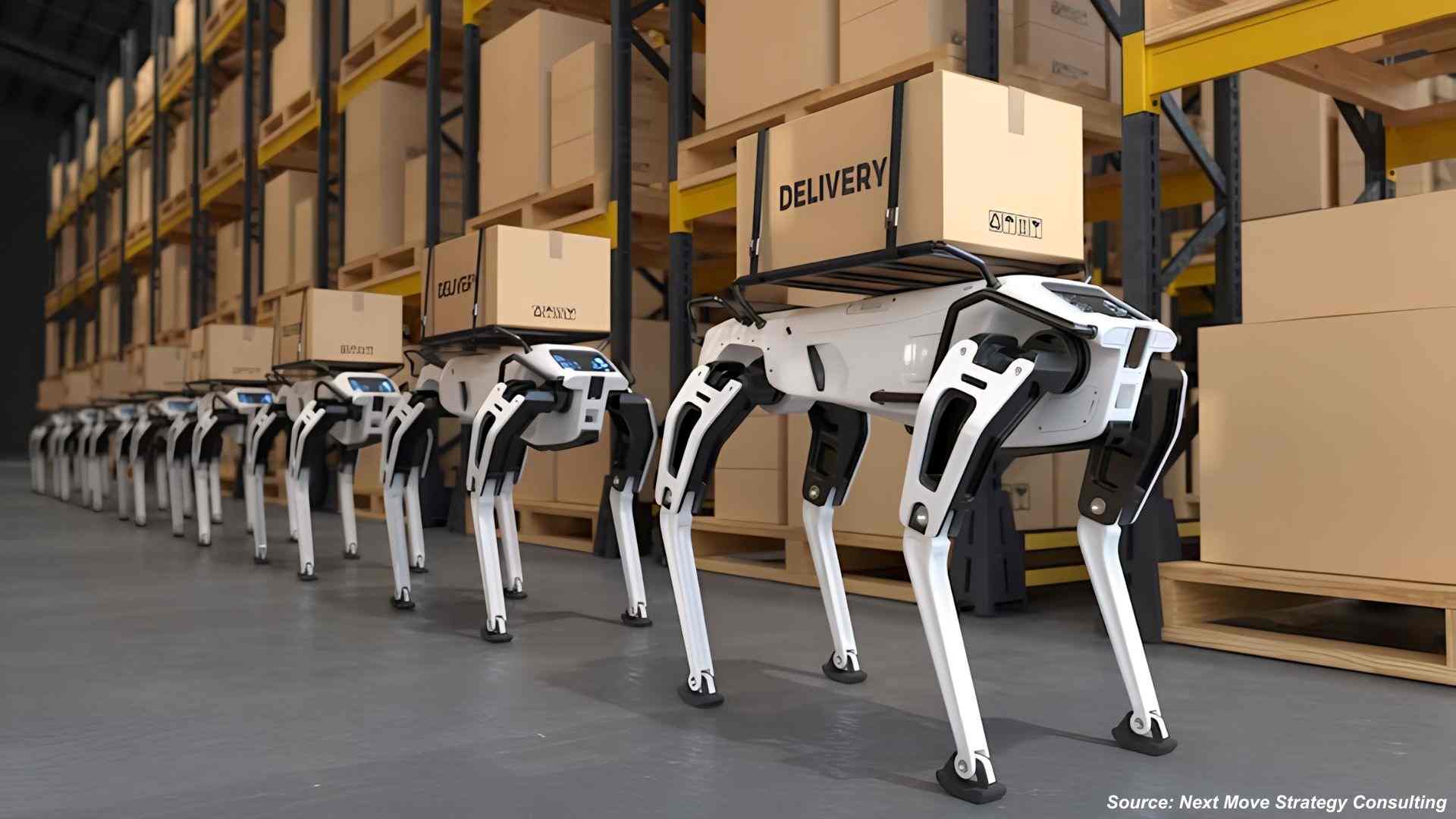
Why Are Autonomous Fulfillment Systems Expanding Rapidly?
The acceleration of autonomous fulfillment deployment is closely tied to ongoing labor and operational challenges across global logistics networks.
Locus Robotics states that Locus Array can reduce manual labor requirements by up to 90% while operating continuously within high-density fulfillment environments. This reflects a growing need for systems capable of maintaining throughput consistency despite workforce shortages and fluctuating order volumes.
The operational flexibility of autonomous robotics is becoming especially valuable for enterprises attempting to scale without redesigning entire warehouse facilities. Locus Robotics emphasized that its system can be deployed within weeks and adapted to changing layouts, inventory profiles, and demand patterns without requiring significant infrastructure modifications.
Amazon’s robotics expansion further demonstrates how large-scale fulfillment operators are prioritizing robotics as a core operational strategy. In 2025, the company announced deployment of its one millionth robot across more than 300 facilities worldwide.
The announcement also revealed another important trend within warehouse robotics: workforce transformation. Amazon stated that more than 700,000 employees have been upskilled through robotics and technology-focused training initiatives since 2019. The company additionally noted that its next-generation fulfillment centers require 30% more employees in reliability, maintenance, and engineering functions.
This indicates that automation is increasingly reshaping workforce structures rather than simply replacing labor altogether.
What Technologies Enable Autonomous Warehouse Robots to Operate Efficiently?
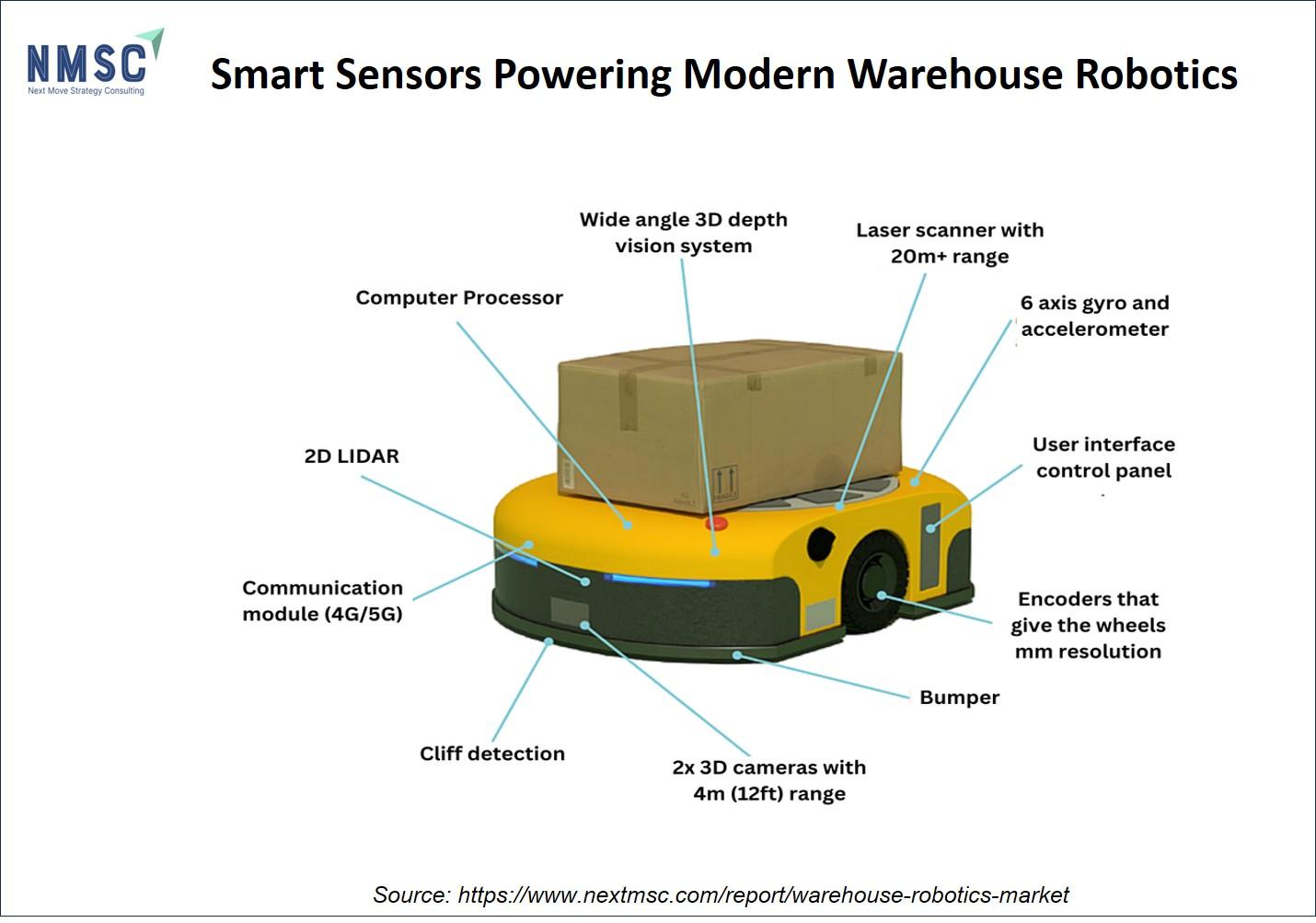
The illustrated warehouse robot demonstrates how advanced sensing, navigation, and AI-processing technologies combine to automate fulfillment tasks inside modern logistics facilities. Features including accelerometers, encoders, cliff detection, and vision systems allow robots to move accurately while maintaining operational safety in dynamic warehouse environments.
The integration of real-time communication systems and intelligent processors also supports coordinated robotic workflows, which are increasingly important as companies scale warehouse automation and AI-powered fulfillment strategies.
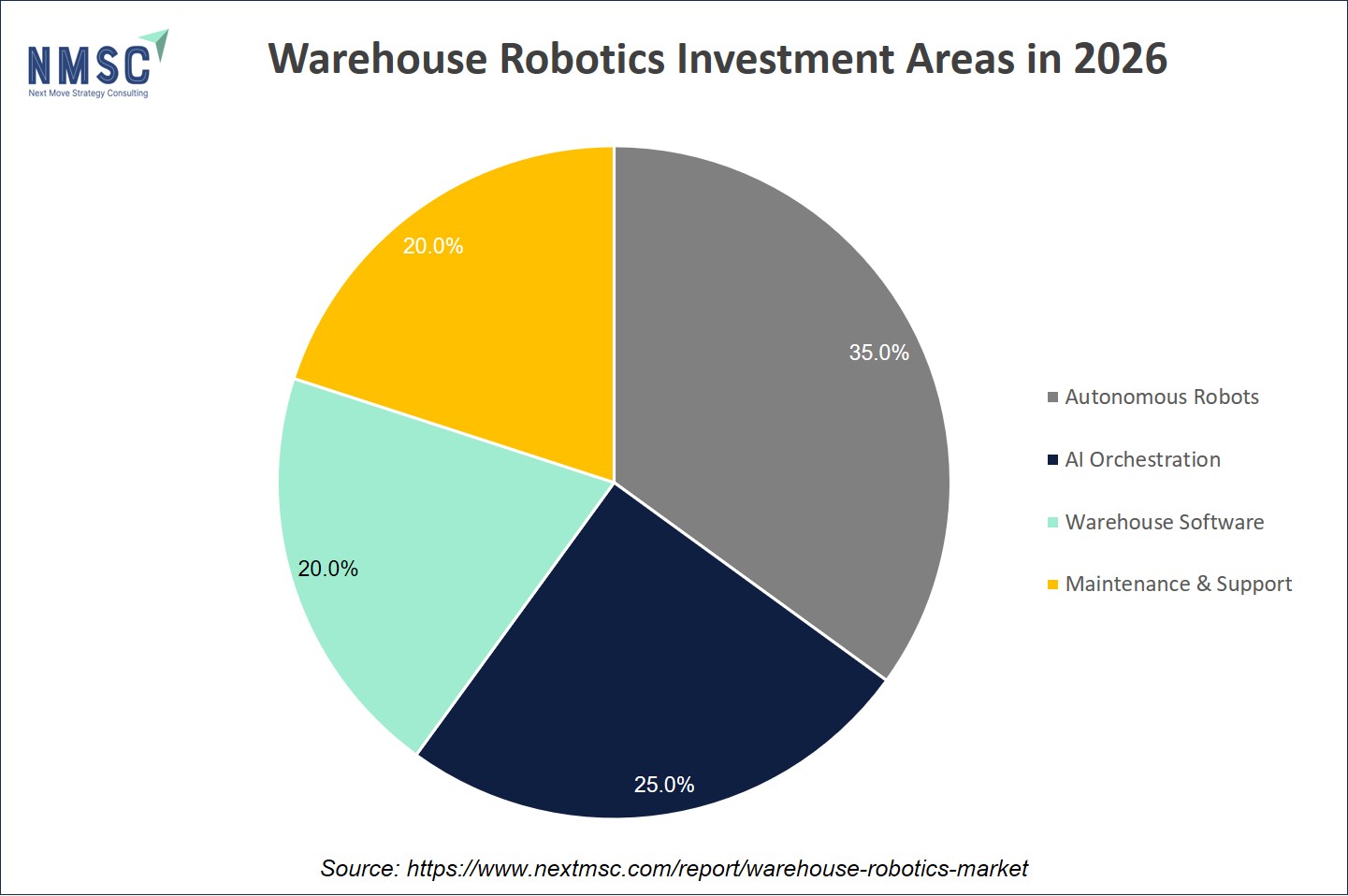
Warehouse Robotics Investment Priorities in 2026
A pie chart for warehouse robotics investment priorities in 2026 would visually represent how logistics companies and fulfillment operators are allocating resources across different automation areas. The chart helps decision-makers understand which technologies are receiving the most strategic focus as warehouses transition toward AI-driven fulfillment operations.
Another significant segment would represent AI Orchestration Platforms. Technologies such as Amazon’s DeepFleet demonstrate how artificial intelligence is increasingly being used to coordinate robotic traffic, reduce congestion, and optimize operational efficiency across fulfillment centers.
A smaller but important portion of the pie chart would focus on Workforce Upskilling and Technical Training. As robotics adoption expands, companies are investing more in engineering, maintenance, and systems management capabilities to support automated operations.
The remaining share would typically represent Infrastructure Integration and Maintenance, including robotics servicing, software integration, and operational support required to maintain continuous warehouse performance.
How Are Industry Leaders Competing in the Warehouse Robotics Landscape?
The global warehouse robotics industry is shaped by a mix of established industrial automation companies and rapidly growing robotics specialists. Major players such as ABB Ltd., Omron Corporation, FANUC Corporation, KUKA AG, JBT Corporation, Teradyne Inc., and Doosan Robotics continue to strengthen their market positions through advanced manufacturing expertise, broad service capabilities, and global integration networks.
At the same time, emerging specialists including Geekplus, GreyOrange, Bastian Solutions, Locus Robotics, and Seegrid Corporation are gaining traction by focusing on autonomous mobile robots (AMRs), AI-driven navigation systems, and flexible deployment models tailored for modern fulfillment operations.
Industry Impact Analysis
The latest advancements in warehouse robotics are likely to influence fulfillment operations, investment strategies, and workforce planning across the broader logistics industry.
One of the most immediate impacts is operational efficiency. AI-driven robotic coordination allows warehouse operators to improve throughput while minimizing unnecessary inventory movement. According to Locus Robotics, the Robots-to-Goods model supports higher storage density because inventory remains stationary while robots execute tasks directly within warehouse aisles.
Another major impact involves infrastructure strategy. Traditional warehouse automation systems often require fixed layouts and significant capital investment. In contrast, scalable robotics systems are being positioned as more flexible alternatives capable of adapting to operational changes without extensive redesigns.
Locus Robotics continues to emphasize its Robotics-as-a-Service (RaaS) model, which enables enterprises to scale automation incrementally instead of committing to large upfront infrastructure costs. For investors and procurement leaders, this approach may lower adoption barriers while improving operational flexibility.
The workforce implications are equally important. As robotics systems become more advanced, demand is increasing for engineering, systems maintenance, and robotics management expertise. This suggests that future warehouse competitiveness may depend not only on automation adoption but also on workforce readiness.
Next Steps
Organizations evaluating warehouse robotics investments should focus on operational areas where automation can improve consistency, scalability, and throughput efficiency.
Supply chain leaders may benefit from assessing current warehouse bottlenecks, workforce readiness, and long-term fulfillment requirements before selecting automation strategies. It is also becoming increasingly important to evaluate whether robotics platforms can adapt to future operational changes without requiring large infrastructure redesigns.
-
Assess whether existing facilities can support scalable robotics deployment without major redesigns.
-
Prioritize AI-driven systems capable of adapting to fluctuating inventory and order volumes.
-
Develop workforce upskilling strategies focused on robotics maintenance and systems operations.
-
Compare flexible deployment models such as Robotics-as-a-Service (RaaS) to reduce upfront investment risk.
Conclusion
Warehouse robotics is entering a new phase defined by autonomous execution, AI-powered orchestration, and scalable fulfillment intelligence. Recent announcements from Locus Robotics and Amazon demonstrate how logistics leaders are moving beyond traditional warehouse automation toward integrated robotic ecosystems capable of adapting dynamically to operational demands.
For supply chain executives, institutional investors, and operations leaders, the most important takeaway is that warehouse robotics is no longer only about reducing labor costs. It is increasingly becoming a strategic tool for improving resilience, fulfillment flexibility, and long-term operational performance.
About the Author
 Sanyukta Deb
— Sanyukta Deb is Digital Marketing Team Lead at Next Move Strategy Consulting, where she has led content strategy and technical SEO for the firm's B2B market research publications for over 2 years. Her editorial process translates NextMSC's primary and secondary research — spanning technology, industrial, and consumer sectors — into commercial narratives, backed by search-intent, keyword, and competitive analysis. She brings 5 years of overall experience in digital marketing and content strategy.
Sanyukta Deb
— Sanyukta Deb is Digital Marketing Team Lead at Next Move Strategy Consulting, where she has led content strategy and technical SEO for the firm's B2B market research publications for over 2 years. Her editorial process translates NextMSC's primary and secondary research — spanning technology, industrial, and consumer sectors — into commercial narratives, backed by search-intent, keyword, and competitive analysis. She brings 5 years of overall experience in digital marketing and content strategy.
About the Reviewer
 Debashree Dey
— Debashree Dey is Assistant Manager at Next Move Strategy Consulting, where she supports cross-vertical market content and communications across diverse industries for 6 years. Her professional background includes senior content writing, communications, and published manuscript authorship, with experience developing audience-focused business narratives and maintaining clear, consistent messaging. Her role supports research-led content development and editorial quality across NextMSC publications.
Debashree Dey
— Debashree Dey is Assistant Manager at Next Move Strategy Consulting, where she supports cross-vertical market content and communications across diverse industries for 6 years. Her professional background includes senior content writing, communications, and published manuscript authorship, with experience developing audience-focused business narratives and maintaining clear, consistent messaging. Her role supports research-led content development and editorial quality across NextMSC publications.


















Add Comment