From Visibility to Autonomous Execution: Why 2026 Is the Inflection Point for Supply Chains
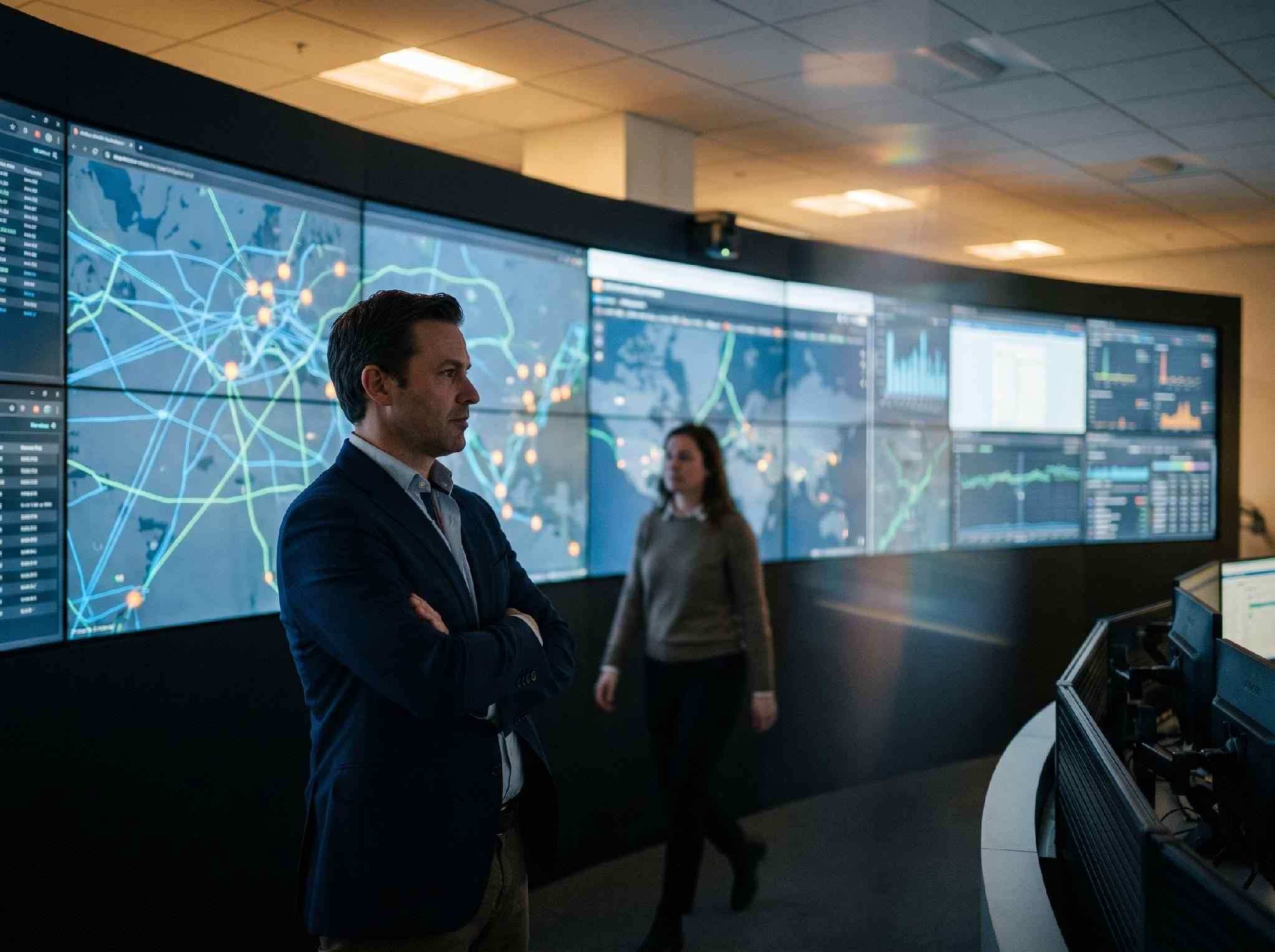
For most of the last decade, the fix for supply chain disruption was better visibility: more dashboards, more alerts, more dots on a map. That solved half the problem. Someone still had to look at the dashboard, interpret the alert, and decide what to do about it, often at 2 a.m., often after the delay had already compounded.
2026 is shaping up to be the year that changes. Analysts, technology vendors, and operators are converging on the same question, not “can we see the problem,” but “can the system act on it without waiting for a person to click approve.” That shift, from visibility to execution, is quietly becoming the defining line between supply chain organizations that stay reactive and the ones that don’t.
From Visibility to Autonomous Execution
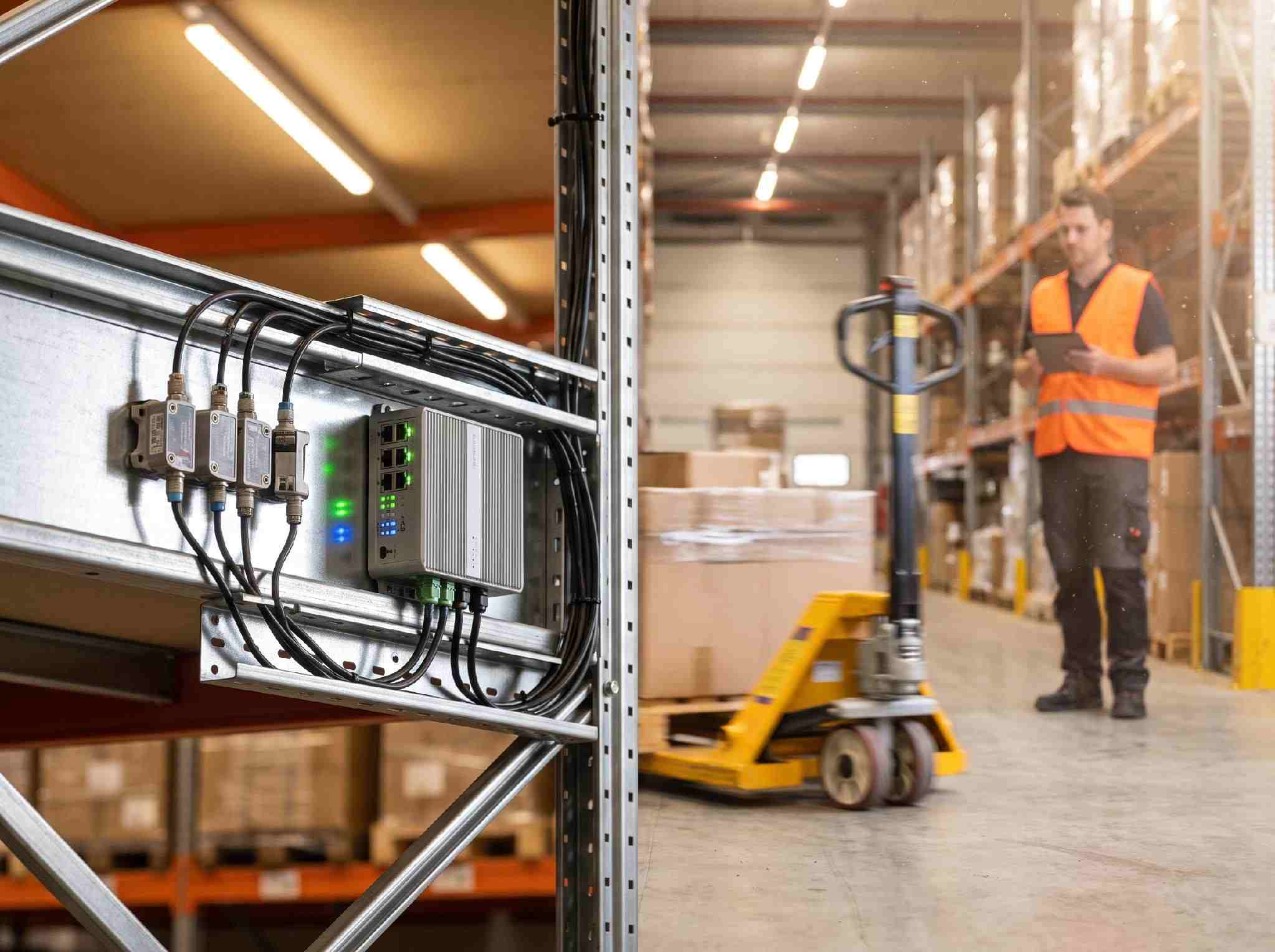
The see-understand-act loop: sensor data flows into AI analysis and triggers automated corrective workflows.
The first generation of supply chain technology was built to inform. Track-and-trace platforms plotted a shipment’s location on a map. Exception-management tools flagged a temperature excursion or a missed dock appointment. All of it was useful, and all of it still required a human being to notice the flag, weigh the options, and issue an instruction. That gap between “we know” and “we did something about it” is where most of the cost of disruption actually lives.
A newer category of technology closes that gap. It follows a simple loop: see, understand, act. Sensors and connected devices capture real-time conditions on a pallet, a container, or a truck. An AI layer interprets what that data means against a set of rules or learned patterns. Then, instead of routing the finding to an inbox, the system triggers the corrective workflow itself, rerouting a shipment, adjusting a dock schedule, or flagging a carrier substitution before a human ever opens the alert.
That’s the model behind platforms like Sensos, where Sensos autonomous supply chain execution connects real-time tracking data with AI-driven workflows that respond to supply chain exceptions automatically. Smart tracking labels feed continuous condition and location data into an AI agent layer, which then triggers automated workflows for exceptions such as delays, temperature excursions, or misrouted shipments, without a dispatcher having to manually reroute the load. It’s a useful example of what the “execution layer” of supply chain technology actually does day to day, distinct from the dashboards that came before it.
The distinction matters because it changes what “supply chain technology” is even for. A visibility tool tells you a problem exists. An execution layer resolves the problem, or at least starts resolving it, within the guardrails a company has set. Most enterprise supply chains today still lean heavily on the first category. The organizations moving fastest in 2026 are the ones building the second.
Why 2026 Is the Inflection Point
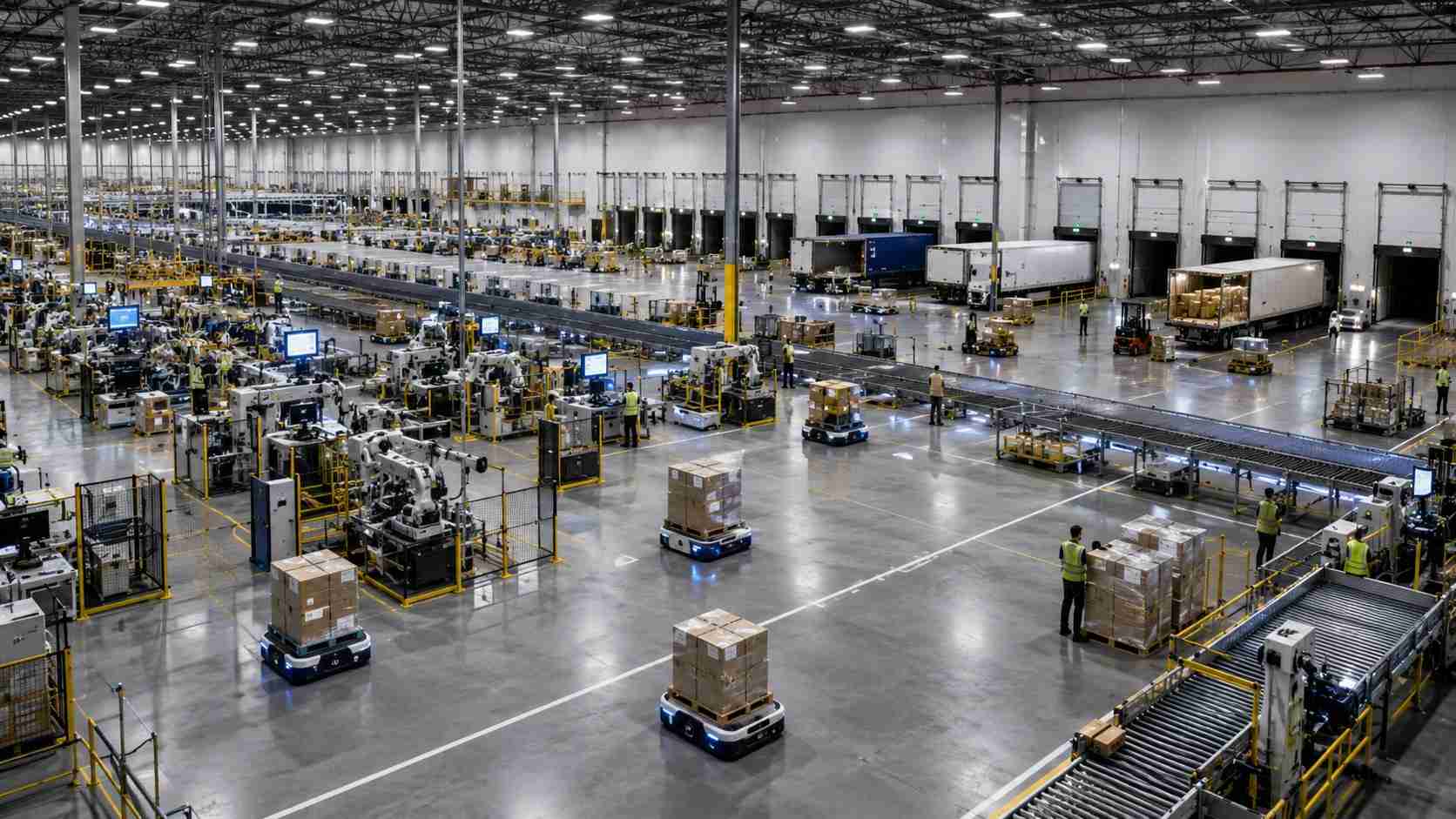
Autonomous robots and AI-coordinated systems are becoming an increasingly common part of day-to-day supply chain operations.
Gartner’s framing of its 2026 supply chain technology trends puts “autonomy and agency” at the top of the list, ahead of the individual technologies like robotics or agentic AI that make it possible. That’s a notable change in emphasis. Previous years’ trend reports tended to focus on discrete tools. This year’s framing treats autonomous decision-making itself as the organizing theme, the thing every other technology investment is now measured against.
The scale of what analysts expect isn’t small either. Gartner predicts that by 2031, 60% of supply chain disruptions will be resolved without human intervention, a five-year window that turns a research trend into a near-term planning assumption for anyone building a network today. That’s not a distant, speculative number. It’s a timeline that overlaps with current capital planning cycles for warehouses, fleets, and enterprise software contracts.
This isn’t a forecast running ahead of reality, either. Boston Consulting Group data cited by Supply Chain Digital in 2026 puts the share of companies already deploying AI in supply chain management at 44%. Nearly half the industry has moved past the pilot stage. The shift Gartner is describing isn’t theoretical anymore. It’s already showing up in procurement budgets and vendor shortlists.
The Labor and Risk Pressures Driving Adoption
None of this is happening because autonomy is trendy. It’s happening because the alternative, staffing every exception with a human decision-maker, is getting harder to sustain. A Descartes Systems Group study from 2025-2026 found that 76% of supply chain operations report being substantially impacted by labor shortages. Warehouses can’t always hire fast enough to keep pace with volume, and the roles hardest to fill tend to be the ones requiring judgment calls under time pressure, exactly the kind of work an execution layer is designed to absorb.
Cybersecurity and resilience risk compound the problem. A supply chain built around manual exception handling is also a supply chain where a single overwhelmed team becomes a single point of failure during a disruption event, whether that’s a port closure, a cyber incident, or a weather event that hits three regions at once. Autonomous execution doesn’t eliminate that risk, but it does mean routine exceptions get resolved without pulling every available person into a war room. That frees scarce staff for the disruptions that genuinely need human judgment.
This is part of why the shift toward fully automated warehouse operations has accelerated faster than most five-year forecasts predicted even two years ago. When the workforce constraint is real and persistent rather than cyclical, automating the execution layer stops being an efficiency project and becomes closer to an operational necessity.
What Autonomous Execution Looks Like Across Industries
The shape of autonomous execution changes depending on what’s moving through the network. In aerospace and high-value cargo, it means continuous condition and chain-of-custody monitoring, so a shock event or unauthorized handling triggers an automatic hold rather than surfacing in an audit three weeks later. In healthcare and pharma, it means cold chain and compliance monitoring where a temperature excursion automatically flags the shipment, notifies the receiving site, and, depending on severity, reroutes it, rather than waiting for a lab tech to catch it on delivery. In transportation and logistics broadly, it’s dynamic rerouting and dock scheduling that adjust themselves in real time as conditions on the ground change.
Automotive and industrial manufacturing show a similar pattern, just with a different failure mode. A missed part delivery to a just-in-time assembly line doesn’t show up as spoiled inventory the way a pharma shipment would, it shows up as a stopped production line within hours, sometimes minutes. Execution-layer systems built for that environment watch inbound component flows against production schedules and can automatically trigger an alternate carrier or a buffer-stock release before the line actually stalls, rather than after a supervisor notices the gap on a whiteboard. Retail and consumer goods networks lean on the same logic for a different problem: matching last-mile capacity to demand spikes in real time instead of relying on a weekly forecast that’s already stale by the time it’s acted on.
The appetite for this across industries is significant. MHI’s 2026 Annual Industry Report found that 83% of supply chain leaders expect to adopt robotics and automation within the next five years, and 56% report increasing their technology and innovation investment. NextMSC’s own research adds a data point worth noting here too: 70% of logistics executives now rank autonomous supply chains as a top investment priority, and 51% of factories globally expect fully automated facilities by 2040. Those aren’t abstract industry sentiments. They’re the kind of adoption curve that shows up in market-sizing models a few years before it shows up in headline case studies.
What ties these verticals together is that none of them are waiting for full end-to-end autonomy before getting value. Aerospace logistics teams don’t need every decision automated to benefit from automatic condition alerts. Pharma cold chain operators don’t need a fully autonomous warehouse to benefit from automated temperature-exception routing. The value shows up incrementally, at each point where a routine decision gets executed without a delay for human sign-off. That incremental path is also why adoption is spreading faster across verticals than a single flagship deployment would suggest, teams don’t have to wait for a company-wide autonomy mandate to start capturing value in their own corner of the network.
Building Toward an Autonomous-Ready Supply Chain
None of this argues for handing every decision to a machine. Even Gartner’s own trend analysis stresses that autonomy still needs governance guardrails and contingency planning, not a removal of human oversight altogether. The practical path most organizations are following looks like a phased rollout: assist first, where the system surfaces recommendations a person still approves; then recommend, where the system pre-selects an action but a human can override it; then autonomous, where routine, well-understood exceptions execute without a person in the loop, and only genuinely novel or high-stakes situations get escalated.
That phased approach matters for governance as much as for trust. It gives an organization the chance to validate that the system is making sound decisions on low-risk exceptions before extending it to higher-stakes ones, something that also echoes how agentic AI is reshaping resilience planning more broadly across enterprise risk functions. Companies that skip straight to full autonomy without that validation step tend to lose confidence in the system the first time it makes a visible mistake, even if the aggregate results are better than manual handling.
From a market-research standpoint, this is worth tracking as its own category, not just a feature bolted onto existing visibility platforms. The vendors, the investment dollars, and the operational playbooks are starting to separate autonomous execution from the broader “supply chain visibility” market it grew out of. That separation is usually a sign a category has matured enough to be sized, forecast, and evaluated on its own terms.
There’s also a data-quality dimension that doesn’t get enough attention in the rollout conversation. An execution layer is only as good as the sensor and telemetry data feeding it. Organizations that jump straight to autonomous decisioning without first cleaning up gaps in their tracking coverage, mislabeled assets, or inconsistent data formats across carriers tend to end up automating bad decisions faster, not fewer of them. The phased rollout isn’t just a trust exercise for the people involved, it’s also the window where a team can find and fix those upstream data problems before the system is making unsupervised calls on the strength of them.
Conclusion
The organizations that treat 2026 as a turning point aren’t doing so because a new buzzword arrived. They’re doing it because the economics finally line up: persistent labor shortages, rising disruption frequency, and technology that’s now mature enough to act on a signal instead of just reporting it. The cost of that gap between detection and action isn’t going away on its own. It shrinks only when the systems responsible for catching problems are also the ones resolving them.
Supply chains that build toward autonomous-ready operations now, with the right guardrails and a phased rollout, are the ones likely to look resilient and cost-efficient a decade from now. The ones that stay in “monitor and alert” mode will keep discovering the same disruptions, just a little earlier than before.
About the Author
 Sanyukta Deb
— Sanyukta Deb is Digital Marketing Team Lead at Next Move Strategy Consulting, where she has led content strategy and technical SEO for the firm's B2B market research publications for over 2 years. Her editorial process translates NextMSC's primary and secondary research — spanning technology, industrial, and consumer sectors — into commercial narratives, backed by search-intent, keyword, and competitive analysis. She brings 5 years of overall experience in digital marketing and content strategy.
Sanyukta Deb
— Sanyukta Deb is Digital Marketing Team Lead at Next Move Strategy Consulting, where she has led content strategy and technical SEO for the firm's B2B market research publications for over 2 years. Her editorial process translates NextMSC's primary and secondary research — spanning technology, industrial, and consumer sectors — into commercial narratives, backed by search-intent, keyword, and competitive analysis. She brings 5 years of overall experience in digital marketing and content strategy.
About the Reviewer
 Debashree Dey
— Debashree Dey is Assistant Manager at Next Move Strategy Consulting, where she supports cross-vertical market content and communications across diverse industries for 6 years. Her professional background includes senior content writing, communications, and published manuscript authorship, with experience developing audience-focused business narratives and maintaining clear, consistent messaging. Her role supports research-led content development and editorial quality across NextMSC publications.
Debashree Dey
— Debashree Dey is Assistant Manager at Next Move Strategy Consulting, where she supports cross-vertical market content and communications across diverse industries for 6 years. Her professional background includes senior content writing, communications, and published manuscript authorship, with experience developing audience-focused business narratives and maintaining clear, consistent messaging. Her role supports research-led content development and editorial quality across NextMSC publications.

















Add Comment