Green Hydrogen Market: Energy Security's Most Urgent Frontier in 2026
Introduction
The global Green Hydrogen Market has entered a defining chapter — one shaped not only by the long-anticipated economics of clean energy transition, but by an acute geopolitical crisis that has exposed the fragility of the world's dependence on fossil-fuel-based hydrogen derivatives. In 2026, the Middle East conflict has disrupted the supply of ammonia, urea, and methanol on a scale that has sent fertiliser prices surging, threatened food supply chains across Africa and Asia, and forced governments worldwide to confront a fundamental question: how quickly can green hydrogen become a credible alternative to fossil-based production?
The answer, according to the International Energy Agency's Global Hydrogen Review 2026, is not immediately — but the strategic imperative has never been clearer. Global hydrogen demand surpassed 100 million tonnes (Mt) in 2025, capital spending on low-emissions hydrogen projects nearly doubled year-on-year to reach almost USD 7 billion, and the green hydrogen market is on a trajectory that Next Move Strategy Consulting (NMSC) projects will reach USD 86.44 billion by 2030. For C-level executives, institutional investors, and policymakers, the green hydrogen market is no longer a long-horizon bet — it is an immediate strategic priority.
For More Information: Download FREE Sample on Green Hydrogen Market Report
From Decarbonization Goal to Energy Security Imperative: The Forces Reshaping the Green Hydrogen Market
The Middle East Crisis and the Hydrogen Supply Chain Shock of 2026
The most consequential development for the green hydrogen market in 2026 has not originated from a laboratory or a policy chamber — it has emerged from the geopolitical disruption of the Middle East. The region is home to approximately one-sixth of global hydrogen production, the majority of which is dedicated to chemicals, fertilisers, and refined oil products. It accounts for more than 10% of global refining capacity, ammonia and urea production, and close to 17% of global methanol production.
The closure of the Strait of Hormuz has severely disrupted the supply of all these products. The Middle East accounts for more than one-quarter of global ammonia trade, approximately 40% of urea trade, and almost 45% of methanol trade — and one-third of its refining capacity is export-oriented. Several refineries and petrochemical plants have halted operations due to supply disruptions, military attacks, and the impossibility of exporting their products. As a direct consequence, urea prices doubled between January and May 2026, compounding the impact of rising natural gas prices and export restrictions imposed by major suppliers.
The consequences extend far beyond the region. Morocco meets 100% of its ammonia demand with imports, 40% of which originate from the Middle East. Brazil, Australia, South Africa, and Thailand import all of their urea, with 40–85% sourced from the Middle East. One-quarter of ammonia production in Bangladesh, India, and Pakistan relies on natural gas imported from the region. The IEA's conclusion in its Global Hydrogen Review 2026 is unequivocal: renewable hydrogen cannot provide an immediate response to the current crisis, but it can become an important element of strategies to improve long-term energy and food security.
This crisis has fundamentally reframed the green hydrogen market narrative. The conversation has shifted from a purely decarbonization-driven investment thesis to one anchored in energy security, supply chain diversification, and food system resilience — a far more urgent and politically compelling set of drivers.
The Investment Surge: Capital Flows Accelerate Despite Headwinds
Capital spending on low-emissions hydrogen projects reached nearly USD 7 billion in 2025 — nearly double the 2024 level — and is estimated to approach USD 10 billion in 2026. Investment in electrolysis has overtaken investment in carbon capture, utilisation and storage (CCUS)-based hydrogen, and is expected to account for approximately 70% of total hydrogen investment in 2026.
China and Europe lead committed electrolysis projects. China accounts for more than 60% of electrolysis capacity by 2026 but only 25% of estimated investment, reflecting its lower capital expenditure per unit of capacity. Europe, by contrast, represents less than 20% of capacity but 45% of investment — a reflection of significantly higher capital costs per installed unit. The United States leads CCUS-based hydrogen projects. Over 85% of total investment targets existing hydrogen uses in industry and refineries, or hydrogen-based fuels.
International public finance for low-emissions hydrogen in emerging markets and developing economies (EMDEs) has grown from a negligible level in 2022 to approximately USD 3.3 billion in cumulative commitments to governments by Q1 2026. Project-level international public finance has reached approximately USD 650 million cumulatively by Q1 2026, primarily for project preparation and reducing financing costs.
However, venture capital (VC) for hydrogen continued to fall in 2025, declining from a 13% peak share of energy VC in 2023 to just 4% in 2025 — a signal that early-stage speculative investment is giving way to project-level institutional capital. Aviation attracted the largest share of hydrogen VC at almost 25%.
The Policy Landscape: USD 41 Billion in Public Funding, But Execution Gaps Persist
The IEA's Global Hydrogen Review 2026 identifies USD 41 billion in public funding in policy updates made since the Global Hydrogen Review 2025. Nearly two-thirds of this funding is linked to legislation in force, and approximately 25% has already been disbursed to projects, triggering final investment decisions. The number of national hydrogen strategies has stabilised at 66 globally, but most countries remain behind their targets. Only two countries — the Netherlands and China — are currently on track to achieve their 2030 hydrogen production targets.
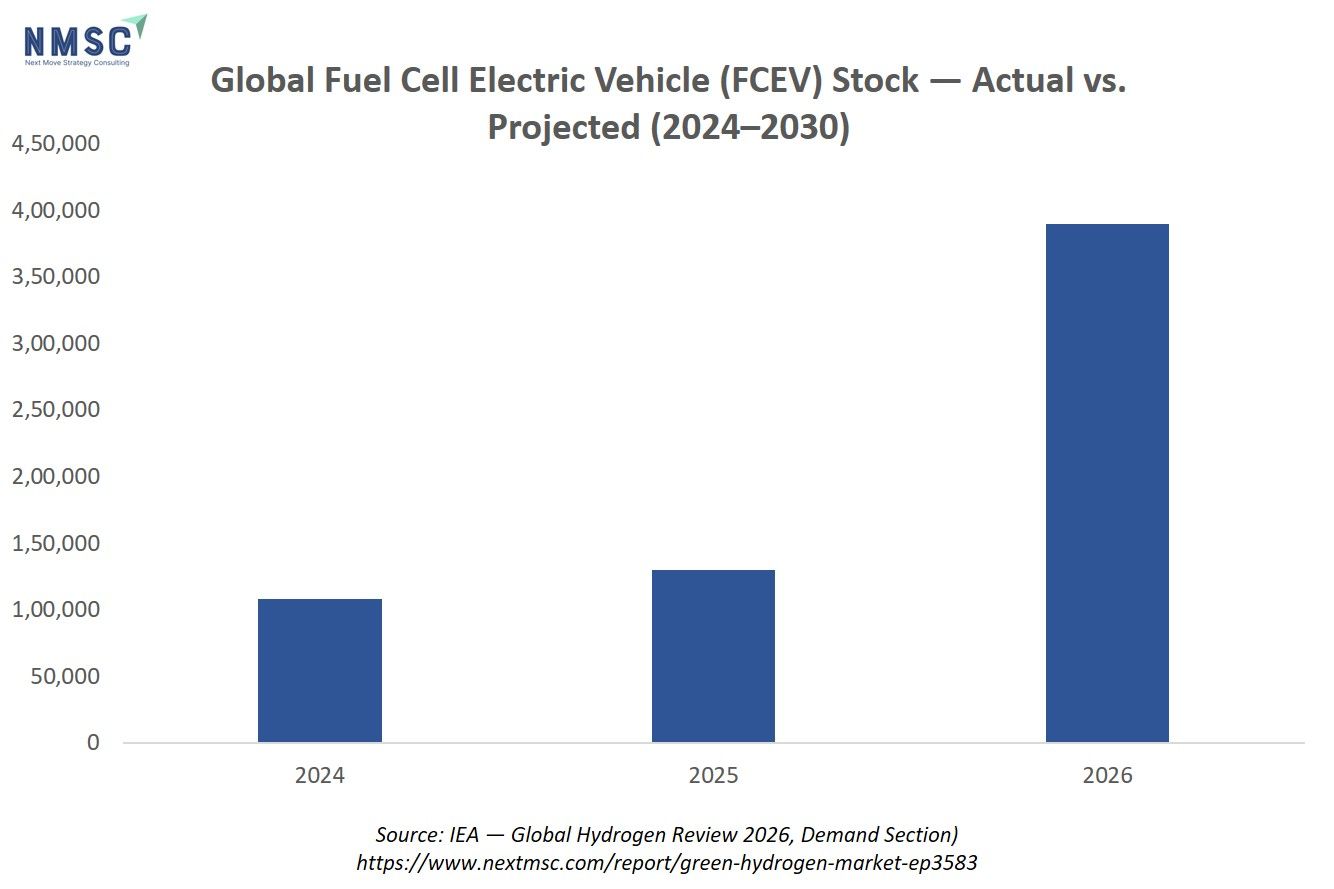
Key policy developments in 2026 include: the European Commission's proposal for a low-emissions steel quota for public procurement; the transposition of the EU Renewable Energy Directive into national legislation in 13 member states for the transport sector, creating demand for more than 575 kilotonnes per annum (ktpa) of low-emissions hydrogen; China's city clusters programme with USD 1.1 billion in funding targeting an end-use hydrogen price of USD 3.6/kg (with an ambition of USD 2.2/kg) and 100,000 fuel cell electric vehicles (FCEVs) by 2030; and Japan's selection of six winners under its contracts for difference scheme, adding nearly 130 kt of low-emissions hydrogen.
The Bird & Bird International Green Hydrogen Report 2026, published in March 2026, confirms that over 500 hydrogen projects worldwide have now passed final investment decision, entered construction, or begun operations, supported by more than USD 110 billion in committed investment. However, the report notes that policy alignment and execution risk — more than technology maturity — has emerged as the defining challenge for hydrogen projects globally.
NMSC Strategic Perspective
According to Next Move Strategy Consulting (NMSC), the global green hydrogen market was valued at USD 6.52 billion in 2024 and reached USD 10.03 billion by the end of 2025. The market is projected to reach USD 86.44 billion by 2030, growing at a CAGR of 53.8% during the forecast period of 2025–2030. NMSC identifies increasing investments in renewable energy, advancements in electrolyser technologies, and supportive government policies as the primary growth catalysts. Rising adoption across industrial, commercial, and energy sectors — including transportation, power generation, and heavy industries such as steel and chemicals — is accelerating demand, positioning green hydrogen as a critical clean and sustainable energy source.
NMSC's segmentation framework covers plant capacity (pilot, small, medium, and large), production technology (alkaline electrolysers, PEM, AEM, SOEC), renewable power source (solar PV-driven, onshore wind-driven, offshore wind-driven, hydro/biomass/geothermal), system ownership model (captive, merchant hubs, public-private partnerships), project maturity stage (concept & feasibility, FID, under construction, operational), delivery & distribution (on-site captive, merchant/third-party offtake, pipeline transport, compressed-gas tube trailers, liquefied-H₂ shipping), and end-user sector (chemicals & fertilisers, refining & petrochemicals, steel & heavy industry, mobility, and power & utilities). The firm's analysis underscores that the market is evolving with a focus on cost-efficient production, large-scale infrastructure development, and global electrolyser manufacturing expansion.
Section Summary
The green hydrogen market has been fundamentally reframed in 2026 by the convergence of a geopolitical supply chain crisis, accelerating institutional investment, and a maturing but uneven policy landscape. The strategic case for green hydrogen has expanded from decarbonization to encompass energy security and food system resilience.
Key Takeaways:
-
Urea prices doubled between January and May 2026 due to Middle East supply disruptions, directly elevating the strategic urgency of domestic green hydrogen production for fertiliser-dependent economies.
-
Capital spending on low-emissions hydrogen nearly doubled to USD 7 billion in 2025 and is estimated to reach USD 10 billion in 2026, per the IEA Global Hydrogen Review 2026.
-
USD 41 billion in public funding has been identified globally since the IEA's 2025 review; only the Netherlands and China are on track to meet their 2030 hydrogen targets.
-
NMSC projects the global green hydrogen market to reach USD 86.44 billion by 2030 at a CAGR of 53.8%.
Industry Impact Analysis
Production Progress: Impressive Growth, Insufficient Scale
Low-emissions hydrogen production grew by 20% in 2025 to reach almost 1 Mt — and is expected to break through the 1% threshold of global hydrogen production for the first time in 2026. While this directional progress is encouraging, it must be contextualised: global hydrogen demand surpassed 100 Mt in 2025, meaning low-emissions hydrogen still represents a fraction of total supply. Hydrogen use in industry and refining accounted for almost all demand in 2025, with new applications growing but still representing a very minor share.
Global installed electrolysis capacity doubled in 2025 to exceed 4 GW, with China accounting for nearly three-quarters of new installations. However, unsustainable internal competition driven by surplus manufacturing capacity is leading to market consolidation in China, and new final investment decisions (FIDs) in production projects fell for the first time in 2025. Chinese electrolyser manufacturers are beginning to expand into overseas markets to ensure business continuity.
The IEA's Breakthrough Agenda Report 2025 provides important context on the emissions dimension: hydrogen production today is associated with emissions of almost 1,300 Mt CO₂ equivalent, and there has been no meaningful progress in reducing them — in contrast, emissions have edged upward in recent years. Renewable and low-carbon hydrogen reached only 0.8 Mt in 2024, making up less than 1% of global production. Based on projects with a final investment decision, renewable and low-carbon hydrogen production can reach over 4 Mt by 2030 — but this represents only 9% of all announced projects (up from 6% the prior year).
The Demand Gap: The Critical Missing Piece
The IEA's Global Hydrogen Review 2026 identifies demand creation as the most critical unresolved challenge in the green hydrogen market. New offtake agreements were broadly unchanged in 2025, at approximately 1.7 Mt. Only around 20% of newly signed volumes were backed by firm contractual commitments, concentrated in refining, industry, and power generation. For the first time, trade-oriented agreements overtook domestic-use agreements in 2025, driven by policies in Japan and Europe.
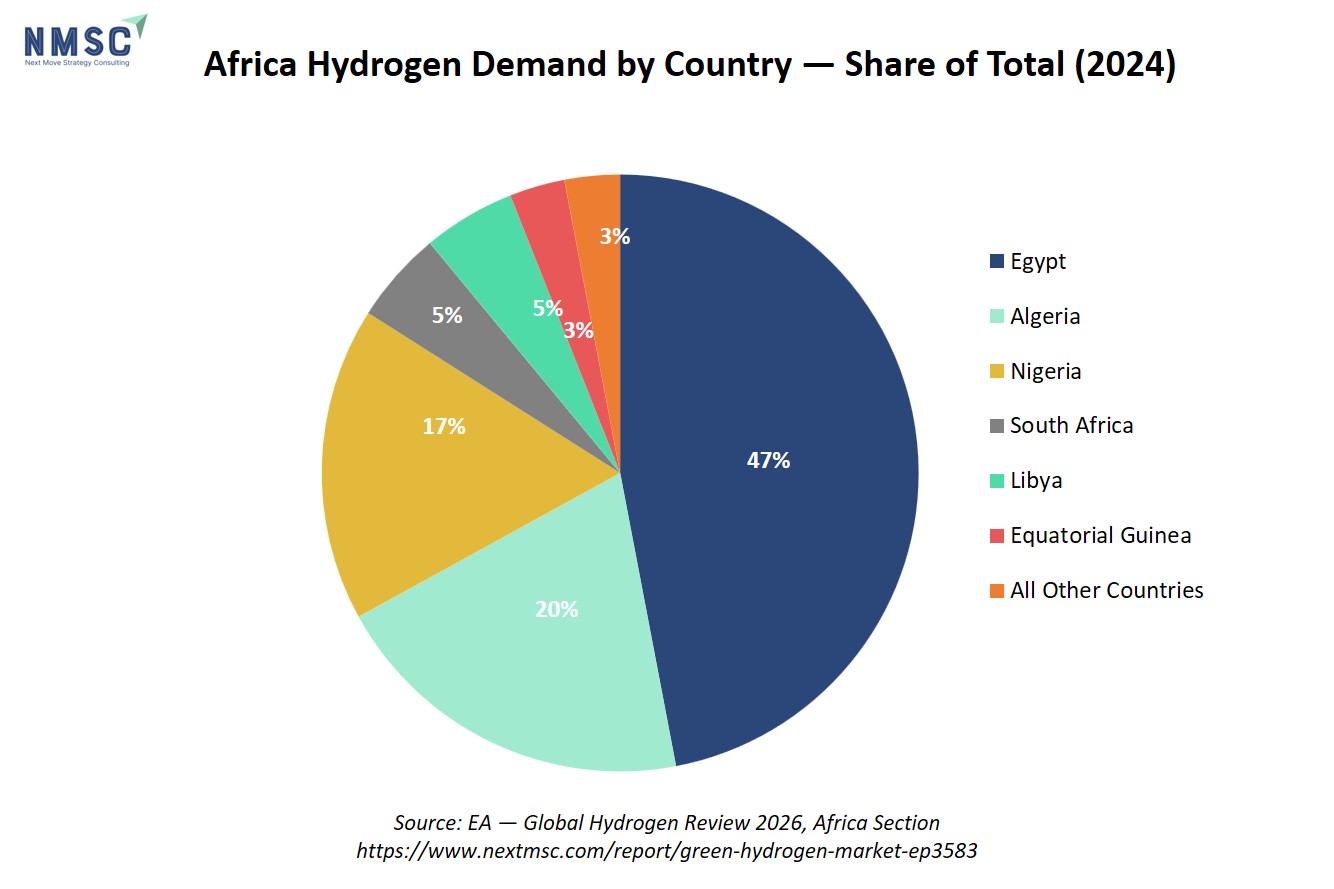
Project developers have widely reported the absence of creditworthy, long-term offtake agreements as the principal barrier to investment. Without firm offtake, projects do not reach FID. Without FID, the sector cannot scale. This dynamic is particularly acute in Africa, where only 1 of the 31 hydrogen projects announced for 2030 has reached FID, despite the continent's vast renewable energy resources and compelling domestic use case for green ammonia production.
The 2030 Pipeline: A Shrinking Window
The pipeline of announced projects for low-emissions hydrogen production has shrunk to 27 Mt by 2030, primarily due to delays and cancellations. Committed projects and those with strong potential to be in operation by 2030 declined from 10 Mt to just above 6 Mt compared to the IEA's 2025 assessment, due to delays in investment decisions. Critically, there is currently 22 Mt of potential production in announced projects that may lose any chance to begin operation by 2030 if investment decisions are not taken by early 2027. Two-thirds of this at-risk potential production is located in Europe, North America, and Latin America.
Cost Trajectories: China Leads, Europe Lags
The IEA's Global Hydrogen Review 2026 provides a clear regional cost outlook for green hydrogen production by 2030. The cheapest green hydrogen will be produced in northern China, where optimised combinations of solar and wind can bring production costs below USD 2/kg. Some locations in Europe could reach USD 3.5/kg, while the Middle East, India, and Chile could achieve costs just above USD 3/kg. In the near term, low-emissions hydrogen production will remain more costly than fossil-based hydrogen in most parts of the world — with the exception of China, where renewable hydrogen could become cost-competitive by 2030.
The U.S. Department of Energy's Hydrogen Shot Initiative targets a reduction in green hydrogen production costs to USD 1 per kilogram by 2031 — a target that, if achieved, would fundamentally alter the competitive economics of the global green hydrogen market.
Key Industry Milestones (2025–2026)
Several landmark project developments have advanced the green hydrogen market from concept to construction in the past 12 months:
-
September 2025: Accelera (Cummins Inc.) delivered a 35 MW PEM electrolyser system to Linde's facility in Niagara Falls, New York, powered by renewable hydroelectric energy.
-
June 2025: Thyssenkrupp Nucera secured a contract to design a 600 MW green hydrogen plant — one of Europe's largest — with a final investment decision expected in the near term.
-
May 2025: ITM Power was selected by Uniper to supply six 20 MW POSEIDON core electrolyser modules for the Humber H2ub (Green) project in the United Kingdom.
Section Summary
The green hydrogen market is advancing on multiple fronts — production, investment, and policy — but the pace of progress remains insufficient relative to 2030 ambitions. The demand gap, cost premium, and execution risk are the three structural challenges that will determine whether the market achieves its transformative potential.
Key Takeaways:
-
Low-emissions hydrogen production grew 20% in 2025 to nearly 1 Mt — expected to exceed 1% of global production for the first time in 2026, per the IEA.
-
Global electrolysis capacity doubled in 2025 to exceed 4 GW, with China accounting for nearly three-quarters of new installations.
-
22 Mt of potential production may miss the 2030 window if investment decisions are not taken by early 2027; two-thirds of this risk is concentrated in Europe, North America, and Latin America.
-
Green hydrogen production costs by 2030 are projected at below USD 2/kg in northern China, ~USD 3/kg in the Middle East, India, and Chile, and ~USD 3.5/kg in parts of Europe, per IEA analysis.
Global Green Hydrogen Market — Key Metrics at a Glance (2024–2026)
|
Metric |
Value |
Period / Year |
|
Global hydrogen demand |
>100 Mt |
2025 |
|
Low-emissions hydrogen production |
~1 Mt (grew 20% YoY) |
2025 |
|
Low-emissions hydrogen as % of global production |
<1% (expected to exceed 1% in 2026) |
2025–2026 |
|
Global installed electrolysis capacity |
>4 GW (doubled YoY) |
2025 |
|
China's share of new electrolysis installations |
~75% |
2025 |
|
Capital spending on low-emissions hydrogen |
~USD 7 billion (~2× 2024 level) |
2025 |
|
Estimated capital spending on low-emissions hydrogen |
~USD 10 billion |
2026 (est.) |
|
New offtake agreements |
~1.7 Mt |
2025 |
|
Firm offtake agreements (% of new volumes) |
~20% |
2025 |
|
Announced project pipeline by 2030 |
27 Mt |
2026 assessment |
|
Committed + strong-potential production by 2030 |
Just above 6 Mt |
2026 assessment |
|
At-risk production (requires FID by early 2027) |
22 Mt |
2026 assessment |
|
Total public funding identified globally |
USD 41 billion |
Since GHR-2025 |
|
National hydrogen strategies globally |
66 |
2026 |
|
Countries on track for 2030 targets |
2 (Netherlands, China) |
2026 |
|
Hydrogen projects past FID / under construction / operational |
>500 |
2026 |
|
Committed investment in hydrogen projects globally |
>USD 110 billion |
2026 |
|
Urea price change |
Doubled |
January–May 2026 |
|
VC share of energy VC for hydrogen |
4% (down from 13% peak in 2023) |
2025 |
Green Hydrogen Production Cost Outlook by Region (2030 Projections)
|
Region |
Projected Green H₂ Production Cost (USD/kg) |
Key Enabling Factor |
|
Northern China |
Below USD 2/kg |
Optimised solar + wind combinations; low CAPEX |
|
Middle East |
Just above USD 3/kg |
High solar irradiance; large-scale project economics |
|
India |
Just above USD 3/kg |
Falling solar tariffs; National Green Hydrogen Mission incentives |
|
Chile |
Just above USD 3/kg |
Abundant solar and wind resources in Atacama region |
|
Europe (select locations) |
~USD 3.5/kg |
REPowerEU support; higher CAPEX per unit of capacity |
|
U.S. DOE Hydrogen Shot Target |
USD 1/kg |
Target by 2031 via technology innovation and scale-up |
Future Outlook & Forecast
NMSC Market Projections: USD 86.44 Billion by 2030
According to Next Move Strategy Consulting (NMSC), the global green hydrogen market is projected to reach USD 86.44 billion by 2030, growing at a CAGR of 53.8% from 2025 to 2030. The market was valued at USD 6.52 billion in 2024 and reached USD 10.03 billion by the end of 2025. This trajectory reflects the compounding effect of renewable energy cost reductions, electrolyser technology maturation, expanding policy frameworks, and rising industrial demand for clean hydrogen across hard-to-abate sectors.
North America is experiencing accelerated growth, primarily driven by the U.S. Inflation Reduction Act's Section 45V tax credit, which offers up to USD 3/kg for hydrogen produced with minimal emissions. This policy framework has spurred significant investments in hydrogen infrastructure and technology development. Large-scale projects such as SoHyCal — the largest green hydrogen production plant powered entirely by renewable energy in North America — exemplify the region's growing commercial momentum. Canada is developing hydrogen hubs in Quebec and Alberta, connecting renewable electricity with electrolyser production and industrial offtake.
Europe is shaped by ambitious decarbonization goals, the REPowerEU plan, and EU funding for hydrogen production and import projects. Germany, France, and Spain are establishing hydrogen clusters and industrial hubs to decarbonize heavy industries. The UK government has approved ten commercial-scale green hydrogen projects supported by over USD 1.36 billion in subsidies, expected to begin construction between 2025 and 2028 and create more than 700 jobs. Spain has allocated USD 1.67 billion across seven projects to establish over 1,000 MW of electrolyser capacity.
Asia-Pacific presents a heterogeneous but rapidly growing market. China's provincial and national policies aggressively support hydrogen development, with massive electrolyser deployment and industrial integration scaling production. India's National Green Hydrogen Mission targets 5 million metric tonnes of production by 2030, backed by USD 2.3 billion in public investment. Australia is positioned as a leading prospective exporter, with flagship projects targeting Asia-Pacific markets. Japan and South Korea are advancing fuel-cell mobility and industrial adoption through structured national roadmaps.
The Middle East & Africa presents long-term strategic potential. Saudi Arabia and the UAE are developing large-scale green hydrogen plants to diversify energy portfolios, with ACWA Power's NEOM green hydrogen hub designed for both domestic use and international export. Africa's vast renewable energy resources could support competitive low-emissions hydrogen production, but high financing costs remain the primary barrier — only 1 of 31 projects announced for 2030 has reached FID.
Technology Vectors Defining the Next Growth Phase
Electrolyser Innovation: Advancements in PEM and alkaline systems are reducing costs and improving efficiency. Modern electrolysers operate with higher energy efficiency, faster start-up times, and greater scalability, enabling continuous and flexible hydrogen generation when paired with variable renewable energy sources. China has defined an efficiency standard of 47.2 kWh/kg (approximately 71% on a lower heating value) by 2028 at the stack level — a benchmark that will drive global technology competition.
Certification and Standards Harmonisation: India has defined emission thresholds for renewable ammonia and methanol. The IEA Hydrogen Technology Collaboration Programme is developing a technical mutual recognition framework for certification schemes. Consistent international certification standards are critical to enabling cross-border hydrogen trade and preventing market fragmentation.
Maritime and Aviation Demand: The IMO's Net-Zero Framework, if adopted in October 2026, could provide maritime operators with greater visibility on the need to adopt low-emissions fuels — including green ammonia and green methanol — stimulating long-term offtake agreements. Aviation attracted the largest share of hydrogen VC in 2025 at almost 25%, signalling growing investor conviction in hydrogen's role in hard-to-abate transport sectors.
Section Summary
The green hydrogen market's trajectory toward USD 86.44 billion by 2030 is supported by accelerating investment, maturing policy frameworks, and a newly urgent energy security narrative. Regional dynamics, technology cost curves, and certification harmonisation will determine which markets and participants capture disproportionate value.
Key Takeaways:
-
NMSC projects the global green hydrogen market to reach USD 86.44 billion by 2030 at a CAGR of 53.8% (2025–2030), from a 2025 base of USD 10.03 billion.
-
North America's 45V tax credit (up to USD 3/kg) and Europe's REPowerEU plan are the two most consequential demand-side policy instruments currently in force.
-
Asia-Pacific leads in electrolyser deployment volume; India's USD 2.3 billion National Green Hydrogen Mission targets 5 Mt of production by 2030.
-
The IMO's Net-Zero Framework decision in October 2026 represents a pivotal demand catalyst for green ammonia and green methanol in the maritime sector.
Next Steps for Stakeholders
For C-Level Executives and Project Developers:
1. Prioritise demand creation over supply announcements. The IEA's Global Hydrogen Review 2026 is unambiguous: the absence of firm, long-term offtake agreements is the single greatest barrier to investment. Executives should focus commercial development resources on securing creditworthy offtake agreements before advancing projects to FID — particularly in Europe, North America, and Latin America, where 22 Mt of potential production is at risk of missing the 2030 window.
2. Reframe the investment thesis around energy security. The 2026 Middle East supply chain disruption has created a new and politically compelling narrative for green hydrogen investment. Executives presenting to boards, sovereign wealth funds, or government partners should lead with energy security and food system resilience — not just decarbonization — to access a broader pool of capital and policy support.
3. Accelerate FID timelines before early 2027. The IEA's assessment is explicit: projects that do not reach FID by early 2027 may lose any realistic chance of operating by 2030. For developers with projects in advanced development stages, the window for securing the policy support, financing structures, and offtake agreements needed to reach FID is narrowing rapidly.
4. Invest in certification compliance as a trade enabler. As international hydrogen trade matures, mutual recognition of certification schemes will be essential for cross-border offtake agreements. Companies that align early with ISO-consistent emission threshold standards — as now required in India for renewable ammonia and methanol — will be better positioned to access premium markets in Japan and the European Union.
5. Target industrial clusters for early deployment. Over 85% of current investment targets existing hydrogen uses in industry and refineries. Focusing initial commercial deployments on refining and chemicals — where hydrogen is already used and cost premiums can be passed through the value chain — provides the most direct path to revenue and scale.
For Institutional Investors:
6. Shift from VC to project-level infrastructure capital. The decline of hydrogen VC from 13% to 4% of energy VC between 2023 and 2025 reflects a market maturation that favours infrastructure-grade, project-level investment over early-stage speculative positions. Investors should evaluate hydrogen exposure through the lens of long-term infrastructure returns, supported by government offtake mechanisms and concessional finance structures.
7.Assess EMDE exposure through blended finance structures. International public finance for low-emissions hydrogen in emerging economies has grown to USD 3.3 billion in cumulative commitments by Q1 2026. Investors with development finance mandates should evaluate co-investment opportunities alongside multilateral development banks, particularly in Africa and South Asia, where domestic green ammonia production addresses both energy security and food security imperatives.
Conclusion
The green hydrogen market stands at a genuine inflection point in 2026. The convergence of a geopolitical supply chain crisis, a near-doubling of capital investment, and a maturing but uneven policy landscape has transformed green hydrogen from a long-horizon decarbonization aspiration into an immediate energy security imperative. With global hydrogen demand surpassing 100 Mt in 2025, low-emissions production growing 20% year-on-year, and NMSC projecting the market to reach USD 86.44 billion by 2030 at a CAGR of 53.8%, the scale of the opportunity is substantial.
Yet the path to that scale is not guaranteed. The demand gap remains the market's most critical structural challenge. The 22 Mt of potential production at risk of missing the 2030 window — concentrated in Europe, North America, and Latin America — represents a stark reminder that policy ambition without execution is insufficient. The organisations that will lead the green hydrogen market through its next phase are those that move decisively on offtake agreements, FID timelines, certification compliance, and industrial cluster deployment — not those that wait for perfect market conditions that may never arrive.
About the Author
 Sanyukta Deb
— Sanyukta Deb is Digital Marketing Team Lead at Next Move Strategy Consulting, where she has led content strategy and technical SEO for the firm's B2B market research publications for over 2 years. Her editorial process translates NextMSC's primary and secondary research — spanning technology, industrial, and consumer sectors — into commercial narratives, backed by search-intent, keyword, and competitive analysis. She brings 5 years of overall experience in digital marketing and content strategy.
Sanyukta Deb
— Sanyukta Deb is Digital Marketing Team Lead at Next Move Strategy Consulting, where she has led content strategy and technical SEO for the firm's B2B market research publications for over 2 years. Her editorial process translates NextMSC's primary and secondary research — spanning technology, industrial, and consumer sectors — into commercial narratives, backed by search-intent, keyword, and competitive analysis. She brings 5 years of overall experience in digital marketing and content strategy.
About the Reviewer
 Debashree Dey
— Debashree Dey is Assistant Manager at Next Move Strategy Consulting, where she supports cross-vertical market content and communications across diverse industries for 6 years. Her professional background includes senior content writing, communications, and published manuscript authorship, with experience developing audience-focused business narratives and maintaining clear, consistent messaging. Her role supports research-led content development and editorial quality across NextMSC publications.
Debashree Dey
— Debashree Dey is Assistant Manager at Next Move Strategy Consulting, where she supports cross-vertical market content and communications across diverse industries for 6 years. Her professional background includes senior content writing, communications, and published manuscript authorship, with experience developing audience-focused business narratives and maintaining clear, consistent messaging. Her role supports research-led content development and editorial quality across NextMSC publications.















Add Comment