How Are AI & Sodium-Ion Tech Transforming the Global Battery Market?
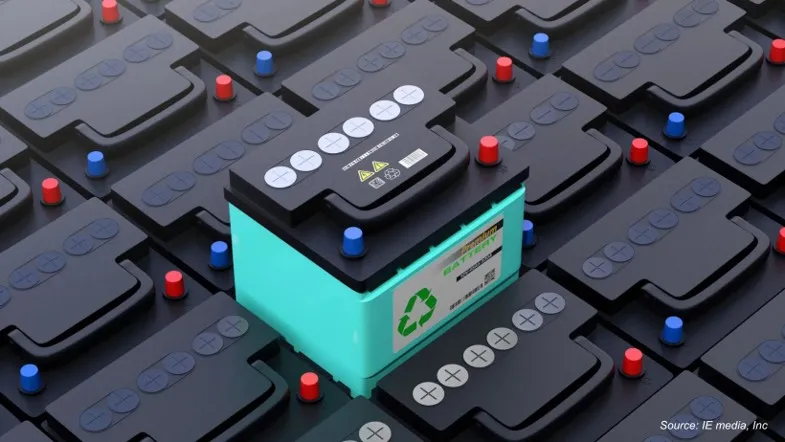
The global battery market is undergoing a structural transformation as industries accelerate electrification, renewable energy integration, and intelligent infrastructure deployment. Batteries no longer function solely as portable energy storage units for consumer electronics and electric vehicles. Instead, they increasingly support smart mobility systems, renewable power networks, AI-driven industries, autonomous transportation, and decentralized energy management platforms. Based on our analysis, we found that the battery industry is transitioning toward a more connected and technology-driven ecosystem supported by artificial intelligence, advanced battery chemistries, and giga-scale manufacturing systems. This transformation is intensifying competition among manufacturers as companies focus on improving charging speed, energy density, thermal stability, lifecycle efficiency, and sustainability performance simultaneously. Industry analysis indicates that advanced battery technologies are becoming central to global decarbonization and next-generation energy infrastructure development.
According to Next Move Strategy Consulting, the Battery Market size was valued at USD 266.02 billion in 2025 and is expected to be valued at USD 347.35 billion by the end of 2026. The industry is projected to grow, hitting USD 1647.13 billion by 2035, with a CAGR of 18.88% between 2026 and 2035. In terms of volume, the market recorded 5 billion units in 2025, with forecasts indicating growth to 7 billion units by 2026 and further to 54 billion units by 2035, reflecting a CAGR of 25.54% over the same period.
Want Insights on the Battery Market? Access a FREE Sample Instantly
How Are Intelligent and Connected Battery Technologies Transforming Modern Energy Infrastructure?
Traditional battery systems primarily focused on energy storage and limited automotive applications. However, modern battery technologies increasingly integrate software intelligence, predictive monitoring systems, and cloud-connected management platforms capable of optimizing battery performance in real time. In our observation, AI-enabled battery management systems improve charging precision, thermal regulation, degradation analysis, and operational safety across electric mobility and energy storage applications. Furthermore, predictive analytics platforms help improve battery lifespan while reducing operational inefficiencies across large-scale storage networks.
For instance, Samsung SDI Co., Ltd. introduced its new “PrismStack” prismatic battery platform during InterBattery 2026 in March 2026. The company positioned the platform as a flagship battery architecture for the artificial intelligence and e-mobility era, highlighting how advanced battery systems increasingly align with intelligent digital ecosystems. Similarly, LG Energy Solution Ltd. signed an exclusive long-term agreement with Aptera Motors in January 2025 to supply advanced 2170 cylindrical battery cells through 2031.
This agreement strengthened the company’s position in high-efficiency cylindrical battery technologies while supporting the expansion of lightweight solar electric mobility systems. This reflects how intelligent battery engineering is becoming a major competitive differentiator within advanced transportation markets.

Solid-State Batteries Reshaping the Future of High-Density Energy Storage
Solid-state batteries are becoming one of the most important next-generation technologies within the global battery market. Unlike conventional lithium-ion batteries that rely on liquid electrolytes, solid-state systems utilize solid conductive materials that improve thermal stability and operational safety while supporting significantly higher energy density. NMSC’s analysis indicates that solid-state batteries are strengthening long-range electric mobility applications and high-performance industrial energy systems due to their enhancing thermal resilience and long-range storage capability.
For instance, Sunwoda Electronic Co., Ltd. introduced its Xin·Bixiao polymer all-solid-state battery in October 2025 with approximately 400 Wh/kg energy density and pilot-scale production plans. This development highlights the accelerating commercialization of next-generation battery chemistries capable of supporting future long-range EV infrastructure.
Additionally, companies including Panasonic Holdings Corporation and Samsung SDI Co., Ltd. continue strengthening research investments in advanced solid-state battery platforms. This reflects how battery manufacturers are aggressively advancing safer and higher-capacity energy storage technologies.
What Driving Forces Are Accelerating Battery Market Expansion Globally?
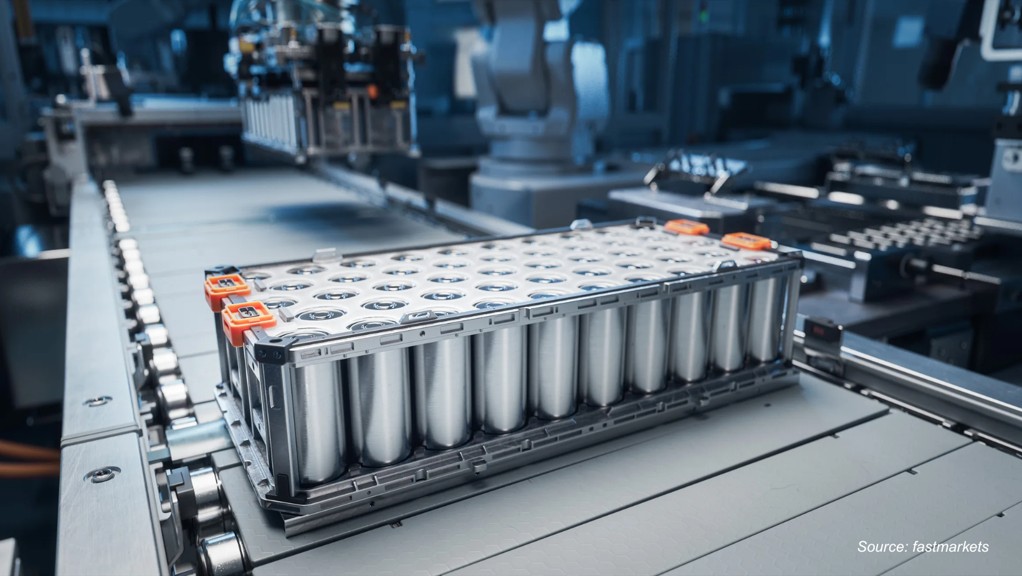
Several structural and technological factors continue accelerating the adoption of advanced battery technologies across industries:
-
Electric Vehicle Expansion: Rising EV production strengthens demand for fast-charging, long-range, and high-efficiency battery systems capable of supporting large-scale transportation electrification.
-
Renewable Energy Deployment: Solar and wind energy integration increases the need for utility-scale battery storage systems that stabilize intermittent power generation.
-
Energy Security Priorities: Governments and industries are strengthening localized battery manufacturing and diversified raw material sourcing strategies to improve supply chain resilience.
-
Artificial Intelligence Infrastructure: Rapid AI and data center expansion increases demand for reliable backup power systems and high-density energy storage technologies.
-
Sustainability and Circular Economy Initiatives: Recycling technologies and sustainable material sourcing strategies are strengthening long-term battery ecosystem sustainability.
Based on our assessment, we found that these interconnected drivers are transforming batteries into critical infrastructure supporting industrial modernization and global energy transition initiatives.
Sodium-Ion Batteries Are Reshaping the Future of Cost-Efficient Energy Storage
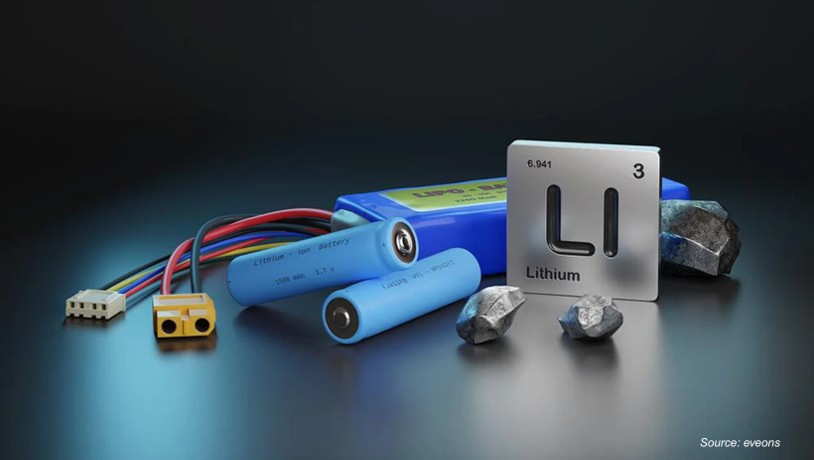
Sodium-ion battery technology is emerging as a major industry advancement as manufacturers diversify beyond conventional lithium-ion systems. Unlike lithium-based chemistries, sodium-ion batteries utilize more abundant raw materials, strengthening affordability and long-term supply chain sustainability. Our assessment indicates that sodium-ion systems are gaining strong traction in stationary energy storage applications due to their thermal stability, lower material costs, and improved scalability for grid infrastructure deployment.
For example, Contemporary Amperex Technology Co., Limited launched its sodium-ion battery brand “Naxtra” in April 2025 alongside a second-generation fast-charging EV battery platform. This launch strengthened the company’s leadership in diversified battery chemistries while supporting growing demand for cost-efficient and fast-charging storage solutions. In another strategic development, CATL signed a framework agreement with BASF in July 2025 for global cathode active material supply. Industry evidence suggests that strategic material partnerships are becoming increasingly important for strengthening sustainable battery value chains and supporting international manufacturing expansion. This demonstrates how battery manufacturers are simultaneously prioritizing chemistry innovation and supply chain resilience.
Outlook on the Rise of a Fully Connected and Intelligent Battery Ecosystem
Our findings show that the battery industry is steadily moving toward more connected and software-enabled energy ecosystems supported by artificial intelligence, advanced battery chemistries, and automated manufacturing systems. Based on our assessment, sodium-ion batteries, solid-state technologies, predictive battery analytics, cloud-connected storage systems, and utility-scale infrastructure platforms continue reshaping how energy is stored, distributed, and managed globally. Furthermore, recycling technologies, localized manufacturing strategies, and sustainable material sourcing frameworks are strengthening long-term battery ecosystem resilience as industries accelerate electrification and renewable energy deployment initiatives. As automation, digital connectivity, and clean energy investments continue expanding, batteries are increasingly functioning as intelligent infrastructure supporting modern industrial economies and decentralized energy networks.
About the Author
 Saista Faiyaz
— Saista Faiyaz is Research Associate at Next Move Strategy Consulting, where she has covered consumer markets and healthcare technologies for 3 years. Her work includes primary interview review, secondary-source validation, market sizing, and structured analysis of company and industry data. She supports research by comparing evidence across sources, organizing findings into market narratives, and documenting assumptions used in analysis. Her scope includes cross-market benchmarking, and reports.
Saista Faiyaz
— Saista Faiyaz is Research Associate at Next Move Strategy Consulting, where she has covered consumer markets and healthcare technologies for 3 years. Her work includes primary interview review, secondary-source validation, market sizing, and structured analysis of company and industry data. She supports research by comparing evidence across sources, organizing findings into market narratives, and documenting assumptions used in analysis. Her scope includes cross-market benchmarking, and reports.
About the Reviewer
 Supradip Baul
— Supradip Baul is an accomplished business consultant and strategist with over a decade of rich experience in market intelligence, strategy, technology, and business transformation. His work has included rigorous qualitative and quantitative analysis across multiple industries, helping clients shape investment decisions and long-term roadmaps. Earlier in his career, he was associated with Gartner, where he contributed to industry-leading reports and market share analyses. He has worked with leading global companies and holds an MBA with a dual specialization in Marketing and Finance.
Supradip Baul
— Supradip Baul is an accomplished business consultant and strategist with over a decade of rich experience in market intelligence, strategy, technology, and business transformation. His work has included rigorous qualitative and quantitative analysis across multiple industries, helping clients shape investment decisions and long-term roadmaps. Earlier in his career, he was associated with Gartner, where he contributed to industry-leading reports and market share analyses. He has worked with leading global companies and holds an MBA with a dual specialization in Marketing and Finance.















Add Comment