How Are Nanobot Innovations Transforming Healthcare and Entertainment?
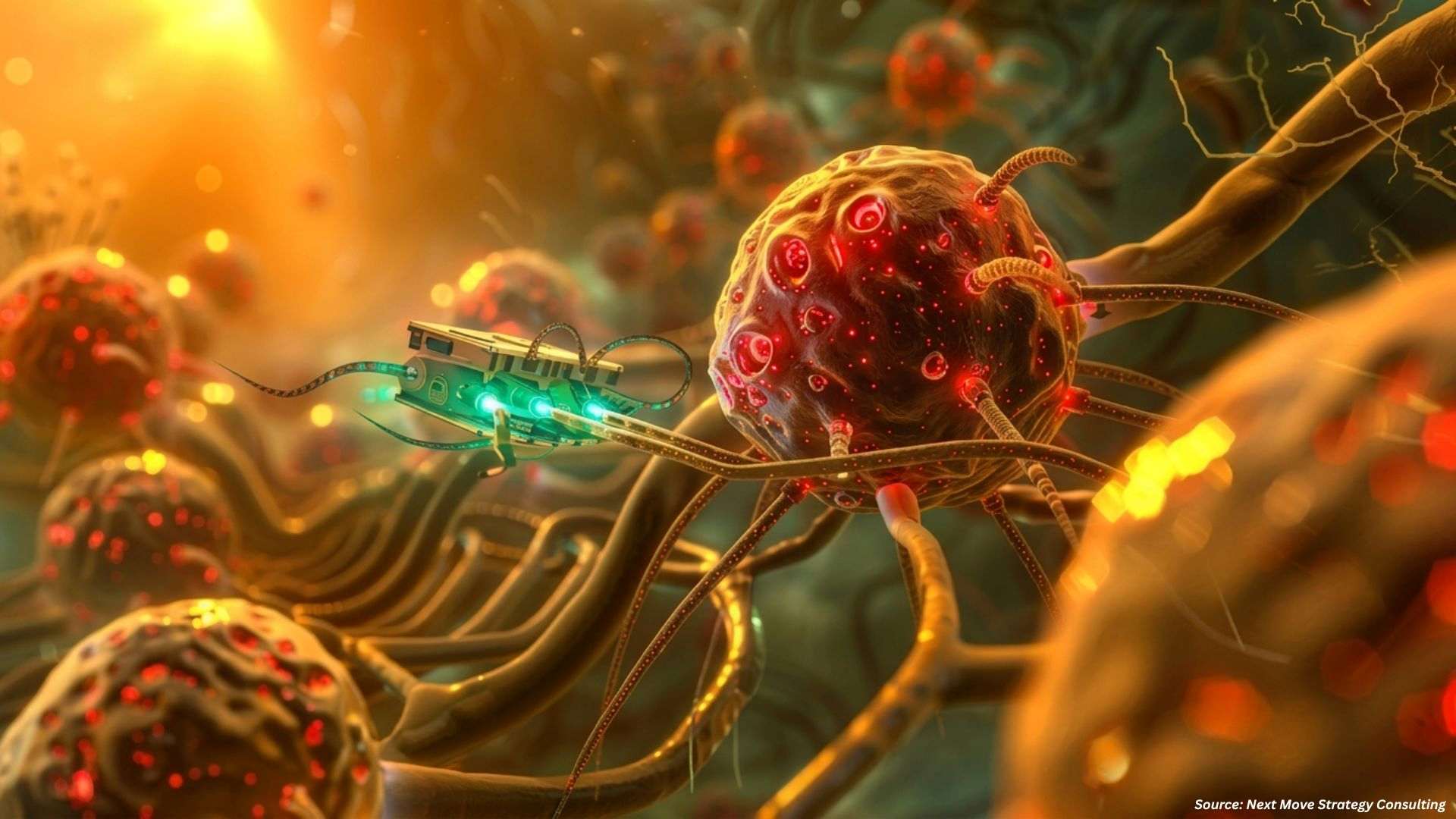
Nanobot Market is steadily transitioning from theoretical research to tangible, real-world applications. What once belonged to the realm of science fiction is now influencing both healthcare advancements and global entertainment narratives. The convergence of these two domains reflects a broader shift toward integrating cutting-edge science with everyday experiences.
What Are the Latest Breakthroughs in Nanobot Applications?
A significant development has emerged from a startup incubated at the Indian Institute of Science, which has introduced magnetic nanobots designed to treat tooth sensitivity. These microscopic devices are engineered to move through dental tubules and seal them, offering a precise and minimally invasive treatment approach.
Unlike traditional dental procedures that may rely on surface-level treatments, this innovation operates at a microscopic level, targeting the root cause directly. The use of magnetic fields to guide nanobots represents a controlled and efficient method, improving both accuracy and patient comfort.
In analytical terms, this advancement reflects a shift toward precision medicine, where treatments are increasingly designed to act at the smallest biological scales. It also demonstrates early-stage commercialization potential for nanotechnology in healthcare.
In summary, healthcare applications of nanobots are moving beyond experimentation and entering practical use, particularly in specialized treatments like dentistry.
Where Are Nanobots Making an Impact?
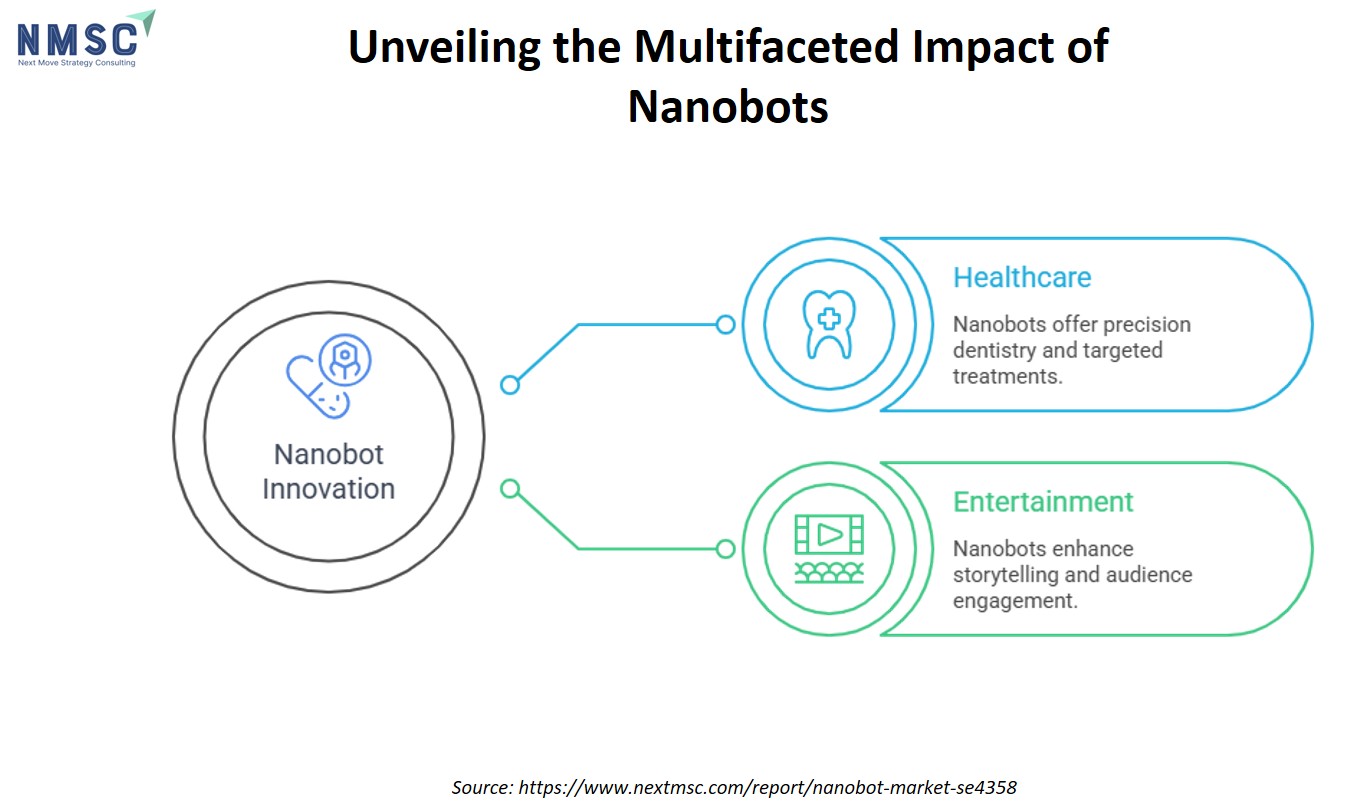
Nanobot innovation is emerging strongly in healthcare, particularly in precision dentistry. Magnetic nanobots are being developed to navigate microscopic dental structures and treat tooth sensitivity at the root level. This targeted approach reduces the need for invasive procedures and highlights how nanotechnology is shifting toward practical, patient-focused solutions.
In parallel, the entertainment industry is adopting nanobot concepts to create immersive storytelling experiences. Animated productions built around nanotechnology-driven worlds are introducing audiences to futuristic applications, blending science with creativity. This not only enhances viewer engagement but also simplifies complex technological ideas for mass understanding.
Together, these developments illustrate a dual impact. While healthcare focuses on functional efficiency and real-world outcomes, entertainment drives awareness and curiosity. This combination is accelerating both innovation adoption and public familiarity with nanobot technology.
How Is Entertainment Leveraging Nanobot Concepts?
Parallel to healthcare developments, nanobot concepts are gaining traction in the entertainment industry. A notable example is the upcoming animated series “New-Gen Nanobot Heroes,” developed through a collaboration between Toonz Media Group and New-Gen Universe.
Set in a futuristic narrative universe, the series explores conflicts driven by nanotechnology innovation across Earth and alien environments. The first season is structured into 13 episodes, each running for 22 minutes, indicating a well-defined production and distribution strategy.
The involvement of experienced writers associated with globally recognized franchises, along with a diverse and high-profile voice cast, signals strong commercial intent. Additionally, the production leverages advanced CGI animation capabilities, aligning with the growing demand for visually immersive content.
From an analytical perspective, this reflects how emerging technologies are not only shaping industries but also influencing cultural narratives. Entertainment serves as a medium to introduce complex scientific ideas to wider audiences in an accessible and engaging manner.
In conclusion, the entertainment sector is playing a crucial role in popularizing nanobot concepts, bridging the gap between innovation and public understanding.
How Is the Nanobot Innovation Ecosystem Distributed?
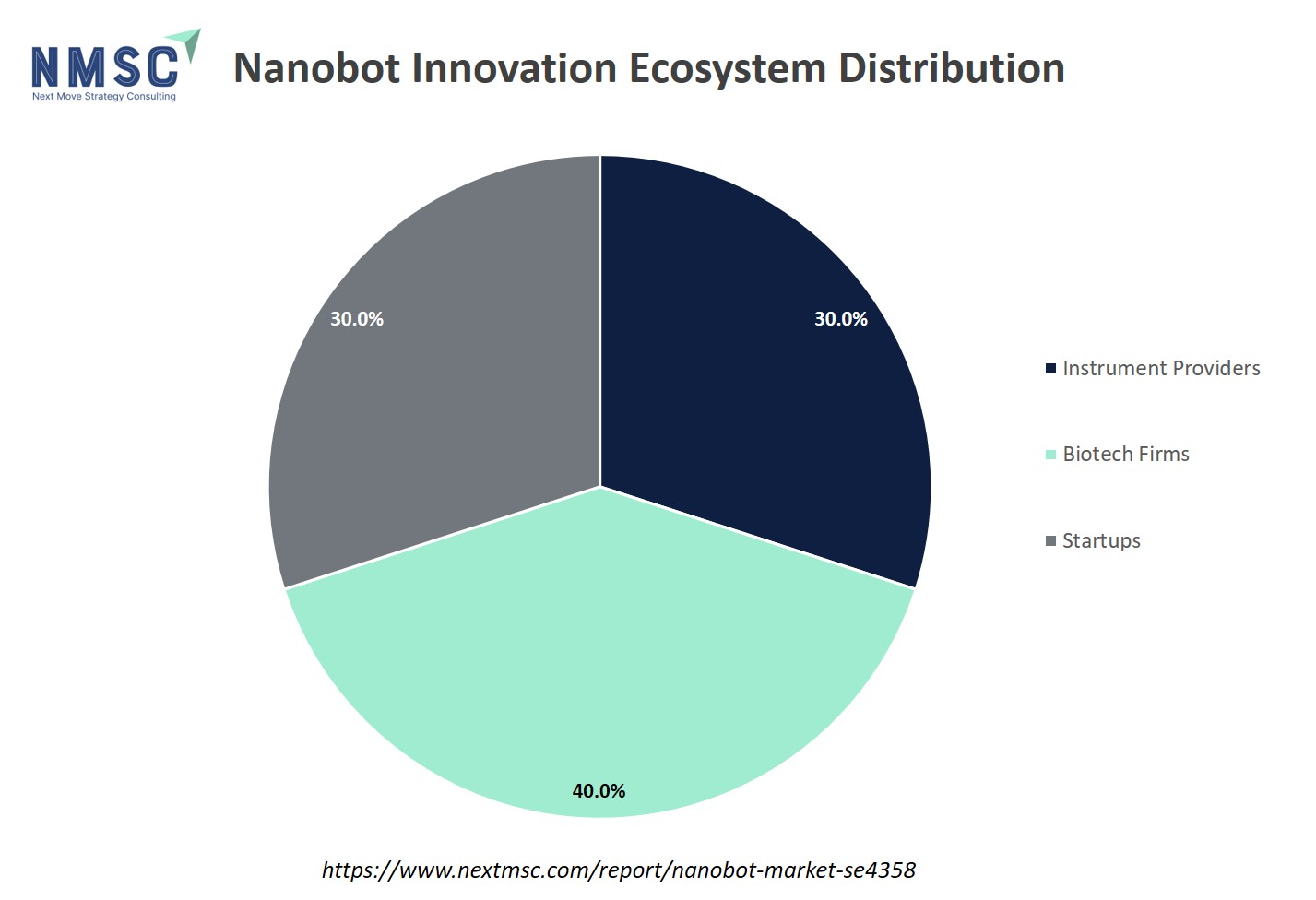
The pie chart highlights the distribution of key contributors shaping the nanobot innovation ecosystem. Biotech firms represent the largest share, indicating their central role in advancing therapeutic and clinical applications. Their strong presence reflects ongoing investments in research, development, and real-world medical use cases.
Instrument providers account for a significant portion, underscoring their importance in enabling the tools and technologies required for nanobot development and deployment. These organizations support the infrastructure that makes precision engineering and testing possible.
Startups make up an equally notable segment, showcasing the growing influence of agile and innovation-driven companies. Their ability to experiment and rapidly develop new solutions contributes to increased competition and accelerates technological progress.
Overall, the chart demonstrates a balanced ecosystem where established expertise and emerging innovation coexist, collectively driving advancements across healthcare, diagnostics, and research applications.
How Is Nanobot Innovation Expanding Across Sectors?
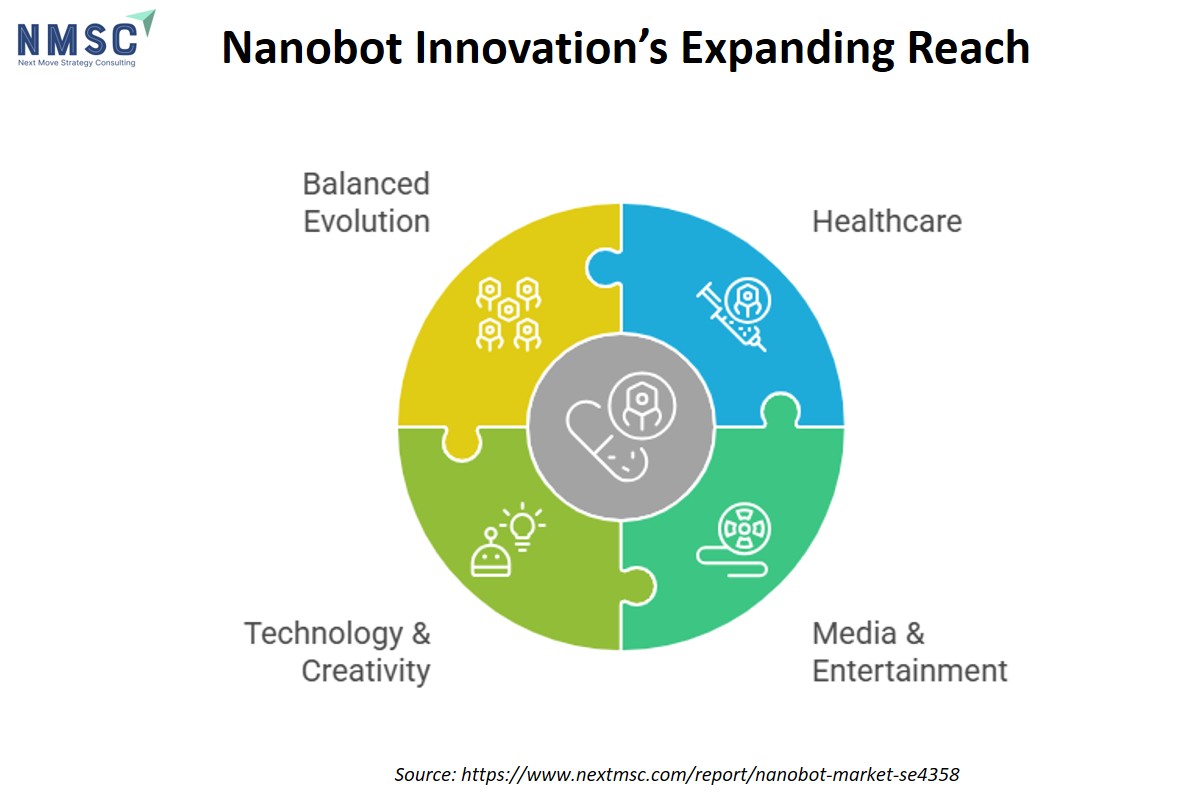
Nanobot innovation is steadily expanding beyond niche research environments into broader, real-world applications. In healthcare, the focus remains on precision and efficiency, where microscopic interventions are enabling highly targeted treatments. This reflects a growing emphasis on minimizing patient discomfort while maximizing treatment effectiveness through controlled, localized action at the cellular or microstructural level.
At the same time, the media and entertainment landscape is transforming nanobot concepts into engaging visual narratives. High-quality CGI productions are using nanotechnology-driven storylines to build expansive fictional universes, making advanced scientific ideas more accessible to global audiences. This trend demonstrates how storytelling can act as a bridge between complex innovation and everyday understanding.
Another key dimension of this expansion is the convergence of technology and creativity. Scientific advancements are no longer isolated from cultural influence; instead, they are being integrated into content, education, and digital experiences. This interconnected growth is helping to normalize emerging technologies, encouraging both acceptance and curiosity among consumers and stakeholders.
Ultimately, the expansion of nanobot innovation across sectors highlights a balanced evolution. Functional applications in healthcare validate the technology’s potential, while creative industries amplify its visibility, together shaping a more informed and innovation-ready ecosystem.
Major Trends Shaping the Present
One of the most prominent trends is the rise of precision-focused applications. The healthcare example demonstrates how nanobots can address highly specific medical conditions with accuracy, reducing the need for invasive interventions. This indicates a broader movement toward targeted therapies.
Another emerging pattern is cross-industry integration. Nanobot technology is no longer confined to laboratories; it is influencing both scientific and creative domains. The overlap between healthcare innovation and entertainment storytelling highlights the versatility of nanotechnology.
There is also a noticeable shift toward experiential engagement. While healthcare applications emphasize functionality, entertainment applications focus on visualization and narrative depth. Together, they create a balanced ecosystem where innovation is both utilized and understood.
To summarize, the current landscape is defined by precision, cross-sector adoption, and increased public engagement through storytelling.
Nanobot Applications Across Industries
|
Sector |
Application Focus |
Core Advantage |
|
Healthcare |
Dental nanobots |
Targeted, minimally |
|
Entertainment |
Animated |
Broader audience |
|
Media Tech |
CGI production |
High-quality visual |
This comparison highlights how nanobot innovation is being adapted to meet different objectives across industries, ranging from functional efficiency to creative storytelling.
In essence, each sector contributes uniquely to the broader evolution of nanotechnology.
Who Are the Key Players Driving Innovation?
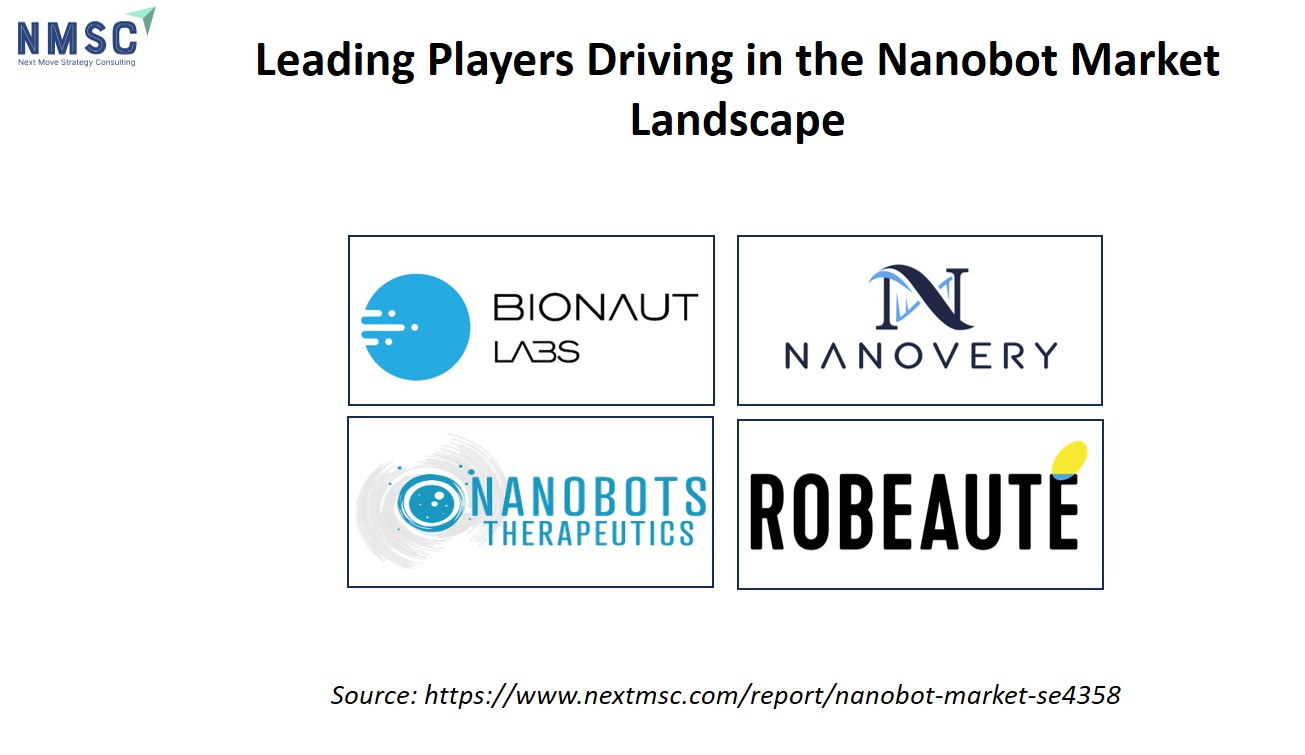
The nanobot landscape is shaped by a dynamic mix of pioneering biotechnology companies, established instrumentation providers, and emerging startups. Organizations such as Bionaut Labs, Microbot Medical, Nanobiotix, Nanovery, and DNA Nanobots, Inc. are contributing to this evolving ecosystem. The combination of experienced industry leaders and agile innovators is intensifying competition across therapeutic, diagnostic, and research-focused applications, accelerating both technological advancement and market development.
Why Does This Matter for Future Innovation?
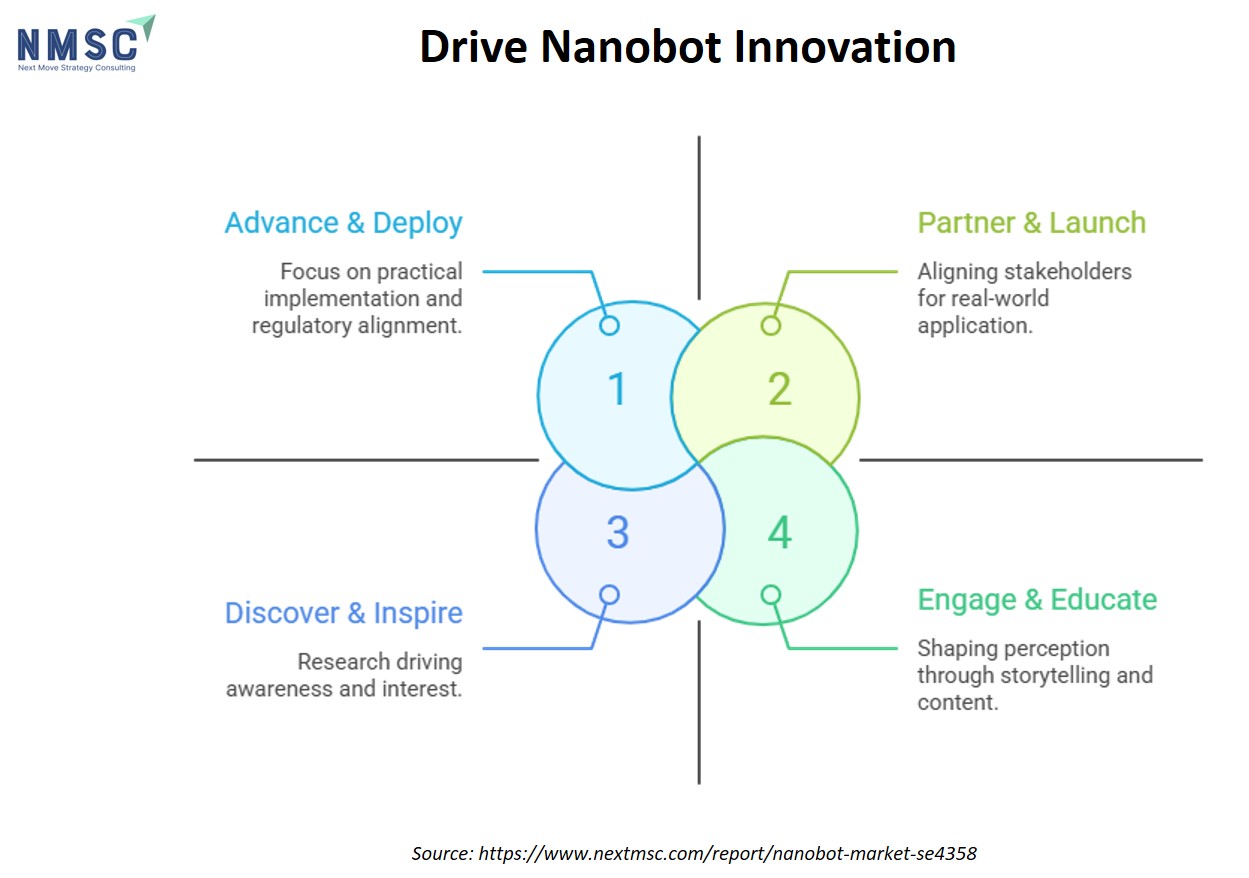
The significance of these developments lies in their combined impact. Healthcare innovations validate the practical feasibility of nanobots, while entertainment applications expand awareness and acceptance among global audiences.
This dual influence creates a reinforcing cycle. Scientific advancements build credibility, and media exposure enhances visibility. Over time, this synergy can accelerate adoption and encourage further investment in research and development.
From an analytical standpoint, this convergence is essential for scaling emerging technologies. Without public understanding, even the most advanced innovations may struggle to achieve widespread implementation.
In summary, the interaction between real-world application and cultural representation is a key driver of future growth in nanobot innovation.
Next Steps
Organizations and stakeholders should focus on translating experimental breakthroughs into scalable solutions. Strengthening collaboration between research institutions and industry players will be essential for accelerating development.
There is also a need to invest in communication strategies that simplify complex technologies for broader audiences. Entertainment platforms can play a significant role in this effort by integrating scientific concepts into mainstream narratives.
Finally, attention must be given to ethical considerations and safety standards, particularly in healthcare applications, to ensure responsible adoption.
-
Focus on translating early-stage nanobot innovations into scalable healthcare solutions.
-
Strengthen collaborations between research institutions and industry stakeholders.
-
Invest in awareness initiatives that simplify nanotechnology for wider audiences.
-
Leverage entertainment platforms to enhance public understanding and engagement.
-
Establish clear safety and ethical guidelines for medical applications.
Final Thoughts
Nanobot innovation is entering a transformative phase where scientific progress and creative storytelling intersect. The emergence of practical healthcare solutions alongside high-profile entertainment projects illustrates the expanding influence of nanotechnology.
As these developments continue, the focus will increasingly shift toward scalability, accessibility, and real-world impact. This evolving landscape signals not only technological advancement but also a redefinition of how innovation is experienced and understood across industries.
About the Author
 Sanyukta Deb
— Sanyukta Deb is Digital Marketing Team Lead at Next Move Strategy Consulting, where she has led content strategy and technical SEO for the firm's B2B market research publications for over 2 years. Her editorial process translates NextMSC's primary and secondary research — spanning technology, industrial, and consumer sectors — into commercial narratives, backed by search-intent, keyword, and competitive analysis. She brings 5 years of overall experience in digital marketing and content strategy.
Sanyukta Deb
— Sanyukta Deb is Digital Marketing Team Lead at Next Move Strategy Consulting, where she has led content strategy and technical SEO for the firm's B2B market research publications for over 2 years. Her editorial process translates NextMSC's primary and secondary research — spanning technology, industrial, and consumer sectors — into commercial narratives, backed by search-intent, keyword, and competitive analysis. She brings 5 years of overall experience in digital marketing and content strategy.
About the Reviewer
 Debashree Dey
— Debashree Dey is Assistant Manager at Next Move Strategy Consulting, where she supports cross-vertical market content and communications across diverse industries for 6 years. Her professional background includes senior content writing, communications, and published manuscript authorship, with experience developing audience-focused business narratives and maintaining clear, consistent messaging. Her role supports research-led content development and editorial quality across NextMSC publications.
Debashree Dey
— Debashree Dey is Assistant Manager at Next Move Strategy Consulting, where she supports cross-vertical market content and communications across diverse industries for 6 years. Her professional background includes senior content writing, communications, and published manuscript authorship, with experience developing audience-focused business narratives and maintaining clear, consistent messaging. Her role supports research-led content development and editorial quality across NextMSC publications.


















Add Comment