Nanobot Market by Offering (Nanorobotic Systems, Particle Products, Biological Nanodevices, & Others), By Material Composition (Metal, Oxide, Carbon, Polymer, & Others), By Actuation (Magnetic, Acoustic, Optical, Chemical Propulsion, & Others), By Application (Medical, Industrial, Research & Academic, & Others), By End User (Pharma & Biotech Companies, Hospitals & Clinics, Diagnostic Labs, CROs & CDMOs, & Others) – Global Analysis & Forecast, 2025-2035
Industry: Semiconductor & Electronics | Publishing Date: March 31, 2026 | Last Updated: September 30, 2026 | No of Pages: N/A | No. of Tables: N/A | No. of Figures: N/A | Format: PDF | Report Code: SE4358
Industry Outlook
The global Nanobot Market size was valued at USD 11.02 billion in 2025, and is expected to be valued at USD 12.94 billion by the end of 2026. The industry is projected to grow, hitting USD 54.83 billion by 2035, with a CAGR of 17.4% between 2026 to 2035.
Nanobot Industry Size & Forecast
|
Parameters |
Details |
|
Market Size in 2026 |
USD 12.94 Billion |
|
Revenue Forecast in 2035 |
USD 54.83 Billion |
|
Growth Rate |
CAGR of 17.4% from 2026 to 2035 |
|
Analysis Period |
2025–2035 |
|
Base Year Considered |
2025 |
|
Forecast Period |
2026–2035 |
|
Market Size Estimation |
Billion (USD) |
|
Companies Profiled |
15 |
|
Countries Covered |
33 |
|
Market Share |
Available for 10 companies |
The nanobot market is entering a phase of accelerated technological maturation, driven by innovations in miniaturisation, nanoscale fabrication, and precision drug delivery. From our interviews with system integrators, it is evident that nanobots, DNA nanorobots, and micro-robots are increasingly being deployed as nanomanipulators for targeted therapeutics, minimally invasive diagnostics, and real-time physiological monitoring. We observed that healthcare providers and technology developers are leveraging these capabilities to improve treatment efficacy, reduce systemic side effects, and enhance operational efficiency. Investors and research institutions are actively supporting R&D initiatives, reflecting the market’s growing strategic and financial importance.
Through our market evaluations, we further found that key trends such as cross-industry collaboration, integration of nanorobots with AI-enabled diagnostics, and proactive regulatory alignment are shaping the future of nanobot adoption. These developments are reducing commercialisation barriers while expanding the functional scope of nanobots and micro-robots across healthcare and industrial applications. From our consultations with technology providers, we analysed that biocompatibility and compliance considerations remain critical for scaling operations, while partnerships between academic and commercial entities are accelerating innovation. Sustained investment, combined with growing clinical and industrial demand, drives long-term growth and creates new strategic opportunities for nanomanipulators and DNA nanorobots.
What Are the Key Trends in the Nanobot Industry?
How are Miniaturisation and Advanced Fabrication Techniques Transforming the Nanobot Market?
Through our market evaluations, we observed that continuous advancements in miniaturisation and nanoscale fabrication techniques are redefining the operational scope and design possibilities for nanobots. From our interviews with biomedical engineers, it is clear that innovations such as DNA origami, 3D nanoscale printing, and molecular self-assembly are enabling the creation of nanobots with enhanced mobility, programmable functionality, and precise targeting capabilities. These technological improvements allow for higher operational efficiency and reduced production costs per unit, yet they introduce scalability challenges due to the complexity of manufacturing reproducible nanoscale components. For product managers and R&D teams, the ability to produce smaller, more reliable nanobots is critical for expanding applications in minimally invasive diagnostics and targeted therapies, directly influencing adoption timelines and long-term nanobot market growth trajectories.
How is the Convergence of Nanobots with Real-Time Imaging and Sensing Systems Reshaping the Market?
The integration of nanobots with advanced imaging modalities and nanoscale sensing platforms is emerging as a transformative trend in the market. DNA nanorobots and micro-robots equipped with real-time sensors relay molecular or cellular-level information to external diagnostic systems, enhancing precision in both therapeutic and monitoring applications. Based on our assessment, we noticed that this convergence significantly improves operational decision-making for clinicians and research teams, enabling more accurate dosing, early detection of pathologies, and responsive treatment strategies. However, stakeholders such as hospital operators and regulatory advisors highlight that incorporating nanomanipulators increases the complexity of device validation, necessitating robust interoperability testing and compliance protocols. Therefore, this trend is gradually accelerating adoption while setting new standards for data-driven, nanoscale interventions in healthcare.
How is Rising Investment in DNA-Based and Biohybrid Nanorobots Shaping Market Dynamics?
Through our primary research with industry leaders, we found that growing investment in DNA-based and biohybrid nanorobots is shaping the strategic trajectory of the market. Companies are allocating resources to synthetic biology, molecular engineering, and biointegration techniques to enhance functionality, precision, and programmability. For R&D teams and product managers, this trend demands advanced technical expertise and cross-disciplinary collaboration, increasing operational complexity but unlocking novel therapeutic and diagnostic applications. Our findings further indicate that firms pioneering DNA and biohybrid approaches gain a competitive edge, as these platforms offer superior adaptability, reduced immunogenicity, and greater potential for scalable commercialisation across global healthcare markets.
Ecosystem Analysis of the Nanobot Market
The infographic illustrates the nanobot market ecosystem, highlighting stakeholders, operational layers, and enabling functions that drive innovation, adoption, and growth.
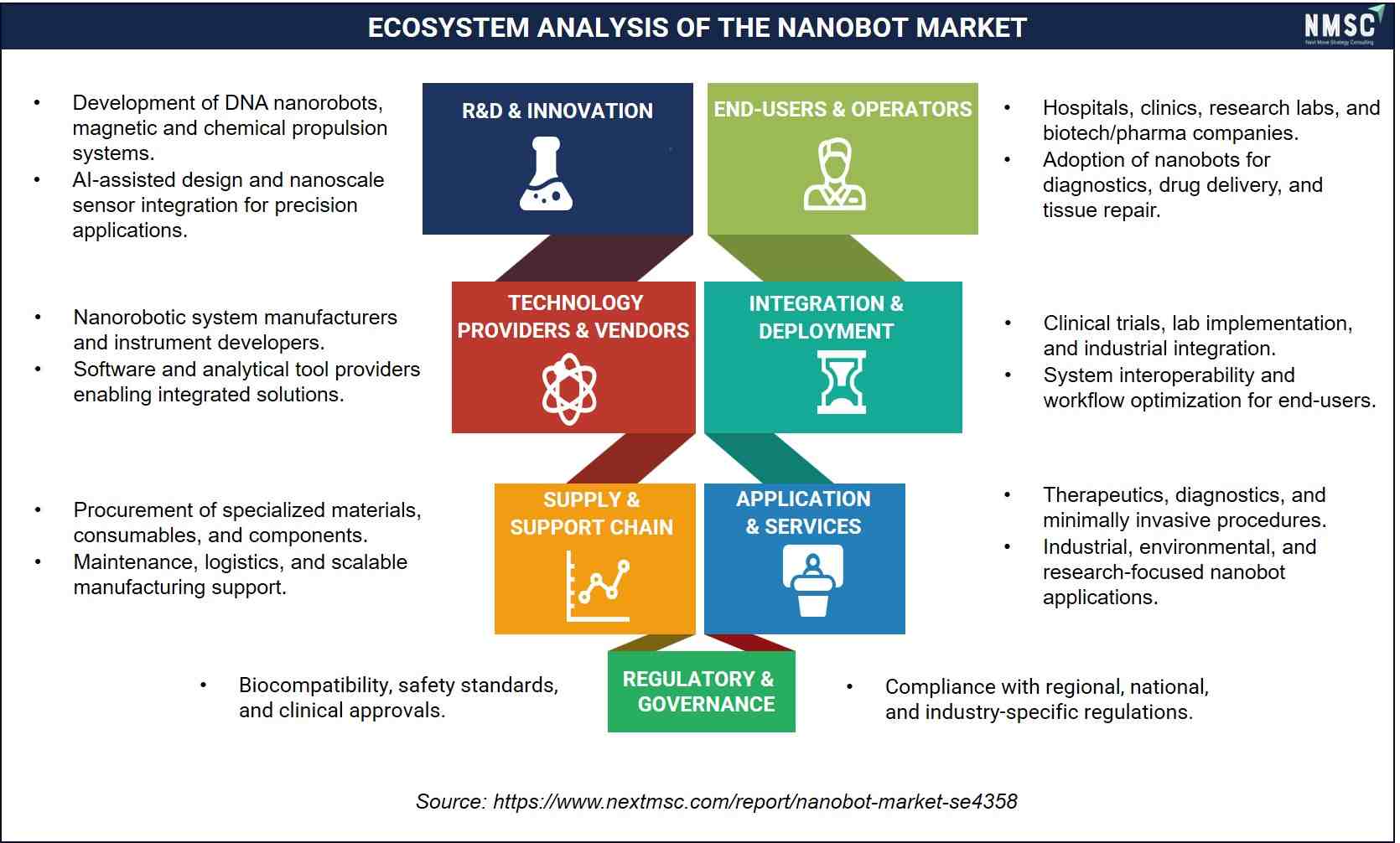
The infographic provides a comprehensive view of the nanobot market ecosystem, illustrating the interplay between innovation, technology deployment, and end-user adoption. Our analysis indicates that supply chain management, application-focused services, and regulatory oversight are critical drivers of market growth. Industry insights suggest that stakeholders, including investors and clinicians, leverage these interconnected dynamics to deliver scalable, safe, and high-impact nanobot solutions across healthcare, research, and industrial applications.
What Are the Key Market Drivers, Breakthroughs, And Investment Opportunities That Will Shape the Nanobot Market in the Next Decade?
Growth Catalyst & Risk Assessment Matrix
|
Drivers/Trends/ Restraints |
(+/-) % Impact On CAGR Forecast |
Geographic Relevance |
Impact Timeline |
|
Rapid advancement in nanomedicine and targeted drug delivery accelerating clinical adoption of nanobots |
+4.2% |
North America, Europe, Japan, South Korea |
Long term (≥4 years) |
|
Increasing investment in nanotechnology research and biomedical robotics by governments and research institutions |
+3.5% |
U.S., China, Europe, Japan, South Korea |
Medium to Long term (3–6 years) |
|
Expanding use of nanobots for minimally invasive diagnostics and precision therapeutic applications |
+2.3% |
North America, Europe, APAC |
Medium term (2–4 years) |
|
Integration of nanosensors and nanobots with AI-enabled diagnostics and digital health monitoring platforms |
+1.6% |
U.S., Europe, China, Japan |
Medium term (2–4 years) |
|
Regulatory uncertainty, safety validation challenges, and ethical concerns surrounding in-vivo nanobot deployment |
-1.8% |
Global, particularly U.S., Europe |
Short to Medium term (≤3 years) |
Drawing from our comprehensive market assessment, we noticed that the nanobot market is being shaped by a combination of technological advancement, investment momentum, regulatory complexity, and emerging digital healthcare opportunities. The primary growth driver stems from the rapid progress in nanomedicine and targeted drug delivery, where nanobots are increasingly explored as precision tools capable of delivering therapeutics directly to diseased cells, improving treatment efficacy while minimising systemic side effects. In parallel, rising global investment in nanotechnology research and biomedical robotics is strengthening the innovation pipeline and accelerating prototype development across academic and commercial laboratories.
However, from our regulatory assessment, we found that commercialisation remains constrained by safety validation requirements and evolving regulatory frameworks governing nanoscale medical devices. At the same time, our research indicates a significant long-term opportunity in integrating nanobots with advanced diagnostics and AI-enabled healthcare systems, which could enable real-time physiological monitoring and highly personalised treatment pathways, expanding the strategic potential of nanobot technologies across the healthcare ecosystem.
We further noticed that rising private investment in artificial intelligence across the healthcare sector is accelerating innovation in advanced medical technologies, including nanorobotics and precision therapeutics. Increased funding enables research institutions, biotechnology firms, and medical device manufacturers to develop AI-enabled nanobot systems for targeted drug delivery, minimally invasive surgery, and real-time diagnostics. These investments also strengthen clinical research infrastructure, improve computational modelling capabilities, and support regulatory validation processes, collectively enhancing commercialisation prospects and expanding the technological maturity of nanobot-based medical applications.
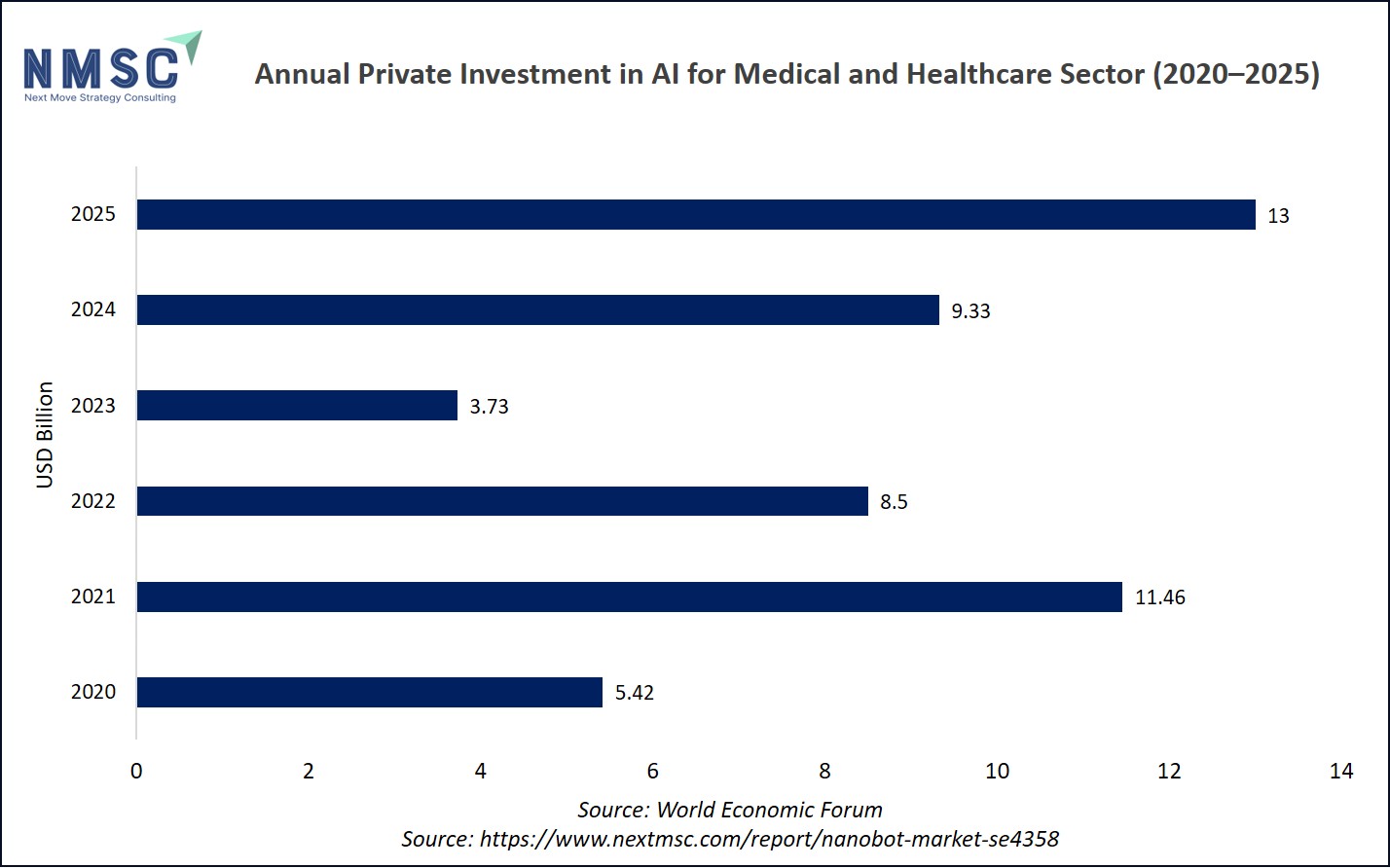
The infographic illustrates the trajectory of annual private investment in AI for the medical and healthcare sector, revealing a marked upward trend fuelled by digital transformation initiatives and growing adoption of advanced technologies. Our analysis indicates that this influx of capital directly supports innovation, R&D expansion, and the commercialisation of next-generation healthcare solutions, including nanorobotics technologies platforms. Further, increased investment enhances the development of sophisticated, AI-enabled nanorobots, accelerates clinical validation, and facilitates broader market adoption, ultimately strengthening growth prospects and operational scalability within the nanobot market.
Growth Drivers:
How Is Rapid Advancement in Nanomedicine and Targeted Drug Delivery Accelerating the Nanobot Market?
Our market analysis indicates that the rapid advancement of nanomedicine and targeted drug delivery systems is significantly accelerating the nanobot market by addressing key limitations of conventional therapeutic methods. Nanobots, DNA nanorobots, and micro-robots are increasingly being designed to transport therapeutic agents directly to diseased cells, enabling highly localised treatment with reduced systemic exposure. From our primary consultations with pharmaceutical developers, we observed that this capability is particularly relevant in oncology and neurological disorders, where treatment precision directly influences clinical outcomes. For pharmaceutical product managers and biotechnology firms, nanobot-enabled delivery platforms serve as nanomanipulators that enhance drug efficacy while minimising dosage-related toxicity. This targeted approach also holds economic value for healthcare providers by potentially lowering hospitalisation rates and improving treatment success, encouraging continued investment in nanobot-enabled therapeutic technologies.
How Is Increasing Investment in Nanotechnology Research and Biomedical Robotics Driving Nanobot Market Expansion?
Increasing investment in nanotechnology research and biomedical robotics is a major catalyst supporting the expansion of the nanobot market. Governments, academic institutions, and biotechnology companies are allocating substantial resources toward nanoscale engineering, advanced materials, and programmable molecular structures capable of performing controlled functions inside biological environments. Through our interviews with technology developers, we found that these investments are accelerating the development of nanobot prototypes with improved navigation, sensing, and biological compatibility. For investors and technology commercialisation teams, this expanding research ecosystem reduces technical uncertainty and strengthens the pipeline of clinically viable nanobot technologies. We further noticed that the continuous flow of research funding is enabling faster transition from laboratory experimentation to early-stage therapeutic applications, ultimately supporting long-term scalability and commercial viability of nanobot platforms.
Growth Inhibitor:
How Do Regulatory Uncertainty and Safety Concerns Limit the Commercialisation of Nanobots?
Regulatory uncertainty and safety concerns remain a major restraint limiting the commercialisation pace of nanobot technologies. As nanobots operate at microscopic scales within biological systems, regulators require extensive validation regarding toxicity, biocompatibility, functional control, and long-term biological effects. We observed that existing medical regulatory frameworks are not fully adapted to nanoscale autonomous devices, creating ambiguity in approval pathways. For biotechnology companies and product development teams, this translates into prolonged clinical testing cycles, higher compliance costs, and increased investment risk. Based on our further assessment, we noticed that investors and pharmaceutical partners adopt cautious funding strategies due to uncertain timelines for regulatory clearance. Until clearer global regulatory standards and testing protocols are established, safety and compliance challenges are expected to continue slowing the large-scale commercialisation of nanorobotics applications technologies.
Growth Opportunity:
How Does the Integration of Nanobots with Advanced Diagnostics and AI-Enabled Healthcare Systems Create New Market Opportunities?
From our market assessment, we noticed that integrating nanobot technologies with advanced diagnostics and AI-enabled healthcare platforms presents a major opportunity for the nanobot market. Nanobots equipped with nano sensors continuously monitor biochemical signals inside the human body, transmitting real-time physiological data to external diagnostic systems. Through our primary discussions with digital health developers, we observed increasing interest in combining nanoscale sensing with artificial intelligence platforms capable of analysing patient data for early disease detection and predictive healthcare management. For hospital operators and digital health providers, this integration shifts healthcare models toward continuous monitoring and proactive intervention. Therefore, such multifunctional nano-enabled medical systems could enable personalised treatment strategies and real-time therapeutic adjustments, creating new commercial pathways for biotechnology firms, medical device manufacturers, and healthcare technology investors.
Regulatory Framework Impacting the Nanobot Industry
The infographic below outlines the regulatory framework shaping the global nanobot market, highlighting compliance, approvals, and standards critical for clinical, diagnostic, and therapeutic applications.
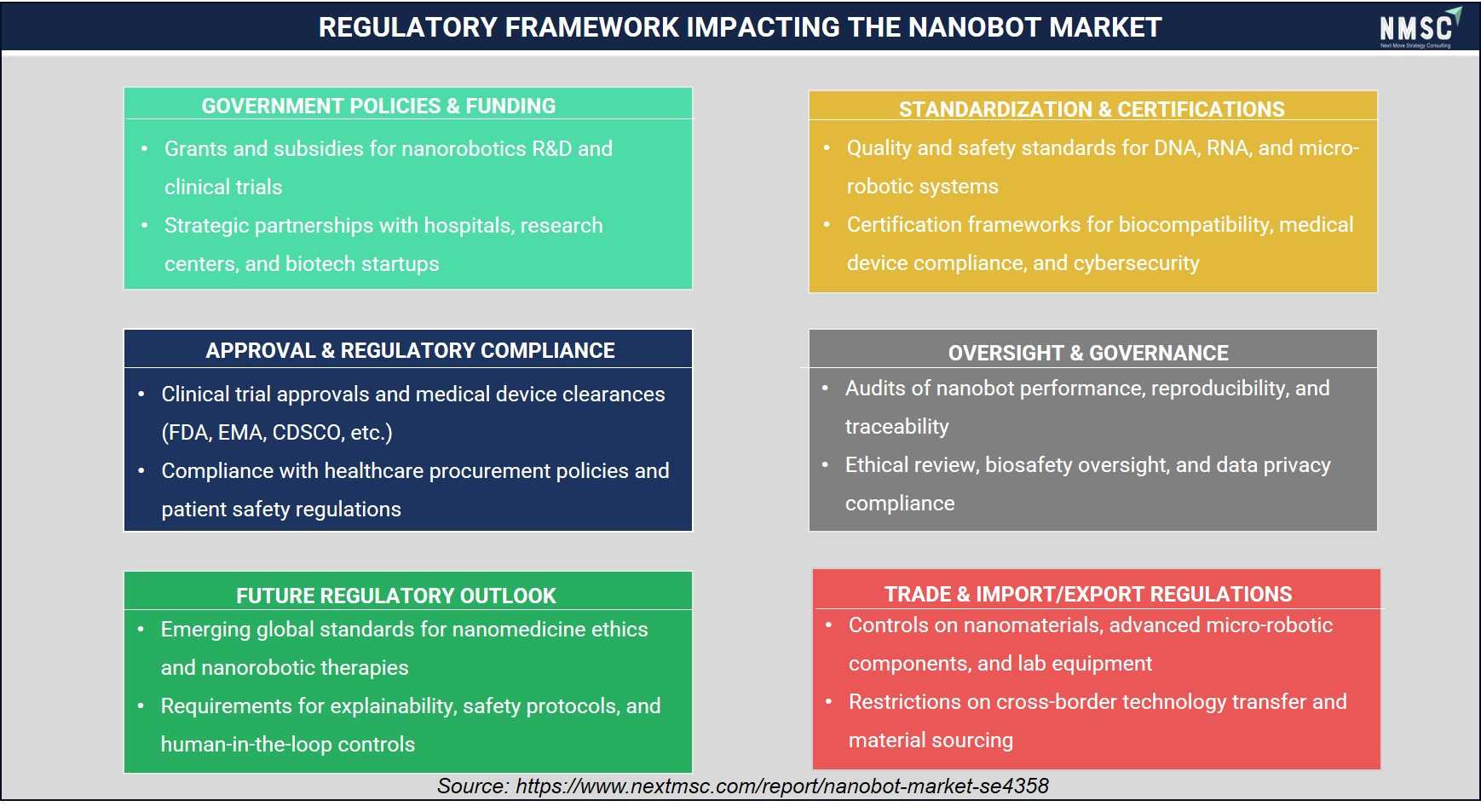
The chart illustrates the complex regulatory landscape governing nanobots, highlighting how government policies, clinical approvals, industry standards, and trade regulations collectively shape the development, commercialisation, and adoption of nanorobotic systems. Our analysis indicates that these regulatory factors provide stakeholders, including biotech startups, medical institutions, and investors, with critical guidance on compliance obligations, ethical considerations, and emerging regulatory trends. Overall, understanding this multifaceted environment is essential for informed strategic planning, risk mitigation, and successful market entry within the nanobot market.
How Is the Nanobot Industry Segmented in This Report, And What Are the Key Insights from the Segmentation Analysis?
Market Highlights & Strategic Insights – Nanobot Market:
|
Segments |
Key Takeaways |
|
Offering |
Nanorobotic systems dominate revenue, driven by DNA nanorobots and micro-robots for targeted therapeutics and minimally invasive procedures. Particle products and biological nanodevices serve diagnostics and niche therapies. Instruments & tools, components & consumables, and software & IP support fabrication, control, and monitoring, while services are expanding for hospitals, biotech firms, and research labs. |
|
Material Composition |
Polymers and lipid-based materials lead due to their use in DNA nanorobots and biocompatible platforms. Metal and hybrid materials are applied in durable micro-robots, whereas carbon enhances structural integrity, and quantum dots support imaging and sensing. Oxides and other materials are niche, making polymers and lipids the dominant segment. |
|
Actuation |
Chemical and biological propulsion dominate, enabling autonomous navigation and targeted delivery, while magnetic and acoustic propulsion allow remote guidance, and optical and passive methods support specialised research. Other actuation types are emerging but remain experimental, with sensor-driven control becoming essential for responsive operation. |
|
Application |
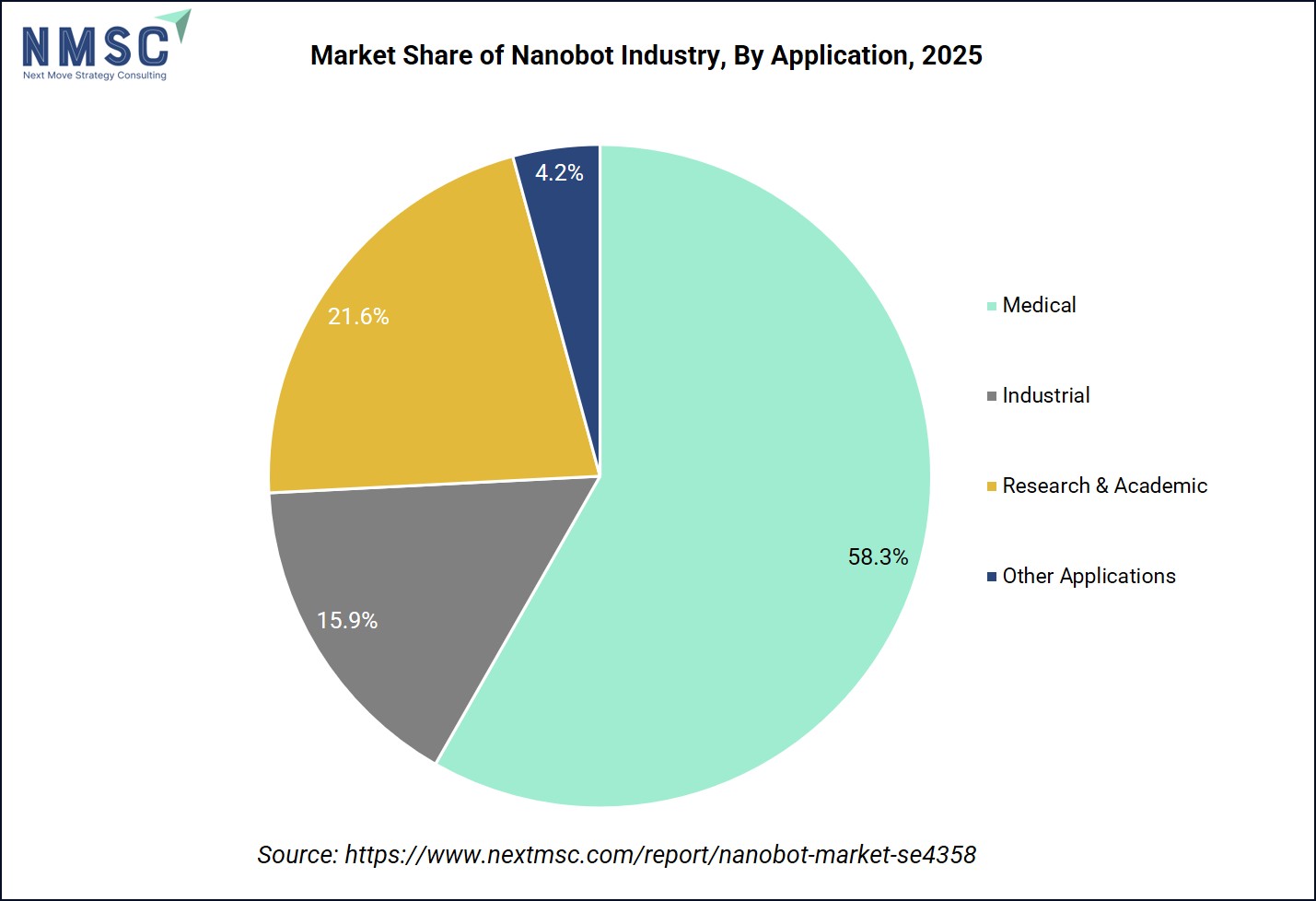
Medical applications dominate, particularly targeted therapeutics, minimally invasive procedures, and in-vivo diagnostics. Research & academic applications support drug discovery and proof-of-concept studies. Industrial and other applications exist but account for a smaller share of the market. |
|
End-User |
Hospitals & clinics lead adoption for precision medicine and minimally invasive therapies. Pharmaceutical and biotech companies drive development and commercialisation. Academic & research institutions and CROs/CDMOs support testing and prototyping, while diagnostic labs, environmental firms, semiconductor OEMs, dental clinics, and other end users occupy smaller market shares. |
By Offering Insights
Is Offering Segmentation Shaping the Nanobot Market in 2025?
On the basis of offering, the nanobot market is segmented into nanorobotic systems, particle products, biological nanodevices, instruments & tools, components & consumables, software & IP, services, and others.
Our analysis indicates that nanorobotic systems dominate the offering segment due to their comprehensive functionality, broad applicability across medical, research, and industrial applications, and higher revenue potential compared with particle products, biological nanodevices, or supporting tools and services. These systems are central to achieving precision in targeted therapeutics, minimally invasive procedures, and in-vivo diagnostics, making them the primary revenue drivers. From our further evaluation, the strategic focus on fully integrated nanorobotic platforms by hospitals, biotechnology companies, and research institutions further reinforces their dominance.
While instruments, components, software, and services are essential to enable deployment, ensure operational reliability, and enhance post-market support, they largely function as complementary layers rather than primary revenue contributors. Industry evidence suggests that continued innovation in nanorobotic systems, coupled with scalable production and increasing clinical adoption, will sustain their leadership in the offering segment over the next several years, making them the cornerstone of market growth strategies.
By Material Composition Insights
How Is Material Composition Segmentation Shaping the Nanobot Market in 2025?
Based on material composition, the nanobot market is segmented into metal, oxide, carbon, polymer, lipid, quantum dot, hybrid, and others.
Through NMSC’s market research, we assessed that polymer- and lipid-based materials dominate the nanobot market due to their versatility, biocompatibility, and critical role in DNA nanorobots and micro-robots for targeted therapeutics and diagnostics. These materials enable higher adoption in clinical, research, and industrial applications, driving primary revenue. While metals, carbon, hybrids, and quantum dots support specialised functions such as structural integrity, imaging, or actuation, they serve largely as complementary or high-value niche materials. Continued innovation in polymer and lipid formulations, coupled with scalable manufacturing, sustains their dominance and shapes material selection strategies for next-generation nanorobotic systems.
By Actuation Insights
Is Actuation Technology Driving the Nanobot Market in 2025?
Based on actuation, the nanobot market is segmented into magnetic propulsion, acoustic propulsion, optical propulsion, chemical propulsion, biological propulsion, passive or no propulsion, other actuation, and not applicable.
Chemical propulsion emerges as the dominant actuation mechanism due to its ability to provide autonomous navigation, scalability, and operational flexibility in therapeutic and diagnostic applications. Magnetic propulsion follows closely, favoured for precise external control and integration with imaging systems. While acoustic, optical, and biological propulsion methods are gaining traction in experimental and niche applications, their adoption is limited relative to chemical and magnetic systems. Our analysis suggests that continued innovation in actuation technologies, particularly hybrid and energy-efficient methods, enhances the manoeuvrability, control, and versatility of nanobots, sustaining growth in the market over the coming years.
By Application Insights
How Are Applications Shaping the Nanobot Market Today?
Based on application, the nanobot market is segmented into medical, industrial, research & academic, and other applications.
Medical applications clearly dominate the nanobot market due to the high demand for minimally invasive therapies, targeted drug delivery, and in-vivo diagnostics. NMSC’s findings suggest that hospitals, pharmaceutical companies, and clinical research institutions are the primary drivers of adoption, reflecting both high revenue potential and strategic importance. While research & academic and industrial applications contribute to innovation and niche deployments, their market impact is secondary. Continued integration of nanobots into medical workflows, coupled with clinical validation and regulatory approvals, sustains the dominance of medical applications and shapes future market growth.
By End-User Insights
Which End-Users Are Driving Adoption in the Nanobot Market in 2025?
Based on end-user, the nanobot market is segmented into pharma & biotech companies, hospitals & clinics, diagnostic labs, CROs & CDMOs, academic & research, semiconductor OEMs, environmental firms, dental clinics, and other end users.
Based on our evaluation, we analysed that hospitals & clinics, along with pharmaceutical and biotechnology companies, dominate end-user adoption due to high demand for clinical applications, therapeutic precision, and integrated R&D workflows.Nanobot market trends indicate that these stakeholders are primary drivers of revenue, while diagnostic labs, CROs/CDMOs, and academic institutions support innovation and commercialisation pipelines. Environmental firms, dental clinics, semiconductor OEMs, and other niche end-users contribute to specialised deployments but remain secondary in terms of market impact. Our further analysis suggests that continued clinical integration and strategic partnerships between pharma, healthcare providers, and research institutions reinforce the dominance of these primary end-user segments in the coming years.
Regional Outlook:
Geographic Performance Snapshot:
|
Regions |
Key Takeaways |
|
North America |
North America leads the nanobot market, driven by hospitals, clinics, pharmaceutical, and biotech firms. DNA nanorobots and micro-robots see strong adoption in targeted therapeutics, diagnostics, and R&D, supported by clinical trials, advanced infrastructure, and innovation hubs. |
|
Europe |
Europe is a strategically important but regulation-intensive market. Germany, the UK, France, and Switzerland lead adoption in medical and research nanobots. Ethical oversight, regulatory compliance, and government-funded R&D shape steady, controlled growth. |
|
Asia-Pacific |
Asia-Pacific is the fastest-growing region, where China, Japan, India, and South Korea drive the adoption of nanobots in drug delivery, diagnostics, and academic research. Rising investment in healthcare modernisation and biotech R&D accelerates regional growth. |
|
Middle East & Africa (MEA) |
Gulf countries are adopting nanobots for medical and research applications. Growth in broader Africa is limited by infrastructure gaps and workforce skills, though specialised labs and pilot programs show early adoption potential. |
|
Latin America (LATAM) |
LATAM is an emerging market, led by Brazil, Chile, and others. Adoption focuses on research, diagnostics, and academic use of nanobots, with expansion dependent on regulatory maturity, funding availability, and infrastructure development. |
The nanobot market is geographically studied across North America, Europe, Asia Pacific, the Middle East & Africa, and Latin America (LATAM), and each region is further studied across countries.
Nanobot Market in North America
North America represents the most mature nanobot market globally, driven by strong adoption across hospitals, pharmaceutical firms, biotechnology companies, and research institutions. The U.S. leads with widespread integration of DNA nanorobots and micro-robots in targeted drug delivery, diagnostics, and clinical research, supported by advanced healthcare infrastructure and regulatory frameworks facilitating innovation while ensuring patient safety.
Canada demonstrates steady adoption focused on translational research and laboratory-scale implementations. Industry data indicates that North American stakeholders actively invest in prototype-to-commercial-scale nanobot technologies, leveraging public-private partnerships, venture capital, and R&D grants. From our market engagements, we observed high buyer sophistication, with end-users prioritising biocompatibility, precision, and regulatory-compliant solutions. Competitive positioning is strong, with multiple multinational and domestic players driving innovation, forming collaborations, and expanding service offerings.
Nanobot Market in the United States
Our research indicates that the United States is the global leader in nanobot adoption, with high maturity in both clinical and research applications. Hospitals and large pharmaceutical firms actively deploy DNA nanorobots and micro-robots for targeted therapeutics, minimally invasive procedures, and in-vitro diagnostics. Operational analysis suggests that regulatory agencies, including the FDA, provide structured pathways for approval, balancing innovation with patient safety.
We further noticed advanced laboratory infrastructure and established clinical trial networks that enable rapid prototyping and scale-up. From our market evaluation, we observed strong investor interest, particularly in biotech start-ups developing nanobot platforms with therapeutic payload delivery and precision diagnostic capabilities. Market evidence suggests that U.S.-based technology providers dominate in product innovation, while collaborative partnerships between hospitals, research labs, and pharma firms accelerate adoption. The combination of regulatory support, capital availability, and technical expertise positions the U.S. for continued leadership in global nanobot deployment.
Nanobot Market in Canada
Based on our assessment, we found that Canada’s nanobot market is growing steadily but remains focused on research, diagnostics, and translational applications. Hospitals, universities, and biotech research labs lead adoption, supported by government R&D programs and innovation grants. Industry data also indicates strong collaboration between academic institutions and technology providers, enabling pilot deployments of DNA nanorobots and micro-robots for targeted drug delivery and cellular imaging. Regulatory oversight emphasises safety and compliance, creating a measured adoption profile compared with the U.S. From our regional evaluations, buyer behaviour prioritises biocompatibility and regulatory-aligned products, while infrastructure readiness supports prototype development and preclinical testing rather than large-scale commercialisation.
Nanobot Market in Europe
Europe is a strategically significant but regulation-intensive market for nanobots, with adoption driven by hospitals, research labs, and pharmaceutical companies. The region demonstrates strong investment in medical and diagnostic applications, but regulatory frameworks, including EMA oversight and ethical compliance mandates, influence procurement cycles. Our regional assessments suggest that countries like Germany, the UK, France, Italy, Spain, and the Nordics exhibit differentiated maturity levels, with Germany and the UK leading in clinical deployment, while Southern European markets emphasise research-oriented adoption.
From our engagements with technology providers, we noticed that infrastructure readiness is high in Western Europe, supporting large-scale trials of DNA nanorobots and micro-robots. End-user behaviour further emphasises safety, biocompatibility, and regulatory compliance. Investment patterns show that European players leverage both government R&D support and strategic partnerships with hospitals and academic institutions, sustaining steady growth while mitigating adoption risks.
Nanobot Market in the United Kingdom
Based on our market evaluation, we identified that the UK demonstrates strong adoption of nanobot technologies across hospitals, clinical research centers, and biotech firms. In particular, industry trends are increasingly focused on targeted drug delivery, minimally invasive procedures, and in-vitro diagnostics leveraging DNA nanorobots. At the same time, regulatory oversight, led by the MHRA and relevant ethics committees, ensures clinical safety and compliance, while the country’s infrastructure readiness supports robust R&D and pilot-scale deployments. Moreover, insights from our market engagements indicate that investment flows, from both public grants and private venture capital, are fuelling innovation, with end-users prioritising safety, precision, and seamless workflow integration. Consequently, the competitive landscape is shaped by both domestic biotech start-ups and multinational collaborations, collectively positioning the UK as a leading European hub for nanobot research, development, and clinical adoption.
Nanobot Market in Germany
Germany is a high-maturity market for nanobot adoption, with hospitals, pharmaceutical companies, and academic institutions actively deploying DNA nanorobots and micro-robots. NMSC assessment indicates that the regulatory environment is rigorous, emphasising clinical safety, ethical compliance, and device approval standards. Our research indicates strong infrastructure readiness, including state-of-the-art laboratories and translational research centers, enabling rapid prototyping and preclinical testing.
Buyer behaviour in Germany reflects a clear preference for solutions with proven efficacy, alignment with regulatory standards, and seamless integration into clinical workflows. Market evidence further suggests that the country’s leadership in Europe is anchored in structured technology adoption, stringent regulatory oversight, and strong R&D collaborations between hospitals, research institutions, and biotech firms. As a result, Germany maintains a competitive edge in advancing nanobot applications while ensuring clinical safety and operational efficiency.
Nanobot Market in France
Our evaluation of industry installations indicates that France exhibits moderate nanobot market maturity, with activity primarily focused on research, diagnostics, and clinical pilot programs. Currently, hospitals and biotech firms are deploying DNA nanorobots for targeted drug delivery and laboratory-scale imaging applications. Meanwhile, regulatory oversight by the ANSM ensures compliance and patient safety, shaping procurement strategies and adoption timelines. From our regional assessment, infrastructure readiness is strong in major urban centers and research hubs, although commercial-scale adoption remains limited. Nonetheless, market trends point to growing investment in R&D collaborations and academic–industry partnerships, collectively positioning France for steady growth in nanobot applications over the next five years.
Nanobot Market in Italy
Italy’s nanobot adoption is largely research- and pilot-driven, with hospitals and universities leading deployments of DNA nanorobots and micro-robots. Regulatory oversight is moderate, emphasising safety and ethical compliance. From our market engagements, we observed that infrastructure readiness is concentrated in key research hubs, with limited commercialisation. Buyer behaviour prioritises biocompatibility, efficacy, and alignment with EU clinical standards. Investment patterns reflect a combination of government funding and collaborative projects with European technology providers, enabling gradual adoption while building long-term capabilities.
Nanobot Market in Spain
Our research suggests that Spain represents an emerging market for nanobot technologies, with adoption largely concentrated in academic research, laboratory-scale diagnostics, and early-stage clinical trials. While hospitals and biotech firms are increasingly exploring these applications, adoption remains cautious due to regulatory compliance requirements and limited funding availability. Market evidence further indicates that infrastructure in major cities is gradually developing, supporting R&D activities and pilot testing. From our assessment, investment patterns are primarily driven by public research grants, supplemented by early-stage private funding, collectively indicating moderate growth potential for the Spanish nanobot market over the next few years.
Nanobot Market in the Nordics
The Nordic region, comprising Sweden, Norway, Denmark, and Finland, demonstrates a strong focus on research, healthcare innovation, and academic adoption of nanobot technologies. Specifically, hospitals and research laboratories are deploying DNA nanorobots for targeted therapies, diagnostics, and experimental studies. At the same time, regulatory oversight emphasises patient safety and clinical ethics, while infrastructure readiness supports advanced laboratory-scale development. From our regional evaluation, we found that public-private partnerships and government-led R&D initiatives are key drivers of investment, collectively positioning the Nordics as a high-quality research and early-adoption hub for nanobot applications within Europe.
Nanobot Market in the Asia-Pacific
Our regional assessment indicates that the Asia-Pacific region represents the fastest-growing nanobot market, with rapid adoption across hospitals, research centers, and biotech firms. Key contributors include China, Japan, India, South Korea, Taiwan, Indonesia, and Australia, where growth is driven by healthcare modernisation, expanding biotech investments, and translational research initiatives. From our further analysis, strong government-backed funding, active venture capital flows, and collaborations between academic institutions and technology providers are fueling innovation. Buyer behaviour in the region emphasises therapeutic efficacy, biocompatibility, and cost-effective deployment, while infrastructure readiness ranges from highly advanced in countries such as Japan and South Korea to developing in Indonesia. Moreover, geopolitical priorities and competitive investment strategies are accelerating adoption, particularly in targeted therapeutics and diagnostics, reinforcing the Asia-Pacific’s position as a dynamic and rapidly evolving market for nanobot technologies.
Nanobot Market in China
NMSC’s assessment indicates that China leads the Asia-Pacific region in nanobot adoption, with hospitals, biotech firms, and research institutes deploying DNA nanorobots for drug delivery, diagnostics, and experimental therapies. Regulatory oversight is steadily strengthening, striking a balance between rapid innovation and clinical safety. Our research further suggests that the country benefits from strong infrastructure readiness, robust R&D funding, and active participation from technology providers. In addition, high investor confidence, intense domestic competition, and increasing integration of nanobot technologies into hospital workflows, collectively positioning China as the regional leader in nanobot adoption and innovation.
Nanobot Market in Japan
Japan demonstrates high maturity in both clinical and research applications of nanobot technologies, supported by advanced hospital infrastructure and well-funded academic programs. From our evaluation, we identified that regulatory frameworks ensure safety and compliance, while end-users prioritise therapeutic efficacy and seamless integration with existing clinical workflows. Investment flows from government programs and private venture capital further enhance R&D, clinical adoption, and prototype scale-up. Further, sustained growth potential, particularly in oncology and precision diagnostics, reinforces Japan’s position as a leading Asia-Pacific hub for nanobot innovation and application.
Nanobot Market in India
India represents an emerging nanobot market, with hospitals, biotech firms, and academic institutions gradually adopting DNA nanorobots and micro-robots for diagnostics and therapeutic applications. Regulatory frameworks are evolving to support clinical trials while maintaining patient safety. Our evaluation indicates that infrastructure readiness is strong in metropolitan centers but remains limited in smaller regions. Investment activity is rising through public research grants, start-up funding, and academic–industry partnerships, collectively driving adoption while fostering the development of long-term domestic capabilities in nanobot technologies.
Nanobot Market in South Korea
Our findings suggest that South Korea is a high-adoption market for nanobot technologies, particularly in clinical research and hospital-based drug delivery applications. Regulatory oversight emphasises safety and therapeutic efficacy, while infrastructure readiness supports prototyping and translational research initiatives. From our market engagements, we observed that both private investment and public R&D funding are driving innovation in DNA nanorobots and micro-robots, collectively positioning South Korea as a regional leader in nanobot adoption alongside Japan and China. Overall, these factors indicate strong long-term growth potential as research activities gradually translate into broader clinical and commercial deployment of nanobot technologies in the country.
Nanobot Market in Taiwan
Taiwan is primarily focused on research and early-stage clinical applications of nanobots, supported by universities, biotech laboratories, and hospitals. At the same time, our market analysis indicates that infrastructure readiness is strong for laboratory-scale testing, while regulatory frameworks ensure a controlled and responsible pace of adoption. Furthermore, investment is largely driven by government research programs and strategic collaborations with technology providers, thereby supporting incremental growth and continued innovation in the field.
Nanobot Market in Indonesia
Current market analysis indicates that Indonesia is an emerging nanobot market, with adoption largely limited to research laboratories and academic programs. Regulatory oversight is still developing, and infrastructure readiness is primarily concentrated in urban research centers. From our evaluation, we identified that adoption is constrained by limited funding, technical expertise, and market awareness. Nonetheless, pilot programs demonstrate potential for gradual expansion in medical and diagnostic applications, suggesting that Indonesia could experience steady growth as capabilities and awareness improve.
Nanobot Market in Australia
Australia demonstrates moderate-to-high adoption of nanobot technologies across hospitals, biotech firms, and academic research institutions. In particular, infrastructure readiness is strong in major cities, which supports the deployment of DNA nanorobots for targeted therapeutics and diagnostics. At the same time, regulatory frameworks emphasise safety and efficacy, ensuring that clinical applications are compliant with national standards. Furthermore, investment flows from both government R&D programs and private venture capital are actively driving innovation and enabling prototype development. Taken together, these factors position Australia as a stable, innovation-driven market within the Asia-Pacific region, with significant potential for continued growth in clinical, research, and translational applications over the coming years.
Nanobot Market in Latin America
Based on our regional analysis, we analysed Latin America represents an emerging nanobot market, with Brazil, Chile, and others leading adoption. Hospitals, academic institutions, and biotech firms are the primary end-users, deploying DNA nanorobots and micro-robots for targeted therapeutics, diagnostics, and experimental medical applications. Industry data indicates that adoption is driven by research initiatives, academic collaborations, and early-stage pilot programs rather than large-scale commercial deployment. Further, regulatory frameworks across the region are evolving, with agencies increasingly defining safety, biocompatibility, and clinical trial guidelines, although inconsistencies remain between countries.
We also noticed that infrastructure readiness varies widely, with advanced research facilities concentrated in metropolitan centres, while rural and smaller urban areas remain underserved. We observed that limited funding and cautious buyer behaviour constrain growth, yet government-backed research programs and cross-border collaborations are fostering a pipeline for broader adoption.
Nanobot Market in the Middle East & Africa
Our analysis indicates that the MEA nanobot market is still in the early adoption stage, with growth primarily concentrated in Gulf countries such as the UAE, Saudi Arabia, and Qatar. Specifically, hospitals, specialised research institutions, and biotechnology centres are deploying DNA nanorobots and micro-robots for diagnostics, minimally invasive procedures, and pilot therapeutics. Further, infrastructure readiness is robust in the Gulf states, supported by modern hospitals and research laboratories. However, much of the broader African continent continues to face challenges related to skills availability, regulatory consistency, and clinical adoption.
At the same time, regulatory frameworks across MEA are evolving, with countries emphasising safety, clinical efficacy, and ethical compliance, although harmonisation across the region remains limited. From our market engagements, we observed that investment in nanobot R&D and pilot programs is primarily government-backed, supplemented by private ventures in urban hubs. Taken together, these factors suggest strong potential for selective adoption in high-income areas, and market evidence indicates that strategic partnerships between international technology providers, local hospitals, and research institutions will be critical to expanding adoption across the region over the long term.
Competitive Landscape
Competitive Dynamics & M&A Landscape:
|
Key Takeaways |
|
The nanobot market is driven by a mix of pioneering biotech firms, established instrument providers, and agile startups, including Bionaut Labs, Microbot Medical, Nanobiotix, Nanovery, and DNA Nanobots, Inc. This blend of legacy expertise and innovative newcomers’ fuels competitive intensity across therapeutic, diagnostic, and research applications. |
|
Companies are prioritising advanced propulsion methods, AI-assisted navigation, nanoscale sensing, and programmable DNA or magnetic platforms. Operational precision, biocompatibility, scalability, and integration with clinical or research workflows have emerged as key differentiators. Vendors increasingly focus on co-developing nanorobotic systems with supporting instruments, software, and analytical tools to create end-to-end solutions across medical, industrial, and academic applications. |
|
Recent collaborations, joint ventures, and strategic partnerships emphasise platform innovation, translational R&D, and regulatory alignment rather than mere portfolio expansion. These alliances accelerate product validation, enhance system reliability, and strengthen market positioning, enabling faster adoption in hospitals, research labs, and biotech applications while supporting long-term growth and the scaling of nanobot technologies globally. |
Which Companies Dominate the Nanobot Market and How Do They Compete?
Based on our competitive assessment, we found that the nanobot market ecosystem remains largely composed of early-stage nanorobotics innovators, medical microrobotics developers, and nanotechnology instrumentation providers rather than companies engaged in large-scale nanobot manufacturing. Firms such as Bionaut Labs, Theranautilus, and Robeaute are advancing experimental therapeutic nanorobots, while technology leaders, including Thermo Fisher Scientific, ZEISS, Bruker, and JEOL Ltd. supply critical nanotechnology instruments that support research and development. Further, Nanovery is progressing in nucleic acid nanorobotics platforms for diagnostics and therapeutic assays. Overall, competitive strategies vary from specialised therapeutic nanobot development to enabling instrumentation platforms, reflecting the sector’s research-driven and highly specialised nature.
Market Dominated by Nanobots Giants and Specialists
In our evaluation, the competitive landscape features global giants that leverage scale and R&D muscle and specialists that excel in targeted innovation. Our market assessment indicates that Thermo Fisher Scientific and Bruker Corporation maintain strong positioning through broad instrumentation portfolios that support nanobot research and characterisation across labs worldwide, underpinning their influence in the market ecosystem. Meanwhile, companies like Nanobiotix, with its established presence in nanomedicine and radiotherapy enhancement technologies, bridge clinical nanotechnology with therapeutic applications, differentiating itself by proven clinical pipelines and regulated product pathways.
Further, specialists such as Nanobots Therapeutics and deep tech players like Theranautilus pursue niche applications, for example, tissue-penetrating bots for cancer treatment and dental hypersensitivity, respectively. This broad competitive fabric, platform instrument vendors, clinical stage nanobot innovators, and deep tech specialist startups, creates layered competition where giants supply enabling tools and infrastructure, while nimble specialists push application-specific breakthroughs.
Innovation and Adaptability Drive Market Success
Innovation and adaptability are key determinants of competitive success in the nanobot market. Our current market analysis indicates that companies integrating advanced computational design, AI-assisted modelling, and high precision fabrication are gaining an edge in rapid prototyping and functional progression. For instance, Nanovery’s ongoing updates to its Nucleic Acid Nanorobotics (NANs) platform showcase enhanced in silico design efficiency, enabling faster iteration and experiment throughput in 2025. Meanwhile, startups such as Theranautilus secured seed funding to develop magnetically controlled nanorobots for dental applications, exemplifying how targeted innovations unlock new clinical opportunities and diversify market entry points.
Market Players to Opt for Merger & Acquisition Strategies to Expand Their Presence
From our competitive analysis, we noticed that M&A, and partnership strategies are gaining traction as firms seek to broaden their technology stacks and market access. Industry data indicates that larger scientific instrument providers like Thermo Fisher Scientific are strengthening alliances and strategic collaborations to integrate nanobot-relevant capabilities with cGMP manufacturing and targeted delivery solutions, enhancing their CDMO offerings and clinical reach. While DNA Nanobots engages in partnership and advisory board expansions to solidify its gene therapy platform initiatives, signalling preparatory steps that could lead to future M&A activity. Our evaluation shows that startups and mid-size innovators frequently enter into joint ventures with academic institutions or larger firms to de-risk technology validation and scale clinical testing, a model that precedes acquisition and broader commercialisation pathways. This pattern demonstrates how consolidation and ecosystem integration are central to competitive expansion in a market where technological complexity and regulatory navigation require complementary capabilities and shared risk.
List of Key Nanobots Companies
-
Bionaut Labs, Inc.
-
Nanobots Therapeutics
-
Robeauté
-
Nanovery
-
DNA Nanobots, Inc
-
Theranautilus
-
AMAROB
-
Endiatx
-
Nanobiotix
-
Nanoscribe
-
Thermo Fisher Scientific
-
ZEISS
-
Bruker
-
JEOL Ltd.
What Are the Latest Key Industry Developments?
-
January 2026 - Jurek Kozyra, CEO of Nanovery, revealed on the Disruption Interruption podcast how DNA nanorobots integrated with AI are shortening diagnostic timelines and accelerating drug discovery, marking a strategic advancement in combining nanobots with intelligent analytics.
-
December 2025 - DNA Nanobots, a U.S.-based company developing self-assembling nanoscale therapeutics, announced it secured a USD 3.5 million investment in seed funding to advance its non-viral gene delivery platform and expand R&D and production infrastructure. This funding boost directly supports the next phase of development and IND-enabling studies.
Case Study:
Theranautilus - CalBots for Tooth Sensitivity
Based on our market analysis, we found that in 2025, Theranautilus, in partnership with the Indian Institute of Science (IISc), developed CalBots, magnetically guided nanobots aimed at treating tooth sensitivity. Traditional treatments for dentinal hypersensitivity require repeated applications of desensitizing agents, offering limited and temporary relief.
Solution Implementation:
CalBots are nanoscale robots that deliver calcium-based bioceramic cement directly into dentinal tubules. Guided by external magnetic fields, the bots penetrate microscopic channels, self-assembling into stable mineral plugs to block nerve exposure. This targeted approach enables a precise, potentially one-time therapy.
Impact & Outcomes:
-
Lab and animal tests confirmed effective sealing of dentinal tubules and high biocompatibility.
-
Demonstrated targeted, minimally invasive therapy compared to conventional treatments.
-
Pioneered magnetically guided nanorobotic delivery, a novel approach in oral healthcare research.
This case illustrates how magnetically guided nanobots transform dental care by offering precise, durable, and minimally invasive solutions, highlighting broader potential for nanorobotic therapies.
Expert Insights
 “We manipulate these tiny nanoscale objects, and we give them magnetic properties. Using these magnetic fields, we are able to move these things in a very controllable manner inside the organ.”
Professor Ambarish Ghosh, Co-Founder of Theranautilus
Statement made while explaining the working principle of magnetically controlled nanorobots developed by Theranautilus for targeted medical treatments, particularly in dental care applications.
The statement highlights the advancement of nanorobotics in healthcare, particularly for precision-based treatments. Magnetically guided nanorobots developed by Theranautilus can navigate microscopic dental tissues to deliver targeted therapy using external magnetic fields. This innovation reflects the growing shift toward minimally invasive and precision medicine technologies, encouraging increased investment in nanotechnology and medical robotics for advanced healthcare applications.
Strategic Framework of the Nanobot Industry
This infographic presents a strategic framework for the nanobot market, highlighting key operational, regulatory, and technological factors influencing development, adoption, and commercialisation.
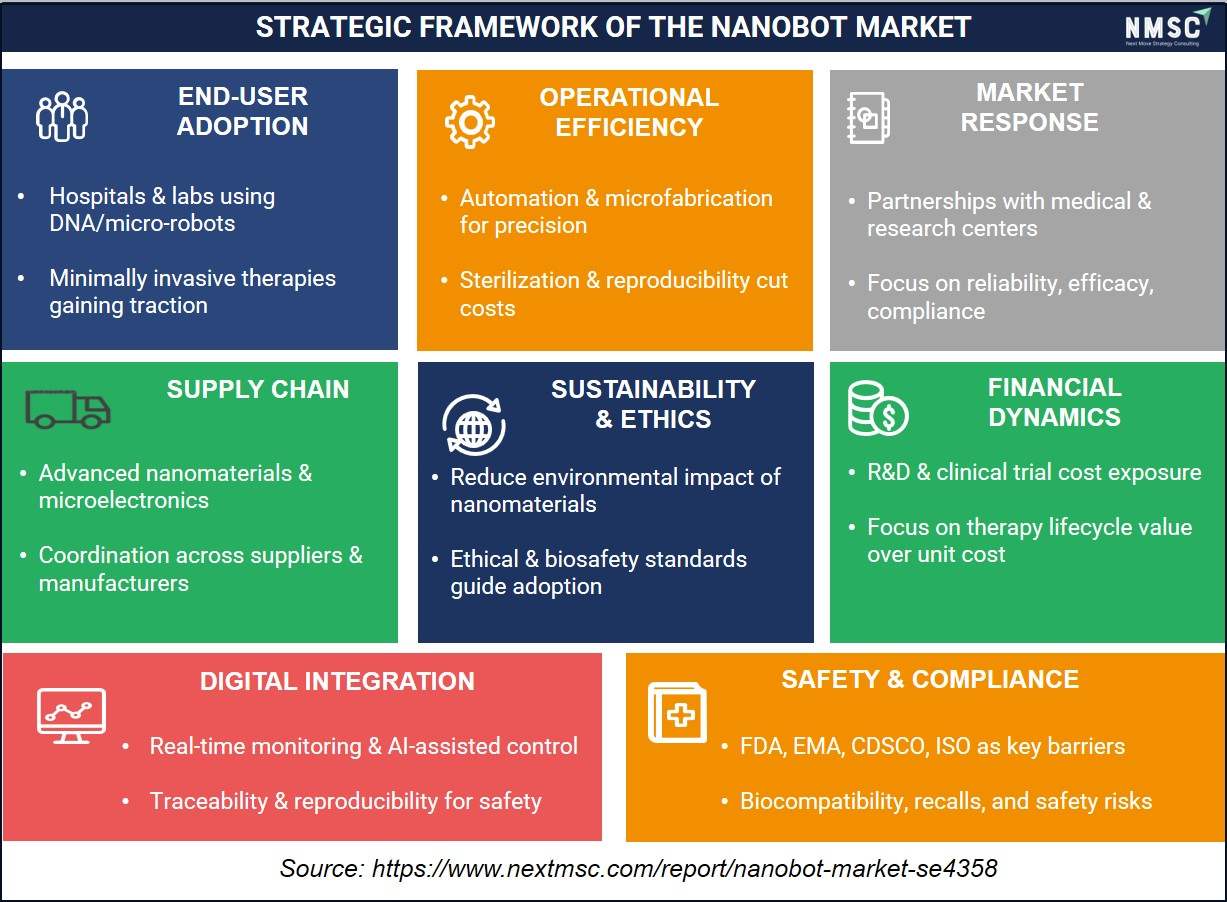
The above infographic shows how the chart visualises the multifaceted strategic considerations for the Nanobot Market, emphasising operational efficiency, supply chain coordination, regulatory compliance, and ethical concerns. It helps stakeholders, including biotech firms, hospitals, investors, and policymakers, understand the critical drivers for market success, the operational and financial pressures faced by manufacturers, and the evolving standards and safety requirements that shape adoption and commercialisation.
What Are the Key Factors Influencing Investment Analysis & Opportunities in the Nanobot Industry?
Investment in the nanobot market is being shaped by a combination of technological innovation, strategic clinical applications, and growing confidence from both venture and institutional investors. Funding trends indicate a clear preference for companies developing DNA nanorobots, magnetic propulsion systems, and targeted therapeutic delivery platforms, reflecting investor recognition of differentiated technological capabilities and high translational potential. From our competitive assessment, we noticed that investors are particularly drawn to startups demonstrating proof-of-concept in complex biological environments, scalable manufacturing capabilities, and regulatory foresight, which reduces execution risk and enhances commercial prospects. Emerging strategic opportunities lie in partnerships with academic research institutions, integration with AI-enabled design platforms, and applications in precision medicine, oncology, and minimally invasive procedures, all of which align with broader healthcare modernisation agendas.
Based on our market evaluation, we found that investment hotspots are concentrated in regions with advanced research infrastructure, supportive regulatory frameworks, and established biotech ecosystems, allowing companies to accelerate R&D and clinical validation. We observed that funding flows are increasingly tied to demonstrated technological adaptability and the potential to address unmet clinical needs, positioning well-capitalised innovators to lead market adoption. Strategic investor engagement now extends beyond capital provision to include advisory support, facilitating regulatory navigation, intellectual property development, and commercialisation strategies, collectively reinforcing the market’s long-term growth trajectory and value creation potential.
Key Benefits for Stakeholders:
Next Move Strategy Consulting (NMSC) provides a comprehensive and evidence-based analysis of the nanobot market trends, covering historical developments from 2020 to 2025 and offering forward-looking forecasts through 2035. Our study assesses the market at global, regional, and country levels, combining quantitative outlooks with qualitative insights into key growth drivers, adoption constraints, technology evolution, and investment dynamics across major Nanobots segments.
Drawing on our analysis, we noticed that the nanobot market delivers differentiated strategic, economic, and practical advantages across stakeholders. Investors benefit from early access to high-innovation platforms such as DNA nanorobots and magnetic propulsion systems, enabling portfolio diversification, long-term value creation, and alignment with emerging healthcare and industrial trends. Customers, including hospitals, research institutions, and pharmaceutical companies, gain operational efficiencies through precision-targeted therapeutics, minimally invasive interventions, and enhanced diagnostic capabilities, translating into improved clinical outcomes and reduced treatment costs.
From our competitive assessment, we further noticed that technology providers and system integrators leverage nanobot adoption to expand service offerings, strengthen R&D collaborations, and capture niche markets, while regulatory bodies benefit from structured oversight that encourages safe innovation and incentivises translational research. In our evaluation, these stakeholders collectively realise synergistic opportunities, where investors secure high-growth potential, end users improve effectiveness and patient outcomes, and regulators foster responsible technological adoption, establishing a robust ecosystem that supports scalable innovation and long-term market sustainability.
|
Parameters |
Details |
|
Customization Scope |
Free customization (equivalent to up to 80 analyst-working hours) after purchase. Addition or alteration to country, regional & segment scope. |
|
Pricing and Purchase Options |
Avail customized purchase options to meet your exact research needs. |
|
Approach |
In-depth primary and secondary research; proprietary databases; rigorous quality control and validation measures. |
|
Analytical Tools |
Porter's Five Forces, SWOT, value chain, and Harvey ball analysis to assess competitive intensity, stakeholder roles, and relative impact of key factors. |
Nanobot Market Key Segments
By Offering
-
Nanorobotic Systems
-
Therapeutic Systems
-
Drug Delivery Robots
-
Surgical Robots
-
Implantable Actuators
-
Other Therapeutic Systems
-
-
Diagnostic Systems
-
In-vivo Imaging Robots
-
In-Vivo Sensor Robots
-
Other Diagnostic Systems
-
-
Industrial Systems
-
Environmental Robots
-
Manufacturing Robots
-
Other Industrial Systems
-
-
-
Particle Products
-
Therapeutic NPs
-
Lipid NPs (LNPs)
-
Polymeric NPs
-
Nano-Conjugates
-
Radioenhancer NPs
-
Photothermal NPs
-
Theranostic NPs
-
Other Therapeutic NPs
-
-
Diagnostic Particles
-
Magnetic NPs
-
Plasmonic NPs
-
Fluorescent NPs
-
Other Diagnostic Particles
-
-
IVD Kits & Assays
-
Lateral Flow Kits
-
Biosensor Kits
-
Other IVD Kits
-
-
Other Particles
-
-
Biological Nanodevices
-
DNA Nanodevices
-
Protein Nanodevices
-
Phage & Microbial Devices
-
Cell Biohybrids
-
Other Biological Devices
-
-
Instruments & Tools
-
Imaging Instruments
-
Scanning Probe Microscopes (SPM)
-
Electron Microscopes (EM)
-
Optical Tweezers
-
-
Manipulation & Positioning Tools
-
In-Situ Nanomanipulators
-
Nanopositioners & Stages
-
-
Fabrication Equipment
-
Electron Beam Lithography (EBL)
-
Focused Ion Beam (FIB)
-
Nanoimprint Lithography (NIL)
-
-
Metrology & Characterization Tools
-
Accessories & Spare Parts
-
Other Instruments & Tools
-
-
Components & Consumables
-
Functional Coatings
-
MEMS Components
-
Reagents & Raw Inputs
-
Other Consumables
-
-
Software & IP
-
Software
-
Control Software
-
AI & Analytics Software
-
Simulation Software
-
-
Intellectual Property
-
Licensing
-
Royalties
-
-
-
Services
-
R&D Services
-
Foundry Services
-
Contract Manufacturing (CDMO)
-
Regulatory Consulting
-
Other Professional Services
-
-
Other Revenue
By Material Composition
-
Metal
-
Oxide
-
Carbon
-
Polymer
-
Lipid
-
Quantum Dot
-
Hybrid
-
Others
By Actuation
-
Magnetic Propulsion
-
Acoustic Propulsion
-
Optical Propulsion
-
Chemical Propulsion
-
Biological Propulsion
-
Passive or No Propulsion
-
Other Actuation
-
Not Applicable
By Application
-
Medical
-
Oncology
-
Neurology
-
Cardiovascular
-
Infectious Disease
-
Dental
-
Diagnostic Imaging & IVD
-
Industrial
-
Semiconductor
-
Environmental
-
Advanced Materials
-
Research & Academic
-
Other Applications
By End-User
-
Pharma & Biotech Companies
-
Hospitals & Clinics
-
Diagnostic Labs
-
CROs & CDMOs
-
Academic & Research
-
Semiconductor OEMs
-
Environmental Firms
-
Dental Clinics
-
Other End Users
Geographical Breakdown
-
North America: U.S., Canada, and Mexico.
-
Europe: UK, Germany, France, Italy, Spain, Sweden, Denmark, Finland, the Netherlands, and the Rest of Europe.
-
Asia Pacific: China, India, Japan, South Korea, Taiwan, Indonesia, Vietnam, Australia, Philippines, Malaysia and the rest of APAC.
-
Middle East & Africa (MEA): Saudi Arabia, UAE, Egypt, Israel, Turkey, Nigeria, South Africa, and the rest of MEA.
-
Latin America: Brazil, Argentina, Chile, Colombia, and the rest of LATAM.
Conclusion & Recommendations
The nanobot market is entering a phase of strategic maturation, driven by advancements in DNA nanorobotics, precision propulsion mechanisms, and AI-enabled design platforms. From our competitive assessment, we found that companies combining technological differentiation with translational applications, particularly in targeted therapeutics, diagnostics, and minimally invasive procedures, are best positioned to capture long-term value. Market dynamics indicate that innovation velocity, regulatory foresight, and integration with established healthcare and research infrastructures define the leaders of the next growth cycle. Our evaluation assessed that stakeholder collaboration across investors, technology providers, and clinical institutions remains pivotal to scaling adoption and translating laboratory breakthroughs into commercially viable, high-impact solutions.
For executives and investors, our findings highlight clear avenues for strategic action. We identified that executives should prioritise R&D alignment with unmet clinical needs and scalable manufacturing capabilities, while investors can focus on differentiated technologies with proven translational potential and regulatory readiness. By coordinating these efforts, stakeholders can collectively foster sustainable innovation, unlock value creation, and accelerate the responsible adoption of nanobot technologies across healthcare and related sectors.


About the Author
 Mayurima Roy
— Mayurima Roy is Research Analyst at Next Move Strategy Consulting, where she has spent 4 years working across the firm's full industry coverage rather than a single fixed vertical. Her work centers on structured research, ongoing trend tracking, competitive assessment, and insight-led content development, translating complex market data into clear, decision-ready narratives that support informed client decision-making across diverse global industries, market sectors, and world regions every day.
Mayurima Roy
— Mayurima Roy is Research Analyst at Next Move Strategy Consulting, where she has spent 4 years working across the firm's full industry coverage rather than a single fixed vertical. Her work centers on structured research, ongoing trend tracking, competitive assessment, and insight-led content development, translating complex market data into clear, decision-ready narratives that support informed client decision-making across diverse global industries, market sectors, and world regions every day.
About the Reviewer
 Supradip Baul
— Supradip Baul is an accomplished business consultant and strategist with over a decade of rich experience in market intelligence, strategy, technology, and business transformation. His work has included rigorous qualitative and quantitative analysis across multiple industries, helping clients shape investment decisions and long-term roadmaps. Earlier in his career, he was associated with Gartner, where he contributed to industry-leading reports and market share analyses. He has worked with leading global companies and holds an MBA with a dual specialization in Marketing and Finance.
Supradip Baul
— Supradip Baul is an accomplished business consultant and strategist with over a decade of rich experience in market intelligence, strategy, technology, and business transformation. His work has included rigorous qualitative and quantitative analysis across multiple industries, helping clients shape investment decisions and long-term roadmaps. Earlier in his career, he was associated with Gartner, where he contributed to industry-leading reports and market share analyses. He has worked with leading global companies and holds an MBA with a dual specialization in Marketing and Finance.
At Next Move Strategy Consulting, we understand that insightful market research is the cornerstone of successful business decisions. That's why we employ a robust and multifaceted approach, combining various methodologies to deliver the most accurate and actionable data for our clients.

Research Landscape
We navigate the world of research with two primary approaches:
Qualitative Approach
Our qualitative research methodologies involve immersive techniques such as in-depth interviews, focus groups, and observational studies. By engaging directly with individuals and stakeholders, we uncover valuable insights that quantitative data alone may overlook.

Quantitative Research
In tandem with qualitative methodologies, NMSC leverages the power of Quantitative Research to provide a robust foundation of numerical insights. Through systematic data collection and analysis, we quantify patterns, preferences, and market trends, offering a comprehensive view of the business landscape.
Our quantitative research approach employs diverse tools, including surveys, experiments, and statistical modelling. These methodologies enable us to gather data from a large and representative sample, ensuring the statistical significance of our findings. By employing structured questionnaires and standardized data collection methods, we guarantee the reliability and validity of the information we present to our clients.
Quantitative research is particularly effective in measuring the prevalence of trends, assessing market size, and gauging the impact of various factors on consumer behavior. The numerical precision attained through this approach equips our clients with actionable insights, facilitating data-driven decision-making and strategy formulation.


Our Specialized Toolbox for Industry-Specific Market Research
We deploy a specialized arsenal of techniques tailored to meet your unique requirements. Here's a glimpse into our comprehensive toolbox:

Information Procurement
The stage entails acquiring market data or relevant information through various sources and methodologies.


Market Research Approach
We utilize both top-down and bottom-up approaches in market research analysis to achieve a comprehensive understanding of the market dynamics, leveraging the broad perspective of industry trends and macroeconomic factors alongside detailed insights from specific segments and individual companies.

Porters Five Forces Analysis
We conduct Porter's Five Forces analysis to evaluate the competitive landscape of an industry, providing us with insights into factors that affect profitability and strategic positioning.

SWOT Analysis

Forecasting
We utilize a forecasting model to predict future consumption by considering parameters like population, economics, regulations, market competition, drivers, constraints, technology, and pricing. We also employ statistical techniques such as multilinear regression, exponential smoothing, moving average, ARIMA, and Monte Carlo simulations for accurate predictions. In econometric forecasting, we analyzed short-term and long-term event impacts, attributing values based on regulatory frameworks, economic factors, and market events.





 Speak to Our Analyst