How Faster Broadband & 5G Bundles Are Turning ISPs into Smart-Home Gatekeepers in APAC
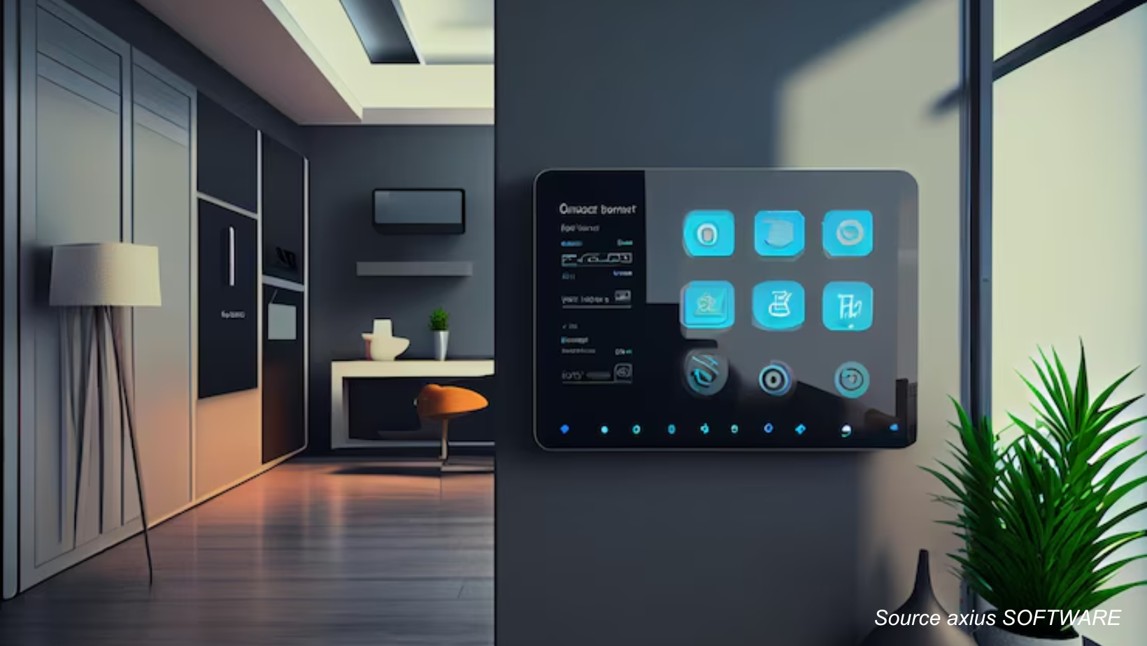
The Asia-Pacific smart home industry is entering a new phase driven not just by devices or apps, but by the rapid expansion of fibre broadband and 5G networks. As connectivity becomes cheaper, faster, and more reliable across the region, telecom operators are moving beyond basic internet plans to become full-stack smart-home service providers. From security and automation bundles to integrated hubs and AI-enabled home services, ISPs are now central gatekeepers shaping customer acquisition, device interoperability, and monthly recurring revenue.
According to Next Move Strategy Consulting, the Asia-Pacific Smart Home Market size was valued at USD 46.61 million in 2024, and is expected to be valued at USD 61.04 million by the end of 2025. The industry is projected to grow, hitting USD 178.01 million by 2030, with a CAGR of 23.9% between 2025 and 2030.
Curious about the Asia-Pacific Smart Home Market? Download FREE Sample Now!
According to recent industry analyses, the smart home market in the APAC continues to expand at double-digit growth rates, supported by aggressive broadband rollouts in India, Indonesia, Vietnam, South Korea, Japan, and Australia, as well as rising smart-device penetration across urban households. In this blog, we explore how next-generation connectivity, high-bandwidth infrastructure, and operator-led platforms are reshaping APAC’s smart home landscape.
Today, high-speed fibre networks, 5G Fixed Wireless Access (FWA), cloud-AI automation, multi-protocol routers, and emerging standards like Matter and Thread are redefining the capabilities of connected homes. From security and energy optimisation to whole-home automation and smart appliances, the region is witnessing a structural shift where telecom operators are becoming the new gatekeepers of the smart-home economy.

Fiber and 5G are Emerging as the Digital Backbone Powering APAC’s Smart-Home Ecosystems
If smart homes were previously limited by Wi-Fi congestion, router bottlenecks, and unreliable broadband, APAC’s new fiber and 5G networks are removing those constraints entirely. The region is now home to some of the world’s fastest fixed networks and densest 5G deployments, creating an ideal environment for high-bandwidth home ecosystems.
Fiber-to-the-Home (FTTH) networks deliver symmetrical gigabit speeds, enabling households to run dozens of devices like cameras, sensors, voice assistants, and smart appliances simultaneously without compromise. Meanwhile, 5G FWA bridges connectivity gaps in suburban and rural areas, offering fiber-like speeds where physical cables cannot reach. This expanded coverage increases the total addressable market for connected devices and services across Asia-Pacific.
Countries such as South Korea, Japan, China, Singapore, and Australia lead in gigabit fiber penetration, while giants like India are experiencing rapid fiber and 5G rollout through operators like Jio and Airtel. This foundation is reshaping what smart homes can achieve, that is, always-on surveillance, multiroom streaming, cloud-assisted AI, VR-enabled fitness, and advanced energy monitoring all rely on the low-latency, high-bandwidth infrastructure now widespread across APAC. The connectivity layer has evolved from a utility into the core enabler of home automation innovation.
Why Telecom Operators are Becoming the Gatekeepers of APAC’s Smart Home Ecosystem
Telecom companies occupy a uniquely powerful position in the Asia-Pacific. They control the household gateway, broadband subscription, mobile ecosystem, and increasingly, the smart-home interface itself. With the evolution of router capabilities, ISPs are embedding Zigbee, Z-Wave, Thread, Bluetooth LE, and the Matter protocol directly into their consumer gateways. This transforms a simple router into a comprehensive smart-home controller.
Instead of consumers juggling multiple apps, hubs, and device brands, operator-managed ecosystems deliver a unified setup flow, a single billing relationship, and centralised after-sales support. For first-time users, this dramatically simplifies adoption. For operators, it cements their role as the orchestrator of the entire smart-home environment. Some examples include Singtel’s HomeHub+ ecosystem, Telstra’s Smart Modem and Smart Home packages, Reliance Jio’s JioFiber and Jio Home services, and NTT Docomo’s IoT-enabled-home offerings.
Across APAC, operators are preloading their gateways with device controls, security dashboards, and automated routines. As a result, telecom providers have stepped into the role previously held by Big Tech and standalone device brands. They are now dictating the flow of services, preferred device partners, and bundled offerings.

Operator Bundling Strategies are Reshaping How ISPs Redefine the Connected Home
Asia-Pacific operators are not merely selling connectivity, they are bundling it with curated devices and cloud services that transform traditional broadband plans into lifestyle ecosystems. Security bundles include AI-enabled cameras, door sensors, and cloud storage.
Energy bundles integrate smart plugs, meters, and appliance monitoring dashboards. Convenience bundles combine lighting automation, voice assistants, and smart switches. These packages reduce consumer friction by offering professional installation, device financing, and seamless app integration. Instead of researching dozens of brands online, customers select a ready-made ecosystem tailored to their household needs.
Notable examples include:
-
Telstra Smart Home kits that combine connectivity with security and automation features.
-
Singtel’s SmartHome platform, which integrates both operator-selected devices and third-party Matter-enabled products.
-
Airtel Xsafe security ecosystem in India, combining broadband, cloud storage, and AI-enabled cameras.
-
Jio’s Smart Home Starter Kits, which bundle smart bulbs, cameras, and sensors with JioFiber plans.
These strategies illustrate how operators are shifting from connectivity providers to end-to-end lifestyle service providers, accelerating smart-home penetration across Asia-Pacific’s diverse markets.
Monetization Models Reshaping APAC’s Smart Home Market
As smart homes evolve into service-first ecosystems, operators are creating new recurrent revenue streams beyond device sales. The most common monetization models include subscription-based security services, cloud video storage, energy management dashboards, device leasing or financing, and premium technical support. Through device financing, households can access high-end smart-home products with minimal upfront cost, widening adoption among emerging middle-class consumers in India, Indonesia, and the Philippines.
Meanwhile, subscription services provide operators with predictable monthly revenue, boosting ARPU and reducing churn. As more devices become interoperable through the Matter standard, operators can grow revenue even further by integrating third-party device ecosystems into their service bundle.
This shift mirrors the broader APAC trend of turning telecom companies into digital service providers. The smart home is no longer a one-time hardware purchase, it has become a recurring-service economy where connectivity, cloud intelligence, and household automation merge into a monthly subscription model.
Consumer Trends Fueling Operator-Led Smart Home Growth
APAC consumers increasingly prefer simplicity, trusted brands, and turnkey ecosystems. In rapidly urbanizing regions, particularly India, Vietnam, and Southeast Asia, first-time buyers often find the smart-home market overwhelming. Operators step in as dependable curators, offering vetted devices, professional installation, and guaranteed compatibility. As smart security becomes a priority in densely populated cities, demand for AI-enabled cameras, intrusion alerts, and cloud monitoring is rising sharply.
Furthermore, the region’s tech-savvy Gen Z and millennial households are driving strong adoption of voice assistants, automated routines, and connected appliances. In countries like Japan and South Korea, on-device AI and energy optimisation are key growth drivers, aligning with national sustainability goals. These consumer shifts converge perfectly with operator-led models, enabling carriers to scale smart-home adoption across both premium and mass-market segments.
Strategic Company Developments Accelerating the Asia-Pacific Smart Home Market Demand
Several major technology and appliance companies are shaping the next growth phase in APAC through AI-enabled innovation, platform integration, and operator partnerships.
-
Samsung has launched its AI Home: Future Living, Now ecosystem in India and other APAC markets, integrating SmartThings with AI cameras, appliances, and multi-device routines.
-
Xiaomi has expanded its global smart-appliance lineup, bringing its Mijia ecosystem, complete with AIoT-connected appliances into multiple Asia-Pacific markets.
-
Huawei continues to push HarmonyOS as a unified cross-device platform with smart-home capabilities, supported by routers that act as multi-protocol hubs.
-
Panasonic, LG, Haier, and TCL are integrating AI and IoT across home appliances, making them compatible with operator-led ecosystems and platform standards like Matter.
These developments provide telecom operators with a broader catalogue of compatible, AI-enabled devices to incorporate into smart-home bundles, strengthening the region’s integrated smart-living strategy.
A Complete Outlook on the Future of Connected Living in APAC
The Asia-Pacific smart home market trends is entering a defining phase where ultrafast fiber networks, 5G coverage, and interoperable ecosystems converge to create a truly intelligent living environment. Telecom operators, once mere connectivity providers, are becoming platform owners, ecosystem orchestrators, and service innovators. Their control over the home gateway, customer relationship, and bundled services gives them unprecedented influence over how the region’s smart-home landscape evolves.
With AI-driven appliances, Matter-enabled interoperability, cloud automation, and emerging energy-management systems, the next chapter of APAC smart homes will be deeply integrated, highly personalized, and increasingly operator-managed. The future of connected living in Asia-Pacific is not just smart, it is becoming seamless, scalable, and service-driven, powered by the region’s most transformative infrastructure upgrades in decades.
About the Author
 Mayurima Roy
— Mayurima Roy is Research Analyst at Next Move Strategy Consulting, where she has spent 4 years working across the firm's full industry coverage rather than a single fixed vertical. Her work centers on structured research, ongoing trend tracking, competitive assessment, and insight-led content development, translating complex market data into clear, decision-ready narratives that support informed client decision-making across diverse global industries, market sectors, and world regions every day.
Mayurima Roy
— Mayurima Roy is Research Analyst at Next Move Strategy Consulting, where she has spent 4 years working across the firm's full industry coverage rather than a single fixed vertical. Her work centers on structured research, ongoing trend tracking, competitive assessment, and insight-led content development, translating complex market data into clear, decision-ready narratives that support informed client decision-making across diverse global industries, market sectors, and world regions every day.
About the Reviewer
 Supradip Baul
— Supradip Baul is an accomplished business consultant and strategist with over a decade of rich experience in market intelligence, strategy, technology, and business transformation. His work has included rigorous qualitative and quantitative analysis across multiple industries, helping clients shape investment decisions and long-term roadmaps. Earlier in his career, he was associated with Gartner, where he contributed to industry-leading reports and market share analyses. He has worked with leading global companies and holds an MBA with a dual specialization in Marketing and Finance.
Supradip Baul
— Supradip Baul is an accomplished business consultant and strategist with over a decade of rich experience in market intelligence, strategy, technology, and business transformation. His work has included rigorous qualitative and quantitative analysis across multiple industries, helping clients shape investment decisions and long-term roadmaps. Earlier in his career, he was associated with Gartner, where he contributed to industry-leading reports and market share analyses. He has worked with leading global companies and holds an MBA with a dual specialization in Marketing and Finance.


















Add Comment