How Is Elevator Advertising Transforming Urban Consumer Engagement?
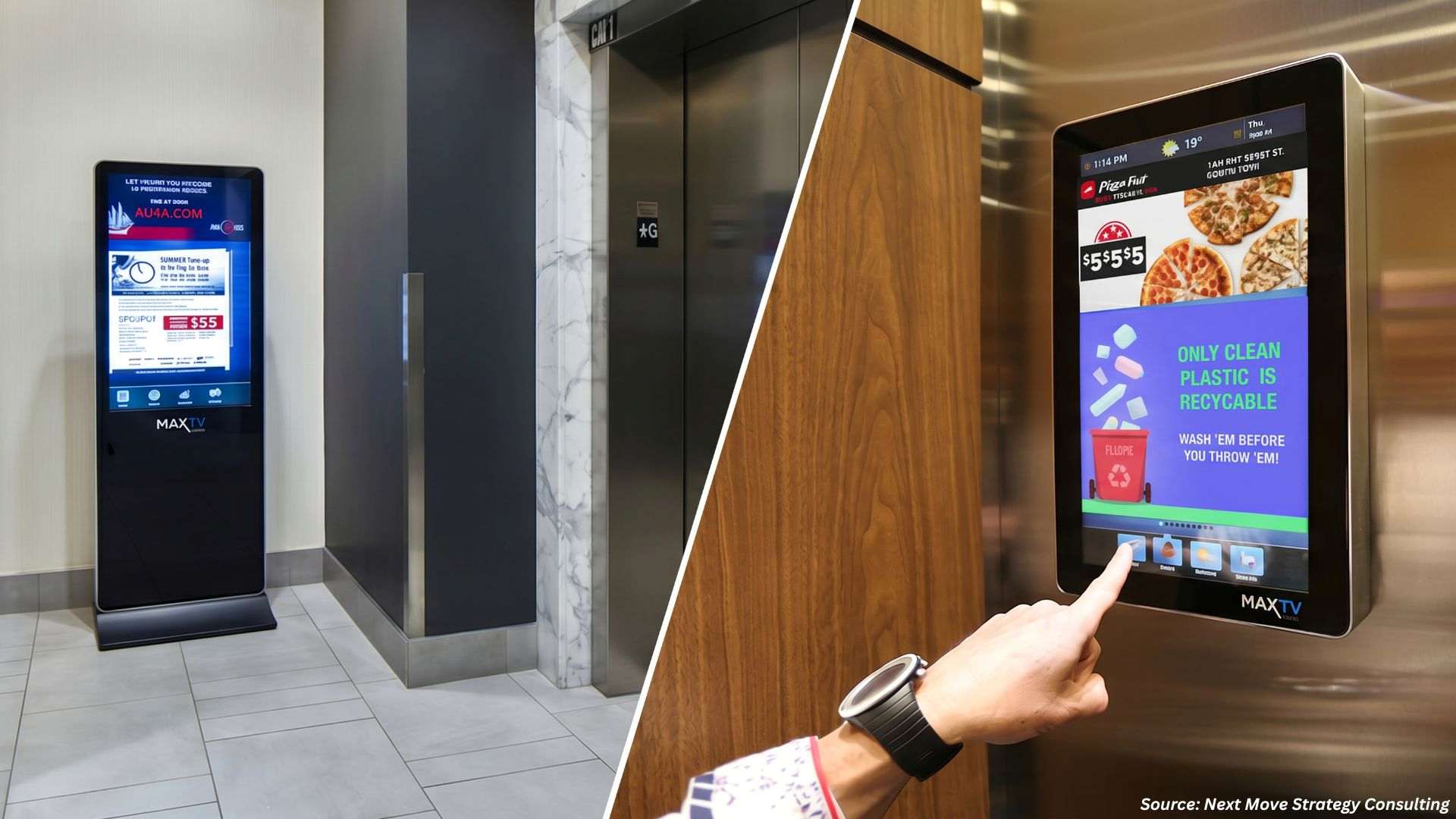
As cities become more digitally connected and densely populated, brands are rethinking how they capture consumer attention. Traditional advertising channels often compete with endless distractions, especially across mobile and online platforms. The Elevator Advertising Market, however, is emerging as a highly focused communication channel where audiences encounter messages in enclosed and distraction-free environments.
Why Is Elevator Advertising Becoming More Influential?
One of the strongest advantages of elevator advertising is audience concentration. Unlike social media or television advertisements, elevator screens reach viewers in a confined setting where there are limited competing stimuli. This repeated exposure improves message recall and strengthens brand recognition.
At the “Leading a New Era of Advertising: Building Elevator Digital Media” forum organized by MMA Global and Chicilon Media in Ho Chi Minh City in 2024, industry experts highlighted the growing effectiveness of digital elevator media. According to the discussions presented at the forum, residents and office workers are exposed to approximately 39–52 elevator advertisements every day.
Experts at the event explained that elevator advertising delivers stronger engagement because consumers encounter advertisements repeatedly while entering and exiting buildings throughout the day. This creates a consistent visual memory that is difficult to achieve through fragmented online channels.
The advertising format is also gaining popularity because it reaches premium urban audiences. Digital elevator media is commonly installed in residential towers, office complexes, and commercial properties where high-income consumers spend significant time daily.
Major Developments in Elevator Advertising
|
Company |
Recent Development |
Strategic Focus |
|
Screenverse |
Expanded network to |
Programmatic DOOH |
|
Vertical Impression |
Upgraded AVA analytics |
Audience engagement |
|
Focus Media |
Announced USD1.1 billion |
Residential elevator |
|
Schindler India |
Renewed partnership |
Elevator-based brand |
|
HYGH |
Expanded smart |
Digital content delivery |
How Are Digital Screens Enhancing Elevator Advertising?
The rise of digital infrastructure is significantly reshaping the elevator advertising ecosystem. Modern elevator campaigns now rely heavily on digital displays with high-quality visuals and audio integration to create stronger consumer engagement.
According to insights shared during the Vietnam industry forum, digital elevator media performs more effectively than traditional outdoor billboards or television advertisements because viewers remain focused inside elevators. The enclosed setting naturally increases attention levels and improves message retention.
Phan Bích Tâm, Country Director of MMA Global Vietnam, Cambodia, and Myanmar, stated that elevator media creates “unique and interactive customer experiences” because advertisements are delivered in close and memorable environments.
Industry professionals also emphasized that elevator advertising benefits from uninterrupted viewing. Unlike online advertisements that users can skip or scroll past, elevator media keeps audiences focused for the duration of the ride.
Nghĩa Phan, Co-Sales Director for Chicilon Media’s Southern region, noted that elevator viewers cannot switch away from advertisements or open alternative content, which significantly increases campaign effectiveness.
This uninterrupted attention is becoming increasingly valuable as brands struggle with declining engagement rates across digital platforms.
The transition from static posters to digital formats is making elevator advertising more dynamic and measurable.
Emerging Trends in Elevator Advertising
|
Trend |
Industry Impact |
|
AI-Based Campaign Optimization |
Improves targeting and content personalization |
|
Smart Infrastructure Integration |
Enhances digital advertising efficiency |
|
Growth of DOOH Advertising |
Expands investment in digital urban media |
|
Urbanization and High-Rise Development |
Creates more advertising installation opportunities |
|
Programmatic Advertising Adoption |
Enables automated campaign management |
What Does China’s USD1.1 Billion Acquisition Indicate About Market Confidence?
A major industry development occurred in April 2025 when Focus Media Information Technology announced plans to acquire Xinchao Media Group for approximately USD1.1 billion.
According to Yicai Global, the acquisition is designed to strengthen Focus Media’s presence in residential elevator advertising while expanding its urban media coverage.
Focus Media already operates one of China’s largest outdoor advertising networks across shopping malls, commercial buildings, and cinemas. Xinchao, meanwhile, specializes in residential elevator advertising through digital screen installations in apartment communities.
The transaction demonstrates how valuable elevator advertising assets have become in urban media strategies. According to the China Advertising Association report referenced by Yicai Global, Focus Media held 14.5% of China’s outdoor advertising market in 2024, while Xinchao accounted for 2.7%.
The acquisition also reflects growing industry consolidation as companies seek broader control over urban advertising networks and premium advertising locations.
Major Trends Shaping the Present
Urbanization remains one of the biggest growth drivers for elevator advertising. As more high-rise residential and office developments emerge across Asian cities, advertisers gain access to concentrated audiences through elevator media networks.
Industry experts at the Vietnam forum also emphasized the role of artificial intelligence and data analytics in improving campaign efficiency. These technologies are expected to support personalized advertising delivery, optimized broadcast scheduling, and better audience measurement capabilities.
Another important trend is the expansion of digital out-of-home advertising investment. Information presented at the forum indicated that DOOH advertising spending across Asia is projected to grow by 34% by 2027.
As consumers become increasingly familiar with digital advertising formats, elevator media is expected to gain stronger acceptance among advertisers seeking measurable urban engagement.
How Can Brands Improve Elevator Advertising Performance?
Experts participating in the Vietnam forum explained that successful elevator advertising campaigns often rely on short, visually engaging content that can quickly capture attention during brief elevator rides.
Campaign effectiveness improves when advertisements are placed in buildings with consistent foot traffic and aligned consumer demographics. Residential towers and office complexes remain especially valuable because of repeated daily exposure.
Brands are also increasingly integrating digital analytics to evaluate campaign performance and optimize advertising schedules based on audience behavior patterns.
Understanding the Key Drivers of Elevator Advertising Growth (2024–2025)
The pie chart highlights the major factors contributing to the rapid growth of elevator advertising across urban markets in 2024 and 2025. The largest share, accounting for 35%, is driven by High Recall & Engagement, showing that brands value elevator media because audiences view advertisements in distraction-free environments, leading to stronger message retention.
The second-largest segment, Urban High-Rise Growth (25%), reflects the increasing number of residential towers, office buildings, and mixed-use developments that are expanding advertising opportunities through elevator digital screens.
Both DOOH Market Expansion and AI & Smart Analytics Integration contribute 20% each. The rise of digital out-of-home advertising investments across Asia is accelerating the adoption of elevator media, while artificial intelligence and analytics technologies are helping advertisers personalize campaigns and improve audience targeting.

Smart Technology and Partnerships Intensify Market Competition
Leading companies such as Screenverse, Vertical Impression, Focus Media Holding Ltd, Captivate, and Schindler India Pvt. Ltd are expanding their elevator advertising networks through technology upgrades and strategic partnerships. Screenverse recently scaled its programmatic DOOH network to over 100,000 screens across 210 U.S. markets, while Vertical Impression enhanced audience analytics through its AVA technology. Meanwhile, Schindler India strengthened its elevator-based advertising initiatives through its renewed collaboration with HOWL Digital. Companies including Elevision Media and HYGH are also growing through premium real estate partnerships and smart content delivery solutions.

Next Steps for Businesses Exploring Elevator Advertising
Businesses planning to expand into elevator advertising should first identify urban locations with strong daily traffic and premium audience demographics. Investment in visually optimized digital content can improve recall and engagement significantly.
Companies should also consider integrating elevator campaigns into broader digital out-of-home strategies to create stronger multi-channel visibility. As AI and analytics capabilities continue to advance, advertisers that adopt data-driven campaign planning may achieve stronger long-term performance.
-
Identify high-traffic residential and office buildings with premium urban audiences
-
Invest in short, visually engaging digital creatives optimized for quick attention spans
-
Use audience analytics and AI-driven scheduling to improve campaign targeting
-
Integrate elevator advertising into broader digital out-of-home marketing strategies
-
Measure campaign recall and engagement regularly to optimize advertising performance over time
Conclusion
Elevator advertising is rapidly evolving into one of the most effective urban engagement channels in the digital advertising landscape. The sector’s growth is being supported by urbanization, technological innovation, and increasing demand for focused consumer attention.
Recent developments in China and Vietnam demonstrate how brands and media companies are investing heavily in digital elevator networks to improve audience targeting and advertising effectiveness. With digital screens, AI integration, and high-frequency exposure becoming central to modern campaigns, elevator advertising is positioned to play a larger role in the future of urban media strategies.
About the Author
 Tania Dey
— Tania Dey is a content writer specializing in transformation-led, insight-driven storytelling. She develops research-backed, high-impact content aligned with evolving business priorities, digital behavior, and audience expectations. Her work helps organizations sharpen value propositions, strengthen visibility, and communicate strategic intent with clarity and precision. Grounded in data-informed storytelling, she brings a strong focus on relevance, consistency, and measurable digital impact across platforms.
Tania Dey
— Tania Dey is a content writer specializing in transformation-led, insight-driven storytelling. She develops research-backed, high-impact content aligned with evolving business priorities, digital behavior, and audience expectations. Her work helps organizations sharpen value propositions, strengthen visibility, and communicate strategic intent with clarity and precision. Grounded in data-informed storytelling, she brings a strong focus on relevance, consistency, and measurable digital impact across platforms.
About the Reviewer
 Sanyukta Deb
— Sanyukta Deb is Digital Marketing Team Lead at Next Move Strategy Consulting, where she has led content strategy and technical SEO for the firm's B2B market research publications for over 2 years. Her editorial process translates NextMSC's primary and secondary research — spanning technology, industrial, and consumer sectors — into commercial narratives, backed by search-intent, keyword, and competitive analysis. She brings 5 years of overall experience in digital marketing and content strategy.
Sanyukta Deb
— Sanyukta Deb is Digital Marketing Team Lead at Next Move Strategy Consulting, where she has led content strategy and technical SEO for the firm's B2B market research publications for over 2 years. Her editorial process translates NextMSC's primary and secondary research — spanning technology, industrial, and consumer sectors — into commercial narratives, backed by search-intent, keyword, and competitive analysis. She brings 5 years of overall experience in digital marketing and content strategy.
















Add Comment