How Leading Urea Producers Are Reshaping Nitrogen Strategy Through Innovation and Policy Alignment?
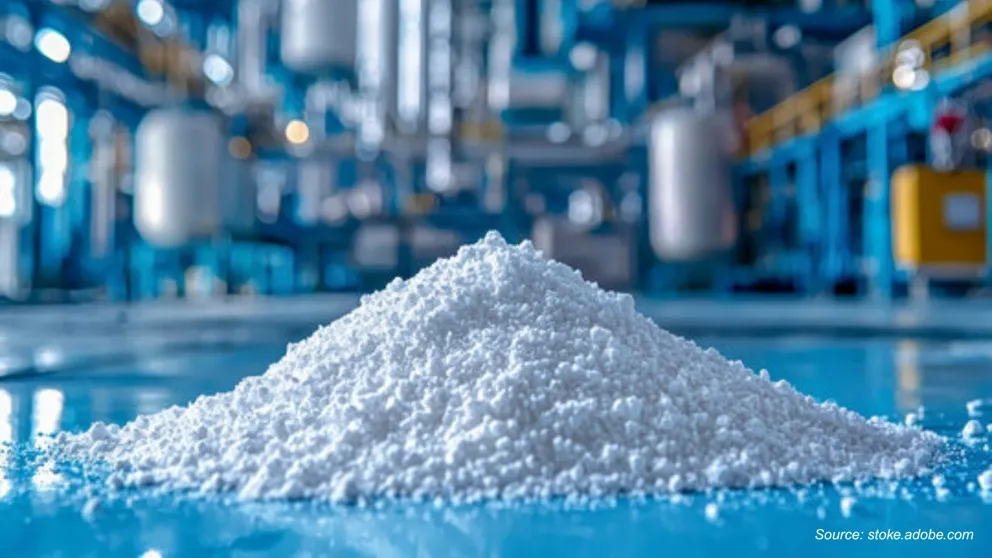
As per NMSC analysis, the Urea Market size was valued at USD 70.68 billion in 2025, and is expected to be valued at USD 78.34 billion by the end of 2026. The industry is projected to grow, hitting USD 110.23 billion by 2035, with a CAGR of 3.87% between 2026 and 2035. Based on our direct engagement with fertilizer producers, agricultural distributors, policymakers, and farming stakeholders across major crop-producing economies, we observe that the urea market evolves rapidly under the combined influence of food security priorities, energy cost volatility, and sustainability mandates. From our analysis, expanding production integration, efficiency-focused nitrogen formulations, and digitally supported agronomy systems enable producers and agricultural stakeholders to optimize nutrient management, stabilize yields, and manage input cost exposure. At the same time, increasing investments in low-carbon ammonia pathways, supply chain resilience strategies, and data-driven farm advisory platforms position market participants to deliver more reliable and strategically aligned fertilizer solutions. Consequently, this convergence of production innovation, policy alignment, and agronomic intelligence strengthens global food system stability and supports sustained market progression.
For an In-depth Analysis of the Urea Industry, Try a FREE Sample
Urea Market Overview
From our direct engagements with producers, distributors, energy suppliers, and agricultural stakeholders worldwide, we observe that the global urea market undergoes a significant structural transition, driven by rising food demand, regulatory oversight, and evolving energy economics. Growing emphasis on yield optimization, soil health management, and input efficiency encourages farmers, cooperatives, and industrial stakeholders to adopt more structured nitrogen management approaches. Simultaneously, policy-driven subsidy frameworks, trade governance mechanisms, and decarbonization initiatives accelerate strategic realignment across both emerging and developed agricultural economies.
We observe that the shift toward performance-oriented and sustainability-aligned organic fertilizer systems broadens market sophistication. Integrated ammonia production, enhanced-efficiency urea variants, digital soil analytics, and advisory-supported distribution models enable producers and agricultural stakeholders to streamline procurement strategies, improve nutrient-use efficiency, and strengthen long-term productivity outcomes. Moreover, as energy suppliers and regulatory stakeholders influence feedstock planning and emission standards, the market increasingly reflects coordinated decision-making across industrial and agricultural ecosystems, reinforcing its evolution toward a more resilient and strategically managed nitrogen infrastructure.
Key global players shaping the urea market include EuroChem Group, PETRONAS Chemicals Group Berhad, CF Industries Holdings Inc., Yara International, Hubei Yihua Group, Saudi Basic Industries Corporation, OCI N.V., PT Pupuk Indonesia, Nutrien Ltd., Uralchem JSC, Chambal Fertilisers and Chemicals Limited, Engro Fertilizers Limited, China BlueChemical Ltd, Qatar Fertiliser Company, CVR Partners, LP, Mangalore Chemicals and Fertilizers Ltd, Koch Fertilizer, LLC, Coromandel International Limited, PhosAgro PJSC, and Dyno Nobel. From our engagements, we observe these companies driving innovation through feedstock integration, energy optimization, low-carbon ammonia investments, localized distribution strategies, and digitally enabled agronomic advisory platforms. By investing in capacity modernization, emission reduction technologies, operational efficiency enhancements, and region-specific supply models, they address input cost volatility, regulatory compliance, and nutrient-use efficiency across agricultural ecosystems.
In our observation, these market leaders guide the urea industry toward its next structural evolution, where nitrogen production becomes increasingly integrated, sustainability-aligned, and strategically embedded within national food security and industrial policy frameworks. As production efficiency, carbon accountability, and supply chain resilience gain priority, the competitive landscape progressively redefines productivity, cost competitiveness, and long-term agricultural sustainability across global markets.

Highlights of Eurochem Group
EuroChem Group, headquartered in Zug, Switzerland, is a leading global producer in the urea market, offering an integrated portfolio spanning ammonia production, granular and prilled urea, and downstream nitrogen-based fertilizer solutions. Through continuous investment in feedstock integration, large-scale production assets, and logistics infrastructure, EuroChem has transformed traditional fertilizer supply models into vertically integrated, efficiency-driven ecosystems that enhance supply security and cost competitiveness. Its broad international footprint, supported by production facilities, distribution terminals, and regional partnerships across Europe, Asia, and the Americas, enables the company to serve agricultural stakeholders and industrial customers across diverse markets.
In late 2025, we observed a material strengthening of EuroChem’s regulatory position when the Court of Justice of the European Union confirmed that the company is not subject to EU restrictive measures, removing compliance uncertainty around cross-border trade and financial transactions. In our assessment, this clarity is particularly significant for the global urea market, where buyers prioritize legally secure and uninterrupted supply relationships. Additionally, Usolskiy Potash reaffirmed its ISO compliance in October 2025, demonstrating continued adherence to internationally recognized operational standards. Collectively, these developments enhance EuroChem’s credibility, reinforce supply reliability, and support its competitive positioning in nitrogen fertilizers.
Highlights of Petronas Chemicals Group
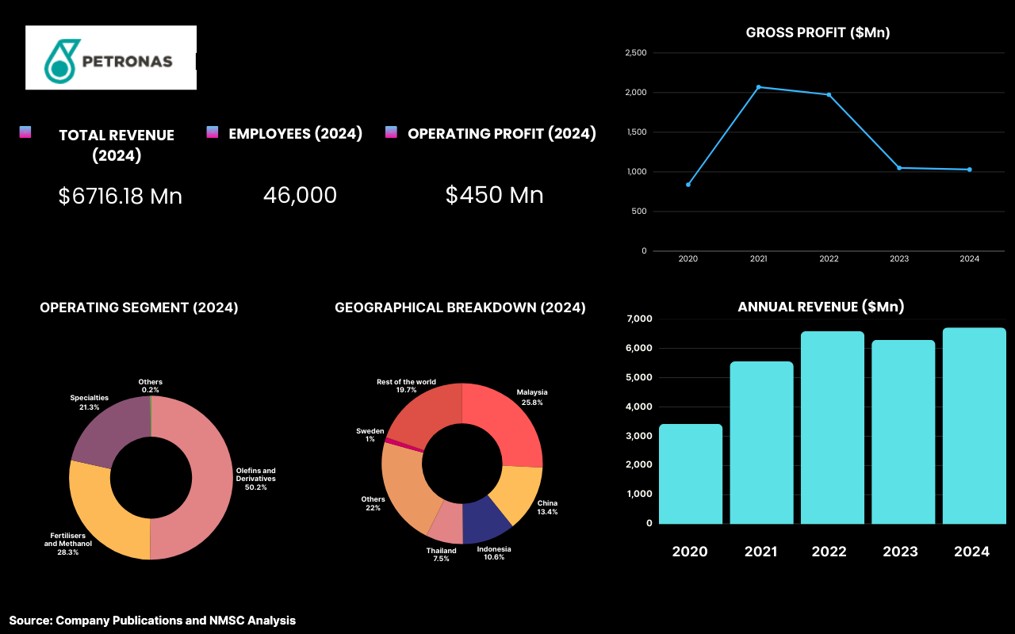
PETRONAS Chemicals Group Berhad, headquartered in Kuala Lumpur, Malaysia, is a prominent global player in the urea market, leveraging its strong upstream energy integration to produce ammonia and urea products for agricultural and industrial stakeholders worldwide. By aligning feedstock access with advanced chemical processing capabilities, the company has strengthened its position within global nitrogen supply chains, supporting efficient, large-scale fertilizer production. Its strategic geographic presence in Southeast Asia, combined with export capabilities and established distribution networks, enables it to serve regional farming communities and international markets effectively.
In 2025, PCG is advancing its circular economy strategy through the development of its first advanced plastic recycling facility in Malaysia, in collaboration with ExxonMobil, with operations targeted to reach maturity in 2025. The facility is designed to convert plastic waste into circular feedstock for integration within PCG’s existing petrochemical value chain, strengthening supply security and reducing reliance on virgin fossil-based inputs. From our assessment, this initiative enhances PCG’s operational resilience and sustainability positioning, while indirectly supporting competitiveness in the Urea Market by improving overall cost discipline, feedstock flexibility, and long-term strategic stability across its integrated nitrogen and petrochemical portfolio in Asia-Pacific.
Highlights of CF Industries Holdings Inc.
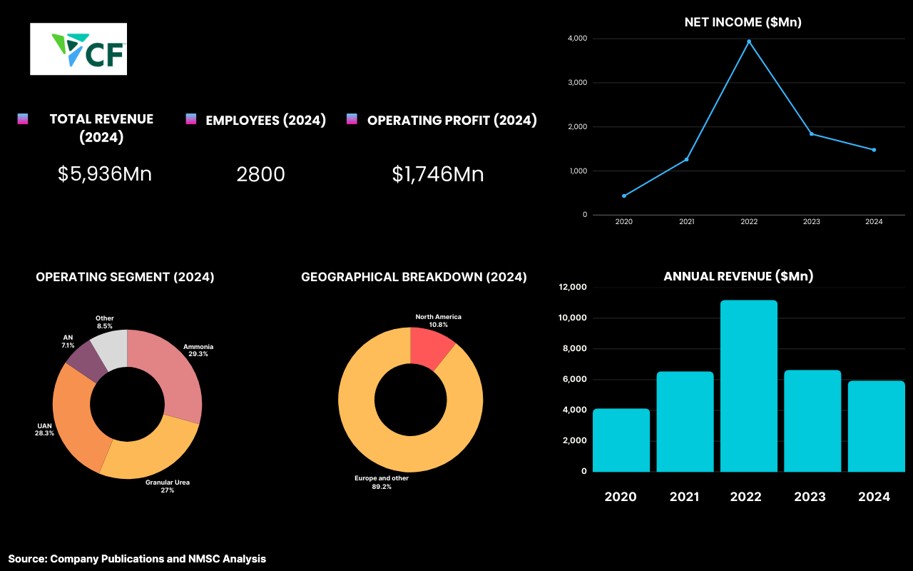
CF Industries Holdings Inc., headquartered in Illinois, United States, is a leading global nitrogen fertilizer producer with a strong presence in ammonia and urea manufacturing. By combining large-scale production facilities with strategic distribution networks across North America and international export markets, CF Industries supports agricultural stakeholders with consistent nitrogen supply and operational reliability. Its integrated production model and advanced manufacturing systems enable efficient output while maintaining competitive cost structures in energy-sensitive environments.
In 2025 and early 2026, CF Industries has pursued strategic initiatives that align with evolving market demands and sustainability trends, including a major joint venture with JERA Co., Inc. and Mitsui & Co., Ltd. to build what is expected to be the world’s largest low-carbon ammonia production facility at its Blue Point Complex, enhancing long-term competitive positioning in nitrogen products while responding to decarbonization expectations and potentially influencing demand dynamics in the Urea market by enabling lower-carbon fertilizer feedstocks. The company also has collaborated with POET and leading agriculture cooperatives on a low-carbon fertilizer pilot to integrate reduced-intensity ammonia into farming supply chains, a development likely to support broader adoption of sustainable nitrogen solutions and strengthen CF Industries’ market strategy as environmental considerations reshape fertilizer demand.
Highlights of Yara International
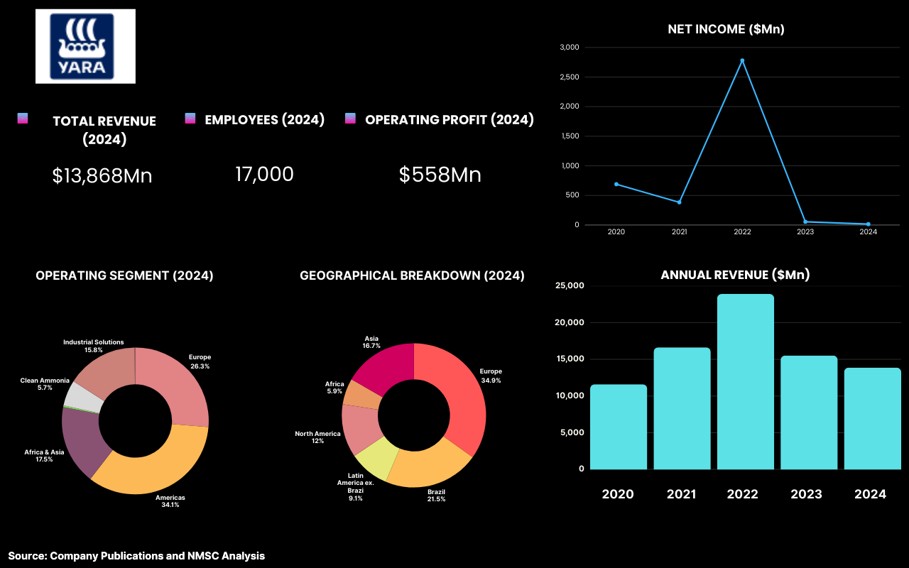
Yara International, headquartered in Oslo, Norway, is a globally recognized leader in nitrogen-based fertilizers, including urea and ammonia solutions tailored for agricultural stakeholders worldwide. By integrating advanced production technologies with digital agronomy platforms, Yara has transformed conventional fertilizer distribution into data-driven nutrient management ecosystems. Its extensive international footprint, supported by production assets, logistics infrastructure, and advisory networks, enables the company to serve farmers, cooperatives, and industrial stakeholders across Europe, the Americas, Asia-Pacific, and Africa.
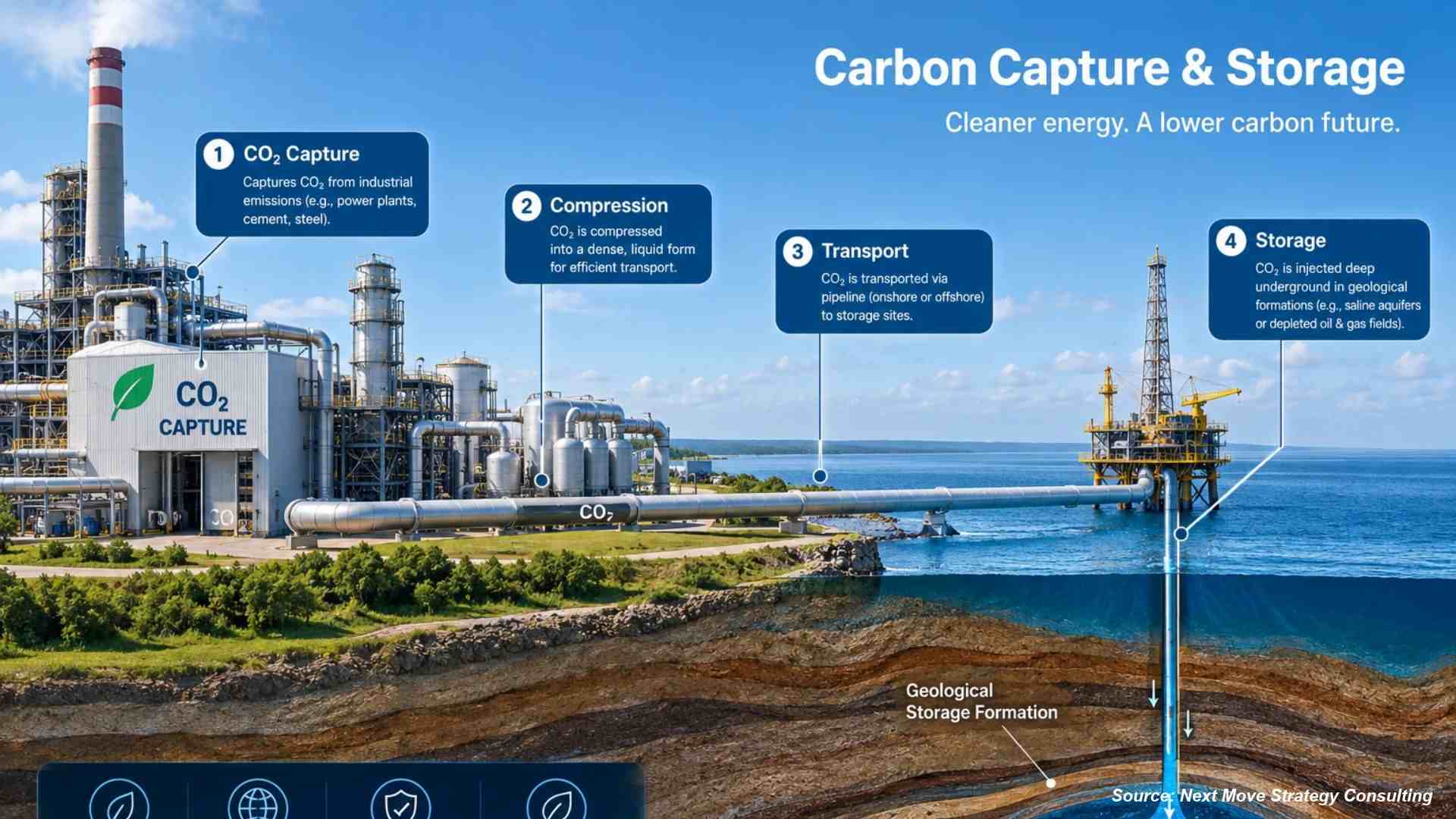
In January 2026, Yara convened its Capital Markets Day and presented a clearly articulated strategy centered on low-emission ammonia, disciplined capital allocation, and asset optimization to deliver resilient earnings through 2030. Management emphasized operational efficiency, decarbonization investments, and portfolio prioritization as core levers to strengthen long-term competitiveness. A pivotal 2026 milestone is the planned commissioning of carbon capture and storage (CCS) at the Sluiskil ammonia plant in the Netherlands, enabling the production of lower-carbon nitrogen products. This development reinforces Yara’s position in the Urea Market by aligning its supply chain with evolving European carbon regulations, including the Carbon Border Adjustment Mechanism, thereby supporting margin resilience and market access.
Highlights of Hubei Yihua Group
Hubei Yihua Group, headquartered in Yichang, China, is a significant participant in the global urea market, operating integrated ammonia and nitrogen fertilizer production facilities that support both domestic agricultural stakeholders and export markets. By leveraging large-scale manufacturing capacity and regional supply chain networks, Hubei Yihua strengthens China’s nitrogen production ecosystem while contributing to global trade flows. Its operational footprint enables it to meet the needs of farmers, distributors, and industrial stakeholders across Asia and beyond.
In 2025, the company’s synthetic ammonia intelligent factory project was officially recognized as a national-level intelligent manufacturing benchmark, reflecting verified progress in digital integration, automation, and process optimization. Because synthetic ammonia is a primary upstream input for urea production, this development strengthens production stability, energy efficiency, and cost control across its nitrogen fertilizer operations. In our assessment, this advancement reinforces the company’s competitiveness within the urea market by improving operational resilience, enhancing margin management in volatile pricing environments, and supporting long-term strategic positioning in large-scale fertilizer manufacturing..
Summary of Urea Market
Based on our direct engagement with fertilizer producers, agricultural cooperatives, policymakers, energy suppliers, and farming stakeholders worldwide, we observe that the global urea market is undergoing a structural transformation driven by rising food security priorities, energy market volatility, and increasing environmental accountability. Traditional volume-driven fertilizer trade models are evolving into strategically managed nitrogen supply systems aligned with national productivity goals and sustainability mandates. Agricultural stakeholders across cereals, oilseeds, and horticulture increasingly depend on stable and efficient urea supply to optimize nutrient management, enhance yield predictability, and improve long-term soil performance.
Our analysis indicates that advancements in production efficiency, feedstock integration, low-carbon ammonia development, and digital agronomy tools are reshaping market dynamics by enabling cost optimization, emissions management, and data-driven nutrient deployment. Modern production systems integrate energy-efficient technologies, carbon mitigation frameworks, and traceability mechanisms, helping stakeholders navigate regulatory pressures and supply chain volatility. Cost competitiveness, supply reliability, and nutrient-use efficiency remain top priorities. Leading companies respond through capacity modernization, sustainability investments, and region-specific distribution strategies, positioning the urea market as a policy-sensitive and productivity-driven pillar of the global agricultural ecosystem.
About the Author
 Sanyukta Deb
— Sanyukta Deb is Digital Marketing Team Lead at Next Move Strategy Consulting, where she has led content strategy and technical SEO for the firm's B2B market research publications for over 2 years. Her editorial process translates NextMSC's primary and secondary research — spanning technology, industrial, and consumer sectors — into commercial narratives, backed by search-intent, keyword, and competitive analysis. She brings 5 years of overall experience in digital marketing and content strategy.
Sanyukta Deb
— Sanyukta Deb is Digital Marketing Team Lead at Next Move Strategy Consulting, where she has led content strategy and technical SEO for the firm's B2B market research publications for over 2 years. Her editorial process translates NextMSC's primary and secondary research — spanning technology, industrial, and consumer sectors — into commercial narratives, backed by search-intent, keyword, and competitive analysis. She brings 5 years of overall experience in digital marketing and content strategy.
About the Reviewer
 Debashree Dey
— Debashree Dey is Assistant Manager at Next Move Strategy Consulting, where she supports cross-vertical market content and communications across diverse industries for 6 years. Her professional background includes senior content writing, communications, and published manuscript authorship, with experience developing audience-focused business narratives and maintaining clear, consistent messaging. Her role supports research-led content development and editorial quality across NextMSC publications.
Debashree Dey
— Debashree Dey is Assistant Manager at Next Move Strategy Consulting, where she supports cross-vertical market content and communications across diverse industries for 6 years. Her professional background includes senior content writing, communications, and published manuscript authorship, with experience developing audience-focused business narratives and maintaining clear, consistent messaging. Her role supports research-led content development and editorial quality across NextMSC publications.

















Add Comment