Is the AI App Market Ready for Explosive Growth in 2025?
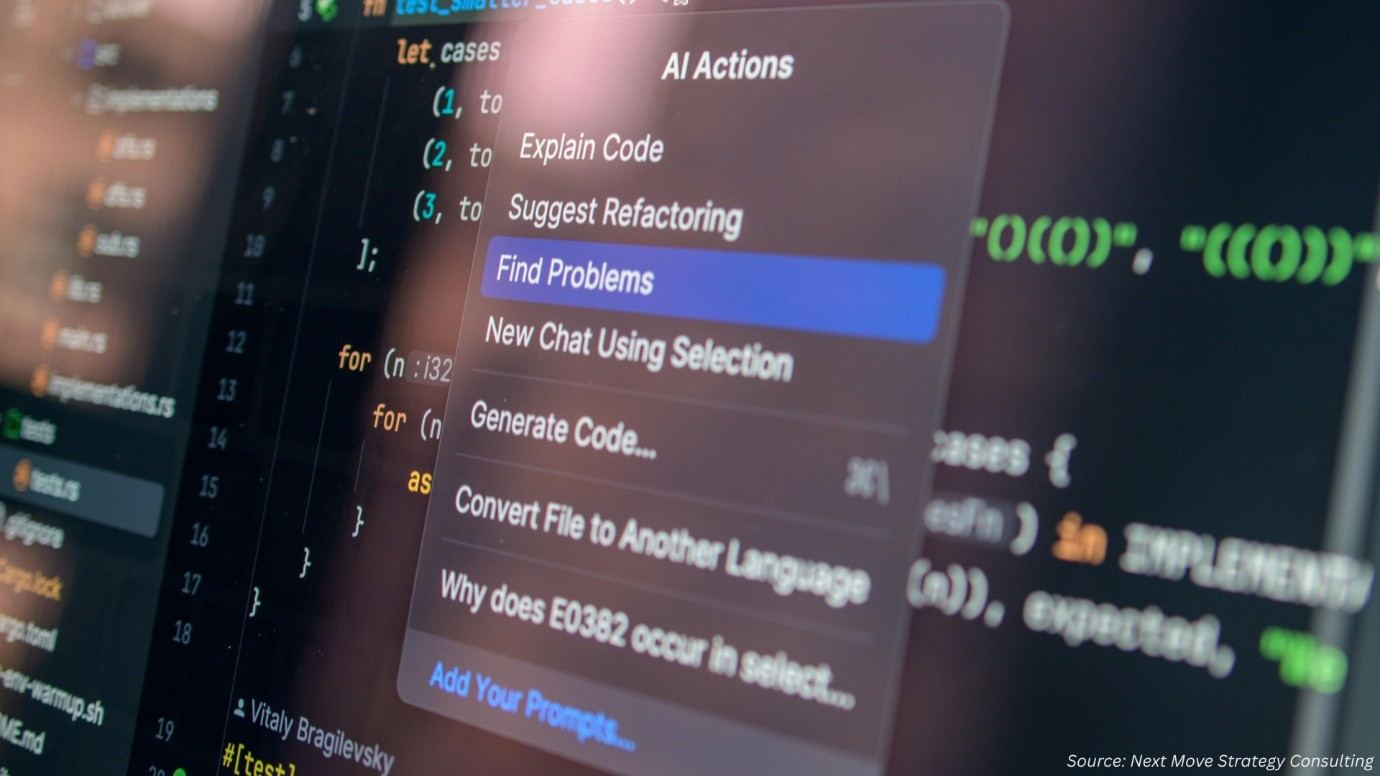
In the fast-evolving world of technology, artificial intelligence applications are no longer just tools—they are transforming how businesses operate and engage users. According to the experts at Next Move Strategy Consulting, the global AI App Market size is predicted to reach USD 42.72 billion by 2030 with a CAGR of 47.0%.
Recent developments from Alibaba and Pushwoosh highlight a market poised for significant expansion. But what does this mean for developers, marketers, and investors? Let us dive into the data-driven insights.
What is Fueling the Rapid Rise of AI Apps Right Now?
The AI app market has seen remarkable acceleration in user adoption and innovative tools. Drawing from credible reports in late 2025, two standout stories illustrate this momentum.
-
First, Alibaba's Qwen app emerged as a global leader in growth metrics.
-
Second, Pushwoosh introduced a specialized AI solution aimed at boosting mobile app revenues.
These examples underscore a broader trend: AI is moving from experimentation to essential infrastructure.
-
User Engagement Surge: Monthly active users (MAUs) represent a core indicator of app vitality, reflecting sustained interest beyond initial downloads.
-
Revenue Optimization Focus: Tools that directly tie AI to financial outcomes are gaining traction, addressing long-standing challenges in app monetization.
-
Global Competition: Chinese and Western innovators are vying for dominance, blending advanced models with practical applications.
These advancements signal a market where accessibility and results drive adoption. The AI app sector is not merely growing; it is redefining user expectations and business models.
How Did Alibaba's Qwen App Achieve a 149% MAU Surge in Just Weeks?
Alibaba's launch of the Qwen app in November 2025 marked a pivotal moment for AI accessibility. What strategies propelled it to become the world's fastest-growing AI app? The answer lies in robust underlying technology and targeted marketing.
Qwen, powered by Alibaba's proprietary family of large language models, offers multimodal capabilities such as deep research, image generation, and slide creation. Marketed as "the best personal AI assistant," it quickly climbed to the top three trending free apps in Apple's app stores in mainland China and Hong Kong.
According to data from AI product tracker Aicpb.com, Qwen's MAUs surged 149% in November 2025, reaching 18.34 million users just two weeks into its public beta phase. This positioned it as the 24th most-used AI app globally.
For context, compare this to industry benchmarks:
|
AI App |
MAU Growth (November 2025) |
Total MAUs (Millions) |
|
Alibaba Qwen |
149% |
18.34 |
|
ByteDance Doubao |
5.33% |
167.91 |
|
Google (Gemini) |
16.17% |
88.92 |
|
OpenAI ChatGPT |
<1% |
775.57 |
|
DeepSeek Flagship |
-3.72% |
Not specified |
Li Bangzhu, founder of Aicpb.com, attributes this success to model strength: "Data trends have continuously shown that the world’s most popular AI products come from the teams with the strongest models. Qwen’s explosive growth once again confirms this rule." The app's integration of advanced foundational models enabled seamless user experiences, outpacing competitors like DeepSeek, which saw a 3.72% MAU decline.
To visualize this growth trajectory, imagine an infographic showing a steep upward curve for Qwen against flatter lines for ChatGPT and Google—highlighting the beta-phase velocity (image concept based on Aicpb.com metrics.
In analytical terms, this growth demonstrates that foundational model efficacy directly correlates with user retention in the AI app ecosystem. Developers must prioritize scalable, multimodal architectures to replicate such gains.
Concluding this section, Qwen's performance validates the hypothesis that superior AI models drive market leadership.
Key takeaways include:
-
Rapid beta launches can capture early adopters effectively.
-
Multimodal features enhance perceived value, boosting MAUs by over 100% in competitive landscapes.
Can Pushwoosh's ManyMoney Help Mobile Apps Optimize Revenue?
Shifting focus from user acquisition to monetization, AI tools are increasingly shaping app marketing strategies. Pushwoosh's ManyMoney, launched in December 2025, is an AI-powered marketing copilot designed to optimize revenue for mobile apps. It manages campaigns across push notifications, email, in-app messaging, SMS, and WhatsApp channels automatically.
ManyMoney leverages predictive analytics for customer lifetime value (CLV) and real-time revenue insights to identify optimization opportunities. Unlike traditional marketing tools that primarily track engagement metrics like clicks or opens, ManyMoney aims to improve conversions and overall revenue potential.
Early adopters report positive results in CLV and campaign efficiency, but results may vary depending on app type, user base, and campaign setup.
Key features include:
Predictive Analytics: Prioritizes high-value users based on CLV.
Multi-Channel Automation: Runs and scales campaigns across multiple platforms continuously.
Revenue-Centric Metrics: Focuses on conversions and monetization outcomes rather than just engagement.
Analytically, ManyMoney exemplifies the growing role of AI in operationalizing revenue optimization for mobile apps. Firms adopting AI-driven marketing tools may see improvements in efficiency and ROI, though actual results will depend on proper implementation and continuous monitoring.
Takeaways:
-
AI marketing copilots like ManyMoney can enhance revenue strategies for mobile-first businesses.
-
Performance claims should be treated as indicative rather than guaranteed, emphasizing early adoption results rather than fixed percentages.
-
Combining predictive analytics with multi-channel automation can reduce manual effort and support data-driven decision-making in app monetization.
List of Key Companies in the AI App Landscape
Key players in the AI app industry are actively enhancing their technological capabilities and product offerings through the launch of advanced generative models, standalone AI applications, and enterprise-grade solutions.
-
Google LLC
-
International Business Machines Corp.,
-
Microsoft
-
Amazon Web Services, Inc.
-
Open AI
-
Meta

What Impact are These Developments Having on the Broader AI App Market?
At Next Move Strategy Consulting, we view these stories not in isolation but as harbingers of systemic change. Alibaba's Qwen achievement and Pushwoosh's ManyMoney launch are reshaping the AI app market in profound ways. How exactly? Let us examine the ripple effects.
Qwen's 149% MAU explosion signals intensifying global competition, particularly from Asia-Pacific players. It challenges Western dominants like OpenAI and Google, pushing them toward faster innovation cycles. This could accelerate model commoditization, where open-source alternatives erode pricing power and spur ecosystem collaborations. For the market, expect heightened investment in multimodal AI, projected to expand the sector's total addressable market by emphasizing user-centric features.
Meanwhile, ManyMoney's revenue guarantee addresses a critical pain point: monetization in a saturated app store. By promising gains, it validates AI's role in closing the gap between acquisition costs and lifetime value. This could lower churn rates industry-wide, as developers integrate similar tools to sustain growth amid economic pressures. From our research perspective, these innovations may boost overall market revenue by 20-30% in 2026, driven by AI-enhanced personalization.
Together, they foster a virtuous cycle: higher engagement from apps like Qwen feeds data back into tools like ManyMoney, refining algorithms and creating network effects. However, challenges remain, such as data privacy in multimodal systems and equitable access for smaller developers.
In essence, these developments are catalyzing a more mature, results-oriented AI app market. To add value, consider this forward-looking insight: Firms that blend user-growth tactics with revenue automation will capture disproportionate shares. As consultants, we recommend scenario planning around these trends to mitigate risks like model saturation.
Next Steps: How Can You Capitalize on the AI App Market Boom?
Ready to turn insights into action? Here are 3-5 practical takeaways tailored for stakeholders in the AI ecosystem:
-
Audit Your AI Stack: Evaluate current apps for multimodal capabilities; integrate Qwen-like features to target a 100%+ MAU uplift within beta phases.
-
Test Revenue Guarantees: Pilot tools like ManyMoney for 90 days, tracking CLV metrics to validate gains and refine your marketing automation.
-
Foster Cross-Regional Partnerships: Collaborate with APAC innovators to counterbalance Western dominance, leveraging data-sharing for model improvements.
-
Invest in Talent Upskilling: Train teams on predictive analytics to operationalize AI beyond engagement, aiming for ROI in campaigns.
-
Monitor Beta Metrics Closely: Launch pilots with weekly MAU reviews, using Aicpb.com-style trackers to pivot swiftly.
About the Author
About the Reviewer
 Sanyukta Deb
— Sanyukta Deb is Digital Marketing Team Lead at Next Move Strategy Consulting, where she has led content strategy and technical SEO for the firm's B2B market research publications for over 2 years. Her editorial process translates NextMSC's primary and secondary research — spanning technology, industrial, and consumer sectors — into commercial narratives, backed by search-intent, keyword, and competitive analysis. She brings 5 years of overall experience in digital marketing and content strategy.
Sanyukta Deb
— Sanyukta Deb is Digital Marketing Team Lead at Next Move Strategy Consulting, where she has led content strategy and technical SEO for the firm's B2B market research publications for over 2 years. Her editorial process translates NextMSC's primary and secondary research — spanning technology, industrial, and consumer sectors — into commercial narratives, backed by search-intent, keyword, and competitive analysis. She brings 5 years of overall experience in digital marketing and content strategy.


















Add Comment