Is the Chiplet Market Entering a New Strategic Era Driven by AI and Arm?
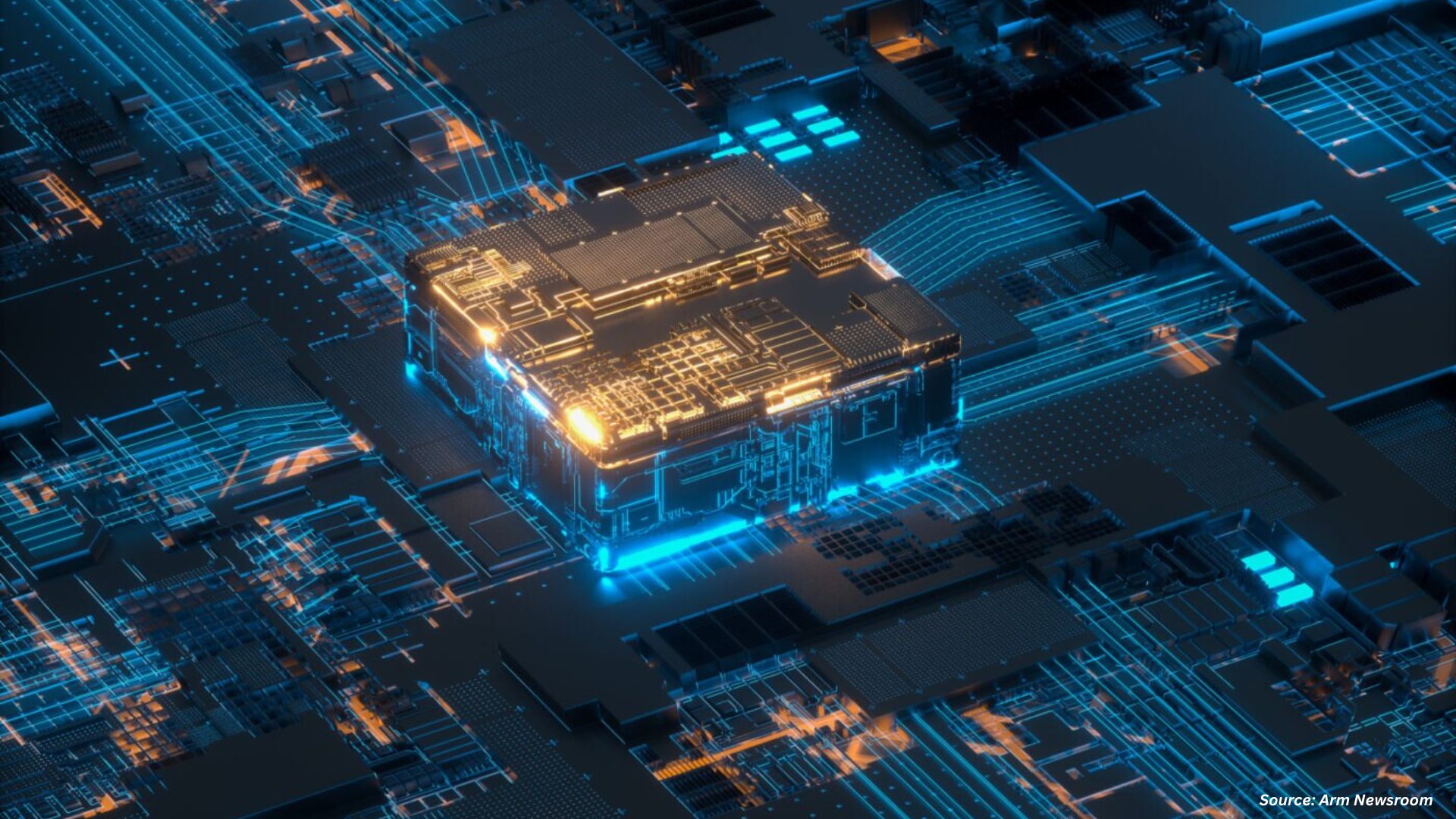
The chiplet market is entering a decisive phase as semiconductor companies reassess how modular design can support rising performance demands without escalating costs. Developments reported in 2025 indicate that chiplets are increasingly viewed not just as a technical option, but as a strategic foundation for future system architectures, particularly for artificial intelligence workloads. This analysis draws on Arm’s 2025 public statements and official Chiplet Summit 2026 disclosures, as reported by established industry news and press-release platforms.
What Is Driving the Chiplet Market Forward?
Chiplets are modular semiconductor components that can be combined within a single package to form a complete system. This approach allows designers to separate functions across multiple dies, improving design flexibility and enabling the reuse of proven components. According to Chiplet Summit organizers, chiplets improve performance, scalability, and cost efficiency, especially for artificial intelligence applications that require high computational density and rapid iteration cycles. The ability to integrate advanced process nodes with high-bandwidth memory in a single package is a key reason chiplets are gaining momentum in system-level design.
Arm’s Strategic Evaluation Signals a Market Shift
In July 2025, Arm Chief Executive Officer Rene Haas stated that the company is increasing investment in the potential development of chiplets and integrated solutions. Arm is exploring a wide range of possibilities, from physical chiplets to complete systems, although no specific products or commercialization timelines have been disclosed. This strategic exploration represents a meaningful shift for a company historically focused on licensing intellectual property rather than delivering physical silicon. Reports indicate that Arm may either develop chiplets designed to integrate into customer systems or design complete chips independently.
Key Developments Shaping the Chiplet Market
|
Area |
Impact |
|
|
Strategy |
Chiplet-based system development is increasing |
Changes traditional chip design models |
|
Demand |
AI workloads are driving adoption |
Raises performance requirements |
|
Technology |
Advanced packaging is essential |
Improves multi-die integration |
Customer Tensions and Financial Risks in Chiplet Development
Arm’s possible entry into chip or chiplet production introduces competitive tension with existing customers that depend on its intellectual property. Reports highlight that this move could place Arm in direct competition with companies developing advanced artificial intelligence chips. The financial risk is also substantial. Developing advanced artificial intelligence silicon can require more than USD 500 million for the chip itself, with additional costs for server infrastructure and software. Increased research and development spending has already impacted Arm’s profit outlook, underscoring the high-stakes nature of this strategic direction.
AI Acceleration and Advanced Packaging Shape Market Direction
Chiplet Summit 2026 will focus on artificial intelligence acceleration and advanced packaging as central themes. Industry leaders emphasize that chiplets enable higher performance per watt, faster product updates, and more flexible system designs. These attributes are particularly relevant for generative artificial intelligence systems that require scalable compute and memory integration. The conference will also address die-to-die interfaces and open chiplet economies, reflecting the industry’s push toward interoperable and collaborative design frameworks.
Key Players and Competitive Strategies in the Chiplet Market
The chiplet industry features a broad mix of technology providers, semiconductor manufacturers, and design solution companies, including Intel Corporation, Advanced Micro Devices, Inc., International Business Machines Corporation, Marvell, NVIDIA Corporation, Achronix Semiconductor Corporation, Ranovus, ASE Technology Holding Co., Ltd., Samsung Electronics Co., Ltd., NHanced Semiconductors, Taiwan Semiconductor Manufacturing Company Limited, Cadence Design Systems, Inc., Ayar Labs, Siemens AG, Michigan Engineering, and several others. To strengthen their market positions, these companies are actively pursuing strategies such as new product launches, technology partnerships, and collaborative development efforts aimed at advancing chiplet-based design, integration, and packaging capabilities. These companies participate across the chiplet ecosystem as chip designers, foundries, packaging providers, interconnect developers, and EDA suppliers.

Industry Collaboration Becomes a Strategic Requirement
The growing emphasis on open standards, foundry collaboration, and shared interfaces signals that the chiplet market is becoming ecosystem-driven. Chiplet Summit 2026 will bring together semiconductor designers, packaging experts, and standards organizations to address integration challenges and cost reduction strategies.
Next Move Strategy Consulting’s View
Next Move Strategy Consulting believes the Chiplet Market is approaching a strategic inflection point where technology decisions and business models are converging. Arm’s exploration of chiplet and system-level development highlights how value creation is shifting beyond intellectual property licensing toward integrated solutions. From a strategic standpoint, artificial intelligence demand is accelerating adoption, while advanced packaging and interoperability standards will determine competitive advantage. Companies that balance ecosystem participation with selective vertical integration are likely to be better positioned as the chiplet market matures.
Next Steps
-
Organizations should actively track strategic shifts by major intellectual property providers, as moves toward chiplet or system-level development may alter long-standing supplier relationships and competitive dynamics.
-
They should align chiplet adoption with artificial intelligence workload needs, ensuring that design choices support performance, scalability, and efficiency requirements rather than experimental implementations.
-
It is also important to prioritize interoperability and open interface compatibility, as emerging chiplet ecosystems increasingly depend on shared standards and die-to-die communication frameworks.
-
Decision-makers should assess advanced packaging capabilities early, since packaging and memory integration play a central role in determining chiplet system performance and cost efficiency.
-
Finally, companies are advised to pursue phased investments and strategic partnerships, balancing innovation ambitions with the high capital and ecosystem risks associated with chiplet development.
Conclusion
The chiplet market is moving beyond a design alternative to become a strategic foundation for next-generation semiconductor systems. Developments in 2025 show that rising artificial intelligence demands, combined with advances in packaging and system integration, are accelerating industry interest in modular chip architectures. Arm’s evaluation of chiplet and system-level development highlights both the opportunity and complexity shaping the market. While chiplets offer greater flexibility, scalability, and performance efficiency, they also introduce higher capital requirements and potential shifts in traditional customer relationships. At the same time, industry focus areas outlined for Chiplet Summit 2026 underscore the growing importance of interoperability, open ecosystems, and collaboration across the semiconductor value chain.
About the Author
 Sanyukta Deb
— Sanyukta Deb is Digital Marketing Team Lead at Next Move Strategy Consulting, where she has led content strategy and technical SEO for the firm's B2B market research publications for over 2 years. Her editorial process translates NextMSC's primary and secondary research — spanning technology, industrial, and consumer sectors — into commercial narratives, backed by search-intent, keyword, and competitive analysis. She brings 5 years of overall experience in digital marketing and content strategy.
Sanyukta Deb
— Sanyukta Deb is Digital Marketing Team Lead at Next Move Strategy Consulting, where she has led content strategy and technical SEO for the firm's B2B market research publications for over 2 years. Her editorial process translates NextMSC's primary and secondary research — spanning technology, industrial, and consumer sectors — into commercial narratives, backed by search-intent, keyword, and competitive analysis. She brings 5 years of overall experience in digital marketing and content strategy.
About the Reviewer
 Debashree Dey
— Debashree Dey is Assistant Manager at Next Move Strategy Consulting, where she supports cross-vertical market content and communications across diverse industries for 6 years. Her professional background includes senior content writing, communications, and published manuscript authorship, with experience developing audience-focused business narratives and maintaining clear, consistent messaging. Her role supports research-led content development and editorial quality across NextMSC publications.
Debashree Dey
— Debashree Dey is Assistant Manager at Next Move Strategy Consulting, where she supports cross-vertical market content and communications across diverse industries for 6 years. Her professional background includes senior content writing, communications, and published manuscript authorship, with experience developing audience-focused business narratives and maintaining clear, consistent messaging. Her role supports research-led content development and editorial quality across NextMSC publications.

















Add Comment