Is the Commercial Vehicle Market Accelerating in 2026?
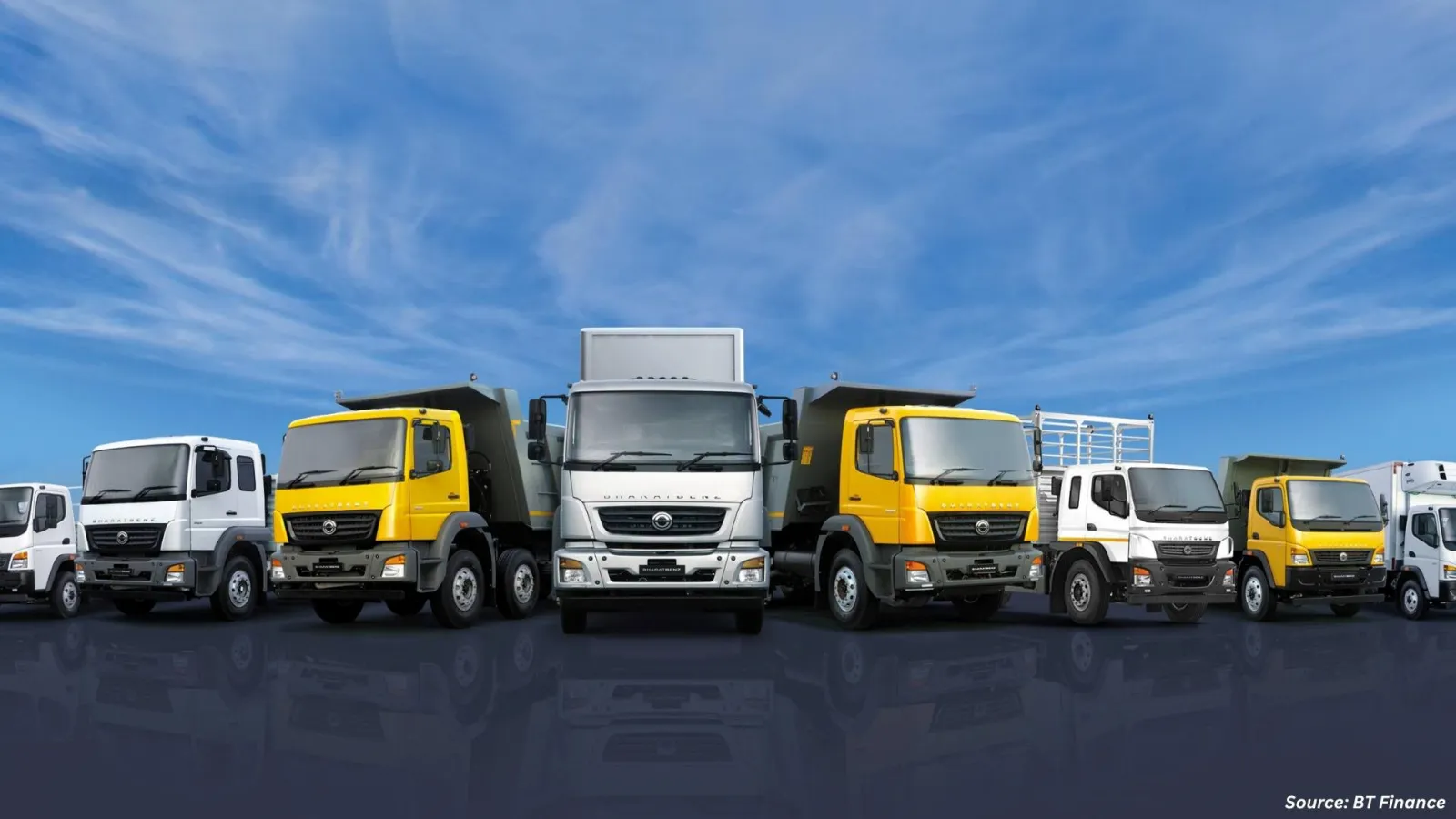
The Commercial Vehicle (CV) sector serves as a vital barometer for economic activity. As we analyze the performance metrics from early 2026, it is clear that major manufacturers are experiencing a period of significant growth. This article examines the latest sales figures and discusses what these numbers mean for the broader market landscape.
How Are Industry Leaders Performing?
Recent data indicates a strong start to the year for major players in the Indian commercial vehicle space. Both Tata Motors and VE Commercial Vehicles (a subsidiary of Eicher Motors) have reported impressive year-on-year growth for February 2026.
Tata Motors: A Significant Surge
Tata Motors Limited has recorded a remarkable 32% increase in total commercial vehicle sales, reaching 42,940 units in February 2026. This performance highlights the company’s ability to maintain high demand across diverse segments.
-
Domestic Sales: The company reported 40,893 units sold locally, compared to 30,797 units in the same month of the previous year. This represents a substantial 32.8% increase.
-
International Business: Exports also showed positive momentum, rising by 17.9% to reach 2,047 units, up from 1,736 units in 2025.
Eicher Motors: Robust Growth Trajectory
VE Commercial Vehicles, the joint venture between Eicher Motors and AB Volvo, also demonstrated strong market confidence. The company reported a 23.4% year-on-year jump in commercial vehicle sales, totaling 9,986 units for February 2026.
-
Domestic Market: Domestic sales increased by 24.6% to 9,165 units.
-
Exports: Total exports saw a growth of 8.9%, reaching 601 units in February 2026 compared to the same month in 2025.
Summary Table: February 2026 Performance
|
Manufacturer |
Total Sales (Feb 2026) |
Year-on-Year Growth |
|
Tata Motors |
42,940 units |
32% |
|
Eicher Motors (VECV) |
9,986 units |
23.4% |
Key Players driving the Industry
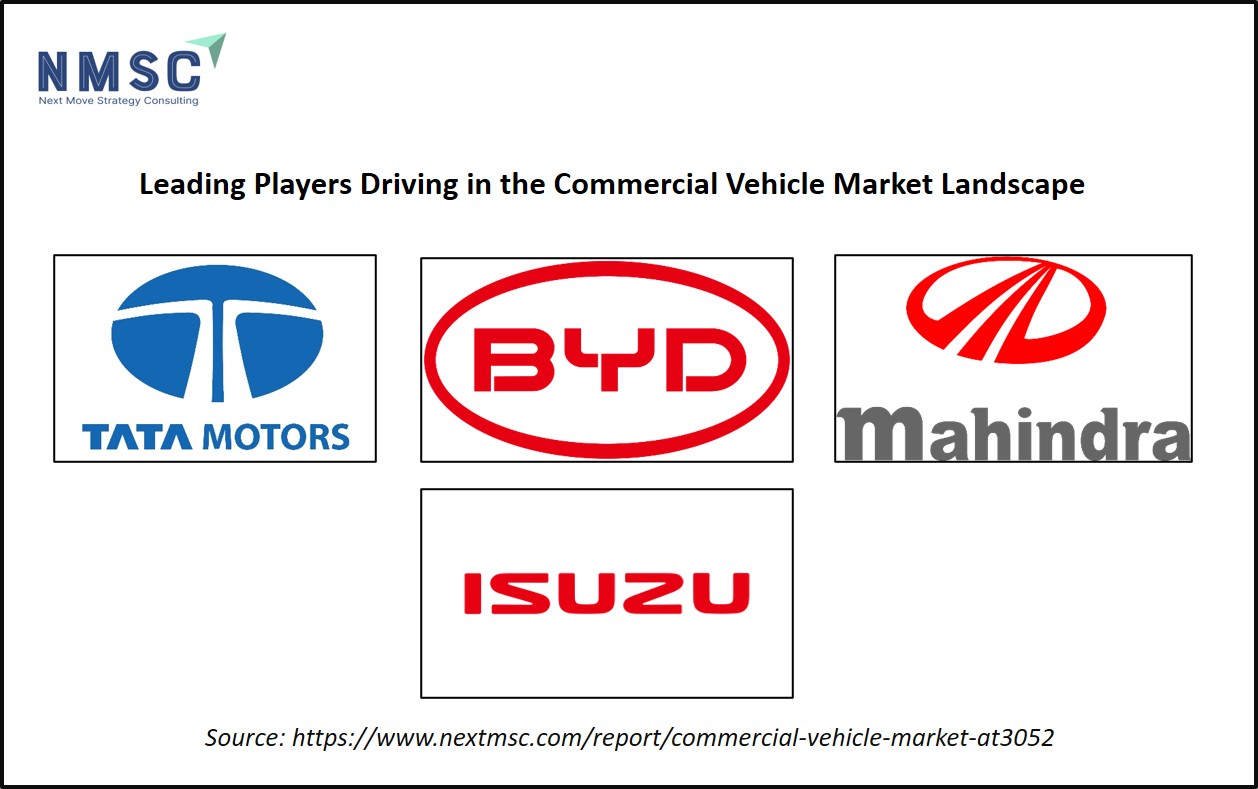
The global commercial vehicle landscape is characterized by intense competition among prominent manufacturers, including General Motors, Tata Motors Limited, Toyota Motor Corporation, AB Volvo, and Ford Motor Company. Other key participants such as Volkswagen AG, Mercedes-Benz Group, Mahindra & Mahindra, Ashok Leyland, and BYD Auto are also vying for market leadership. To maintain their dominance and adapt to evolving consumer requirements, these organizations-alongside Isuzu Motors Limited, Honda Motor Company, Hyundai Motor Company, Mitsubishi Motors Company, Renault, and Dongfeng Motor Company-consistently prioritize strategic product launches and innovations.
Recent industry developments highlight this commitment to enhancing operational efficiency and meeting specific business needs. For instance, in September 2024, Isuzu Motors expanded its D-MAX commercial range by introducing a new Cab-Chassis variant designed for the FMCG, catering, and last-mile delivery sectors. Similarly, in December 2023, Tata Motors launched the Intra V70, Intra V20 Gold, and Ace HT+ models. These vehicles were specifically engineered to improve first and last-mile transportation by supporting higher payloads over longer distances, thereby providing superior economic value to fleet operators.
NMSC Viewpoint: Decoding the Market Momentum
At Next Move Strategy Consulting, our approach to market intelligence relies on the synthesis of primary demand signals and structural economic shifts. The February 2026 performance of major Commercial Vehicle manufacturers is not merely a short-term fluctuation; it reflects a deeper realignment in how industrial stakeholders are approaching fleet investment.
From our analytical perspective, three key dynamics are defining this growth:
-
Data-Driven Fleet Expansion: Fleet operators are increasingly utilizing predictive logistics tools to optimize their assets. This shift is driving demand for specific high-performance vehicle segments, as companies prioritize long-term asset productivity over basic procurement.
-
The Multi-Vertical Impact: Growth is no longer concentrated in a single sector. We are observing that infrastructure, manufacturing, and industrial automation are simultaneously contributing to higher vehicle utilization rates.
-
Strategic Resilience: The ability of top-tier manufacturers to balance domestic strength with expanding export footprints is a crucial indicator of a mature, resilient supply chain. This balance is expected to be a primary pillar for sustaining growth through the remainder of 2026.
In conclusion, NMSC identifies this period as a foundational phase for the industry. Rather than reacting to transient demand, the market is actively scaling its capacity to meet a more permanent, digitally-enabled, and infrastructure-heavy economic environment.
Next Steps: Actionable Takeaways
As the market continues to evolve, stakeholders should consider the following actionable steps:
-
Monitor Infrastructure Projects: Closely track government-led infrastructure initiatives, as these are primary drivers for heavy commercial vehicle demand.
-
Evaluate Export Strategies: Analyze the export growth trends to identify which emerging markets are providing the most significant opportunities for Indian original equipment manufacturers.
-
Assess Supply Chain Resilience: Ensure that logistics planning accounts for the increased volume of commercial vehicles entering the fleet, which may impact operational efficiency.
-
Stay Updated on Macroeconomic Indicators: Continue to watch for inflationary pressures and interest rate shifts, which may influence capital expenditure decisions for fleet operators throughout the remainder of 2026.
About the Author
 Sanyukta Deb
— Sanyukta Deb is Digital Marketing Team Lead at Next Move Strategy Consulting, where she has led content strategy and technical SEO for the firm's B2B market research publications for over 2 years. Her editorial process translates NextMSC's primary and secondary research — spanning technology, industrial, and consumer sectors — into commercial narratives, backed by search-intent, keyword, and competitive analysis. She brings 5 years of overall experience in digital marketing and content strategy.
Sanyukta Deb
— Sanyukta Deb is Digital Marketing Team Lead at Next Move Strategy Consulting, where she has led content strategy and technical SEO for the firm's B2B market research publications for over 2 years. Her editorial process translates NextMSC's primary and secondary research — spanning technology, industrial, and consumer sectors — into commercial narratives, backed by search-intent, keyword, and competitive analysis. She brings 5 years of overall experience in digital marketing and content strategy.
About the Reviewer
 Debashree Dey
— Debashree Dey is Assistant Manager at Next Move Strategy Consulting, where she supports cross-vertical market content and communications across diverse industries for 6 years. Her professional background includes senior content writing, communications, and published manuscript authorship, with experience developing audience-focused business narratives and maintaining clear, consistent messaging. Her role supports research-led content development and editorial quality across NextMSC publications.
Debashree Dey
— Debashree Dey is Assistant Manager at Next Move Strategy Consulting, where she supports cross-vertical market content and communications across diverse industries for 6 years. Her professional background includes senior content writing, communications, and published manuscript authorship, with experience developing audience-focused business narratives and maintaining clear, consistent messaging. Her role supports research-led content development and editorial quality across NextMSC publications.















Add Comment