Is the Low Earth Orbit Satellites Market Heading for Collision or Breakthrough?
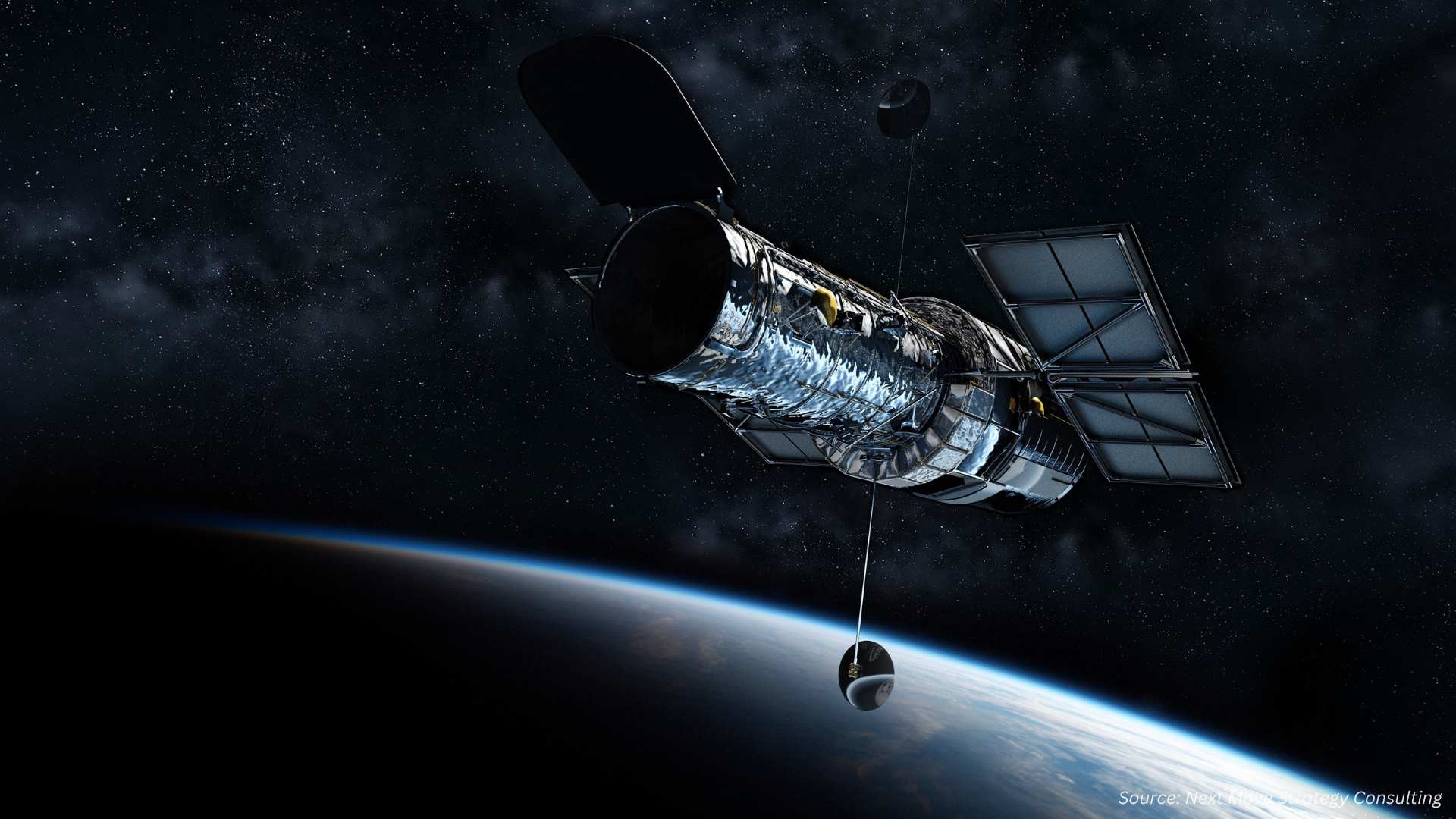
The Low Earth Orbit (LEO) Satellites Industry is currently defined by two competing trends: unprecedented deployment volume and escalating orbital congestion. As we look ahead into 2025, the market is demonstrating vigorous growth alongside significant technical hurdles. For stakeholders in the space economy, understanding the balancing act between rapid commercialization and sustainable operation is paramount.
This analysis examines the recent market activity, the critical risks posed by orbital congestion, and the groundbreaking innovations that promise to secure the future of satellite operations.
What is Driving the Current LEO Deployment Boom?
The expansion of broadband mega-constellations remains the primary driver of LEO activity. Satellite operators are continuously scaling their infrastructure to deliver global connectivity, pushing launch cadence to historic highs.
The relentless pace of deployment was underscored by the Starlink Group 6-82 mission, which launched twenty-nine satellites into Low Earth Orbit in December 2025 on a Falcon 9 rocket. This particular mission, which utilized the Falcon 9 booster B1092 for its ninth flight, was part of a record-setting year for the launch provider. In fact, the east coast mission marked the 163rd Falcon 9 flight accomplished in 2025.
Market Impact Analysis (Next Move Strategy Consulting)
From a market research perspective, this consistent, high-frequency launch cadence indicates that demand saturation is not a present concern for the LEO connectivity segment. It is understood that high volume deployment stabilizes the constellation infrastructure and improves service reliability, which directly increases the Total Addressable Market (TAM) for satellite broadband providers.
However, this same volume imposes pressure on the supply chain for reliable satellite components and dedicated launch capacity, potentially inflating costs for smaller operators who do not possess vertically integrated launch capabilities. Consequently, market valuation is increasingly tied not only to the size of a constellation but also to the demonstrated efficiency and reusability of its deployment strategy.
-
Launch Activity Summary (December 2025):
-
Twenty-nine Starlink satellites were launched in December 2025.
-
The mission was the 163rd Falcon 9 flight achieved in 2025.
-
This rapid deployment confirms robust market demand for LEO services.
-
What Risks Threaten the Sustainability of the LEO Environment?
Despite the commercial success of LEO deployments, the rising volume of operational and non-operational objects poses an immediate threat to the entire domain. The current environment is characterized as a fundamentally unstable "House of Cards".
Collision avoidance is now a routine necessity. Calculations show that a close approach, defined as two satellites passing at less than one kilometer of separation, occurs across all LEO mega-constellations every twenty-two seconds. Furthermore, the complexity introduced by atmospheric events is concerning. During the "Gannon Storm" in May 2024, more than 50% of all LEO satellites were compelled to perform fuel-consuming repositioning maneuvers.
The Collision Realization and Significant Harm (CRASH) Clock
A new metric, the CRASH Clock, illustrates the critical fragility of the LEO environment. As of June 2025, if satellite operators were to lose the ability to send commands for avoidance maneuvers—a scenario plausible during a severe solar storm—a catastrophic collision is calculated to occur in approximately 2.8 days.
Losing command control for just twenty-four hours introduces a 30% chance of a catastrophic collision, which could initiate the decades-long process known as Kessler syndrome. This indicates the system is entirely dependent upon real-time monitoring and control.
Key Players in the LEO Satellite Sector
-
SpaceX
-
Lockheed Martin Corporation
-
Airbus Defence and Space
-
Northrop Grumman Corporation
-
L3Harris Technologies, Inc.
-
Thales Alenia Space
-
Surrey Satellite Technology Ltd
-
Planet Labs PBC
-
Maxar Technologies
-
GomSpace

These companies are adopting various strategies such as product launches and collaborations to remain dominant in the market.
Market Impact Analysis (Next Move Strategy Consulting)
The 2.8-day CRASH Clock and the 30% risk exposure highlight that operational risk in the LEO Satellites Market is increasing exponentially, which severely impacts the valuation model for all LEO assets. When conducting due diligence, investors must now consider not only the technical lifetime of the satellite hardware but also the high frequency of necessary maneuvers (Starlink satellites average forty-one maneuvers per year).
This increased operational expenditure (OpEx) for fuel consumption and ground control must be factored into the overall cost of ownership. The growing debris problem necessitates immediate investment in Space Situational Awareness (SSA) and Active Debris Removal (ADR) services, creating lucrative ancillary markets.
-
Orbital Risk Summary (June–December 2025):
-
A close approach event (less than 1km) occurs every 22 seconds across LEO constellations.
-
The loss of command control capability would lead to a catastrophic collision in approximately 2.8 days.
-
Solar storms, such as the May 2024 Gannon Storm, force large-scale avoidance maneuvers.
-
How can Very Low Earth Orbit (VLEO) Innovation Change the Market Paradigm?
A significant segment of the industry is looking downward, toward Very Low Earth Orbit (VLEO)—the region between 160 and 450 kilometers—as a solution to both the data resolution and debris challenges. This area has historically been avoided due to extreme atmospheric drag, but new propulsion technologies are making it viable.
Stellar Space Industries, based in the Netherlands, is pioneering Atmosphere-Breathing Electric Propulsion (ABEP) systems. This breakthrough technology allows satellites to use the residual atmospheric particles found in VLEO as propellant. By compressing and ionizing this rarefied gas, the system can generate continuous thrust to offset drag, enabling satellites weighing 150 kilograms or more to operate indefinitely in this lower altitude.
VLEO Advantages
Operating in VLEO offers substantial benefits over traditional LEO:
-
Ultra-High-Resolution Imagery: VLEO enables sub-meter-resolution imagery, which is critical for defense and sophisticated Earth observation applications.
-
Reduced Latency and Power: The lower altitude means lower-latency communications and stronger link budgets, potentially allowing ordinary smartphones to connect directly to the satellite without intermediate ground antennas.
-
Debris Mitigation: VLEO satellites naturally deorbit within weeks or months if propulsion fails. This significantly reduces the long-term debris hazard associated with traditional LEO constellations.
The ABEP technology has achieved Technology Readiness Level (TRL) 4–5 as of late 2025 and is seeking strategic partners to accelerate its path toward commercial readiness.
Market Impact Analysis (Next Move Strategy Consulting)
The successful maturation of VLEO technology represents a disruptive shift in the LEO Satellites Market architecture. VLEO does not just improve existing services; it creates an entirely new orbital layer. From a market standpoint, this innovation introduces a sustainable competitive differentiator for Earth observation and dual-use (commercial and defense) missions requiring exquisite detail. The inherent advantage of rapid, natural deorbiting reduces the regulatory burden and long-term liability for operators, making VLEO missions inherently more sustainable and attractive to Environmental, Social, and Governance (ESG)-focused investors. The successful deployment of ABEP technology will redefine "best-in-class" satellite platform capabilities.
-
VLEO Innovation Summary (December 2025):
-
Stellar Space Industries is developing Atmosphere-Breathing Electric Propulsion (ABEP).
-
VLEO (160–450 km) offers sub-meter-resolution imaging and reduced long-term debris risk.
-
The technology is currently at TRL 4–5 and is seeking commercial partners.
-
Next Steps: How Should Market Leaders Respond?
The 2025 LEO market is defined by high throughput and high risk, requiring strategic maneuvering from all participants. Based on the analysis of recent launch activity, escalating debris threats, and VLEO innovation, we suggest the following actionable steps:
-
Prioritize Resiliency in Satellite Design: Developers must integrate enhanced maneuverability and radiation-hardened components into new satellite generations to withstand aggressive solar weather events, reducing the probability of losing command control and triggering a CRASH scenario.
-
Invest Immediately in SSA and ADR Solutions: To protect existing assets, operators must allocate capital toward advanced Space Situational Awareness (SSA) services that provide faster, more accurate collision warnings, and engage with emerging Active Debris Removal (ADR) ventures to clean up non-operational mass.
-
Evaluate VLEO as a Strategic New Layer: Companies focused on high-value data, such as high-resolution Earth observation or defense applications, should immediately begin technology feasibility studies and seek strategic partnerships with VLEO propulsion providers like Stellar Space Industries to secure early access to the competitive advantages of this new orbital regime.
-
Adopt Full Cost Accounting: Financial analysts and corporate strategists should incorporate the true operational costs of LEO congestion (i.e., higher fuel consumption and regulatory/liability risk) into long-term financial models, favoring constellations that demonstrate superior sustainability and risk mitigation protocols.
About the Author
About the Reviewer
 Sanyukta Deb
— Sanyukta Deb is Digital Marketing Team Lead at Next Move Strategy Consulting, where she has led content strategy and technical SEO for the firm's B2B market research publications for over 2 years. Her editorial process translates NextMSC's primary and secondary research — spanning technology, industrial, and consumer sectors — into commercial narratives, backed by search-intent, keyword, and competitive analysis. She brings 5 years of overall experience in digital marketing and content strategy.
Sanyukta Deb
— Sanyukta Deb is Digital Marketing Team Lead at Next Move Strategy Consulting, where she has led content strategy and technical SEO for the firm's B2B market research publications for over 2 years. Her editorial process translates NextMSC's primary and secondary research — spanning technology, industrial, and consumer sectors — into commercial narratives, backed by search-intent, keyword, and competitive analysis. She brings 5 years of overall experience in digital marketing and content strategy.

















Add Comment