Is the VPX SBC Market Ready for Next-Level Performance in 2025?
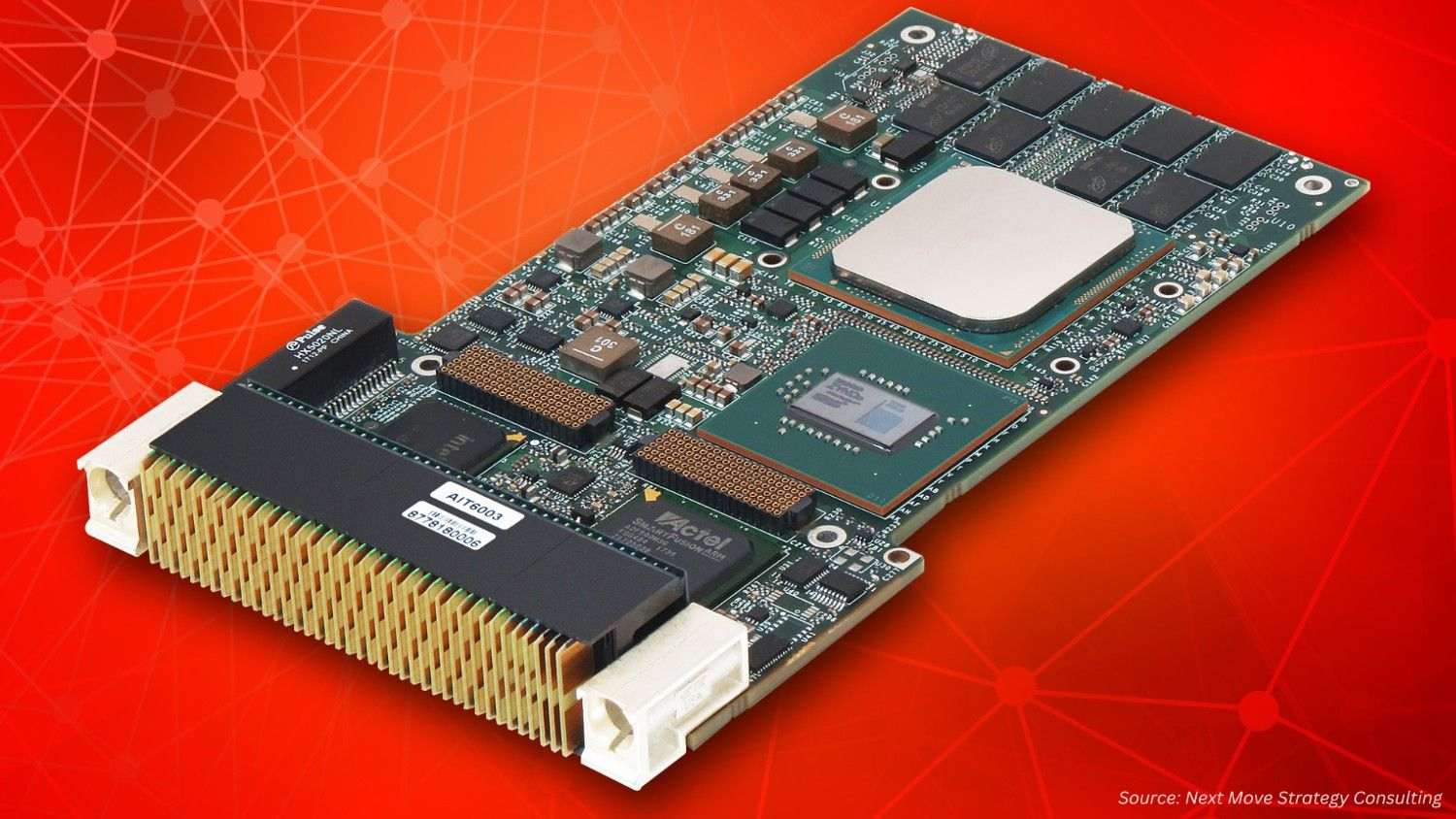
The VPX Single Board Computer (SBC) Market continues to evolve rapidly, driven by growing demands across defense, aerospace, and unmanned systems. The industry is projected to reach USD 499.9 million by 2030, with a CAGR of 14.4% from 2025-2030. In 2025, recent product announcements highlight a clear shift toward higher bandwidth, AI acceleration, and stronger standards alignment.
Have you wondered how these developments could shape future deployments?
What Defines a Modern VPX Single Board Computer?
VPX SBCs are compact, rugged computing platforms built on the VITA 46 standard and commonly deployed in 3U or 6U form factors for embedded systems. They integrate processors, memory, storage, and I/O on a single board, ideal for harsh environments.
Key characteristics include:
-
High-speed backplane connectivity
-
Support for open architectures like SOSA (Sensor Open Systems Architecture)
-
Variants for air-cooled or conduction-cooled operation
Together, these features ensure interoperability and scalability in mission-critical environments.
Why is High-Bandwidth Networking Crucial in VPX SBCs?
In data-intensive defense systems, the rapid transfer of sensor data is essential. Traditional Ethernet speeds often fall short for real-time processing.
Acromag's VPX7600, announced in late 2025, addresses this with a dedicated 100 GbE data plane using an Intel E810 controller, alongside 10 GbE for control. This SOSA-aligned 3U VPX board features an Intel 11th Generation Xeon W-11000E Series 8-core processor, up to 32 GB ECC DDR4 memory, and 1 TB NVMe storage.
This capability supports I/O-intensive aerospace and deployed applications by enabling faster data handling without performance bottlenecks.
As a market research firm, Next Move Strategy Consulting observes that such 100 GbE integration is positively impacting the VPX SBC market by facilitating distributed sensor networks and reducing latency in multi-domain operations. This advancement encourages broader adoption across next-generation defense architectures, expanding market opportunities for high-bandwidth VPX solutions.
Competitive Landscape of the VPX SBC Industry
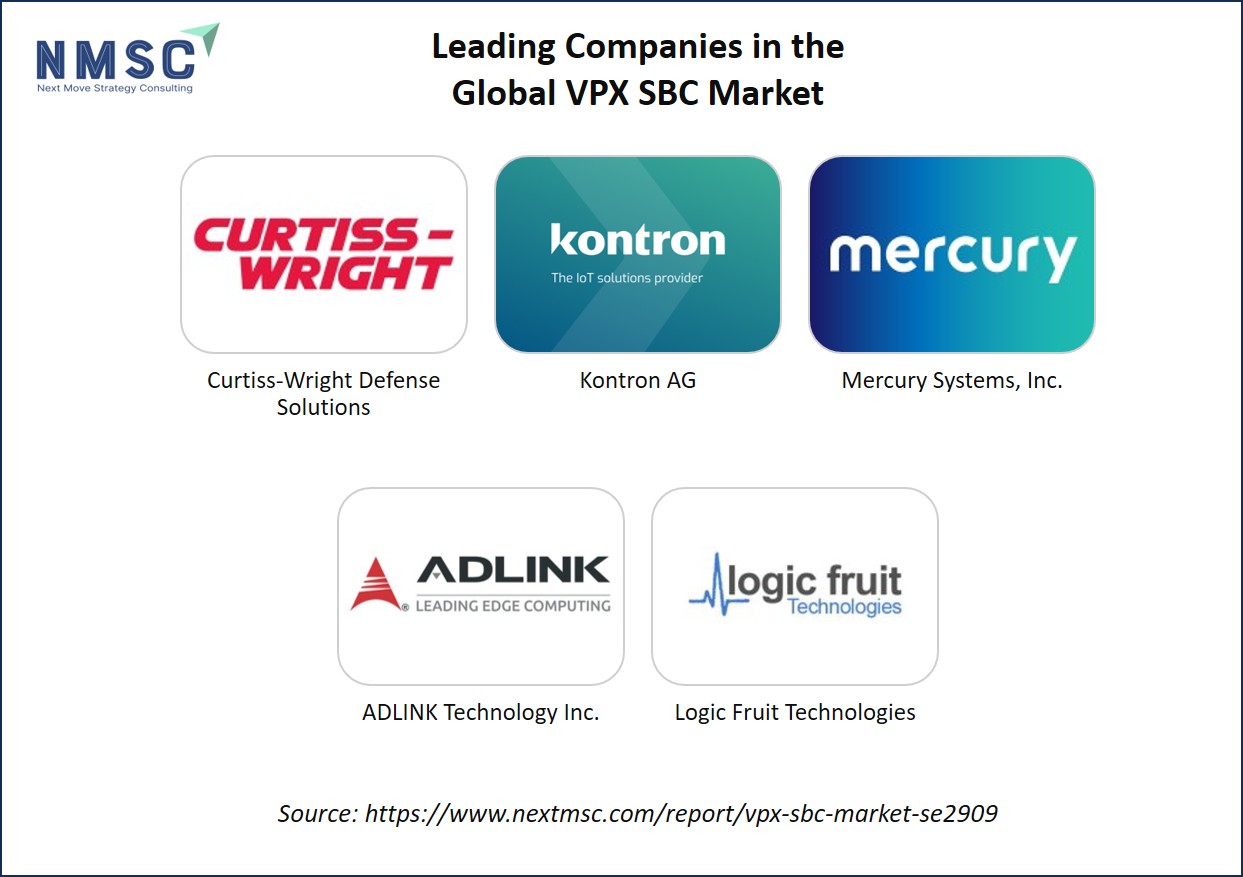
The VPX SBC sector includes several key market players such as Curtiss-Wright Defense Solutions, Kontron AG, Mercury Systems, Inc., ADLINK Technology Inc., General Electric Company, Logic Fruit Technologies, Elma Electronic, North Atlantic Industries, Aitech, Extreme Engineering Solutions, Inc., General Micro Systems, Inc., Interface Concept, Acromag, EIZO Rugged Solutions, Sital Technology, and others.
How is AI Acceleration Reshaping VPX SBC Applications?
Artificial intelligence at the edge requires powerful yet efficient processing within constrained environments. Traditional CPU-only boards struggle with real-time AI workloads.
EIZO Rugged Solutions revealed the Condor Thor 3U VPX series in November 2025, powered by the NVIDIA Jetson Thor module. This SOSA-aligned family incorporates NVIDIA Blackwell Architecture, a 14-core Arm Neoverse-V3AE CPU, 128 GB LPDDR5X memory, and 2,560 CUDA cores delivering up to 2,070 FP4 TFLOPS of AI performance.
Additional features include:
-
Multi-Instance GPU (MIG) for low-latency tasks
-
Programmable Vision Accelerators (PVA)
-
Hardware accelerators for video encoding/decoding (NVENC/NVDEC)
-
I/O such as 10 GbE, 12G-SDI, and DisplayPort
Targeted at unmanned systems and Intelligence, Surveillance, and Reconnaissance (ISR) platforms, it excels in multi-sensor fusion and AI-driven autonomy.
From Next Move Strategy Consulting's perspective, this AI-focused introduction is significantly impacting the VPX SBC market by accelerating the shift toward autonomous and intelligent edge computing. It adds substantial value in SWaP-optimized scenarios, opening new opportunities across uncrewed vehicles and C5ISR applications.
What Trends Are Emerging in the VPX SBC Market for 2025 and Beyond?
Both announcements underscore common themes:
-
Strong adherence to SOSA for interoperability
-
Focus on 3U form factor for SWaP efficiency
-
Blend of traditional high-performance computing (Intel Xeon) with emerging AI capabilities (NVIDIA Jetson)
Collectively, these developments reflect growing requirements for hybrid processing across modern defense ecosystems.
Next Steps: How Can You Leverage These VPX SBC Advancements?
To stay ahead in this dynamic market, consider these actionable takeaways:
-
Evaluate SOSA-aligned boards for new designs to ensure future-proof interoperability and reduced integration costs.
-
Assess high-bandwidth needs in your applications—100 GbE options can future-enable data-intensive platforms.
-
Explore AI-accelerated SBCs for edge autonomy, particularly in unmanned or ISR projects.
-
Engage early with vendors such as Acromag and EIZO as these products enter customer qualification programs.
-
Conduct a SWaP analysis to determine if 3U VPX with advanced processors fits your thermal and power constraints.
These steps can help align your strategies with the latest VPX SBC innovations.
About the Author
 Sanyukta Deb
— Sanyukta Deb is Digital Marketing Team Lead at Next Move Strategy Consulting, where she has led content strategy and technical SEO for the firm's B2B market research publications for over 2 years. Her editorial process translates NextMSC's primary and secondary research — spanning technology, industrial, and consumer sectors — into commercial narratives, backed by search-intent, keyword, and competitive analysis. She brings 5 years of overall experience in digital marketing and content strategy.
Sanyukta Deb
— Sanyukta Deb is Digital Marketing Team Lead at Next Move Strategy Consulting, where she has led content strategy and technical SEO for the firm's B2B market research publications for over 2 years. Her editorial process translates NextMSC's primary and secondary research — spanning technology, industrial, and consumer sectors — into commercial narratives, backed by search-intent, keyword, and competitive analysis. She brings 5 years of overall experience in digital marketing and content strategy.
About the Reviewer
 Debashree Dey
— Debashree Dey is Assistant Manager at Next Move Strategy Consulting, where she supports cross-vertical market content and communications across diverse industries for 6 years. Her professional background includes senior content writing, communications, and published manuscript authorship, with experience developing audience-focused business narratives and maintaining clear, consistent messaging. Her role supports research-led content development and editorial quality across NextMSC publications.
Debashree Dey
— Debashree Dey is Assistant Manager at Next Move Strategy Consulting, where she supports cross-vertical market content and communications across diverse industries for 6 years. Her professional background includes senior content writing, communications, and published manuscript authorship, with experience developing audience-focused business narratives and maintaining clear, consistent messaging. Her role supports research-led content development and editorial quality across NextMSC publications.


















Add Comment