Liquid-Cooled EV Charging Cable Market: The Technology Powering the Future of Ultra-Fast EV Charging
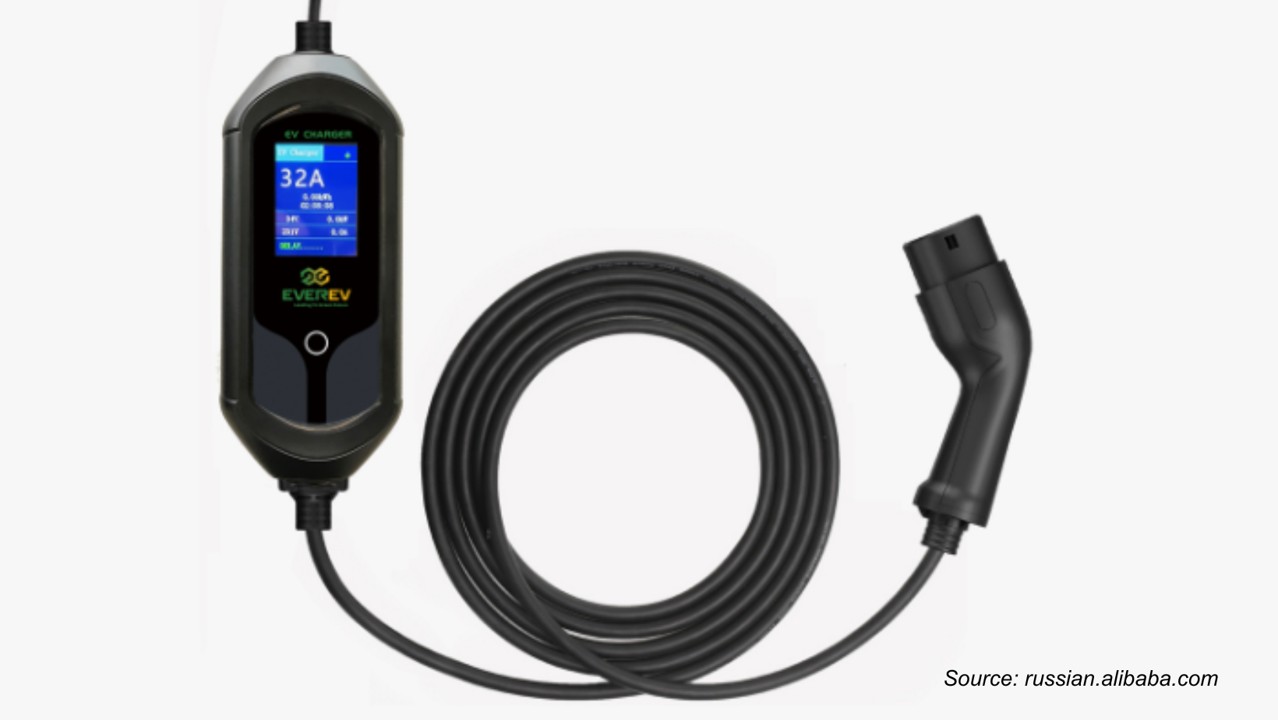
The global transition toward ultra-fast electric vehicle charging is reshaping the requirements of charging infrastructure worldwide. As EV adoption accelerates across passenger mobility, commercial transportation, logistics, and heavy-duty applications, charging systems are increasingly expected to deliver higher power output within significantly shorter charging durations. We analysed that this industry shift is creating strong demand for advanced thermal management technologies, particularly liquid-cooled charging cable systems capable of supporting sustained high-current charging operations.
According to Next Move Strategy Consulting, the Liquid-Cooled EV Charging Cable Market size was valued at USD 467.7 million in 2025 and is expected to reach USD 655.4 million by 2026. Looking ahead, the industry is projected to expand significantly, reaching USD 2791.0 million by 2035, registering a CAGR of 17.47% from 2026 to 2035. In terms of volume, the market recorded 269 thousand units in 2025, with forecasts indicating growth to 391 thousand units by 2026 and further to 2165 thousand units by 2035, reflecting a CAGR of 20.93% over the same period.
The market’s momentum is closely aligned with the rapid expansion of public fast-charging infrastructure. According to the International Energy Agency, more than 1.3 million public charging points were added globally in 2024 alone, taking the worldwide public charger stock beyond 5 million units. Ultra-fast chargers above 150 kW also recorded growth of over 50% in 2024, highlighting the increasing demand for high-power charging solutions.
We observed that industry participants are actively introducing next-generation cooling-enabled charging technologies to support this transition. For instance, in May 2025, Phoenix Contact introduced its CHARX connect professional liquid-cooled CCS charging connector, designed for megawatt-level EV charging applications while reducing connector weight by approximately 20% compared to conventional cooled systems.
Curious about the Liquid-Cooled EV Charging Cable Market? Download Your FREE Sample Report Now
Why Ultra-Fast Charging Is Redefining Charging Infrastructure
NMSC’s analysis indicates that the global EV industry is steadily transitioning toward higher-voltage vehicle platforms and faster charging architectures. Modern EV users increasingly expect charging experiences comparable to conventional refuelling in terms of convenience and turnaround time. As a result, charging infrastructure providers are investing in systems capable of delivering significantly higher charging power while maintaining operational safety, charging efficiency, and long-term reliability.
However, higher current flow generates substantial thermal buildup within charging cables and connectors, creating operational limitations for conventional air-cooled charging systems. These limitations include excessive cable heating, increased cable thickness, reduced handling flexibility, and performance instability during prolonged charging sessions. NMSC’s evaluation indicates that these thermal challenges are accelerating the adoption of liquid-cooled charging cable systems across ultra-fast charging infrastructure deployments.
Liquid-cooled charging cable systems address these challenges by circulating coolant through dedicated thermal channels integrated within the cable assembly, enabling efficient heat dissipation while maintaining manageable cable size and improved ergonomics. From an infrastructure engineering perspective, these systems support sustained ultra-fast charging performance, improved thermal stability during repeated charging cycles, enhanced cable flexibility, and higher current-carrying capability without excessive cable bulk. Consequently, we observed that charging operators are increasingly prioritizing thermally optimized charging solutions to support next-generation high-power charging requirements.
The transition toward 800V and ≥1,000V EV architectures is further accelerating market demand for advanced cooled charging systems. Higher-voltage platforms improve charging efficiency and reduce charging duration, particularly across premium EVs, electric buses, commercial fleets, and heavy-duty transportation applications. The International Energy Agency also highlights that ultra-fast charging infrastructure deployment is expanding rapidly across Europe, China, and North America as governments and charging operators strengthen public fast-charging networks. Additionally, our market study reveals that regulatory initiatives such as the European Union’s Alternative Fuels Infrastructure Regulation (AFIR), which mandates fast-charging stations with at least 150 kW output every 60 km along major transport corridors, are expected to further support long-term infrastructure expansion.

How is Commercial Electrification Accelerating Demand for Liquid-Cooled EV Charging Cables?
The rapid electrification of commercial transportation is emerging as one of the most influential long-term growth drivers for the Liquid-Cooled EV Charging Cable market. Unlike passenger EV applications, commercial mobility ecosystems require continuous vehicle operation, faster turnaround times, and significantly higher charging throughput, creating greater thermal stress across charging infrastructure. Our market analysis indicates that these evolving operational requirements are accelerating demand for advanced liquid-cooled charging cable systems capable of supporting stable high-power charging performance across heavy-duty and fleet-based EV applications.
-
Commercial EV applications involve continuous operational cycles, larger battery capacities, higher energy throughput, and frequent daily charging sessions, significantly increasing thermal load across charging infrastructure.
-
Our evaluation highlights that these operational conditions are increasing adoption of liquid-cooled charging systems designed to support sustained ultra-fast charging performance under demanding commercial operating environments.
-
Fleet operators across logistics, public transportation, mining, industrial transportation, and ride-hailing ecosystems are actively investing in high-power charging depots to minimize charging downtime and improve vehicle utilization efficiency.
-
Heavy-duty charging infrastructure is emerging as a major opportunity area, as electric truck corridors and industrial charging systems increasingly require megawatt-level charging performance under continuous operating conditions.
-
Mobile and temporary charging systems are further expanding the application scope for liquid-cooled charging cables. Our findings indicate that portable charging installations increasingly require flexible high-power charging solutions capable of operating efficiently across varying environmental and deployment conditions.
Overall, the ongoing electrification of commercial mobility is expected to significantly strengthen long-term demand for thermally optimized EV charging infrastructure. As charging power requirements continue increasing across electric buses, trucks, industrial fleets, and logistics vehicles, liquid-cooled charging cable systems are likely to become essential for ensuring charging reliability, operational safety, and sustained ultra-fast charging efficiency across next-generation commercial EV ecosystems.
How Is Technology Innovation Intensifying Competition in the Liquid-Cooled EV Charging Cable Market?
The competitive landscape of the Liquid-Cooled EV Charging Cable market is evolving beyond conventional cable manufacturing toward advanced thermal engineering and charging system optimization. Our analysis highlights that manufacturers are increasingly focusing on improving thermal efficiency, connector flexibility, and charging reliability to support next-generation ultra-fast EV charging infrastructure. In addition, companies are investing in lightweight conductor materials, advanced insulation technologies, integrated temperature sensing, and enhanced coolant flow systems to improve overall charging performance while reducing operational complexity.
Connector standardization continues to remain a key strategic focus across the industry. We observed that CCS1 and CCS2 standards maintain strong deployment across Europe and several global EV markets due to their compatibility with existing high-power DC charging infrastructure. Meanwhile, the North American Charging Standard (NACS) is gaining traction across North America as charging operators and automotive OEMs strengthen interoperability initiatives within expanding EV charging ecosystems.
The development of megawatt-scale charging infrastructure is also expected to reshape long-term competitive dynamics. Our market research reveals that charging operators increasingly require systems capable of delivering ultra-high-power charging while maintaining thermal stability, durability, and operational safety under continuous charging conditions. Reflecting this trend, in June 2025, VOSS Automotive, Amphenol, and GG Group introduced a 1 MW liquid-cooled EV charging harness featuring advanced thermal management technologies for commercial charging applications. Similarly, in September 2025, Autel Energy integrated Phoenix Contact’s liquid-cooled connector technology into its 1,000 A megawatt charging platform designed for commercial EV charging infrastructure.

How Is Regional EV Infrastructure Expansion Supporting Growth in the Liquid-Cooled EV Charging Cable Market?
The rapid expansion of public EV charging infrastructure is emerging as a major growth catalyst for the Liquid-Cooled EV Charging Cable market. Governments and private charging operators across major automotive markets are increasingly investing in ultra-fast charging networks to support rising EV adoption and long-distance electric mobility. Our market evaluation indicates that the growing deployment of high-power charging stations is significantly increasing demand for advanced liquid-cooled charging cable systems capable of maintaining thermal stability and charging efficiency under continuous high-current operations.
-
Government-backed charging infrastructure expansion continues to strengthen long-term growth opportunities across the Liquid-Cooled EV Charging Cable market.
-
According to the International Energy Agency (IEA), global public charging infrastructure exceeded 5 million charging points in 2024, with more than 1.3 million chargers added during the year. Our analysis highlights that the rapid deployment of ultra-fast charging infrastructure across Europe and China is significantly increasing demand for high-power liquid-cooled charging systems capable of supporting sustained charging performance.
-
China continues to dominate the global charging infrastructure landscape, accounting for more than 65% of the worldwide public charging infrastructure stock.
-
India is emerging as a rapidly developing EV charging market. Our market research indicates that India’s public charging infrastructure could increase from nearly 75,000 charging points in 2024 to approximately 375,000 by 2030 under existing policy support and electrification initiatives.
-
Expanding investments in highway charging corridors, commercial fleet depots, and public fast-charging hubs are expected to create favourable deployment opportunities for advanced liquid-cooled charging cable technologies over the coming decade.
Overall, regional EV infrastructure expansion is expected to remain a critical factor supporting long-term growth across the Liquid-Cooled EV Charging Cable market. As governments accelerate charging network deployment and charging operators prioritize ultra-fast charging capabilities, demand for thermally optimized liquid-cooled charging cable systems is likely to increase substantially across passenger and commercial EV charging ecosystems worldwide.
Why is the Growing Deployment of Ultra-Fast EV Charging Driving Demand for Liquid-Cooled Charging Cables?
The future of the Liquid-Cooled EV Charging Cable market remains closely linked to the expansion of ultra-fast charging infrastructure and the growing electrification of commercial transportation. Our assessment shows that the rising adoption of 800V and higher-voltage EV architectures is increasing the need for advanced thermal management systems capable of supporting higher charging currents and reduced charging durations.
Several long-term industry trends are expected to support market expansion, including the deployment of megawatt charging systems, growing electric commercial fleets, and increasing investments in highway fast-charging infrastructure. In addition, charging operators are placing greater emphasis on charging reliability, thermal efficiency, and operational durability as charging power requirements continue increasing across passenger and commercial EV applications.
Technological innovation is expected to remain a major competitive factor across the industry. We found that manufacturers are increasingly focusing on intelligent thermal monitoring, AI-enabled charging optimization, improved coolant efficiency, reduced cable weight, and higher amperage capabilities to improve charging performance and user handling efficiency. Consequently, thermal management performance is expected to remain one of the most critical differentiating factors within next-generation EV charging infrastructure technologies.
Liquid-Cooled Charging Systems Are Transforming the Future of High-Power EV Infrastructure
The Liquid-Cooled EV Charging Cable market is emerging as a critical component of next-generation EV charging infrastructure as the global automotive industry transitions toward ultra-fast and high-power charging ecosystems. Our analysis indicates that increasing deployment of 800V and megawatt-level charging architectures, expanding commercial EV fleets, and rising investments in public fast-charging infrastructure are significantly accelerating demand for advanced liquid-cooled charging technologies. In addition, continuous innovation in thermal management, connector optimization, lightweight cable engineering, and intelligent monitoring systems is reshaping the competitive landscape across the industry. Government-backed charging corridor expansion, evolving interoperability standards, and growing emphasis on charging reliability are further expected to support long-term market growth. Consequently, liquid-cooled charging cable systems are likely to play a foundational role in enabling faster, safer, and more efficient EV charging infrastructure worldwide over the coming decade.
About the Author
 Tushmi Dutta
— Tushmi Dutta is a focused researcher specializing in detailed analysis and insight-driven research across diverse business landscapes. She supports strategic initiatives through structured data interpretation, thorough validation, and clear communication of findings that aid informed decision-making. With a strong interest in writing, she enjoys presenting research insights in an engaging and accessible manner. Beyond work, she enjoys traveling, reading, painting, and continuously learning new skills that contribute to her creative and professional growth.
Tushmi Dutta
— Tushmi Dutta is a focused researcher specializing in detailed analysis and insight-driven research across diverse business landscapes. She supports strategic initiatives through structured data interpretation, thorough validation, and clear communication of findings that aid informed decision-making. With a strong interest in writing, she enjoys presenting research insights in an engaging and accessible manner. Beyond work, she enjoys traveling, reading, painting, and continuously learning new skills that contribute to her creative and professional growth.
About the Reviewer
 Supradip Baul
— Supradip Baul is an accomplished business consultant and strategist with over a decade of rich experience in market intelligence, strategy, technology, and business transformation. His work has included rigorous qualitative and quantitative analysis across multiple industries, helping clients shape investment decisions and long-term roadmaps. Earlier in his career, he was associated with Gartner, where he contributed to industry-leading reports and market share analyses. He has worked with leading global companies and holds an MBA with a dual specialization in Marketing and Finance.
Supradip Baul
— Supradip Baul is an accomplished business consultant and strategist with over a decade of rich experience in market intelligence, strategy, technology, and business transformation. His work has included rigorous qualitative and quantitative analysis across multiple industries, helping clients shape investment decisions and long-term roadmaps. Earlier in his career, he was associated with Gartner, where he contributed to industry-leading reports and market share analyses. He has worked with leading global companies and holds an MBA with a dual specialization in Marketing and Finance.

















Add Comment