Revolutionizing Europe’s Plastic Injection Molding Market with Smart Manufacturing Technologies
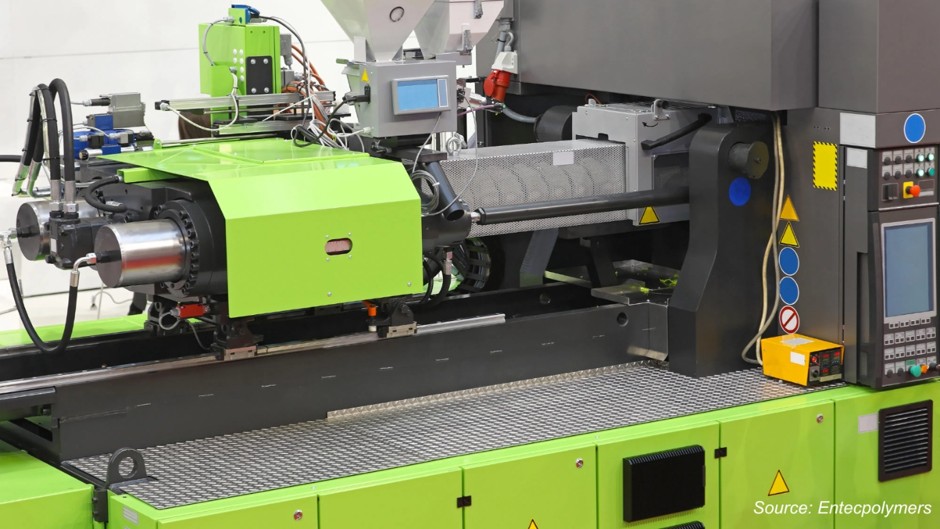
Plastic injection molding is the backbone of modern manufacturing, a process that transforms molten polymers into precise, repeatable components used across sectors such as automotive, packaging, and healthcare. In Europe, this technology has evolved far beyond the traditional press-and-mold setup. Today, data-driven intelligence, real-time monitoring, and predictive maintenance define the new frontier. The convergence of artificial intelligence, the internet of things, and predictive maintenance has given rise to what experts now call Smart Molding. This next-generation approach not only enhances production speed and precision but also transforms medical and hospital-grade manufacturing by ensuring quality, traceability, and sustainability.
As Europe accelerates toward digitalized and sustainable manufacturing under the EU Green Deal and MDR regulations, the plastic injection molding machines market is poised for a major leap. According to Next Move Strategy Consulting, the Europe Plastic Injection Molding Machines Market size was valued at USD 210.77 billion in 2024, and is expected to be valued at USD 224 billion by the end of 2025. The industry is projected to grow, hitting USD 264.72 billion by 2030, with a CAGR of 3.40% between 2025 and 2030. In this blog, we explore how emerging technologies like AI, IoT, and predictive maintenance are revolutionizing Europe’s plastic injection molding machines market, driving efficiency, sustainability, and growth across smart manufacturing and healthcare sectors.
Curious about the Mexico Data Center Market? Grab a FREE Sample
AI, IoT, and Predictive Maintenance: The Pillars of Smart Molding
Artificial Intelligence as the Brain of the Factory
AI has become the cornerstone of modern injection molding operations, enabling machines to think, analyze, and self-optimize. In traditional molding setups, process parameters like pressure, temperature, and injection speed are set manually and require constant operator supervision. With AI, these processes become self-learning and adaptive, continuously improving quality and productivity based on historical and real-time data. AI algorithms can detect the smallest deviations in melt viscosity or mold temperature that would otherwise lead to part defects, automatically adjusting cycle settings to maintain optimal quality. This allows for a zero-defect manufacturing environment, especially critical in sectors like medical devices or automotive safety components.
ENGEL, one of Europe’s leading injection molding machine manufacturers, has pioneered AI-enabled solutions like iQ Weight Control and iQ Clamp Control, which automatically adjust injection parameters in real time to maintain consistent part weight and reduce scrap. According to Plastics News (2024), ENGEL’s AI-driven process control has helped customers improve energy efficiency by up to 10% and reduce material waste across complex molding cycles.
Similarly, Arburg’s ask ARBURG digital assistant leverages AI to provide predictive recommendations to operators, such as cycle-time optimization, maintenance alerts, and even troubleshooting support. The system uses natural language processing to analyze operator queries and deliver intelligent insights in seconds.
In essence, AI transforms the molding plant into a self-aware production environment, one where machines continuously learn, make decisions, and drive output without human intervention. This not only enhances operational stability but also empowers manufacturers to meet Europe’s growing demand for high-precision, sustainable, and medical-grade plastics.
Internet of Things Enabling Intelligent Injection Molding
The IoT is the connective layer that turns isolated injection machines into a fully networked smart factory. IoT-enabled systems integrate every element of the production chain, from molding machines and temperature controllers to robots and sensors, allowing seamless communication and data flow across the plant. Through IoT, operators can monitor real-time machine performance, track energy consumption, and analyse quality metrics from a central dashboard. This connected infrastructure allows instant detection of inefficiencies or anomalies, minimizing downtime and enabling proactive decision-making.
In Europe, the integration of IoT is particularly impactful for medical and healthcare applications, where quality assurance and traceability are paramount. For example, in smart hospitals, every molded plastic component, such as syringe bodies, diagnostic housings, or sensor enclosures, must be produced under stringent conditions and tracked digitally for compliance. IoT-enabled molding systems automatically log production data such as mold ID, cavity number, humidity, and temperature, creating a digital footprint that supports EU MDR (Medical Device Regulation) standards.
Companies like Wittmann Group and KraussMaffei are leading this connected revolution. Wittmann’s WITTMANN 4.0 platform integrates all auxiliary equipment, robots, dryers, chillers, and injection machines, under one networked ecosystem, ensuring full transparency and centralized process control. Meanwhile, KraussMaffei’s APC plus system uses IoT sensors to continuously optimize material flow and injection speed, adjusting parameters dynamically to match changing production conditions. In the context of Europe’s smart hospital and medical manufacturing facilities, this interconnectivity ensures that each component produced is not only precise but also digitally validated, linking factory floors directly with hospital inventory systems through cloud-based data exchange. IoT is thus redefining the molding process as part of a larger, intelligent supply chain rather than a standalone manufacturing function.
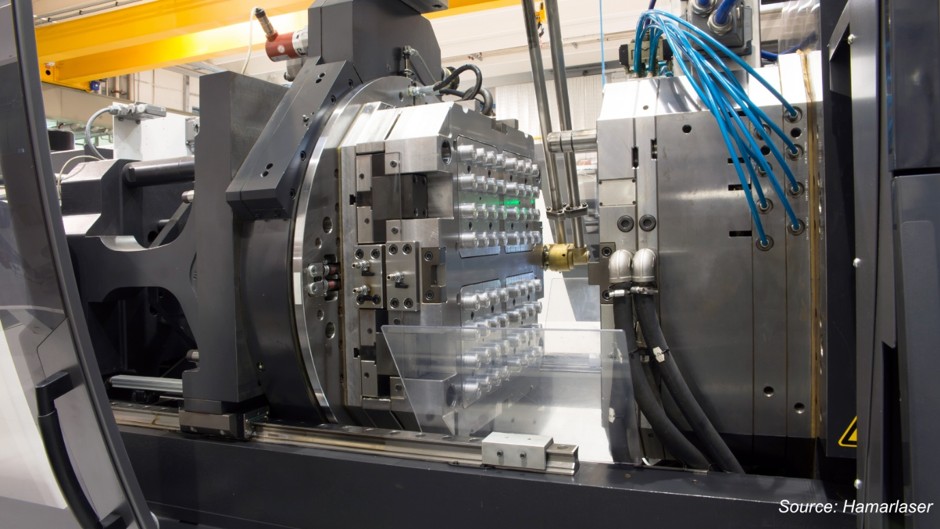
Predictive Maintenance Enabling Smarter Production Strategies
Predictive Maintenance is one of the most transformative applications of smart technology in injection molding. Traditional maintenance models rely on scheduled inspections or, worse, reacting after a failure has occurred. PdM flips this paradigm by using real-time sensor data and AI algorithms to predict when a component, such as a hydraulic pump, motor, or valve, is likely to fail. In a modern molding setup, dozens of sensors monitor vibration, pressure, and temperature in critical components. AI-driven analytics interpret these readings to detect early signs of wear, allowing maintenance teams to intervene before downtime occurs. The result is a dramatic improvement in machine uptime, cost efficiency, and lifecycle management.
European companies like ENGEL, Arburg, and Fanuc are deploying predictive maintenance modules that continuously collect and evaluate data from servo motors and hydraulic systems. For instance, ENGEL’s Condition Monitoring tool can identify unusual friction in the screw drive, triggering a maintenance alert long before failure. Similarly, Arburg’s ALS (Arburg Leitrechnersystem) collects production data from connected machines to predict potential breakdowns and plan service operations at optimal times.
In medical-grade molding, predictive maintenance delivers even greater value. Machine downtime during sterile production runs can result in expensive waste or regulatory noncompliance. Predictive systems minimize such risks, ensuring uninterrupted production for critical healthcare components, from surgical parts to pharmaceutical packaging, while maintaining ISO 13485 compliance. In effect, predictive maintenance converts plant operations from reactive to intelligent and proactive, aligning perfectly with Europe’s Industry 4.0 vision of a fully optimized and data-driven manufacturing ecosystem.
Strategic Company Actions Driving Market Transformation
Several European manufacturers are setting the benchmark for smart injection molding by strategically integrating AI, IoT, and predictive maintenance into their operations. ENGEL, Arburg, and KraussMaffei have expanded their capabilities to not only offer advanced machinery but also comprehensive digital ecosystems, including training centers, simulation tools, and cloud-based monitoring services. Wittmann Group and other technology partners are supporting factories in achieving full connectivity of robots, auxiliary devices, and molding machines, enabling predictive decision-making and enhanced traceability for medical and high-precision applications. Meanwhile, specialized players like Wirthwein AG and Comar Europe are leveraging these innovations to meet ISO 13485 standards, demonstrating how smart technologies are shaping production practices and driving Europe’s injection molding market growth across healthcare and industrial sectors.
The Future of Smart and Connected Molding
The European plastic injection molding industry is entering a transformative era, where intelligence, connectivity, and predictive insight redefine every stage of production. AI, IoT, and predictive maintenance are no longer optional enhancements; they are the drivers of efficiency, precision, and compliance in high-value sectors like healthcare. By adopting these technologies, manufacturers reduce waste, improve product quality, minimize downtime, and ensure full traceability, meeting both regulatory demands and market expectations. Companies that embrace smart molding are positioning themselves not just as machine suppliers, but as strategic partners for hospitals, medical device firms, and other critical industries. Therefore, the future of injection molding is smart, connected, and proactive. Europe’s manufacturers who leverage these innovations today set the standard for quality, sustainability, and operational excellence tomorrow.
About the Author
 Mayurima Roy
— Mayurima Roy is Research Analyst at Next Move Strategy Consulting, where she has spent 4 years working across the firm's full industry coverage rather than a single fixed vertical. Her work centers on structured research, ongoing trend tracking, competitive assessment, and insight-led content development, translating complex market data into clear, decision-ready narratives that support informed client decision-making across diverse global industries, market sectors, and world regions every day.
Mayurima Roy
— Mayurima Roy is Research Analyst at Next Move Strategy Consulting, where she has spent 4 years working across the firm's full industry coverage rather than a single fixed vertical. Her work centers on structured research, ongoing trend tracking, competitive assessment, and insight-led content development, translating complex market data into clear, decision-ready narratives that support informed client decision-making across diverse global industries, market sectors, and world regions every day.
About the Reviewer
 Supradip Baul
— Supradip Baul is an accomplished business consultant and strategist with over a decade of rich experience in market intelligence, strategy, technology, and business transformation. His work has included rigorous qualitative and quantitative analysis across multiple industries, helping clients shape investment decisions and long-term roadmaps. Earlier in his career, he was associated with Gartner, where he contributed to industry-leading reports and market share analyses. He has worked with leading global companies and holds an MBA with a dual specialization in Marketing and Finance.
Supradip Baul
— Supradip Baul is an accomplished business consultant and strategist with over a decade of rich experience in market intelligence, strategy, technology, and business transformation. His work has included rigorous qualitative and quantitative analysis across multiple industries, helping clients shape investment decisions and long-term roadmaps. Earlier in his career, he was associated with Gartner, where he contributed to industry-leading reports and market share analyses. He has worked with leading global companies and holds an MBA with a dual specialization in Marketing and Finance.

















Add Comment