Shaping The Future of the Global Data Center Market: Led by Aws, Microsoft Azure, Google Cloud, And Meta Platforms
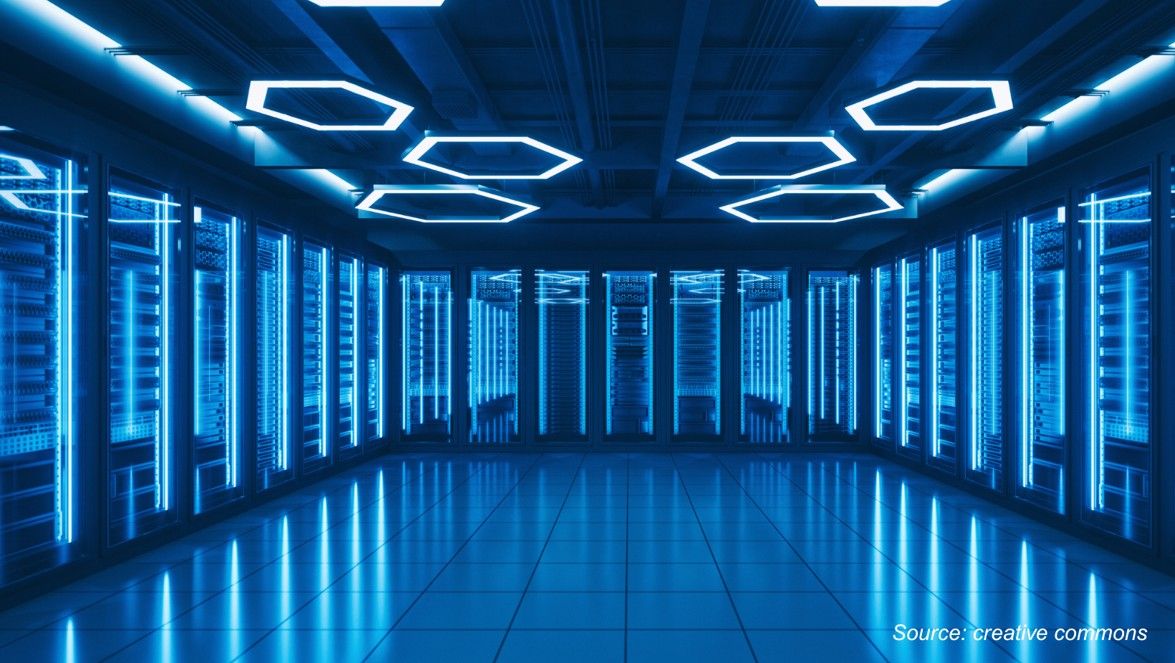
As per NMSC analysis, the data center industry is set to maintain strong growth momentum, with the market size expected to reach around USD 646.16 billion by 2030, marking a solid CAGR of 12.13%. Valued at USD 308.46 billion in 2024, the Data Center Market is projected to rise to USD 364.59 billion by 2025.
Curious about the Data Center Market? Download Your FREE Sample Report Now
Data Center Market Overview
The Data center market is expanding rapidly as enterprises, cloud providers, and digital-native businesses increasingly adopt intelligent, scalable, and energy-efficient infrastructure solutions. Modern data centers are redefining digital operations through the integration of AI-driven automation, edge computing, IoT connectivity, and sustainable design principles. These next-generation facilities leverage smart infrastructure management systems, real-time monitoring platforms, and AI-based predictive analytics to optimize performance, reduce downtime, and ensure seamless scalability. The convergence of automation, AI, and hybrid cloud architectures is allowing data centers to achieve unparalleled efficiency, supporting the world’s growing reliance on AI workloads, 5G networks, and high-performance computing applications.
The accelerating adoption of AI, machine learning, and automation technologies is fundamentally transforming how data centers operate. Facilities are becoming increasingly modular, adaptive, and software-defined, enabling dynamic resource allocation and faster deployment of computing power to meet global demand. Intelligent workload orchestration, self-healing networks, and robotic process automation (RPA) are enhancing operational precision and efficiency across large-scale infrastructures. Moreover, the integration of digital twins and autonomous monitoring systems allows operators to simulate and optimize facility performance in real time, minimizing energy waste and maintenance costs. As the world transitions toward data-driven operations, enterprises are prioritizing resilient, sustainable, and AI-ready data centers that can process massive volumes of information efficiently and securely.
Sustainability and energy efficiency have emerged as central pillars of the industry’s growth. The push for low-carbon, renewable-powered, and liquid-cooled data centers reflects a strategic shift toward environmentally responsible operations. Companies are adopting IoT-enabled energy monitoring, liquid immersion cooling, and AI-powered climate control systems to lower carbon footprints while maintaining high computational capacity. Global leaders such as Google, Microsoft, and Amazon Web Services (AWS) are investing heavily in net-zero data center campuses, with innovations such as heat reuse systems, circular energy loops, and renewable microgrids. For instance, Google’s data centers now use AI systems developed by DeepMind to optimize cooling energy consumption, reducing power usage by up to 30%, while Microsoft is piloting underwater and hydrogen-powered data centers to enhance sustainability and resilience.
Several key players dominate the global data center landscape, including Amazon Web Services, Microsoft, Google Cloud, Meta, Equinix, Digital Realty, and NTT Data among others. These companies are driving innovation through AI integration, automated orchestration, and infrastructure modernization. They are expanding their global presence with investments in hyperscale facilities, edge computing nodes, and regional data hubs, ensuring low-latency services for enterprise clients worldwide. Their ongoing efforts in AI-driven operations, renewable energy adoption, and modular construction are setting new standards in performance, cost optimization, and environmental responsibility.
As data generation accelerates across industries, from healthcare and finance to autonomous vehicles and industrial IoT, the demand for highly intelligent, automated, and sustainable data centers continues to surge. The sector is emerging as the digital backbone of the global economy, supporting everything from AI model training and real-time analytics to streaming, e-commerce, and metaverse applications. The integration of AI and automation is not only transforming operational models but also expanding the market’s capacity to deliver secure, efficient, and sustainable digital infrastructure on a global scale. In doing so, the data center industry is positioning itself as a critical enabler of the world’s digital transformation, where performance, intelligence, and sustainability converge to define the future of connectivity.

HIGHLIGHTS OF AMAZON WEB SERVICES (AWS)

Amazon Web Services (AWS), headquartered in Seattle, Washington, is a global leader in cloud computing services. As a subsidiary of Amazon, AWS specializes in providing scalable and secure infrastructure solutions, including compute power, storage, and networking capabilities, to businesses of all sizes. The data center market plays a pivotal role in AWS's operations, as the company relies on a vast network of data centers to deliver its cloud services efficiently and reliably to customers worldwide.
In 2025, AWS announced a significant expansion of its data center infrastructure, investing over USD 30 billion in new facilities across Pennsylvania and North Carolina. This expansion aims to meet the growing demand for cloud computing and artificial intelligence services, positioning AWS to better serve enterprise clients and government contracts. Additionally, AWS is exploring innovative energy solutions, including partnerships to develop Small Modular Reactors (SMRs) in Washington and Virginia, to address the increasing power requirements of its data centers. These strategic investments and initiatives reinforce AWS's commitment to maintaining its leadership in the global data center market.
HIGHLIGHTS OF MICROSOFT CORPORATION

Microsoft Corporation, headquartered at One Microsoft Way in Redmond, Washington, is a global technology leader specializing in software, cloud computing, and artificial intelligence. The company operates a vast network of data centers worldwide, supporting its Azure cloud platform, AI services, and enterprise solutions. The data center market is integral to Microsoft's operations, providing the infrastructure necessary to deliver scalable and reliable cloud services to customers across various industries.
In 2025, Microsoft announced a significant expansion of its data center infrastructure, committing an additional USD 4 billion to its Mount Pleasant, Wisconsin campus. This investment aims to construct a second large-scale AI data center, enhancing the company's capacity to support advanced AI workloads and services. The new facility is expected to house one of the world's most powerful AI supercomputers, integrating hundreds of thousands of Nvidia chips to power AI applications. This development underscores Microsoft's strategic focus on bolstering its AI capabilities and reinforces the critical role of data centers in its business model.
HIGHLIGHTS OF GOOGLE CLOUD

Google Cloud, a subsidiary of Alphabet Inc., is headquartered in Mountain View, California. As a leading provider of cloud computing services, Google Cloud offers a comprehensive suite of solutions encompassing infrastructure, data analytics, machine learning, and productivity tools. The data center market is integral to Google Cloud's operations, providing the necessary infrastructure to support its global services and meet the increasing demand for scalable and reliable cloud solutions.
In 2025, Google announced a significant expansion of its data center infrastructure, investing USD 5.3 billion (USD 5.8 billion) in Belgium. This investment focuses on enhancing its existing Saint-Ghislain facility and developing a new campus in Farciennes, aiming to bolster its artificial intelligence and cloud computing capabilities. The expansion is expected to create approximately 300 new jobs and support new onshore wind farm projects, aligning with Google's sustainability initiatives. Additionally, Google is investing USD 4 billion in a new data center in West Memphis, Arkansas, to support its AI and cloud infrastructure. The project includes a 600-megawatt solar energy initiative and a USD 25 million Energy Impact Fund to support energy affordability in the region. These developments underscore Google Cloud's commitment to expanding its data center footprint and advancing its AI capabilities to meet the growing global demand for cloud services.
HIGHLIGHTS OF ORACLE

Oracle Corporation, headquartered in Austin, Texas, is a global leader in enterprise software, cloud computing, and database technologies. The company operates a vast network of data centers worldwide, supporting its Oracle Cloud Infrastructure (OCI) platform and various cloud services. The data center market is integral to Oracle's operations, providing the necessary infrastructure to deliver scalable and reliable cloud services to customers across various industries.
In 2025, Oracle announced plans to invest USD 35 billion in capital expenditures for fiscal year 2026, aiming to expand its cloud infrastructure and meet the growing demand for AI and cloud services. Additionally, Oracle is collaborating with OpenAI and SoftBank on the Stargate project, a major AI infrastructure initiative to develop a 10-gigawatt AI data center network across the U.S., with Oracle contributing new data centers and infrastructure to support advanced AI workloads. These strategic initiatives reinforce Oracle’s position in the global data center market and its commitment to advancing cloud and AI capabilities.
HIGHLIGHTS OF META PLATFORMS INC.

Meta Platforms Inc., headquartered in Menlo Park, California, is a global leader in social media, virtual reality, and artificial intelligence technologies. The company operates an extensive network of data centers worldwide to support its platforms, including Facebook, Instagram, WhatsApp, and Oculus. The data center market is integral to Meta's operations, providing the necessary infrastructure to deliver scalable and reliable services to billions of users globally.
In 2025, Meta announced a significant investment of USD 70 billion in AI data centers, marking a substantial increase from the previous year's USD 37 billion investment. This funding is allocated across multiple initiatives, including the development of hyperscale campuses in locations such as Indiana, Texas, Spain, Finland, Singapore, and India, as well as the establishment of over 1,200 micro data centers globally. The expansion aims to support Meta's AI-driven services and enhance its global infrastructure. Additionally, Meta is exploring the acquisition of Rivos, a chip startup specializing in RISC-V architecture, to bolster its in-house AI chip development and reduce reliance on external suppliers like Nvidia. These strategic investments underscore Meta's commitment to advancing its AI capabilities and strengthening its position in the global data center market.
Summary of Data Center Market
The global data center market is experiencing rapid evolution, driven by the growing demand for digital infrastructure and the widespread adoption of cloud computing. Once primarily serving enterprises with traditional IT needs, data centers have now become strategic assets for organizations worldwide, offering scalable, high-performance, and energy-efficient environments that support business continuity, data security, and operational agility. While major hubs in North America, Europe, and Asia-Pacific continue to host premium, large-scale facilities, rising real estate costs and network congestion are encouraging investment in secondary and regional locations, reflecting the broader trend of distributed computing and edge infrastructure deployment.
Technology and sustainability are key forces shaping the sector’s trajectory. Operators are leveraging AI-driven monitoring, IoT-enabled sensors, and automation platforms to optimize efficiency, improve uptime, and scale operations seamlessly. Concurrently, regulatory frameworks and ESG mandates are accelerating the adoption of energy-efficient designs, renewable power sourcing, and sustainable construction practices. With strong demand from cloud providers, hyperscale operators, enterprises, and colocation service providers, and growing collaboration between technology vendors and real estate developers, the global data center market is poised for robust expansion, establishing itself as a critical backbone of the modern digital economy.
About the Author
 Ridip Gogoi is a research associate recognized for his strong analytical thinking and meticulous attention to detail. He specializes in transforming complex datasets into meaningful insights that support informed business decisions and strategic planning. With a proactive mindset and strong commitment to accuracy, he contributes effectively to market analysis, data validation, and insight generation. Ridip is driven by continuous learning and consistently works to enhance research quality, analytical depth, and reporting clarity across projects.
About the Reviewer
 Supradip Baul is an accomplished business consultant and strategist with over a decade of rich experience in market intelligence, strategy, technology, and business transformation. His work has included rigorous qualitative and quantitative analysis across multiple industries, helping clients shape investment decisions and long-term roadmaps. Earlier in his career, he was associated with Gartner, where he contributed to industry-leading reports and market share analyses. He has worked with leading global companies and holds an MBA with a dual specialization in Marketing and Finance.














Add Comment