5 Powerful Active Network Management Trends Reshaping the Global Energy Grid in 2026

The Active Network Management Market is becoming increasingly important as the global electricity grid undergoes one of its most significant transformations in a century. With renewable energy capacity expanding at an unprecedented rate, the infrastructure connecting energy generation to consumption is facing mounting pressure, creating operational and capacity challenges across power networks. In response, active network management (ANM) has emerged as a critical technological solution, enabling grid operators to dynamically monitor, control, and optimize distributed energy flows in real time without the substantial cost and long implementation timelines associated with conventional grid reinforcement.
The Grid Modernization Imperative: What Is Driving the Active Network Management Market Forward
A Landmark Policy Shift Reshapes Grid Connections in the UK
The reform introduces the Gate 2 to Whole Queue (G2TWQ) process, ensuring that only projects demonstrating sufficient readiness and alignment with national energy objectives receive confirmed grid connection timelines. This structural transformation carries significant implications for the Active Network Management Market, as distribution and transmission network operators accelerate the deployment of active network management zones to support a more efficient and responsive connection framework. As a result, demand for ANM software, automation platforms, and real time grid monitoring infrastructure is expected to strengthen considerably.
National Grid Electricity Distribution (NGED) has already begun expanding active network management zones based on projected energisation schedules for new grid connections, implementing both Distribution Active Network Management (DANM) and Transmission Active Network Management (TANM) systems across its network to improve flexibility and optimize grid capacity.
This trend extends beyond a single region. The European Court of Auditors, in its review on preparing the EU electricity grid for net zero emissions, emphasized the urgent need to accelerate electricity grid modernization efforts across Europe. The review highlighted that planned infrastructure development remains insufficient to meet long term energy transition goals, positioning active grid management technologies, including ANM solutions, as a central component of future energy and grid resilience strategies.
The Distributed Energy Resource Integration Challenge
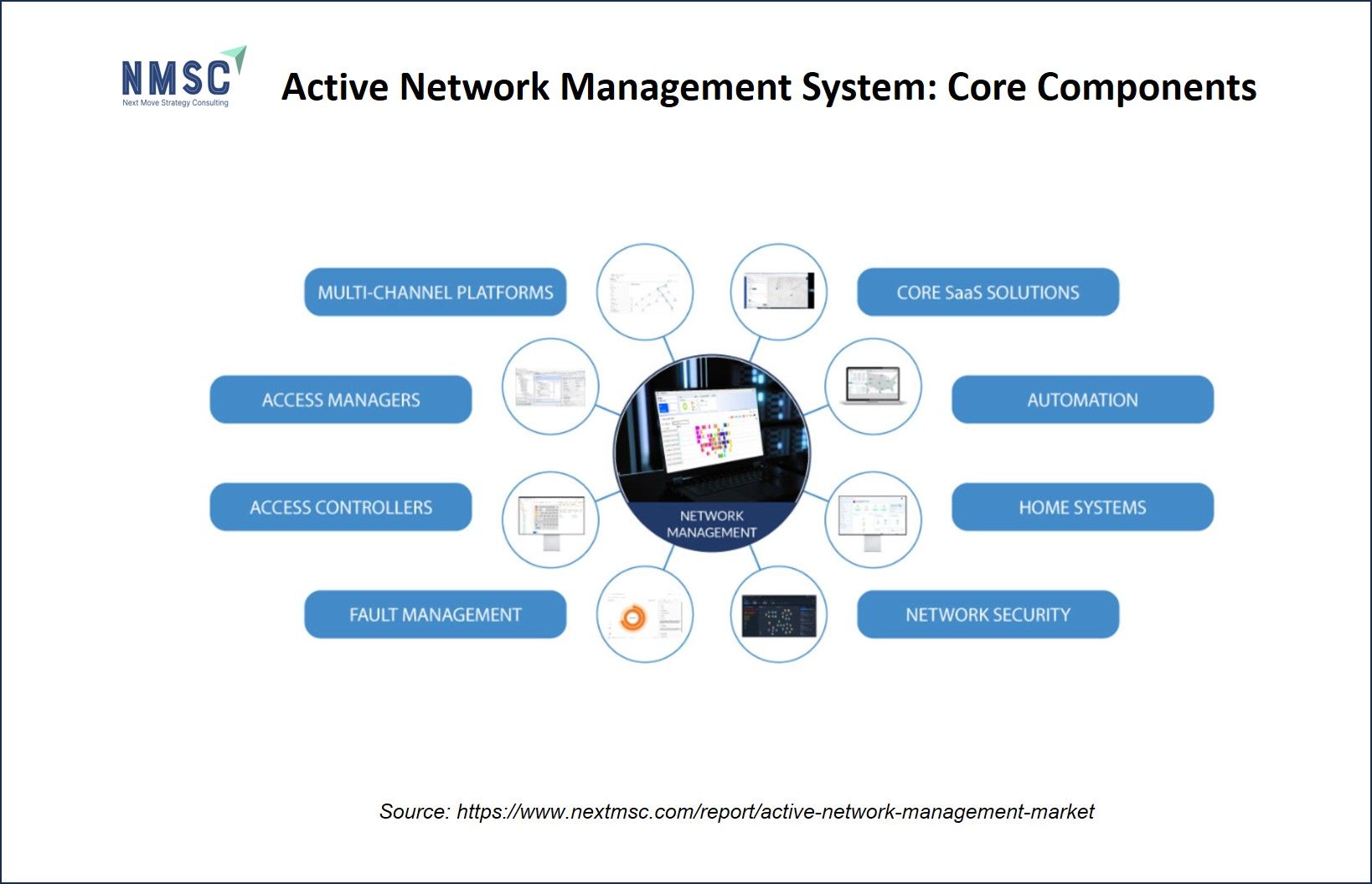
The proliferation of distributed energy resources (DERs) including rooftop solar, battery storage, electric vehicles, and small-scale wind is fundamentally altering the operational dynamics of electricity distribution networks. Traditional passive grid architectures, designed for unidirectional power flows from large centralized generators to end consumers, are structurally ill-equipped to manage the bidirectional, variable, and geographically dispersed nature of modern DER portfolios.
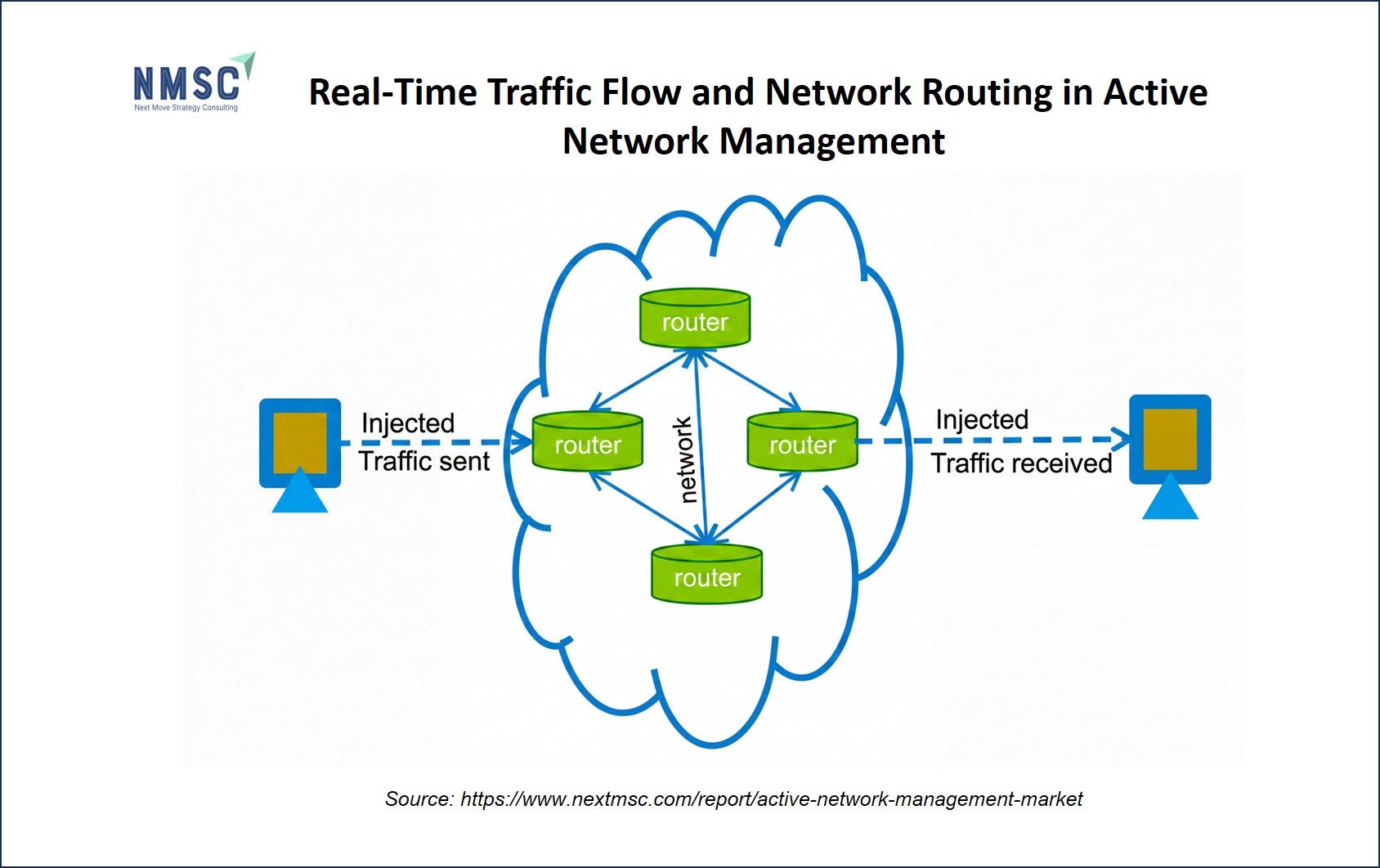
Active network management systems address this challenge directly. By continuously measuring real-time or near-real-time network parameters including voltage levels, power flows, and fault conditions ANM platforms calculate permissible operating values and issue automated control signals to generation and demand assets. This capability allows network operators to maximize the hosting capacity of existing infrastructure, defer costly capital reinforcement, and maintain system stability as renewable penetration increases.
The rapid growth in electricity demand driven by data centers, industrial electrification, and electric mobility is placing unprecedented pressure on grid operators to deploy intelligent management solutions at scale.
NMSC Strategic Perspective: Decoding the ANM Market Shift
According to Next Move Strategy Consulting's proprietary analysis, the global active network management market was valued at USD 658.3 million in 2019 and is projected to reach USD 3,034.9 million by 2030, representing a compound annual growth rate (CAGR) of 14.9% over the forecast period 2020–2030.
NMSC's analysis identifies several structural growth drivers underpinning this trajectory. The increasing demand for uninterrupted power supply, the rising requirement for efficient power management solutions, and the accelerating integration of ANM into smart city development projects are collectively reinforcing market expansion. North America currently accounts for the largest regional market share, supported by well-established grid infrastructure and a high concentration of key technology players. Asia-Pacific, however, is projected to register the highest CAGR through 2030, driven by rapid smart city development, expanding power and utility sector investment, and strong government-led grid modernization programs across China, India, Japan, and Australia.
Industry Impact Analysis
Record Global Energy Investment Reshapes Grid Technology Priorities
This structural reallocation of capital has profound implications for the Active Network Management Market. As renewable generation capacity continues to expand rapidly, investment in solar and other clean energy technologies is accelerating, increasing the operational complexity of managing variable and distributed energy generation across existing grid infrastructure. As a result, ANM systems are increasingly being recognized as a cost-effective alternative to physical network reinforcement, enabling operators to unlock greater capacity from existing assets through intelligent, real-time monitoring and control.
BloombergNEF’s Grid Investment Outlook further emphasizes that investment in transmission infrastructure is expected to grow at a faster pace than distribution networks, supported by expanding long-distance interconnections, new substations, and high-voltage direct-current (HVDC) projects. Major economies including the United States, China, and the EU/UK continue to drive global grid investment, reinforcing the need for advanced network management solutions that improve grid flexibility, reliability, and renewable energy integration.
Supply Chain Constraints and the Case for Software-Led ANM Solutions
Despite record investment levels, BloombergNEF's analysis cautions that increased spending will not fully eliminate ongoing grid infrastructure bottlenecks. Rising equipment costs, compounded by high inflation, supply chain constraints for transformers and cables, and permitting delays are collectively limiting the pace of physical grid expansion. The IEA similarly notes that grid materials prices have nearly doubled over the past five years as a result of rising demand for cables and transformers.
This environment creates a compelling commercial case for software-led ANM solutions. Rather than waiting years for physical reinforcement projects to complete, network operators can deploy ANM platforms to unlock latent capacity within existing infrastructure connecting new renewable generation and demand assets at a fraction of the cost and timeline. The IEA has explicitly called for grid regulation to incentivize grids to keep pace with rapid changes in electricity demand and supply, noting that regulatory frameworks must evolve to support intelligent grid management technologies.
Data Centers and Industrial Electrification: Emerging ANM Demand Drivers
A significant and underappreciated driver of ANM market growth is the surge in power demand from data centers and industrial electrification. BloombergNEF notes that demand queues are rising rapidly as transmission grids receive a major increase in connection requests from large data centers and high-consumption industrial facilities. The IEA's World Energy Investment 2025 report identifies the 'Age of Electricity' characterized by rising electricity demand for industry, cooling, electric mobility, data centers, and artificial intelligence as the primary force reshaping investment trends across the global energy sector.
For ANM solution providers, this represents a structural expansion of the addressable market beyond traditional utility and renewable energy applications. As hyperscale data center operators and industrial manufacturers seek guaranteed, high-quality grid connections, the demand for sophisticated real-time monitoring and automated network management capabilities is set to grow substantially.
Pros and Cons of Recent Market Developments
|
Recent Development |
Pros |
Cons |
|
UK Ofgem TMO4+ Connections Reform (April 2025) |
Accelerates ANM zone rollouts; creates a structured, prioritized queue for renewable connections; reduces speculative projects clogging the grid |
Short-term operational complexity for DNOs; Gate 1 projects face uncertainty; implementation timeline pressures on network operators |
|
Record Global Grid Investment (USD 470B+ in 2025) |
Increases capital available for ANM infrastructure; validates grid modernization as a strategic priority; attracts institutional investment |
Rising equipment costs and inflation reduce the physical infrastructure impact of increased spending; bottlenecks persist |
|
EU Grid Review (ECA Review 01/2025) |
Elevates ANM on the EU policy agenda; creates regulatory pressure for accelerated grid modernization investment |
Planned investments still fall short of net-zero expansion needs; regulatory fragmentation across member states slows deployment |
|
Surge in Data Center & Industrial Power Demand |
Expands the ANM addressable market beyond utilities; creates high-value, long-term connection contracts |
Increases grid congestion in the near term; demand queues growing faster than grid capacity can accommodate |
|
Rising Grid Material Costs (Cables & Transformers) |
Strengthens the commercial case for software-led ANM over physical reinforcement |
Increases overall project costs; may delay physical ANM infrastructure deployment in cost-sensitive markets |
|
Asia-Pacific Smart City Expansion |
Creates large-scale, government-backed ANM deployment opportunities in high-growth markets |
Infrastructure maturity gaps in emerging economies; higher deployment costs relative to established markets |
Key Titans Driving Innovation in the Active Network Management Market
The Active Network Management (ANM) Market is characterized by the presence of several prominent technology and energy management providers that are advancing grid modernization and renewable energy integration. Key players operating in the market include GE Vernova, Schneider Electric, ABB, Hitachi Energy, Oracle Corporation, Open Systems International, Smarter Grid Solutions, Argand Solutions, and AutoGrid Systems. These companies are actively investing in advanced grid automation, distributed energy resource management, network optimization, and smart utility technologies to strengthen their market position and support the evolving requirements of modern power distribution networks.

Future Outlook & Forecast for the Active Network Management Market
Technology Evolution: AI, IoT, and the Next Generation of ANM
The integration of artificial intelligence, machine learning, and Internet of Things (IoT) connectivity into ANM platforms represents the next frontier of market evolution. BloombergNEF's Grid Investment Outlook 2025 specifically identifies investment in innovative grid technologies including dynamic line ratings, advanced power flow control, and AI-optimized smart-grid software solutions, as a growing component of overall grid capital expenditure. These capabilities are expected to enhance the precision, responsiveness, and scalability of ANM systems, enabling network operators to manage increasingly complex grid topologies with greater efficiency and lower operational cost.
The rise in ICT expenditure by governmental bodies in both developed and developing nations, combined with the growing proliferation of IoT-connected devices, is expected to create additional lucrative opportunities in the ANM market, particularly in smart city applications where integrated energy, transportation, and infrastructure management systems require sophisticated real-time network control capabilities.
Next Steps for Stakeholders
For C-Level Executives at Utilities and Network Operators:
Prioritize the integration of ANM software platforms into capital planning frameworks as a cost-effective alternative to physical network reinforcement.
For Technology and Solution Providers:
The convergence of AI, IoT, and real-time grid analytics represents a significant product differentiation opportunity.
For Institutional Investors and Private Equity:
The active network management market's 14.9% CAGR through 2030, combined with the structural tailwinds of regulatory reform and record grid investment, presents a compelling risk-adjusted investment thesis.
For Government and Regulatory Bodies:
Accelerate the development of regulatory frameworks that incentivize utilities to invest in grid-enhancing technologies, including ANM systems.
Conclusion
The active network management market stands at a pivotal inflection point. The convergence of record global grid investment, landmark regulatory reforms in the UK and EU, the proliferation of distributed energy resources, and the emergence of data centers and industrial electrification as new demand drivers has created a structural growth environment that is unlikely to abate before the end of the decade. The IEA's confirmation that annual grid investment must nearly double to USD 600 billion by 2030 against a current baseline of USD 400 billion underscores the scale of the infrastructure challenge that ANM technologies are uniquely positioned to address.
According to Next Move Strategy Consulting's analysis, the global active network management market is projected to reach USD 3,034.9 million by 2030, growing at a CAGR of 14.9%. A trajectory that reflects both the urgency of the grid modernization imperative and the proven commercial value of intelligent, software-driven network management. For executives, investors, and policymakers navigating the energy transition, the active network management market is not a peripheral technology play. It is a foundational enabler of the decarbonized, digitalized grid that the global economy requires.
About the Author
 Sanyukta Deb
— Sanyukta Deb is Digital Marketing Team Lead at Next Move Strategy Consulting, where she has led content strategy and technical SEO for the firm's B2B market research publications for over 2 years. Her editorial process translates NextMSC's primary and secondary research — spanning technology, industrial, and consumer sectors — into commercial narratives, backed by search-intent, keyword, and competitive analysis. She brings 5 years of overall experience in digital marketing and content strategy.
Sanyukta Deb
— Sanyukta Deb is Digital Marketing Team Lead at Next Move Strategy Consulting, where she has led content strategy and technical SEO for the firm's B2B market research publications for over 2 years. Her editorial process translates NextMSC's primary and secondary research — spanning technology, industrial, and consumer sectors — into commercial narratives, backed by search-intent, keyword, and competitive analysis. She brings 5 years of overall experience in digital marketing and content strategy.
About the Reviewer
 Debashree Dey
— Debashree Dey is Assistant Manager at Next Move Strategy Consulting, where she supports cross-vertical market content and communications across diverse industries for 6 years. Her professional background includes senior content writing, communications, and published manuscript authorship, with experience developing audience-focused business narratives and maintaining clear, consistent messaging. Her role supports research-led content development and editorial quality across NextMSC publications.
Debashree Dey
— Debashree Dey is Assistant Manager at Next Move Strategy Consulting, where she supports cross-vertical market content and communications across diverse industries for 6 years. Her professional background includes senior content writing, communications, and published manuscript authorship, with experience developing audience-focused business narratives and maintaining clear, consistent messaging. Her role supports research-led content development and editorial quality across NextMSC publications.


















Add Comment