The Future of Enterprise Customisation is Powered by Composable and Low-Code ERP
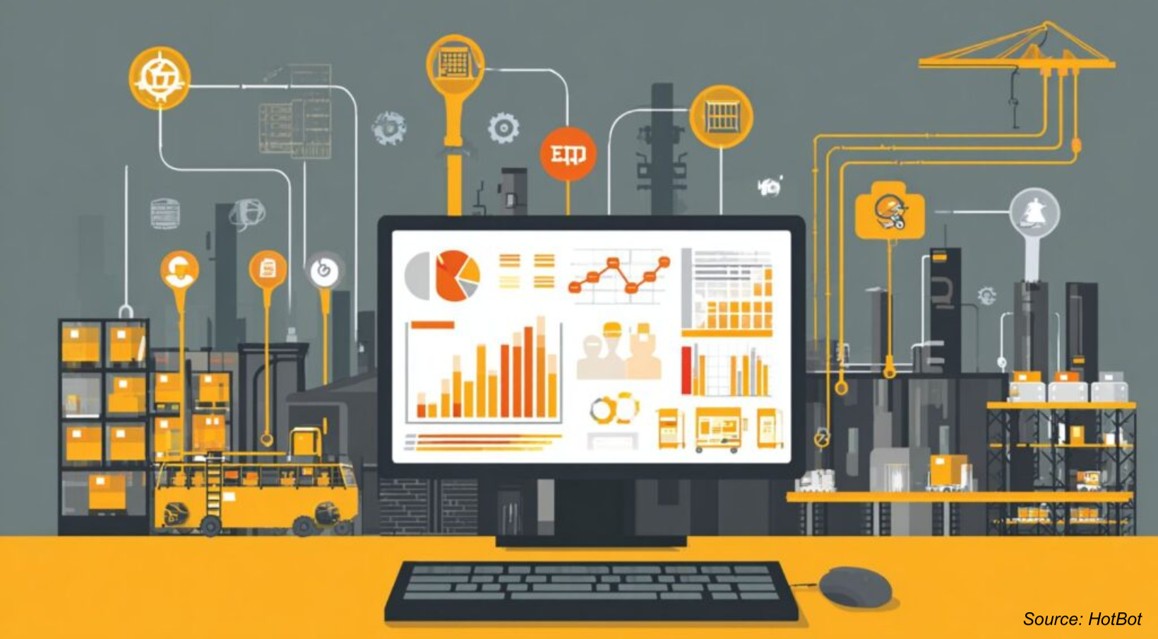
The global ERP software landscape is undergoing a structural transformation as businesses move away from monolithic, rigid systems toward more modular, adaptive, and user-driven solutions. At the center of this shift is composable and low code ERP architecture, an approach that redefines how enterprise systems are configured, deployed, and extended. Based on our analysis, we found that composable ERP is no longer a niche or experimental solution; it is emerging as a core strategy for addressing persistent enterprise challenges such as long implementation cycles, high IT dependency, and slow adaptation to changing business processes. By enabling modular components and low-code customisation, organisations are adopting principles long established in software development: agility, scalability, repeatability, and operational efficiency.
According to Next Move Strategy Consulting, the ERP Software Market size was valued at USD 116.26 billion in 2025, and is expected to be valued at USD 142.02 billion by the end of 2026. The industry is projected to grow, hitting USD 383.36 billion by 2035, with a CAGR of 11.7% between 2026 and 2035.
Want Insights on the ERP Software Market? Access a FREE Sample Instantly
From Monolithic Suites to Modular Platforms: A Fundamental Shift in ERP Delivery
Traditional ERP systems have historically relied on monolithic architectures that require complex coding, extended deployment timelines, and extensive IT resources. Composable ERP fundamentally alters this paradigm by enabling modular, interoperable components that can be configured independently. NMSC’s analysis indicates that this modularity allows businesses to implement, upgrade, or replace specific ERP modules, such as finance, supply chain, or HR, without disrupting the broader system. Combined with low-code platforms, organisations empower business users to design workflows, dashboards, and automations with minimal technical expertise, accelerating digital transformation while reducing IT bottlenecks.

Industry evidence suggests that composable ERP provides measurable improvements in agility, operational efficiency, and ROI. By standardising core modules while allowing flexible customisation, organisations rapidly respond to market changes, regulatory requirements, and strategic initiatives. Comparative market data indicates that enterprises leveraging low-code composable ERP experience faster implementation cycles and higher user adoption rates than those relying solely on traditional ERP customisation approaches. Operationally, this architecture supports cross-functional collaboration and real-time decision-making, though governance, data security, and integration standardisation remain critical considerations.
What Driving Forces are Scaling Composable & Low Code ERP Globally?
We observed several structural and economic factors driving adoption across regions:
-
Digital Transformation Imperatives: Businesses across sectors are under pressure to modernise legacy systems, integrate AI, and support hybrid work models. Composable ERP provides the flexibility to adapt to evolving business processes while preserving core operational stability.
-
Resource Optimisation & IT Efficiency: Shortages of skilled developers and rising IT costs incentivise the adoption of low-code platforms, enabling citizen developers to contribute to system configuration and automation.
-
Process Agility & Competitive Advantage: Standardised modular components, combined with low-code customisation, allow enterprises to scale rapidly, launch new offerings, and implement strategic initiatives without long delays.
-
Integration & Ecosystem Alignment: Our analysis indicates that composable ERP simplifies integration with third-party tools, cloud services, and emerging technologies, enhancing the value of existing software ecosystems and reducing operational complexity.
Real-World Examples of Composable & Low-Code ERP
Based on our evaluation, several real-world implementations demonstrate the tangible benefits of composable ERP, showing how modular architectures and low-code customisation improve deployment speed, operational efficiency, and business adaptability across functions:
1. SAP Business Technology Platform – Modular & Extensible ERP
SAP’s composable framework enables enterprises to deploy modular finance, HR, and supply chain components with flexible extensions.
-
Reduced implementation cycles for large organisations.
-
Facilitated integration with AI-powered analytics and IoT systems.
-
Demonstrated agility in adapting workflows for multi-regional operations.
2. Oracle Fusion Cloud – Low-Code Customisation at Scale
Oracle Fusion Cloud leverages low-code tools to enable business users to design process automations, reports, and dashboards.
-
Faster deployment of custom workflows without heavy IT involvement.
-
Increased end-user adoption due to intuitive interfaces.
-
Showcased scalability for large enterprises with complex business structures.
3. Workday Adaptive ERP Modules – Real-Time Flexibility
Workday’s modular ERP allows organisations to select and configure only the modules required for their operations.
-
Supported rapid HR and financial process modernisation.
-
Reduced dependency on specialised IT teams.
-
Enabled faster integration with third-party talent and payroll systems.

The Outlook for Agile and Modular ERP as it Gains Momentum in Enterprises
Market trends indicate that composable and low-code ERP are reshaping the enterprise software landscape, as organisations are increasingly moving toward hybrid deployment models, where traditional ERP frameworks coexist with modular and low-code systems. As cloud technologies, AI, and integration platforms evolve, composable ERP is expected to become a mainstream standard for agile enterprise management. We noticed that this transformation represents more than a technological upgrade, it signals a fundamental redefinition of how businesses design, implement, and scale enterprise systems, aligning software infrastructure with the speed, flexibility, and operational precision required in modern organisations.
About the Author
 Mayurima Roy is Research Analyst at Next Move Strategy Consulting, where she has spent 4 years working across the firm's full industry coverage rather than a single fixed vertical. Her work centers on structured research, ongoing trend tracking, competitive assessment, and insight-led content development, translating complex market data into clear, decision-ready narratives that support informed client decision-making across diverse global industries, market sectors, and world regions every day.
About the Reviewer
 Supradip Baul is an accomplished business consultant and strategist with over a decade of rich experience in market intelligence, strategy, technology, and business transformation. His work has included rigorous qualitative and quantitative analysis across multiple industries, helping clients shape investment decisions and long-term roadmaps. Earlier in his career, he was associated with Gartner, where he contributed to industry-leading reports and market share analyses. He has worked with leading global companies and holds an MBA with a dual specialization in Marketing and Finance.


















Add Comment