Why Is Robot Software Becoming the Brain Behind Industrial Automation in 2026?
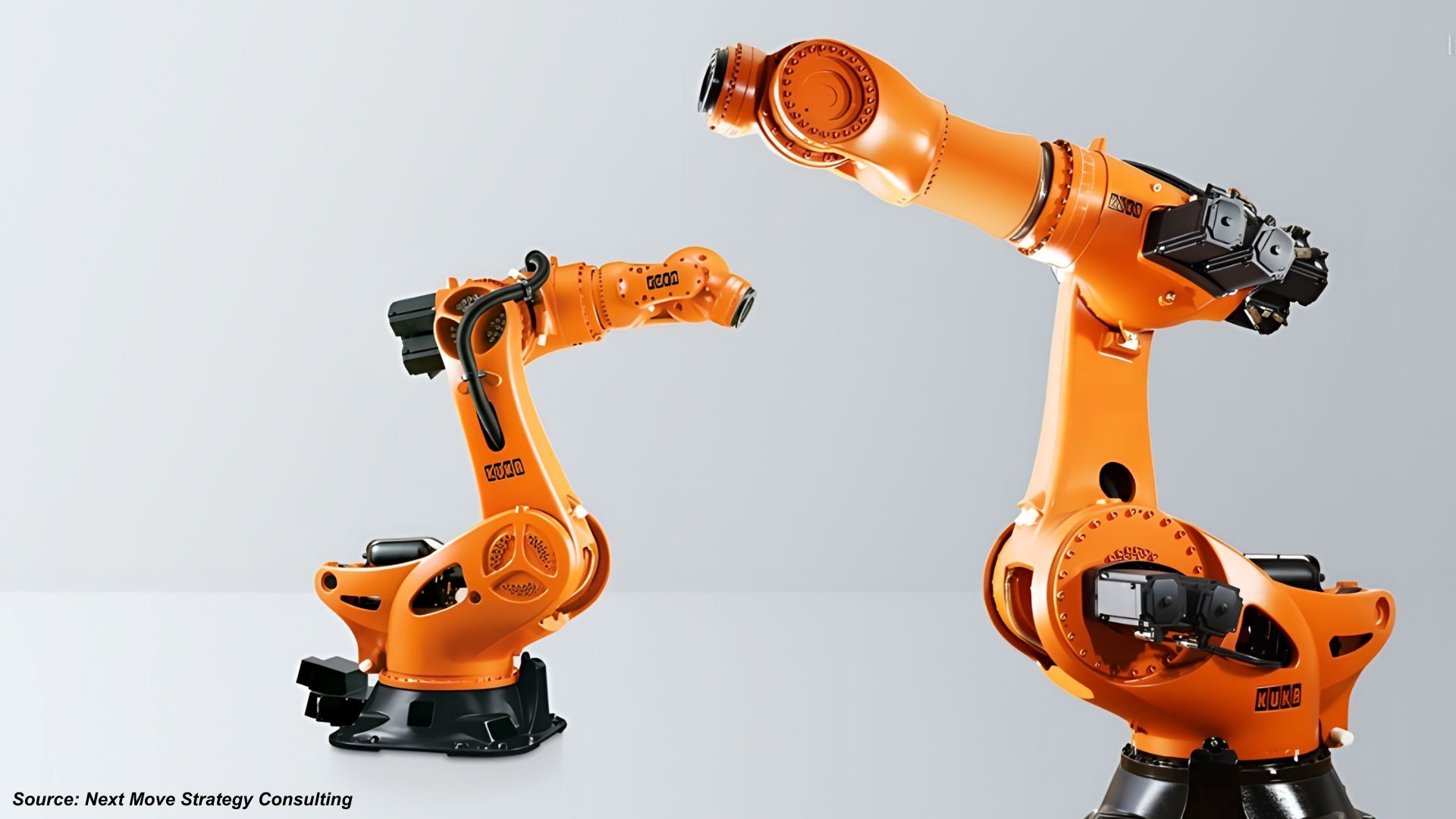
Robot Software Market is rapidly becoming the intelligence layer behind next-generation automation systems. In 2026, companies are no longer focusing only on robotic hardware. The competitive advantage increasingly comes from software platforms that allow robots to adapt, learn, simulate, and execute complex industrial tasks with minimal manual programming.
Recent developments from NVIDIA and Swiss robotics startup MESH demonstrate how software-defined robotics is reshaping industries ranging from construction and logistics to healthcare and manufacturing. These developments matter because industries worldwide are facing labor shortages, rising safety expectations, and growing pressure to improve operational efficiency.
For investors, procurement leaders, and operations executives, the shift toward intelligent robot software is becoming a strategic infrastructure decision rather than a future technology experiment.
How Is Robot Software Transforming Industrial Automation?
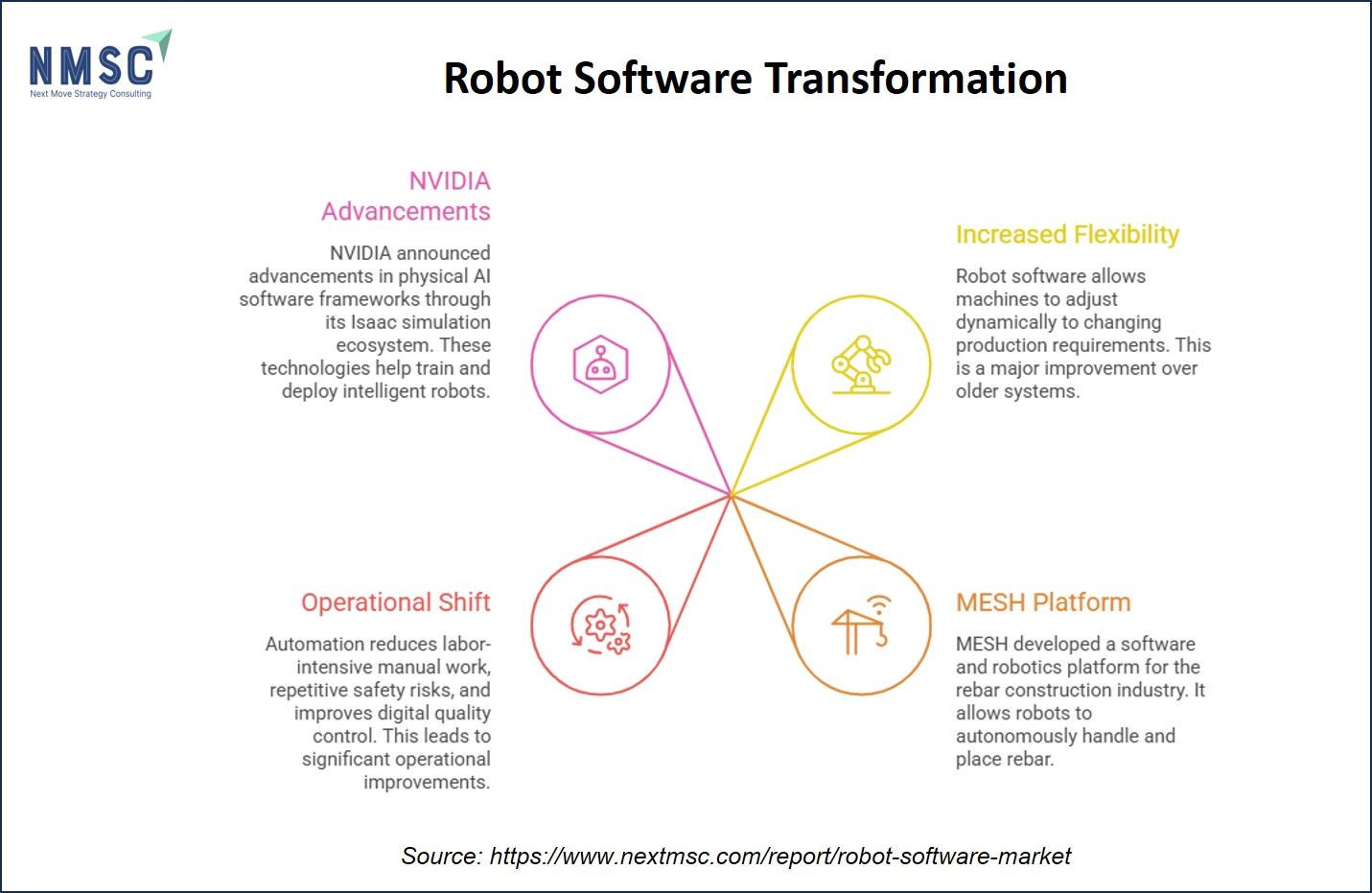
Robot software now enables machines to operate with far greater flexibility than traditional industrial robots. Earlier automation systems depended heavily on specialized programming for every design or workflow modification. Modern robotics software platforms instead allow machines to adjust dynamically to changing production requirements.
A major example comes from MESH, an ETH Zurich spin-off that developed a software and robotics platform specifically for the rebar construction industry. Its platform allows industrial robots to autonomously handle, place, and join rebar while switching between different designs “at the push of a button” without requiring specialized programming.
This represents a major operational shift for industries that previously relied on labor-intensive manual work. According to MESH, its systems have already processed more than 1 million rebar elements for infrastructure projects, including Switzerland’s new Gotthard tunnel. The company also reported that automation reduced repetitive safety risks while improving digital quality control.
At the same time, NVIDIA announced major advancements in physical AI software frameworks through its Isaac simulation ecosystem, Cosmos world models, and Isaac GR00T robot foundation models. These technologies are designed to help robotics companies train, validate, and deploy intelligent robots at industrial scale.
Major Categories Driving the Robot Software Ecosystem
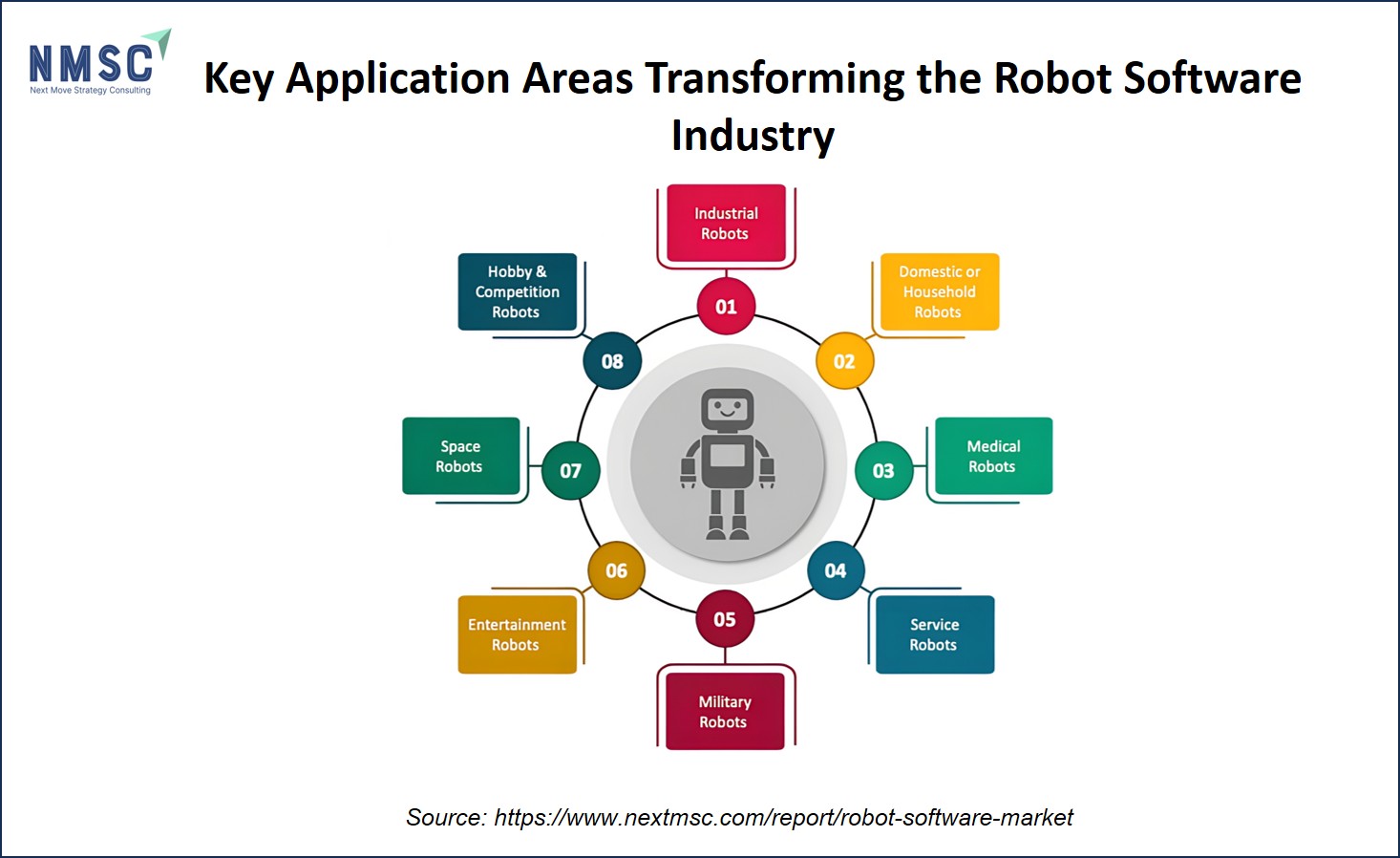
The image highlights the diverse application areas where robot software is enabling automation, intelligent control, and AI-driven decision-making across industries. At the center is a robotic system surrounded by eight major robot categories that increasingly rely on advanced software platforms for operation, simulation, and autonomous functionality.
Industrial robots represent one of the largest adoption segments, where robot software is used for precision manufacturing, assembly line automation, and production optimization. Domestic or household robots focus on consumer convenience through automated cleaning, smart assistance, and home management tasks.
Medical robots are gaining traction in surgical procedures, diagnostics, and rehabilitation support, where software precision and safety validation are critical. Service robots are widely used in customer service, logistics, hospitality, and warehouse management to improve operational efficiency.
The image also includes military robots, which rely on advanced robotics software for surveillance, navigation, and mission-critical operations in high-risk environments. Entertainment robots are increasingly used in gaming, theme parks, and interactive digital experiences powered by AI-driven behaviors.
Space robots demonstrate how robotics software supports autonomous exploration, satellite servicing, and extraterrestrial operations in highly complex environments. Meanwhile, hobby and competition robots highlight the growing role of robotics education, coding, and innovation-driven experimentation.
Major Trends Shaping the Present Robot Software Landscape
AI-Powered Simulation and Digital Twins
NVIDIA revealed that robotics leaders including ABB Robotics, FANUC, KUKA, and YASKAWA are integrating NVIDIA Omniverse and Isaac simulation frameworks into production systems. This reflects the growing importance of digital twins in industrial automation.
Digital twins are virtual replicas of factories, workflows, or robotic environments that allow companies to test deployments before physical implementation. This approach helps manufacturers reduce downtime, lower commissioning risks, and optimize robotic performance before systems are activated on production floors.
Generalized Robot Intelligence
Traditional industrial robots were typically designed for repetitive single-purpose functions. Modern robot software is increasingly focused on generalized intelligence, enabling robots to adapt to multiple tasks with limited retraining.
Companies such as Skild AI and FieldAI are using NVIDIA Cosmos world models and Isaac simulation frameworks to train robots capable of operating across dynamic environments. This could significantly improve scalability for manufacturers managing complex production operations.
Humanoid Robotics Expansion
Humanoid robotics development is also accelerating as companies seek systems capable of functioning in environments originally designed for human workers. NVIDIA highlighted how companies including AGIBOT, Figure, Boston Dynamics, and NEURA Robotics are using Isaac Lab and GR00T models to speed up humanoid robotics development.
Construction Automation Gains Momentum
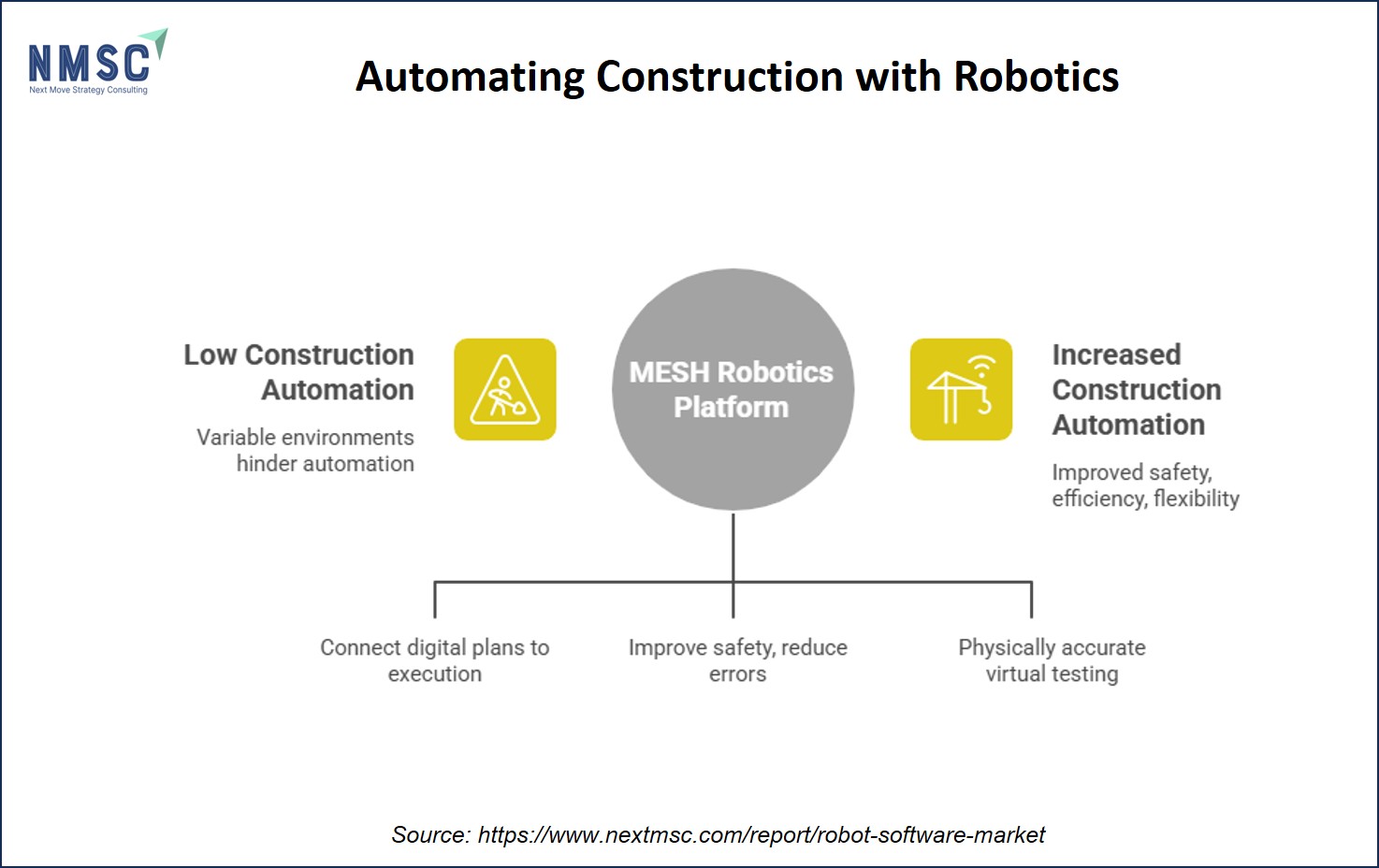
Construction has historically been one of the most difficult industries to automate because of highly variable work environments. MESH demonstrates how robot software is beginning to bridge that gap by connecting digital construction planning with autonomous physical execution.
Its rebar automation platform shows how robotics software can improve safety, reduce manual errors, and increase flexibility in construction workflows without requiring deep programming expertise from operators.
One of the most important developments is the increasing reliance on simulation before physical deployment. NVIDIA stated that manufacturers are now demanding physically accurate virtual testing environments before implementing robotics systems at scale.
However, adoption challenges remain. Companies must manage integration costs, workforce adaptation, and compatibility with legacy infrastructure. Industries such as healthcare also face higher regulatory scrutiny due to the safety-critical nature of robotic systems.
Leading Companies Strengthening Their Position in the Robot Software Industry
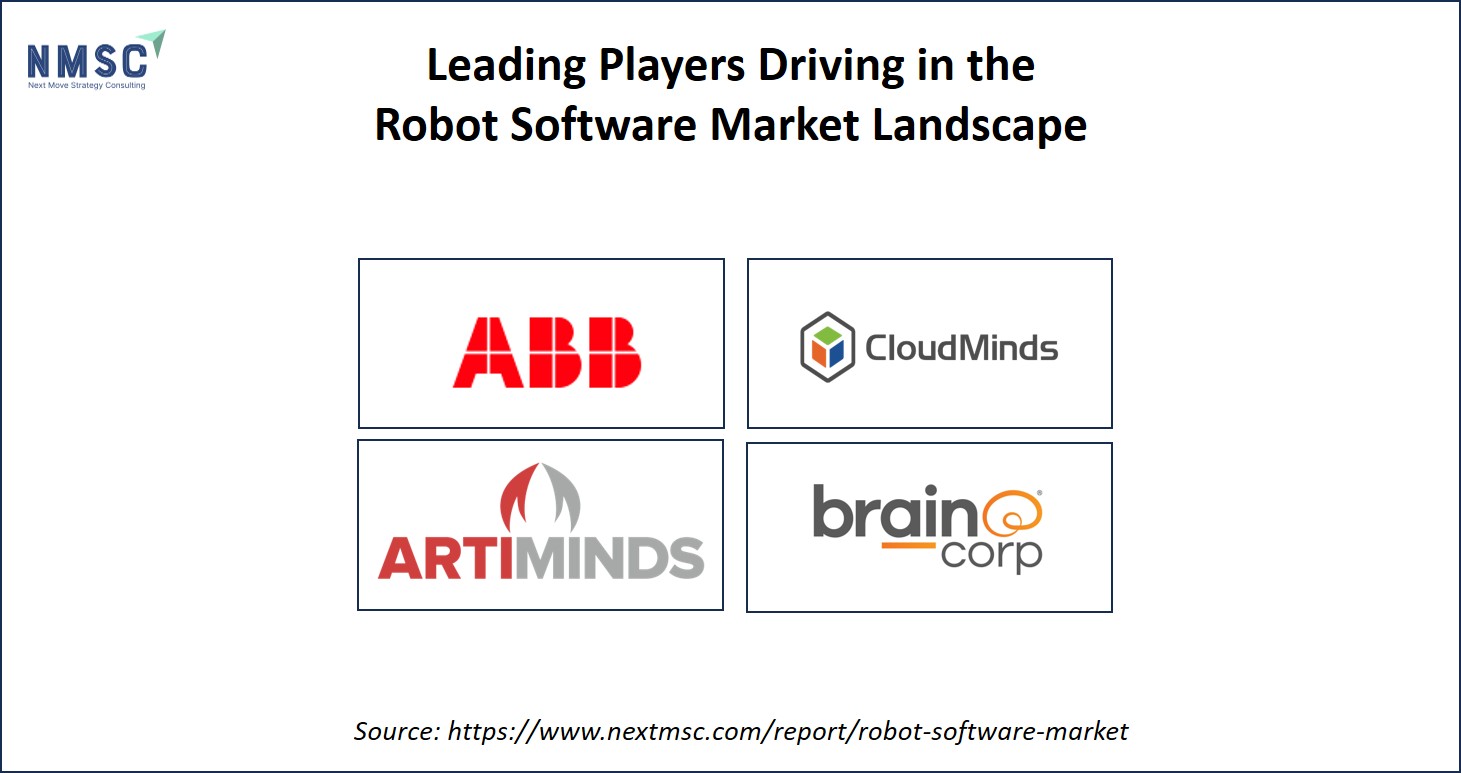
Several major companies are actively shaping the robot software industry, including ABB Ltd., ArtiMinds Robotics GmbH, Brain Corp, Clearpath Robotics, CloudMinds, Dassault Systèmes, Flexiv, H2O.ai, IBM Corporation, Kemppi Oy Ab, Kinova Robotics, MathWorks, NVIDIA Corporation, Omron Corporation, Open Robotics, RoboDK Global, Rockwell Automation, Schneider Electric, Siemens AG, Standard Bots, Teradyne, Inc., Visual Components, Yaskawa Electric, Unity Technologies, and FANUC Corp..
These companies are increasingly focusing on strategies such as product launches, AI-driven robotics innovation, simulation software expansion, and regional market penetration to strengthen their competitive position and maintain leadership within the evolving robot software industry.
Future Outlook
The future of robot software will likely revolve around autonomous reasoning, scalable simulation, and cross-industry interoperability. NVIDIA’s announcement of Cosmos 3 and GR00T N2 signals growing investment in generalized robot intelligence capable of operating in unpredictable environments with higher levels of autonomy.
At the same time, MESH’s international expansion strategy highlights increasing demand for robotics platforms that simplify deployment for industrial operators without requiring advanced programming knowledge. This suggests that usability and scalability may become major competitive differentiators in the robotics software ecosystem.
The pace of adoption, however, will vary by industry depending on infrastructure readiness, regulatory frameworks, and workforce capabilities. Industries with complex operational environments may adopt robotics software more gradually, while sectors facing acute labor shortages could accelerate deployment significantly faster.
For enterprise leaders and institutional investors, the long-term opportunity increasingly appears tied to software ecosystems that combine simulation, AI reasoning, and real-world robotics deployment into unified operational platforms.
About the Author
 Sanyukta Deb
— Sanyukta Deb is Digital Marketing Team Lead at Next Move Strategy Consulting, where she has led content strategy and technical SEO for the firm's B2B market research publications for over 2 years. Her editorial process translates NextMSC's primary and secondary research — spanning technology, industrial, and consumer sectors — into commercial narratives, backed by search-intent, keyword, and competitive analysis. She brings 5 years of overall experience in digital marketing and content strategy.
Sanyukta Deb
— Sanyukta Deb is Digital Marketing Team Lead at Next Move Strategy Consulting, where she has led content strategy and technical SEO for the firm's B2B market research publications for over 2 years. Her editorial process translates NextMSC's primary and secondary research — spanning technology, industrial, and consumer sectors — into commercial narratives, backed by search-intent, keyword, and competitive analysis. She brings 5 years of overall experience in digital marketing and content strategy.
About the Reviewer
 Debashree Dey
— Debashree Dey is Assistant Manager at Next Move Strategy Consulting, where she supports cross-vertical market content and communications across diverse industries for 6 years. Her professional background includes senior content writing, communications, and published manuscript authorship, with experience developing audience-focused business narratives and maintaining clear, consistent messaging. Her role supports research-led content development and editorial quality across NextMSC publications.
Debashree Dey
— Debashree Dey is Assistant Manager at Next Move Strategy Consulting, where she supports cross-vertical market content and communications across diverse industries for 6 years. Her professional background includes senior content writing, communications, and published manuscript authorship, with experience developing audience-focused business narratives and maintaining clear, consistent messaging. Her role supports research-led content development and editorial quality across NextMSC publications.

















Add Comment