3D Cell Culture Industry Gains Momentum from Hydrogel Breakthroughs
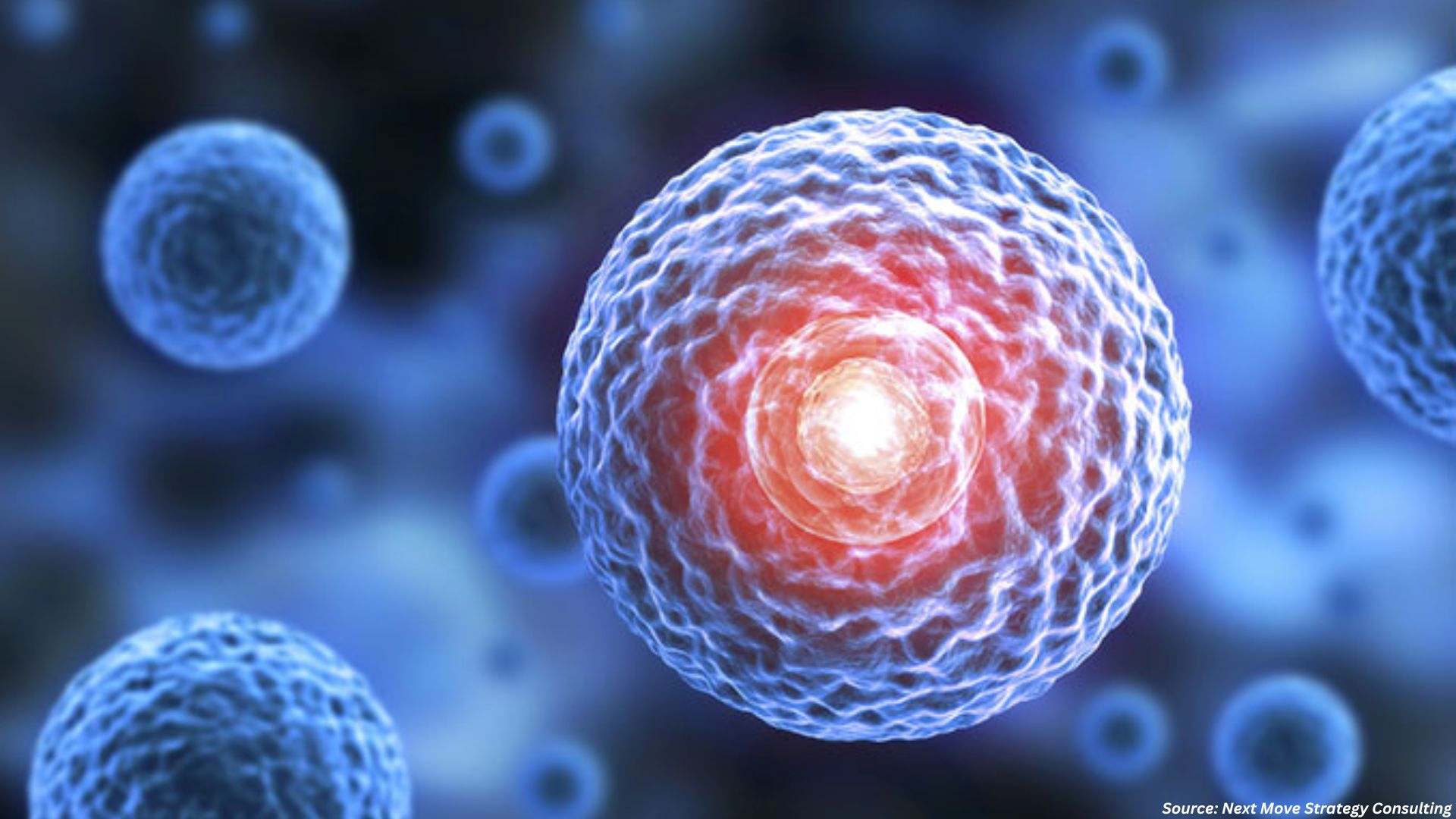
3D Cell Culture Market Size to Hit USD 5.34 Billion by 2030 as Engineered Hydrogel Breakthroughs Accelerate Drug Discovery
The global 3D Cell Culture Industry is entering a new growth phase after a series of breakthrough developments in engineered hydrogel scaffolds and tumor microenvironment modeling reshaped expectations for regenerative medicine and oncology research. The latest advancements from TOPPAN Holdings and researchers at The University of Osaka have intensified commercial momentum across pharmaceutical R&D and advanced cell therapy applications.
A newly published study by TOPPAN Holdings and academic collaborators demonstrated the successful engineering of a multilayered 3D stromal barrier model capable of replicating immune-resistant tumor environments in vitro, significantly improving drug candidate identification for refractory cancers. Simultaneously, Osaka University researchers unveiled a chemically defined hydrogel scaffold designed to replace Matrigel in stem cell culture applications, a milestone viewed by analysts as a critical step toward scalable and clinically compliant organoid production.
According to the latest NMSC proprietary dataset, the rapid commercialization of scaffold-based culture systems and xeno-free biomaterials is expected to push the global 3D cell culture market valuation to USD 5.34 billion by 2030, driven by accelerating investments in immunotherapy, regenerative medicine, and precision oncology.
Advanced Tumor Modeling Reshapes Oncology Research
The December 2025 publication from TOPPAN Holdings, Osaka University, the Japanese Foundation for Cancer Research, and Sapporo Medical University demonstrated how engineered stromal barriers can reproduce immune-cell exclusion mechanisms found in difficult-to-treat tumors. Researchers successfully identified drug candidates capable of improving T-cell infiltration into tumor environments, marking a major advancement in immunotherapy evaluation systems.

The study leveraged TOPPAN’s proprietary invivoid™ 3D cell culture technology, which allows layered co-culture architectures that closely mimic living tissue structures. Analysts indicate that the technology’s ability to reproduce complex tumor microenvironments may reduce preclinical drug failure rates and improve translational oncology research outcomes.
“Biopharmaceutical companies are increasingly shifting away from conventional 2D culture systems because they fail to replicate physiological cell interactions accurately,” said David Walker, Lead Analyst at Next Move Strategy Consulting. “The emergence of clinically relevant 3D tumor barrier models is accelerating demand from oncology drug developers seeking higher predictive accuracy during preclinical testing.”
Engineered Hydrogels Move Beyond Matrigel Dependency
A separate breakthrough announced by Osaka University researchers introduced a synthetic fibrin-laminin hydrogel scaffold designed specifically for human induced pluripotent stem cell (iPSC) culture. The engineered hydrogel eliminates dependence on animal-derived Matrigel substrates, addressing long-standing concerns surrounding batch inconsistency and regulatory limitations.
Industry analysts view this development as strategically significant for regenerative medicine and organoid manufacturing because xeno-free systems are increasingly becoming mandatory for clinical-grade cell therapies.
NMSC researchers identified a sharp rise in venture funding and commercialization activity linked to synthetic scaffold technologies during the last six months, particularly across Asia-Pacific biotechnology hubs.
Recent Industry Developments Driving Market Expansion
|
Date |
Organization |
Development |
Strategic Impact |
|
Dec 2025 |
TOPPAN Holdings & Osaka University |
Developed multilayered tumor stromal barrier model |
Accelerates immunotherapy drug screening |
|
Dec 2025 |
Osaka University |
Introduced synthetic fibrin-laminin hydrogel scaffold |
Reduces reliance on Matrigel |
|
Sept 2025 |
TheWell Bioscience |
Launched VitroGel Neuron hydrogel platform |
Expands neuronal 3D modeling applications |
|
Feb 2025 |
TOPPAN Holdings & PhoenixBio |
Partnership for artificial 3D liver tissue |
Strengthens toxicology testing capabilities |
Pharmaceutical Adoption Accelerates Across Asia-Pacific
The Asia-Pacific region is emerging as the fastest-growing innovation center for advanced 3D culture systems due to rising biotech infrastructure investments and increased government support for regenerative medicine.
TOPPAN Holdings has expanded its strategic investments in biofabrication and artificial tissue engineering during the past year, including partnerships focused on artificial liver tissue manufacturing and next-generation drug discovery platforms.
According to NMSC analysis, pharmaceutical firms are increasingly integrating scaffold-based and organoid-based platforms into toxicology screening, immunotherapy validation, and personalized medicine workflows to improve predictive modeling accuracy while reducing dependence on animal testing.
Regional Market Dynamics in 3D Cell Culture
|
Region |
Key Growth Driver |
Market Trend |
|
North America |
Oncology drug discovery investments |
Largest market share |
|
Europe |
Regulatory support for alternative testing |
Rising organoid adoption |
|
Asia-Pacific |
Stem cell research expansion |
Fastest CAGR growth |
|
Middle East & Africa |
Emerging biotech infrastructure |
Early-stage adoption |

Competitive Landscape Intensifies
The competitive environment within the 3D cell culture market is rapidly evolving as biotechnology firms race to commercialize reproducible, scalable, and clinically compliant culture systems.
Key industry participants are focusing on:
-
Synthetic hydrogel innovation
-
Organoid commercialization
-
Perfusion-based culture systems
-
AI-assisted drug discovery integration
-
Personalized oncology platforms

Analysts note that companies capable of delivering xeno-free and highly reproducible scaffold systems are likely to gain strategic advantages as regulatory scrutiny increases across cell therapy manufacturing.
What CEOs and Investors Should Do Next
-
Increase investments in xeno-free hydrogel and scaffold technologies for regulatory-ready cell therapy production.
-
Expand partnerships with academic institutions developing organoid and tumor microenvironment models.
-
Prioritize AI-integrated 3D culture analytics to improve predictive oncology screening.
-
Establish regional manufacturing and R&D capabilities in Asia-Pacific biotechnology clusters.
-
Accelerate adoption of 3D tissue models to reduce late-stage drug development failures.
About Next Move Strategy Consulting:
Next Move Strategy Consulting is a premier market research and management consulting firm that has been committed to provide strategically analysed well documented latest research reports to its clients. The research industry is flooded with many firms to choose from, what makes NMSC different from the rest is its top-quality research and the obsession of turning data into knowledge by dissecting every bit of it and providing fact-based research recommendation that is supported by information collected from over 500 million websites, paid databases, industry journals and one on one consultations with industry experts across a diverse range of industry sectors. The high-quality customized research reports with actionable insights and excellent end-to-end customer service help our clients to take critical business decisions that enables them to move beyond time and have competitive edge in the industry.
We have been servicing over 1000 customers globally that includes 90% of the Fortune 500 companies over a decade. Our analysts are constantly tracking various high growth markets and identifying hidden opportunities in each sector or the industry. We provide one of the industry’s best quality syndicate as well as custom research reports across 10 different industry verticals. We are committed to deliver high quality research solutions in accordance to your business needs. Our industry standard delivery solutions that ranges from the pre consultation to after-sales services, provide an excellent client experience and ensure right strategic decision making for businesses.
For more information, please contact:
Next Move Strategy Consulting
5th Floor 867
Boylston St, STE 500,
Boston, MA 02116, U.S.
E-Mail: [email protected]
Direct: +1-217-650-7991
Website: www.nextmsc.com
About the Author
 Sanyukta Deb
— Sanyukta Deb is Digital Marketing Team Lead at Next Move Strategy Consulting, where she has led content strategy and technical SEO for the firm's B2B market research publications for over 2 years. Her editorial process translates NextMSC's primary and secondary research — spanning technology, industrial, and consumer sectors — into commercial narratives, backed by search-intent, keyword, and competitive analysis. She brings 5 years of overall experience in digital marketing and content strategy.
Sanyukta Deb
— Sanyukta Deb is Digital Marketing Team Lead at Next Move Strategy Consulting, where she has led content strategy and technical SEO for the firm's B2B market research publications for over 2 years. Her editorial process translates NextMSC's primary and secondary research — spanning technology, industrial, and consumer sectors — into commercial narratives, backed by search-intent, keyword, and competitive analysis. She brings 5 years of overall experience in digital marketing and content strategy.
About the Reviewer
 Debashree Dey
— Debashree Dey is Assistant Manager at Next Move Strategy Consulting, where she supports cross-vertical market content and communications across diverse industries for 6 years. Her professional background includes senior content writing, communications, and published manuscript authorship, with experience developing audience-focused business narratives and maintaining clear, consistent messaging. Her role supports research-led content development and editorial quality across NextMSC publications.
Debashree Dey
— Debashree Dey is Assistant Manager at Next Move Strategy Consulting, where she supports cross-vertical market content and communications across diverse industries for 6 years. Her professional background includes senior content writing, communications, and published manuscript authorship, with experience developing audience-focused business narratives and maintaining clear, consistent messaging. Her role supports research-led content development and editorial quality across NextMSC publications.















Add Comment