Can Bitters Brands Drive Long-Term Growth in 2026?
Lede
New launches in the UK and calls for stricter standards highlight how premium cocktail and herbal bitters are entering a new phase of international competition. Two developments from different regions point to the same conclusion: the bitters category is globalising. One brand is expanding through premium cocktail channels, while another is advocating stronger standards to unlock export demand. We believe these moves show that the next growth phase will be shaped by disciplined execution, not just product identity.
Bitters, once viewed mainly as cocktail modifiers or regional wellness products, are gaining broader commercial relevance in 2026. Premium beverage innovation, rising consumer interest in natural ingredients, and stronger regulatory expectations are reshaping how brands compete across borders. We see two recent developments illustrating this shift: Australian Bitters’ expansion into the UK and renewed calls in Ghana for global compliance standards in African herbal products.
For producers, distributors, and investors, these developments matter because they show that success now depends on more than heritage or flavour. We observe that scale, quality assurance, brand positioning, and regulatory readiness are becoming the defining growth factors for the category.
Australian Bitters Enters the UK
Australia’s first locally produced cocktail bitters brand, Australian Bitters, officially launched its Aromatic and Orange Bitters in London in July 2025, marking a strategic expansion into one of the world’s most influential beverage markets. The rollout followed activity in the United States, including workshops at Tales of the Cocktail in New Orleans.
The company said the UK move represents a new phase in its international journey. Its products are positioned around natural ingredients and versatility across classic cocktails such as the Old Fashioned, Manhattan, Dry Martini, and Sazerac. We at Next Move Strategy Consulting observe that this is a textbook example of premium niche beverage brands targeting mature consumption markets through trade partnerships rather than capital-heavy direct expansion.
-
UK market entry gives access to premium bars, hotels, and specialty retail.
-
Distributor-led expansion lowers operational risk.
-
Cocktail culture trends support premium bitters adoption.
-
Cross-market launches improve brand visibility and export credibility.
Global Bitters Industry Driven by Wellness and Premium Demand
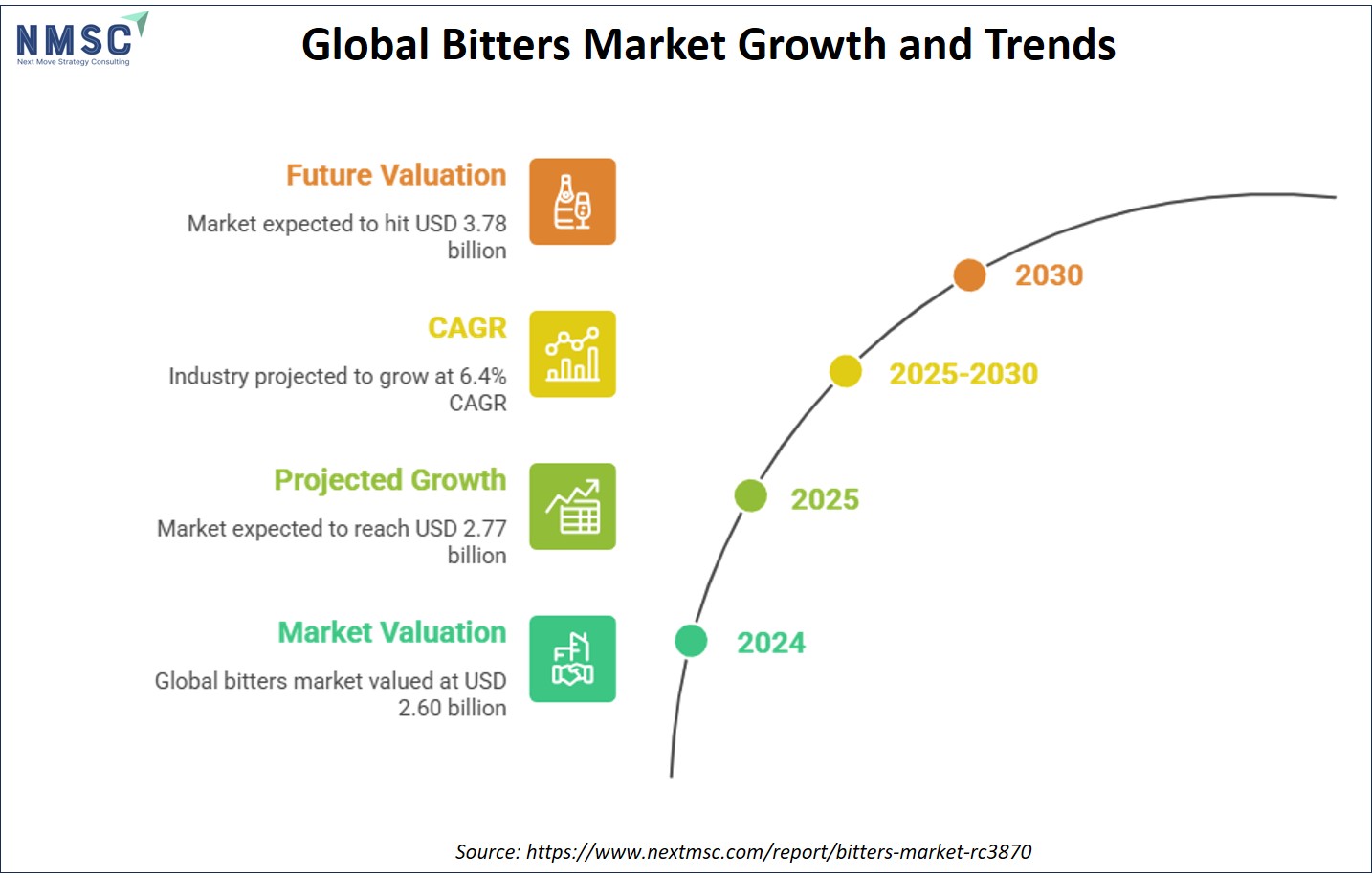
The global Bitters Market was valued at USD 2.60 billion in 2024 and is expected to reach USD 3.78 billion by 2030, growing at a CAGR of 6.4% from 2025 to 2030.
Growth is being supported by rising demand for health-focused and functional beverages. Consumers are increasingly choosing drinks with botanical, digestive, and natural benefits, expanding the use of bitters beyond cocktails into mocktails and food applications.
At the same time, interest in sustainably sourced and premium botanicals is creating new opportunities for brands. Companies that emphasize authenticity, natural ingredients, and eco-friendly sourcing are likely to strengthen their market position and attract wellness-conscious consumers.
Expansion Snapshot
|
Company |
Development |
Strategic Value |
|
Australian Bitters |
UK launch of Aromatic |
Entry into mature |
|
Australian Bitters |
U.S. activation at |
Trade awareness and |
|
Lightbox Brands |
Distribution partnership |
Faster market |
African Herbal Products Push for Global Standards
In January 2026, Albert Asiedu Boadu, Chief Executive Officer of Amega Herbal Bitters, called for stricter standardisation and regulatory compliance across Africa’s herbal and wellness sector. He said African-owned brands must combine indigenous knowledge with scientific validation, quality control, and transparent processes to compete internationally.
He emphasized that Amega Herbal Bitters was built on three pillars: research, regulation, and respect for tradition. He also argued that compliance should be seen as a growth enabler rather than a barrier to innovation. We notice that this reflects a larger transformation across natural wellness categories, where trust, safety, and consistency increasingly determine export success.
-
Regulation is becoming central to category credibility.
-
Documentation improves access to export markets.
-
Traditional formulations can scale when validated scientifically.
-
Ethical branding strengthens long-term consumer trust.
Key Forces Shaping the Bitters Industry in 2026
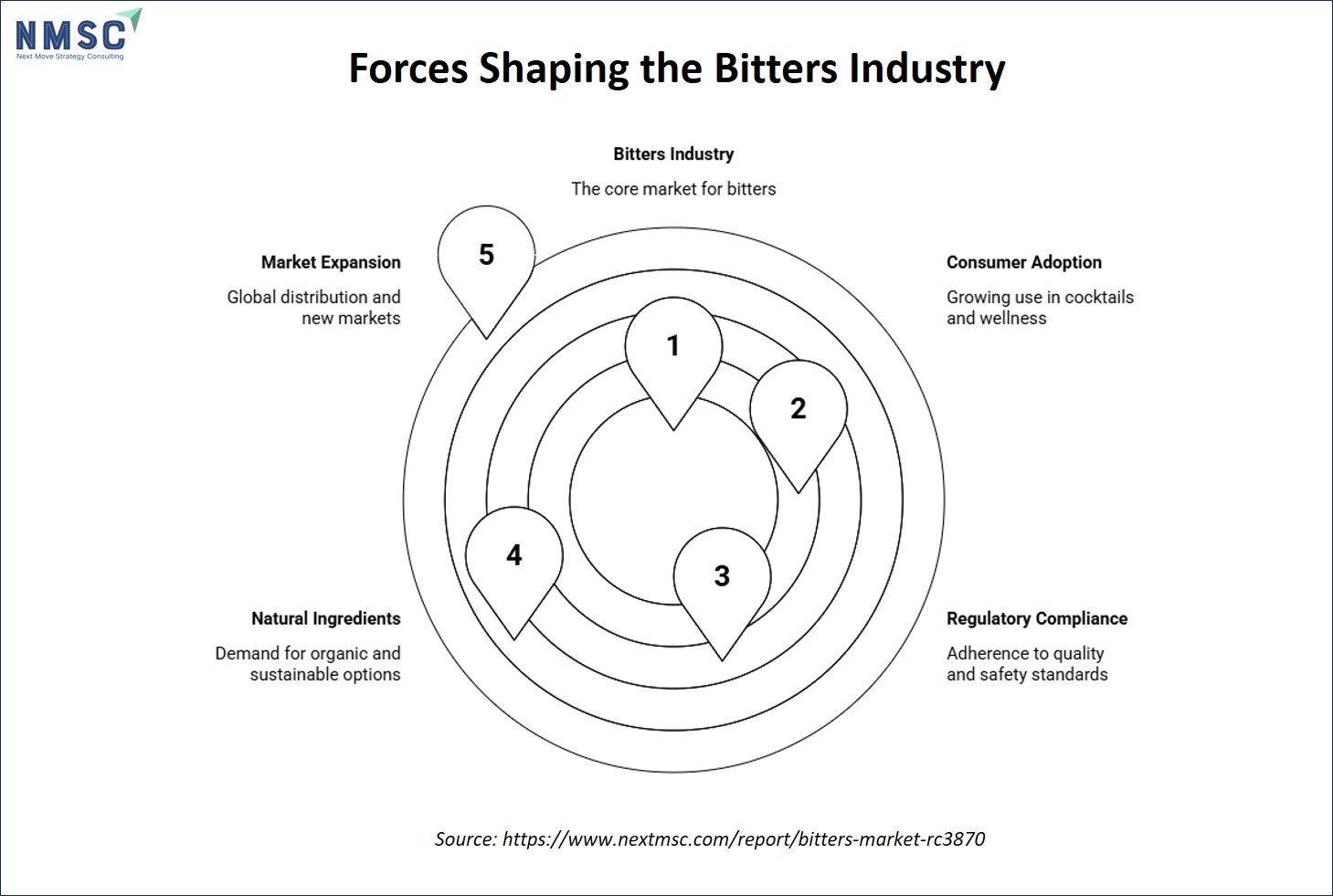
The bitters industry is being reshaped by five major forces in 2026: international market expansion, premium product launches, rising demand for natural ingredients, stronger regulatory compliance, and wider consumer adoption in cocktails and wellness beverages. Australian Bitters’ UK expansion highlights the role of global distribution, while African herbal producers emphasize the need for quality standards and scientific validation. Together, these trends show how innovation, trust, and cross-border partnerships are creating new long-term growth opportunities for bitters brands worldwide.
Compliance Drivers in Herbal Bitters
|
Growth Factor |
Why It Matters |
Business Impact |
|
Standardisation |
Ensures consistency |
Better customer retention |
|
Product Testing |
Supports safety claims |
Easier retail acceptance |
|
Regulatory Alignment |
Enables cross-border sales |
Faster expansion |
|
Transparent Branding |
Builds trust |
Premium pricing potential |
Bitters Industry Growth Drivers in 2026 (%)
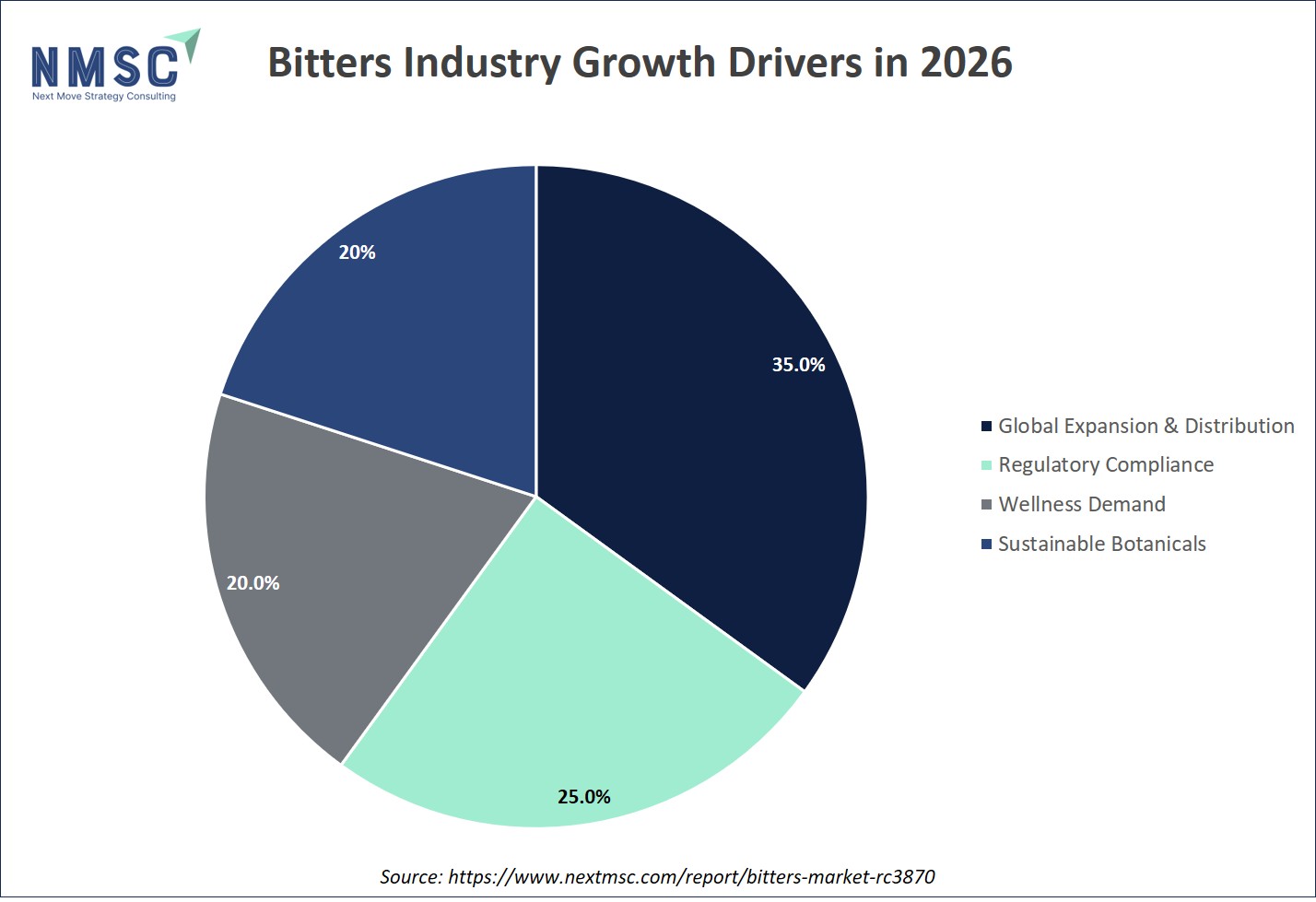
The pie chart highlights the major factors influencing growth in the bitters industry in 2026. Global Expansion & Distribution holds the largest share at 35%, showing that international market entry, trade partnerships, and wider product availability are the strongest drivers of industry growth. Regulatory Compliance accounts for 25%, reflecting the increasing importance of product standards, certifications, and quality assurance for gaining consumer trust and entering new markets. Wellness Demand represents 20%, driven by rising consumer interest in functional beverages with botanical and digestive benefits. Sustainable Botanicals also make up 20%, indicating strong demand for natural, responsibly sourced ingredients that support premium and eco-conscious product positioning.
Long-Term Industry Impact and NMSC Perspective
1. Premiumisation Will Accelerate
Consumers are increasingly seeking products with authentic origin stories, natural ingredients, and craft positioning. We expect bitters brands with premium packaging, clean-label ingredients, and mixology relevance to outperform lower-value offerings.
2. Regulation Will Separate Winners from Followers
As wellness and herbal beverages grow, governments and retailers are likely to demand stronger testing, traceability, and labeling standards. Our analysis indicates early investment in compliance systems will create long-term barriers to entry.
3. Global Distribution Networks Will Decide Scale
Many small beverage brands succeed locally but struggle abroad. We observe that partnerships with specialist importers and distributors, such as the Australian Bitters–Lightbox model, can significantly reduce expansion friction.
4. Product Innovation Will Expand Usage Occasions
Beyond bars, bitters can grow through home mixology, premium gifting, functional beverage blends, and low-alcohol drinks. Companies that diversify use cases may unlock stronger repeat purchase rates.
5. Emerging Markets Could Become Export Hubs
Africa, Asia-Pacific, and Latin America have strong botanical traditions. If paired with quality systems and export readiness, these regions may become important supply and brand innovation centers over the next decade.
Five-Year Outlook
|
Trend |
2026 Status |
Long-Term Outlook |
|
Premium Cocktail Bitters |
Rising |
Strong growth |
|
Herbal Wellness Bitters |
Fragmented |
Consolidation likely |
|
Regulatory Oversight |
Increasing |
Industry standard |
|
Cross-Border Partnerships |
Expanding |
Essential strategy |
|
Consumer Education |
Early stage |
Major demand driver |
What to Do Next
For Beverage Brands
-
Build export-ready packaging and labeling.
-
Partner with experienced distributors in target markets.
-
Invest in bartender advocacy and sampling programs.
-
Expand digital storytelling around ingredients and origin.
For Herbal Product Companies
-
Prioritize product testing and certification.
-
Document formulations and manufacturing standards.
-
Align claims with local and international regulations.
-
Use trust-led branding instead of exaggerated promises.
For Investors
-
Watch premium beverage niches with scalable margins.
-
Evaluate compliance maturity before funding expansion.
-
Look for brands with repeat purchase potential and multi-market appeal.
Conclusion
The bitters category is evolving from a niche segment into a globally competitive industry shaped by premiumisation, trust, and international expansion. Australian Bitters’ UK launch and Amega Herbal Bitters’ call for stricter standards both highlight the same reality: future growth will reward brands that combine product quality with strategic discipline. At Next Move Strategy Consulting, we believe companies that invest early in compliance, partnerships, and differentiated positioning will be best placed to capture long-term value.
About Next Move Strategy Consulting:
Next Move Strategy Consulting is a premier market research and management consulting firm that has been committed to provide strategically analysed well documented latest research reports to its clients. The research industry is flooded with many firms to choose from, what makes NMSC different from the rest is its top-quality research and the obsession of turning data into knowledge by dissecting every bit of it and providing fact-based research recommendation that is supported by information collected from over 500 million websites, paid databases, industry journals and one on one consultations with industry experts across a diverse range of industry sectors. The high-quality customized research reports with actionable insights and excellent end-to-end customer service help our clients to take critical business decisions that enables them to move beyond time and have competitive edge in the industry.
We have been servicing over 1000 customers globally that includes 90% of the Fortune 500 companies over a decade. Our analysts are constantly tracking various high growth markets and identifying hidden opportunities in each sector or the industry. We provide one of the industry’s best quality syndicate as well as custom research reports across 10 different industry verticals. We are committed to deliver high quality research solutions in accordance to your business needs. Our industry standard delivery solutions that ranges from the pre consultation to after-sales services, provide an excellent client experience and ensure right strategic decision making for businesses.
For more information, please contact:
Next Move Strategy Consulting
5th Floor 867
Boylston St, STE 500,
Boston, MA 02116, U.S.
E-Mail: [email protected]
Direct: +1-217-650-7991
Website: www.nextmsc.com
About the Author
 Sanyukta Deb
— Sanyukta Deb is Digital Marketing Team Lead at Next Move Strategy Consulting, where she has led content strategy and technical SEO for the firm's B2B market research publications for over 2 years. Her editorial process translates NextMSC's primary and secondary research — spanning technology, industrial, and consumer sectors — into commercial narratives, backed by search-intent, keyword, and competitive analysis. She brings 5 years of overall experience in digital marketing and content strategy.
Sanyukta Deb
— Sanyukta Deb is Digital Marketing Team Lead at Next Move Strategy Consulting, where she has led content strategy and technical SEO for the firm's B2B market research publications for over 2 years. Her editorial process translates NextMSC's primary and secondary research — spanning technology, industrial, and consumer sectors — into commercial narratives, backed by search-intent, keyword, and competitive analysis. She brings 5 years of overall experience in digital marketing and content strategy.
About the Reviewer
 Debashree Dey
— Debashree Dey is Assistant Manager at Next Move Strategy Consulting, where she supports cross-vertical market content and communications across diverse industries for 6 years. Her professional background includes senior content writing, communications, and published manuscript authorship, with experience developing audience-focused business narratives and maintaining clear, consistent messaging. Her role supports research-led content development and editorial quality across NextMSC publications.
Debashree Dey
— Debashree Dey is Assistant Manager at Next Move Strategy Consulting, where she supports cross-vertical market content and communications across diverse industries for 6 years. Her professional background includes senior content writing, communications, and published manuscript authorship, with experience developing audience-focused business narratives and maintaining clear, consistent messaging. Her role supports research-led content development and editorial quality across NextMSC publications.

















Add Comment