China Approves First Brain–Computer Interface
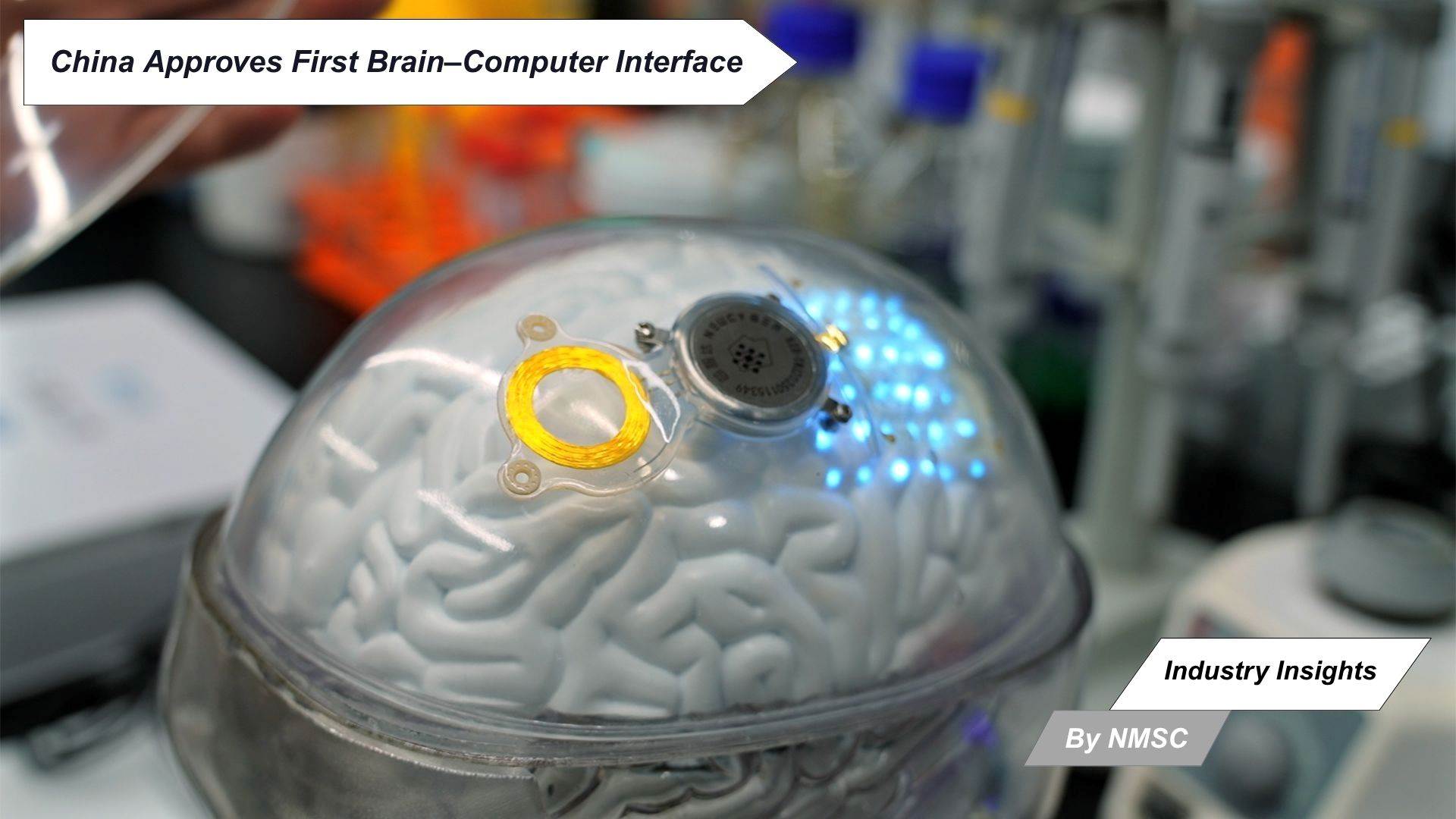
Industry Insights from Next Move Strategy Consulting
As advancements in neural engineering accelerate, China’s recent approval of a brain–computer interface (BCI) device marks a pivotal moment in both the Brain Computer Interface Market and the evolving Neuromorphic Computing Market. The milestone introduces the first BCI authorized for use beyond clinical trials, reinforcing the transition of neural technologies from experimental research to real-world medical applications.
A Transformative Leap in Paralysis Treatment
Developed by Neuracle Medical Technology in Shanghai, the device—known as NEO—has been approved for individuals aged 18 to 60 suffering from severe paralysis caused by spinal cord injuries in the neck region. This development is particularly significant given the absence of effective treatment options for such conditions.
The system enables patients to regain partial hand functionality by translating brain signals into physical movement. By capturing neural activity when a user imagines moving their hand, the device decodes these signals and transmits them to a connected robotic glove, allowing users to perform essential daily tasks such as eating and drinking.
This approval represents a major advancement for BCI technology, underscoring its growing clinical viability and therapeutic potential.
Key Functional Highlights of the NEO System:
-
Semi-invasive design embedded within the skull for neural signal acquisition
-
Eight electrodes positioned over the brain to monitor motor intent
-
Real-time signal decoding to translate thoughts into movement
-
Integration with a soft robotic glove to restore hand functionality
-
Demonstrated ability to assist in grasping, gripping, and object manipulation
Clinical Progress and Early Outcomes
The research team supporting the device has accumulated up to 18 months of performance data, a relatively rare achievement in the BCI field. Early findings indicate meaningful functional improvements among users.
In one documented case, a patient using the system for nine months regained the ability to independently eat and drink—tasks that were previously impossible. Broader trial results show that all 32 participants implanted with the device were able to perform basic grabbing motions with assistance from the robotic glove.
While these outcomes demonstrate promising progress, the limited sample size highlights the need for broader studies to validate long-term effectiveness and scalability.
Minimally Invasive Innovation Driving Adoption
A distinguishing factor of the NEO system is its semi-invasive architecture, which contrasts with more invasive approaches currently under development. This design reduces procedural complexity and may have contributed to its accelerated regulatory approval.
The device’s ability to balance safety with functionality positions it as a practical solution within the BCI landscape, potentially setting a benchmark for future developments in neural interface technologies.
Policy Alignment and Future Research Momentum
The approval aligns closely with China’s national strategy to position BCIs as a key “future industry” under its 2026–2030 development plan. This strategic direction is expected to accelerate innovation across neural technologies, including advancements in electrode design, artificial intelligence-driven signal processing, and specialized chips for brain activity analysis.
Ongoing research efforts aim to expand the application of the NEO system to other neurological conditions, including paralysis caused by cerebral ischaemic strokes, with additional clinical trials planned.
According to Next Move Strategy Consulting
This development is expected to significantly influence both the Brain Computer Interface Market by accelerating the transition of neural technologies from research to commercialization. The approval of a semi-invasive, clinically viable BCI demonstrates increasing confidence in neural signal processing systems, which are foundational to neuromorphic computing architectures.
As governments align policy frameworks with innovation goals, increased funding and research activity are likely to drive advancements in AI-integrated neural decoding, specialized processing chips, and scalable BCI solutions. This convergence is anticipated to unlock new growth avenues, positioning neural interface technologies as a cornerstone of next-generation healthcare and intelligent computing systems.
Redefining the Future of Neural Integration
China’s approval of the NEO brain–computer interface marks a defining step toward practical neurotechnology applications. By enabling individuals with paralysis to regain functional independence, the development highlights the transformative potential of brain–machine integration.
As research expands and technological capabilities mature, BCIs are poised to reshape both medical treatment paradigms and the broader landscape of intelligent computing, bridging the gap between human cognition and machine execution.
Source: Nature
Prepared by: Next Move Strategy Consulting
About the Author
 Sanyukta Deb
— Sanyukta Deb is Digital Marketing Team Lead at Next Move Strategy Consulting, where she has led content strategy and technical SEO for the firm's B2B market research publications for over 2 years. Her editorial process translates NextMSC's primary and secondary research — spanning technology, industrial, and consumer sectors — into commercial narratives, backed by search-intent, keyword, and competitive analysis. She brings 5 years of overall experience in digital marketing and content strategy.
Sanyukta Deb
— Sanyukta Deb is Digital Marketing Team Lead at Next Move Strategy Consulting, where she has led content strategy and technical SEO for the firm's B2B market research publications for over 2 years. Her editorial process translates NextMSC's primary and secondary research — spanning technology, industrial, and consumer sectors — into commercial narratives, backed by search-intent, keyword, and competitive analysis. She brings 5 years of overall experience in digital marketing and content strategy.
About the Reviewer
 Debashree Dey
— Debashree Dey is Assistant Manager at Next Move Strategy Consulting, where she supports cross-vertical market content and communications across diverse industries for 6 years. Her professional background includes senior content writing, communications, and published manuscript authorship, with experience developing audience-focused business narratives and maintaining clear, consistent messaging. Her role supports research-led content development and editorial quality across NextMSC publications.
Debashree Dey
— Debashree Dey is Assistant Manager at Next Move Strategy Consulting, where she supports cross-vertical market content and communications across diverse industries for 6 years. Her professional background includes senior content writing, communications, and published manuscript authorship, with experience developing audience-focused business narratives and maintaining clear, consistent messaging. Her role supports research-led content development and editorial quality across NextMSC publications.

















Add Comment