Chiplet Market Pivots to HLSI as AI Reshapes Chip Design
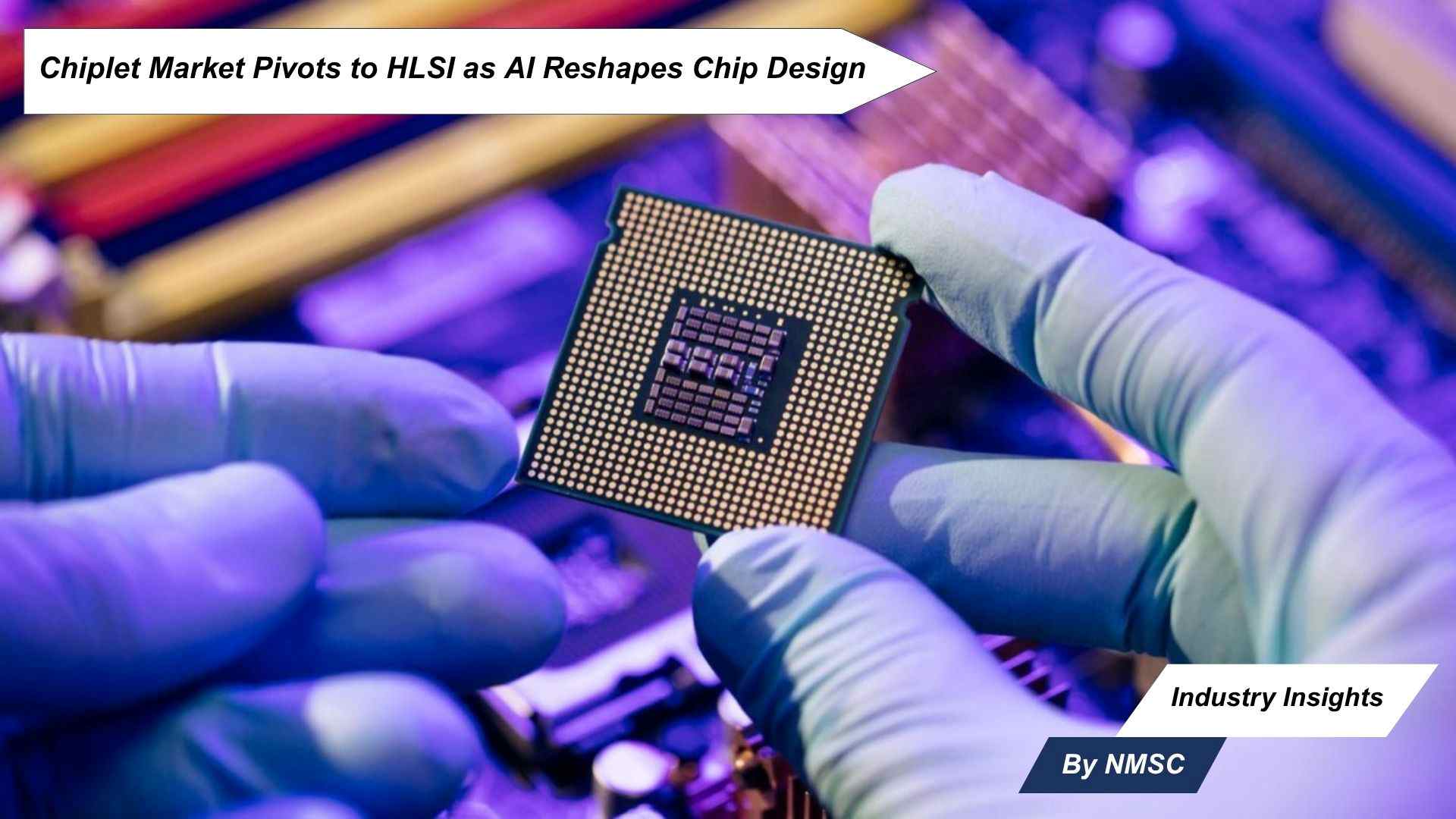
Chiplet Industry Enters Heterogeneous Integration Era as AI Outgrows Traditional SoC Architectures
Grenoble, France — July 1, 2026 — The semiconductor industry is moving beyond the traditional system-on-chip (SoC) paradigm toward heterogeneous large-scale integration (HLSI), as artificial intelligence workloads simultaneously strain compute, memory bandwidth, interconnect capacity, and power delivery, according to a report published by EE Times. The shift, described by research organization imec, is forcing fundamental changes across manufacturing, design tools, and system architecture within the broader chiplet market.
Main Development
AI differs from prior computing workloads because solving one system bottleneck frequently exposes another, compelling engineers to optimize entire systems rather than individual components.
Julien Ryckaert, VP of R&D at imec, told EE Times that the industry does not need to break Moore's Law but rather combine specialized technologies into a coherent system. Advances in 3D integration and hybrid bonding are enabling designers to connect stacked dies at densities comparable to connections within a single chip, effectively dissolving the SoC model.
TSMC characterized the approach as system-technology co-optimization, noting that co-packaged optics technology is already entering production and can deliver significant latency and power-efficiency gains over conventional copper interconnects. Cadence executives said the transition is collapsing longstanding abstraction boundaries in electronic design automation, requiring concurrent optimization across compute, power, thermal, memory, and fabric layers.
Key Highlights:
-
AI workloads are driving the semiconductor industry beyond traditional SoC scaling toward heterogeneous large-scale integration (HLSI).
-
Advances in 3D integration and hybrid bonding are enabling die-to-die connections at near-monolithic densities, according to imec.
-
TSMC's co-packaged optics technology is entering production, moving optical links closer to the processor as copper interconnects reach power and bandwidth limits.
-
EDA tools must evolve toward concurrent, multi-variable optimization, with AI increasingly automating the design process itself.
Analyst Insight:
According to analysts at Next Move Strategy Consulting, the global chiplet market is projected to reach USD 243.47 billion by 2030, expanding at a compound annual growth rate of 68.8% between 2025 and 2030. NMSC analysts note that Asia-Pacific currently dominates the market, while North America is expected to be the fastest-growing region over the forecast period.
Industry Outlook:
As package sizes grow and optical, memory, and power technologies converge within single platforms, future performance gains are expected to occur increasingly at the system level rather than within a single die. Analysts and industry participants indicate that the reorientation toward heterogeneous integration will continue to influence manufacturing strategy, design tooling, and competitive positioning across the chiplet ecosystem.
Source: EE Times
For More Information – Download FREE Sample on Chiplet Market Report
Prepared By: Sanyukta Deb
About the Author
 Sanyukta Deb
— Sanyukta Deb is Digital Marketing Team Lead at Next Move Strategy Consulting, where she has led content strategy and technical SEO for the firm's B2B market research publications for over 2 years. Her editorial process translates NextMSC's primary and secondary research — spanning technology, industrial, and consumer sectors — into commercial narratives, backed by search-intent, keyword, and competitive analysis. She brings 5 years of overall experience in digital marketing and content strategy.
Sanyukta Deb
— Sanyukta Deb is Digital Marketing Team Lead at Next Move Strategy Consulting, where she has led content strategy and technical SEO for the firm's B2B market research publications for over 2 years. Her editorial process translates NextMSC's primary and secondary research — spanning technology, industrial, and consumer sectors — into commercial narratives, backed by search-intent, keyword, and competitive analysis. She brings 5 years of overall experience in digital marketing and content strategy.
About the Reviewer
 Debashree Dey
— Debashree Dey is Assistant Manager at Next Move Strategy Consulting, where she supports cross-vertical market content and communications across diverse industries for 6 years. Her professional background includes senior content writing, communications, and published manuscript authorship, with experience developing audience-focused business narratives and maintaining clear, consistent messaging. Her role supports research-led content development and editorial quality across NextMSC publications.
Debashree Dey
— Debashree Dey is Assistant Manager at Next Move Strategy Consulting, where she supports cross-vertical market content and communications across diverse industries for 6 years. Her professional background includes senior content writing, communications, and published manuscript authorship, with experience developing audience-focused business narratives and maintaining clear, consistent messaging. Her role supports research-led content development and editorial quality across NextMSC publications.
















Add Comment