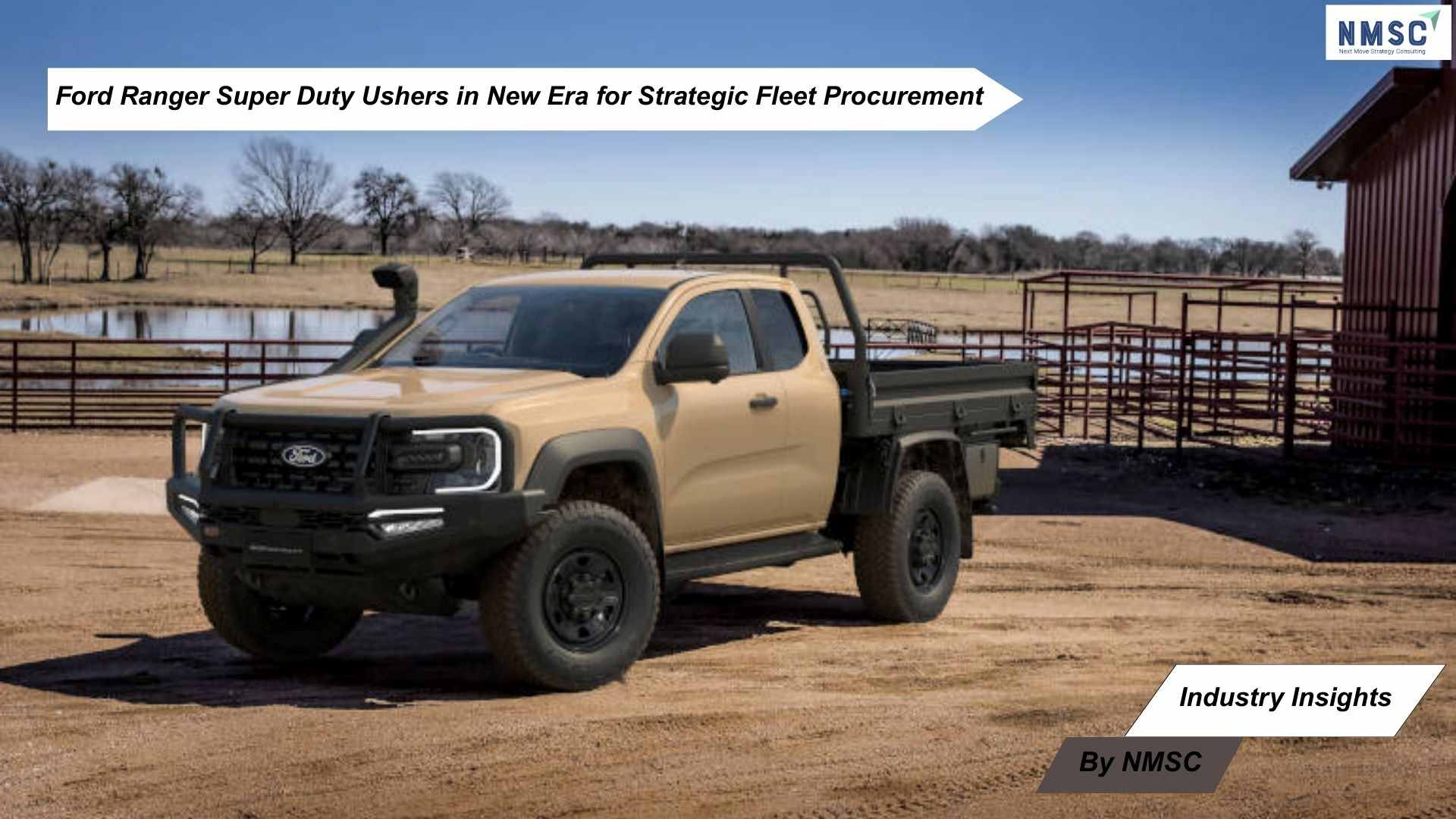
Ford Ranger Super Duty Ushers in New Era for Strategic Fleet Procurement
Industry Insights from Next Move Strategy Consulting
As fleet operators navigate the complexities of long-term asset management, tightening compliance regulations, and the transition to electrification, the introduction of the Ford Ranger Super Duty for the Australian market marks a pivotal shift in procurement strategy. Moving beyond the limitations of standard dual cabs and aftermarket modifications, this factory-engineered heavy-duty platform provides a new, compliant option designed to reshape ten-year replacement plans, whole-of-life cost calculations, and emission-reduction pathways.
A Strategic Solution for Long-Standing Fleet Challenges
For years, fleet managers have faced difficult compromises when vehicle requirements exceeded the capabilities of standard offerings. Common workarounds included costly aftermarket Gross Vehicle Mass (GVM) upgrades, stepping up into more expensive light trucks, or retaining aging assets beyond their ideal service life, often increasing maintenance costs, compliance exposure, and emissions.
The Ranger Super Duty directly addresses this strategic gap. It creates a new, legitimate option within the light commercial category, engineered to replace some LandCruiser 70 Series applications, certain entry-level cab-over trucks, and a wide range of aftermarket-modified dual cabs. For fleet teams actively reviewing utilization creep, payload risks, compliance obligations, and environmental targets, this vehicle becomes a critical new variable in the asset planning equation.
Key Fleet-Centric Specifications:
-
4.5-Tonne GVM & Factory Payload: A major shift for Workplace Health and Safety (WHS) management, moving payload capacity from a post-purchase workaround to an integrated design principle.
-
Re-Engineered Heavy-Duty Chassis: Built with upgraded axles, hubs, and suspension for sustained high-load operation, supporting longer, safer replacement cycles.
-
130-Litre Fuel Tank: Designed to reduce refuelling frequency and increase operational range, directly improving utilization for remote and regional fleets.
-
Integrated Safety & Driver Assistance: Features like trailer assist and integrated cameras are positioned to reduce low-speed incidents, vehicle downtime, and insurance claims.
-
Ford Pro Converter Pathways: Engineered for compatibility with service bodies and specialist upfits, simplifying conversions and reducing lead times for capital programs.
Redefining Whole-of-Life Cost and Procurement Timing
Ford has positioned the Ranger Super Duty above standard Ranger variants but below light truck alternatives when evaluated on a total cost of ownership basis. The strategic pricing compels fleet buyers to look beyond the upfront invoice.
The value proposition is built on avoiding aftermarket upgrade costs, simplifying warranty and compliance management, reducing operational downtime, and extending the vehicle's usable service life. This holistic approach means the Super Duty can lower the total cost of ownership for many fleets, even with a higher initial purchase price, making it a financially sound long-term investment.
Integrating the Mild Hybrid Electric Vehicle (MHEV) Market Context
The arrival of the Ranger Super Duty coincides with a rapidly evolving Mild Hybrid Electric Vehicle (MHEV) market, which is becoming a critical consideration for fleets balancing capability with emissions. While the current Super Duty platform is not electrified, its strategic positioning influences fleet planning in the context of broader electrification trends.
-
Strategic Bridging Role: For many fleets, a full transition to Battery Electric Vehicles (BEVs) for high-demand, heavy-payload, or remote operations remains challenging. Vehicles like the Ranger Super Duty offer a robust, fit-for-purpose solution that can operate alongside a growing fleet of Mild Hybrid and full hybrid vehicles for less demanding urban roles, creating a multi-technology fleet strategy.
-
Emission Reduction Pathways: As corporate sustainability targets tighten, fleets must consider the MHEV market as a stepping stone. While adopting capable ICE platforms like the Super Duty for specific heavy-duty roles, fleets can aggressively deploy MHEV and other electrified options in suitable applications, optimizing the overall fleet's carbon footprint without compromising operational capability where needed.
-
Future-Proofing Investment: Fleet managers must evaluate the Ranger Super Duty's potential place in a future procurement landscape increasingly dominated by electrified options. Its extended lifecycle (10+ years) means it will operate alongside and eventually be replaced by next-generation hybrid or electric heavy-duty utes. This makes its integration into a phased, strategic electrification roadmap essential.
Transforming Long-Term Asset Management Plans
The arrival of the Ranger Super Duty and the growth of the Mild Hybrid Electric Vehicle market necessitate a review of foundational fleet strategy documents. As teams update their ten-year Asset Management Plans, they must now assess whether this platform can replace vehicles being extended beyond their optimal lifecycle, substitute for light trucks in specific roles, reduce risk in high-payload operations, and how it fits within a diversified powertrain strategy.
In practice, this may lead to adjusted replacement cycles, consolidation of varied vehicle types into a single, more capable platform, simplified training and compliance frameworks, and a clearer technology adoption roadmap. Ultimately, it provides a pathway for future-proofing fleets against continually rising safety, regulatory, and environmental expectations.
According to Next Move Strategy Consulting, the strategic introduction of vehicles like the Ranger Super Duty signals a broader shift in commercial fleet investment. It reflects a growing industry prioritization of integrated engineering, total lifecycle cost analysis, and compliance-by-design principles over short-term purchase price considerations. This evolution, paralleled by the rise of the Mild Hybrid Electric Vehicle market, will likely accelerate the consolidation of fleet vehicle types and encourage more dynamic, long-term asset planning models focused on operational efficiency, risk mitigation, and phased decarbonisation.
A New Planning Variable for Modern Fleets
The Ford Ranger Super Duty represents more than a new model line; it is a transformative planning variable for strategic procurement within a diversifying technological landscape. For fleet managers finalizing 2026 procurement decisions and revising long-term asset strategies, this vehicle demands serious consideration in replacement modelling, risk assessment for high-payload roles, rigorous whole-of-life cost evaluation, and its role within a broader fleet that includes Mild Hybrid Electric Vehicles Market. Its integration into the market empowers fleets to build more resilient, efficient, compliant, and strategically balanced operations for the decade ahead.
Source: Fleet Auto News
Prepared by: Next Move Strategy Consulting
About the Author
 Sanyukta Deb
— Sanyukta Deb is Digital Marketing Team Lead at Next Move Strategy Consulting, where she has led content strategy and technical SEO for the firm's B2B market research publications for over 2 years. Her editorial process translates NextMSC's primary and secondary research — spanning technology, industrial, and consumer sectors — into commercial narratives, backed by search-intent, keyword, and competitive analysis. She brings 5 years of overall experience in digital marketing and content strategy.
Sanyukta Deb
— Sanyukta Deb is Digital Marketing Team Lead at Next Move Strategy Consulting, where she has led content strategy and technical SEO for the firm's B2B market research publications for over 2 years. Her editorial process translates NextMSC's primary and secondary research — spanning technology, industrial, and consumer sectors — into commercial narratives, backed by search-intent, keyword, and competitive analysis. She brings 5 years of overall experience in digital marketing and content strategy.
About the Reviewer
 Debashree Dey
— Debashree Dey is Assistant Manager at Next Move Strategy Consulting, where she supports cross-vertical market content and communications across diverse industries for 6 years. Her professional background includes senior content writing, communications, and published manuscript authorship, with experience developing audience-focused business narratives and maintaining clear, consistent messaging. Her role supports research-led content development and editorial quality across NextMSC publications.
Debashree Dey
— Debashree Dey is Assistant Manager at Next Move Strategy Consulting, where she supports cross-vertical market content and communications across diverse industries for 6 years. Her professional background includes senior content writing, communications, and published manuscript authorship, with experience developing audience-focused business narratives and maintaining clear, consistent messaging. Her role supports research-led content development and editorial quality across NextMSC publications.

















Add Comment