Hormuz Crisis Puts Asia-Pacific Ammonia & Urea Market at Risk
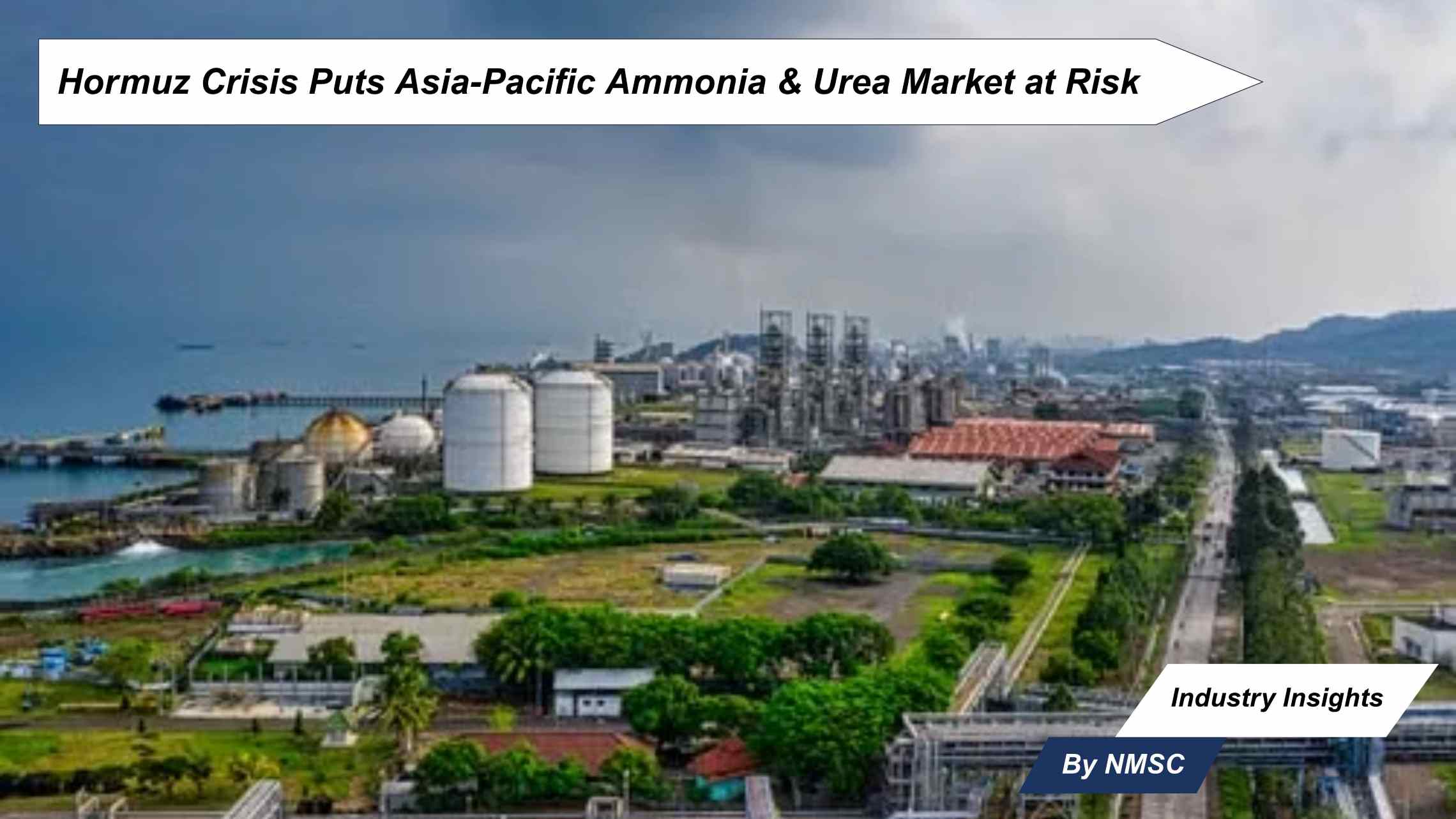
UN Warns Hormuz Fertilizer Deadlock Could Spark Food Crisis Across Asia and Africa
BANGKOK, Thailand October 14, 2026 A senior United Nations official has warned that the continued failure to activate a UN-backed fertilizer transport arrangement through the Strait of Hormuz could trigger a food security crisis across parts of Asia and Africa, placing the Asia-Pacific Ammonia & Urea Products Market at the center of an escalating global agricultural supply emergency.
Jorge Moreira da Silva, UN Under-Secretary-General and Executive Director of the United Nations Office for Project Services, issued the warning on Wednesday on the sidelines of the International Monetary Fund and World Bank annual meetings in Bangkok. He stated that the proposed mechanism could be activated within 7 to 10 days of a formal agreement between Washington and Tehran, but that time is critically short.
"It's absolutely crucial to get the deal in the next few weeks. Otherwise, we will miss the planting season," Moreira da Silva said. The UN established a dedicated taskforce in March to facilitate safe passage of fertilizers through the strait, though the mechanism has yet to be implemented amid stalled US-Iran negotiations.
Prior to the conflict, the Strait of Hormuz served as the transit corridor for approximately one-third of globally traded urea the world's most widely used nitrogen fertilizer and nearly half of seaborne sulphur, a critical agricultural input. Fertilizer shipments out of the Gulf region have remained largely halted for more than six months since the onset of hostilities, according to the Washington-based International Food Policy Research Institute.
The proposed UN arrangement would establish a coordination centre in Oman to register vessels and coordinate safe passage, with UN monitors working alongside local port authorities to verify cargo loading. Moreira da Silva noted that the passage of as few as five vessels per day through the strait would be sufficient to sustain fertilizer flows to countries in critical need.
Compounding the Hormuz crisis, simultaneous disruptions in the Black Sea where cargo vessels have come under attack and continued Houthi militant activity along the Red Sea shipping corridor are further straining global food supply chains. "What we are witnessing now is a concentration of factors," Moreira da Silva said. "Climate crisis, simultaneous disruption of maritime chokepoints on the Black Sea, on the Red Sea and on Hormuz."
Key Highlights:
-
Planting season at risk: The UN official warned that failure to secure a deal within weeks would cause Asia-Pacific agricultural productivity to decline significantly, with downstream price impacts intensifying across food-importing nations.
-
Commodity price shock: An August 2026 report by the International Chamber of Commerce projected that a prolonged Hormuz disruption could raise cereal prices by up to 81%, oil crop prices by 66%, and animal product prices by 30%.
-
Minimal throughput required: According to the UN official, only five vessels per day transiting the Strait of Hormuz would be sufficient to maintain critical fertilizer supply flows to vulnerable nations.
-
Market scale at stake: According to Next Move Strategy Consulting, the Asia-Pacific Ammonia & Urea Products Market is valued at USD 73.53 billion in 2025 and is projected to reach USD 85.03 billion by 2030, registering a CAGR of 2.95% underscoring the economic magnitude of any sustained supply disruption.
Analyst Insight:
According to analysts at Next Move Strategy Consulting, the Hormuz fertilizer crisis represents a structural stress test for the Asia-Pacific ammonia and urea supply chain, which is heavily reliant on Gulf-origin urea and sulphur imports to sustain agricultural output across major economies including India, Indonesia, Vietnam, and the Philippines. NMSC analysts note that while the region's largest producers particularly China and Indonesia maintain significant domestic production capacity, import-dependent nations face acute near-term vulnerability if the proposed UN transit mechanism fails to materialize ahead of the critical planting window. The disruption also accelerates the strategic case for supply-chain diversification and investment in domestic ammonia production infrastructure across Southeast Asia.
Industry Outlook:
The Strait of Hormuz crisis has brought into sharp relief the structural dependencies embedded within Asia-Pacific agricultural supply chains. With the region's ammonia and urea market on a trajectory toward USD 85.03 billion by 2030, sustained fertilizer supply disruptions carry the potential to compress agricultural yields, elevate food prices, and undermine food security commitments across developing economies in the region.
The UN's proposed five-vessel-per-day transit arrangement, if activated, would represent a minimum viable solution to prevent immediate planting season losses. However, the broader geopolitical impasse between the United States and Iran compounded by concurrent disruptions across the Black Sea and Red Sea signals that the fertilizer supply risk environment will remain elevated in the near to medium term. Governments and industry stakeholders across Asia-Pacific are expected to accelerate investments in domestic production capacity, feedstock security, and alternative sourcing strategies as the region navigates an increasingly fragmented global fertilizer trade landscape.
Source: Reuters
For More Information: Download FREE Sample on Asia-Pacific Ammonia & Urea Products Market Report
Prepared By: Sanyukta Deb
About the Author
 Sanyukta Deb
— Sanyukta Deb is Digital Marketing Team Lead at Next Move Strategy Consulting, where she has led content strategy and technical SEO for the firm's B2B market research publications for over 2 years. Her editorial process translates NextMSC's primary and secondary research — spanning technology, industrial, and consumer sectors — into commercial narratives, backed by search-intent, keyword, and competitive analysis. She brings 5 years of overall experience in digital marketing and content strategy.
Sanyukta Deb
— Sanyukta Deb is Digital Marketing Team Lead at Next Move Strategy Consulting, where she has led content strategy and technical SEO for the firm's B2B market research publications for over 2 years. Her editorial process translates NextMSC's primary and secondary research — spanning technology, industrial, and consumer sectors — into commercial narratives, backed by search-intent, keyword, and competitive analysis. She brings 5 years of overall experience in digital marketing and content strategy.
About the Reviewer
 Debashree Dey
— Debashree Dey is Assistant Manager at Next Move Strategy Consulting, where she supports cross-vertical market content and communications across diverse industries for 6 years. Her professional background includes senior content writing, communications, and published manuscript authorship, with experience developing audience-focused business narratives and maintaining clear, consistent messaging. Her role supports research-led content development and editorial quality across NextMSC publications.
Debashree Dey
— Debashree Dey is Assistant Manager at Next Move Strategy Consulting, where she supports cross-vertical market content and communications across diverse industries for 6 years. Her professional background includes senior content writing, communications, and published manuscript authorship, with experience developing audience-focused business narratives and maintaining clear, consistent messaging. Her role supports research-led content development and editorial quality across NextMSC publications.















Add Comment