Asia-Pacific Ammonia & Urea Products Market By Product (Ammonia, Urea–Prill, Urea–Granule), By Application (Fertilizer, Industrial, and Others) – Analysis & Forecast, 2025–2030
Industry: Materials and Chemical | Latest Edition: September 21, 2026 | No of Pages: 166 | No. of Tables: 124 | No. of Figures: 89 | Format: PDF | Report Code: MC3922
Industry Outlook
The Asia-Pacific Ammonia & Urea Products Market size was valued at USD 68.92 billion in 2024 and is expected to reach USD 73.53 billion by 2025. Looking ahead, the industry is projected to expand significantly, reaching USD 85.03 billion by 2030, registering a CAGR of 2.95% from 2025 to 2030. Also, it has a market volume of 172216 kilo tons in 2024 and is expected to reach 198107 kilo tons by 2025 and is projected to reach 255664 kilo tons by 2030, with a CAGR of 5.23%.
The Asia-Pacific ammonia & urea products market demand is expanding steadily, driven by growing agricultural needs, increasing crop production, and supportive government initiatives across the region. Large farming communities and heavy reliance on nitrogen-based fertilizers continue to fuel demand, while the adoption of enhanced-efficiency products reflects a broader shift toward sustainable nutrient management. Alongside agriculture, industrial consumption is rising due to applications in chemicals, mining, textiles, emissions control, and the emerging clean-energy sector, where ammonia plays a role in hydrogen transport and low-carbon fuel solutions.
Market growth is reinforced by ongoing investments in greener technologies and low-emission production methods, positioning the region as a leader in the global transition toward cleaner industrial processes. Increasing interest in green ammonia is creating new opportunities in energy storage, mobility, and power applications. At the same time, rising demand across developing economies, supported by modernizing agriculture and expanding industrial sectors, is strengthening the region’s overall market potential. With innovation, sustainability, and capacity expansion at the forefront, Asia-Pacific continues to shape the future trajectory of the global ammonia and urea industry.
The market continues to grow steadily across key countries such as China, India, Indonesia, Vietnam, Thailand, Malaysia, and South Korea. Rising agricultural requirements, expanding crop production, and supportive government programs drive significant fertilizer demand throughout these regions. At the same time, industrial usage is increasing across sectors such as chemicals, manufacturing, mining, textiles, and emissions control, with several countries also exploring the role of ammonia in clean energy applications. Growing interest in sustainable production technologies and the development of low-carbon ammonia solutions are further strengthening the region’s market outlook, reinforcing Asia-Pacific’s position as a major global hub for ammonia and urea production and consumption.
What Are the Key Trends in the Asia-Pacific Ammonia & Urea Products Market?
How is the Asia-Pacific Ammonia & Urea Products Market Embracing Functional or Value-Added Product Enhancements?
The Asia-Pacific ammonia & urea products market is increasingly adopting value-added and functional fertilizer solutions to meet the region’s productivity and sustainability needs. Instead of traditional functional food ingredients, the functional trend in this industry refers to enhanced nitrogen products designed to deliver specific performance benefits, such as reduced volatilization, slow release, or improved nutrient uptake. Farmers and commercial users are showing growing preference for stabilized urea, coated urea, and ammonium-based blends that offer higher efficiency and lower environmental footprint. Companies are capitalizing on this by developing premium formulations that highlight benefits like improved soil health, reduced nitrogen loss, and better yield outcomes, thereby differentiating themselves in a highly competitive market.
What Role does E-Commerce Play in the Asia-Pacific Ammonia & Urea Products Market Growth?
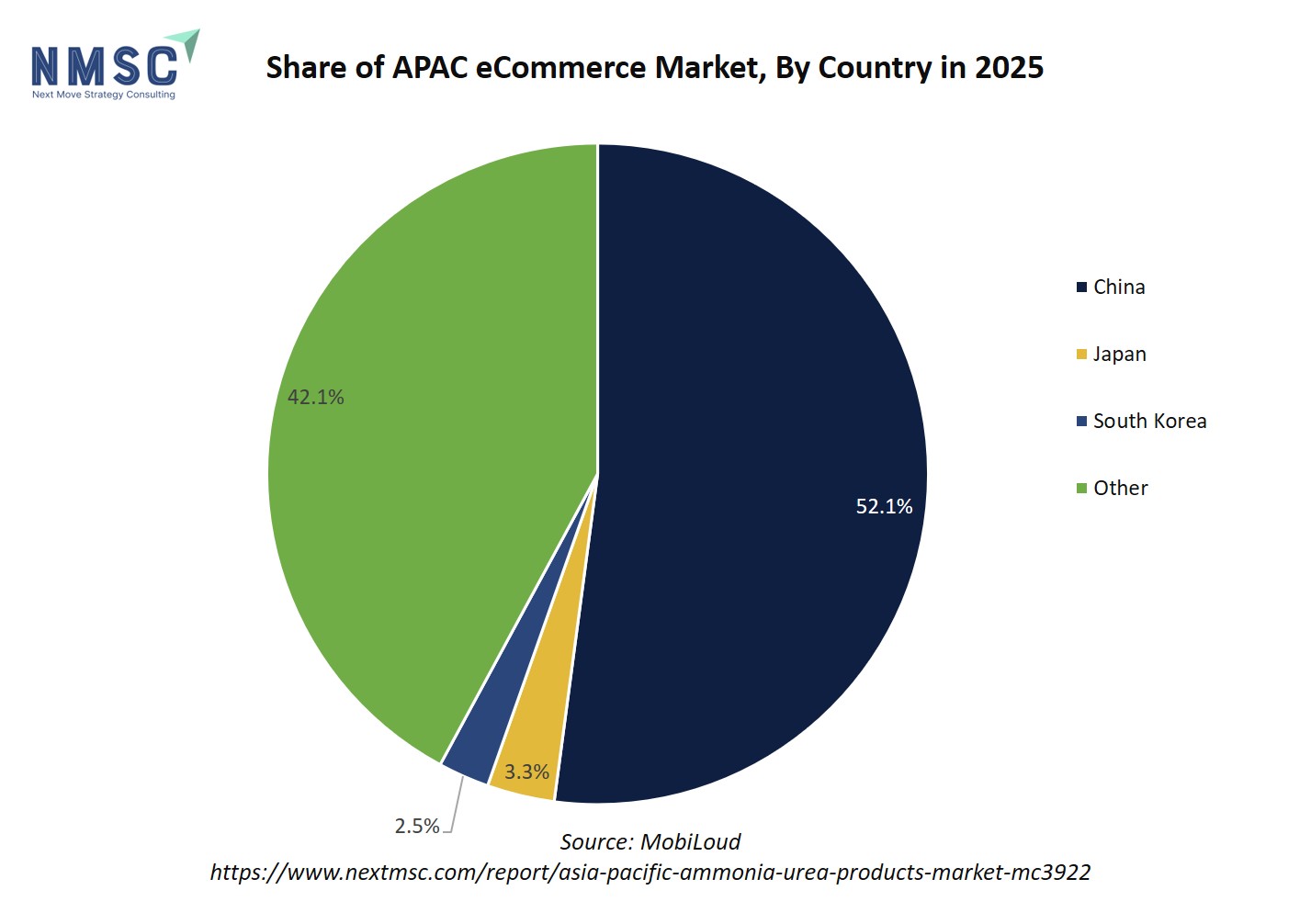
E-commerce has emerged as a strong growth catalyst for the Asia-Pacific ammonia & urea products market trends, particularly in large agricultural economies such as India, Indonesia, and Vietnam. Digital platforms enable farmers and distributors to access fertilizers more conveniently, compare prices, track deliveries, and receive agronomic guidance. The expansion of B2B and B2F (business-to-farmer) online marketplaces is improving supply-chain transparency and reducing regional distribution gaps. As companies invest in mobile apps, online ordering systems, and digital advisory services, e-commerce is becoming an integral channel that boosts market accessibility and accelerates fertilizer adoption across rural and semi-urban regions.
How are Ammonia & Urea-Based Products Transforming Industrial and Environmental Applications in Asia-Pacific?
Ammonia and urea-based products are playing an increasingly important role in Asia-Pacific’s industrial, environmental, and energy transitions. Urea is witnessing strong uptake in diesel exhaust fluid (DEF/AdBlue) used for emissions control in vehicles, while ammonia is gaining momentum as a hydrogen carrier, clean fuel option, and power-generation feedstock. These applications support regional goals for decarbonization and cleaner mobility. Companies are emphasizing product purity, safety, and sustainable sourcing to cater to these industries, and the growing focus on green and blue ammonia is positioning the region as a global hub for low-carbon energy solutions.
What Are the Key Market Drivers, Breakthroughs, and Investment Opportunities That Will Shape the Asia-Pacific Ammonia & Urea Products Market in the Next Decade?
The Asia-Pacific ammonia & urea products market is experiencing steady expansion driven by strong agricultural demand, improved farmer affordability, and rising government support across major economies such as India and Indonesia. Increased fertilizer subsidies, higher crop sowing, and sustained consumption during key seasons continue to anchor the region’s nitrogen fertilizer demand. At the same time, producers are navigating energy-cost volatility by optimizing natural gas sourcing and leveraging diversified feedstocks to maintain competitiveness. While tightening environmental regulations are prompting costly upgrades and operational adjustments, the long-term outlook remains positive, supported by emerging opportunities in green ammonia. Growing investments in low-carbon energy and clean-fuel applications are positioning Asia-Pacific as a future hub for sustainable ammonia production.
Flow Chart Of Ammonia Synthesis
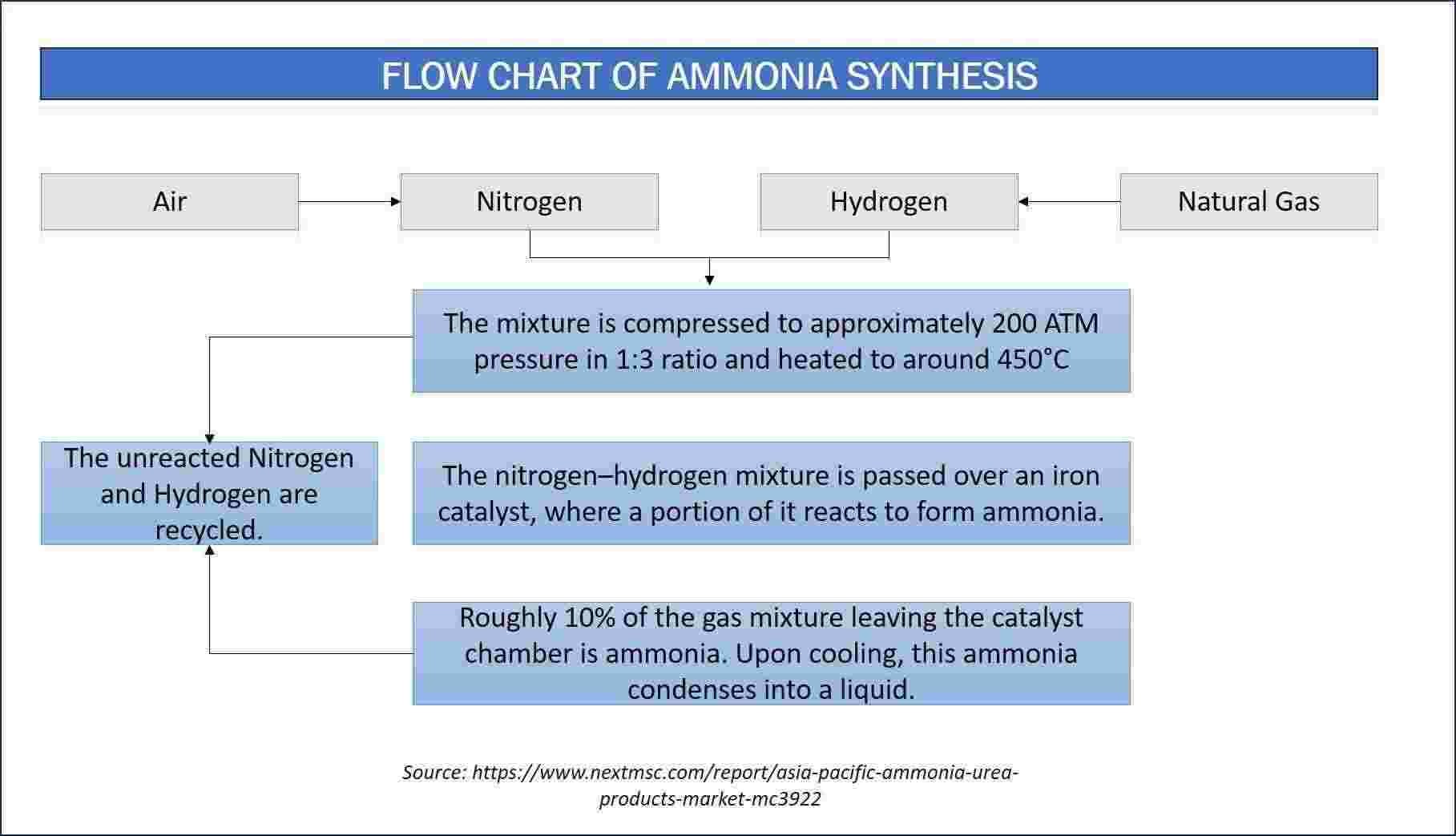
The flow chart illustrates the Haber–Bosch process for ammonia synthesis, where nitrogen from air and hydrogen derived from natural gas are compressed at high pressure and temperature, reacted over an iron catalyst, and continuously recycled to maximize ammonia yield. This process underpins the Asia Pacific ammonia and urea products market, as the region relies heavily on ammonia as a key feedstock for urea fertilizer production. Rapid population growth, rising food demand, and intensive agricultural activity across countries such as China, India, and Southeast Asia drive large-scale ammonia synthesis and downstream urea manufacturing. Additionally, expanding industrial uses of ammonia and ongoing investments in efficient, low-emission production technologies are strengthening Asia Pacific’s dominance in the global ammonia–urea value chain.
Growth Drivers:
How is Improved Farmer Affordability and Strong Agricultural Demand Driving the Asia-Pacific Ammonia & Urea Products Market?
A major driver of the Asia-Pacific ammonia & urea products market growth is improved farmer affordability coupled with robust agricultural demand. According to the International Fertilizer Association, despite higher interest rates and tight working capital, governments continued to support agriculture strongly in 2024, which helped sustain fertilizer demand and enabled higher production. In India, for instance, the kharif season in 2025 saw urea consumption of 18.2 million tonnes between June and mid-September, a 4.6% increase from the same period in the previous year. This combination of government support, subsidy mechanisms, and crop sowing trends underpins continued demand for nitrogen fertilizers like ammonia and urea.
In recent years, Indonesia’s agricultural demand has surged, pushing up demand for fertilizers and making affordability key for farmers. With about 32% of national land used by farms and agriculture contributing roughly 14% of GDP, a large proportion of the population depends on farming, on small holdings, which heightens sensitivity to fertilizer prices. To support these farmers and boost productivity, the government and the state-owned fertilizer supplier Pupuk Indonesia significantly expanded subsidized fertilizer availability in 2024. Allocation of subsidized fertilizers was raised to 9.55 million tonnes (from 4.7 million tonnes previously), with roughly 4.63 million tonnes of urea and 4.42 million tonnes of NPK included in the scheme.
How is Energy Cost Volatility & Natural Gas Dynamics Fuels the Market Expansion?
Energy-price volatility and shifting natural-gas dynamics are emerging as major forces shaping the Asia-Pacific ammonia & urea products market expansion. As ammonia production is highly energy-intensive and dependent on natural gas or coal as feedstock, fluctuations in global energy markets, driven by geopolitical tensions, LNG supply tightness, and seasonal demand surges, are prompting APAC producers to strategically optimize feedstock sourcing and production economics. Countries such as China and India are leveraging diversified energy mixes, including coal gasification, LNG imports, and long-term gas contracts, to stabilize input costs and maintain competitive output levels.
Flow Chart Of Urea Synthesis
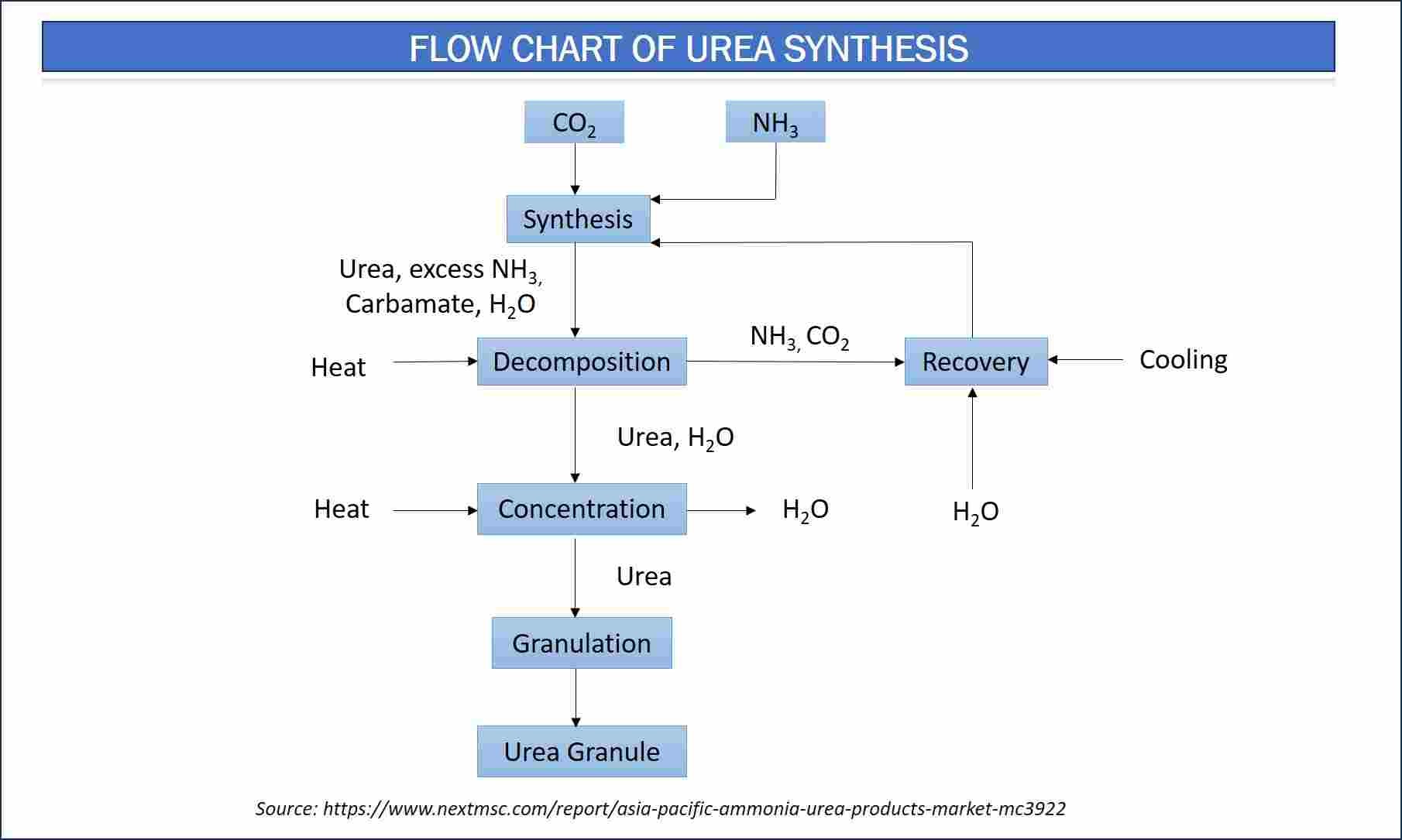
The flow chart depicts the urea synthesis process, where ammonia (NH₃) reacts with carbon dioxide (CO₂) to form ammonium carbamate, which is then decomposed, concentrated, and granulated to produce solid urea. Unreacted ammonia and CO₂ are recovered and recycled, improving process efficiency and reducing waste. This production pathway is directly linked to the Asia Pacific ammonia and urea products market, as the region hosts large-scale integrated ammonia–urea plants, particularly in China, India, and Southeast Asia. Strong agricultural dependence, large fertilizer consumption, and government support for food security drive sustained urea demand. Additionally, cost-efficient natural gas and expanding industrial fertilizer capacity reinforce Asia Pacific’s leadership in global urea production and consumption.
Growth Inhibitors:
What Environmental Regulations and Sustainability Pressure are Hindering the Asia-Pacific Ammonia & Urea Products Market?
Increasingly strict environmental and emission regulations across Asia-Pacific countries, such as limits on nitrogen runoff, ammonia emissions, and water pollution, constrain traditional ammonia and urea production methods. For instance, China and South Korea are enforcing stricter pollution control standards at fertilizer plants, which increase operational costs, require costly technology upgrades, or reduce production in non-compliant facilities. These regulations act as a restraint, as compliance increases production costs and limit expansion or profitability for conventional producers. In Indonesia, the increasing environmental impact of chemical fertilizer production and usage, including water pollution, soil degradation, greenhouse-gas (GHG) emissions and ecosystem damage, has led regulators and industry stakeholders to tighten standards and demand more sustainable practices.
How is Rapid Growth of Green Ammonia as a Clean Energy Carrier Creates Opportunities for the Market?
The Asia-Pacific region is positioned to become a global hub for green ammonia, driven by large renewable energy capacities, supportive government policies, and rising international demand for carbon-free fuels. Countries such as Australia, Japan, India, and South Korea are investing heavily in green hydrogen and ammonia production to support applications in power generation, shipping fuel, hydrogen transport, and industrial decarbonization. As global industries transition to low-carbon energy systems, green ammonia offers a multi-billion-dollar opportunity for producers, enabling exports, technology partnerships, and long-term market expansion beyond traditional fertilizer demand.
How Is the Asia-Pacific Ammonia & Urea Products Market Segmented in This Report, and What Are the Key Insights From the Segmentation Analysis?
By Product Insights
Is the Asia-Pacific Ammonia & Urea Products Market Share in 2025 Shaped by Diverse Product Categories?
Based on product type, the Asia-Pacific ammonia & urea products market is segmented into ammonia and urea, each playing a distinct role in agriculture, industry, and emerging clean-energy applications across the region.
Ammonia serves as a foundational product in the Asia-Pacific market, driven by its critical role as a feedstock for fertilizers and its growing relevance in industrial and energy sectors. In agriculture, ammonia is used directly or converted into downstream nitrogen fertilizers, supporting high-yield crop production in major markets like India, China, and Indonesia. Beyond farming, ammonia’s importance is rapidly evolving as countries explore its potential in power generation, hydrogen transport, and low-carbon fuel applications, positioning it as a transformative element in the region’s decarbonization efforts. Producers are investing in cleaner and more efficient ammonia production technologies to meet both traditional fertilizer demand and emerging energy requirements.
Urea remains the dominant nitrogen fertilizer product in the Asia-Pacific market due to its high nitrogen content, cost-effectiveness, and broad applicability across crops. Consumption continues to rise in high-intensity agricultural economies, supported by extensive government subsidy programs and strong food security priorities. Urea also plays a growing role in industrial applications, particularly in the production of diesel exhaust fluid (DEF/AdBlue), where tightening emission regulations are expanding demand. Its versatility, spanning fertilizers, industrial feedstocks, and emission-control additives, makes urea a key product category shaping the future of the ammonia and urea industry. Manufacturers continue to innovate with stabilized, coated, and enhanced-efficiency urea formulations to meet evolving sustainability and productivity requirements.
By Application Insights
How is the Fertilizer Segment Driving the Core Demand for Ammonia & Urea in Asia-Pacific in 2025?
Based on application, the Asia-Pacific ammonia & urea products market is divided into fertilizer, industrial, and others, each contributing uniquely to the region’s expanding demand profile.
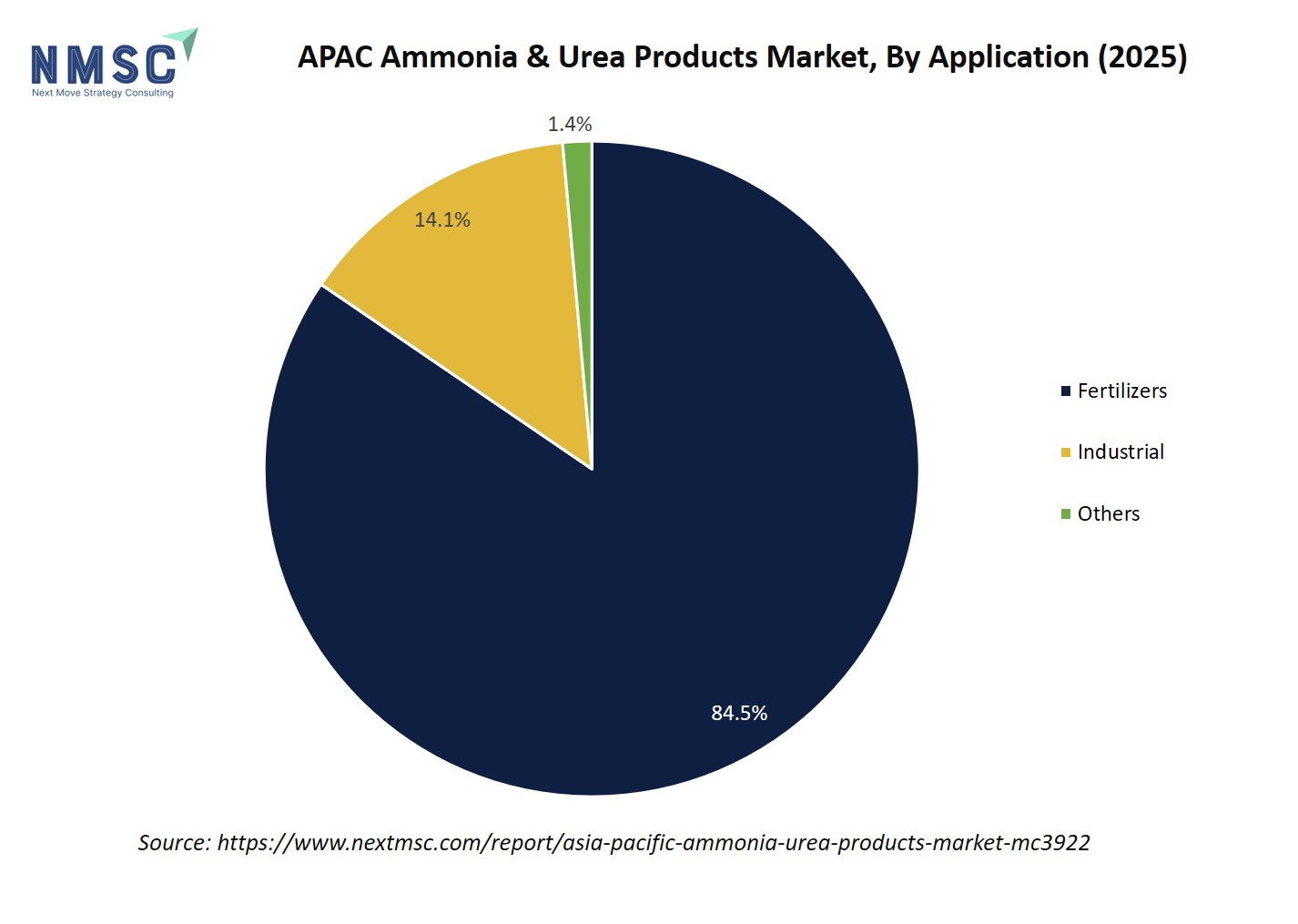
The fertilizer segment remains the backbone of the Asia-Pacific ammonia and urea market, driven by the region’s need to sustain high agricultural productivity. Urea, being the most widely used nitrogen fertilizer, supports large-scale cultivation of rice, wheat, corn, and plantation crops across countries such as India, China, and Indonesia. Strong government subsidies, rising crop acreage, and increased focus on food security continue to fuel demand. Ammonia, used as a precursor for several nitrogen fertilizers, further reinforces this segment’s dominance. The fertilizer application not only secures stable market growth but also ensures long-term reliance on nitrogen-based inputs across the region.
Regional Outlook
The Asia-Pacific Ammonia & Urea Products market is geographically studied across Indonesia, China, India, Vietnam, Philippines, Thailand, Malaysia, and South Korea.
Bilateral Trade Mapping Of Urea Imports, By Trade Value In Us$
|
COUNTRIES/YEARS |
2019 |
2020 |
2021 |
2022 |
2023 |
2024 |
|
India |
XX |
XX |
XX |
35 |
7566 |
59 |
|
China |
290686 |
3442563 |
537801 |
19575098 |
2722089 |
287141 |
|
South Korea |
XX |
XX |
25 |
356 |
145 |
478768 |
|
Vietnam |
XX |
XX |
870 |
20243432 |
10987820 |
220 |
|
Philippines |
XX |
XX |
XX |
XX |
XX |
XX |
|
Thailand |
XX |
XX |
XX |
XX |
XX |
XX |
|
Malaysia |
3208502 |
2935975 |
2012496 |
3414255 |
4252975 |
130743 |
Source: Primary Research, Secondary Research, NMSC Analysis
The table presents a bilateral trade mapping of urea imports across key Asia Pacific countries from 2019 to 2024, highlighting sharp fluctuations in trade values driven by supply–demand imbalances, pricing volatility, and policy interventions. China and Malaysia emerge as significant importers in several years, reflecting periods of domestic supply tightness or export restrictions. Countries such as South Korea and Vietnam show sudden import spikes, indicating short-term dependence on external suppliers to support agricultural and industrial demand. These trends underscore the interconnected nature of the Asia Pacific ammonia and urea products market, where urea trade flows are highly sensitive to natural gas availability, production outages, and government controls. Overall, the table illustrates the region’s dynamic import dependency and the strategic importance of ammonia-based fertilizer supply security.
Bilateral Trade Mapping Of Ammonia Imports, By Trade Value In Us$
|
COUNTRIES/YEARS |
2019 |
2020 |
2021 |
2022 |
2023 |
2024 |
|
India |
35 |
11298 |
190 |
12226 |
100 |
1351 |
|
China |
400398 |
56960 |
67237 |
34053 |
327092 |
237376 |
|
South Korea |
XX |
54 |
218 |
2742 |
164 |
361 |
|
Vietnam |
XX |
XX |
XX |
XX |
XX |
XX |
|
Philippines |
XX |
52 |
XX |
XX |
XX |
XX |
|
Thailand |
1505 |
8 |
11645 |
11581 |
$1 |
3581 |
|
Malaysia |
89 |
1567500 |
XX |
4160 |
10797128 |
117726 |
Source: Primary Research, Secondary Research, NMSC Analysis
The table illustrates bilateral ammonia import values across major Asia Pacific economies from 2019 to 2024, revealing significant volatility driven by energy prices, supply disruptions, and changing domestic production capacities. China remains a dominant importer in several years, reflecting its large industrial and fertilizer base despite strong domestic output. India’s imports fluctuate sharply, highlighting its reliance on external ammonia to support downstream fertilizer and chemical production. Malaysia and Thailand show episodic import surges, indicating periods of feedstock shortages or plant maintenance. These patterns are closely linked to the Asia Pacific ammonia and urea products market, as ammonia is the primary feedstock for urea manufacturing. Overall, the table underscores the region’s interconnected trade dynamics and the strategic importance of ammonia supply security for fertilizer availability and food production.
Asia-Pacific Ammonia & Urea Products Market in Indonesia
Indonesia represents one of the most important and fast-expanding markets for ammonia and urea in Asia-Pacific, with the industry reaching USD 5,000.4 million and a consumption volume of 12,801 kilotons. This growth is strongly supported by the country’s large agricultural base, where nearly a third of national land is used for farming and fertilizer demand remains consistently high. Government initiatives, especially the significant expansion of subsidized fertilizer allocations, continue to enhance farmer affordability and sustain large-scale urea and ammonia usage. Beyond agriculture, Indonesia’s industrial sectors such as mining, chemicals, and emissions control are contributing to rising consumption. Coupled with ongoing efforts to modernize production and improve sustainability, these factors position Indonesia as a major driver of the region’s ammonia and urea market.
Asia-Pacific Ammonia & Urea Products Market in the China
China stands as the largest and most influential market for ammonia and urea in the Asia-Pacific region, with a substantial market value of USD 40,461.0 million and a massive consumption volume of 112,392 kilotons. The country’s dominance is reinforced by its extensive agricultural sector, which continues to rely heavily on nitrogen-based fertilizers to support high-yield crop production. Strong domestic manufacturing capacity, combined with strategic government policies aimed at ensuring fertilizer availability and stabilizing prices, further strengthens market growth. In addition to agriculture, China’s broad industrial ecosystem, including chemicals, plastics, resins, textiles, and emissions-control applications, significantly boosts the demand for ammonia and urea. With ongoing investments in energy-efficient technologies and low-carbon production pathways, China remains a central force driving innovation, capacity expansion, and long-term growth in the regional ammonia and urea industry.
Asia-Pacific Ammonia & Urea Products Market in India
India’s ammonia and urea market continues to show steady expansion, supported by strong agricultural demand, government-backed fertilizer subsidy mechanisms, and ongoing investments in domestic production capacity. Rising food security priorities and efforts to reduce dependence on imports are further accelerating modernization across the country’s fertilizer value chain. The market size and volume of India’s ammonia and urea market stand at USD 20,206.3 million and 53,931 kilotons, respectively, underscoring the nation’s critical role as one of the world’s largest fertilizer-consuming economies.
Apac Urea-prilled Historical Price Movements, 2019-2024, In Usd/ton
|
APAC |
2019 |
2020 |
2021 |
2022 |
2023 |
2024 |
|
Indonesia |
106 |
94 |
199 |
335 |
176 |
205 |
|
China |
142 |
98 |
253 |
347 |
236 |
203 |
|
India |
119 |
84 |
216 |
296 |
202 |
182 |
|
Vietnam |
112 |
95 |
243 |
335 |
228 |
186 |
|
Philippines |
130 |
96 |
236 |
324 |
177 |
173 |
|
Thailand |
125 |
92 |
237 |
326 |
220 |
199 |
|
Malaysia |
128 |
94 |
233 |
320 |
192 |
177 |
|
South Korea |
126 |
98 |
239 |
345 |
218 |
202 |
Source: Primary Research, Secondary Research, NMSC Analysis
The table tracks historical price movements of prilled urea across major Asia Pacific countries from 2019 to 2024, showing clear cycles of volatility. Prices declined in 2020 due to weaker demand and lower energy costs, then surged sharply in 2021–2022, driven by natural gas price spikes, supply disruptions, and export restrictions, particularly from key producers. In 2023 and 2024, prices moderated but remained above pre-pandemic levels, reflecting ongoing cost pressures and tighter global supply. These trends are central to the Asia Pacific ammonia and urea products market, as urea pricing is directly linked to ammonia feedstock costs and energy inputs. Overall, the table highlights the region’s sensitivity to global energy markets and its impact on fertilizer affordability and agricultural economics.
Asia-Pacific Ammonia & Urea Products Market in Vietnam
Vietnam’s ammonia and urea market is experiencing gradual expansion, supported by the country’s rising agricultural input requirements, ongoing improvements in domestic fertilizer production, and efforts to enhance food security through stable nutrient supply. Growing demand from rice, coffee, and plantation crops, coupled with modernization across local manufacturing facilities, continues to shape the sector’s development. The market size and volume of Vietnam’s ammonia and urea market stand at USD 1,893.2 million and 4,474 kilotons, respectively, highlighting the nation’s role as a key fertilizer consumer within Southeast Asia.
Asia-Pacific Ammonia & Urea Products Market in the Philippines
The Philippines’ ammonia and urea market is steadily evolving, driven by the nation’s dependence on fertilizers to support its expanding agriculture sector, particularly rice, corn, and high-value crops. Increasing focus on improving crop yields, reducing import dependency, and strengthening domestic supply chains is shaping ongoing market activity. Additionally, government programs aimed at enhancing food security and modernizing farming practices continue to stimulate fertilizer demand. The market size and volume of the Philippines ammonia and urea market stand at USD 1,379.3 million and 3,158 kilotons, respectively, underscoring its importance as a developing but vital market within Southeast Asia.
Asia-Pacific Ammonia & Urea Products Market in Thailand
Thailand’s ammonia and urea market continues to develop steadily, supported by the country’s strong agricultural base and ongoing efforts to enhance crop productivity across key staples such as rice, sugarcane, and cassava. Rising emphasis on improving soil nutrition, stabilizing fertilizer supply, and supporting farmers through modernization programs has strengthened domestic demand. Additionally, Thailand’s push toward optimizing agricultural efficiency and reducing reliance on imported inputs contributes to sustained market growth. The market size and volume of Thailand’s ammonia and urea market stand at USD 2,566.5 million and 6,372 kilotons, respectively, reflecting its role as a crucial and expanding fertilizer market in Southeast Asia.
Asia-Pacific Ammonia & Urea Products Market in Malaysia
Malaysia’s ammonia and urea market is progressing steadily, driven by the country’s strong agricultural activities in palm oil, rubber, and paddy cultivation, all of which require consistent fertilizer inputs. Growing efforts to enhance crop productivity, improve soil health, and strengthen domestic supply reliability are influencing market dynamics. Government initiatives aimed at supporting farmers, modernizing agricultural practices, and reducing dependency on imported fertilizers further contribute to the sector’s expansion. The market size and volume of Malaysia’s ammonia and urea market stand at USD 1,037.4 million and 2,730 kilotons, underscoring its importance as a key and developing fertilizer market in Southeast Asia.
Ammonia Supply Chain Structure
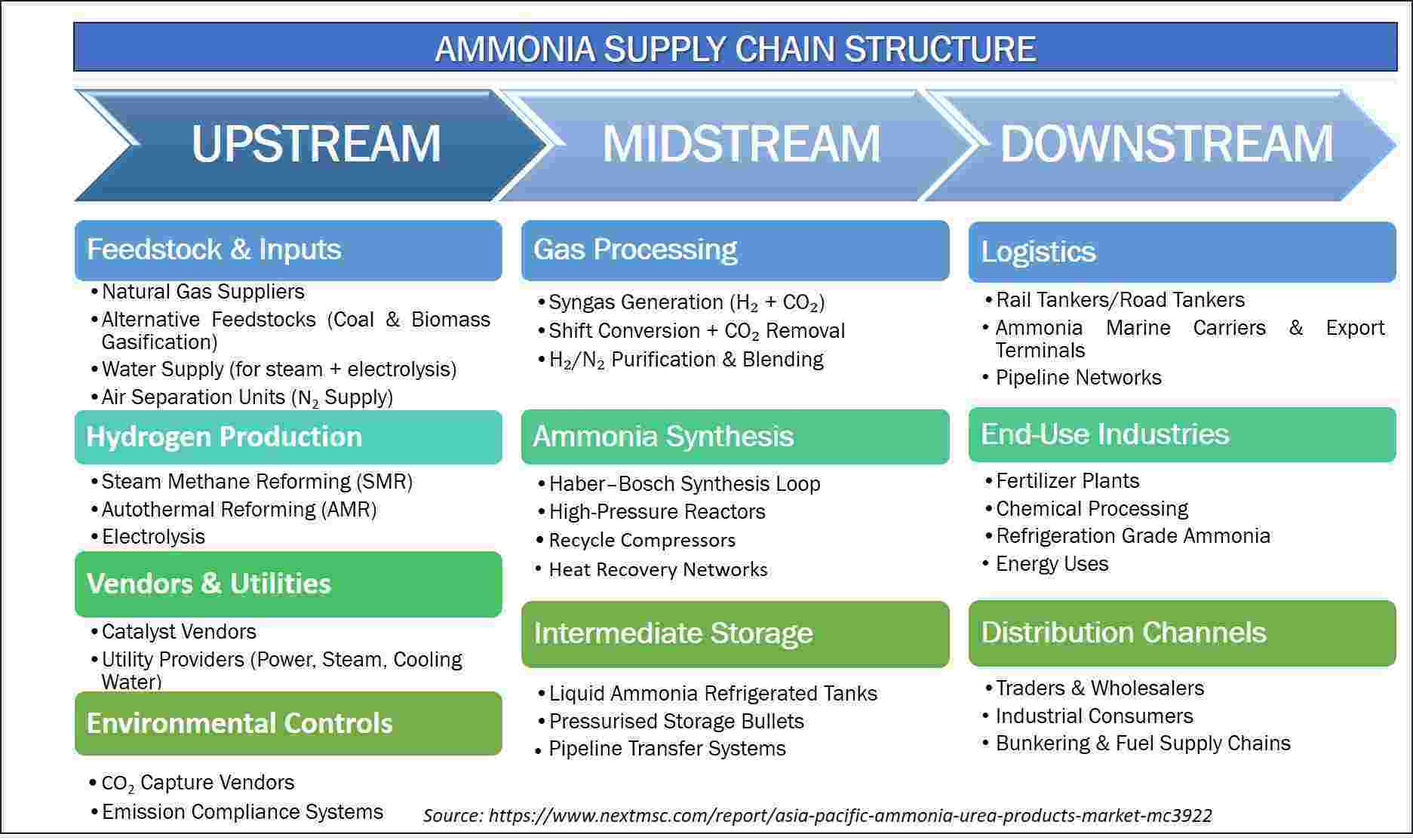
The chart illustrates the ammonia supply chain structure, spanning upstream feedstock sourcing and hydrogen production, midstream gas processing and ammonia synthesis, and downstream logistics and end-use industries. Upstream activities rely heavily on natural gas, while midstream operations focus on syngas generation, Haber-Bosch synthesis, and intermediate storage. Downstream, ammonia is transported via pipelines, tankers, and terminals to fertilizer plants and industrial users. This structure is highly relevant to the Asia Pacific ammonia and urea products market, where integrated production facilities, strong fertilizer demand, and expanding logistics infrastructure support large-scale operations. Rapid agricultural growth, rising industrial consumption, and increasing investments in cleaner hydrogen and carbon capture technologies are further reshaping the regional ammonia–urea supply chain.
Urea Supply Chain Structure
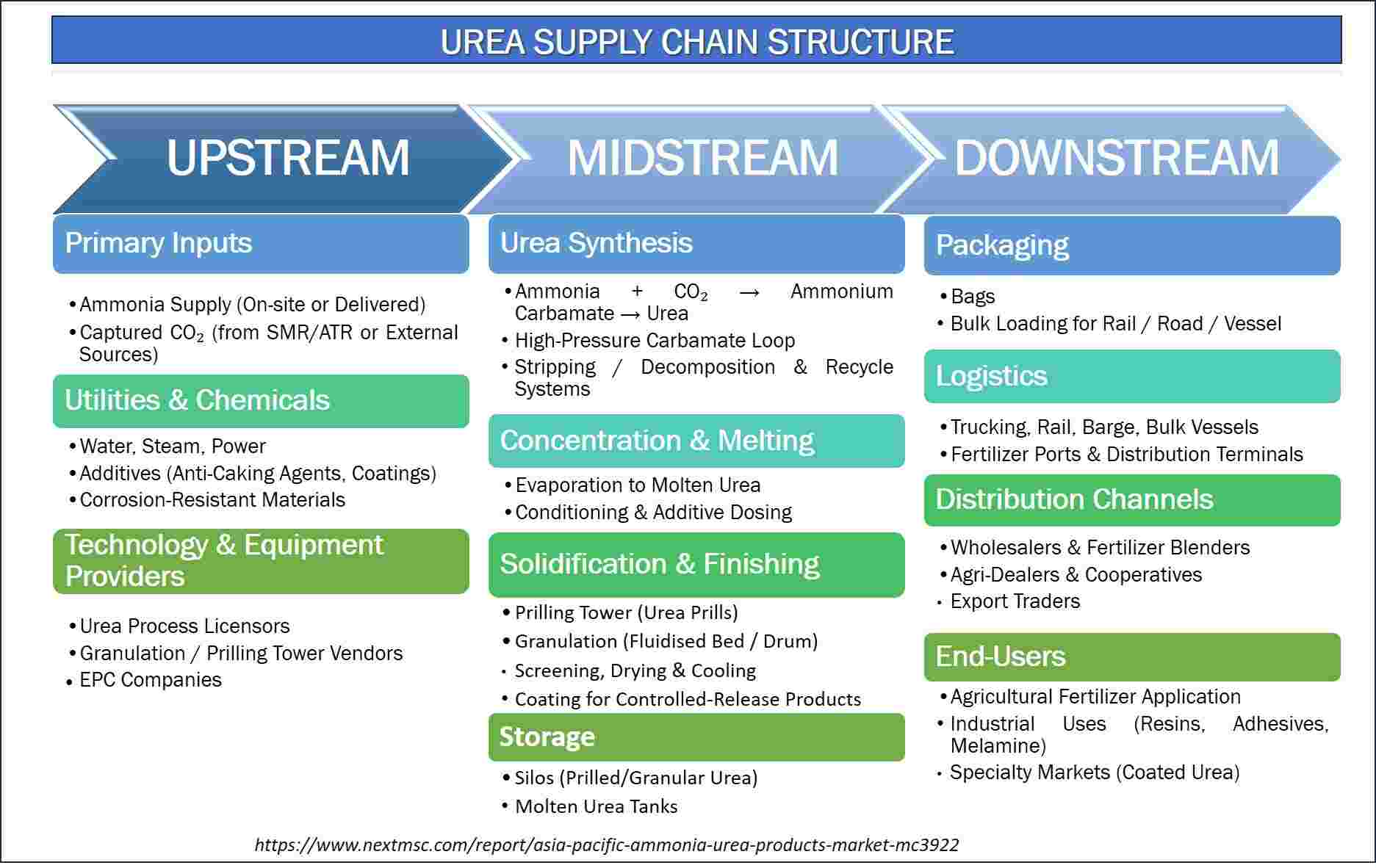
The chart outlines the urea supply chain structure, progressing from upstream ammonia and captured CO₂ inputs to midstream urea synthesis, concentration, and solidification, and finally to downstream packaging, logistics, and end-use distribution. Upstream integration with ammonia plants ensures stable feedstock supply, while midstream processes such as carbamate recycling, prilling, and granulation improve efficiency and product quality. Downstream activities focus on bulk handling, transport, and delivery to agricultural and industrial consumers. This structure closely reflects the Asia Pacific ammonia and urea products market, where large, integrated fertilizer complexes, strong farming demand, and well-developed logistics networks support high-volume urea production. Growing food security needs, export-oriented production, and investments in advanced coating and controlled-release technologies further strengthen the region’s market position.
Asia-Pacific Ammonia & Urea Products Market in South Korea
South Korea’s ammonia and urea market is advancing as the country increases its focus on food security, precision agriculture, and industrial applications that rely on nitrogen-based chemicals. Although agricultural land is limited, the demand for high-efficiency fertilizers continues to rise, driven by greenhouse farming, modern cultivation practices, and efforts to improve crop yields. Additionally, South Korea’s strong industrial base, including chemicals, textiles, and manufacturing, supports steady consumption of ammonia and urea in non-agricultural applications. The market size and volume of South Korea’s ammonia and urea market stand at USD 989.9 million and 2,251 kilotons, reflecting its role as a technologically advanced and strategically important market within the Asia-Pacific region.
Competitive Landscape
Which Companies Dominate the Asia-Pacific Ammonia & Urea Products Market and How do they Compete?
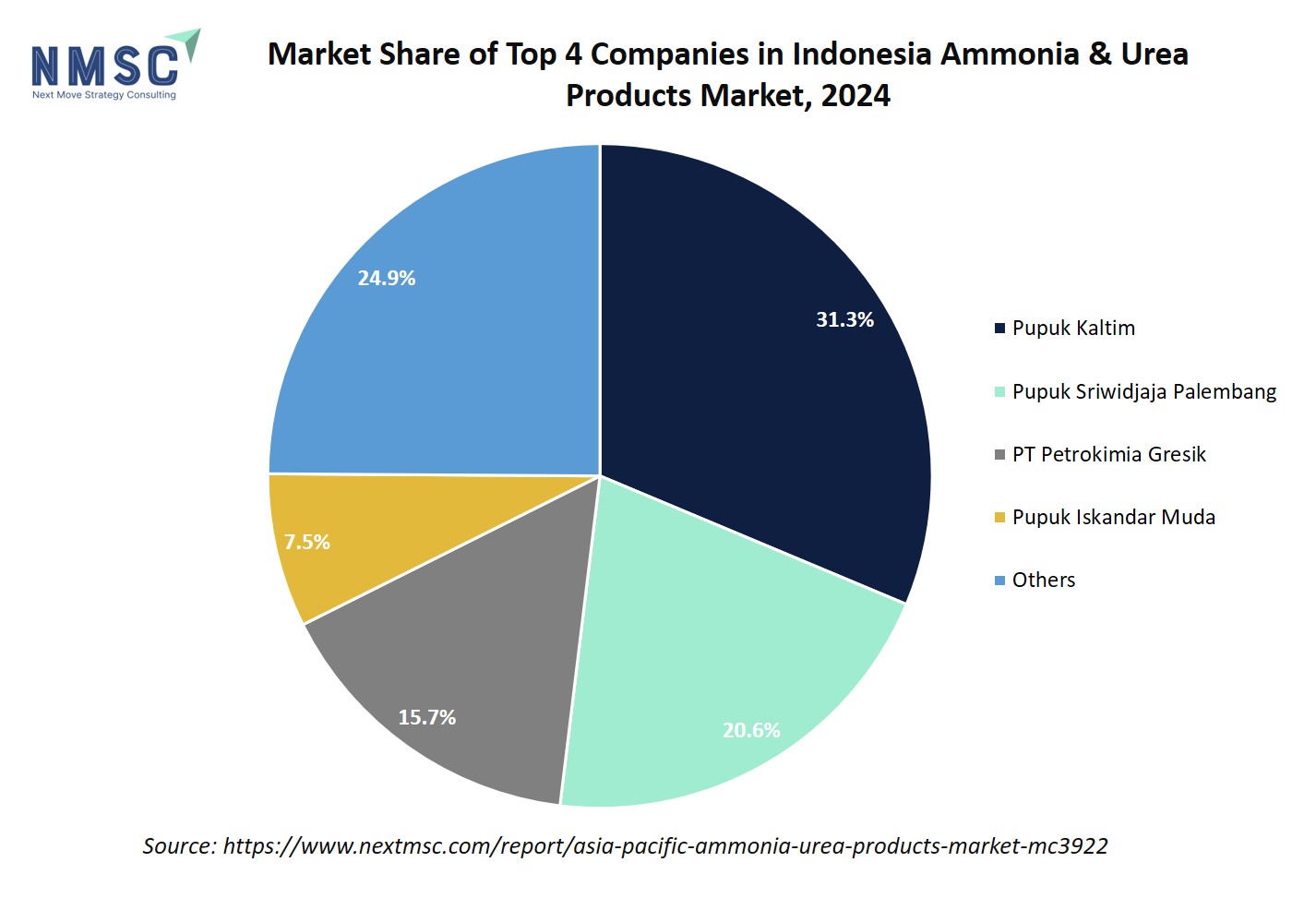
Leading producers in the Asia-Pacific ammonia & urea products market, such as Pupuk Kaltim, Pupuk Kujang, Pupuk Sriwidjaja Palembang, Pupuk Iskandar Muda, PT Petrokimia Gresik, SABIC, QAFCO, PT Yara Indonesia, Sumitomo Chemical Co., Ltd., and PT ESSA Industries Indonesia Tbk, have established themselves as key players through capacity expansion, strategic feedstock partnerships, and technological upgrades.
Indonesian fertilizer giants under Pupuk Indonesia Group (Pupuk Kaltim, Pupuk Kujang, Pusri, PIM, and Petrokimia Gresik) dominate the regional landscape with large-scale ammonia and urea production, supported by secure gas supply contracts and continuous modernization of manufacturing assets. SABIC and QAFCO, two of the world’s largest ammonia and urea exporters, reinforce their competitive advantage through energy-efficient technologies and upcoming blue/low-carbon ammonia initiatives, which are increasingly influencing regional supply dynamics. Yara Indonesia, Sumitomo Chemical, and ESSA Industries compete by leveraging global R&D, specialty chemical integration, and strategic partnerships that enhance fertilizer efficiency and production sustainability. Altogether, these companies differentiate themselves through production scale, cost competitiveness, sustainable technologies, and regional market penetration.
Market Dominated by Asia-Pacific Ammonia & Urea Products Giants and Specialists
The Asia-Pacific ammonia & urea products market is shaped by a combination of global giants and strong regional specialists. SABIC and QAFCO lead globally with their massive export-oriented ammonia and urea capacities, advanced production technologies, and investments in low-carbon fertilizer solutions. In contrast, Indonesian producers, Pupuk Kaltim, Pupuk Kujang, Pusri, PIM, and Petrokimia Gresik, function as regional powerhouses with deep knowledge of local agronomic needs, strong government backing, and integrated production networks that ensure reliable supply for domestic and Southeast Asian markets.
Specialized players like Sumitomo Chemical, PT Yara Indonesia, and PT ESSA Industries Indonesia Tbk strengthen competition by offering niche strengths such as premium nitrogen solutions, innovative crop nutrition technologies, and high-purity industrial ammonia. This dual structure, global exporters with massive scale on one side and regionally focused producers with localized expertise on the other, creates a highly competitive environment driven by investment in energy efficiency, feedstock security, sustainable ammonia production, and tailored product offerings.
Innovation and Adaptability Drive Market Success
Innovation remains a central force shaping the Asia-Pacific ammonia & urea products market, as producers continuously enhance technologies, processes, and applications to meet evolving industry requirements. Advancements in sustainable production methods, such as energy-efficient ammonia synthesis and improved urea formulation techniques, are helping manufacturers reduce environmental impact while boosting output quality. The increasing adoption of digital tools, including precision monitoring, automation, and data-driven optimization, further strengthens operational efficiency. This commitment to innovation allows market players to stay competitive, address rising agricultural and industrial demand, and adapt to shifting regulatory and sustainability expectations across the region.
Market Players to Opt for Merger & Acquisition Strategies to Expand their Presence
Merger and acquisition (M&A) activities are becoming increasingly important for companies seeking to expand their footprint in the Asia-Pacific ammonia & urea products market. In recent years, several producers and distributors have pursued strategic acquisitions to broaden their product portfolios, secure more reliable feedstock sources, and enhance distribution networks. These consolidations enable firms to achieve economies of scale, accelerate technological improvements, and strengthen their position in both domestic and export markets. By leveraging M&A strategies, companies are better equipped to navigate market volatility, meet rising fertilizer demand, and support the region’s growing industrial and agricultural need.
List of Key Companies
-
Pupuk Kaltim
-
Pupuk Kujang
-
Pupuk Sriwidjaja Palembang
-
Pupuk Iskandar Muda
-
PT Petrokimia Gresik
-
QAFCO (Qatar Fertiliser Company)
-
Sumitomo Chemical Co., Ltd
-
PT ESSA Industries Indonesia Tbk
What Are The Latest Key Industry Developments?
-
May 2025 - QAFCO’s blue ammonia production facility QAFCO-7 remains on schedule to begin operations in 2026, which impact regional ammonia pricing and supply chains in Asia including Indonesia.
-
February 2025 - Pupuk Kaltim signed a long-term gas sales agreement with Pertamina, ensuring steady feedstock for fertilizer, supporting ammonia and urea production stability.
-
June 2024 - Pupuk Kujang signed an MoU to secure long-term gas from the Madura Strait, enabling plans to build a new manufacturing unit to improve efficiency and future urea/related production.
What Are The Key Factors Influencing Investment Analysis & Opportunities In The Asia-pacific Ammonia & Urea Products Market?
Investment activity in the Asia-Pacific ammonia & urea products market is being shaped by the region’s expanding agricultural requirements, rising food security priorities, and increasing demand from industrial sectors such as chemicals, plastics, textiles, and manufacturing. Investors are particularly drawn to projects that emphasize production efficiency, energy-saving technologies, and reduced environmental impact, factors that directly improve profitability and long-term operational stability. Growing interest in low-carbon ammonia, green hydrogen integration, and cleaner urea production methods is also influencing capital flows, as governments and industries push for sustainable development.
Valuations in the ammonia and urea sector are driven by factors such as plant modernization, feedstock availability, production scalability, and the ability to meet regional fertilizer demand reliably. Markets with strong infrastructure, supportive policies, and access to natural gas or renewable energy sources are emerging as major investment hotspots. Companies that prioritize sustainability, adopt advanced process technologies, and form strategic partnerships, whether for R&D, technology sharing, or supply-chain expansion, tend to attract stronger investor confidence. As a result, opportunities in this sector continue to expand, especially for players that balance cost competitiveness with environmental responsibility.
Key Benefits for Stakeholders:
Next Move Strategy Consulting (NMSC) delivers an in-depth evaluation of the Asia-Pacific ammonia & urea products market, analyzing historical performance from 2024 to 2030 and providing reliable forecasts through 2030. The report covers regional and country-level assessments, offering quantitative insights into market size, production capacities, trade flows, consumption patterns, and emerging opportunities across all major ammonia and urea application segments. This comprehensive study highlights critical growth drivers, regulatory shifts, supply-chain developments, and investment trends shaping the sector.
The Asia-Pacific ammonia & urea products market provides strong value to a wide range of stakeholders by supporting essential sectors such as agriculture, chemicals, manufacturing, and energy. Investors benefit from stable long-term demand, attractive returns linked to agricultural expansion, and growing opportunities in low-carbon and energy-efficient production technologies. Customers, including fertilizer distributors, industrial users, and chemical manufacturers, gain access to reliable nitrogen-based inputs vital for crop productivity, industrial processing, and downstream product development. Producers and suppliers benefit from consistent raw material demand and opportunities to modernize plants, increase efficiency, and expand export potential.
Report Scope
|
Parameters |
Details |
|
Market Size in 2025 |
USD 73.53 Billion |
|
Revenue Forecast in 2030 |
USD 85.03 Billion |
|
Growth Rate |
CAGR of 2.95% from 2025 to 2030 |
|
Market Volume in 2025 |
198107 Kilo Tons |
|
Volume Forecast in 2030 |
255664 Kilo Tons |
|
Growth Rate |
CAGR of 5.23% from 2025 to 2030 |
|
Analysis Period |
2024–2030 |
|
Base Year Considered |
2024 |
|
Forecast Period |
2025–2030 |
|
Market Size Estimation |
Billion (USD) |
|
Growth Factors |
|
|
Companies Profiled |
15 |
|
Countries Covered |
33 |
|
Market Share |
Available for 10 companies |
|
Customization Scope |
Free customization (equivalent to up to 80 analyst-working hours) after purchase. Addition or alteration to country, regional & segment scope. |
|
Pricing and Purchase Options |
Avail customized purchase options to meet your exact research needs. |
|
Approach |
In-depth primary and secondary research; proprietary databases; rigorous quality control and validation measures. |
|
Analytical Tools |
Porter's Five Forces, SWOT, value chain, and Harvey ball analysis to assess competitive intensity, stakeholder roles, and relative impact of key factors. |
Key Market Segments
By Product
-
Ammonia
-
Urea
-
Prill
-
Granule
-
By Application
-
Fertilizer
-
Industrial
-
Others
Conclusion & Recommendations
The Asia-Pacific Ammonia & Urea Products Market is poised for continued expansion, supported by strong agricultural demand, growing population needs, industrial utilization, and ongoing investments in production capacity across key regional economies. NMSC’s analytical framework equips stakeholders, industry leaders, investors, and consultants with actionable insights to navigate this evolving landscape with confidence. The sector’s long-term growth outlook remains positive, driven by government support for food security, technological modernization of fertilizer plants, and the increasing shift toward energy-efficient and low-emission production pathways. Strategic takeaways emphasize the importance of operational efficiency, regulatory compliance, and supply-chain resilience. Companies that enhance plant performance, adopt cleaner technologies, diversify feedstock sources, and strengthen distribution networks will gain competitive advantage. The market also offers significant potential in emerging areas such as green ammonia, export-oriented production, and downstream industrial applications, which unlock new revenue streams and strengthen regional competitiveness.
For executives and investors, capitalizing on these trends requires identifying high-growth application segments, prioritizing investments in modern ammonia–urea complexes, and forming strategic partnerships across the value chain. Expanding capacity in regions with favorable energy economics, stable regulatory frameworks, and growing agricultural consumption will optimize long-term returns. Additionally, focusing on sustainability, transparency, and safety standards enhances stakeholder confidence and helps companies meet rising expectations from governments and industrial buyers. Together, these strategies position market participants to maximize value creation and capture strong opportunities in the Asia-Pacific ammonia and urea products market.


About the Author
 Tushmi Dutta
— Tushmi Dutta is a focused researcher specializing in detailed analysis and insight-driven research across diverse business landscapes. She supports strategic initiatives through structured data interpretation, thorough validation, and clear communication of findings that aid informed decision-making. With a strong interest in writing, she enjoys presenting research insights in an engaging and accessible manner. Beyond work, she enjoys traveling, reading, painting, and continuously learning new skills that contribute to her creative and professional growth.
Tushmi Dutta
— Tushmi Dutta is a focused researcher specializing in detailed analysis and insight-driven research across diverse business landscapes. She supports strategic initiatives through structured data interpretation, thorough validation, and clear communication of findings that aid informed decision-making. With a strong interest in writing, she enjoys presenting research insights in an engaging and accessible manner. Beyond work, she enjoys traveling, reading, painting, and continuously learning new skills that contribute to her creative and professional growth.
About the Reviewer
 Supradip Baul
— Supradip Baul is an accomplished business consultant and strategist with over a decade of rich experience in market intelligence, strategy, technology, and business transformation. His work has included rigorous qualitative and quantitative analysis across multiple industries, helping clients shape investment decisions and long-term roadmaps. Earlier in his career, he was associated with Gartner, where he contributed to industry-leading reports and market share analyses. He has worked with leading global companies and holds an MBA with a dual specialization in Marketing and Finance.
Supradip Baul
— Supradip Baul is an accomplished business consultant and strategist with over a decade of rich experience in market intelligence, strategy, technology, and business transformation. His work has included rigorous qualitative and quantitative analysis across multiple industries, helping clients shape investment decisions and long-term roadmaps. Earlier in his career, he was associated with Gartner, where he contributed to industry-leading reports and market share analyses. He has worked with leading global companies and holds an MBA with a dual specialization in Marketing and Finance.
At Next Move Strategy Consulting, we understand that insightful market research is the cornerstone of successful business decisions. That's why we employ a robust and multifaceted approach, combining various methodologies to deliver the most accurate and actionable data for our clients.

Research Landscape
We navigate the world of research with two primary approaches:
Qualitative Approach
Our qualitative research methodologies involve immersive techniques such as in-depth interviews, focus groups, and observational studies. By engaging directly with individuals and stakeholders, we uncover valuable insights that quantitative data alone may overlook.

Quantitative Research
In tandem with qualitative methodologies, NMSC leverages the power of Quantitative Research to provide a robust foundation of numerical insights. Through systematic data collection and analysis, we quantify patterns, preferences, and market trends, offering a comprehensive view of the business landscape.
Our quantitative research approach employs diverse tools, including surveys, experiments, and statistical modelling. These methodologies enable us to gather data from a large and representative sample, ensuring the statistical significance of our findings. By employing structured questionnaires and standardized data collection methods, we guarantee the reliability and validity of the information we present to our clients.
Quantitative research is particularly effective in measuring the prevalence of trends, assessing market size, and gauging the impact of various factors on consumer behavior. The numerical precision attained through this approach equips our clients with actionable insights, facilitating data-driven decision-making and strategy formulation.


Our Specialized Toolbox for Industry-Specific Market Research
We deploy a specialized arsenal of techniques tailored to meet your unique requirements. Here's a glimpse into our comprehensive toolbox:

Information Procurement
The stage entails acquiring market data or relevant information through various sources and methodologies.


Market Research Approach
We utilize both top-down and bottom-up approaches in market research analysis to achieve a comprehensive understanding of the market dynamics, leveraging the broad perspective of industry trends and macroeconomic factors alongside detailed insights from specific segments and individual companies.

Porters Five Forces Analysis
We conduct Porter's Five Forces analysis to evaluate the competitive landscape of an industry, providing us with insights into factors that affect profitability and strategic positioning.

SWOT Analysis

Forecasting
We utilize a forecasting model to predict future consumption by considering parameters like population, economics, regulations, market competition, drivers, constraints, technology, and pricing. We also employ statistical techniques such as multilinear regression, exponential smoothing, moving average, ARIMA, and Monte Carlo simulations for accurate predictions. In econometric forecasting, we analyzed short-term and long-term event impacts, attributing values based on regulatory frameworks, economic factors, and market events.





 Speak to Our Analyst