Is the Biosensors Market Shifting from Detection to Prediction in Healthcare?
Lede
The biosensors market is undergoing a quiet but fundamental shift one that moves the technology from reactive measurement toward predictive and pre-emptive healthcare. Two recent research-led developments, one emerging from deep-tech ecosystem and another from U.S. clinical research, highlight how biosensors are increasingly being designed not just to detect biological signals, but to anticipate health events before they escalate into crises. Together, these developments signal a broader transformation underway: biosensors are becoming decision-support tools, not just diagnostic accessories.
Quantum Biosensors Push Cancer Detection Upstream
Unlike conventional imaging tools such as MRI or PET scans, which typically identify damage after it has occurred, this platform focuses on identifying what the company describes as “magnetic fingerprints” of oxidative stress. These fingerprints may allow clinicians to observe cellular distress before clinical symptoms emerge, potentially reshaping how early intervention is approached in cancer care.
The initiative is led by Managing Director Ravi Puvvala, who transitioned from automotive sensor development to healthcare following personal exposure to the long-term side effects of radiation therapy. His experience underscores a key limitation in today’s diagnostic landscape: current tools often detect harm only after irreversible damage has already set in.
To strengthen scientific rigor and validation, Quantum Biosciences has partnered with Netherlands-based QT Sense, leveraging over 15 years of academic research from the University of Groningen. The company is currently incubated at C-CAMP and CeNSE, IISc, with plans to collaborate with hospitals over the next two years to collect clinical data and map cellular stress signals to actionable biomarkers.
This effort reflects a broader trend in the biosensors marketwhere precision physics, quantum sensing, and life sciences are converging to create entirely new diagnostic categories rather than incremental upgrades.
How Biosensors Work: From Biomolecular Recognition to Digital Readouts
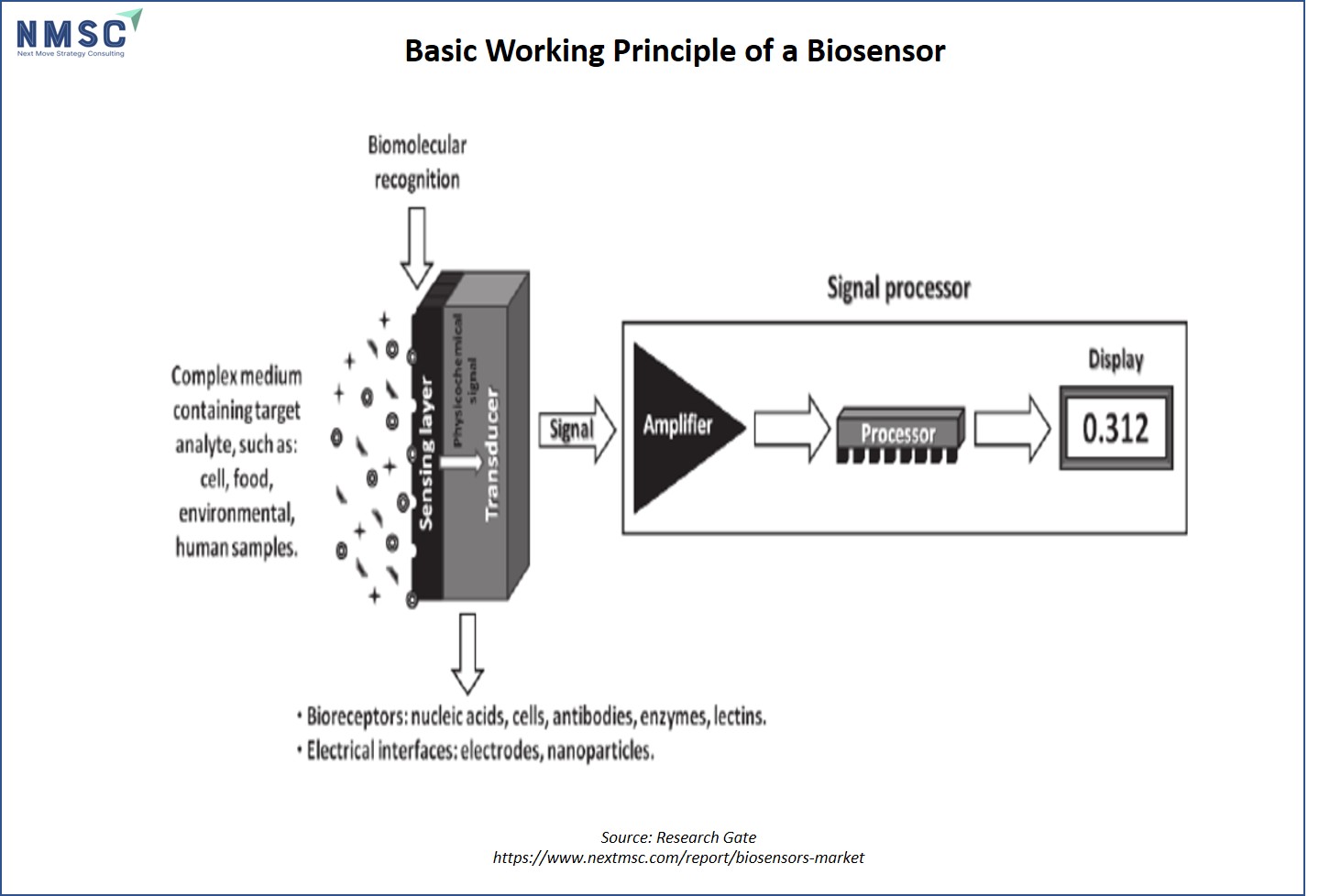
The diagram illustrates the core working architecture of a biosensor, showing how biological interactions are converted into measurable digital signals. The process begins when a complex medium such as food samples, environmental samples, or human biological fluids comes into contact with the sensing layer. This layer contains bioreceptors (including nucleic acids, cells, antibodies, enzymes, or lectins) that are designed for specific biomolecular recognition of a target analyte. Once binding occurs, the interaction is translated by a transducer often using electrical interfaces such as electrodes or nanoparticles into a raw electrical signal. This signal is then passed through an amplifier and signal processor, where noise is reduced and the signal is converted into a readable, quantifiable output. Finally, the processed data is displayed numerically, enabling accurate detection and interpretation. This workflow highlights why biosensors are increasingly critical in diagnostics, environmental monitoring, and food safety, as they seamlessly integrate biology with electronics for rapid, real-time analysis.
Wearable Biosensors and AI Enable Behavioral Prediction in Autism Care
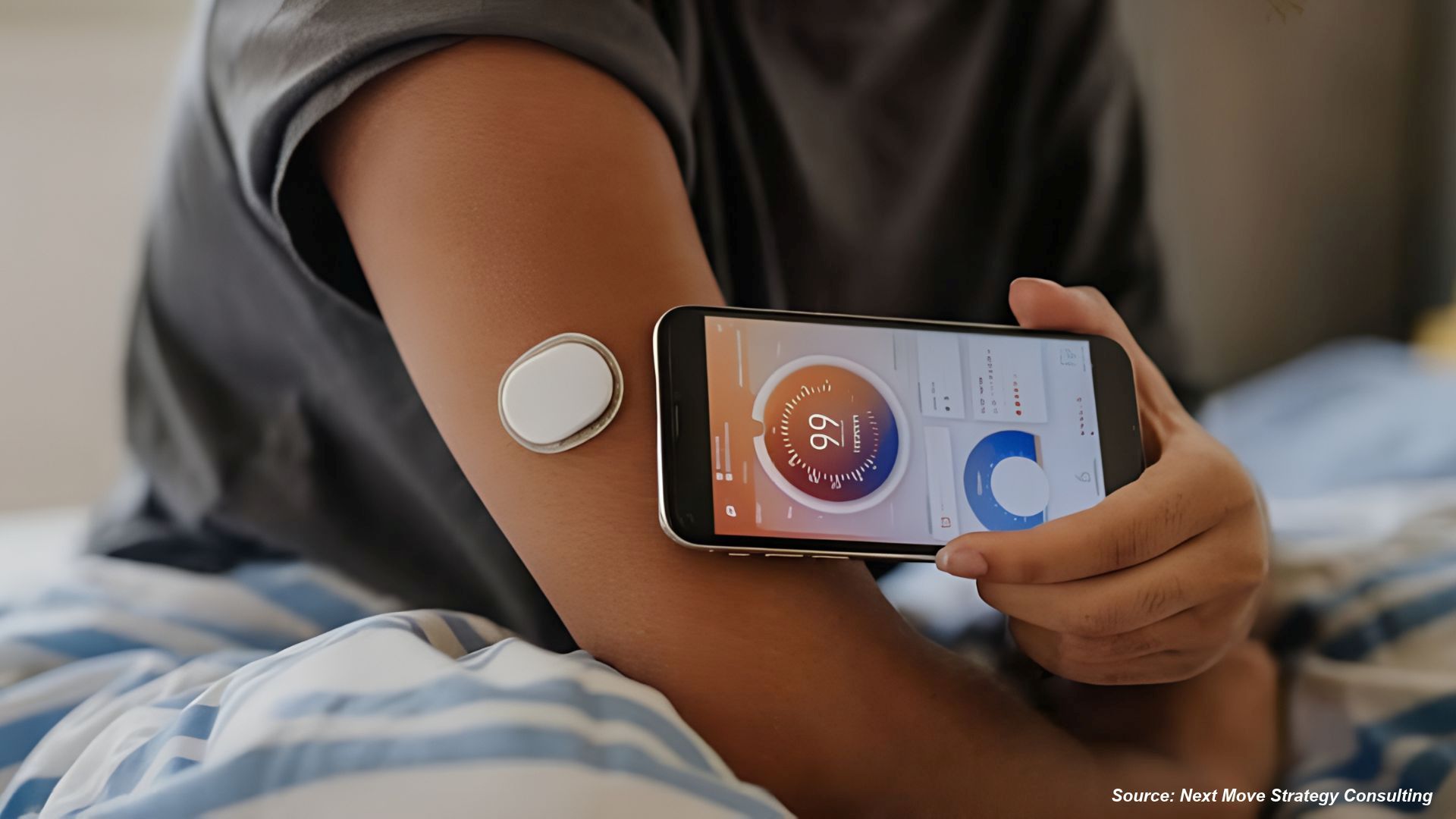
In a parallel but equally significant development, researchers at Northeastern University have demonstrated how wearable biosensors, combined with machine learning, can predict aggressive behavior in children with profound autism up to three minutes in advance, with nearly 80% accuracy.
Published in JAMA Network Open, the study analyzed data collected from commercially available, wrist-worn biosensors measuring physiological signals such as heart rate, electrodermal activity, skin temperature, and movement. These signals revealed subtle autonomic changes that occur before visible signs of distress, even in individuals who cannot verbally communicate discomfort.
Led by Professor Matthew Goodwin, the research addresses a long-standing challenge in autism care: aggressive outbursts that appear to caregivers as sudden and unpredictable, often resulting in emergency interventions, injuries, and caregiver burnout.
The study involved 70 youths across four inpatient psychiatric hospitals, generating nearly 500 hours of biosensor data and tracking over 6,600 aggressive incidents. Machine learning models were trained to identify how much recent physiological data was needed to predict an event and how far in advance meaningful alerts could be generated.
The implications extend beyond autism care. The same framework could eventually support early warnings for self-harm, PTSD episodes, bipolar disorder crises, or other high-risk behavioral health situations marking a shift from crisis response to anticipatory care.
Biosensor System Architecture: From Analyte Recognition to Data Processing
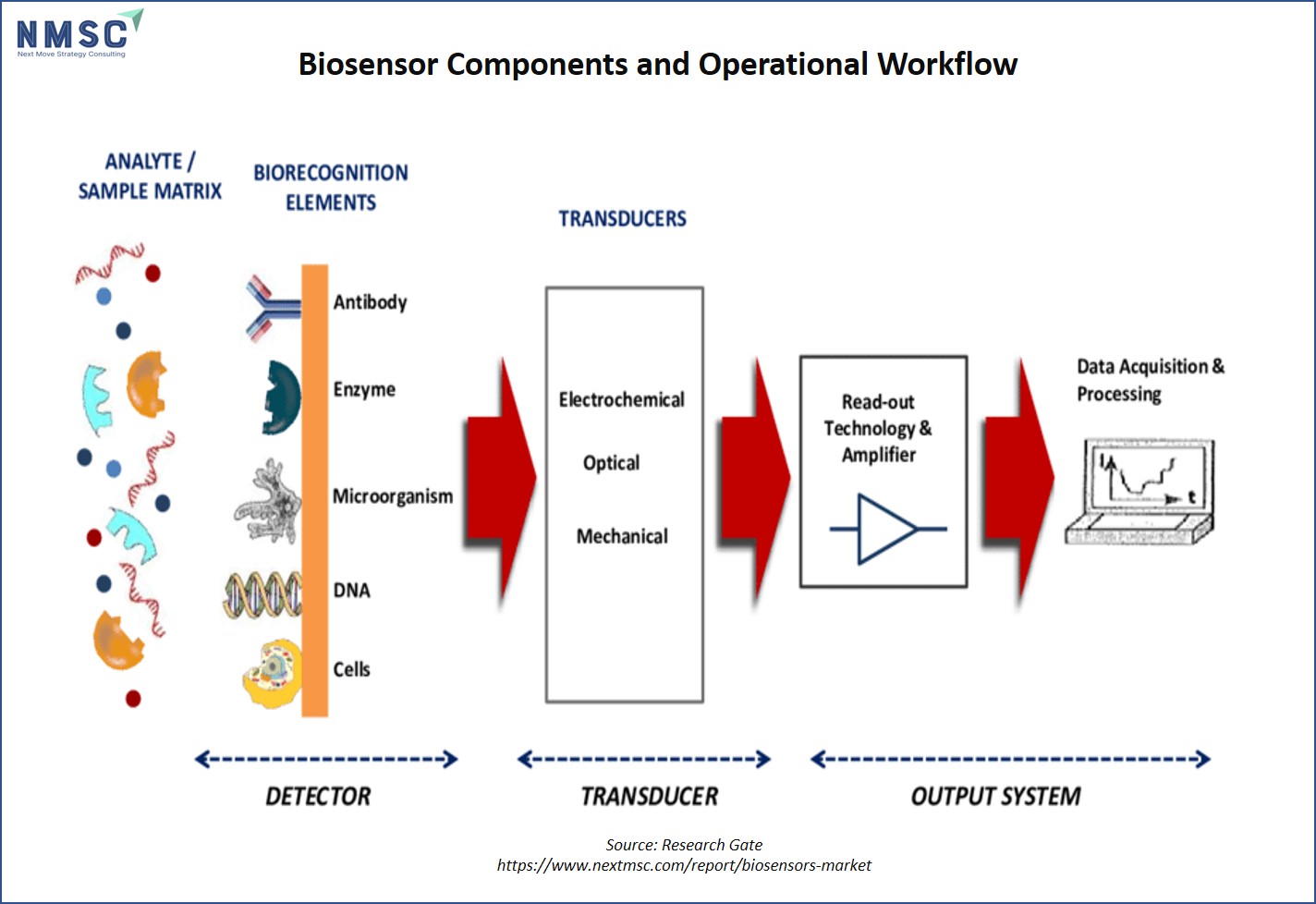
The diagram presents a step-by-step functional layout of a biosensor system, highlighting how biological information is translated into actionable data. The process begins with the analyte or sample matrix, which may contain biomolecules such as proteins, nucleic acids, or cells. These targets interact with biorecognition elements including antibodies, enzymes, microorganisms, DNA, or whole cells forming the detector component of the biosensor. Upon specific binding, the biological interaction is converted into a measurable signal by transducers, which can be electrochemical, optical, or mechanical in nature. This signal is then routed through a read-out system and amplifier, ensuring signal clarity and strength. Finally, the data acquisition and processing unit interprets and visualizes the signal, enabling quantitative analysis and decision-making. This structured workflow explains why biosensors are widely adopted across medical diagnostics, environmental monitoring, and industrial applications, as they seamlessly integrate biological specificity with electronic signal processing.
A Broader Perspective: From Measurement to Meaning
While these two innovations target very different use cases oncology device and behavioral health they converge on a common theme shaping the biosensors market:
Biosensors are evolving from passive data collectors into active predictors of biological and behavioral outcomes.
Several structural changes are becoming visible:
-
Sensors are moving upstream, detecting stress, risk, or instability before disease or events manifest.
-
Data interpretation is overtaking hardware innovation as the primary value driver, powered by AI and machine learning.
-
Clinical relevance now depends on context, not just signal accuracy linking physiological changes to actionable decisions.
This transition also raises new challenges around validation, interoperability, clinician trust, and ethical deployment especially as biosensors enter sensitive areas such as mental health and predictive diagnostics.
Long-Term Market Impact and Next Move Strategy Consulting’s View
From a strategic standpoint, Next Move Strategy Consulting (NMSC) views these developments as early indicators of a structural redefinition of the biosensors market, rather than isolated breakthroughs.
1. Shift from Devices to Diagnostic Ecosystems
The future of biosensors lies less in standalone products and more in integrated ecosystems that combine sensing, analytics, cloud infrastructure, and clinical workflows. Companies that remain hardware-only may struggle to sustain differentiation.
2. Predictive Capability Becomes a Competitive Threshold
As demonstrated by both quantum diagnostics and AI-enabled wearables, prediction not detection will increasingly define clinical and commercial relevance. Solutions that merely report current states risk becoming commoditized.
3. Validation and Trust Will Shape Adoption Curves
Early-stage promise must translate into clinically interpretable, regulator-ready evidence. Partnerships with hospitals, academic centers, and public health institutions will play a decisive role in scaling adoption.
4. Expansion Beyond Traditional Healthcare Settings
Biosensors are steadily moving into homes, schools, caregiving environments, and community settings, expanding their influence beyond hospitals and labs. This decentralization will redefine procurement models and stakeholder engagement.
5. Ethical and Data Governance Considerations Will Gain Weight
Predictive biosensing especially in behavioral health will intensify conversations around data ownership, consent, alert fatigue, and intervention responsibility, shaping both regulation and product design.
Outlook: A Market Moving Toward Anticipation
The biosensors market is no longer just about seeing what is happening inside the body. It is increasingly about understanding what is about to happen and acting in time.
Whether through quantum-level insights into cellular stress or wearable technologies that surface invisible physiological signals, biosensors are becoming a foundational layer for preventive, personalized, and predictive healthcare systems.
As these technologies mature, the next phase of growth will belong to players who can bridge deep science, intelligent analytics, and real-world clinical impact turning early signals into meaningful outcomes rather than overwhelming data streams.
About Next Move Strategy Consulting:
Next Move Strategy Consulting is a premier market research and management consulting firm that has been committed to providing strategically analysed well documented latest research reports to its clients. The research industry is flooded with many firms to choose from, what makes NMSC different from the rest is its top-quality research and the obsession of turning data into knowledge by dissecting every bit of it and providing fact-based research recommendation that is supported by information collected from over 500 million websites, paid databases, industry journals and one on one consultations with industry experts across a diverse range of industry sectors. The high-quality customized research reports with actionable insights and excellent end-to-end customer service help our clients to take critical business decisions that enables them to move beyond time and have competitive edge in the industry.
We have been servicing over 1000 customers globally that includes 90% of the Fortune 500 companies over a decade. Our analysts are constantly tracking various high growth markets and identifying hidden opportunities in each sector or the industry. We provide one of the industry’s best quality syndicate as well as custom research reports across 10 different industry verticals. We are committed to deliver high quality research solutions in accordance to your business needs. Our industry standard delivery solutions that ranges from the pre consultation to after-sales services, provide an excellent client experience and ensure right strategic decision making for businesses.
For more information, please contact:
Next Move Strategy Consulting
5th Floor 867
Boylston St, STE 500
Boston, MA 02116, U.S.
E-Mail: [email protected]
Direct: +1 857 758 5017
Website: www.nextmsc.com
About the Author
 Sanyukta Deb
— Sanyukta Deb is Digital Marketing Team Lead at Next Move Strategy Consulting, where she has led content strategy and technical SEO for the firm's B2B market research publications for over 2 years. Her editorial process translates NextMSC's primary and secondary research — spanning technology, industrial, and consumer sectors — into commercial narratives, backed by search-intent, keyword, and competitive analysis. She brings 5 years of overall experience in digital marketing and content strategy.
Sanyukta Deb
— Sanyukta Deb is Digital Marketing Team Lead at Next Move Strategy Consulting, where she has led content strategy and technical SEO for the firm's B2B market research publications for over 2 years. Her editorial process translates NextMSC's primary and secondary research — spanning technology, industrial, and consumer sectors — into commercial narratives, backed by search-intent, keyword, and competitive analysis. She brings 5 years of overall experience in digital marketing and content strategy.
About the Reviewer
 Debashree Dey
— Debashree Dey is Assistant Manager at Next Move Strategy Consulting, where she supports cross-vertical market content and communications across diverse industries for 6 years. Her professional background includes senior content writing, communications, and published manuscript authorship, with experience developing audience-focused business narratives and maintaining clear, consistent messaging. Her role supports research-led content development and editorial quality across NextMSC publications.
Debashree Dey
— Debashree Dey is Assistant Manager at Next Move Strategy Consulting, where she supports cross-vertical market content and communications across diverse industries for 6 years. Her professional background includes senior content writing, communications, and published manuscript authorship, with experience developing audience-focused business narratives and maintaining clear, consistent messaging. Her role supports research-led content development and editorial quality across NextMSC publications.















Add Comment