Is the Hemodialysis Industry Entering a New Phase of Supply Resilience and Innovation?

Lede
The global hemodialysis landscape is undergoing a period of transition as leading players navigate supply chain constraints, cost pressures, and evolving care delivery models. Recent developments surrounding Rockwell Medical and Nipro Corporation highlight how both specialized and diversified providers are adapting to maintain stability in a critical segment of renal care.
Supply Chain Disruptions and Competitive Pressure Impact Rockwell Medical
Rockwell Medical, a U.S.-based manufacturer of hemodialysis concentrates, is currently facing heightened scrutiny as operational disruptions begin to ripple through its core business. The company’s reliance on raw materials such as sodium bicarbonate an essential component in dialysis solutions has exposed it to volatility in global chemical supply chains. This has led to intermittent production slowdowns and delivery delays to dialysis clinics.
These disruptions come at a sensitive time, as dialysis providers operate within tight cost structures and depend heavily on consistent supply. Even minor delays can impact treatment schedules for patients with end-stage renal disease, making reliability a critical competitive factor.
At the same time, Rockwell is working to scale its Triferic product line, an iron therapy integrated into dialysis treatment. While clinical outcomes and patient benefits continue to support its adoption, reimbursement complexities and payer scrutiny remain barriers to faster penetration. The company’s ability to balance production efficiency with commercial expansion will be central to its recovery trajectory.
Financially, Rockwell is showing signs of stabilization, supported by improved liquidity and ongoing investments in automation. However, margin pressures persist due to rising input costs and competition from vertically integrated giants with stronger procurement capabilities.
Nipro Demonstrates Stability Through Diversification and Vertical Integration
In contrast, Japan-based Nipro Corporation is maintaining relatively steady performance amid similar macroeconomic and healthcare pressures. The company benefits from a diversified portfolio that spans dialysis equipment, consumables, and infusion products, enabling it to offset volatility in any single segment.
Nipro’s vertically integrated model where it manufactures key components such as dialyzer membranes in-house has proven advantageous in managing cost fluctuations and ensuring supply continuity. This operational control allows the company to maintain margins while delivering consistent product availability across global markets.
Demand fundamentals for Nipro remain strong, driven by rising chronic kidney disease prevalence linked to aging populations and lifestyle-related conditions. Its extensive presence across Asia and Europe, combined with compliance with stringent regulatory frameworks, further strengthens its positioning as a dependable supplier in the hemodialysis ecosystem.
Additionally, Nipro continues to invest in next-generation dialysis technologies and adjacent segments such as interventional radiology and pharmaceutical packaging, creating diversified growth pathways beyond its core renal care business.
Transformational Shifts in Hemodialysis Ecosystem
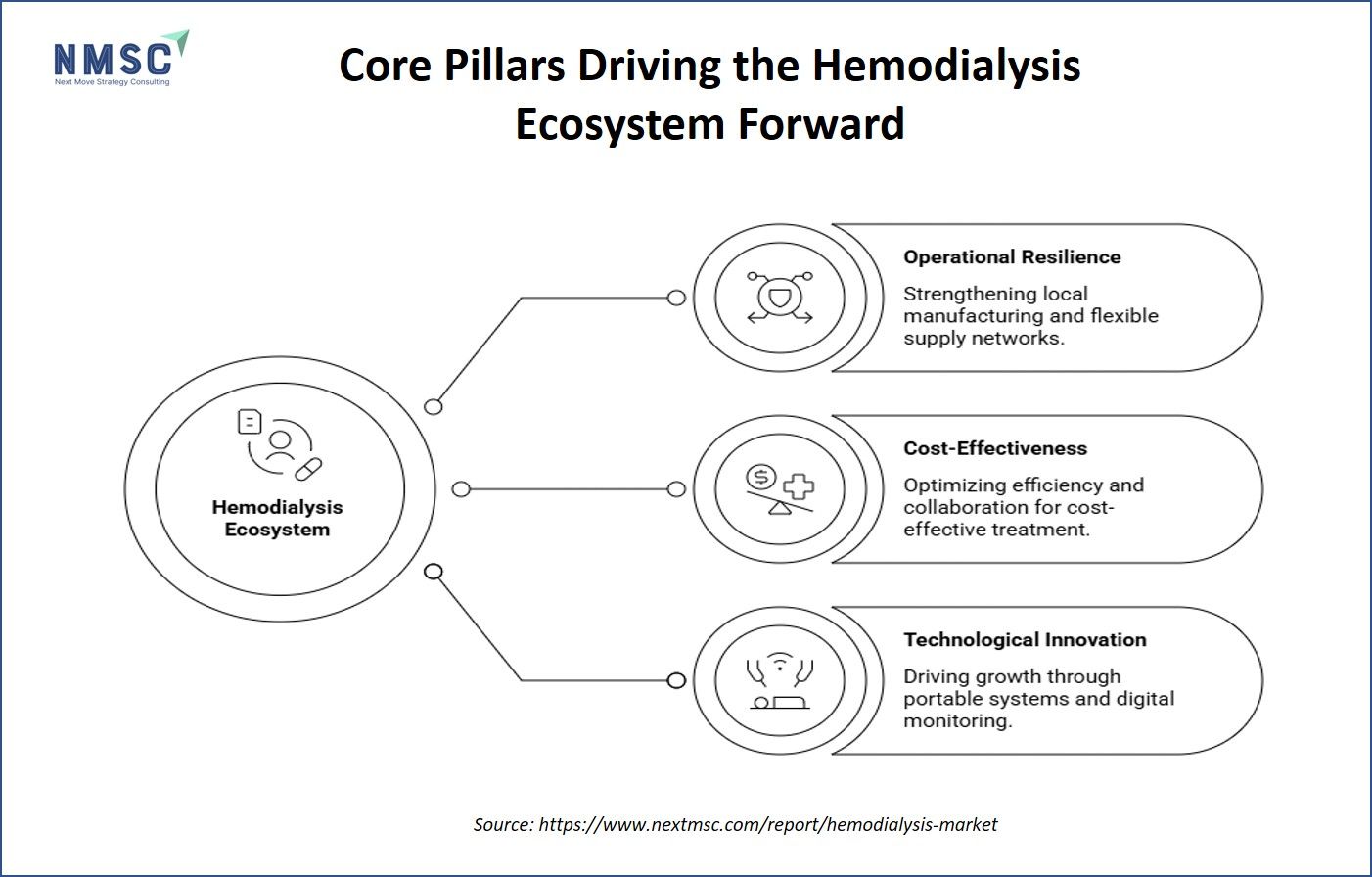
The hemodialysis ecosystem is witnessing a shift toward greater operational resilience, as companies respond to supply uncertainties and pricing pressures. Strengthening local manufacturing capabilities and building flexible supply networks are becoming essential strategies to maintain uninterrupted patient care.
Global healthcare systems are increasingly emphasizing cost-effective treatment models, placing pressure on dialysis providers to optimize efficiency without compromising quality. This is accelerating consolidation trends and encouraging closer collaboration between device manufacturers, clinics, and healthcare providers.
Future growth in hemodialysis is expected to be driven by technological innovation and improved patient access. Developments in portable dialysis systems, digital monitoring, and integrated therapies are set to enhance treatment outcomes while making care more accessible beyond traditional clinical settings.
Evolving Competitive Dynamics in the Hemodialysis Sector
The developments at Rockwell and Nipro reflect broader shifts within the hemodialysis market, where operational resilience and supply chain control are becoming as critical as clinical innovation.
Large, integrated players continue to consolidate their advantage through end-to-end capabilities, while smaller or specialized firms must focus on niche innovation, partnerships, or strategic alliances to remain competitive. At the same time, healthcare systems are increasingly prioritizing cost efficiency, outpatient care expansion, and home-based dialysis solutions, reshaping demand patterns.
Rising input costs, reimbursement uncertainties, and regulatory complexities are also influencing strategic decision-making across the sector. Companies that can align clinical value with economic efficiency are likely to gain stronger traction among providers and payers.
Emerging Dynamics in Hemodialysis Care
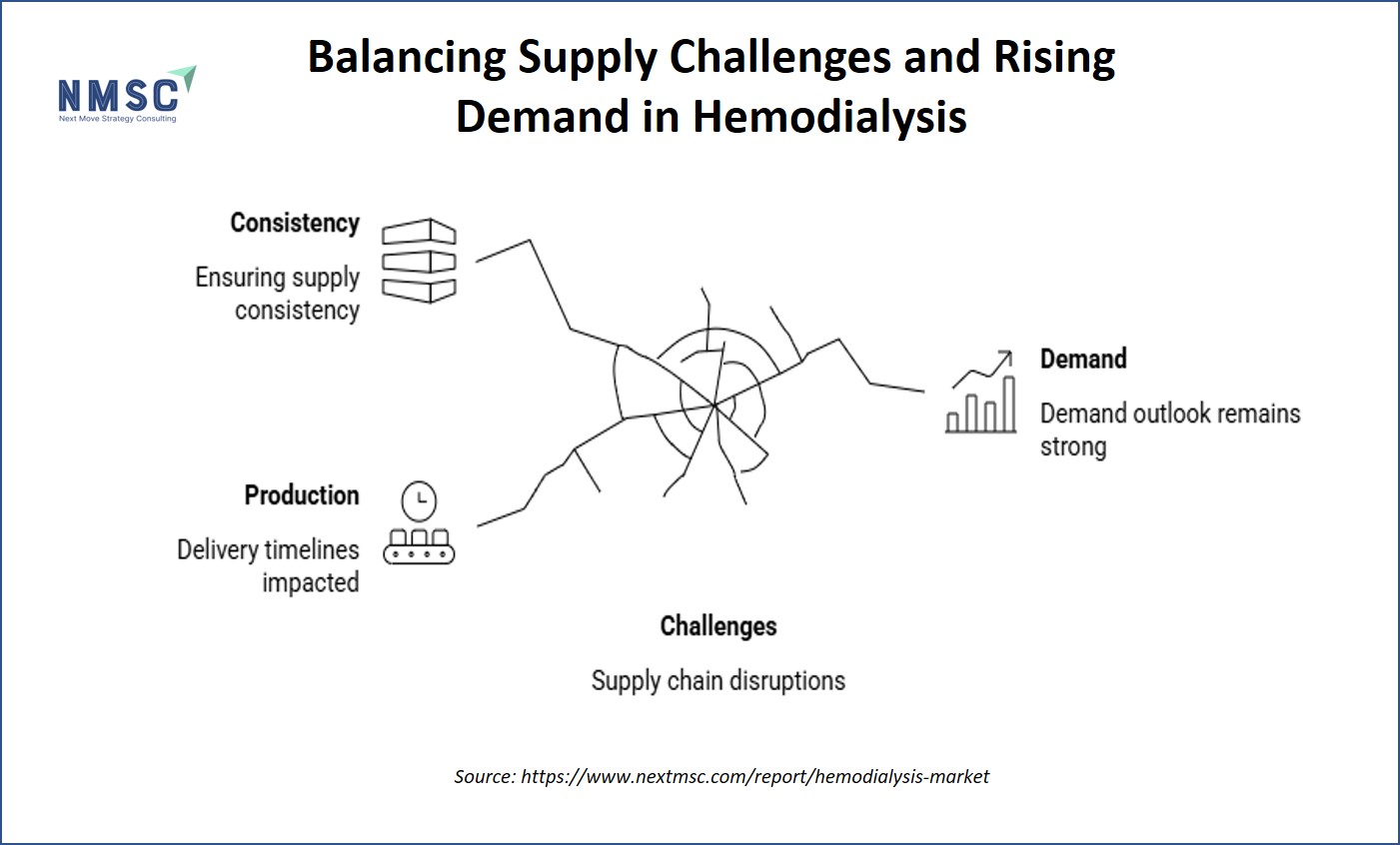
Operational challenges are becoming a defining factor in the hemodialysis industry, with supply chain disruptions and raw material cost fluctuations impacting production and delivery timelines. Ensuring consistency in dialysis supplies remains critical, pushing companies to enhance sourcing strategies and streamline manufacturing processes.
The demand outlook for hemodialysis remains strong, supported by the growing burden of chronic kidney disease worldwide. Factors such as increasing diabetes cases, hypertension, and aging populations are driving long-term dependence on dialysis treatments, reinforcing the need for reliable and scalable care solutions.
Innovation is reshaping the future of hemodialysis, with a growing emphasis on home-based therapies, advanced drug integration, and patient-friendly technologies. As the industry evolves, companies prioritizing efficiency, accessibility, and technological advancement are likely to gain a competitive edge.
Long-Term Market Impact and Next Move Strategy Consulting Perspective
According to Next Move Strategy Consulting, the current challenges in the Hemodialysis Market signal a structural shift rather than a temporary disruption. Supply chain resilience is emerging as a key differentiator, prompting companies to invest in localized manufacturing, vertical integration, and strategic sourcing partnerships.
From a long-term perspective, the market is expected to evolve toward more patient-centric and technology-driven care models. Innovations such as home hemodialysis systems, portable devices, and integrated drug delivery solutions are likely to redefine treatment accessibility and efficiency.
Key strategic outlooks include:
-
Increased focus on integrated solutions: Companies combining equipment, consumables, and therapeutics similar to Nipro’s model are expected to gain competitive advantage.
-
Acceleration of home-based dialysis adoption: This shift could reduce dependency on centralized clinics and reshape supply chain requirements.
-
Partnership-driven growth: Collaborations between device manufacturers, clinics, and pharmaceutical firms will play a crucial role in expanding market reach.
-
Operational efficiency as a growth lever: Firms like Rockwell that can optimize production and cost structures may unlock renewed growth despite current pressures.
Next Move Strategy Consulting also highlights that the global burden of chronic kidney disease will continue to rise, ensuring sustained demand for hemodialysis services. However, future market leadership will depend less on scale alone and more on adaptability, innovation, and supply chain robustness.
Outlook
While near-term headwinds such as supply disruptions and cost inflation persist, the hemodialysis market remains fundamentally strong, supported by non-discretionary demand and demographic trends. The contrasting positions of Rockwell Medical and Nipro Corporation illustrate the importance of strategic execution in navigating this evolving landscape. As the sector moves forward, companies that successfully integrate clinical innovation with operational resilience will be best positioned to capitalize on emerging opportunities in global renal care.
About Next Move Strategy Consulting:
Next Move Strategy Consulting is a premier market research and management consulting firm that has been committed to providing strategically analysed well documented latest research reports to its clients. The research industry is flooded with many firms to choose from, what makes NMSC different from the rest is its top-quality research and the obsession of turning data into knowledge by dissecting every bit of it and providing fact-based research recommendation that is supported by information collected from over 500 million websites, paid databases, industry journals and one on one consultations with industry experts across a diverse range of industry sectors. The high-quality customized research reports with actionable insights and excellent end-to-end customer service help our clients to take critical business decisions that enables them to move beyond time and have competitive edge in the industry.
We have been servicing over 1000 customers globally that includes 90% of the Fortune 500 companies over a decade. Our analysts are constantly tracking various high growth markets and identifying hidden opportunities in each sector or the industry. We provide one of the industry’s best quality syndicate as well as custom research reports across 10 different industry verticals. We are committed to deliver high quality research solutions in accordance to your business needs. Our industry standard delivery solutions that ranges from the pre consultation to after-sales services, provide an excellent client experience and ensure right strategic decision making for businesses.
For more information, please contact:
Next Move Strategy Consulting
5th Floor 867
Boylston St, STE 500
Boston, MA 02116, U.S.
E-Mail: [email protected]
Direct: +1 857 758 5017
Website: www.nextmsc.com
About the Author
 Sanyukta Deb
— Sanyukta Deb is Digital Marketing Team Lead at Next Move Strategy Consulting, where she has led content strategy and technical SEO for the firm's B2B market research publications for over 2 years. Her editorial process translates NextMSC's primary and secondary research — spanning technology, industrial, and consumer sectors — into commercial narratives, backed by search-intent, keyword, and competitive analysis. She brings 5 years of overall experience in digital marketing and content strategy.
Sanyukta Deb
— Sanyukta Deb is Digital Marketing Team Lead at Next Move Strategy Consulting, where she has led content strategy and technical SEO for the firm's B2B market research publications for over 2 years. Her editorial process translates NextMSC's primary and secondary research — spanning technology, industrial, and consumer sectors — into commercial narratives, backed by search-intent, keyword, and competitive analysis. She brings 5 years of overall experience in digital marketing and content strategy.
About the Reviewer
 Debashree Dey
— Debashree Dey is Assistant Manager at Next Move Strategy Consulting, where she supports cross-vertical market content and communications across diverse industries for 6 years. Her professional background includes senior content writing, communications, and published manuscript authorship, with experience developing audience-focused business narratives and maintaining clear, consistent messaging. Her role supports research-led content development and editorial quality across NextMSC publications.
Debashree Dey
— Debashree Dey is Assistant Manager at Next Move Strategy Consulting, where she supports cross-vertical market content and communications across diverse industries for 6 years. Her professional background includes senior content writing, communications, and published manuscript authorship, with experience developing audience-focused business narratives and maintaining clear, consistent messaging. Her role supports research-led content development and editorial quality across NextMSC publications.

















Add Comment