Kyushu University Nanoscale Discovery Advances Nanobot Market
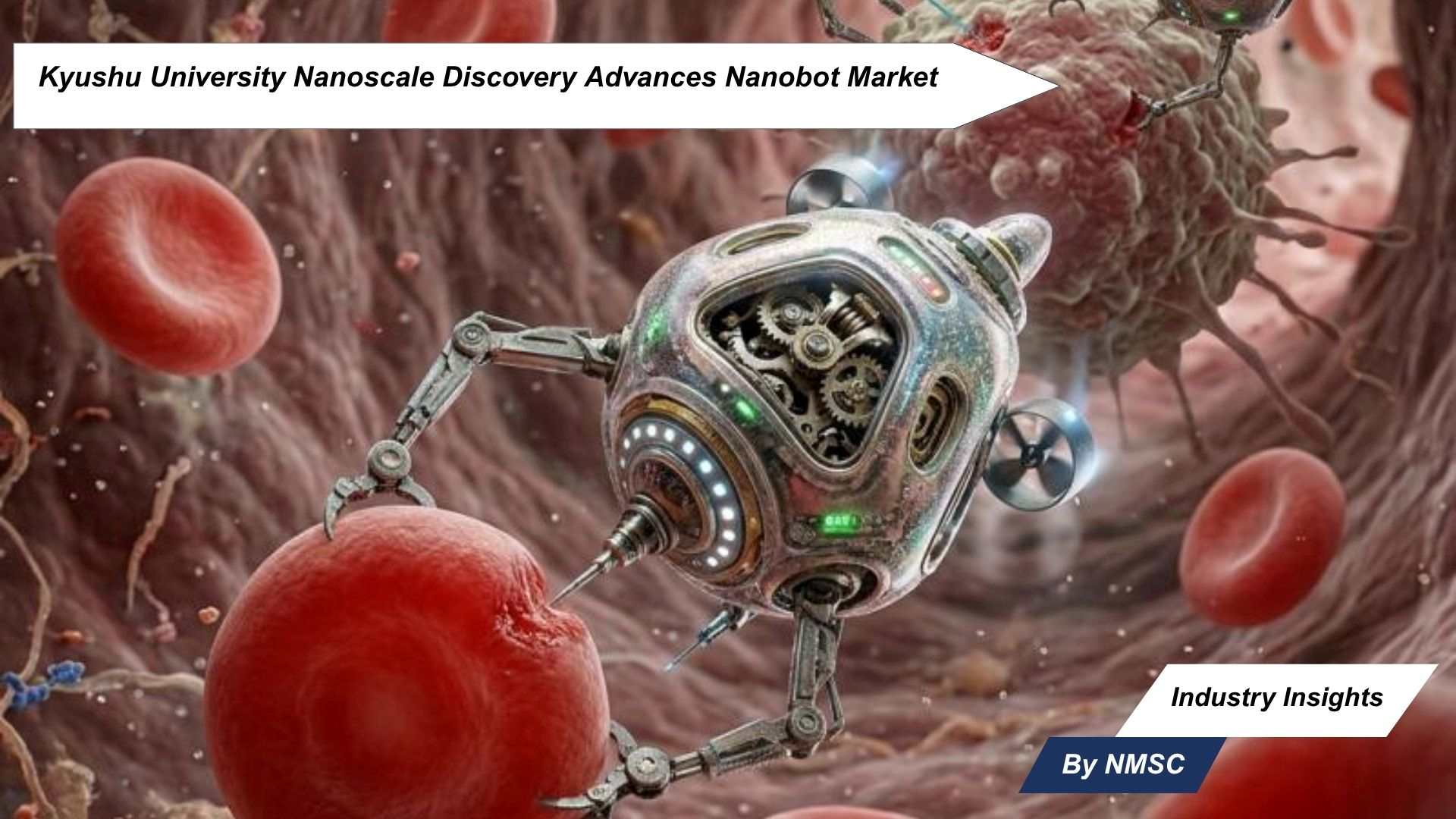
Kyushu University Maps Nanoscale Electric Fields, Opening New Design Pathways for Nanobot Systems
FUKUOKA, Japan — August 18, 2026 — An international research team led by Kyushu University has provided the first direct observational evidence of powerful electric fields at nanoconfined air-water interfaces — a fundamental nanoscale physics breakthrough with material implications for the global nanobot market, currently valued at USD 12.94 billion in 2026 and projected to reach USD 54.83 billion by 2035, growing at a CAGR of 17.4%.
The study, published in the Journal of the American Chemical Society, was conducted by researchers from Kyushu University, Nankai University, Stanford University, and the University of Alberta. Using three-dimensional transmission electron microscopy (3D TEM), the team reconstructed the full geometry of nanoconfined air-water interfaces sealed within carbon nanotubes approximately 50 nanometers wide — roughly 1,000 times thinner than a human hair.
The researchers identified repulsive forces reaching approximately 10 megapascals at the thinnest interface points — approximately 100 times atmospheric pressure — a magnitude that classical theories could not explain. The team attributed the missing force to an intense electric field generated by the molecular alignment of water at the interface, a finding confirmed by the spontaneous formation of gold nanoparticles within two nanometers of the air-water boundary without the addition of a reducing agent.
The methodology — sealing fluids in a nanotube, reconstructing the interface's 3D shape, deducing forces, and confirming via reaction tracking — is directly applicable to the characterization of nanoscale materials used in nanobot fabrication, including nanoporous structures central to nanobot propulsion and drug-loading architectures. The research also carries implications for fuel cell and water electrolysis technologies, which represent emerging energy sources for next-generation autonomous nanobot systems.
Key Highlights:
-
First Direct Evidence: The Kyushu University-led team is the first to directly observe and quantify electric fields at nanoconfined air-water interfaces using 3D electron microscopy, resolving a long-standing debate in nanoscale physics.
-
Nanobot Design Relevance: Nanobots operate in aqueous biological environments where nanoscale interfacial forces govern navigation, propulsion, and drug-release behavior — making this research directly applicable to nanobot system design and optimization.
-
Nanoporous Materials Advancement: The findings provide a rational design framework for nanoporous materials used in nanobot fabrication, potentially improving the structural precision and functional reliability of next-generation nanorobotic platforms.
-
Market Growth Context: The global nanobot market is forecast to expand from USD 12.94 billion in 2026 to USD 54.83 billion by 2035, with medical applications — including targeted drug delivery and minimally invasive diagnostics — representing the dominant revenue segment.
Analyst Insight:
According to analysts at Next Move Strategy Consulting, the Kyushu University research represents a meaningful advance in the foundational science underpinning nanobot design. NMSC analysts note that as the nanobot market accelerates toward commercialization, the ability to precisely characterize and predict nanoscale interfacial forces will become a critical differentiator for companies developing nanorobotic systems intended for in-vivo navigation through biological fluids. The 3D TEM methodology introduced by this research offers a scalable framework for validating nanobot structural performance at the atomic level — a capability that could materially reduce preclinical validation timelines and lower the technical risk associated with regulatory submissions for therapeutic nanobot platforms.
Industry Outlook:
The Kyushu University discovery underscores a broader trend in which advances in fundamental nanoscale physics are increasingly translating into actionable design intelligence for the nanobot industry. As the global nanobot market progresses toward its projected USD 54.83 billion valuation by 2035, the integration of precision nanoscale characterization tools — including 3D electron microscopy and force-mapping methodologies — with nanobot R&D workflows is expected to accelerate prototype development cycles and strengthen the clinical validation pipeline. North America and Asia-Pacific, which collectively lead global nanobot investment and adoption, are positioned to benefit most directly from this convergence of materials science and nanorobotics engineering.
Source: Phys.org
For More Information: Download FREE Sample on Nanobot Market Report
Prepared By: Sanyukta Deb
About the Author
 Sanyukta Deb
— Sanyukta Deb is Digital Marketing Team Lead at Next Move Strategy Consulting, where she has led content strategy and technical SEO for the firm's B2B market research publications for over 2 years. Her editorial process translates NextMSC's primary and secondary research — spanning technology, industrial, and consumer sectors — into commercial narratives, backed by search-intent, keyword, and competitive analysis. She brings 5 years of overall experience in digital marketing and content strategy.
Sanyukta Deb
— Sanyukta Deb is Digital Marketing Team Lead at Next Move Strategy Consulting, where she has led content strategy and technical SEO for the firm's B2B market research publications for over 2 years. Her editorial process translates NextMSC's primary and secondary research — spanning technology, industrial, and consumer sectors — into commercial narratives, backed by search-intent, keyword, and competitive analysis. She brings 5 years of overall experience in digital marketing and content strategy.
About the Reviewer
 Debashree Dey
— Debashree Dey is Assistant Manager at Next Move Strategy Consulting, where she supports cross-vertical market content and communications across diverse industries for 6 years. Her professional background includes senior content writing, communications, and published manuscript authorship, with experience developing audience-focused business narratives and maintaining clear, consistent messaging. Her role supports research-led content development and editorial quality across NextMSC publications.
Debashree Dey
— Debashree Dey is Assistant Manager at Next Move Strategy Consulting, where she supports cross-vertical market content and communications across diverse industries for 6 years. Her professional background includes senior content writing, communications, and published manuscript authorship, with experience developing audience-focused business narratives and maintaining clear, consistent messaging. Her role supports research-led content development and editorial quality across NextMSC publications.















Add Comment