Memory Shortage Crisis Reaches Disrupting LED and LCD Display Markets
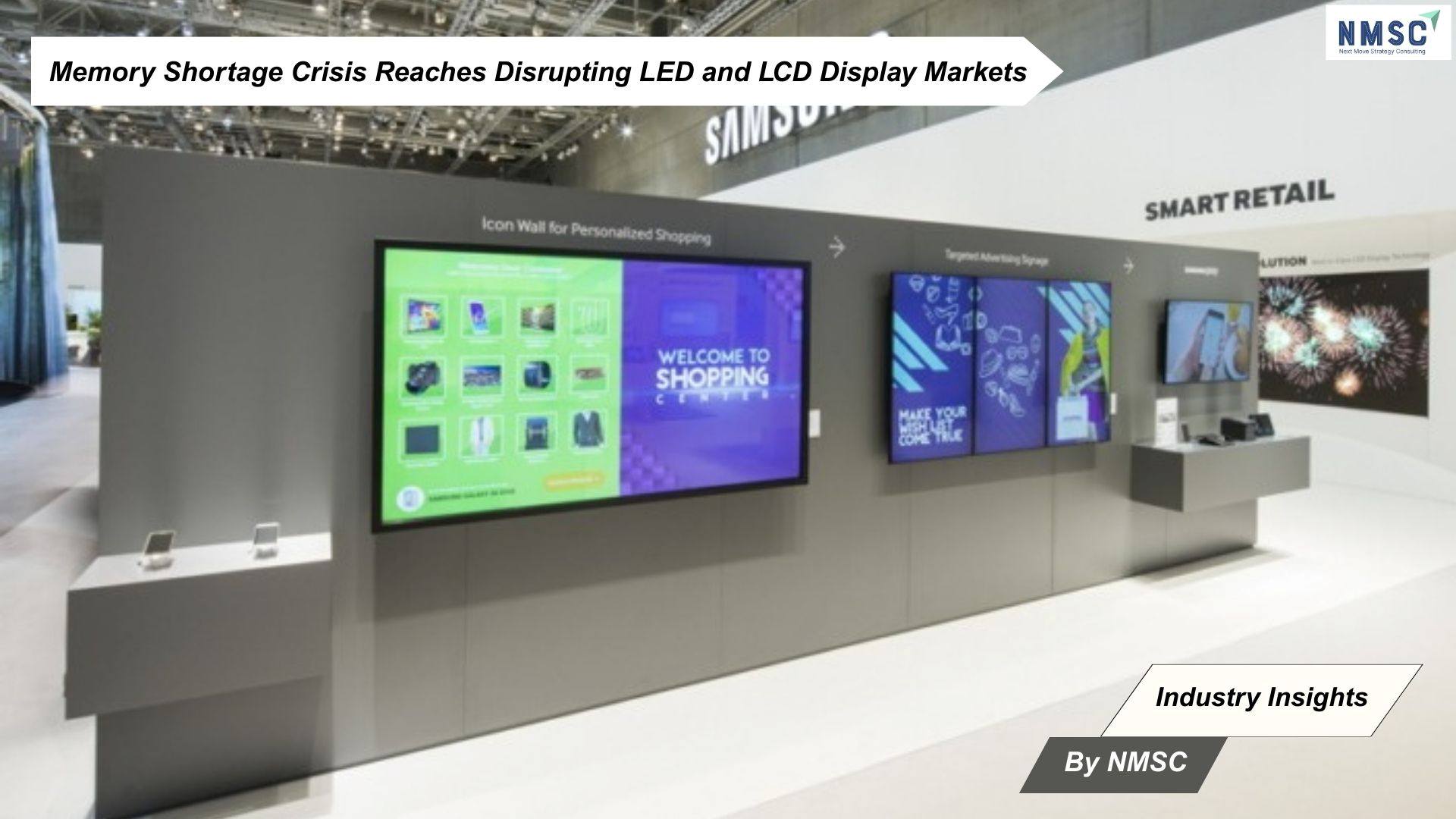
Industry Insights from Next Move Strategy Consulting
The global digital signage industry, encompassing LCD and LED display manufacturers, is facing a severe and direct impact from the ongoing worldwide memory shortage. This crisis, fueled by a massive shift in semiconductor production toward artificial intelligence (AI), is escalating component costs, stretching lead times, and creating unprecedented supply chain pressures for professional display providers.
Digital Signage: An Unexpectedly Vulnerable Sector
While often viewed through the lens of panel manufacturing, professional displays are highly integrated embedded computing systems. Their heavy reliance on DRAM, NAND, and other memory components makes the entire sector—from video walls to interactive touchscreens—structurally sensitive to semiconductor supply fluctuations. The rapid reallocation of production capacity toward high-bandwidth memory (HBM) for AI GPUs has accelerated this imbalance, pushing memory allocation for display applications further down the supply queue.
Price Spikes Reveal Market Severity
The severity of the supply crunch is starkly illustrated by its impact on industry giants. Multiple reports indicate that even Apple, a company renowned for its supply chain dominance, is being charged up to 180 percent more for memory. The price for LPDDR5X chips used in its latest iPhone generation has reportedly surged from USD 25–29 to approximately USD 70.
This price shock is not an isolated event but part of a rapid market deterioration. Since September, memory prices have more than tripled within just three months. Industry analysts currently see no relief in sight before 2028, as AI data centers continue to absorb enormous volumes of memory for training and operating large language models.
Broad Impact Across Professional Display Categories
The memory shortage creates a challenging environment across all major digital signage product categories:
-
Professional LCD displays are contending with significantly higher bill-of-materials costs.
-
Interactive Flat Panel (IFP) touch displays and educational panels, which rely heavily on embedded computing architectures, are particularly vulnerable.
-
Direct-view LED (dvLED) displays are increasingly affected as they integrate sophisticated onboard controllers and System-on-Chips (SoCs) dependent on DRAM and NAND.
Even if panel prices remain stable, the rising cost of controllers, media processors, and embedded boards will inevitably translate into higher end-product pricing for the market.
A Prolonged Challenge for the Ecosystem
For digital signage manufacturers, who lack the purchasing leverage of consumer electronics titans, the situation is delicate. Procurement teams are already navigating longer lead times, shifting component priorities, and intensifying pressure on profit margins.
The immediate impact on end-users has been limited so far, with vendors reporting only moderate price increases. However, this is expected to change as inventories of lower-priced memory components deplete in early 2026, likely triggering further price adjustments. This memory shortage represents another major structural challenge for the ecosystem, following years of panel supply volatility and logistics disruptions.
According to Next Move Strategy Consulting, this crisis signals a fundamental shift for the digital signage industry. It is becoming inextricably linked to global IT and semiconductor supply dynamics, with the AI boom’s consequences now impossible to ignore. Strategic planning must now account for elevated memory costs as a persistent market condition well into the second half of the decade. Companies will need to focus on supply chain resilience, innovative product design to mitigate component reliance, and flexible pricing strategies to navigate this prolonged period of instability.
Source: Invidis
Prepared by: Next Move Strategy Consulting
About the Author
 Sanyukta Deb
— Sanyukta Deb is Digital Marketing Team Lead at Next Move Strategy Consulting, where she has led content strategy and technical SEO for the firm's B2B market research publications for over 2 years. Her editorial process translates NextMSC's primary and secondary research — spanning technology, industrial, and consumer sectors — into commercial narratives, backed by search-intent, keyword, and competitive analysis. She brings 5 years of overall experience in digital marketing and content strategy.
Sanyukta Deb
— Sanyukta Deb is Digital Marketing Team Lead at Next Move Strategy Consulting, where she has led content strategy and technical SEO for the firm's B2B market research publications for over 2 years. Her editorial process translates NextMSC's primary and secondary research — spanning technology, industrial, and consumer sectors — into commercial narratives, backed by search-intent, keyword, and competitive analysis. She brings 5 years of overall experience in digital marketing and content strategy.
About the Reviewer
 Debashree Dey
— Debashree Dey is Assistant Manager at Next Move Strategy Consulting, where she supports cross-vertical market content and communications across diverse industries for 6 years. Her professional background includes senior content writing, communications, and published manuscript authorship, with experience developing audience-focused business narratives and maintaining clear, consistent messaging. Her role supports research-led content development and editorial quality across NextMSC publications.
Debashree Dey
— Debashree Dey is Assistant Manager at Next Move Strategy Consulting, where she supports cross-vertical market content and communications across diverse industries for 6 years. Her professional background includes senior content writing, communications, and published manuscript authorship, with experience developing audience-focused business narratives and maintaining clear, consistent messaging. Her role supports research-led content development and editorial quality across NextMSC publications.

















Add Comment